

P0133 on 2008-2023 Dodge Challenger: Slow O2 Sensor Response Causes and Fixes
On a Dodge Challenger, code P0133 almost always points to a failing upstream oxygen sensor (Bank 1, Sensor 1) that has become slow to respond. This sensor is on the passenger side. Replacing it is the most common fix, costing around $40-$90 for an aftermarket part and is a straightforward DIY job for many owners. However, on Hemi engines, a broken exhaust manifold bolt causing a leak is also a very common underlying cause.
- P0133 on your Challenger means the passenger-side upstream O2 sensor is responding too slowly.
- The most likely cause is simply an old, worn-out oxygen sensor that needs to be replaced.
- Before replacing the sensor, especially on a Hemi V8, listen for a ticking noise on cold start, which points to a common exhaust manifold leak that must be fixed first.
What's Unique About the 2008-2023 Dodge Challenger
For the Dodge Challenger, whether equipped with a V6 or a Hemi V8, the P0133 code doesn't indicate a unique platform-specific flaw but rather a common failure for oxygen sensors in general. 'Bank 1' on all Challenger engines (V6 and V8) refers to the passenger side of the engine, as this is the bank containing cylinder #1. 'Sensor 1' is the upstream sensor located on the exhaust manifold or front pipe, before the catalytic converter. A notable issue, particularly on the 5.7L Hemi, is the tendency for exhaust manifold bolts to break, causing a leak that can trigger a P0133 code even with a perfectly good sensor. A Technical Service Bulletin (TSB #18-032-09) was issued for the 2010 SRT8 6-speed model specifically for P0133, indicating a required PCM software update.
Generation note: The 2008-2023 Dodge Challenger is considered a single generation (LC), though it received a major interior and exterior refresh for the 2015 model year. The engines and their management systems were updated over this period (e.g., introduction of the 3.6L Pentastar V6), but the function and diagnosis for a P0133 code remain fundamentally the same across all model years and engine types. An early TSB (#18-032-09) was released on 11/05/2009 for the 2010 SRT8 6-speed model to address false P0133/P0153 codes via a PCM flash.
Symptoms You May Notice
- Check Engine Light is illuminated
- Decreased fuel economy
- Rough or unstable idle
- Hesitation or sluggish acceleration
- Possible black smoke from the exhaust or a smell of gasoline if running very rich
- Engine misfires or stalling in some cases
- Replacing the downstream (Sensor 2) oxygen sensor instead of the upstream (Sensor 1) sensor.
- Replacing the sensor on the driver's side (Bank 2) instead of the passenger side (Bank 1).
- Replacing the O2 sensor without first checking for exhaust leaks, which can mimic the symptoms of a bad sensor, especially on Hemi engines.
- Mistaking the upstream and downstream sensor connectors. On some vehicles, the connectors are similar and located near each other, making it possible to swap them accidentally during a repair.
Most Likely Causes
- Failing Bank 1, Sensor 1 Oxygen Sensor 🔴 High Probability Oxygen sensors are consumable parts that degrade over time due to heat and contaminants. After 80,000-100,000 miles, their ability to react quickly diminishes, making this the most common cause. 🎬 Watch: How to fix a P0133 slow response code
How to confirm: Use an OBD-II scanner with live data capability. Graph the Bank 1, Sensor 1 voltage. A healthy sensor will show rapid, frequent fluctuations between approximately 0.1V and 0.9V. A slow sensor will show lazy, rounded-off waves or get stuck. The PCM sets the code when it detects the sensor is switching less than a specified number of times in a set period (e.g., less than 16 times in 20 seconds).
Typical fix: Replace the Bank 1, Sensor 1 (upstream, passenger side) oxygen sensor. An O2 sensor socket is recommended for removal.
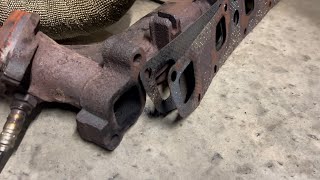
Est. part cost: $40-$90 - Exhaust Leak 🟡 Medium Probability On Hemi V8 engines, the exhaust manifold bolts, particularly the rear ones, are known to break from repeated heat cycles. This creates a leak between the manifold and the cylinder head, allowing outside air to enter the exhaust stream and skew O2 sensor readings, causing a slow response code.
How to confirm: Listen for a distinct 'ticking' noise from the passenger side of the engine, especially on a cold start, which may quiet down as the engine warms up and the metal expands. Perform a visual inspection of the exhaust manifold for black soot trails or obviously broken bolt heads. A smoke machine can also be used to pressurize the cold exhaust and pinpoint leaks.
Typical fix: Replace the broken exhaust manifold bolts and the manifold gasket. It is recommended to use new OEM bolts and gaskets 🎬 See how to fix a warped Hemi exhaust manifold for this repair.
Est. part cost: $25-$75 for gaskets and bolts. - Damaged Wiring or Connector ⚪ Low Probability
How to confirm: Visually inspect the wiring harness leading to the O2 sensor for any signs of melting, chafing, or corrosion. The harness can sometimes be damaged by contact with hot exhaust components or road debris. Check the connector pins for corrosion or a loose fit. Use a multimeter to check for continuity and proper voltage at the connector.
Typical fix: Repair the damaged section of the wiring harness or clean/replace the connector.
Est. part cost: $10-$30
Rare But Worth Checking
- Intake Vacuum Leak: A leak in the air intake system (e.g., a cracked hose or bad intake manifold gasket) can introduce unmetered air, causing the engine to run lean. While this usually sets other codes like P0171, it can sometimes contribute to a P0133 by creating unusual conditions for the O2 sensor.
- Low Fuel Pressure: A weak fuel pump or clogged fuel filter can cause a lean condition, which might affect the O2 sensor's readings, though this would typically be accompanied by other fuel-system-related codes.
- PCM Software or Hardware Issue: In very rare instances, the issue may be with the Powertrain Control Module itself, either requiring a software update from a dealership or a replacement of the module. On some related Chrysler/Dodge/Ram products, TSBs have been issued for software updates to correct overly sensitive P0133 monitoring. This should only be considered after all other possibilities have been exhausted.
Diagnosis Steps
- Read the code with an OBD-II scanner to confirm P0133 is present and note any other codes.
- On a cold engine, start it and listen carefully for a ticking sound from the passenger-side exhaust manifold, which may disappear after a minute as the engine warms. This strongly suggests an exhaust leak.
- Use the scanner's live data feature to monitor the 'Bank 1, Sensor 1' O2 sensor voltage after the engine is fully warmed up. The voltage should switch rapidly between ~0.1V and ~0.9V. If it's slow, flat, or biased, it points towards a sensor or wiring issue.
- Visually inspect the exhaust system from the passenger side exhaust manifold 🎬 Watch this guide to locate all four O2 sensors to the catalytic converter for any signs of black soot, which indicates a leak. Check for broken manifold bolts.
- Inspect the O2 sensor's wiring harness and connector for any signs of melting, corrosion, or physical damage.
- Test the O2 sensor's internal heater circuit. Disconnect the sensor and measure the resistance between the two heater pins (often the same color wires). A typical reading is between 3 and 15 Ohms, but consult a service manual for exact specs. An open circuit (infinite resistance) indicates a failed heater.
- If no leaks or wiring issues are found, and the live data shows a slow response, the oxygen sensor is the most likely cause.
- If you replace the sensor and the code returns, investigate potential vacuum leaks or fuel pressure issues more thoroughly. Also, check with a dealer for any available PCM software updates, especially for early model year SRT8s.
Parts You'll Likely Need
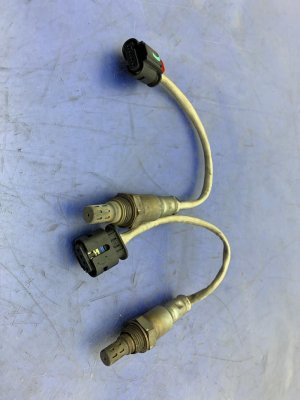
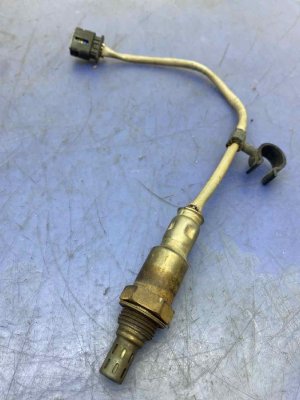
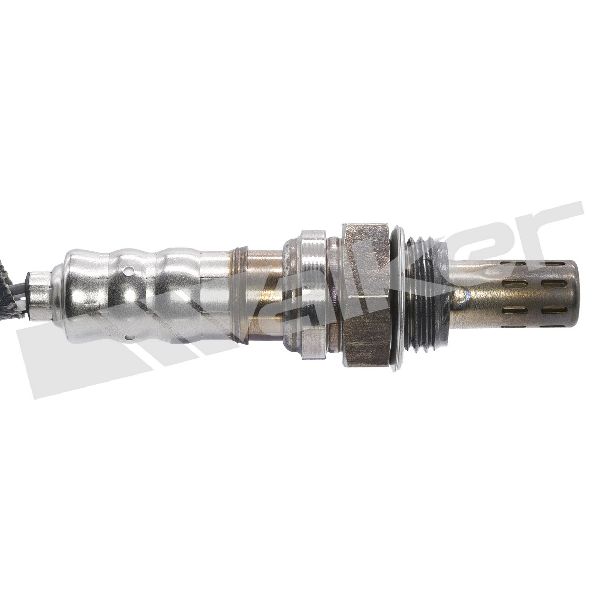
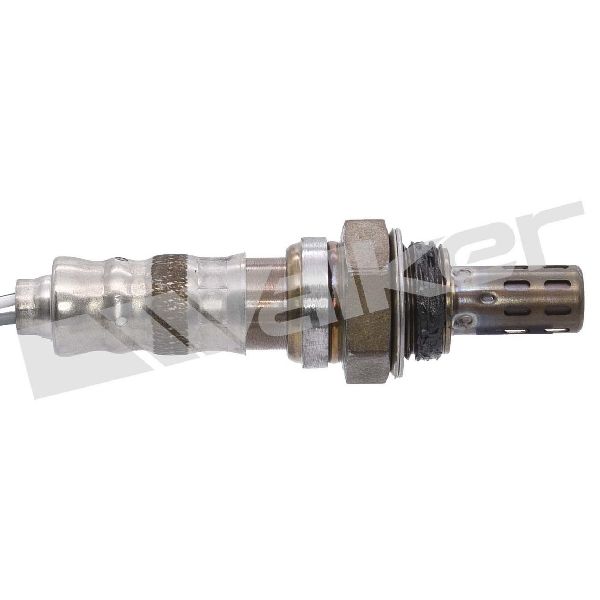
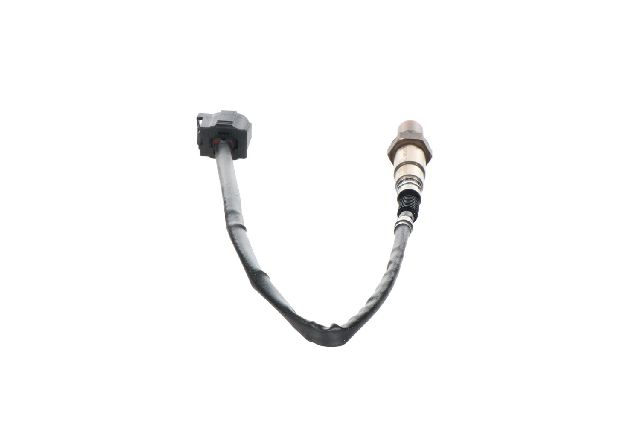
- Upstream Oxygen Sensor (Bank 1, Sensor 1)
(OEM #5149180AA (or superseding part 05149180AB) is a common number for 3.6L and 5.7L engines, but always verify with VIN. 68291046AA is used on some later models.)— This sensor is the direct source of the reading that triggers the P0133 code. It is a common wear-and-tear item that degrades over time.
Trusted brands: Mopar (OEM), NTK/NGK, Denso, Bosch
OEM price range: $80-$150
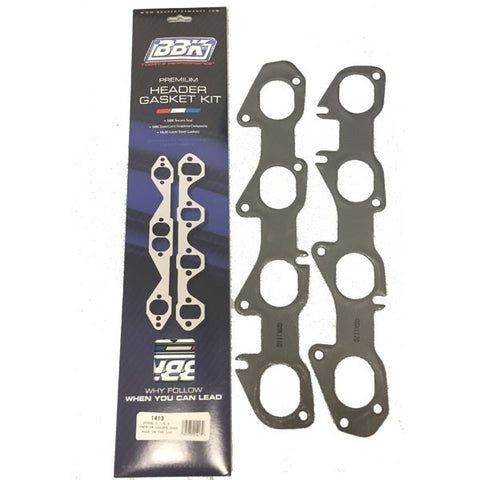
Aftermarket price range: $40-$90 - Exhaust Manifold Gasket & Bolt Kit — Required if the cause is a common Hemi exhaust manifold leak due to broken bolts.
Trusted brands: Mopar (OEM), Fel-Pro, Dorman
OEM price range: $40-$75
Aftermarket price range: $25-$50
Related Codes That Often Appear With This One
- P0171 — System Too Lean (Bank 1) - An exhaust or vacuum leak causing the P0133 can also cause a lean condition, triggering P0171.
- P0174 — System Too Lean (Bank 2) - If a vacuum leak is large enough to affect both banks, you might see this code as well.
- P0153 — O2 Sensor Circuit Slow Response (Bank 2, Sensor 1) - If both upstream sensors are of a similar age and mileage, it's not uncommon for them to fail around the same time.
Technical Service Bulletins (TSBs) & Recalls
- 18-032-09 — Flash: MIL Illumination P0133 And/Or P0153 (SRT8 6-speed) — The PCM software calibration may be overly sensitive, causing the Malfunction Indicator Lamp (MIL) to illuminate and store DTC P0133 or P0153. The fix is to reprogram the PCM with updated software.
Platform-Specific Known Issues
- Hemi Exhaust Manifold Bolt Failure: The 5.7L and 6.4L Hemi engines are known for breaking exhaust manifold bolts, especially the rearmost bolts on the passenger side. This causes an exhaust leak that presents as a 'tick' on cold starts and is a frequent cause of the P0133 code on these engines.
- Aftermarket Headers: Owners who install aftermarket long-tube headers may experience P0133 or P0153 codes. This can happen because the new headers relocate the O2 sensor bung further downstream, causing a delay in the sensor reading that the PCM interprets as a slow response. A custom tune may be required to adjust the PCM's expectations.
- TSB for 2010 SRT8 Models: Chrysler issued Technical Service Bulletin #18-032-09 on November 5, 2009, for 2010 Dodge Challenger SRT8 models with a 6-speed manual transmission. The TSB addresses MIL illumination for codes P0133 and/or P0153 and requires a PCM software update (re-flash) to correct overly sensitive monitoring logic.
Mechanic-Grade Diagnostic Values
- Upstream O2 Sensor Voltage (Live Data) — expected: Rapidly fluctuating signal between approximately 0.1V (lean) and 0.9V (rich) on a fully warmed engine.. Failure: Signal is slow to change, flat-lines, or stays stuck in a specific range (e.g., only 0.4V to 0.6V). The PCM expects a switch from rich-to-lean or lean-to-rich in under 100 milliseconds.
- O2 Sensor Heater Circuit Resistance — expected: Typically between 3 and 15 Ohms when measured across the two heater pins on a disconnected, cold sensor.. Failure: A reading of infinity (OL) indicates an open/broken heater element. A reading of zero or near-zero indicates a short circuit.
- O2 Sensor Heater Circuit Voltage Supply — expected: Battery voltage (approx. 12V) should be present at the heater power supply wire in the harness connector with the key on, engine off.. Failure: No voltage indicates a problem with the power supply, which is often a blown fuse (Fuse F77 in the under-hood fuse box for many 2015+ models).
Scan Tool Commands That Help
- Professional Scan Tool (e.g., wiTECH): O2 Sensor Heater Test — This is a bidirectional command that allows the technician to manually activate the O2 sensor's heater circuit to verify its operation. It can be used to confirm if the heater is receiving the command from the PCM and drawing current, helping to isolate a faulty heater element from a wiring or PCM driver issue.
Wiring & Ground Locations
- Bank 1 Sensor 1 Connector — On the passenger side of the engine, connected to the upstream O2 sensor located in the exhaust manifold.. This is the primary connection point to test for power, ground, and signal integrity. For a 2015 3.6L V6, the pinout is typically: Pin 1 (BRN/VIO) - 5 Volt Supply, Pin 2 (BRN/WHT) - APP Signal 1, Pin 65 (BRN/DK BLU) - TP Sensor Return, Pin 66 (DK BLU/DK GRN) - Sensor Ground. Always verify with a model-year specific diagram.
- G102 / G305 — G102 is a primary engine compartment ground, often located on the right front of the engine compartment. G305 is another critical ground point.. The O2 sensor circuit relies on a clean ground path to provide an accurate voltage signal to the PCM. A corroded or loose G102 or G305 ground can introduce resistance and voltage offsets, potentially causing incorrect sensor readings that could be misinterpreted as a slow response.
- Fuse F77 (2015+ models) — In the under-hood fuse box, located on the driver's side of the engine bay.. This fuse often supplies power to the O2 sensor heater circuits. If the heater fails to warm the sensor quickly, especially on cold starts, the PCM will register a slow response time and set code P0133. A blown fuse is a simple but critical check.
Real Owner Repair Stories
- ChallengerTalk Forum User (2010 Dodge Challenger SRT8, 6-speed manual) — Check Engine Light with P0133 and P0153 codes.
❌ Tried (didn't work) The owner likely would have first considered replacing the oxygen sensors, as this is the most common fix.
✅ What actually fixed it The issue was resolved by taking the vehicle to a dealership to have the PCM reprogrammed (flashed) per TSB #18-032-09, which specifically addresses these codes on this model due to overly sensitive software logic. - ScannerDanner YouTube Channel (Conceptual Case Study) (Generic vehicle, but principles apply to the Challenger) — Persistent P0133 code even after the O2 sensor was replaced four times.
❌ Tried (didn't work) Replacing the Bank 1, Sensor 1 oxygen sensor multiple times.
✅ What actually fixed it The diagnostic process revealed the upstream and downstream O2 sensor connectors had been accidentally swapped. Because the connectors were identical and located near each other, the downstream sensor (which reacts slowly by design) was plugged into the upstream harness, causing the PCM to read a 'slow response' from what it thought was Sensor 1.
"I Checked Everything" — The Actual Cause
- A P0133 code can appear right after the vehicle's battery has been disconnected or replaced. When the PCM loses power, it resets its learned fuel trim adaptations and runs a strict series of emissions readiness tests from scratch. A very minor exhaust leak or a slightly lazy sensor that the PCM had previously adapted to might now fail this strict, initial test, triggering the code. Before replacing parts, it's wise to drive the vehicle for a full drive cycle to see if the code clears once the PCM relearns.
OEM Part Supersession History
5149180AA→05149180AB— Standard part number revision and update by the manufacturer. The parts are functionally identical and interchangeable.
Heads up: The part number format changed from 5149180AA to 05149180AA and was then superseded by 05149180AB. They are considered direct replacements.
Model Year Variations Within This Range
- 2010 SRT8 (6-speed manual): A specific TSB (#18-032-09) was issued for this model year and trim, indicating that the P0133 code could be triggered by overly sensitive PCM software, requiring a dealer re-flash rather than a part replacement.
- 2015+: With the major refresh in 2015, fuse box layouts changed. For many of these later models, the O2 sensor heater fuse is located at position F77 in the front power distribution center (under the hood).
Diagnostic Flowchart
Other Known Issues on This Vehicle
Issues unrelated to this code that are worth knowing about as an owner of this generation:
- Hemi Lifter/Camshaft Failure ('Hemi Tick') 🔴 High — Common on 5.7L and 6.4L Hemi engines, particularly 2009-2016 models, but can occur at any time. Often starts after 30,000-60,000 miles. Caused by failure of the MDS (Multi-Displacement System) lifter rollers, which damages the camshaft.
- 3.6L Pentastar Timing Chain Wear 🟠 Medium — Primarily affects earlier Pentastar engines (approx. 2011-2014). A rattling noise on cold startup is the primary symptom, caused by wearing chain guides or tensioners.
- Uconnect Infotainment System Issues 🟡 Low — Widespread across many model years. Symptoms include screen delamination ('ghost touching'), Bluetooth connectivity problems, freezing, or random reboots. (Ref: Various software update TSBs exist. Some hardware issues require screen or radio replacement.)
- Alternator Failure 🟠 Medium — Premature alternator failure is a known issue, especially on 2011-2014 models where a recall was issued for alternators that could short and cause a fire. Symptoms include a battery warning light, dimming lights, and a dead battery. (Ref: Recall P60 / NHTSA 14V-634 for 2011-2014 models.)
- 3.6L Pentastar Rocker Arm/Lifter Failure 🟠 Medium — A ticking or tapping noise from the upper engine is a common symptom, often caused by premature wear of the rocker arm bearings. This was the subject of a class-action lawsuit for 2014-2020 models.
- Totally Integrated Power Module (TIPM) Failure 🔴 High — More common on earlier models (pre-2015). A faulty TIPM can cause a wide range of bizarre electrical issues, including no-start conditions, fuel pump issues, and random activation of accessories.
Used vs. New Parts: Buying Guide for This Vehicle
When a used part is the smart pick: For this repair, sourcing a used part is generally not recommended for the oxygen sensor itself. However, if the cause is a cracked exhaust manifold (common on Hemi engines), a used manifold from a low-mileage donor vehicle is a perfectly acceptable and cost-effective option.
Donor-vehicle mileage cap: roughly under 70000 miles for the part to have meaningful remaining life.
What to inspect on the donor part:
- For an exhaust manifold, check for any visible cracks, especially around the bolt flanges and collector.
- Ensure all mounting studs are intact and not broken off inside the manifold.
- Check the mating surface for severe warping using a straight edge; minor pitting is acceptable, but deep grooves are not.
OEM-only on this vehicle (don't cheap out):
- Exhaust Manifold Bolts: It is highly recommended to use new OEM bolts when replacing a manifold, as they are designed for the specific heat cycles of the engine. Aftermarket bolts may have different tensile strengths and can fail prematurely.
Aftermarket brands forum-validated for this vehicle:
- NTK/NGK (Often the OEM supplier)
- Denso
- Bosch
Brands owners have reported issues with on this vehicle:
- Ultra-cheap, unbranded oxygen sensors from online marketplaces often have poor quality control, leading to incorrect readings, premature failure, or even being dead-on-arrival.
Real Owner Stories
Aggregated from forums and TSBs cited above. Mileages and costs reflect what owners reported in those sources.
2010 Dodge Challenger SRT8 6.1L (6-speed manual)
Symptoms: Malfunction Indicator Lamp (MIL) illumination for codes P0133 and/or P0153.
What fixed it: Reprogramming the PCM with updated software per TSB #18-032-09 to correct overly sensitive monitoring logic.
Source hint: TSB #18-032-09
2008-2023 Dodge Challenger 5.7L/6.4L Hemi
Symptoms: A distinct 'ticking' noise from the passenger side of the engine, especially on a cold start, which may quiet down as the engine warms up.
What fixed it: Replacing broken exhaust manifold bolts (typically the rearmost ones) and the manifold gasket using new OEM hardware.
Source hint: vehicle_specific_issues: Hemi Exhaust Manifold Bolt Failure
2008-2023 Dodge Challenger (Modified)
Symptoms: P0133 or P0153 codes appearing after the installation of aftermarket long-tube headers.
What fixed it: A custom tune to adjust the PCM's expectations for the relocated O2 sensor bungs.
Source hint: DodgeForum.com thread: 'P0133/P0153 - Oxygen Sensor Slow Response (B1S1/B2S1)'
Related OBD-II Codes
Frequently Asked Questions
I have a 2010 SRT8 with a 6-speed manual and a Check Engine Light for P0133. Is there a specific fix for this model?
I hear a ticking sound on cold starts and have a P0133 code on my 5.7L Hemi. What is the likely cause?
I just installed long-tube headers on my Challenger and now I have a P0133 code. Did I break the sensor?
Which oxygen sensor do I need to replace for a P0133 code on my Challenger?
How many miles do the O2 sensors usually last on a Challenger before they cause a P0133 code?
Helpful Videos

Used OEM Parts in Stock
New Aftermarket Parts Available

The information in this article is provided for general reference and educational purposes only. Vehicle specifications, procedures, and part compatibility can vary by production date, trim level, and region. Always consult your vehicle's factory service manual and verify part numbers before purchasing or performing repairs. Safety-critical components such as airbags, seat belts, and braking systems should be installed by a qualified professional.
- Dodge Challenger:
- 🎬 Helpful Videos
- 🛍️ Shop This Part
- What's Unique About the 2008-2023 Dodge Challenger
- Symptoms You May Notice
- Most Likely Causes
- Rare But Worth Checking
- Diagnosis Steps
- Parts You'll Likely Need
- Related Codes That Often Appear With This One
- Technical Service Bulletins (TSBs) & Recalls
- Platform-Specific Known Issues
- Mechanic-Grade Diagnostic Values
- Scan Tool Commands That Help
- Wiring & Ground Locations
- Real Owner Repair Stories
- "I Checked Everything" — The Actual Cause
- OEM Part Supersession History
- Model Year Variations Within This Range
- Diagnostic Flowchart
- Other Known Issues on This Vehicle
- Used vs. New Parts: Buying Guide for This Vehicle
- Real Owner Stories
- 2010 Dodge Challenger SRT8 6.1L (6-speed manual)
- 2008-2023 Dodge Challenger 5.7L/6.4L Hemi
- 2008-2023 Dodge Challenger (Modified)
- Related OBD-II Codes
- Frequently Asked Questions
- 🎟️ Get 5% Off