

P0132 on 2006-2012 Mitsubishi Eclipse: O2 Sensor High Voltage Causes and Fixes
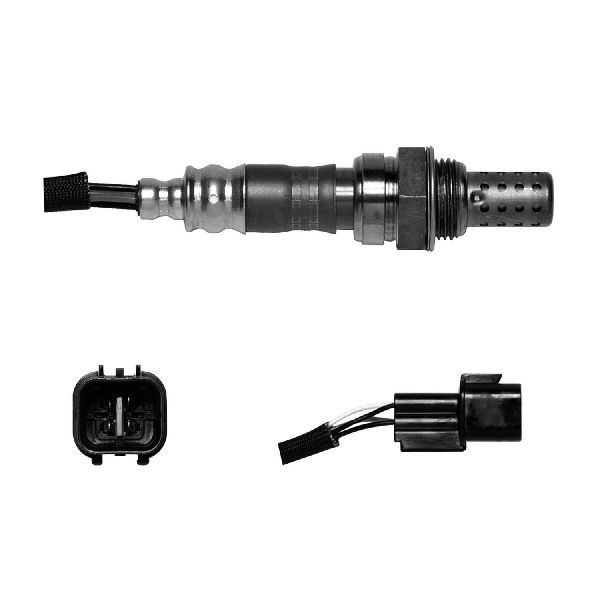
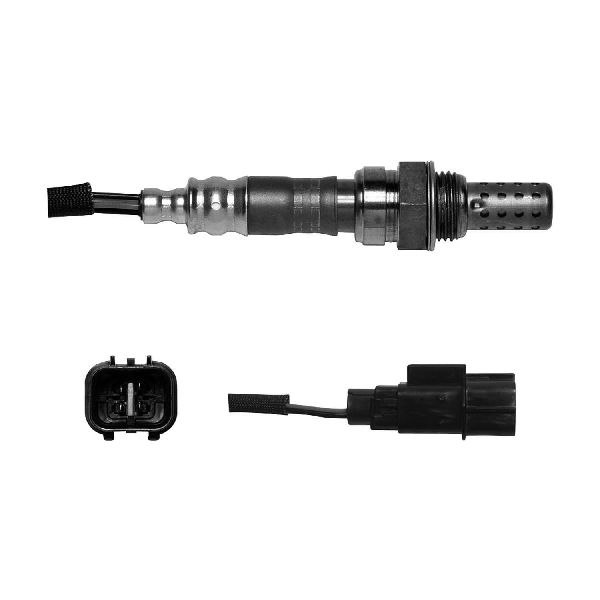
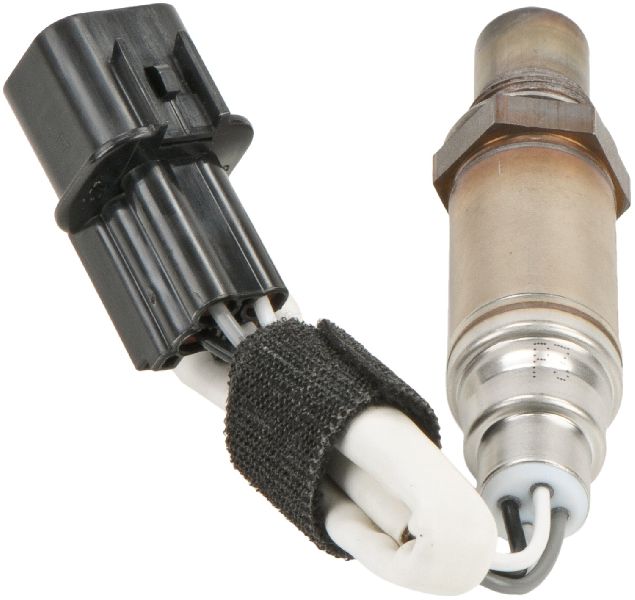
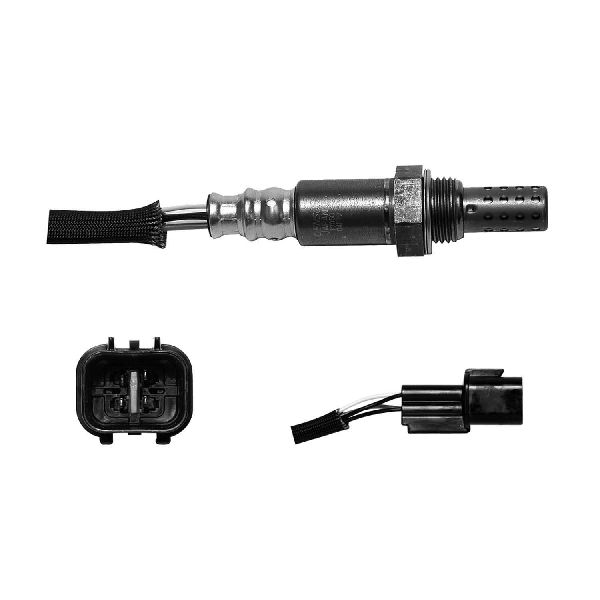
P0132 on a 2006-2012 Mitsubishi Eclipse almost always points to a failed upstream oxygen sensor (Bank 1, Sensor 1). The Powertrain Control Module (PCM) triggers this code when it sees a sensor voltage stuck above approximately 0.8V. Replacing this sensor is the most common fix. Expect to pay $60-$110 for a quality aftermarket sensor (like Denso or NGK/NTK) and $180+ for an OEM part. It's a DIY-friendly job if the sensor isn't seized, requiring a 22mm (7/8") O2 sensor socket.
- P0132 on your Eclipse almost certainly means you need a new upstream oxygen sensor (Bank 1, Sensor 1).
- For the 3.8L V6, Bank 1 is the rear bank of cylinders near the firewall, which is more difficult to access.
- Using a quality aftermarket brand like Denso or NGK is a cost-effective and reliable alternative to expensive OEM parts.
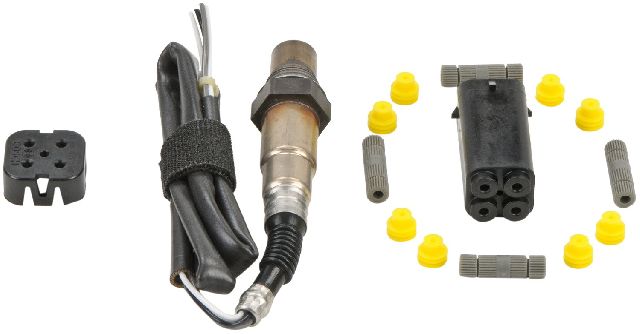
- Before buying a replacement, double-check the part number for your specific engine (2.4L I4 or 3.8L V6) as they are different.
- While you can drive with this code, fixing it promptly will restore fuel economy and prevent potential damage to your catalytic converter.
What's Unique About the 2006-2012 Mitsubishi Eclipse
The 2006-2012 Mitsubishi Eclipse (4G) uses a standard and reliable emissions system, and P0132 is a straightforward code on these cars. There are no widespread systemic flaws causing this code. For the V6 (6G75) engine, owners need to know that Bank 1 is the rear bank of cylinders against the firewall, which can be harder to access than Bank 2 at the front. For the 4-cylinder (4G69), there is only one bank, making identification simple. The most common cause is simply an aged oxygen sensor failing due to heat and contamination cycles.
Symptoms You May Notice
- Check Engine Light is on
- Decreased fuel economy
- Rough or unstable idle
- Engine hesitation or stumbling during acceleration
- Black smoke from the exhaust in severe cases
- Smell of raw fuel
- Replacing the wrong oxygen sensor (e.g., the downstream Sensor 2, or the sensor on Bank 2 for V6 models). P0132 is specifically for Bank 1, Sensor 1.
- Replacing the catalytic converter. A bad converter is typically indicated by codes like P0420 or P0421, not P0132.
Most Likely Causes
- Failed Upstream Oxygen Sensor (Bank 1, Sensor 1) 🔴 High Probability Oxygen sensors are wear-and-tear items that degrade over time from heat and contaminants. After 80,000+ miles, an internal short-circuit becomes a common failure mode, causing the sensor to output a constant high voltage.
How to confirm: Use an OBD-II scanner to monitor live data for the B1S1 O2 sensor. If the voltage is stuck high (e.g., above 0.8V) and does not fluctuate rapidly, the sensor is bad. You can also test the sensor's internal heater circuit with a multimeter for proper resistance. A typical value is between 4.5 and 8.0 Ohms at room temperature.
Typical fix: Replace the Bank 1, Sensor 1 oxygen sensor. For the 2.4L I4, this is the upstream sensor in the exhaust manifold. For the 3.8L V6, this is the upstream sensor on the rear exhaust manifold near the firewall. A 22mm or 7/8" oxygen sensor socket is required.
Est. part cost: $60 - $250 - Wiring or Connector Damage 🟡 Medium Probability The O2 sensor wiring harness is routed near hot exhaust components. Over time, the protective loom can become brittle, allowing wires to melt and short to power, which can cause a constant high voltage signal.
How to confirm: Visually inspect the entire wiring harness from the O2 sensor to the main engine harness. Look for melted plastic, frayed wires, or green corrosion inside the connector plug. Use a multimeter to check for a short-to-power on the signal wire.
Typical fix: Repair the damaged section of the wiring harness or replace the connector pigtail.
Est. part cost: $10 - $50 - Engine Running Rich ⚪ Low Probability Less common, but issues like a leaking fuel injector or a faulty fuel pressure regulator can cause a genuinely rich condition that the O2 sensor is correctly reporting. This is usually accompanied by other codes.
How to confirm: This is less likely if P0132 is the only code present. If other codes like P0172 (System Too Rich) are also stored, investigate the fuel system. Check fuel pressure and monitor long-term fuel trims.
Typical fix: Replace the leaking fuel injector or faulty fuel pressure regulator.
Est. part cost: $70 - $300
Rare But Worth Checking
- Exhaust Leak Before the O2 Sensor: An exhaust leak from the manifold or gasket can sometimes draw in outside air, confusing the sensor and causing erratic readings, although this more commonly triggers lean codes (like P0131).
- Faulty Engine Control Module (ECM): This is very rare. The ECM's internal circuit for the O2 sensor can fail, but all other possibilities should be exhausted before condemning the ECM.
Diagnosis Steps
- Read the code with an OBD-II scanner and confirm P0132 is present. Note any other codes.
- Use the scanner's live data function to observe the voltage of 'O2S11' (Oxygen Sensor Bank 1 Sensor 1). A healthy sensor's voltage should fluctuate rapidly between approximately 0.1V and 0.9V. If it is stuck high (e.g., >0.8V), the sensor or its circuit is faulty.
- Turn off the engine and allow the exhaust to cool.
- Locate Bank 1, Sensor 1. On the 2.4L I4, it's the sensor in the exhaust manifold before the catalytic converter. On the 3.8L V6, it's the sensor in the rear exhaust manifold (near the firewall).
- Inspect the sensor's wiring harness and connector for any signs of melting, chafing, corrosion, or loose pins.
- If the wiring looks good, the most probable cause is the sensor itself. Proceed with replacement. Use a 22mm (7/8") O2 sensor socket. Penetrating fluid may be needed if the sensor is seized.
- If a new sensor does not fix the issue, perform a detailed check of the wiring harness for a short-to-power. This involves using a multimeter to check the signal wire between the ECM connector and the sensor connector.
- If wiring and sensor are confirmed good, investigate potential rich conditions (fuel pressure, injectors).
- Only consider the ECM as the fault after all other possibilities have been ruled out.
Parts You'll Likely Need
- Upstream Oxygen Sensor (Bank 1, Sensor 1) for 2.4L I4 (4G69)
(OEM #MN183469)— This is the primary sensor for fuel trim on the 4-cylinder engine and is the most common failure point for code P0132.
Trusted brands: Denso (234-4317), NGK/NTK (24626)
OEM price range: $180-$250
Aftermarket price range: $60-$90 - Upstream Oxygen Sensor (Bank 1, Sensor 1) for 3.8L V6 (6G75)
(OEM #MN158670)— This is the fuel control sensor for the rear bank of cylinders (firewall side) and is the most common failure point for code P0132 on the V6 model.
Trusted brands: Denso (234-4741), NGK/NTK (24653)
OEM price range: $200-$300
Aftermarket price range: $70-$110
Related Codes That Often Appear With This One
- P0172 — If the engine is genuinely running rich, you may also see a P0172 (System Too Rich Bank 1) code, which points towards a fuel delivery problem rather than just a sensor fault.
- P0133 — P0133 (O2 Sensor Circuit Slow Response) can sometimes accompany P0132 as it indicates the sensor is degraded and not performing correctly.
Technical Service Bulletins (TSBs) & Recalls
- TSB-13-15-001: Details a warranty extension for catalytic converters on certain vehicles and specifies that for a 2006 Eclipse V6 with codes P0421 or P0431, the tech must first ensure recall EMR-06-002 (PCM reprogramming) has been completed before replacing parts.
Platform-Specific Known Issues
- For 2006 Eclipse V6 models, a related Technical Service Bulletin (TSB-13-15-001) addresses catalytic converter efficiency codes (P0421/P0431) and mandates checking if a prior PCM reprogramming recall (EMR-06-002) was performed. While not directly for P0132, this indicates that ensuring the PCM software is up-to-date is a crucial first step on these specific vehicles if any emissions codes are present.
Mechanic-Grade Diagnostic Values
- Heated Oxygen Sensor (Front) Heater Resistance — expected: 4.5 - 8.0 Ω at 20°C (68°F). Failure: A reading outside this range indicates a faulty heater element within the sensor.
- P0132 DTC Set Condition (ECM/PCM Logic) — expected: Sensor output voltage must be less than 1.2V or 1.8V (depending on ECU version).. Failure: The ECM/PCM will set code P0132 if the front O2 sensor output voltage remains higher than 1.2V or 1.8V for more than 2 seconds.
Wiring & Ground Locations
- ECM Connector B-108 (V6) / B-09 (I4) — Located at the Engine Control Module (ECM), typically behind the passenger side kick panel or center console area.. This is the main connector where the O2 sensor signals terminate. Probing here is the final step to confirm if a wiring fault exists or if the ECM itself is the issue.
- O2 Sensor Signal Wire Pin (V6) — For the V6 (6G75), the Bank 1 Sensor 1 signal wire is on Pin 72 of the PCM connector. The sensor ground is on Pin 57.. When diagnosing a persistent P0132 after sensor replacement, you must test for a short-to-power on the signal wire (Pin 72) between this connector and the sensor harness.
- O2 Sensor Signal Wire Pin (I4) — For the I4 (4G69), the Bank 1 Sensor 1 signal wire is on Pin 38 of the ECM connector. The sensor ground is on Pin 39.. To definitively rule out a wiring issue, check for continuity and shorts on the circuit between the sensor connector and these specific pins at the ECM.
- Engine/Chassis Grounds — Key grounds are located on the firewall behind the battery, from the battery to the transmission case, and from the valve cover to the chassis near the motor mount.. The O2 sensor circuit relies on a clean ground path to the ECM. Corroded or loose grounds can introduce voltage offsets and cause erratic sensor readings, potentially contributing to codes like P0132.
Model Year Variations Within This Range
- 2009-2012: The Eclipse received a facelift in 2009. For the GT V6 model, this included a new dual exhaust system which increased horsepower from 263 to 265 hp and torque from 260 to 262 lb-ft. While this change does not directly affect the P0132 diagnosis, it's a key identifier for post-facelift models.
Diagnostic Flowchart
Other Known Issues on This Vehicle
Issues unrelated to this code that are worth knowing about as an owner of this generation:
- Clear Coat / Paint Failure 🟠 Medium — Very common, especially on horizontal surfaces (hood, roof, trunk) and with specific colors like pearlescent orange. Can start appearing after 5-7 years.
- Cracked Dashboard 🟠 Medium — Widespread issue where the dashboard material becomes brittle from sun exposure and develops cracks, particularly around the passenger airbag area.
- Spongy or Inconsistent Brakes 🔴 High — Numerous owner complaints regarding a spongy brake pedal feel, often linked to the ABS unit. A recall was issued for 2006-2009 models for potential internal valve seizure in the ABS unit due to corrosion. (Ref: NHTSA Action Number: EA09003, Recall: 09V124000)
- 6G75 V6 Timing Belt Maintenance 🔴 High — The 6G75 is an interference engine, meaning if the timing belt breaks, catastrophic engine damage will occur. The replacement interval is critical (typically 60,000-100,000 miles, check manual) and is a significant maintenance cost.
- Sunroof Mechanism Failure 🟡 Low — Some owners report issues with the sunroof getting stuck or making clicking noises, often requiring guide rail or motor repair.
Used vs. New Parts: Buying Guide for This Vehicle
When a used part is the smart pick: For this repair, using a used part is generally not recommended. The primary cause is a failed oxygen sensor, which is a wear-and-tear item. A used sensor from a junkyard has unknown remaining life and may fail soon after installation.
Donor-vehicle mileage cap: roughly under 50000 miles for the part to have meaningful remaining life.
What to inspect on the donor part:
- If considering a used sensor, choose one from a low-mileage, collision-damaged vehicle rather than a high-mileage car.
- Inspect the used sensor's tip for heavy carbon deposits or white contamination, which indicate a poor-running donor engine or coolant leaks.
- Check the wiring pigtail for any signs of melting, brittleness, or previous repairs.
Aftermarket brands forum-validated for this vehicle:
- Denso
- NGK/NTK
Brands owners have reported issues with on this vehicle:
- Unnamed or 'white-box' ultra-cheap sensors from online marketplaces are frequently reported on forums to have high failure rates or incorrect calibration, causing the code to return.
Real Owner Stories
Aggregated from forums and TSBs cited above. Mileages and costs reflect what owners reported in those sources.
2006 Mitsubishi Eclipse GS 2.4L I4
Symptoms: The owner noted the process of removing and installing all four O2 sensors, specifically highlighting that sensors can become seized and may require a torch for removal.
What fixed it: Replacement of the O2 sensors using a 22mm (7/8") socket.
Source hint: youtube.com video titled 'Removal+Install All 4 O2 Sensors|4G Eclipse GS'
2006-2012 Mitsubishi Eclipse (General) — ~85000 miles
Symptoms: P0132 code present; sensor outputting a constant high voltage due to an internal short-circuit.
What fixed it: Replacing the Bank 1, Sensor 1 oxygen sensor with a Denso or NGK/NTK unit.
Source hint: club4g.org forum threads
2006-2012 Mitsubishi Eclipse (General)
Symptoms: Scanned the vehicle and found P0132 (bank 1 sensor 1 circuit high) along with P0152, P0138, P0158, P1128, P1129, P0300, and P0507.
What fixed it: Removed valve covers (part of a larger diagnostic and repair documented by service invoice).
Source hint: nhtsa_complaint: CSAI Auto Service (Repair Invoice)
Related OBD-II Codes
Frequently Asked Questions
I have a 2006 Eclipse V6 with emissions codes; should I check for any software updates before replacing the O2 sensor?
Where is the Bank 1 Sensor 1 located on my 3.8L V6 Eclipse?
Where is the Bank 1 Sensor 1 located on my 2.4L I4 Eclipse?
What brand of oxygen sensor is recommended for the 4th Gen Eclipse to fix P0132?
What tools do I need to replace the upstream O2 sensor on my Eclipse?
Can a bad O2 sensor cause my Eclipse to have a rough idle and smell like gas?
Helpful Videos
We Have This Part in Stock

The information in this article is provided for general reference and educational purposes only. Vehicle specifications, procedures, and part compatibility can vary by production date, trim level, and region. Always consult your vehicle's factory service manual and verify part numbers before purchasing or performing repairs. Safety-critical components such as airbags, seat belts, and braking systems should be installed by a qualified professional.
- Mitsubishi Eclipse:
- 🎬 Helpful Videos
- 🛍️ Shop This Part
- What's Unique About the 2006-2012 Mitsubishi Eclipse
- Symptoms You May Notice
- Most Likely Causes
- Rare But Worth Checking
- Diagnosis Steps
- Parts You'll Likely Need
- Related Codes That Often Appear With This One
- Technical Service Bulletins (TSBs) & Recalls
- Platform-Specific Known Issues
- Mechanic-Grade Diagnostic Values
- Wiring & Ground Locations
- Model Year Variations Within This Range
- Diagnostic Flowchart
- Other Known Issues on This Vehicle
- Used vs. New Parts: Buying Guide for This Vehicle
- Real Owner Stories
- 2006 Mitsubishi Eclipse GS 2.4L I4
- 2006-2012 Mitsubishi Eclipse (General) — ~85000 miles
- 2006-2012 Mitsubishi Eclipse (General)
- Related OBD-II Codes
- Frequently Asked Questions
- 🎟️ Get 5% Off