

P0132 on 2013-2016 Ford Escape 2.0L: Causes and Fixes for O2 Sensor High Voltage
P0132 on a 2013-2016 Ford Escape with the 2.0L engine typically indicates a failed upstream oxygen sensor (Bank 1, Sensor 1) or a wiring issue. Replacing the sensor is the most common fix, with parts costing between $50 and $150. Before replacing, check for wiring damage and loose PCM grounds.
- P0132 means the upstream oxygen sensor (Bank 1, Sensor 1) signal is stuck high.
- The most likely cause is a failed oxygen sensor, which is a standard wear item.
- Before replacing the sensor, always inspect the wiring and connector for damage, melting, or corrosion, as this is a known Ford issue.
- Use a scanner's live data to confirm the sensor's voltage is stuck high (above 0.8V) before buying parts.
- If code P0172 (System Too Rich) is also present, investigate the fuel system for the root cause before suspecting the O2 sensor.
What's Unique About the 2013-2016 Ford Escape
While a failed O2 sensor is a common cause for P0132 on any vehicle, it's worth noting that Ford has issued Technical Service Bulletins (TSBs) for other models that cite water intrusion into the O2 sensor's electrical connector as a cause for this and related codes. This suggests that a thorough inspection of the wiring harness and connector for moisture or corrosion is a particularly important diagnostic step on Ford vehicles like the Escape. More specifically for this platform, a well-documented owner experience on a 2013 Escape 2.0L found the root cause to be a loose PCM ground wire located under the airbox, which highlights the sensitivity of the electrical system. Key grounds to check include G105 and G108 in the engine compartment.
Symptoms You May Notice
- Check Engine Light (MIL) is on
- Reduced fuel economy
- Rough or fluctuating idle
- Engine hesitation or stumbling on acceleration
- Smell of gasoline or 'rotten eggs' from the exhaust
- Black smoke from the exhaust in some cases
- Replacing the downstream (Sensor 2) oxygen sensor instead of the upstream (Sensor 1) sensor.
- Replacing the catalytic converter, which is expensive and typically associated with code P0420, not P0132.
- Replacing the O2 sensor without first checking the wiring for shorts, verifying PCM grounds, or confirming the engine is not in a true rich-running condition.
Most Likely Causes
- Failed Upstream Oxygen Sensor (Bank 1, Sensor 1) 🔴 High Probability Oxygen sensors are wear-and-tear components that fail over time due to constant exposure to high heat and exhaust contaminants. An internal short in the sensor's element or heater circuit is a common failure mode that causes the signal to stick high.
How to confirm: Use an OBD-II scanner to view live data for the 'O2S11' voltage. On a warm engine, the voltage should fluctuate rapidly between ~0.1V and ~0.9V. If it is stuck high (e.g., >0.8V) and not switching, the sensor has likely failed.
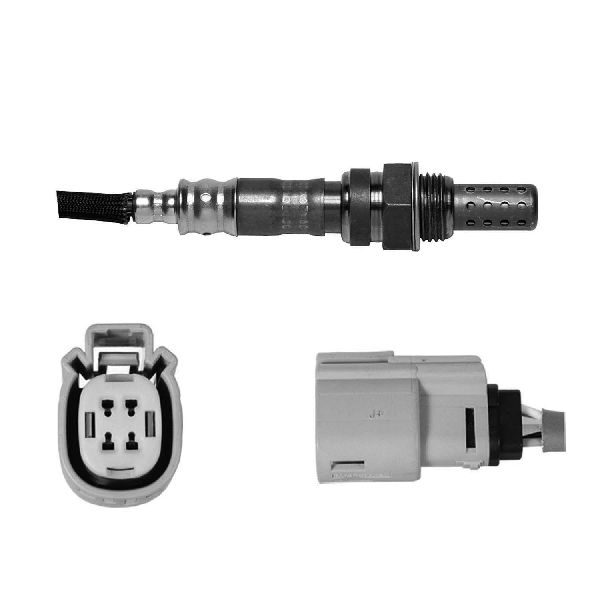
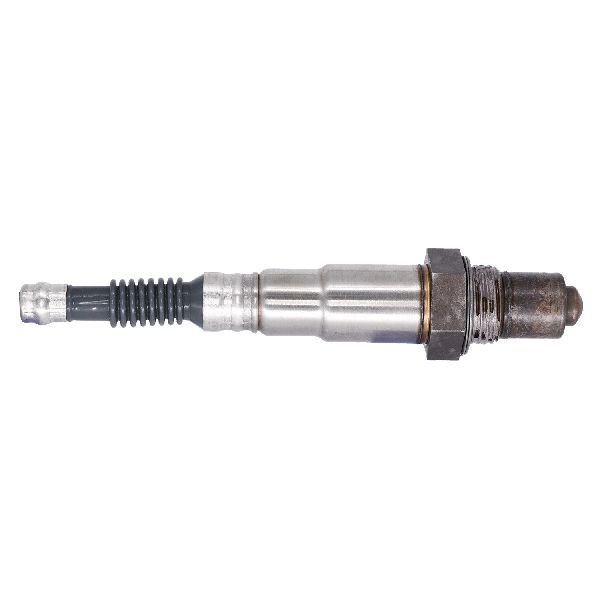
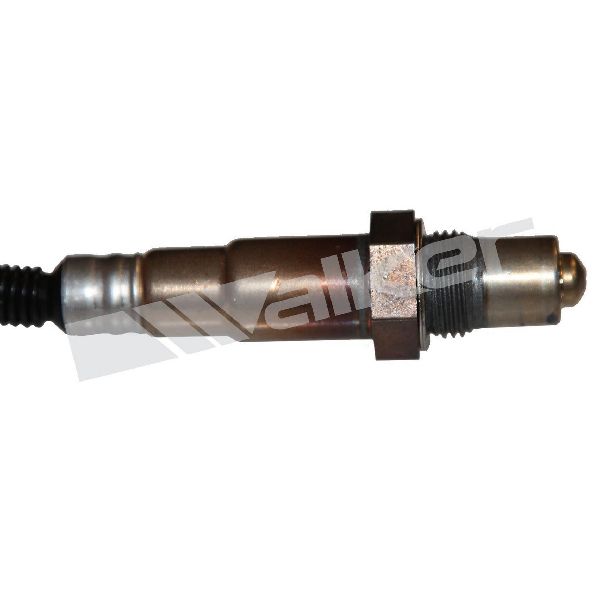
Typical fix: Replace the upstream oxygen sensor. The OEM part for the 2013-2016 Escape 2.0L is Motorcraft DY1199. The sensor is located on the exhaust manifold, and access can be tight.
Est. part cost: $50-$120 - Wiring or Connector Damage 🟡 Medium Probability The wiring harness is close to the hot exhaust and can become melted, frayed, or corroded. Ford TSBs on other models point to water intrusion in the connectors as a known issue leading to this code. The main inline harness connector for the upstream sensor is C134; this is a common point for corrosion or pin damage.
How to confirm: Visually inspect the entire wiring harness from the sensor to the PCM. Check connector C134 for bent or corroded pins, and signs of moisture. Check for a short-to-voltage on the signal wire.
Typical fix: Repair the damaged section of the wiring harness or clean/replace the connector. Ensure the harness is properly secured away from heat sources.
Est. part cost: $10-$50 - Engine Running Rich ⚪ Low Probability While less common for a standalone P0132, a genuinely rich condition from a leaking fuel injector or faulty EVAP purge valve can cause the O2 sensor to correctly report high voltage. The EVAP purge valve is a known failure point on this platform.
How to confirm: Check for other codes, especially P0172 (System Too Rich). Monitor short-term (STFT) and long-term (LTFT) fuel trims; large negative numbers (e.g., -15% or more) indicate the PCM is trying to correct a rich condition.
Typical fix: Diagnose the root cause of the rich condition, such as replacing a leaking fuel injector or a faulty EVAP purge valve, before replacing the O2 sensor.
Est. part cost: $50-$250
Rare But Worth Checking
- Loose PCM Ground Wire: A documented case on a 2013 Escape 2.0L showed that a loose ground wire for the Powertrain Control Module (PCM) located under the airbox caused a P0132 code. This should be checked if a new sensor and wiring inspection don't solve the issue. Key grounds are G105 (inner fender) and G108 (near PCM).
- Exhaust Leak: An exhaust leak before the O2 sensor can introduce outside air, confusing the sensor and potentially causing erratic readings, though this more commonly leads to lean codes (like P0131) rather than a high voltage P0132.
- Blown O2 Sensor Fuse: The O2 sensor heater circuits are powered by a fuse. On this model Escape, this is typically fuse F33 (a 15A fuse) in the under-hood fuse box. If this fuse is blown, it can cause erratic sensor readings, including P0132, often paired with a heater circuit code like P0135.
- Faulty Powertrain Control Module (PCM): In very rare cases, the PCM itself may have a fault in its voltage regulation or sensor interpretation circuits. This should only be considered after all other possibilities have been exhausted.
Diagnosis Steps
- Read all stored fault codes with an OBD-II scanner. Note any other codes that appear with P0132, especially P0135 or P0172.
- Using the scanner's live data function, monitor the voltage for 'O2S11' (Bank 1, Sensor 1) with the engine warm and running.
- Confirm if the voltage is stuck high (e.g., >0.8V) and not fluctuating. A healthy sensor's voltage should switch rapidly between approximately 0.1V and 0.9V.
- Perform a thorough visual inspection of the O2 sensor's wiring harness and connector (C134). Look for melting, chafing, corrosion, or signs of water intrusion.
- Check the O2 sensor heater fuse (F33, 15A) in the engine compartment fuse box.
- If wiring and fuse are good and the sensor voltage is stuck high, the sensor is the most likely culprit.
- If other codes like P0172 are present, investigate potential causes of a rich condition (e.g., fuel pressure, leaking injectors, EVAP purge valve) before replacing the O2 sensor. Check fuel trims for large negative values.
- As a final check, inspect the PCM ground wire connection points (G105, G108) for tightness and corrosion. The main one is located under the airbox.
Parts You'll Likely Need
- Upstream Oxygen Sensor
(OEM #DY1199)— This is the most common cause of a P0132 code. The sensor fails internally from age and heat, causing its signal to short and remain high.
Trusted brands: Motorcraft (OEM), Bosch, Denso, NGK/NTK
OEM price range: $70-$120
Aftermarket price range: $50-$90
Related Codes That Often Appear With This One
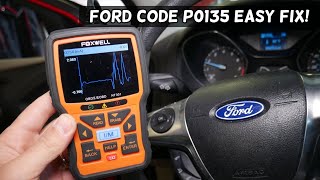
- P0135 — This code indicates a fault in the heater circuit of the same O2 sensor. Seeing them together strongly suggests the sensor itself has failed internally. A YouTube user with a 2013 Escape reported both codes appearing together.
- P0172 — This code means 'System Too Rich'. If seen with P0132, it's a major clue that the O2 sensor is likely working correctly and reporting a real rich condition. The cause is likely in the fuel system (e.g., injector, purge valve), not the O2 sensor.
- P2196 — This code means 'O2 Sensor Signal Biased/Stuck Rich' and is functionally very similar to P0132, pointing to the same set of causes.
Technical Service Bulletins (TSBs) & Recalls
- TSB-14-0129: Notes that DTC P0132 may be stored in the PCM, causing the MIL to illuminate on 2013 Escape, Fusion, and MKZ models.
- TSB 21-2090: Mentions P0132 may be caused by water intrusion into the heated oxygen sensor connector on some Ford models.
- TSB 20-2380: Also links P0132 to potential water intrusion in the O2 sensor connector on certain Ford engines.
Platform-Specific Known Issues
- TSB TSB-14-0129 was issued by Ford for 2013 models, noting that DTC P0132 can be stored in memory and illuminate the check engine light.
- While not for the Escape specifically, TSB 21-2090 and TSB 20-2380 for Ford trucks indicate that P0132 can be caused by water intrusion into the heated oxygen sensor connector, which is a valuable diagnostic clue for any Ford product.
- A documented repair on a 2013 Escape 2.0L found the cause to be a loose PCM ground wire under the airbox, suggesting electrical grounding (specifically points G105/G108) should be verified during diagnosis.
Mechanic-Grade Diagnostic Values
- Upstream O2 Sensor (HO2S B1S1) Live Data Voltage — expected: Fluctuating rapidly between ~0.1V and 0.9V on a warm, closed-loop engine.. Failure: Voltage is stuck high, consistently above 0.8V, and does not switch.
- Upstream O2 Sensor (HO2S B1S1) Heater Element Resistance — expected: Between 3 and 30 Ohms when measured cold across the two same-colored wires on the sensor connector.. Failure: A reading of OL (infinite resistance) for an open circuit or near 0 Ohms for a shorted circuit.
- Heater Circuit Power Supply Voltage — expected: 10.5V or higher with Key On, Engine Off (KOEO) at the harness connector.. Failure: Voltage below 10.5V, indicating a problem with the power supply circuit or fuse F33.
- Long Term Fuel Trim (LTFT) for Bank 1 — expected: Close to 0%, typically within +/- 10%.. Failure: Large negative numbers (e.g., -15% or more) indicate the PCM is compensating for a true rich condition, suggesting the O2 sensor is reporting correctly.
Scan Tool Commands That Help
- FORScan / Ford IDS: Keep Alive Memory (KAM) Reset — Should be performed after replacing the O2 sensor or fixing a related fuel system issue. It clears the long-term fuel trim adaptations, allowing for a faster relearn process and verification of the repair.
- FORScan / Ford IDS: O2 Sensor Heater Test — This is a bidirectional command that allows the technician to command the O2 sensor's internal heater on and off to verify the integrity of the heater circuit (power, ground, and control).
Wiring & Ground Locations
- G105 — Located in the left (driver's side) rear of the engine compartment, often on the inner fender near the shock tower.. This is a primary PCM and sensor ground point. A loose or corroded connection here can create a floating ground, causing erratic voltage readings for multiple sensors, including the upstream O2 sensor, leading to a false P0132 code.
- G108 — Located in the left rear of the engine compartment, near the PCM.. Serves as another critical ground for the PCM. Like G105, poor contact at this location can cause a wide range of difficult-to-diagnose electrical faults.
- Connector C134 — The main inline harness connector for the upstream O2 sensor, situated between the sensor pigtail and the main engine harness.. This is a common point for corrosion, moisture intrusion, or pin damage. All voltage and resistance tests of the sensor vs. the harness should be performed at this connector.
- PCM Connector C175B — The black connector at the Powertrain Control Module (PCM), located in the engine compartment.. This is the final destination for the O2 sensor signal. Advanced diagnostics may require back-probing pins at this connector to verify signal integrity all the way to the PCM.
Real Owner Repair Stories
- Go-Parts article citing a dealership repair (2013 Ford Escape 2.0L EcoBoost) — Check Engine Light with P0132 and other electrical fault codes.
❌ Tried (didn't work) Initial diagnosis at a dealership that took four weeks without a resolution.
✅ What actually fixed it The final cause was a loose PCM ground wire located below the air-box. The wire was not making good contact with the vehicle chassis. Tightening the ground connection resolved the P0132 code and all other electrical issues. - YouTube user 'Hernandez' (2013 Ford Escape SEL) — Check Engine Light with codes P0132 and P0135.
❌ Tried (didn't work) Resetting the codes, which resulted in only P0135 returning initially, but the light came back on.
✅ What actually fixed it Replaced both the upstream (Motorcraft DY1199) and downstream (Motorcraft DY1202) oxygen sensors to be safe, which resolved the codes.
When the Usual Fixes Don't Work
- While replacing the O2 sensor is the most common fix, a significant number of cases, particularly on Ford platforms, are resolved by addressing electrical issues. One documented repair for a 2013 Escape 2.0L with P0132 was not the sensor itself, but a loose PCM ground wire under the airbox. This highlights that before spending money on a new sensor, a thorough inspection of the wiring harness for damage and key ground points (G105, G108) for tightness and corrosion is a critical, and often overlooked, diagnostic step.
OEM Part Supersession History
DS7Z9F472A→Motorcraft DY1199— Standard part number transition from Ford engineering number to Motorcraft service part number.
Heads up: Some owners have reported issues with aftermarket sensors, particularly certain Bosch models, causing persistent heater circuit codes. Using the OEM Motorcraft part or a known-good equivalent like NTK/Denso is recommended to ensure compatibility.
Diagnostic Flowchart
Other Known Issues on This Vehicle
Issues unrelated to this code that are worth knowing about as an owner of this generation:
- Coolant Intrusion into Cylinders 🔴 High — A known, albeit less common, issue on the 2.0L compared to the 1.5L/1.6L. A defect in the engine block design can allow coolant to leak into the cylinders, leading to misfires, white exhaust smoke, and eventual engine failure. (Ref: While multiple TSBs exist for the 1.5L/1.6L engines, the 2.0L is also affected. A class-action lawsuit covers this issue.)
- 6F35 Transmission Shudder/Failure 🟠 Medium — Commonly reported, especially in 2013-2014 models. Symptoms include harsh shifting, shuddering on acceleration, and eventual loss of gears. Often linked to internal wear or torque converter issues. (Ref: Multiple TSBs were issued for software updates and addressing fluid leaks, but some vehicles require significant hardware repair or replacement.)
- AWD Power Transfer Unit (PTU) Failure 🟠 Medium — The PTU (transfer case) on AWD models can fail prematurely. Ford's claim of "lifetime fluid" is a contributing factor; the fluid overheats and breaks down, leading to gear and bearing failure. Regular fluid changes are recommended preventative maintenance.
- Fuel Odor in Cabin 🟡 Low — Some owners report a smell of raw fuel, particularly at idle. This was addressed by a TSB for the 2.0L EcoBoost. (Ref: TSB 15-0096 points to a failing PCV hose as the cause.)
Used vs. New Parts: Buying Guide for This Vehicle
When a used part is the smart pick: For this repair, a used part only makes sense for the wiring harness pigtail or connector (e.g., C134) if it is damaged. The oxygen sensor itself is a wear-and-tear component and should always be purchased new.
Donor-vehicle mileage cap: roughly under 80000 miles for the part to have meaningful remaining life.
What to inspect on the donor part:
- For a wiring pigtail, inspect for any signs of melting, brittleness, or previous repairs.
- Ensure the connector's locking tab is intact and not broken.
- Check the connector pins to ensure they are straight, clean, and free of corrosion.
Aftermarket brands forum-validated for this vehicle:
- NTK/NGK
- Denso
- Bosch (ensure it is an exact-fit model, as universal types can cause issues)
Brands owners have reported issues with on this vehicle:
- Unbranded, 'white-box' parts from online marketplaces have a high failure rate and may not meet OEM specifications for heater resistance or signal accuracy.
Real Owner Stories
Aggregated from forums and TSBs cited above. Mileages and costs reflect what owners reported in those sources.
2013 Ford Escape 2.0L EcoBoost
Symptoms: Check engine light on with codes P0132 and P0135 stored in the PCM.
What fixed it: Replacement of the upstream oxygen sensor (Bank 1, Sensor 1) using OEM part DY1199.
Source hint: fordescape.org thread titled 'P0132 and P0135 O2 Sensor Bank 1 Sensor 1'
2013 Ford Escape 2.0L EcoBoost
Symptoms: P0132 code present; diagnostic investigation into electrical grounds.
What fixed it: Tightening and cleaning a loose PCM ground wire (G105/G108) located under the airbox.
Source hint: vehicle_specific_issues
2013 Ford Escape 2.0L EcoBoost
Symptoms: Check engine light (MIL) illuminated with P0132 stored in memory.
What fixed it: Performed repairs as outlined in TSB-14-0129.
Source hint: TSB-14-0129
2013 Ford Escape 2.0L EcoBoost
Symptoms: P0132 and P0135 codes; owner performed a DIY replacement of sensors.
What fixed it: Replacement of both upstream (DY1199) and downstream (DY1202) oxygen sensors.
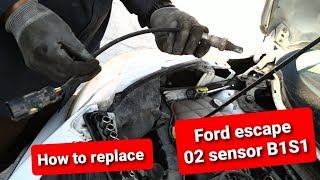
Source hint: YouTube video '2013 Ford Escape O2 Sensor Replacement'
Related OBD-II Codes
Frequently Asked Questions
Does TSB-14-0129 apply to my 2013 Ford Escape 2.0L?
What is the specific Motorcraft part number for the upstream oxygen sensor on my 2.0L EcoBoost?
Could a problem with my airbox or grounding cause a P0132 code?
I'm seeing P0132 and P0135 together; is this common for the Escape?
Can water getting into the engine bay cause this sensor code?
Which connector should I check for corrosion if I suspect wiring issues?
Is there a fuse I should check before replacing the sensor?
Helpful Videos
We Have This Part in Stock

The information in this article is provided for general reference and educational purposes only. Vehicle specifications, procedures, and part compatibility can vary by production date, trim level, and region. Always consult your vehicle's factory service manual and verify part numbers before purchasing or performing repairs. Safety-critical components such as airbags, seat belts, and braking systems should be installed by a qualified professional.
- Ford Escape:
- 🎬 Helpful Videos
- 🛍️ Shop This Part
- What's Unique About the 2013-2016 Ford Escape
- Symptoms You May Notice
- Most Likely Causes
- Rare But Worth Checking
- Diagnosis Steps
- Parts You'll Likely Need
- Related Codes That Often Appear With This One
- Technical Service Bulletins (TSBs) & Recalls
- Platform-Specific Known Issues
- Mechanic-Grade Diagnostic Values
- Scan Tool Commands That Help
- Wiring & Ground Locations
- Real Owner Repair Stories
- When the Usual Fixes Don't Work
- OEM Part Supersession History
- Diagnostic Flowchart
- Other Known Issues on This Vehicle
- Used vs. New Parts: Buying Guide for This Vehicle
- Real Owner Stories
- 2013 Ford Escape 2.0L EcoBoost
- 2013 Ford Escape 2.0L EcoBoost
- 2013 Ford Escape 2.0L EcoBoost
- 2013 Ford Escape 2.0L EcoBoost
- Related OBD-II Codes
- Frequently Asked Questions
- 🎟️ Get 5% Off