

P0132 on 2005-2010 Chrysler 300 3.5L: O2 Sensor High Voltage Causes and Fixes
On a 2005-2010 Chrysler 300 with the 3.5L V6, code P0132 is most often caused by a failed upstream oxygen sensor on the passenger side. It's critical to use an OEM (Mopar) or OEM-equivalent (NTK, Denso) sensor, as these engines are known to be incompatible with many aftermarket brands. Expect to pay $40-$80 for a quality aftermarket part or $120-$180 for OEM. If a new, quality sensor doesn't fix the code, a short-to-power in the wiring harness due to melting is the next most likely cause.
- The most likely fix for P0132 on your Chrysler 300 is to replace the upstream oxygen sensor on the passenger side.
- Before replacing the sensor, carefully inspect its wiring harness for any signs of melting or oil contamination, as this is a common secondary cause.
- CRITICAL: Only use an OEM (Mopar) or OEM-equivalent (NTK, Denso) brand for the replacement sensor. Using other brands is very likely to cause the code to return.
- This is a DIY-friendly job for someone with basic tools, but an O2 sensor socket will make the job much easier.
- Do not ignore this code, as it will cause poor fuel mileage and can lead to costly catalytic converter damage over time.
What's Unique About the 2005-2010 Chrysler 300
The first-generation Chrysler 300's 3.5L V6 engine, and its platform mates like the Dodge Charger and Magnum, are notoriously sensitive to the brand of oxygen sensor used. Many owners report that using incorrect aftermarket brands, especially Bosch, will not fix the code and may even introduce new problems or cause the code to return immediately. Additionally, the wiring for the O2 sensors can be susceptible to melting or contamination from common oil leaks (like from valve cover gaskets or the oil filter housing), making a thorough wiring inspection a critical diagnostic step on this platform. The harness can melt internally, causing the O2 signal wire to short to a power source from a completely different circuit.
Symptoms You May Notice
- Check Engine Light is on
- Decreased fuel economy
- Rough or unstable idle
- Engine hesitation or stalling
- Intermittently unresponsive gas pedal
- Black smoke from the exhaust in some cases
- Bad or rotten egg smell from exhaust
- Replacing the O2 sensor with an incompatible aftermarket brand (e.g., Bosch). Many owners do this and the code returns, leading them to suspect other causes when the issue is the new part itself.
- Replacing the wrong oxygen sensor. The code is specific to Bank 1 (passenger side) and Sensor 1 (upstream, before the catalytic converter).
- Replacing the catalytic converter. This code points to a sensor circuit issue, not a bad converter. A faulty sensor can damage a converter over time, but the converter is not the cause of the code.
Most Likely Causes
- Failed Upstream Oxygen Sensor (Bank 1, Sensor 1) 🔴 High Probability Oxygen sensors are wear-and-tear items that typically have a service life of 70,000-100,000 miles. Given the age of this vehicle range, sensor failure is very common. Contamination from internal coolant leaks or excessive oil consumption can also shorten their life.
How to confirm: Use a scan tool to monitor live data for the B1S1 O2 sensor. If the voltage is stuck above 0.8V-0.9V and not fluctuating rapidly between ~0.1V and ~0.9V, the sensor is likely bad. Unplugging the sensor should cause the voltage to drop to a reference level (around 0.45V); if it does, the sensor is confirmed faulty.
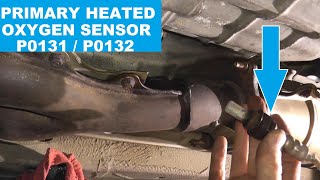
Typical fix: Replace the Bank 1, Sensor 1 oxygen sensor, located on the passenger side exhaust manifold. Use of an O2 sensor socket is highly recommended. 🎬 Watch: Step-by-step Chrysler 300 oxygen sensor replacement guide. Ensure replacement is with a Mopar, NTK, or Denso branded sensor.
Est. part cost: $40-$180 - Wiring Harness Damage or Short Circuit 🟡 Medium Probability The sensor wiring is routed near hot exhaust components and can be prone to melting. Oil leaks from valve cover gaskets or the oil filter housing O-rings can also drip onto the wiring, contaminating the connector and causing a short-to-power in the signal wire. The harness tape and insulation can break down over time, allowing multiple wires to melt and short together. 🎬 See how to diagnose circuit high codes on this platform.
How to confirm: Visually inspect the entire wiring harness from the O2 sensor to its connection point. Look for melted plastic, chafed wires, or oil saturation. If unplugging the sensor does NOT cause the high voltage reading on a scan tool to drop, you have a short-to-power in the harness. A definitive test is to disconnect both the O2 sensor and the PCM; if a multimeter shows voltage on the signal wire pin at the harness connector, it is shorted to another power source.
Typical fix: Repair or replace the damaged section of the wiring harness. If the connector is contaminated, clean it with electrical contact cleaner or replace the connector pigtail. In cases of extensive melting, sourcing a used harness from a salvage yard may be necessary.
Est. part cost: $10-$150 - Engine Running Rich ⚪ Low Probability
How to confirm: Check for other diagnostic trouble codes, such as P0172 (System Too Rich). Investigate fuel system components like leaking fuel injectors or a faulty fuel pressure regulator. A high fuel pressure reading would confirm this.
Typical fix: Diagnose and repair the root cause of the rich condition. This is not an O2 sensor problem, but a fuel system or other engine problem that the O2 sensor is correctly reporting.
Est. part cost: $50-$500+
Rare But Worth Checking
- Exhaust Leak (pre-sensor): While more likely to cause a low voltage code (P0131), a significant leak near the sensor manifold can sometimes disrupt readings and cause erratic behavior. Check for audible leaks or black soot marks around the exhaust manifold.
- Leaking or Shorted Fuel Injector: A fuel injector on Bank 1 that is leaking fuel or has an electrical short can cause a localized rich condition, which the O2 sensor will report as high voltage. This may be accompanied by a misfire code for a specific cylinder. TSB 18-031-03 discusses insulating an injector to prevent vapor lock, indicating injector-related issues are a known possibility.
- Faulty Powertrain Control Module (PCM): This is extremely rare. The PCM should only be considered after all other possibilities, including the sensor, wiring, and fuel system, have been definitively ruled out. A PCM failure is more likely if multiple unrelated codes are present. A Chrysler diagnostic chart lists PCM replacement as the final step after all wiring tests pass.
Diagnosis Steps
- Connect an OBD-II scanner and confirm P0132 is present. Check for any other codes and freeze frame data.
- View the live data stream for the 'O2S B1S1' (Bank 1, Sensor 1) voltage. Confirm it is stuck high, typically above 0.8V, and not fluctuating when the engine is warm and running.
- Perform a thorough visual inspection. Trace the wiring from the passenger side upstream O2 sensor. Look for any signs of melting, chafing, or fluid contamination from oil leaks, particularly from the valve cover or dripping down from the oil filter housing area.
- If the wiring looks good, perform a definitive test: with the engine running and scanner connected, carefully unplug the B1S1 sensor. If the voltage on the scanner drops to a reference value (around 0.45V), the sensor is bad. If the voltage stays high, the wiring harness is shorted to power. 🎬 Watch: How to test and replace a heated oxygen sensor.
- If a harness short is suspected, disconnect the PCM and the O2 sensor. Use a multimeter to check for any voltage on the O2 signal wire at the sensor connector. If voltage is present, it's confirmed to be shorted to another circuit in the harness.
- If wiring and the sensor test good, investigate rich running conditions. Check fuel pressure and look for leaking fuel injectors.
- Inspect for any exhaust leaks between the cylinder head and the O2 sensor.
- If the sensor is confirmed bad, proceed with replacement. If the wiring is bad, repair it.
Parts You'll Likely Need
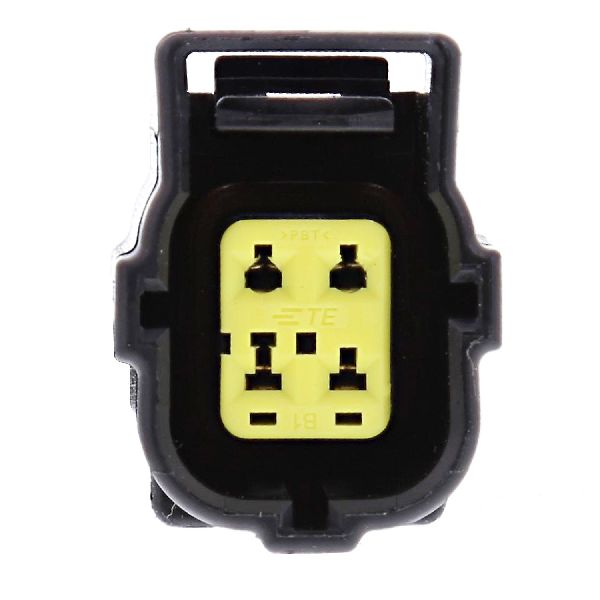
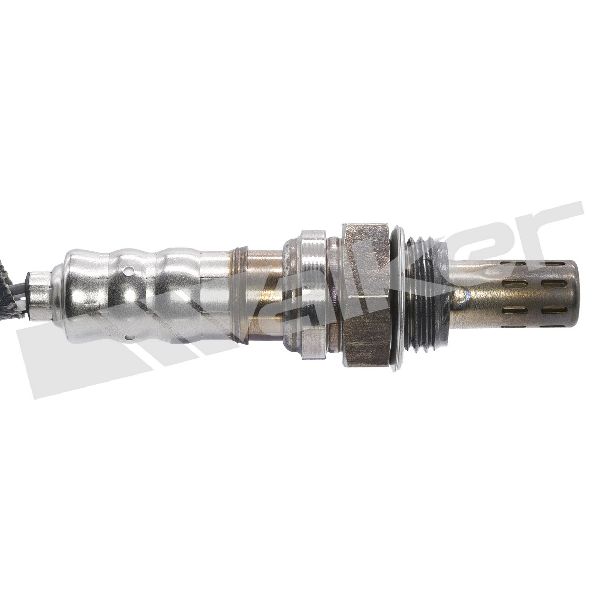
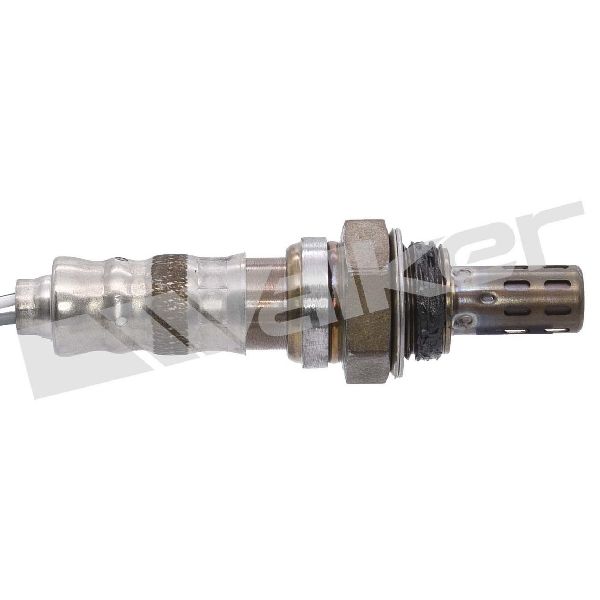
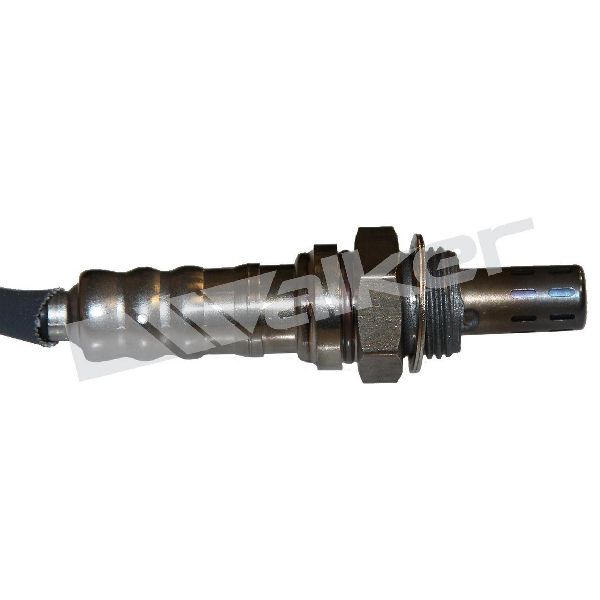
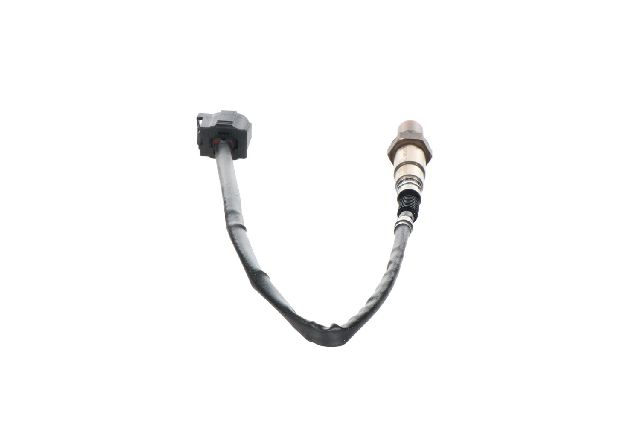
- Oxygen Sensor (Bank 1, Sensor 1)
(OEM #5149171AB)— This is the upstream sensor on the passenger side. It is the most common failure point for code P0132 and is a standard wear item.
Trusted brands: Mopar (OEM), NTK (P/N: 23159), Denso
OEM price range: $120-$180
Aftermarket price range: $40-$80
Related Codes That Often Appear With This One
- P0172 — If the engine is genuinely running rich due to a fuel system problem, you may also get a P0172 (System Too Rich Bank 1) code, as the O2 sensor is correctly reporting the rich condition.
- P0152 — This is the same high voltage code but for Bank 2 (driver's side). Seeing both codes together makes a single bad sensor less likely and points toward a systemic issue like high fuel pressure affecting both banks.
- P0420 — If the P0132 code is ignored for a long time, the resulting rich condition can overheat and damage the catalytic converter, eventually leading to a P0420 (Catalyst System Efficiency Below Threshold) code.
Technical Service Bulletins (TSBs) & Recalls
- TSB 18-031-03: While not for P0132 directly, this TSB addresses a rough idle after a hot soak on some Chrysler engines due to fuel vapor in injector #3. It involves installing an insulator sleeve. This highlights that injector-related issues can cause symptoms that might be misdiagnosed as sensor faults.
Platform-Specific Known Issues
- Extreme sensitivity to non-OEM oxygen sensors. Owners on multiple forums report that using brands other than Mopar, NTK, or Denso often results in the code returning.
- Oil leaks from the 3.5L V6 valve cover gaskets or oil filter housing can drip directly onto the O2 sensor wiring harness, causing shorts and triggering this code.
- The main engine wiring harness, which includes the O2 sensor circuits, is prone to internal melting from engine heat over time. This can cause the O2 signal wire to short to a power wire from an unrelated circuit, creating a high voltage condition that is impossible to fix by replacing the sensor alone.
Mechanic-Grade Diagnostic Values
- PCM Set Condition for P0132 — expected: Normal O2 sensor voltage fluctuates between ~0.1V and 0.9V.. Failure: The PCM flags P0132 when the O2 sensor voltage is detected above 3.7 volts for 60 seconds.
- O2 Sensor Heater Resistance — expected: 4 to 20 Ohms when measured across the two heater pins on the sensor.. Failure: A reading of OL (infinite resistance) indicates a burned-out heater element.
- O2 Signal Circuit (K141) Short-to-Voltage Test — expected: 0 Volts. Failure: With the O2 sensor and PCM disconnected, any voltage measured on the signal wire indicates a short to another power source within the harness.
- Scan Tool Voltage (B1S1) with Sensor Unplugged — expected: Voltage should drop to a PCM reference value, typically ~0.45V.. Failure: If voltage remains high (e.g., > 0.9V or higher), the signal wire is shorted to a power source in the harness.
Wiring & Ground Locations
- PCM (Powertrain Control Module) — Located in the engine compartment, on the right (passenger) side, near the firewall.. The PCM receives the signal from the O2 sensor and provides the sensor return ground. The harness connecting to it is a primary location for testing.
- O2 1/1 Signal Wire — This is the signal wire from the Bank 1 Sensor 1 O2 sensor to the PCM. On Chrysler NGC PCMs, this circuit is often designated K141.. This wire carries the voltage signal. A short-to-power on this specific wire is the direct cause of P0132 when the sensor itself is good.
- G102 (Ground) — Located on the right (passenger) side of the engine compartment.. This is a primary engine compartment ground point. While the O2 sensor has a dedicated return circuit to the PCM, a poor main engine ground can cause electrical noise and erratic behavior across multiple systems.
Real Owner Repair Stories
- NAXJA Forums user (1999 Jeep Cherokee (Uses similar Chrysler wiring principles and NGC-era computer logic)) — Persistent P0132 code. At one point, the engine shut off while driving and threw multiple high voltage codes for various sensors (P0108, P0123, P0118, etc.).
❌ Tried (didn't work) Replacing the O2 sensor with a Bosch brand part., Replacing the Bosch sensor with a Denso brand part., Replacing the Denso sensor with an NTK brand part., Repairing cracked/bare wires at the O2 sensor connector.
✅ What actually fixed it The owner discovered the code would set even with the O2 sensor completely unplugged, confirming a wiring issue. After extensive diagnosis, they found that engine heat had melted the main wiring harness internally, causing the O2 sensor signal wire to short against other power-carrying wires. The final fix required replacing the affected section of the engine wiring harness. - ChryslerForum.com user 'momzilla' (2005 Chrysler Pacifica 3.5L) — Car would intermittently stall, and the gas pedal would become unresponsive. Rough idle.
❌ Tried (didn't work) Replacing the original O2 sensor with a Bosch aftermarket sensor, which immediately caused P0132 and poor running.
✅ What actually fixed it Replacing the Bosch sensor with a genuine OEM Mopar sensor resolved the drivability issues (stalling, unresponsive pedal). However, the P0132 code still returned, indicating that while the incompatible sensor was causing performance problems, an underlying wiring fault was the root cause of the code itself.
OEM Part Supersession History
5149171AA→05149171AB— Standard part revision by the manufacturer.68066160AA→05149171AB— Standard part revision by the manufacturer.
Model Year Variations Within This Range
- 2005-2010: All vehicles in this range use a Next Generation Controller (NGC) type PCM. A transition from the NGC3 to the NGC4 architecture occurred around the 2007 model year, but diagnostic principles for this code remain consistent. A minor facelift in 2008 included cosmetic changes but no significant alterations to the engine management system that would affect this code's diagnosis.
Diagnostic Flowchart
Other Known Issues on This Vehicle
Issues unrelated to this code that are worth knowing about as an owner of this generation:
- Timing Belt and Water Pump Failure 🔴 High — The 3.5L V6 is an interference engine. The timing belt has a recommended replacement interval of approximately 100,000 miles or 10 years. Failure to replace it can lead to catastrophic engine damage if the belt snaps.
- Shift Lever Stuck in Park ('Pink Thingy' Failure) 🟠 Medium — A small plastic latch (the 'pink thingy') in the shifter assembly is prone to breaking, which prevents the shifter from moving out of Park. This is a very common failure across the entire LX platform.
- Intake Manifold Runner Control (IMRC) Valve Failure 🟠 Medium — The IMRC valve can fail, causing rough idle, hesitation, and reduced power, sometimes without a specific check engine light. Wiring to the valve can also become brittle and fail.
- Front Suspension Component Wear 🟠 Medium — Control arm bushings and tie rod ends are known to wear out prematurely, causing clunking noises over bumps and poor tire wear. This is a common complaint on high-mileage LX platform vehicles.
- Oil Leaks from Oil Filter Housing/Cooler 🟡 Low — The O-rings on the oil filter housing and oil cooler assembly, located under the intake manifold, can degrade and cause significant oil leaks that drip down onto the transmission and wiring.
- Takata Airbag Recalls 🔴 High — This model range was subject to multiple, massive recalls for defective Takata airbag inflators that could rupture during deployment, causing serious injury or death. (Ref: Multiple NHTSA recalls, including 15V313000 and 16V352000.)
Used vs. New Parts: Buying Guide for This Vehicle
When a used part is the smart pick: A used part is a smart choice for the engine wiring harness. If diagnostics confirm the harness is melted internally and beyond a simple spot repair, a complete used harness from a reputable salvage yard is often more cost-effective and reliable than attempting extensive repairs on the old one.
Donor-vehicle mileage cap: roughly under 120000 miles for the part to have meaningful remaining life.
What to inspect on the donor part:
- For a wiring harness, inspect the donor vehicle for signs of major oil leaks, as oil degrades wire insulation.
- Carefully examine the loom wrap for brittleness, cracking, or obvious heat damage, especially in areas that run close to the exhaust or engine block.
- Check all connectors for broken locking tabs, corrosion, or pushed-out pins.
OEM-only on this vehicle (don't cheap out):
- Oxygen Sensor
Aftermarket brands forum-validated for this vehicle:
- NTK (for Oxygen Sensor)
- Denso (for Oxygen Sensor)
Brands owners have reported issues with on this vehicle:
- Bosch (for Oxygen Sensor)
Real Owner Stories
Aggregated from forums and TSBs cited above. Mileages and costs reflect what owners reported in those sources.
2005-2010 Chrysler 300 3.5L V6
Symptoms: A user replaced a sensor with a Bosch part, which immediately caused a P0132 code and poor running. After replacing it with an OEM sensor, the drivability was fixed but the code eventually returned.
What fixed it: The owner found that while the OEM sensor improved drivability, underlying wiring issues or sensor sensitivity remained a factor.
Source hint: ChryslerForum.com: 'P0132 after replacing O2 Sensor'
2006-2010 Dodge Charger 3.5L V6
Symptoms: Check engine light for P0132, decreased fuel economy, and black smoke from the exhaust.
What fixed it: Replacement of the Bank 1, Sensor 1 oxygen sensor with an NTK or Denso unit and inspection of the wiring harness for melting.
Source hint: ChargerForums.com / 300CForums.com
Related OBD-II Codes
Frequently Asked Questions
Which brand of oxygen sensor should I use for my 3.5L Chrysler 300 to fix P0132?
Can an oil leak cause a P0132 code on the 3.5L V6 engine?
I replaced the sensor but the P0132 code is still there. What else could be wrong on my Chrysler 300?
Where is the Bank 1, Sensor 1 oxygen sensor located on the 3.5L V6?
Does TSB 18-031-03 relate to my P0132 code?
Is there a specific tool I need to change the sensor on my 2005-2010 Chrysler 300?
Helpful Videos
![How to Fix P0132 Engine Code in 3 Minutes [2 DIY Methods / Only $8.78]](https://img.youtube.com/vi/z01JETB0ezI/mqdefault.jpg)
We Have This Part in Stock


The information in this article is provided for general reference and educational purposes only. Vehicle specifications, procedures, and part compatibility can vary by production date, trim level, and region. Always consult your vehicle's factory service manual and verify part numbers before purchasing or performing repairs. Safety-critical components such as airbags, seat belts, and braking systems should be installed by a qualified professional.
- Chrysler 300:
- 🎬 Helpful Videos
- 🛍️ Shop This Part
- What's Unique About the 2005-2010 Chrysler 300
- Symptoms You May Notice
- Most Likely Causes
- Rare But Worth Checking
- Diagnosis Steps
- Parts You'll Likely Need
- Related Codes That Often Appear With This One
- Technical Service Bulletins (TSBs) & Recalls
- Platform-Specific Known Issues
- Mechanic-Grade Diagnostic Values
- Wiring & Ground Locations
- Real Owner Repair Stories
- OEM Part Supersession History
- Model Year Variations Within This Range
- Diagnostic Flowchart
- Other Known Issues on This Vehicle
- Used vs. New Parts: Buying Guide for This Vehicle
- Real Owner Stories
- 2005-2010 Chrysler 300 3.5L V6
- 2006-2010 Dodge Charger 3.5L V6
- Related OBD-II Codes
- Frequently Asked Questions
- 🎟️ Get 5% Off