

P0131 on 2013-2020 Ford Fusion Hybrid: Low Voltage O2 Sensor Causes and Fixes
On a 2013-2020 Ford Fusion Hybrid, code P0131 almost always means the upstream oxygen sensor (Bank 1, Sensor 1) has failed. Replacing this sensor is the most common fix, with an OEM part costing around $100 and aftermarket options available for less. DIY difficulty is 2/5 with the correct O2 sensor socket. Before replacing, quickly check for obvious exhaust leaks or wiring damage near the sensor.
- P0131 on a Fusion Hybrid points directly to the upstream oxygen sensor (before the catalytic converter).
- The most likely fix is to replace the sensor itself, which is a common wear item.
- Before replacing the sensor, perform a quick visual check for obvious exhaust leaks or damaged wiring.
- This is a DIY-friendly repair with the right tool (a 22mm offset O2 sensor socket).
- Ignoring the code will lead to poor fuel mileage and can cause long-term, expensive damage to the catalytic converter.
What's Unique About the 2013-2020 Ford Fusion

The 2.0L Atkinson-cycle engine in the Fusion Hybrid uses a standard upstream oxygen sensor (also called an Air/Fuel Ratio sensor) for fuel trim adjustments. While the P0131 code itself is common across many vehicles, it's important to note that Ford has issued Technical Service Bulletins (TSBs) for other O2 sensor codes on this platform (like P013A on 2017-2019 models) that are resolved with a PCM software update, not a part replacement. While P0131 is most often a bad sensor, a persistent issue after sensor replacement could warrant checking for available PCM updates, though this is rare for this specific code.
Symptoms You May Notice

- Check Engine Light is on
- Decreased fuel economy
- Rough or fluctuating idle
- Engine hesitation or lack of power during acceleration
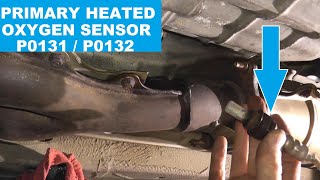
- Engine running rich, potentially causing a fuel smell or black smoke from the exhaust 🎬 Watch: A guide to P0131 causes and common fixes.
- Replacing the downstream (Bank 1, Sensor 2) oxygen sensor. This code specifically points to Sensor 1, which is located before the catalytic converter.
- Replacing the O2 sensor when the actual root cause is an exhaust leak or a fuel delivery issue.
Most Likely Causes

- Faulty Upstream Oxygen Sensor (Bank 1, Sensor 1) 🔴 High Probability Oxygen sensors are wear-and-tear items that operate in a harsh exhaust environment. They typically have a lifespan of 60,000 to 100,000 miles before their internal heating element or sensing capability degrades. Forum discussions confirm this is the most common fix among owners.
How to confirm: Use an OBD-II scanner with live data capability. Observe the voltage for 'O2S11' (Oxygen Sensor, Bank 1, Sensor 1). If it stays consistently low (e.g., below 0.2V) and does not fluctuate rapidly during closed-loop engine operation, the sensor is almost certainly faulty.
Typical fix: Replace the upstream oxygen sensor. This is a DIY-friendly job for many.
Est. part cost: $60-$150 - Exhaust Leak Before the Sensor 🟡 Medium Probability Cracks in the exhaust manifold or leaks at the manifold-to-head gasket can allow outside air into the exhaust stream. This extra oxygen 'fools' the sensor into reading a false lean condition (low voltage).
How to confirm: Perform a visual inspection of the exhaust manifold and connecting pipes for cracks or black soot trails indicating a leak. A smoke test is the most effective method to precisely locate small leaks.
Typical fix: Repair the exhaust leak. This may involve replacing the exhaust manifold gasket or repairing/replacing the cracked component.
Est. part cost: $20-$300 - Damaged Wiring or Connectors ⚪ Low Probability The sensor wiring is located near hot exhaust components and can become brittle, melted, or frayed over time, leading to a short to ground or an open circuit, both of which can cause a low voltage reading.
How to confirm: Visually inspect the wiring harness leading to the O2 sensor for any signs of damage, melting, or corrosion on the connector pins. Check for continuity and voltage at the connector with a multimeter to ensure the sensor is receiving power and has a good ground.
Typical fix: Repair the damaged section of the wiring harness or replace the connector pigtail.
Est. part cost: $15-$50
Rare But Worth Checking
- Blown O2 Sensor Fuse: A specific YouTube video for 2013-2020 Fusions identifies a fuse for the O2 sensor heater circuit in the engine bay fuse box. A blown fuse can cause the sensor to operate incorrectly and trigger this code.
- Low Fuel Pressure: If the fuel pressure is too low, the engine will genuinely run lean. The O2 sensor will report this correctly with a low voltage signal. This could be due to a weak fuel pump or a clogged filter.
- Faulty Mass Airflow (MAF) Sensor: A dirty or failing MAF sensor can under-report the amount of air entering the engine, causing the PCM to inject too little fuel. The O2 sensor will correctly report the resulting lean mixture (low voltage).
- Powertrain Control Module (PCM) Software Issue: While not documented for P0131 specifically, Ford TSB 19-2158 addresses another O2 code (P013A) on 2017-2019 Hybrids by updating the PCM software. It's a rare but possible scenario that a software glitch could cause P0131.
Diagnosis Steps
- Connect an OBD-II scanner to confirm P0131 is the primary code. Note any other codes present, especially fuel trim (P0171, P0174) or MAF sensor codes.
- Check for Technical Service Bulletins (TSBs) for your vehicle's VIN to see if a software update applies.
- Using the scanner's live data, monitor the voltage of 'O2S11' (Oxygen Sensor, Bank 1, Sensor 1). It should fluctuate rapidly between approximately 0.1V and 0.9V. If it is stuck low (e.g., < 0.2V), proceed with diagnosis.
- Perform a thorough visual inspection of the exhaust system from the engine to the catalytic converter. Look for soot marks, cracks, or listen for audible leaks.
- Inspect the O2 sensor's wiring harness and connector for any signs of melting, chafing, or corrosion.
- Check the O2 sensor heater circuit fuse in the engine bay fuse box.
- If the O2 sensor appears unresponsive and no other faults are found, it is the most likely culprit. To be certain, you can induce a rich condition (e.g., by adding propane to the intake) and watch for a voltage spike on the scanner. If it remains low, the sensor is bad.
- If a new sensor does not fix the issue, check fuel pressure and inspect the MAF sensor readings to rule out fuel delivery or air metering problems.
- To replace, disconnect the battery, unplug the sensor connector, and use a 22mm (or 7/8") offset oxygen sensor socket to remove the old sensor from the exhaust manifold.
- Install the new sensor, apply anti-seize compound to the threads (if not pre-applied), and torque to manufacturer specifications. Reconnect the wiring and battery.
- Clear the code with the scanner and perform a test drive to ensure the fix was successful.
Parts You'll Likely Need
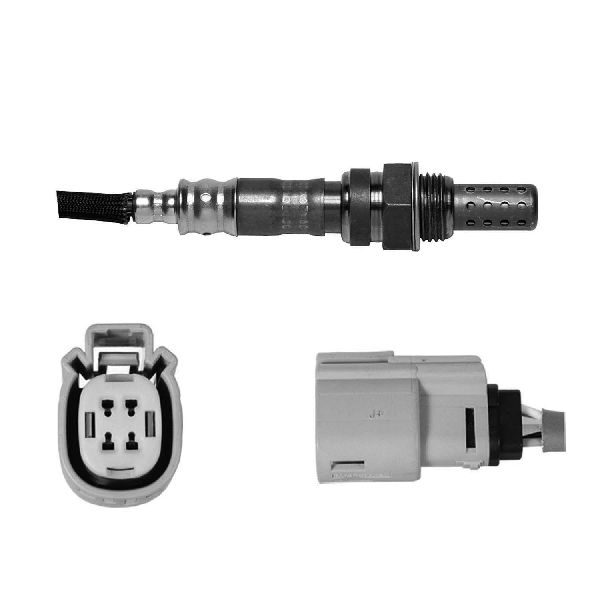
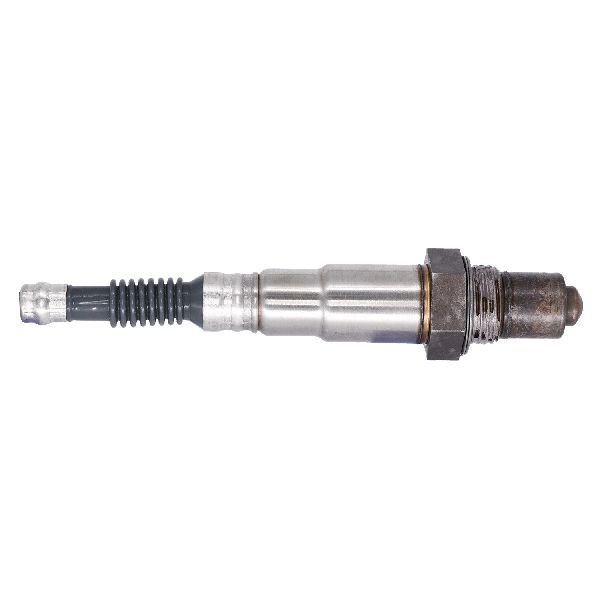
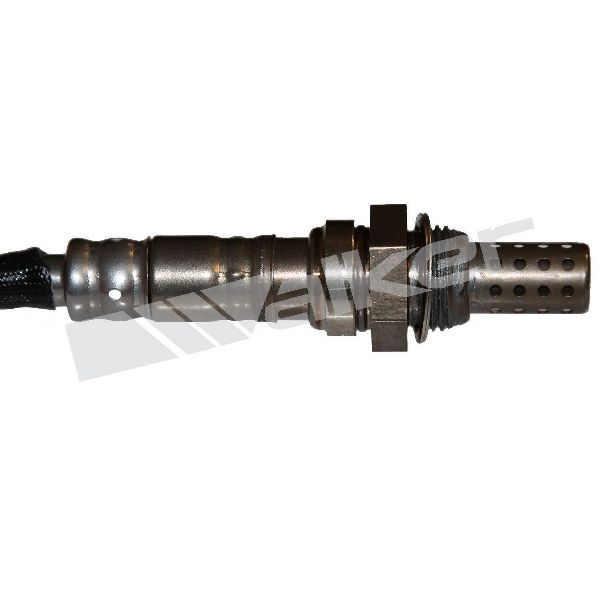
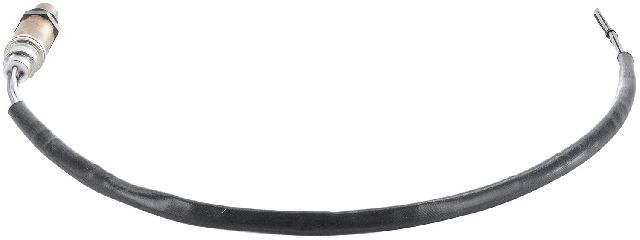
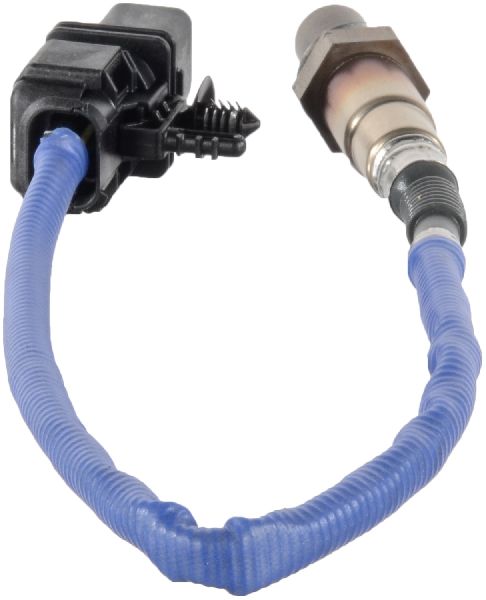
- Upstream Oxygen Sensor (Bank 1, Sensor 1)
(OEM #DS7Z-9F472-A)— This is the primary sensor used for air-fuel mixture control and is the most common failure point for code P0131.
Trusted brands: Motorcraft, Denso, Bosch, NGK/NTK
OEM price range: $95-$145
Aftermarket price range: $60-$120
Technical Service Bulletins (TSBs) & Recalls
- NHTSA Recall 22V413: Shifter Cable Bushing Degradation. A widespread recall addressing the risk of the vehicle rolling away. While unrelated to P0131, it's a critical safety issue for this platform.
- NHTSA Recall 23S12: Front Brake Hose Rupture. Recall for 2013-2018 models due to brake hoses that can leak, causing loss of braking.
- Ford TSB 19-2158: Addresses code P013A (O2 Sensor Slow Response) on 2017-2019 Hybrids with a PCM software update. While not for P0131, it shows a precedent for PCM updates fixing O2 sensor codes on this platform.
Platform-Specific Known Issues
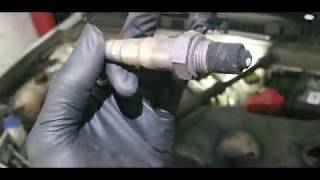
- Sensor Accessibility: The upstream O2 sensor (Bank 1, Sensor 1) is located on the exhaust manifold, on the firewall side of the engine. Access is tight, but many DIYers report being able to replace it from the top of the engine bay with an offset O2 sensor socket and some patience. 🎬 See this walkthrough for replacing the upstream sensor.
Mechanic-Grade Diagnostic Values

- Upstream O2 Sensor (HO2S S11) Signal Voltage — expected: Rapidly fluctuating between ~0.1V (lean) and ~0.9V (rich) during closed-loop operation.. Failure: Voltage is stuck consistently below 0.1V - 0.2V.
- O2 Sensor Heater Circuit Resistance — expected: Generally between 2 and 14 Ohms when measured at room temperature across the two same-colored heater wires on the sensor connector. 🎬 Watch: How to test and replace a heated oxygen sensor.. Failure: An open circuit (infinite resistance) or a dead short (zero resistance) indicates a failed heater element.
Hidden / Shadow Codes Worth Checking
- Mode 6, Test ID $81, Component ID $11: This test monitors the O2 sensor's signal amplitude and switching frequency. A failure here can indicate a poorly performing sensor even before a constant fault code like P0131 is set. (see via A professional scan tool capable of displaying Ford's Mode 6 data. This is not typically available on basic code readers.)
Scan Tool Commands That Help
- Ford IDS (Integrated Diagnostic System): Power Balance Test — If P0131 is accompanied by misfire codes (P030x), this test can graphically show if a specific cylinder is underperforming, helping to determine if the O2 sensor's incorrect lean reading is causing the PCM to over-fuel and foul a plug on one cylinder.
- Advanced Scan Tool or Multimeter: Signal Circuit Integrity Test — To definitively rule out a wiring problem. On Ford systems without a bias voltage, a technician can disconnect the sensor and apply a low voltage (e.g., via a test light connected to the battery) to the signal wire pin on the harness side; the corresponding PID on the scan tool should jump to a high voltage, confirming the wiring to the PCM is intact.
Wiring & Ground Locations

- G103 / G104 — G103 is at the right rear of the engine compartment; G104 is on the right side of the engine compartment.. These are primary engine bay ground points. A corroded or loose connection at either of these locations could potentially affect the O2 sensor's circuit reference, leading to incorrect voltage readings.
- O2 Sensor Connector Pins (B1S1) — On the 6-pin connector for the upstream oxygen sensor.. Based on a similar 2012 Lincoln MKZ Hybrid, the 5 wires in the 6-pin connector are likely: Pin 1 (Red) and Pin 2 (Yellow) for the heater circuit, Pin 3 (White) for signal, Pin 4 (Gray) and Pin 6 (Black) for sensor ground and reference. Testing for voltage and continuity at these specific pins is crucial for diagnosing a circuit fault vs. a sensor fault.
Real Owner Repair Stories
- Reddit user /u/Correct_Distance_940 (2019 Ford Fusion SEL (non-hybrid, but same code/component)) — Check Engine Light with code P0131. The light sometimes disappeared after filling the gas tank but would return.
❌ Tried (didn't work) Clearing the code (it came back)., The user had previously replaced the purge valve for a different issue.
✅ What actually fixed it A visit to the Ford dealer confirmed the diagnosis was a faulty upstream O2 sensor, which needed replacement.
Documented NHTSA Reports
- An owner reported that after noticing an empty coolant reservoir, a vehicle scan displayed codes P0302, P0131, P1299, P1450, P0300, and P0303 (NHTSA ODI #11485331).
- NHTSA ODI #11653155 describes a situation where a vehicle required the accelerator pedal to be pressed to start, with a mechanic retrieving DTCs P02, P0087, P0131, P0302, and P1450.
OEM Part Supersession History
DS7Z-9F472-A→No supersession found.— The part number appears to be stable for the entire 2013-2020 model year range.
Model Year Variations Within This Range
- 2013-2020: The second-generation Fusion Hybrid platform (2013-2020) uses a 2.0L Atkinson-cycle engine, a change from the 2.5L in the first generation (2010-2012). However, within the 2013-2020 range, despite facelifts in 2017 and 2019, the upstream oxygen sensor part number (DY-1199) and its function for this code remain consistent.
Diagnostic Flowchart
Other Known Issues on This Vehicle
Issues unrelated to this code that are worth knowing about as an owner of this generation:
- Degrading Shifter Cable Bushing 🔴 High — Extremely common. Affects millions of Ford vehicles, including 2013-2016 Fusions. Can fail at any mileage. (Ref: NHTSA Recalls: 22V413, 21V376, 18V471. The bushing degrades, potentially causing the vehicle to roll away unexpectedly as the gear shifter position no longer matches the transmission's actual gear.)
- Electronic Power Steering Rack Failure 🔴 High — A widely reported problem across the generation, leading to a sudden loss of power assist. Can occur without warning. (Ref: Multiple recalls (e.g., 15N01 for earlier models) and customer satisfaction programs have been issued, but failures are still common. Repair is very expensive, often exceeding $2,000.)
- Premature eCVT Transmission Failure 🔴 High — A significant number of owners report whining noises followed by complete transmission failure, often around 80,000-120,000 miles. Not as frequent as the bushing issue, but catastrophic when it occurs. (Ref: No specific recall, but it is a well-documented complaint. Repair involves a full transmission replacement, costing between $7,000 and $9,000.)
- Rupturing Front Brake Hoses 🔴 High — Common enough to trigger a major recall for the 2013-2018 model years. (Ref: NHTSA Recall: 23S12. The front brake hoses can rupture and leak brake fluid, leading to a loss of braking ability.)
- Battery Energy Control Module (BECM) Failure (PHEV Only) 🔴 High — Specific to 2019-2020 Fusion Plug-in Hybrid (Energi) models. (Ref: NHTSA Recall: 23V440000. The BECM can fail due to voltage/current spikes, causing a loss of drive power or a fire risk.)
Used vs. New Parts: Buying Guide for This Vehicle
When a used part is the smart pick: For this specific repair, buying a used oxygen sensor is NOT recommended. O2 sensors are wear-and-tear items with a finite lifespan. The cost savings are minimal compared to the high risk of receiving a part that is already near the end of its life.
What to inspect on the donor part:
- Not applicable as used purchase is not advised.
OEM-only on this vehicle (don't cheap out):
- While not strictly 'OEM-only', it is highly recommended to use either the Ford/Motorcraft part or a direct OEM supplier to avoid compatibility and performance issues.
Aftermarket brands forum-validated for this vehicle:
- Motorcraft
- NTK/NGK
- Denso
- Bosch
Brands owners have reported issues with on this vehicle:
- No specific brands were consistently reported as problematic in research, but unbranded, 'white-box' parts from online marketplaces carry a higher risk of premature failure or incorrect readings.
Real Owner Stories
Aggregated from forums and TSBs cited above. Mileages and costs reflect what owners reported in those sources.
2019 Ford Fusion SEL
Symptoms: Check engine light on with code P0131.
What fixed it: Replacement of the upstream O2 sensor.
Cost: $300-$400
Source hint: https://www.reddit.com/r/fordfusion/comments/11e9g0o/error_code_p0131_ford_fusion_2019_sel/
2019 Ford Fusion 1.5L
Symptoms: P0131 code triggered; dealer diagnosis confirmed a bad O2 sensor.
What fixed it: O2 sensor replacement.
Cost: $500-$500
Source hint: https://www.reddit.com/r/fordfusion/comments/176v25d/p0131_code/
2014 Ford Fusion 2.0L
Symptoms: Both P0131 (low voltage) and P0135 (heater circuit fault) codes appearing together.
What fixed it: Replacement of the failed sensor unit.
Cost: $150-$250
Source hint: https://fordfusionforum.com/topic/20833-p0131-and-p0135-on-2014-20l-fusion/
2016 Ford Fusion
Symptoms: An owner reported that the vehicle required the accelerator pedal to be pressed to start, and a mechanic retrieved codes including P0131 and P0087 (NHTSA ODI #11653155).
What fixed it: Diagnosis indicated the vehicle would not pass inspection without repair.
2016 Ford Fusion
Symptoms: An owner noticed an empty coolant reservoir; a scan revealed codes P0131, P0302, and P1299 among others (NHTSA ODI #11485331).
What fixed it: The owner replaced spark plugs, coils, and the coolant reservoir.
Related OBD-II Codes
Frequently Asked Questions
Does Ford TSB 19-2158 apply to my P0131 code on a 2018 Fusion Hybrid?
Is the upstream O2 sensor easy to access on the 2.0L Hybrid engine?
What is the specific part number for the upstream O2 sensor on the Fusion Hybrid?
Could my P0131 code be related to the shifter cable recall?
How long do the oxygen sensors typically last on the 2013-2020 Fusion models?
Can a brake hose leak cause an O2 sensor code like P0131?
Helpful Videos
We Have This Part in Stock

The information in this article is provided for general reference and educational purposes only. Vehicle specifications, procedures, and part compatibility can vary by production date, trim level, and region. Always consult your vehicle's factory service manual and verify part numbers before purchasing or performing repairs. Safety-critical components such as airbags, seat belts, and braking systems should be installed by a qualified professional.
- Ford Fusion:
- 🎬 Helpful Videos
- 🛍️ Shop This Part
- What's Unique About the 2013-2020 Ford Fusion
- Symptoms You May Notice
- Most Likely Causes
- Rare But Worth Checking
- Diagnosis Steps
- Parts You'll Likely Need
- Technical Service Bulletins (TSBs) & Recalls
- Platform-Specific Known Issues
- Mechanic-Grade Diagnostic Values
- Hidden / Shadow Codes Worth Checking
- Scan Tool Commands That Help
- Wiring & Ground Locations
- Real Owner Repair Stories
- Documented NHTSA Reports
- OEM Part Supersession History
- Model Year Variations Within This Range
- Diagnostic Flowchart
- Other Known Issues on This Vehicle
- Used vs. New Parts: Buying Guide for This Vehicle
- Real Owner Stories
- 2019 Ford Fusion SEL
- 2019 Ford Fusion 1.5L
- 2014 Ford Fusion 2.0L
- 2016 Ford Fusion
- 2016 Ford Fusion
- Related OBD-II Codes
- Frequently Asked Questions
- 🎟️ Get 5% Off