

P0131 on 2011-2019 Ford Explorer 3.5L V6: O2 Sensor Low Voltage Causes and Fixes
This code almost always points to a faulty upstream oxygen sensor on Bank 1 (the firewall side of the engine). Replacing the Bank 1, Sensor 1 O2 sensor is the most common fix. Expect to pay $50-$100 for an aftermarket sensor or $120-$200 for an OEM Motorcraft part. DIY difficulty is moderate due to tight access.
- P0131 on your Explorer means the upstream O2 sensor on the firewall side (Bank 1) is reading a low voltage.
- The most likely cause is a failed O2 sensor, which is a common wear-and-tear item.
- Before replacing the sensor, perform a quick visual inspection of the wiring for any obvious damage and check for exhaust leaks.
- The repair is more difficult than on other vehicles due to the sensor's location against the firewall; plan for extra time or consider professional service if you are not comfortable working in tight spaces.
- Driving with this code will cause poor fuel mileage and can lead to more expensive catalytic converter damage over time.
What's Unique About the 2011-2019 Ford Explorer

On the transverse-mounted 3.5L V6 in the fifth-generation Explorer, 'Bank 1' is the cylinder bank located against the firewall, making access to its components, including the 'Sensor 1' (upstream) O2 sensor, notoriously difficult. 🎬 Watch: Locate Bank 1 Sensor 1 on your Explorer While the code itself is standard, the repair is more challenging on this specific vehicle compared to others where the sensor is more exposed. Owners frequently report that accessing the sensor from the passenger side wheel well or from underneath the vehicle is required.
Generation note: The 2011-2019 year range covers the entire fifth generation of the Ford Explorer. The location and function of the O2 sensors are consistent across this generation for the 3.5L V6 engine. The 3.5L V6 in this platform is part of the Ford 'Cyclone' engine family.
Symptoms You May Notice
- Check Engine Light is on
- Reduced fuel economy
- Rough or unstable idle
- Engine hesitation or stumbling during acceleration
- Strong smell of gasoline or rotten eggs from the exhaust
- Engine may run rough or die
- Replacing the wrong O2 sensor (e.g., Bank 2 or a downstream sensor). Bank 1 is the firewall side, and Sensor 1 is upstream (before the catalytic converter).
- Replacing the catalytic converter. While a bad O2 sensor can eventually damage the converter, the converter itself does not cause the P0131 code.
- Assuming the sensor is bad without checking for wiring issues or exhaust leaks first. A forum user on FordExpeditionForum.com noted that after replacing a sensor and PCM to no avail, the issue was ultimately a wiring harness problem.
Most Likely Causes

- Faulty Bank 1, Sensor 1 Oxygen Sensor 🔴 High Probability Oxygen sensors are wear items that degrade over time from heat and contaminants. With age and mileage (typically 70-100k miles), they are the most common failure point for this code.
How to confirm: Use an OBD-II scanner to monitor live data for 'O2S11' or 'B1S1'. If the voltage is stuck below 0.2V and does not fluctuate during engine operation, the sensor has likely failed.
Typical fix: Replace the Bank 1, Sensor 1 oxygen sensor. This is the upstream sensor on the firewall side of the engine.
Est. part cost: $50-$200 - Damaged Wiring or Connector 🟡 Medium Probability The wiring harness for the Bank 1 sensor is routed in a hot, tight area near the firewall and exhaust, making it susceptible to heat damage, chafing, or corrosion over time. Water intrusion in the engine bay has also been noted as a cause for shorts or corrosion in O2 sensor circuits on similar Ford platforms. Manufacturer service bulletins TSB #17-0014 and TSB #19-2091 note that undesired water entry into the engine compartment directly over powertrain components can trigger P0131 and other DTCs.
How to confirm: Visually inspect the entire wiring harness from the O2 sensor to the main engine harness. Check for melted insulation, frayed wires, or corrosion inside the connector pins.
Typical fix: Repair or replace the damaged section of the wiring harness or the connector itself.
Est. part cost: $10-$50 - Exhaust Leak ⚪ Low Probability Exhaust manifold gaskets or the manifold itself can develop cracks, allowing outside air to be drawn into the exhaust stream before the O2 sensor. This unmetered oxygen causes the sensor to read a lean condition (low voltage).
How to confirm: Listen for a ticking or puffing noise from the engine bay, especially when the engine is cold. Visually inspect the exhaust manifold on the firewall side for black soot trails, which indicate a leak.
Typical fix: Replace the leaking exhaust manifold gasket or repair/replace the cracked manifold. In some cases, exhaust putty can be used for minor leaks.
Est. part cost: $20-$400
Rare But Worth Checking
- Low Fuel Pressure: If the engine is genuinely running lean due to a weak fuel pump or clogged filter, the O2 sensor will correctly report low voltage. This is less common but should be investigated if a new sensor doesn't fix the code.
- Vacuum Leak: A significant vacuum leak can cause a lean condition across all cylinders, which the Bank 1 sensor would detect. This would usually be accompanied by other codes, like P0171 (System Too Lean Bank 1). NHTSA ODI #10219019 for a related Ford platform describes a scenario where P0131 appeared alongside P0171 and P0174, requiring the replacement of isolator bolts and various port seals.
- Faulty Powertrain Control Module (PCM): This is extremely rare. The PCM should only be considered as the cause after all other possibilities, including the sensor, wiring, and other engine systems, have been thoroughly ruled out.
Diagnosis Steps
- Confirm the code P0131 is present using an OBD-II scanner.
- Using the scanner's live data function, monitor the voltage for 'B1S1' (Bank 1, Sensor 1). It should rapidly fluctuate between approximately 0.1V and 0.9V on a warm, running engine.
- If the voltage is stuck below 0.4V, and especially below 0.2V, proceed with diagnosis.
- Carefully inspect the O2 sensor's wiring harness and connector for any signs of melting, chafing, corrosion, or loose pins. Pay close attention to areas where the harness is close to hot exhaust components. Manufacturer bulletin TSB #16-0163 indicates that various drivability issues and P0131 can be caused by intermittent electrical faults in the engine circuit.
- Inspect the exhaust manifold and the area around the sensor for black soot marks, indicating an exhaust leak. A cold engine start may reveal audible 'puffing' sounds from a leak.
- If no wiring or exhaust issues are found, test the sensor's heater circuit. A faulty heater can prevent the sensor from reaching operating temperature, causing a low voltage reading.
- If the wiring, exhaust system, and heater circuit are intact, the oxygen sensor itself is the most probable cause of failure.
- After replacing the sensor, clear the codes and perform a test drive to ensure the fix was successful.
Parts You'll Likely Need
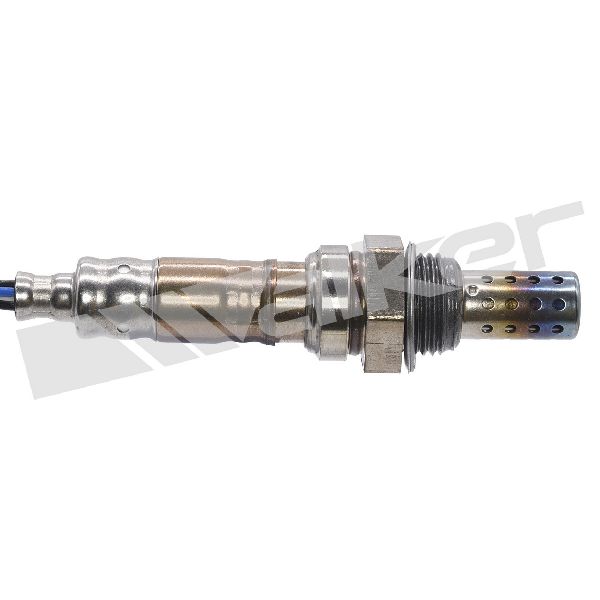
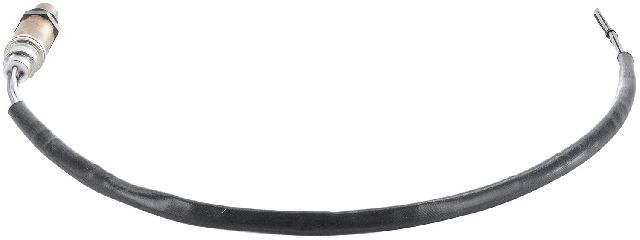
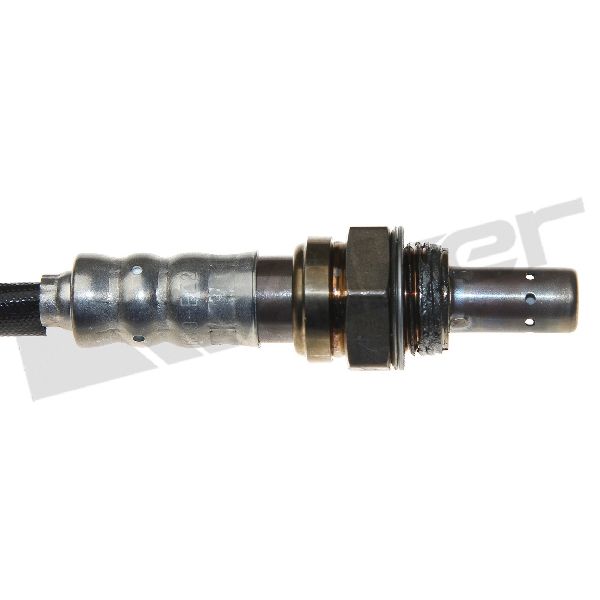
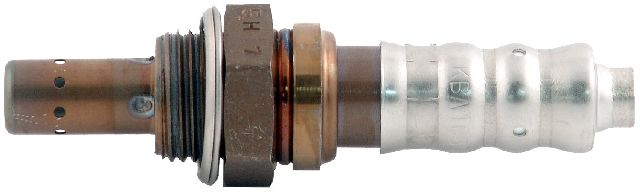
- Oxygen Sensor (Bank 1, Sensor 1)
(OEM #DY-1178 (Motorcraft), cross-references to BL3Z-9F472-A (Ford) and Denso 234-5038)— This is the upstream sensor on the firewall side. It is a primary component for fuel control and is a common wear item that fails, directly causing the P0131 code.
Trusted brands: Motorcraft, Bosch, Denso, NTK
OEM price range: $120-$200
Aftermarket price range: $50-$100
Related Codes That Often Appear With This One
- P0171 — If there is a legitimate lean condition (like a vacuum or exhaust leak) causing the low voltage reading, you may also get a P0171 'System Too Lean (Bank 1)' code. This is a common pairing.
- P2195 — This code means 'O2 Sensor Signal Stuck Lean Bank 1 Sensor 1', which is a very similar condition to P0131 and often points to the same root causes.
- P0151 — This is the equivalent code for Bank 2, Sensor 1. If both P0131 and P0151 are present, it points towards a problem common to both engine banks, such as a vacuum leak or low fuel pressure, rather than a single faulty sensor.
- P144A & P1450 — As noted in NHTSA ODI #11443669, P0131 can appear with EVAP system codes, potentially leading to stalling after refueling and hesitation at low speeds.
Platform-Specific Known Issues
- A Reddit user with a 2014 Explorer Sport (which has the 3.5L EcoBoost, a related engine) posted about getting a P0131 code and asked the community if it's typically just the sensor. This highlights that the issue is known among owners who are considering a DIY repair.
Mechanic-Grade Diagnostic Values

- Upstream O2 Sensor (HO2S11) Live Data Voltage — expected: Rapidly fluctuating between 0.1V and 0.9V when the engine is warm and in closed-loop.. Failure: Voltage is stuck low, typically below 0.2V, and does not switch.
- O2 Sensor Heater Circuit Resistance — expected: Approximately 3-10 Ohms, but varies by manufacturer. Check service manual for exact spec.. Failure: An infinite resistance reading (open circuit) or zero resistance (short circuit) indicates a failed heater element, which can cause a P0131 code.
- O2 Sensor Signal Wire Voltage (Unplugged) — expected: Approximately 0.45V (reference voltage from PCM).. Failure: A reading of 0V may indicate a break in the signal wire, while a reading of battery voltage could indicate a short to power in the harness.
Hidden / Shadow Codes Worth Checking
- Mode 6, Test ID $81, Component ID $11: This test monitors the Bank 1 Sensor 1 O2 sensor's signal amplitude and switching frequency. A failure here can confirm a performance issue with the sensor even if the P0131 code is intermittent. (see via A professional scan tool capable of displaying Ford's specific Mode 6 data. Values are compared against manufacturer limits.)
Scan Tool Commands That Help
- Ford IDS (Integrated Diagnostic System) or equivalent: KOER (Key On, Engine Running) Self-Test — This test runs the engine through a series of checks and can help identify intermittent faults with the O2 sensor circuit that may not be present at idle.
- Ford IDS (Integrated Diagnostic System) or equivalent: Power Balance Test — While not a direct O2 sensor test, this can help rule out a single cylinder misfire that might be causing an actual lean condition on Bank 1, which the O2 sensor would correctly report.
Wiring & Ground Locations

- G104 — On the right side of the engine compartment, often on the fender apron behind the battery.. This is a primary chassis ground. A poor connection here can affect the PCM's reference voltage and cause erratic sensor readings, including for the O2 sensors.
- G103 — On the left front corner of the engine compartment.. Another key chassis ground point. Corrosion or looseness can impact PCM and sensor operation.
- G105 — Main battery negative cable to engine block ground.. This is the primary engine ground. A weak connection here can introduce electrical noise and voltage drops across all engine sensors, including the HO2S11.
- O2 Sensor Connector — On the Bank 1 (firewall side) upstream O2 sensor pigtail. It is a 6-terminal female connector, often black and purple.. This is the direct connection point for testing the sensor and harness. It is susceptible to heat damage, corrosion, and contamination due to its location.
"I Checked Everything" — The Actual Cause
- A known issue on the 3.5L Cyclone engine family is a failing internal water pump. Coolant can leak from the pump weep hole, which is located inside the timing cover, and drip down onto the exhaust. This can contaminate the Bank 1 O2 sensor, causing it to fail and trigger a P0131 code, even though there are no external exhaust or vacuum leaks.
OEM Part Supersession History
BL3Z-9F472-A→DY-1178 (Motorcraft Service Part Number)— Standard part number update from Ford engineering number to Motorcraft service number.
Heads up: DY-1178 is the correct upstream sensor for both Bank 1 and Bank 2 on the 3.5L V6 Explorer from 2011-2019.
Model Year Variations Within This Range
- 2016-2019: The 2016 model year introduced a significant facelift for the Explorer, which included revised front and rear fascias, and interior updates like replacing some touch-sensitive controls with physical buttons. While the core 3.5L V6 engine and O2 sensor locations remained the same, some wiring harness routing and connector brackets may differ slightly from the 2011-2015 models.
Diagnostic Flowchart
Other Known Issues on This Vehicle
Issues unrelated to this code that are worth knowing about as an owner of this generation:
- Internal Water Pump Failure 🔴 High — Commonly occurs around 100,000 miles. Failure can cause coolant to mix with engine oil, leading to catastrophic engine damage. Repair is very expensive ($2,000-$4,000) as the pump is driven by the timing chain and requires extensive labor to access.
- Power Transfer Unit (PTU) Failure 🔴 High — The PTU (on AWD models) is prone to overheating and fluid breakdown. Ford claimed the fluid was 'lifetime,' but it often degrades, leading to bearing failure and loss of AWD. Regular fluid changes (every 30k miles) are recommended by owners to prevent failure.
- Exhaust Odor in Cabin 🟠 Medium — A widely reported issue where exhaust fumes (sometimes smelling like sulfur or rotten eggs) can enter the cabin, particularly during heavy acceleration. This prompted multiple investigations and TSBs. (Ref: TSB 12-12-4, TSB 16-0166, TSB 17-0029, TSB 17-0044)
- Electronic Power Steering Rack Failure 🟠 Medium — Failures of the electronic power steering rack are a common complaint, leading to a loss of power assist and expensive repairs. This was subject to recalls on earlier models but remains a weak point. (Ref: Multiple recalls on early model years (2011-2013).)
- Throttle Body Malfunction 🟠 Medium — The electronic throttle body can fail, causing the vehicle to suddenly lose power and enter 'limp mode,' often indicated by a wrench icon on the dash and codes like P2111 or P2112.
- Suspension Component Wear 🟡 Low — Premature wear of components like rear suspension toe links (subject to a recall), ball joints, and control arm bushings is common, leading to alignment issues, uneven tire wear, and noises. (Ref: Recall for rear suspension toe links on 2011-2017 models.)
Used vs. New Parts: Buying Guide for This Vehicle
When a used part is the smart pick: For this repair, a used part is almost never a good choice. The primary failure component is the oxygen sensor itself, which is a wear-and-tear item. A used sensor has unknown remaining life and is not worth the labor to install. A used wiring harness pigtail from a junkyard could be a cost-effective option if only the connector is damaged, but it must be carefully inspected.
Donor-vehicle mileage cap: roughly under 30000 miles for the part to have meaningful remaining life.
What to inspect on the donor part:
- For a wiring pigtail: check for flexible, non-brittle insulation.
- Ensure there is no melting or charring on the connector body.
- Look for clean, corrosion-free pins inside the connector.
- Verify it's from a vehicle that did not have a fire or major coolant/oil leaks in that area.
OEM-only on this vehicle (don't cheap out):
- While not required, using an OEM Motorcraft oxygen sensor is highly recommended. Some Ford PCMs can be sensitive to the specific resistance and response characteristics of aftermarket sensors, potentially leading to persistent or new codes.
Aftermarket brands forum-validated for this vehicle:
- Denso
- NTK
- Bosch
Brands owners have reported issues with on this vehicle:
- Generic, unbranded 'white-box' sensors sold on marketplaces are frequently reported by mechanics to have high failure rates or incorrect response curves, causing more diagnostic headaches.
Real Owner Stories
Aggregated from forums and TSBs cited above. Mileages and costs reflect what owners reported in those sources.
2014 Ford Explorer Sport 3.5L EcoBoost
Symptoms: Owner observed a P0131 code and sought community advice on whether the sensor was the definitive cause for a DIY repair.
What fixed it: The community corroborated that Bank 1 is on the firewall side and suggested sensor replacement.
Source hint: r/FordExplorer on Reddit
Ford Expedition (Related Platform) 3.5L V6
Symptoms: Vehicle was running fine but threw codes P0131 and P0151 simultaneously.
What fixed it: Replacing a seized passenger side O2 sensor and repairing a coolant leak from a heater hose that was dripping onto the exhaust area.
Source hint: FordExpeditionForum.com - 'P0131 and P0151 but running fine'
Ford Focus (Related Platform)
Symptoms: An owner reported P0131 (O2 Circuit Low Voltage Bank 1, Sensor 1) along with P144A and P1450. The vehicle started stalling after putting new gas in and began hesitating at low speeds.
What fixed it: Documented under NHTSA ODI #11443669.
Related OBD-II Codes
Frequently Asked Questions
Where is the Bank 1, Sensor 1 oxygen sensor located on my 3.5L V6 Explorer?
Could the exhaust smell in my cabin be related to the P0131 code?
At what mileage do these sensors typically fail on the Explorer?
Can a coolant leak cause a P0131 code on my Ford?
Is there a TSB for the throttle body issues that sometimes accompany engine hesitation?
Helpful Videos
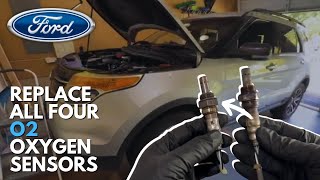
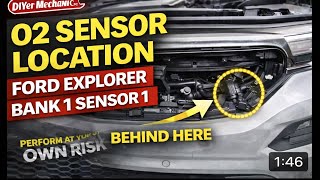
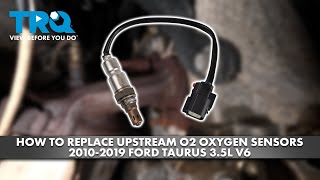
We Have This Part in Stock


The information in this article is provided for general reference and educational purposes only. Vehicle specifications, procedures, and part compatibility can vary by production date, trim level, and region. Always consult your vehicle's factory service manual and verify part numbers before purchasing or performing repairs. Safety-critical components such as airbags, seat belts, and braking systems should be installed by a qualified professional.
- Ford Explorer:
- 🎬 Helpful Videos
- 🛍️ Shop This Part
- What's Unique About the 2011-2019 Ford Explorer
- Symptoms You May Notice
- Most Likely Causes
- Rare But Worth Checking
- Diagnosis Steps
- Parts You'll Likely Need
- Related Codes That Often Appear With This One
- Platform-Specific Known Issues
- Mechanic-Grade Diagnostic Values
- Hidden / Shadow Codes Worth Checking
- Scan Tool Commands That Help
- Wiring & Ground Locations
- "I Checked Everything" — The Actual Cause
- OEM Part Supersession History
- Model Year Variations Within This Range
- Diagnostic Flowchart
- Other Known Issues on This Vehicle
- Used vs. New Parts: Buying Guide for This Vehicle
- Real Owner Stories
- 2014 Ford Explorer Sport 3.5L EcoBoost
- Ford Expedition (Related Platform) 3.5L V6
- Ford Focus (Related Platform)
- Related OBD-II Codes
- Frequently Asked Questions
- 🎟️ Get 5% Off