

P0131 on 2004-2008 Acura TL: O2 Sensor Circuit Low Voltage Causes and Fixes
This code means the primary oxygen sensor on the rear cylinder bank (Bank 1, Sensor 1) is sending a low voltage signal. The most common fix is replacing this sensor with a new Denso or NTK part. The sensor is notoriously difficult to access against the firewall. Before replacing, check for oil leaks from the rear valve cover contaminating the sensor's connector.
- P0131 on a 2004-2008 Acura TL points to a low voltage signal from the upstream oxygen sensor on the rear cylinder bank (Bank 1, Sensor 1).
- The most probable cause is a failed oxygen sensor, but it is often triggered by oil contamination from a leaking rear valve cover gasket.
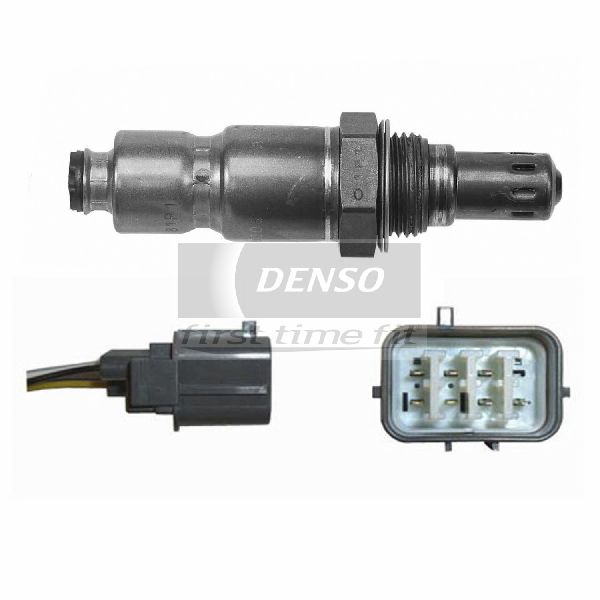
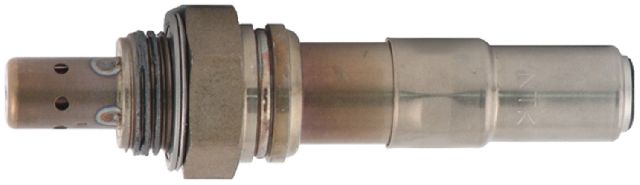
- For a successful repair, you MUST use a Denso (234-5010) or NTK (24302) brand sensor; other brands are known to cause issues.
- The sensor is located against the firewall and is difficult to access; DIY replacement is possible but challenging, often requiring removal of the strut tower brace.
- Before replacing the sensor, inspect its connector for oil contamination. If oil is present, the valve cover gasket should also be replaced to ensure a permanent fix.
What's Unique About the 2004-2008 Acura TL
On the third-generation Acura TL, the J32A3 V6 engine is mounted transversely, making the Bank 1 (rear) upstream O2 sensor notoriously difficult to access against the firewall. The platform is also known to be sensitive to the brand of oxygen sensor used; owners and technicians on forums like Acurazine strongly recommend using OEM, Denso, or NTK sensors to avoid compatibility issues and prevent the code from returning. Using other brands, such as Bosch, has been reported by many owners to cause problems or fail prematurely.
Symptoms You May Notice
- Check Engine Light (CEL) is on
- VSA (Vehicle Stability Assist) and/or TCS (Traction Control System) light may also illuminate along with the CEL.
- Reduced fuel economy
- Rough or unstable idle
- Engine hesitation or stumbling on acceleration
- Black smoke or a strong, rotten-egg smell from the exhaust
- Smell of burning oil, which may indicate a valve cover leak that is contaminating the sensor or wiring.
- Replacing the wrong oxygen sensor (e.g., Bank 2 Sensor 1 at the front of the engine, or the downstream Sensor 2 after the catalytic converter). P0131 is specifically for Bank 1, Sensor 1, which is the upstream sensor on the rear bank.
- Replacing the O2 sensor without fixing the root cause, such as an oil leak from the valve cover that will quickly contaminate the new sensor's connector.
Most Likely Causes
- Faulty Bank 1, Sensor 1 Oxygen Sensor 🔴 High Probability Oxygen sensors are wear items that degrade over time, typically needing replacement after 100,000 miles. Contamination from oil leaks from the valve cover gaskets, a common issue on the J32A3 engine, can also soak the sensor or its connector, causing premature failure.
How to confirm: Use an OBD-II scanner to monitor the live data for the B1S1 voltage. A healthy sensor's voltage should fluctuate rapidly between 0.1V and 0.9V. If it stays consistently low (below 0.4V), the sensor is likely bad. Visually inspect the sensor and its connector for heavy oil or fluid contamination.
Typical fix: Replace the Bank 1, Sensor 1 oxygen sensor. This sensor is located on the rear exhaust manifold against the firewall. Access is difficult and may require removing the strut tower brace. A 22mm wrench or a specialized O2 sensor socket is required. Ensure the new sensor has anti-seize compound on the threads before installation.
Est. part cost: $60-$180 - Damaged Wiring or Contaminated Connector 🟡 Medium Probability Oil leaks from the rear valve cover can drip directly onto the O2 sensor connector, contaminating it with oil and causing a poor connection or short circuit. The wiring is also exposed to high heat in the engine bay, which can make it brittle over time.
How to confirm: Visually inspect the wiring harness and the 4-pin connector for the Bank 1 Sensor 1 O2 sensor. The connector is typically mounted on a bracket near the firewall. Look for signs of oil saturation, corrosion, or physical damage to the wires.
Typical fix: Clean the connector thoroughly with electrical contact cleaner. If oil contamination is present, the source (likely a valve cover gasket leak) must be repaired to prevent recurrence. Repair or replace any damaged sections of the wiring harness. Apply dielectric grease to the connector seal to keep moisture out.
Est. part cost: $5-$50 for cleaning supplies; $50-$200 for valve cover gasket repair. - Exhaust Leak ⚪ Low Probability Leaks in the exhaust manifold or gaskets before the O2 sensor can allow outside air to enter the exhaust stream, skewing sensor readings. While not a uniquely common problem on this platform, gaskets and flex pipes can fail with age and corrosion.
How to confirm: Visually inspect the exhaust manifold and connecting pipes for cracks or black soot marks indicating a leak. You can also use a smoke machine to pinpoint the source of the leak. A listening for an audible ticking or hissing sound from the exhaust manifold on a cold start can also reveal leaks.
Typical fix: Repair the leak by replacing the faulty gasket or component. This may involve welding a crack or replacing the exhaust manifold or a section of pipe.
Est. part cost: $20-$300
Rare But Worth Checking
- Low Fuel Pressure: If the engine is truly running lean due to a weak fuel pump or clogged filter, the O2 sensor will correctly report a low voltage. This should be investigated if a new sensor doesn't fix the code.
- Faulty Powertrain Control Module (PCM): This is extremely rare. The PCM should only be considered as the cause after all other possibilities (sensor, wiring, exhaust leaks, fuel system) have been thoroughly ruled out.
Diagnosis Steps
- Connect an OBD-II scanner and confirm that P0131 is the primary code. Note any other codes present, such as P0135 or P0171.
- Use the scanner's live data function to observe the voltage for 'B1S1'. At idle, it should fluctuate rapidly between approximately 0.1V and 0.9V. If it is stuck low (e.g., < 0.4V), this points towards a sensor or wiring issue.
- Perform a thorough visual inspection of the rear cylinder bank. Check for active or old oil leaks from the rear valve cover dripping onto the O2 sensor or its wiring harness.
- Locate and inspect the O2 sensor's electrical connector (mounted on a bracket near the firewall). Disconnect it and check for oil contamination, corrosion, or loose pins. If oily, clean thoroughly with electrical contact cleaner.
- Inspect the exhaust manifold and downpipe for any signs of leaks (soot, cracks) upstream of the sensor.
- If the sensor signal is stuck low and no wiring or leak issues are found, the sensor itself is the most likely culprit and should be replaced.
- If a new sensor does not resolve the issue, investigate other potential causes like low fuel pressure or, in rare cases, a PCM fault.
Parts You'll Likely Need
- Bank 1 Sensor 1 Air/Fuel Ratio Sensor
(OEM #36531-RCA-A02 (replaces 36531-RCA-A01))— This is the primary upstream oxygen sensor for the rear cylinder bank. It is a common wear item and the most frequent cause of code P0131.
Trusted brands: Denso (p/n 234-5010), NTK (p/n 24302)
OEM price range: $150-$250
Aftermarket price range: $60-$120 - Rear Valve Cover Gasket Kit — A leaking rear valve cover gasket is a very common cause of oil contamination on the B1S1 O2 sensor connector, leading to code P0131. If the connector is oily, this repair is necessary.
Trusted brands: Fel-Pro, Genuine Acura
OEM price range: $40-$60
Aftermarket price range: $20-$40
Related Codes That Often Appear With This One
- P0135 — This code indicates a fault in the heater circuit for the same oxygen sensor (Bank 1, Sensor 1). They often appear together when the sensor fails internally.
- P0171 — This code means 'System Too Lean (Bank 1)'. P0131 can cause P0171 because the faulty sensor is reporting a lean condition, even if it's not accurate.
Platform-Specific Known Issues
- The Bank 1 (rear) upstream sensor is difficult to access due to its location against the firewall, often requiring removal of the strut tower brace for better access.
- The engine's computer is known to be sensitive to the brand of O2 sensor. Using non-OEM supplier brands like Bosch can lead to persistent codes or premature failure. Denso and NTK are the recommended brands.
- Oil leaks from the rear valve cover gasket are very common and are a frequent root cause of this code by contaminating the O2 sensor connector.
Mechanic-Grade Diagnostic Values
- A/F Sensor Heater Circuit Resistance — expected: 1.0 to 5.0 Ohms. Some service data cites a broader range of 4.2 to 6.6 Ohms, or even up to 40 Ohms.. Failure: A reading of infinite resistance (Open Loop/OL) indicates a failed heater element.
- Fuel Pressure (at idle) — expected: 57-64 PSI with vacuum line disconnected; approximately 45 PSI with vacuum line connected.. Failure: Pressure significantly below specification can cause a true lean condition, which the O2 sensor will correctly report as low voltage.
- B1S1 Voltage (Forced Lean/Rich) — expected: When creating a vacuum leak to force a lean condition, voltage should drop to less than 0.3V. When artificially enriching the mixture, voltage should rise to 0.8-0.9V.. Failure: If the voltage remains steady and low (below 0.45V) and does not respond to induced changes in the air/fuel mixture, the sensor is likely faulty.
Scan Tool Commands That Help
- Honda Diagnostic System (HDS): Data List Display & Snapshot Function — Use to monitor real-time ECU parameters, including A/F sensor voltage and fuel trim. The snapshot function can capture data during a specific event (like acceleration) to analyze sensor response under load, which is critical for diagnosing intermittent issues.
- Honda Diagnostic System (HDS): A/F Sensor Test — Some versions of the HDS software include a specific guided test for the Air/Fuel ratio sensor, which can confirm if the sensor's response rate and voltage output are within OEM specifications, helping to differentiate between a faulty sensor and another system issue.
Wiring & Ground Locations
- G101 — On the left (driver's) side of the engine.. This is a primary engine ground. A corroded or loose G101 ground can introduce electrical noise and voltage offsets, potentially affecting the PCM's interpretation of the O2 sensor's low-voltage signal.
- Engine-to-Chassis Ground Strap — A braided strap located at the side motor mount.. This strap ensures the engine block has a solid ground reference to the vehicle's chassis. Degradation of this strap (often turns green and brittle) can cause erratic sensor readings, including the O2 sensor.
- Transmission Mount Ground — Located near the transmission mount, behind and under the battery tray area.. Provides a ground path for the transmission and engine assembly. A poor connection here can contribute to overall electrical system grounding issues that may manifest as sensor faults.
- B1S1 Connector Pins — The 4-pin connector for the rear upstream O2 sensor, mounted on a bracket near the firewall.. Technicians must test for 12V at the heater circuit pins on the harness side of the connector (Key On, Engine Off) to rule out a fuse or wiring issue before condemning the sensor.
Real Owner Repair Stories
- Acurazine.com user (2G Acura TL (1999-2003, similar J-series engine and issue)) — P0131 code, oil found on the O2 sensor connector.
❌ Tried (didn't work) Cleaning the oil from the connector with electronic spray and applying dielectric grease. The code returned.
✅ What actually fixed it The user replaced the sensor with a new Denso part, but the code persisted and a new P0135 (heater circuit) code appeared. It was discovered the first new Denso sensor was defective from the factory. Replacing it with a second new Denso sensor finally resolved the codes. - Acurazine.com user (2G Acura TL) — P0131, VSA, and TCS lights on. A/F gauge reading flatline lean.
❌ Tried (didn't work) Replacing the sensor with a Bosch universal O2 sensor. The code remained., Replacing the Bosch sensor with the correct Denso sensor (p/n 234-4727 for that model). The code still remained.
✅ What actually fixed it The thread discussion pointed towards a wiring issue or a problem with the fuel supply system, as two different new sensors did not fix the problem. The final resolution was not posted, but it serves as a strong case that when a quality new sensor doesn't fix P0131, the problem lies elsewhere in the circuit or fuel system.
OEM Part Supersession History
36531-RCA-A01→36531-RCA-A02— Standard part revision by the manufacturer.
Heads up: The two part numbers are interchangeable. 36531-RCA-A02 is the current replacement for the original part.
Model Year Variations Within This Range
- 2007-2008: While the P0131 fault itself is not different, the 2007-2008 models received a different automatic transmission than the failure-prone 2004-2006 units. This is unrelated to the P0131 code but is a critical distinction for the vehicle generation. No significant changes affecting the cause or diagnosis of P0131 have been identified between the 2004-2006 and 2007-2008 models.
Diagnostic Flowchart
Other Known Issues on This Vehicle
Issues unrelated to this code that are worth knowing about as an owner of this generation:
- Cracked Dashboard 🟠 Medium — Extremely common, especially in sun-exposed climates. Cracks typically start near the passenger airbag outline or vents and spread. Onset can be as early as 4-5 years.
- Automatic Transmission Failure (2004-2006) 🔴 High — Very common on 2004-2006 models. Issues include shuddering, rough shifts, slipping, and complete failure. Replacing the 3rd and 4th gear pressure switches and frequent fluid changes can help, but many transmissions fail regardless. (Ref: Acura addressed some issues with recalls and warranty extensions on earlier generation TLs, but the 3rd gen still suffers. Replacing pressure switches is a common preventative measure.)
- HandsFreeLink (HFL) Module Failure 🟡 Low — Very common. The HFL Bluetooth module, located in the overhead console, fails to shut down, causing a parasitic battery drain that kills the battery overnight or after a few days. (Ref: Acura TSB 05-020 addresses a related issue. The common fix is to simply unplug the module.)
- Lower Control Arm / Ball Joint Wear 🟠 Medium — Compliance bushings on the front lower control arms and lower ball joints wear out, causing clunking noises, poor alignment, and uneven tire wear.
- Power Steering Hose Leak 🟡 Low — The high-pressure power steering hose is known to leak, often causing a whining noise from the pump as air enters the system. The O-ring at the pump inlet is a common failure point. (Ref: Recall 12V-222 was issued for power steering hose deterioration on some 2007-2008 models.)
Used vs. New Parts: Buying Guide for This Vehicle
When a used part is the smart pick: For this specific fault (P0131), obtaining a used oxygen sensor is never recommended as it is a wear-and-tear item with a finite lifespan. However, if the cause is a damaged wiring harness pigtail, a used pigtail from a junkyard vehicle can be a cost-effective repair if spliced in correctly.
Donor-vehicle mileage cap: roughly under 100000 miles for the part to have meaningful remaining life.
What to inspect on the donor part:
- For a wiring pigtail, ensure the wires are not brittle, cracked, or oil-soaked.
- Check that the connector locking tab is intact and not broken.
- Verify there is no corrosion or bent pins inside the connector.
OEM-only on this vehicle (don't cheap out):
- Air/Fuel Ratio Sensor (Oxygen Sensor)
Aftermarket brands forum-validated for this vehicle:
- Denso (p/n 234-5010)
- NTK (p/n 24302)
Brands owners have reported issues with on this vehicle:
- Bosch (specifically for this application, as widely reported by owners to cause issues)
Real Owner Stories
Aggregated from forums and TSBs cited above. Mileages and costs reflect what owners reported in those sources.
2004-2008 Acura TL 3.2L V6 — ~100000 miles
Symptoms: The Check Engine Light came on along with the TCS light. The owner found the P0131 code set after an oil leak occurred.
What fixed it: The owner cleaned the O2 sensor connector and replaced the sensor with a Denso part.
Source hint: Acurazine.com: Thread 'P0131 Code Set and Fixed' (https://acurazine.com/forums/2g-tl-problems-fixes-117/p0131-code-set-fixed-985023/)
2004-2008 Acura TL 3.2L V6
Symptoms: Check Engine Light (CEL) and oil found inside the O2 sensor electrical connection.
What fixed it: Cleaning the O2 sensor connector and ensuring a Denso brand sensor was used instead of Bosch.
Source hint: Acurazine.com: Thread 'P0131 CEL and oil on O2 connection' (https://acurazine.com/forums/2g-tl-problems-fixes-117/p0131-cel-oil-o2-connection-782002/)
2004-2008 Acura TL 3.2L V6
Symptoms: Oil leaks from the valve cover gaskets dripping onto exhaust components near the O2 sensors.
What fixed it: Repairing the valve cover gasket leak to prevent O2 sensor contamination.
Source hint: Reddit r/AcuraTL: Multiple threads show images and discuss oil leaks from valve cover gaskets dripping onto exhaust components
Related OBD-II Codes
Frequently Asked Questions
Can I use a Bosch oxygen sensor to fix the P0131 code on my Acura TL?
Why is my TCS and VSA light on at the same time as the Check Engine Light for P0131?
Where is the Bank 1, Sensor 1 oxygen sensor located on the J32A3 engine?
Could an oil leak be causing my P0131 code?
How can I tell if the O2 sensor is actually bad or if it's just a wiring issue?
Helpful Videos

We Have This Part in Stock


The information in this article is provided for general reference and educational purposes only. Vehicle specifications, procedures, and part compatibility can vary by production date, trim level, and region. Always consult your vehicle's factory service manual and verify part numbers before purchasing or performing repairs. Safety-critical components such as airbags, seat belts, and braking systems should be installed by a qualified professional.
- Acura TL:
- 🎬 Helpful Videos
- 🛍️ Shop This Part
- What's Unique About the 2004-2008 Acura TL
- Symptoms You May Notice
- Most Likely Causes
- Rare But Worth Checking
- Diagnosis Steps
- Parts You'll Likely Need
- Related Codes That Often Appear With This One
- Platform-Specific Known Issues
- Mechanic-Grade Diagnostic Values
- Scan Tool Commands That Help
- Wiring & Ground Locations
- Real Owner Repair Stories
- OEM Part Supersession History
- Model Year Variations Within This Range
- Diagnostic Flowchart
- Other Known Issues on This Vehicle
- Used vs. New Parts: Buying Guide for This Vehicle
- Real Owner Stories
- 2004-2008 Acura TL 3.2L V6 — ~100000 miles
- 2004-2008 Acura TL 3.2L V6
- 2004-2008 Acura TL 3.2L V6
- Related OBD-II Codes
- Frequently Asked Questions
- 🎟️ Get 5% Off