

P0128 on 2010-2012 Land Rover Range Rover: Causes and Fixes for Low Coolant Temperature
On a 2010-2012 Range Rover, code P0128 almost always means the engine thermostat is stuck open and needs to be replaced. This is a common failure item. The thermostat is located under the intake manifold, making the repair more labor-intensive. Expect to pay between $150-$250 for an OEM part and around 2-3 hours for labor.
- P0128 on a 2010-2012 Range Rover is overwhelmingly caused by a thermostat that is stuck open.
- Before buying parts, use an OBD-II scanner to monitor live coolant temperature to confirm the engine is truly running cool.
- Always check the coolant level first, as it's a simple check that could be related.
- Due to known issues with aftermarket parts, it is strongly recommended to use a genuine Land Rover or high-quality OEM thermostat for the repair.
What's Unique About the 2010-2012 Land Rover RANGE ROVER
The 2010-2012 Range Rover (L322), particularly with the 5.0L V8 engine, is known for thermostat failures that lead to the P0128 code. Land Rover has issued a Technical Service Bulletin (TSB #LTB00461NAS2) that directly addresses this code, along with P0126, indicating a known issue with the cooling system components on these models. A key difference for this platform is the location of the thermostat; it is situated under the intake manifold, making replacement more complex and labor-intensive than on many other vehicles. Owners and technicians often report that using cheaper, aftermarket thermostats can lead to repeat failures or incorrect temperature regulation, making the use of an OEM part highly recommended for a lasting repair.
Diagnostic Flowchart
Tap your situation to follow the diagnostic path that matches what you're seeing on this vehicle.
Symptoms You May Notice
- Check Engine Light is on
- Engine temperature gauge reads lower than normal or takes a very long time to reach the middle
- Heater performance is poor or blows lukewarm air
- Noticeable decrease in fuel economy
- Replacing the coolant temperature sensor when the thermostat is the actual faulty component. It's often best to diagnose by watching live data before replacing parts.
- Assuming a simple thermostat swap without accounting for the labor to remove the intake manifold on the 5.0L V8 engine.
Most Likely Causes
- Engine Thermostat Stuck Open 🔴 High Probability The thermostat is a known failure point on this platform, as acknowledged by TSB LTB00461NAS2. The internal spring mechanism can weaken, causing it to remain open and allow coolant to circulate constantly, preventing the engine from warming up properly.
How to confirm: Use an OBD-II scanner to monitor live coolant temperature data. If the temperature struggles to reach or stay above ~190°F during normal driving, the thermostat is almost certainly stuck open.
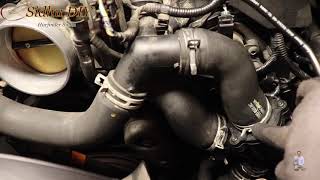
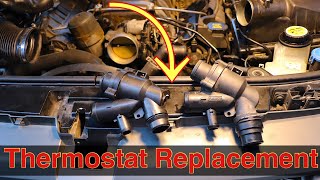
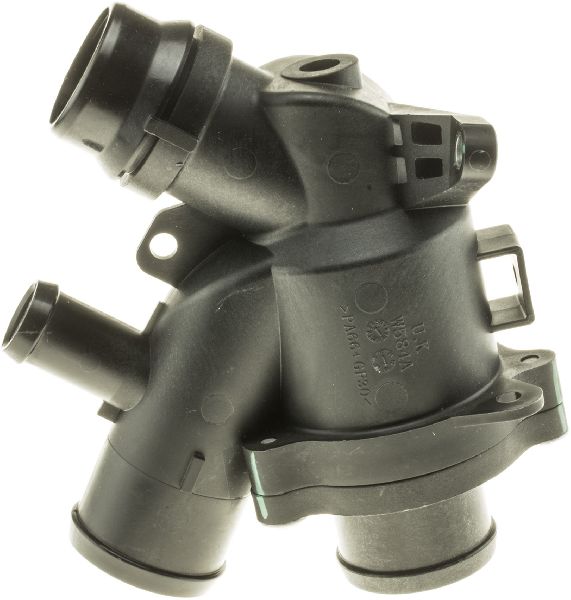
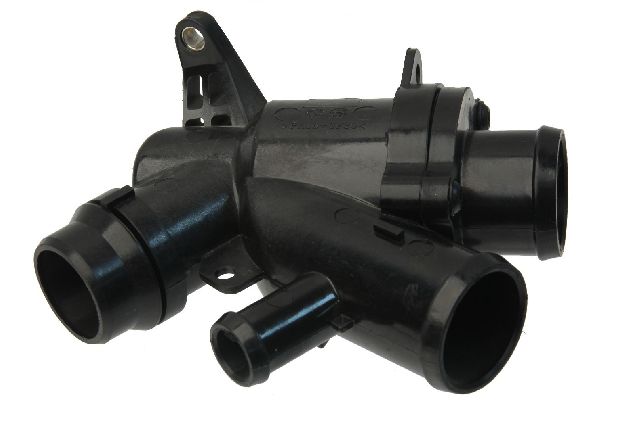
Typical fix: Replace the entire thermostat and housing assembly. 🎬 Watch: Step-by-step guide to replacing the thermostat assembly. It is highly recommended to use an OEM or high-quality OE-equivalent part. Due to its location, this repair also involves removing the intake manifold.
Est. part cost: $150-$250 - Faulty Engine Coolant Temperature (ECT) Sensor 🟡 Medium Probability The ECT sensor can fail and send inaccurate readings to the ECM. While less common than thermostat failure, it's a possibility, especially on higher-mileage vehicles.
How to confirm: Monitor live data from the ECT sensor with a scan tool. If the reading is erratic, nonsensical (e.g., jumping from cold to hot instantly), or doesn't change as the engine warms up, the sensor is likely bad. A technician can also test the sensor's resistance against specifications.
Typical fix: Replace the engine coolant temperature sensor. This is often done at the same time as the thermostat since the cooling system is already drained. The OEM part number is 4346360.
Est. part cost: $30-$80 - Low Engine Coolant Level ⚪ Low Probability While not a direct cause of running too cool, a very low coolant level can create air pockets in the system, which may cause the ECT sensor to read incorrectly and trigger the code. The L322 Range Rover is also known for coolant leaks from plastic components like crossover pipes, the water pump, and the expansion tank itself.
How to confirm: Visually inspect the coolant level in the expansion tank when the engine is cold. If it is low, top it off with the correct type of coolant (typically orange OAT coolant) and inspect for leaks.
Typical fix: Top off the coolant and find and repair the source of the leak. Common leak points include the water pump, radiator, hoses, and the front/rear coolant crossover pipes.
Est. part cost: $20-$500+ (depending on the source of the leak)
Rare But Worth Checking
- Cooling Fan Stuck On: If the electric cooling fan runs constantly, even when the engine is cold, it can over-cool the engine and prevent it from reaching operating temperature. This usually points to a faulty fan control module or a wiring issue. If the ECT sensor fails, the ECM may default to running the cooling fans permanently as a fail-safe measure.
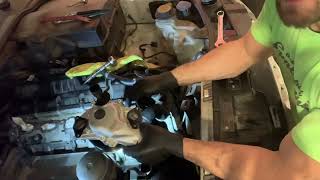
- Air Pockets in Cooling System: If the cooling system was recently serviced and not bled properly, trapped air can cause erratic temperature readings and trigger P0128. Forum members strongly recommend using a vacuum filler on the JLR 5.0L V8 🎬 Watch: Accessing the difficult rear coolant crossover tube. to avoid this issue.
Diagnosis Steps
- Check the coolant level in the expansion tank (when the engine is cold). Ensure it is at the 'MAX' line.
- Inspect for any visible signs of coolant leaks around the engine bay, particularly at the water pump, thermostat housing, radiator, and hoses. Pay close attention to the plastic coolant crossover pipes at the front and rear of the engine.
- Connect an OBD-II scanner and check for any other stored trouble codes, paying special attention to P0126.
- Use the scanner's live data function to monitor the Engine Coolant Temperature (ECT).
- Start the engine from cold and watch the ECT reading. It should climb steadily.
- Drive the vehicle and observe the ECT. It should reach and maintain a temperature between approximately 195°F and 215°F. If it stays well below this range (e.g., 170-180°F), the thermostat is stuck open.
- If the temperature reading is erratic or illogical, the ECT sensor or its wiring is the likely culprit.
- If the sensor seems plausible, test its resistance when cold and warm and compare to specifications. For example, at 68°F (20°C), resistance should be ~2.45 kOhms.
Parts You'll Likely Need
- Engine Coolant Thermostat Assembly
(OEM #LR032135 (supersedes LR010796, LR010799, LR023429, LR029143))— This is the most common cause of code P0128 on this vehicle. The original part is prone to failing in the open position. The entire housing is replaced as a unit.
Trusted brands: Land Rover (Genuine), Mahle, Behr
OEM price range: $150-$250
Aftermarket price range: $70-$150 - Engine Coolant Temperature Sensor
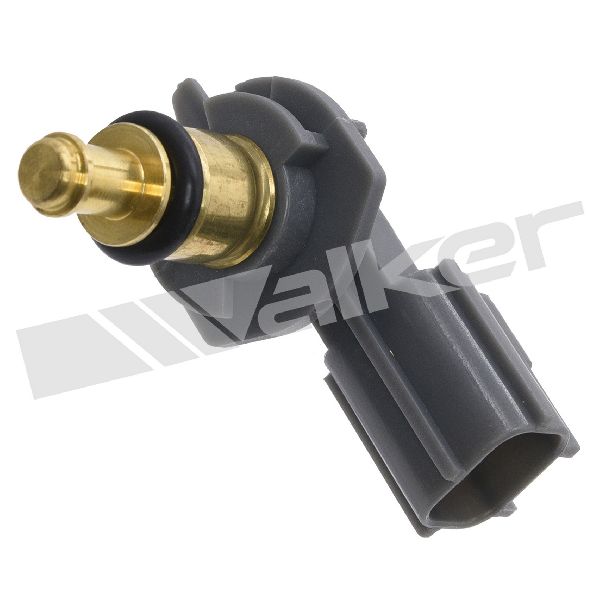
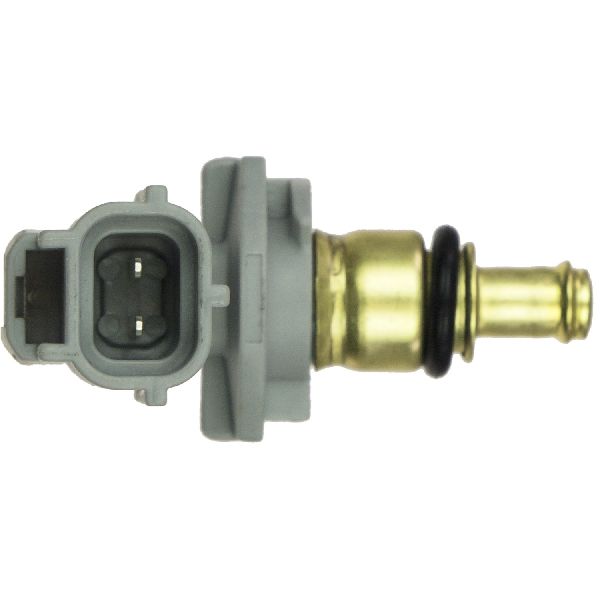
(OEM #4346360 (replaces LR041442))— This is the second most likely cause if the thermostat is functioning correctly. It can send false readings to the computer.
Trusted brands: Land Rover (Genuine), Bosch, NTK
OEM price range: $50-$90
Aftermarket price range: $20-$50
Related Codes That Often Appear With This One
- P0126 — P0126 ('Insufficient Coolant Temperature for Stable Operation') is a very similar code and is often triggered along with P0128. The Land Rover TSB LTB00461NAS2 explicitly groups these two codes together for the same underlying issue.
Technical Service Bulletins (TSBs) & Recalls
- LTB00461NAS2: Engine MIL Illuminated with DTC P0126-26/P0128-00 Stored
Platform-Specific Known Issues
- Land Rover issued Technical Service Bulletin #LTB00461NAS2 regarding the Malfunction Indicator Lamp (MIL) being illuminated with DTC P0128-00 or P0126-26 stored in the ECM. This bulletin points towards a known issue requiring diagnosis and potential replacement of cooling system components, confirming this is a recognized fault by the manufacturer.
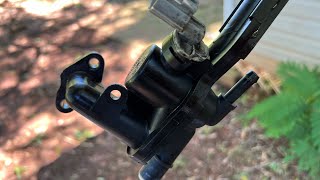
- The plastic cooling system components on the 5.0L V8 are notorious for becoming brittle and failing. When replacing the thermostat for a P0128 code, it is highly recommended by owners in forums to proactively replace the front and rear plastic coolant crossover pipes and the water pump, as they are likely near the end of their service life and require similar labor to access. 🎬 See how to replace the water pump and crossover pipes.
Mechanic-Grade Diagnostic Values
- Engine Coolant Temperature (ECT) Sensor Resistance — expected: Resistance varies with temperature. At 20°C (68°F), expect ~2.45 kOhms. At 80°C (176°F), expect ~0.318 kOhms (318 Ohms). At 110°C (230°F), expect ~0.147 kOhms (147 Ohms).. Failure: A reading of infinite ohms (open circuit) or a value that does not change with temperature indicates a failed sensor. Readings that are significantly outside the expected range for a given temperature also indicate a fault.
- Engine Coolant Temperature (ECT) Sensor Voltage (Signal Pin to Ground) — expected: The voltage should be between 2V and 3V on a cold engine and decrease smoothly to around 0.5V as the engine warms to operating temperature.. Failure: A voltage that is stuck, erratic, or does not correspond to the actual engine temperature (e.g., staying high when the engine is hot) points to a sensor or wiring issue.
Hidden / Shadow Codes Worth Checking
- P0128-00: The '-00' suffix is a standard JLR sub-code indicating a general or non-specific fault. It means the criteria for P0128 have been met, but there is no additional subtype information (e.g., circuit high/low) being reported by the ECM. This is the most common variant seen for this issue. (see via JLR SDD (Symptom Driven Diagnostics) or a professional scan tool capable of reading manufacturer-specific codes.)
Scan Tool Commands That Help
- JLR SDD (Symptom Driven Diagnostics): Symptom Selection > Powertrain > Engine system > Engine cooling — This is the manufacturer-prescribed starting point for diagnosis. After identifying the vehicle, selecting this symptom path will prompt the software to run automated tests and provide guided diagnostic recommendations, including relevant TSBs and component checks for P0128.
- JLR SDD (Symptom Driven Diagnostics): Recommendations > Datalogger / Live Data — To monitor the 'Engine Coolant Temperature' PID in real-time while the engine warms up. This is the primary method to confirm if the thermostat is stuck open (temperature plateaus too low) or if the sensor reading is erratic.
- JLR SDD (Symptom Driven Diagnostics): Recommendations > Clear all stored diagnostic trouble codes — After the repair is complete, this function is used to clear the P0128 code from the ECM. The vehicle should then be driven through a full warm-up cycle to confirm the code does not return.
Wiring & Ground Locations
- Engine Coolant Temperature (ECT) Sensor — Located at the rear of the engine in the plastic water crossover pipe that sits in the 'V' between the two cylinder heads. Access requires removal of the intake manifold.. This sensor provides the primary data for the P0128 code. A fault in its wiring, connector, or ground can mimic a failed thermostat or sensor. The connector has two pins: Pin 1 is the sensor output signal to the ECM, and Pin 2 is the sensor ground.
Real Owner Repair Stories
- Honda-Tech forum user (2001 Honda Accord (different vehicle, but illustrates a valuable universal diagnostic principle)) — P0128 code, temperature gauge would randomly drop to cold on the highway and then bounce back up. Live data showed ECT readings jumping from ~181°F down to ~117°F and back.
❌ Tried (didn't work) Replaced thermostat twice (once with aftermarket, once with OEM)., Replaced the engine coolant temperature sensor., Vacuum-filled the cooling system to eliminate air pockets.
✅ What actually fixed it The fault was in the instrument gauge cluster itself. The owner noticed the gauge would react to tapping the cluster. Upon disassembly, the pins connecting the circuit board to the temperature gauge were found to be wobbly. Securing these connections resolved the issue permanently. - Reddit user on r/LandRover (Land Rover LR3 (similar platform)) — Intermittent P0128 code and check engine light immediately after replacing the thermostat and housing.
❌ Tried (didn't work) Topping off coolant., Bleeding air from the system using the bleed screw.
✅ What actually fixed it The user was still diagnosing, but the symptoms (intermittent code after replacement) strongly point to either a defective new thermostat or, more likely, a persistent air pocket in the cooling system that was not removed by simple bleeding, highlighting the need for a proper vacuum-fill procedure on these vehicles.
"I Checked Everything" — The Actual Cause
- For code P0128, the equivalent of a 'smoke test clean' scenario is when the thermostat and ECT sensor have both been replaced, and the cooling system has been properly bled, yet the code persists. In these cases, the root cause is often electrical and not related to the flow of coolant. A documented case on a different vehicle found the cause to be loose solder joints for the temperature gauge pins inside the instrument cluster, which caused erratic readings to be interpreted by the system. The fault was only found by physically tapping the dashboard and noticing the gauge needle flicker, a step far outside the standard diagnostic procedure for a cooling system code.
OEM Part Supersession History
LR010796, LR010799, LR023429, LR029143→LR032135— Progressive design revisions by the manufacturer to improve reliability and address the common failure of the thermostat sticking open.
Heads up: All previous part numbers are superseded by LR032135. When replacing, ensure you are purchasing the latest part number to get the most updated design.
Helpful Videos
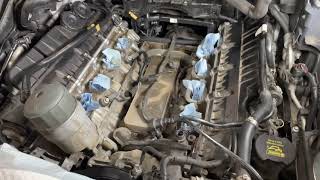
Used OEM Parts in Stock
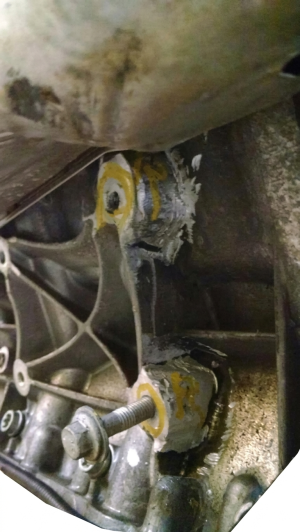
New Aftermarket Parts Available



The information in this article is provided for general reference and educational purposes only. Vehicle specifications, procedures, and part compatibility can vary by production date, trim level, and region. Always consult your vehicle's factory service manual and verify part numbers before purchasing or performing repairs. Safety-critical components such as airbags, seat belts, and braking systems should be installed by a qualified professional.
- Land Rover RANGE ROVER:
- 🎬 Helpful Videos
- 🛍️ Shop This Part
- What's Unique About the 2010-2012 Land Rover RANGE ROVER
- Diagnostic Flowchart
- Symptoms You May Notice
- Most Likely Causes
- Rare But Worth Checking
- Diagnosis Steps
- Parts You'll Likely Need
- Related Codes That Often Appear With This One
- Technical Service Bulletins (TSBs) & Recalls
- Platform-Specific Known Issues
- Mechanic-Grade Diagnostic Values
- Hidden / Shadow Codes Worth Checking
- Scan Tool Commands That Help
- Wiring & Ground Locations
- Real Owner Repair Stories
- "I Checked Everything" — The Actual Cause
- OEM Part Supersession History
- 🎟️ Get 5% Off