

P0128 on 2010-2013 Kia Forte: Causes and Fixes for Engine Running Too Cool
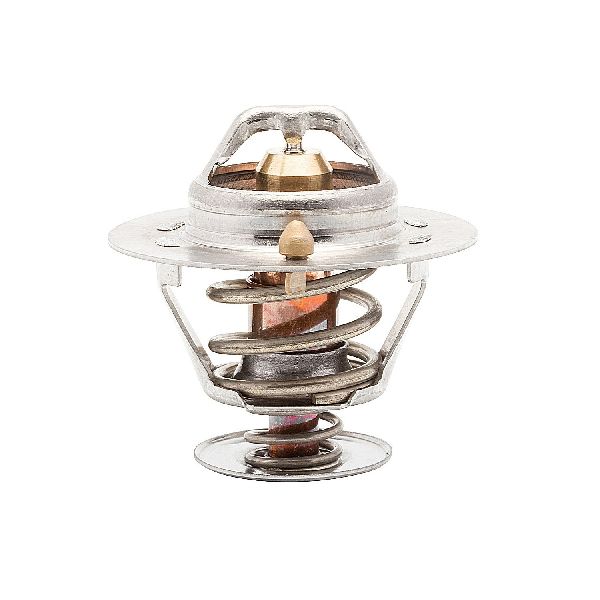
On a 2010-2013 Kia Forte, code P0128 almost always means the engine thermostat is stuck open and needs to be replaced. This specific generation uses an integrated thermostat and housing assembly, which is more expensive than later models. Expect to pay $40-$100 for the part and plan for 1-2 hours of DIY labor. Before replacing parts, ensure the coolant level is correct and there are no obvious leaks.
- P0128 on a 2010-2013 Kia Forte almost always points to a thermostat that is stuck open.
- For this specific year range and engine, you must replace the entire integrated thermostat and housing assembly, not just the thermostat itself.
- Before replacing parts, always check the coolant level first, as a low level can also trigger this code.
- Use a scan tool to watch the live coolant temperature data to confirm the thermostat is failing to bring the engine to the correct operating temperature.
- After the repair, ensure you use the correct phosphate-based Asian vehicle coolant and properly bleed all air from the system to prevent a recurrence of the code.
What's Unique About the 2010-2013 Kia Forte
The first-generation Kia Forte (2010-2013) with the Theta II engine uses a larger, integrated thermostat and housing assembly. Unlike later models where the thermostat can be replaced separately, on this platform, the entire unit must be replaced. This makes the part more expensive and the job slightly more involved. This design is shared with other Hyundai/Kia vehicles from the same era using the 2.0L and 2.4L Theta II engines, such as the Kia Optima and Hyundai Sonata.
Symptoms You May Notice
- Check Engine Light is on
- Engine takes a very long time to warm up
- Temperature gauge on the dashboard stays low or drops during highway driving
- Cabin heater blows lukewarm air or takes a long time to get hot
- Noticeable decrease in fuel economy
- Failed emissions test due to monitors not being ready
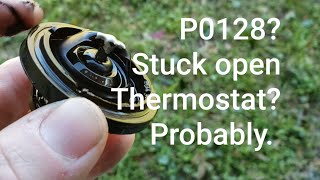
- Replacing the Engine Coolant Temperature (ECT) sensor when the thermostat is the actual problem. Always diagnose by watching the live temperature data on a scan tool before replacing parts. 🎬 Watch: A pro mechanic's guide to diagnosing the P0128 code.
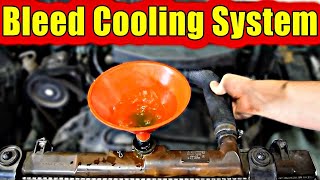
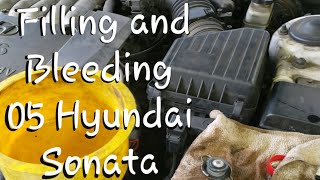
- Failing to properly bleed air from the cooling system after a repair, which can trap air pockets and cause incorrect temperature readings or a repeat P0128 code. 🎬 Watch: Three effective ways to bleed air from your cooling system.
- Ignoring the code long-term. A constantly cold engine runs rich ('open loop'), which washes oil off cylinder walls, accelerates wear, and can eventually damage the catalytic converter.
Most Likely Causes
- Thermostat Stuck Open 🔴 High Probability This is the most common failure mode for modern thermostats and the primary cause of P0128 on most vehicles, including the Forte. The internal rubber seal on the thermostat valve degrades over time, allowing coolant to bypass it and flow to the radiator constantly.
How to confirm: Use an OBD-II scanner with live data to monitor the Engine Coolant Temperature (ECT). After a cold start, the temperature should rise steadily to around 195°F. If it gets stuck at a lower temperature (e.g., 140-160°F), rises very slowly, or drops at highway speed, the thermostat is stuck open. Alternatively, perform the 'Upper Hose Test' on a cold engine: if the upper radiator hose becomes warm within the first 60-90 seconds of starting, coolant is flowing prematurely, confirming a stuck-open thermostat.
Typical fix: Replace the entire thermostat and housing assembly. The system must then be refilled with the correct coolant and properly bled of air to prevent air pockets.
Est. part cost: $40-$100 - Low Engine Coolant Level 🟡 Medium Probability
How to confirm: Visually inspect the coolant reservoir and the radiator (when the engine is completely cool). If the level is below the 'MIN' or 'LOW' mark, it is low. An air pocket near the ECT sensor caused by low coolant can lead to an inaccurate low reading.
Typical fix: Top off the cooling system with the correct type of coolant (a phosphate-based Asian vehicle coolant, typically green or blue-green). If a leak is found, the leaking component must be repaired or replaced.
Est. part cost: $15-$30 for coolant - Faulty Engine Coolant Temperature (ECT) Sensor ⚪ Low Probability
How to confirm: With a scan tool, compare the ECT sensor reading to other temperature sensors (like the intake air temp) on a cold engine; they should be similar. If the ECT reads an illogical value (e.g., -40°F or 250°F) on a cold engine, the sensor or its wiring is faulty. A faulty ECT sensor will often trigger other specific codes like P0116, P0117, or P0118.
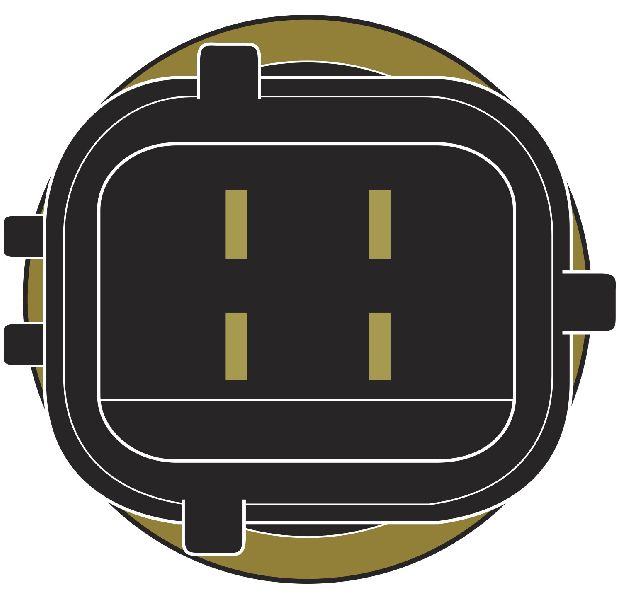
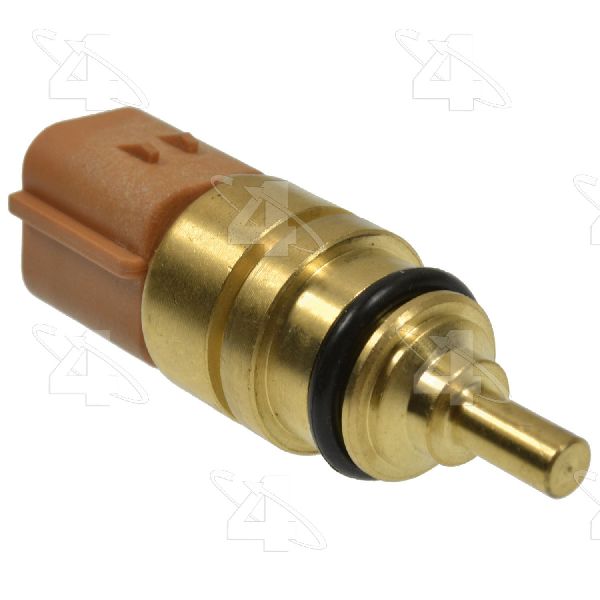
Typical fix: Replace the engine coolant temperature sensor and ensure the electrical connector is clean and secure.
Est. part cost: $20-$50
Rare But Worth Checking
- Cooling Fan Stuck On: If the electric radiator fan runs constantly, even when the engine is cold, it can prevent the engine from warming up properly. This is usually caused by a failed fan relay or fan control module.
- Incorrect Coolant Mixture: On some Hyundai/Kia vehicles, the diagnostic logic is sensitive. Using a coolant mix with more than a 50/50 concentration of antifreeze and distilled water can sometimes trigger a P0128 code, as mentioned by technicians in forums.
- ECU Software Logic: Kia has issued TSBs for other models (e.g., TSB ENG156 for the Soul, ENG206 for the Optima) to update the ECU software because the original parameters for triggering P0128 were too sensitive. While not specific to the 2010-13 Forte, it shows a pattern of this being a potential issue.
Diagnosis Steps
- Check for other Diagnostic Trouble Codes (DTCs) with a scan tool.
- Visually inspect the coolant level in the reservoir and radiator (only when the engine is cold). Top off if necessary.
- Check for any visible coolant leaks around the engine bay, hoses, and radiator.
- Use a scan tool with live data to monitor the Engine Coolant Temperature (ECT) sensor.
- Start the engine from cold and observe the ECT data. The temperature should rise steadily and stabilize around 195-215°F.
- If the temperature rises very slowly, never reaches the target, or drops significantly when driving at speed, the thermostat is almost certainly stuck open and needs replacement.
- If the temperature reading is erratic or clearly incorrect from the start (e.g., reads -40°F), suspect a faulty ECT sensor or wiring. Compare to the Intake Air Temperature sensor reading on a cold engine for confirmation.
- After repair, clear the code and perform a drive cycle to ensure the problem is resolved.
Parts You'll Likely Need
- Engine Coolant Thermostat and Housing Assembly
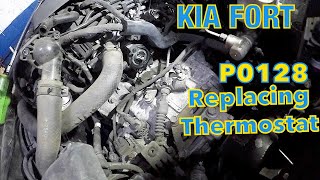
(OEM #25620-2G010 (supercedes 25620-2G000))— This is the most common cause of P0128. For the 2010-2013 Forte, the thermostat is integrated into the housing and replaced as a single unit. 🎬 See this step-by-step walkthrough for replacing the Forte thermostat housing.
Trusted brands: Genuine Kia/Hyundai, Beck/Arnley, Gates, Fel-Pro
OEM price range: $70-$100
Aftermarket price range: $40-$75 - Engine Coolant — The cooling system must be partially drained to replace the thermostat and refilled afterward. Use a phosphate-based Asian vehicle coolant (Green or Blue-Green).
Trusted brands: Genuine Kia Long Life Coolant, Pentofrost A2, Zerex Asian Vehicle (Green or Blue)
OEM price range: $25-$35 per gallon
Aftermarket price range: $15-$25 per gallon
Technical Service Bulletins (TSBs) & Recalls
- SA419: For later model Forte GTs (2019-2020), an ECU update was issued to improve the logic for P0128, indicating Kia has adjusted diagnostic parameters for this code on other platforms. [This is a pattern, not directly applicable to 2010-13 models].
- PS267: A Kia Pitstop document warns of repeat P0128 codes after thermostat replacement due to incorrect installation, highlighting the importance of proper seating and gasket placement. Specifically, TSB Bulletin #PS267 advises technicians to remove the thermostat housing to verify if the installation procedure was followed correctly when diagnosing a vehicle returning with a repeat DTC P0128.
- ENG156 / ENG206: TSBs for other Kia models (Soul, Optima) that involve an ECU software upgrade to fix overly sensitive P0128 logic, suggesting this is a known issue within the Hyundai/Kia family.
Platform-Specific Known Issues
- Incorrect Gasket Placement During Reassembly: A common DIY mistake is placing the new thermostat housing gasket on the housing itself instead of in the groove on the engine block. This will cause a coolant leak under pressure and can lead to a repeat P0128 code or overheating.
Mechanic-Grade Diagnostic Values
- Engine Coolant Temperature (ECT) Sensor Resistance — expected: Resistance decreases as temperature increases. At ~20°C (68°F), expect ~2,200–3,000 Ω. At ~80°C (176°F), expect ~250–350 Ω.. Failure: A reading of infinite resistance (open circuit), zero resistance (short circuit), or values significantly outside the expected range for a given temperature indicates a faulty sensor.
- Engine Coolant Temperature (ECT) Sensor Voltage — expected: Voltage decreases as temperature increases. On a 5V reference circuit, a cold start at ~20°C (68°F) should show ~3.0–3.5V. At normal operating temperature ~80°C (176°F), voltage should be ~1.0–1.3V.. Failure: Voltage that is stuck high (e.g., 5V) or low (e.g., 0V), or that does not change smoothly as the engine warms, points to a sensor or wiring circuit fault.
Scan Tool Commands That Help
- Kia GDS (Global Diagnostic System): Vehicle S/W Management — To check for and apply any available ECU software updates. For some Kia models, an update was released to change the P0128 trigger logic, making this a critical diagnostic step before replacing hardware.
Real Owner Repair Stories
- BobIsTheOilGuy.com forum user '2.1 SX' (Kia Forte 2.4L (Implied 2010-2013)) — P0128 Check Engine Light appeared after a preventative thermostat and coolant change.
❌ Tried (didn't work) The initial thermostat replacement itself caused the code to appear.
✅ What actually fixed it The user had installed the new thermostat housing gasket on the housing itself, not in the groove on the engine block where it belonged. This caused a coolant leak under pressure. The fix was to disassemble, place the gasket in the correct location on the engine block, reassemble, and properly bleed the system. The code did not return after the proper installation.
OEM Part Supersession History
25620-2G000→25620-2G010— Standard part revision or improvement by the manufacturer.
Heads up: The changeover date was December 28, 2009. Vehicles manufactured before this date use 25620-2G000, while vehicles manufactured after use 25620-2G010. It is critical to verify the vehicle's production date when ordering for a 2010 model.
Model Year Variations Within This Range
- 2010: There was a mid-year change for the thermostat housing assembly. Part number 25620-2G000 was used for models built up to December 28, 2009, and was superseded by 25620-2G010 for models built after that date.
Diagnostic Flowchart
Other Known Issues on This Vehicle
Issues unrelated to this code that are worth knowing about as an owner of this generation:
- Catastrophic Engine Failure (Rod Bearing Failure) 🔴 High — Widespread across the Theta II engine family. Can occur at various mileages, often without warning. Leads to engine seizure or fire. (Ref: Subject of multiple class-action lawsuits (e.g., Case No. 8:18-cv-02223) and recalls, leading to lifetime warranties and engine replacement programs for affected VINs.)
- Piston Scuffing / Engine Knocking ("Piston Slap") 🔴 High — Common issue noted in the 2.0L and 2.4L engines, characterized by a loud knocking noise that is present at startup and may persist. Often requires engine block replacement. (Ref: Subject of a class-action lawsuit filed by the Automobile Protection Association (APA) for 2010-2015 Forte models.)
- Faulty Flexible Steering Coupler 🟠 Medium — Extremely common wear item. The rubber coupler disintegrates over time, causing a distinct clicking or knocking sound in the steering column when turning the wheel at low speeds. (Ref: No official recall, but it is a widely documented failure. The OEM replacement part is inexpensive, but labor can be significant.)
- Excessive Oil Consumption 🟠 Medium — Many owners report that the Theta II engine consumes oil at an abnormally high rate, which can lead to low oil levels and contribute to premature engine wear or failure if not monitored closely. (Ref: Addressed as part of the broader engine defect lawsuits and settlements.)
Used vs. New Parts: Buying Guide for This Vehicle
When a used part is the smart pick: For this specific repair, a used part is NOT recommended. The thermostat is a mechanical wear item with a finite lifespan. A used thermostat and housing assembly from a junkyard carries a high risk of being near the end of its life or already failed in the same way.
What to inspect on the donor part:
- Not applicable, as a used part is not advised for this repair.
OEM-only on this vehicle (don't cheap out):
- While not strictly 'OEM-only', using a Genuine Kia/Hyundai thermostat housing (P/N: 25620-2G010) is the safest choice to ensure correct fitment and thermostat operating temperature (82°C). The integrated nature of the part makes it more critical than a simple drop-in thermostat.
Aftermarket brands forum-validated for this vehicle:
- Gates
- Beck/Arnley
Brands owners have reported issues with on this vehicle:
- No-name, unbranded parts from online marketplaces should be avoided, as the thermostat's opening temperature and long-term reliability are questionable and can lead to a repeat failure.
Real Owner Stories
Aggregated from forums and TSBs cited above. Mileages and costs reflect what owners reported in those sources.
2010-2013 Kia Forte 2.4L
Symptoms: P0128 code appeared immediately after replacing the thermostat. The owner also noted the importance of proper air bleeding to prevent air pockets.
What fixed it: Correcting the gasket placement; the gasket must be placed in the groove on the engine block, not on the housing itself.
Source hint: BobIsTheOilGuy.com - Thread: 'P0128 Coolant code on the Forte 2.4L'
Related OBD-II Codes
Frequently Asked Questions
I replaced the thermostat on my 2.4L Forte but the P0128 code came back immediately. Did I get a bad part?
Is there a software update for P0128 on the 2010-2013 Kia Forte?
Why is my fuel economy dropping along with the P0128 code?
What type of coolant should I use to top off my Forte's radiator?
Can a bad temperature sensor cause P0128 on my Kia?
Helpful Videos
We Have This Part in Stock


The information in this article is provided for general reference and educational purposes only. Vehicle specifications, procedures, and part compatibility can vary by production date, trim level, and region. Always consult your vehicle's factory service manual and verify part numbers before purchasing or performing repairs. Safety-critical components such as airbags, seat belts, and braking systems should be installed by a qualified professional.
- Kia Forte:
- 🎬 Helpful Videos
- 🛍️ Shop This Part
- What's Unique About the 2010-2013 Kia Forte
- Symptoms You May Notice
- Most Likely Causes
- Rare But Worth Checking
- Diagnosis Steps
- Parts You'll Likely Need
- Technical Service Bulletins (TSBs) & Recalls
- Platform-Specific Known Issues
- Mechanic-Grade Diagnostic Values
- Scan Tool Commands That Help
- Real Owner Repair Stories
- OEM Part Supersession History
- Model Year Variations Within This Range
- Diagnostic Flowchart
- Other Known Issues on This Vehicle
- Used vs. New Parts: Buying Guide for This Vehicle
- Real Owner Stories
- 2010-2013 Kia Forte 2.4L
- Related OBD-II Codes
- Frequently Asked Questions
- 🎟️ Get 5% Off