

P0128 on 2014-2018 GMC Sierra 1500: Causes and Fixes for Low Coolant Temperature
On a 2014-2018 GMC Sierra, code P0128 almost always indicates a faulty thermostat that is stuck open. This is a very common failure for this platform. The most common fix is to replace the entire thermostat and housing assembly with an OEM part. This part typically costs between $45 and $90, and it is a DIY-friendly repair for most owners.
- P0128 on a 2014-2018 Sierra almost certainly means your thermostat has failed in the open position.
- Symptoms include a low reading on the temperature gauge, poor cabin heat, and cooling fans that won't shut off.
- The fix is to replace the entire thermostat and housing assembly (GM Part No. 12677895 or equivalent).
- This is a common and relatively simple DIY repair that can be done with basic hand tools in 1-2 hours.
- Always use DEX-COOL approved coolant when refilling the system after the repair.
What's Unique About the 2014-2018 GMC Sierra 1500

On the K2XX generation of GMC Sierra trucks (2014-2019), the P0128 code is an extremely common issue. The original equipment thermostat is known to fail in the 'open' position, which is a fail-safe to prevent overheating but results in the engine running too cool. The thermostat is integrated into a plastic housing, and the entire assembly must be replaced as a single unit. This is a well-documented problem across forums and mechanic communities for these specific trucks and their platform mates. For 2014-2016 models, a faulty original-design thermostat can also lead to radiator failure due to excessive thermal cycles, as noted in GM TSB PI1513.
Symptoms You May Notice

- Check Engine Light is on.
- Engine temperature gauge reads lower than normal or stays on the cold peg (e.g., stuck around 160-175°F instead of the usual ~210°F).
- Cabin heater blows lukewarm or cool air, especially in cold weather.
- Cooling fans run constantly at high speed, even after the engine is shut off.
- Slight decrease in fuel economy due to the engine running rich.
- A/C system may be disabled by the ECM as a protective measure.
- In some instances, a Malfunction Indicator Lamp (MIL) for P0128 may be accompanied by engine vibration or a humming sensation felt through the steering wheel, as noted in Bulletin #17-NA-171.
- Replacing the Engine Coolant Temperature (ECT) sensor when the thermostat is the actual cause. While the sensor can fail, a stuck-open thermostat is far more common for this specific code on these trucks. Many owners replace both at the same time due to the low cost of the sensor and the shared labor. 🎬 Watch: A simple walkthrough for replacing both the thermostat and sensor.
Most Likely Causes

- Thermostat stuck open 🔴 High Probability The OEM thermostat is designed to fail in the open position as a fail-safe. This is the most common point of failure in the cooling system for this code, with countless owner reports online. On 2014-2016 models, the original thermostat design was prone to excessive cycling, which could also cause radiator leaks (TSB PI1513).
How to confirm: Monitor the temperature gauge or live ECT data with a scan tool while driving. If it fails to reach the normal operating temperature (approx. 210°F) or drops significantly at highway speeds, the thermostat is almost certainly stuck open.
Typical fix: Replace the entire thermostat and housing assembly. The thermostat is not sold separately from the housing for this application. It is highly recommended to use an OEM ACDelco part to avoid premature failure of aftermarket units.
Est. part cost: $45-$90 - Faulty Engine Coolant Temperature (ECT) Sensor ⚪ Low Probability
How to confirm: Use a scan tool to monitor the live data from the ECT sensor. If the reading is erratic, nonsensical (e.g., reads -40°F on a warm day), or never changes even as the engine warms up, the sensor is likely bad. However, a sensor that reads consistently low can be hard to distinguish from a stuck-open thermostat without comparing its reading to a physical temperature measurement at the housing. A definitive test involves checking the sensor's resistance against a temperature chart.
Typical fix: Replace the ECT sensor. It is located near the thermostat housing and is relatively inexpensive and easy to replace.
Est. part cost: $20-$40 - Low Engine Coolant Level ⚪ Low Probability
How to confirm: Visually inspect the coolant reservoir. If the level is below the 'Full Cold' line, it needs to be topped off. An air pocket in the system from a low coolant level can cause the ECT sensor to give a false low reading. Check for visible leaks in the system (hoses, radiator, water pump).
Typical fix: Top off the coolant with the correct type (ACDelco DEX-COOL Orange) and bleed the system. Repair any leaks found.
Est. part cost: $20-$30 for coolant
Rare But Worth Checking
- Cooling fan running constantly: A stuck fan relay or faulty fan control module can cause the fan to run at full speed continuously, over-cooling the engine and potentially triggering a P0128 code. However, for this vehicle, the P0128 code itself often *causes* the fans to run constantly as a default fail-safe, so this is more likely a symptom than a cause. 🎬 See why your fans run at full speed with code P0128.
Diagnosis Steps
- Verify the Check Engine Light is on and code P0128 is present using an OBD-II scanner.
- Check the engine coolant level in the reservoir. If low, top off with a 50/50 mix of DEX-COOL approved coolant and distilled water and check for leaks.
- Start the engine from cold and monitor the live ECT sensor data on a scan tool. Simultaneously, you can use an infrared thermometer to measure the temperature of the upper radiator hose.
- If the upper radiator hose starts to warm up immediately after starting the engine (before the ECT reaches ~180°F), coolant is flowing prematurely, confirming the thermostat is stuck open.
- If the hose remains cold while the engine warms up and then suddenly gets hot as the temperature approaches ~210°F, the thermostat is likely functioning correctly.
- Drive the vehicle at highway speeds. If the temperature gauge or live data reading drops significantly, it strongly indicates the thermostat is stuck open and unable to regulate temperature under high airflow.
- If the ECT sensor data is erratic, jumps around, or reads an illogical value (like -40°F), the sensor itself or its wiring is the likely culprit. To confirm, test the sensor's resistance when cold and compare it to a spec chart (e.g., ~3520 Ohms at 68°F/20°C).
- If the coolant level is correct and the ECT sensor appears to be functioning, the most probable cause is a stuck-open thermostat.
- To replace the thermostat, allow the engine to cool completely. Place a drain pan under the radiator and partially drain the coolant using the petcock.
- Remove the air intake ducting for better access to the thermostat housing, located at the front-top of the engine where the upper radiator hose connects.
- Disconnect the upper radiator hose and any smaller bypass hoses from the thermostat housing. Be prepared for some coolant spillage.
- Remove the bolts securing the thermostat housing to the engine block (typically three 10mm bolts) and remove the old assembly.
- Clean the mating surface on the engine block thoroughly. Install the new thermostat assembly with its new gasket/seal, and tighten the bolts to specification (typically 10 ft-lbs or 120 lb-in). 🎬 Watch this quick video to see the thermostat replacement process.
- Reconnect the hoses and refill the cooling system with the drained coolant (if clean) or new coolant. A spill-free funnel kit is highly recommended to properly bleed air from the system.
- Start the engine with the heater on high and the radiator cap/funnel open. Allow it to warm up to operating temperature to purge any air from the system. You will see bubbles coming up through the funnel. Top off coolant as needed.
- Clear the P0128 code with the scanner and verify the repair by driving the vehicle and ensuring the temperature gauge now reads correctly and holds steady at ~210°F.
Parts You'll Likely Need

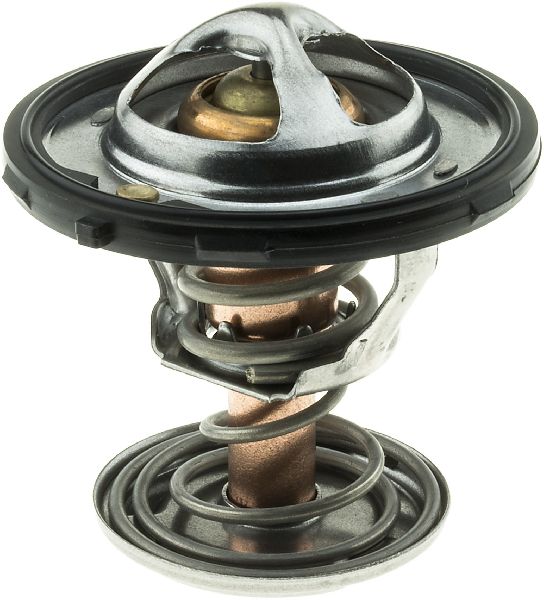
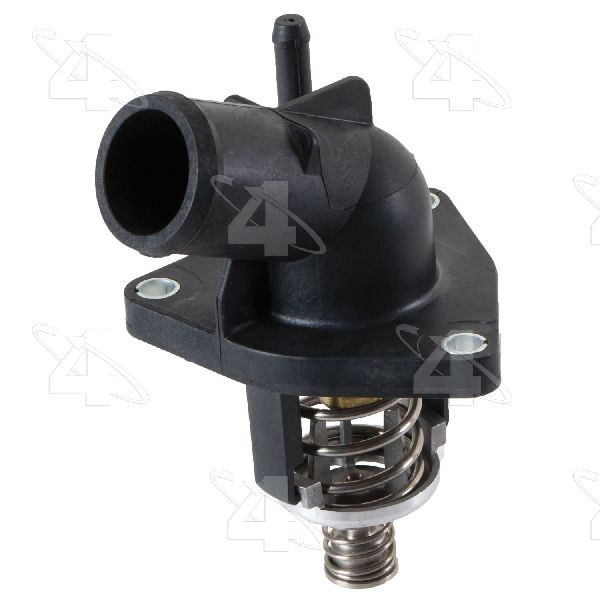
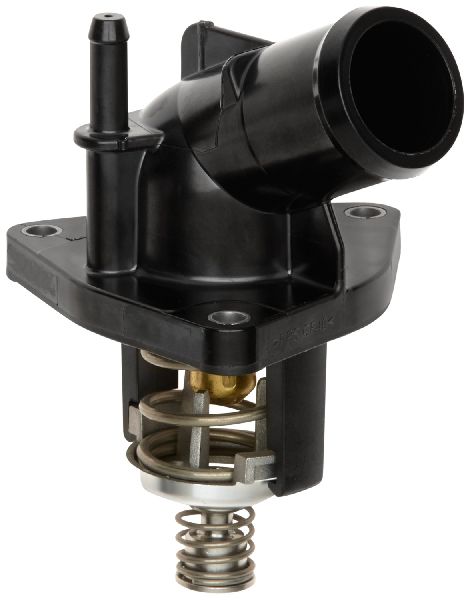
- Engine Coolant Thermostat with Housing
(OEM #12677895)— This is the primary cause of code P0128 on these trucks. The thermostat fails in the open position and is integrated with the housing, requiring replacement as a complete unit. The ACDelco Professional part is 15-11125G.
Trusted brands: ACDelco (OEM), Motorad, Dorman
OEM price range: $60-$90
Aftermarket price range: $45-$70 - Engine Coolant (Antifreeze)
(OEM #ACDelco 10-101 (DEX-COOL Orange))— You will lose coolant when replacing the thermostat. It's necessary to top off or refill the system. Use of the correct DEX-COOL coolant is critical for system longevity.
Trusted brands: ACDelco, Prestone DEX-COOL
OEM price range: $20-$30 per gallon
Aftermarket price range: $18-$25 per gallon
Technical Service Bulletins (TSBs) & Recalls
- 20-NA-167: Pertains to 2019-2020 models for a false P0128 code due to a software issue, but highlights GM's awareness of issues with this diagnostic. It does not apply to the 2014-2018 models which typically have a mechanical fault.
- PI1513: Pertains to 2014-2016 models. Notes that an original-design thermostat can cycle excessively, leading to stress cracks and leaks in the radiator. The official fix is to replace both the radiator and the thermostat with an updated part (PN 12674639).
- Bulletin #PIP5685: Notes that engineering is aware of a customer concern regarding P0128 and is working on a repair. This bulletin advises technicians to clear the codes and not replace the thermostat for this specific concern at the time of publication.
- Bulletin #17-NA-171: Describes symptoms including the Malfunction Indicator Lamp (MIL) illuminated for DTC P0128, which may be accompanied by engine vibration or a humming sensation from the steering wheel.
Platform-Specific Known Issues
- Real Owner Experience: P0128 and Fans Running: On a Chevrolet Forum, a 2014 Silverado owner reported the classic P0128 symptoms: check engine light, fans running on high after engine shutoff, and a low coolant reservoir. The fix was replacing both the thermostat and the ECT sensor, after which the codes needed to be properly cleared with the ignition in the 'ON' position for the fix to take effect and the fans to return to normal operation.
- Recurring P0128 After Replacement: A Reddit user on r/AskAMechanic described a situation where P0128 returned months after having a shop replace the thermostat and sensor. This highlights the possibility of premature failure of aftermarket parts, or a more complex wiring issue, though a second thermostat failure is still a strong possibility.
Mechanic-Grade Diagnostic Values
- Engine Coolant Temperature (ECT) Sensor Resistance — expected: Resistance changes with temperature. Common values are: ~3520 Ω at 20°C (68°F), ~973 Ω at 50°C (122°F), ~332 Ω at 80°C (176°F), and ~177 Ω at 100°C (212°F).. Failure: An open circuit (infinite resistance) or a short (near-zero resistance). A reading that doesn't change as the engine warms up, or a value that is drastically different from the expected value at a known temperature.
- ECT Sensor Voltage at Connector (Key On, Engine Off) — expected: The ECM provides a 5V reference. With the sensor connected, voltage should vary with temperature. On a cold engine (~20°C/68°F), expect ~3.0-3.5V. On a warm engine (~80°C/176°F), expect ~1.0-1.3V.. Failure: A reading of 5V indicates an open circuit (unplugged sensor or broken wire). A reading of 0V indicates a short to ground.
- Thermostat Housing Bolt Torque — expected: 10 ft-lbs (120 lb-in or 13.6 Nm). Failure: N/A. This is an installation specification.
Scan Tool Commands That Help

- GM GDS2: Data Display / Graphing — A common professional diagnostic technique is to graph the Engine Coolant Temperature (ECT), Intake Air Temperature (IAT), and Ambient Air Temperature sensors together on a cold-soaked engine (off for several hours). Before starting, all three should read within a few degrees of each other. If the ECT sensor reads significantly different from the other two, it is faulty.
- GM GDS2: Coolant System Bleed / Coolant Pump Bleed Procedure — While not strictly required for a simple thermostat replacement on this truck, GDS2 does contain automated procedures for bleeding the cooling system on various GM vehicles. These functions are used to actuate pumps and valves to remove trapped air after a repair, ensuring no air pockets are left, which could cause erratic temperature readings.
Wiring & Ground Locations
- ECT Sensor Connector — On the thermostat housing, at the front top of the engine. The sensor itself is a brass-colored, 19mm hex component screwed into the housing.. This 2-pin connector is a common point for inspection. The wires are typically Pin A: Yellow (Signal) and Pin B: Tan/Black or Black (Low Reference/Ground). The ground is not a direct chassis ground but a sensor ground provided by the ECM. Damage or corrosion here can cause incorrect readings.
- Engine Block to Firewall Ground Strap — Typically a braided strap running from the rear of the engine block/cylinder head to the vehicle's firewall, often near the brake booster.. This is a primary ground path for the engine and its sensors. While the ECT sensor uses a dedicated low-reference from the ECM, the ECM itself relies on clean engine and body grounds. Poor grounding here can cause a host of intermittent electrical issues.
- Battery to Chassis/Engine Grounds — The main negative battery cable connects to the chassis on the passenger side. Another ground point is often found on the driver's side frame rail behind the front wheel.. These are the foundational grounds for the entire vehicle's electrical system. Corrosion or looseness at these points can create voltage drops and electrical noise that may affect sensor readings.
Real Owner Repair Stories
- YouTube channel 'How To Fix P0128 On Chevy Silverado!!' (2016 Chevrolet Silverado) — P0128 code, cooling fans running constantly, temperature gauge not reaching operating temp, A/C disabled.
❌ Tried (didn't work) The owner had previously replaced the ECT sensor to fix a P0118 code, but the P0128 code appeared afterward.
✅ What actually fixed it Replacing the complete thermostat and housing assembly resolved the P0128 code and all associated symptoms. The owner noted the permanent code will remain until the ECM completes a drive cycle and verifies the fix itself. - Reddit user on r/Silverado (2014 Chevrolet Silverado 4.3L V6) — Intermittent P0128, temperature gauge drops to cold while driving, fans run after shutoff.
❌ Tried (didn't work) Clearing the code would work temporarily for about 100 miles before it returned.
✅ What actually fixed it A responding technician strongly advised against using aftermarket thermostats, stating they are a common cause of recurring P0128 codes. The advice was to use only an OEM GM thermostat and sensor. Another user mentioned that chaffed wires on the ECT sensor harness could also be a potential cause if new OEM parts don't solve the issue.
OEM Part Supersession History
Unknown (Original thermostat on 2014-2016 models)→12674639— The original thermostat design was found to cycle excessively, causing thermal stress that could lead to radiator leaks.
Heads up: This is not an incompatibility, but a required upgrade. If a 2014-2016 model has a leaking radiator due to this issue, both the radiator and the thermostat must be replaced with the updated parts to ensure a permanent repair.
Model Year Variations Within This Range
- 2014-2016: These model years may have an original-design thermostat that is prone to excessive cycling, which can cause radiator failure per TSB PI1513. The recommended fix involves replacing the thermostat with an updated part number (12674639).
- 2016+: The part number for the Engine Coolant Temperature (ECT) sensor may differ for 2016 and newer models. The later part number is often listed as 25186240. While they may be interchangeable, it is critical to verify the correct part for your specific VIN to ensure accurate temperature readings.
Diagnostic Flowchart
Other Known Issues on This Vehicle
Issues unrelated to this code that are worth knowing about as an owner of this generation:
- Active Fuel Management (AFM) Lifter Failure 🔴 High — Widespread issue, can occur at various mileages (commonly 50k-100k miles). Affects both L83 and L86 engines. Leads to misfires (P0300), ticking noises, bent pushrods, and potential camshaft damage. (Ref: Multiple TSBs exist, including 19-NA-218, which addresses ticking noises and lifter issues. No formal recall has been issued, but the problem is the subject of class-action lawsuits.)
- 8-Speed (8L90/8L45) Transmission Shudder/Harsh Shift 🟠 Medium — Very common on vehicles equipped with the 8-speed automatic. Owners report a shudder or vibration during light acceleration, often described as driving over rumble strips. Typically appears between 20k-60k miles. (Ref: TSB 18-NA-355 prescribed a fluid flush to a newer Mobil 1 synthetic fluid, which often resolves the issue, though sometimes only temporarily.)
- Cracked Dashboard 🟡 Low — Extremely common, especially on trucks in warmer climates. Cracks typically form on the driver's side near the instrument cluster and over the passenger airbag. This is a cosmetic issue but is very prevalent. (Ref: No recall. This was the subject of a lawsuit which did not result in a recall. The fix is an expensive dash replacement or a more affordable dash cover/skin.)
- A/C Condenser Failure 🟠 Medium — Common failure point, leading to loss of air conditioning. The condenser is prone to developing leaks. While other GM models had special coverage, trucks were often excluded, leading to owner frustration. (Ref: No specific recall for trucks, but a well-documented problem in owner forums.)
Used vs. New Parts: Buying Guide for This Vehicle
When a used part is the smart pick: For this repair, a used part is only a viable option for a wiring harness pigtail if the original connector is damaged. Never use a junkyard thermostat or ECT sensor.
What to inspect on the donor part:
- For a wiring pigtail, ensure the plastic is not brittle, the locking tab is intact, and there is at least 6 inches of wire with no visible corrosion or damage.
OEM-only on this vehicle (don't cheap out):
- Engine Coolant Thermostat Assembly: This is the most critical part. Forum and technician consensus is overwhelming: use only an OEM ACDelco thermostat. Aftermarket units are widely reported to fail prematurely, causing the P0128 code to return within weeks or months.
Aftermarket brands forum-validated for this vehicle:
- None are consistently recommended for the thermostat. For the ECT sensor, brands like NTK or Denso are generally reputable, but the OEM ACDelco sensor is inexpensive and the safest choice.
Brands owners have reported issues with on this vehicle:
- Generic 'white box' parts store brands for the thermostat.
- Motorad thermostats have been specifically mentioned in forums as failing prematurely on this platform.
Real Owner Stories
Aggregated from forums and TSBs cited above. Mileages and costs reflect what owners reported in those sources.
2014 Chevrolet Silverado 1500
Symptoms: Check engine light, cooling fans running on high after engine shutoff, and a low coolant reservoir.
What fixed it: Replacing both the thermostat and the ECT sensor, then clearing the codes with the ignition in the 'ON' position.
Source hint: Chevrolet Forum report cited in 'Real Owner Experience: P0128 and Fans Running'
2014-2018 GMC Sierra 1500
Symptoms: P0128 returned months after a shop had already replaced the thermostat and sensor.
What fixed it: The report highlights the need to check for premature failure of aftermarket parts or complex wiring issues, suggesting a second thermostat failure is a strong possibility.
Source hint: Reddit user on r/AskAMechanic cited in 'Recurring P0128 After Replacement'
Related OBD-II Codes
Frequently Asked Questions
My 2015 GMC Sierra 1500 has a radiator leak; could this be related to the P0128 code?
Why are my cooling fans running at high speed even after I turn off my Sierra?
Can I just buy the thermostat for my 5.3L L83 engine, or do I need the whole housing?
What temperature should my 2014-2018 Sierra 1500 normally run at?
Does the P0128 code affect my Sierra's fuel economy?
What type of coolant should I use to top off my GMC Sierra 1500?
Helpful Videos
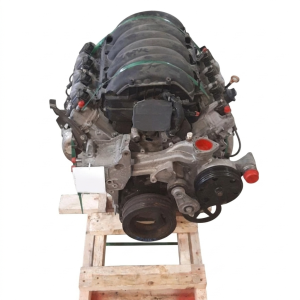
Used OEM Parts in Stock
New Aftermarket Parts Available


The information in this article is provided for general reference and educational purposes only. Vehicle specifications, procedures, and part compatibility can vary by production date, trim level, and region. Always consult your vehicle's factory service manual and verify part numbers before purchasing or performing repairs. Safety-critical components such as airbags, seat belts, and braking systems should be installed by a qualified professional.
- GMC Sierra 1500:
- 🎬 Helpful Videos
- 🛍️ Shop This Part
- What's Unique About the 2014-2018 GMC Sierra 1500
- Symptoms You May Notice
- Most Likely Causes
- Rare But Worth Checking
- Diagnosis Steps
- Parts You'll Likely Need
- Technical Service Bulletins (TSBs) & Recalls
- Platform-Specific Known Issues
- Mechanic-Grade Diagnostic Values
- Scan Tool Commands That Help
- Wiring & Ground Locations
- Real Owner Repair Stories
- OEM Part Supersession History
- Model Year Variations Within This Range
- Diagnostic Flowchart
- Other Known Issues on This Vehicle
- Used vs. New Parts: Buying Guide for This Vehicle
- Real Owner Stories
- 2014 Chevrolet Silverado 1500
- 2014-2018 GMC Sierra 1500
- Related OBD-II Codes
- Frequently Asked Questions
- 🎟️ Get 5% Off