

P0128 on 2011-2018 Ford Focus 2.0L: Causes and Fixes for Low Coolant Temperature
On a 2011-2018 Ford Focus with the 2.0L engine, code P0128 almost always means the thermostat is stuck open. The standard fix is to replace the entire thermostat and housing assembly, which costs about $50-$100 for the part and is a moderately difficult DIY job due to tight access under the intake manifold.
- P0128 on your Focus means the engine is running too cool, not too hot.
- The cause is almost certainly a thermostat that is stuck open.
- You must replace the entire thermostat and housing assembly, not just the thermostat itself.
- While the part is not expensive, the repair can be time-consuming due to the thermostat's location under the intake manifold.
- Always use the correct type of coolant (Ford Yellow) when refilling the system to prevent damage.
What's Unique About the 2011-2018 Ford Focus

The 2011-2018 Ford Focus (Mk3) with the 2.0L GDI Duratec engine has a very common failure point with this code: the thermostat assembly. Unlike older vehicles where you could just swap the metal thermostat valve, on this engine the thermostat is integrated into a plastic housing that is replaced as a single unit. The location of this housing, tucked under the intake manifold, makes the replacement more time-consuming than on many other vehicles.
Symptoms You May Notice
- Check Engine Light is on
- Engine temperature gauge reads lower than normal or drops during highway driving
- Heater/defroster performance is poor or takes a long time to warm up
- Noticeable decrease in fuel economy
- Engine takes an unusually long time to warm up
- Replacing the ECT sensor when the thermostat is the actual problem. Many owners replace the sensor first because it's cheaper and sometimes easier to access, but forum discussions overwhelmingly show the thermostat is the much more common culprit for this specific code on this platform.
Most Likely Causes

- Thermostat Stuck Open 🔴 High Probability The original thermostat is integrated into a plastic housing which is a known failure point. The internal valve mechanism fails, causing it to stick in the open position, allowing coolant to circulate constantly through the radiator.
How to confirm: Use a scan tool to monitor live coolant temperature data. If the engine warms up very slowly and the temperature drops significantly when driving at speed (e.g., below 170°F), the thermostat is likely stuck open. You can also feel the upper radiator hose; it should remain cool until the engine reaches operating temperature (around 190-200°F) and then become hot quickly. If it warms up gradually with the engine, the thermostat is open.
Typical fix: Replace the entire thermostat and housing assembly. It is sold as one unit.
Est. part cost: $50-$120 - Faulty Engine Coolant Temperature (ECT) Sensor 🟡 Medium Probability While less common than the thermostat, sensor failure can occur. It may send incorrect low-temperature readings to the PCM, triggering the P0128 code even if the engine temperature is normal. A manufacturer service bulletin, TSB 21-2168, notes that an illuminated MIL with P0128 can be caused by an intermittent drop in the ECT voltage.
How to confirm: Use a scan tool to compare the ECT sensor reading to the ambient air temperature sensor reading on a cold engine; they should be very close (within a few degrees). If the ECT reading is illogical (e.g., -40°F or significantly different from ambient), the sensor is likely bad. You can also compare the scan tool reading to a temperature reading from an infrared thermometer aimed at the thermostat housing; they should be similar.
Typical fix: Replace the ECT sensor. On the 2.0L Focus, it is located on the back of the cylinder head, between the engine and firewall, making access tight.
Est. part cost: $20-$50 - Low Engine Coolant Level ⚪ Low Probability
How to confirm: Visually inspect the coolant reservoir. When the engine is cold, the coolant level should be between the 'MIN' and 'MAX' lines. If it's low, an air pocket may have formed near the ECT sensor, causing an inaccurate reading. Manufacturer bulletin TSB 20-2234 indicates that vehicles may exhibit low coolant levels alongside DTC P0128.
Typical fix: Top off the coolant with the correct type (Ford specifies Motorcraft Orange VC-3-D or Yellow VC-13-G, depending on the exact model year and service history; do not mix) and inspect for leaks.
Est. part cost: $20-$30 for a gallon of coolant
Rare But Worth Checking
- Cooling Fan Running Constantly: If the cooling fan is stuck on due to a faulty fan relay or control module, it can over-cool the engine and trigger a P0128 code, especially in cold weather or at highway speeds.
- Wiring Issue to ECT Sensor: A damaged wire or corroded connector in the ECT sensor circuit can cause incorrect signals to be sent to the PCM, mimicking a sensor failure.
- PCM Software Errors: In some Ford models, an incorrectly illuminated MIL with P0128 can be due to the software in the PCM, as documented in TSB 25-2348 and TSB 25-2486.
Diagnosis Steps

- Check for other DTCs. If codes related to the ECT sensor circuit (like P0117 - low input, or P0118 - high input) are present, diagnose those first as they indicate a direct sensor or circuit fault.
- Inspect the coolant level and condition. Ensure the coolant is at the proper level in the reservoir when the engine is cold.
- Use a scan tool to monitor the Engine Coolant Temperature (ECT). From a cold start, compare the ECT reading with the Intake Air Temperature (IAT) sensor. They should be within a few degrees of each other.
- Start the engine and watch the ECT rise. It should rise steadily to about 190-205°F and then stabilize as the thermostat opens and closes.
- Test drive the vehicle at highway speeds. While monitoring the ECT, if the temperature drops significantly (e.g., below 170°F), it's a classic sign of a thermostat stuck open.
- If the temperature reading is erratic, nonsensical from the start (e.g., stuck at -40°F), or never changes, suspect the ECT sensor or its wiring.
- If the temperature seems plausible but the code persists after clearing, the thermostat is the most likely cause, even if the gauge appears to read 'normal' (as the gauge can be buffered).
- If the thermostat and sensor are confirmed to be good, check the cooling fan operation to ensure it is not running constantly when it shouldn't be.
Parts You'll Likely Need

- Engine Coolant Thermostat Housing Assembly
(OEM #CP9Z-8592-G)— This is the most common failure item for code P0128 on this vehicle. The thermostat is integrated into the housing and must be replaced as a complete unit.
Trusted brands: Motorcraft (RT-1219), Gates, Dorman
OEM price range: $80-$120
Aftermarket price range: $50-$90 - Engine Coolant Temperature (ECT) Sensor
(OEM #CM5Z-12A648-A (Motorcraft DY-1162))— This is the second most likely cause. It provides the temperature reading to the PCM, and if it fails, it can trigger the code.
Trusted brands: Motorcraft, Bosch, Delphi
OEM price range: $30-$50
Aftermarket price range: $20-$40 - Engine Coolant / Antifreeze
(OEM #VC-13-G (Yellow), VC-3-D (Orange))— The cooling system must be partially drained to replace the thermostat or ECT sensor. Ford transitioned from Orange (VC-3-D) to Yellow (VC-13-G) coolant. They are not compatible. Check what is currently in the system or consult a dealer. If changing types, a full flush is required.
Trusted brands: Motorcraft
OEM price range: $25-$35
Aftermarket price range: $20-$30
Related Codes That Often Appear With This One
- P0126 — P0126 ('Insufficient Coolant Temperature for Stable Operation') is a very similar code that is often triggered by the same root cause. If both appear together, it points very strongly to a stuck-open thermostat.
- P0420 / P0430 — These catalyst efficiency codes sometimes appear alongside P0128 due to PCM software issues, as noted in TSB 25-2348.
Technical Service Bulletins (TSBs) & Recalls

- TSB 18-2062 — For 2012-2014 Focus models, this TSB addresses a wiring harness that can chafe against the intake manifold near ground G103. While this TSB is for various drivability concerns and other codes, a damaged wire in this harness affecting the ECT sensor circuit could potentially contribute to a P0128 code.
- TSB 11-10-5 — For some 2010-2012 models including the Focus, this TSB addresses DTC P0128 along with CHT sensor codes (P1285, P1299). The issue is related to incorrect CHT sensor readings, which can be caused by water contamination in the sensor connector. This highlights a potential conflict between the CHT and ECT sensors.
- TSB 21-2168 — This bulletin describes an illuminated MIL with P0128 that may be caused by an intermittent drop in the engine coolant temperature (ECT) voltage.
- TSB 20-2234 — This bulletin notes that vehicles may exhibit DTC P0128 along with P1285, P1299, and low coolant levels.
- TSB 25-2348 & TSB 25-2486 — These bulletins indicate that P0128 may be incorrectly stored in the PCM due to software issues rather than a mechanical fault.
Platform-Specific Known Issues
- Owner Experience: Thermostat is the Culprit: A user on Reddit' r/MechanicAdvice with a 2012 Focus SE experienced code P0128. Despite the temperature gauge appearing normal and having good cabin heat, replacing the ECT sensor did not solve the problem. The issue was ultimately resolved by replacing the thermostat, confirming that the dashboard gauge can be misleading and the thermostat is the most common failure point even when other symptoms aren't obvious.
- DIY Repair Difficulty: Multiple forum and video sources confirm the thermostat replacement is a challenging DIY job due to its location under the intake manifold. Some repair guides suggest removing the passenger headlight assembly for better access from the side, as an alternative to the official service manual procedure which may involve moving the A/C compressor.
Mechanic-Grade Diagnostic Values
- Engine Coolant Temperature (ECT) Sensor Resistance — expected: Approx. 2,200 - 3,000 Ω at 20°C (68°F); Approx. 250 - 350 Ω at 80°C (176°F).. Failure: Readings are significantly outside the expected range for a given temperature, or resistance does not change as the engine warms up.
- Engine Coolant Temperature (ECT) Sensor Signal Voltage — expected: Approx. 3.0V - 3.5V on a cold engine (~20°C/68°F), dropping to approx. 1.0V - 1.3V at normal operating temperature (~80°C/176°F).. Failure: Voltage is stuck high (e.g., near 5V reference) or low (short to ground), or does not decrease smoothly as the engine warms.
- ECT vs. IAT Sensor Correlation (Cold Soak) — expected: On a cold engine (soaked for 6+ hours), the ECT and IAT sensor readings on a scan tool should be within a few degrees of each other.. Failure: A significant difference between ECT and IAT on a cold engine points to a faulty ECT sensor. For example, if IAT is 70°F and ECT reads 20°F, the sensor is likely bad.
Wiring & Ground Locations
- G103 — A stud on the top left side of the engine (driver's side), near the valve cover, where several ground wires attach.. TSB 18-2062 identifies this area as a location where the engine wiring harness can chafe against the intake manifold. A damaged wire for the ECT sensor in this harness could cause an open or short, leading to incorrect temperature readings and triggering P0128.
- ECT Sensor Connector — On the back of the cylinder head, between the engine and the firewall.. This connector is the primary interface for the ECT sensor. Corrosion from moisture or a poor pin fit can cause intermittent or incorrect readings. TSB 11-10-5 notes that water contamination in the CHT sensor connector (a related sensor) can cause similar temperature-related codes.
- Main Chassis Ground — Under the airbox, bolted to the painted chassis surface in front of the battery.. A poor main ground connection can cause a variety of electrical issues, including incorrect sensor readings. Some owners have found that cleaning the paint from under this ground point and ensuring a tight connection resolves intermittent electrical problems.
Real Owner Repair Stories
- Reddit user in r/MechanicAdvice (Honda Civic (General P0128 case, not Focus specific but illustrates a common failure pattern)) — Check engine light with code P0128 returned two months after replacing the thermostat.
❌ Tried (didn't work) Replaced thermostat with an aftermarket (non-OEM) part from an auto parts store.
✅ What actually fixed it The consensus from technicians in the thread was that the aftermarket thermostat likely failed prematurely or was out of spec, and the user should replace it again with a genuine OEM part. This highlights the risk of using lower-quality aftermarket parts for this specific component. - Reddit user GeekMan85 in r/FordFocus (2014 Ford Focus SE) — Sudden check engine light with code P0128. No noticeable driving issues, no overheating, coolant level was normal.
❌ Tried (didn't work) Initial diagnosis and checks (coolant level, visual inspection for leaks).
✅ What actually fixed it The owner replaced the thermostat assembly as a weekend project. Eight months later, they confirmed in the thread that replacing the thermostat had permanently fixed the problem. - Owner Report NHTSA ODI #11640247 — An owner reported receiving a repair estimate that included a coolant flush and code P0128 after other engine work was performed.
OEM Part Supersession History
CP9Z-8592-A/B/C/D/E/F (earlier revisions)→CP9Z-8592-G— Incremental design improvements to address the common failure of the thermostat sticking open.
Heads up: All revisions are physically interchangeable, but using the latest revision (CP9Z-8592-G) or a quality aftermarket equivalent is highly recommended for durability. The Motorcraft service part is often labeled RT-1219, which corresponds to the latest OEM part number.
Model Year Variations Within This Range
- 2011-2018: Ford transitioned its factory-fill and service coolant from Motorcraft Orange (OAT) to Motorcraft Yellow (P-OAT) around 2018. The new Yellow coolant is specified as backward-compatible for a top-off, but a full flush is recommended if changing types. A key detail is that the new Yellow P-OAT coolant requires the use of distilled water for dilution, as it can react negatively with minerals in tap water.
- 2012-2014: Models built on or before early 2014 are specifically mentioned in TSB 18-2062 regarding potential wiring harness chafing near the G103 ground stud. While not directly for P0128, it indicates a higher risk of wiring-related faults on these earlier Mk3 models.
Diagnostic Flowchart
Other Known Issues on This Vehicle
Issues unrelated to this code that are worth knowing about as an owner of this generation:
- DPS6 'PowerShift' Dual-Clutch Automatic Transmission Failure 🔴 High — Extremely common on automatic models from 2012-2016, less so on 2017-2018 but still present. Symptoms include shuddering, jerking, hesitation, and complete loss of power. (Ref: Multiple lawsuits, recalls, and warranty extensions have been issued. TSB 16-0129 is one example related to loss of engagement.)
- Canister Purge Valve (CPV) Failure 🟠 Medium — Common across many model years. A stuck-open valve can cause rough idle, difficulty starting after refueling, and decreased fuel economy. In some cases, it can create a vacuum that deforms the plastic fuel tank. (Ref: Recall 18S32 / NHTSA 18V735 was issued for the PCM not detecting a stuck CPV, which could lead to engine stalling.)
- Electric Power Assisted Steering (EPAS) Failure 🔴 High — A notable number of owners experience a sudden and complete loss of power steering assist, often accompanied by a 'Power Steering Fault' message. Can be caused by internal module failure, sometimes related to water ingress or battery voltage issues. (Ref: Multiple TSBs exist, such as those addressing fault codes like U3000.)
- Engine Mount Failure 🟠 Medium — The passenger-side hydraulic engine mount is known to wear out prematurely, typically between 60,000 and 100,000 miles, leading to excessive vibration and noise in the cabin, especially at idle.
Used vs. New Parts: Buying Guide for This Vehicle
When a used part is the smart pick: For this specific repair, using a used part is strongly discouraged. The thermostat housing is a known high-failure item made of plastic that becomes brittle with heat cycles. A used part from a junkyard has unknown remaining life and is very likely to fail soon after installation, forcing you to repeat the difficult labor.
What to inspect on the donor part:
- Not applicable, as used parts are not recommended.
OEM-only on this vehicle (don't cheap out):
- While not strictly 'OEM-only', using the OEM Motorcraft (CP9Z-8592-G / RT-1219) thermostat assembly is the safest bet for longevity. The cost difference between OEM and aftermarket is relatively small, and the labor to replace it is significant, making a durable part the priority.
Aftermarket brands forum-validated for this vehicle:
- Gates and Dorman are commonly used aftermarket alternatives. However, some forum reports mention premature failures with aftermarket units, making them a calculated risk compared to the OEM part.
Brands owners have reported issues with on this vehicle:
- Avoid no-name, unbranded thermostat assemblies from online marketplaces. The quality control on the internal thermostat valve and plastic housing is critical, and failure rates on cheap parts are reportedly high.
Real Owner Stories
Aggregated from forums and TSBs cited above. Mileages and costs reflect what owners reported in those sources.
2012 Ford Focus SE 2.0L
Symptoms: Check engine light on for P0128; temperature gauge appeared to function normally and the car had good cabin heat.
What fixed it: Replacing the thermostat assembly resolved the issue after replacing the ECT sensor failed to fix it.
Source hint: Reddit r/MechanicAdvice - P0128 Ford Focus 2012 SE
2012 Ford Focus 2.0L
Symptoms: P0128 code present; owner was hesitant to repair because the car felt fine.
What fixed it: The community confirmed the thermostat was stuck open and required replacement of the housing assembly.
Source hint: Reddit - r/FordFocus - P0128 discussion and concerns
Ford Owner Report
Symptoms: Diagnostic trouble code P0128 stored in the powertrain control module (PCM).
What fixed it: NHTSA ODI #11640247 describes an owner who received a $3500 estimate for various repairs including a coolant flush and code P0128.
Related OBD-II Codes
Frequently Asked Questions
My 2012 Focus SE has a P0128 code but the temperature gauge looks normal. Could it still be the thermostat?
Is there a TSB for wiring issues that might cause cooling codes on a 2013 Ford Focus?
Can a faulty Cylinder Head Temperature (CHT) sensor cause a P0128 on my 2011 Focus?
What specific coolant should I use when topping off my 2011-2018 Focus to avoid P0128 issues?
How difficult is it to replace the thermostat assembly on the 2.0L Duratec engine?
Can I keep driving my Focus with the P0128 code active?
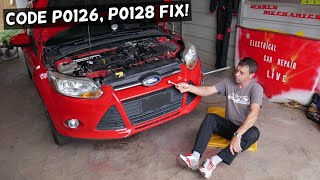
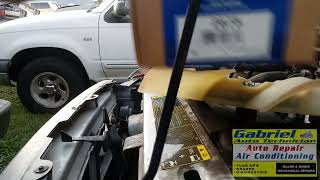
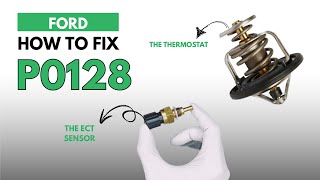
Helpful Videos
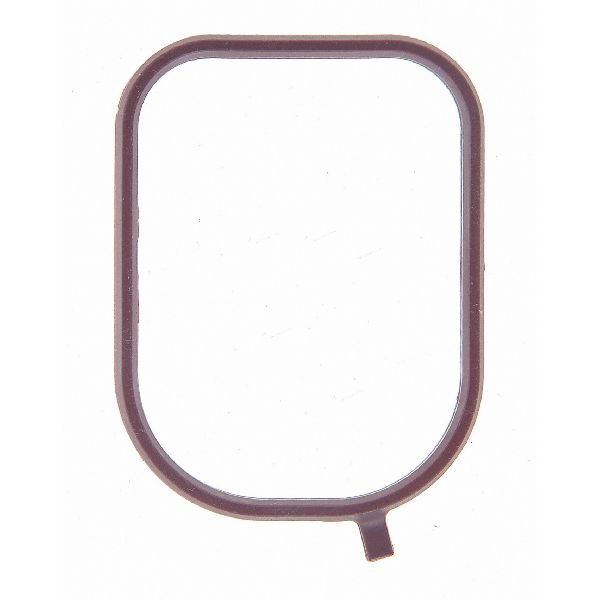
We Have This Part in Stock


The information in this article is provided for general reference and educational purposes only. Vehicle specifications, procedures, and part compatibility can vary by production date, trim level, and region. Always consult your vehicle's factory service manual and verify part numbers before purchasing or performing repairs. Safety-critical components such as airbags, seat belts, and braking systems should be installed by a qualified professional.
- Ford Focus:
- 🎬 Helpful Videos
- 🛍️ Shop This Part
- What's Unique About the 2011-2018 Ford Focus
- Symptoms You May Notice
- Most Likely Causes
- Rare But Worth Checking
- Diagnosis Steps
- Parts You'll Likely Need
- Related Codes That Often Appear With This One
- Technical Service Bulletins (TSBs) & Recalls
- Platform-Specific Known Issues
- Mechanic-Grade Diagnostic Values
- Wiring & Ground Locations
- Real Owner Repair Stories
- OEM Part Supersession History
- Model Year Variations Within This Range
- Diagnostic Flowchart
- Other Known Issues on This Vehicle
- Used vs. New Parts: Buying Guide for This Vehicle
- Real Owner Stories
- 2012 Ford Focus SE 2.0L
- 2012 Ford Focus 2.0L
- Ford Owner Report
- Related OBD-II Codes
- Frequently Asked Questions
- 🎟️ Get 5% Off