

P0128 on 2018-2023 Buick Enclave: Causes and Fixes for Coolant Temperature Issues
On a 2018-2023 Buick Enclave with the 3.6L V6 engine, code P0128 is almost always caused by a faulty engine thermostat that is stuck open. This failure prevents the engine from reaching its proper operating temperature. A highly specific symptom on this platform is a resulting 'Service Steering Message' and loss of power steering assist, which is a fail-safe measure triggered by the unreliable temperature data. Replacing the thermostat assembly is the standard and effective fix, with an OEM part
- P0128 on a 2018-2023 Enclave means the engine is running too cool, almost certainly due to a thermostat stuck open.
- This code will likely trigger a 'Service Steering Message' and make steering heavy; this is a known, connected issue and not a separate power steering failure.
- The correct fix is to replace the entire thermostat and housing assembly (GM Part #12681133), which will resolve both the check engine light and the steering warning.
- Do not replace the power steering rack or ECT sensor before confirming the thermostat is functioning correctly by monitoring live coolant temperature data.
What's Unique About the 2018-2023 Buick ENCLAVE
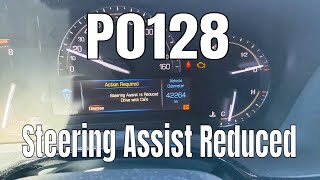
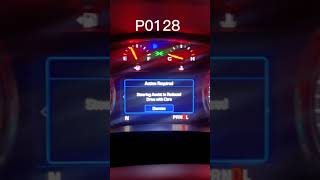
What's highly unusual on the Buick Enclave and its GM platform mates (like the Chevrolet Traverse, GMC Acadia, and Cadillac XT5/XT6) is the direct link between this cooling system code and the power steering system. A faulty thermostat triggering P0128 can cause the instrument cluster to display a 'Service Steering Message' or 'Steering Assist is Reduced' and disable or reduce power steering assist. 🎬 Watch: How a faulty thermostat triggers steering assist warnings. This happens because the electric power steering control module uses coolant temperature data as part of its operating strategy. When the temperature signal is deemed unreliable (as indicated by code P0128), the module enters a fail-safe mode as a precaution, reducing steering assist to prevent potential issues that could arise from incorrect temperature-related viscosity changes in steering gear grease.
Diagnostic Flowchart
Tap your situation to follow the diagnostic path that matches what you're seeing on this vehicle.
Symptoms You May Notice
- Check Engine Light is on
- Temperature gauge reads lower than normal, often stuck on 'C' or not moving past the first mark
- Cooling fans run constantly at high speed, even after the vehicle is turned off [TSB #22-NA-054, 9, 14]
- 'Service Steering Message' or 'Steering Assist is Reduced' warning on the driver information center [TSB #PIT5967, 1, 2]
- Noticeably heavy or difficult steering, especially at low speeds
- Heater blows lukewarm or cool air, as the coolant isn't hot enough to provide sufficient heat to the heater core
- Slightly reduced fuel economy due to the engine running in a prolonged 'warm-up' state
- A/C system may stop blowing cold air
- Replacing the Engine Coolant Temperature (ECT) sensor when the thermostat is the actual cause. Always diagnose the thermostat's function by watching the live temperature data before replacing the sensor. The steady, but low, temperature reading is the key indicator of a stuck-open thermostat.
- Replacing the power steering rack or power steering control module due to the 'Service Steering Message' without first diagnosing the P0128 code. TSB #PIT5967 explicitly instructs technicians to resolve P0128 first, as this almost always clears the steering warning.
Most Likely Causes
- Engine thermostat stuck open 🔴 High Probability This is the most common failure point for this code across most modern vehicles, including the Enclave and its platform mates with the 3.6L LGX engine. The thermostat's internal spring mechanism can fail, causing it to open prematurely or remain stuck open, allowing coolant to constantly circulate through the radiator and preventing the engine from reaching operating temperature.
How to confirm: Use a scan tool to monitor the Engine Coolant Temperature (ECT) sensor data from a cold start. The temperature should rise steadily to ~195-220°F and stabilize. If it rises very slowly, never reaches this range (often plateauing around 170-176°F), or drops significantly at highway speeds, the thermostat has failed in the open position.
Typical fix: Replace the engine coolant thermostat and housing assembly. It is sold as a single unit. It is also recommended to drain and refill the engine coolant with fresh DEX-COOL at the same time.
Est. part cost: $60-$135 - Faulty Engine Coolant Temperature (ECT) sensor ⚪ Low Probability While possible, this is far less common than a thermostat failure for this specific code. The sensor can send inaccurate readings to the ECM, but this often presents with different codes or more erratic gauge behavior.
How to confirm: Check the live data on a scan tool. If the temperature reading is erratic (jumps around wildly) or shows an impossible value (e.g., -40°F on a warm day), the sensor is likely bad. A faulty ECT sensor often sets other codes like P0116, P0117, or P0118. With a cold engine, the ECT and Intake Air Temperature (IAT) sensor readings should be within a few degrees of each other.
Typical fix: Replace the ECT sensor and check the wiring connector for corrosion or damage. On the 3.6L LGX, this sensor is located in a difficult-to-reach spot between the cylinder heads.
Est. part cost: $20-$50 - Low engine coolant level ⚪ Low Probability A low coolant level can create air pockets in the system, which may prevent the ECT sensor from getting an accurate reading of the coolant temperature. This is a possibility but less likely to cause P0128 specifically without also causing overheating issues.
How to confirm: Visually inspect the coolant reservoir when the engine is cold. If the level is below the 'MIN' or 'COLD' line, it needs to be topped off. Also, inspect for visible leaks from hoses, the radiator, or the water pump.
Typical fix: Top off the coolant with the correct type (typically orange DEX-COOL for GM vehicles) and bleed any air from the system. Investigate and repair the source of any leaks.
Est. part cost: $20-$40
Rare But Worth Checking
- Cooling fan relay stuck on: If the cooling fans run at all times, even when the engine is cold, it can prevent the engine from warming up properly. This is more often a symptom of P0128 rather than a cause, as the ECM commands the fans on as a fail-safe. However, a shorted relay could theoretically cause this independently.
- Wiring issue to ECT sensor: Damaged wiring or a corroded connector at the ECT sensor can cause an open or shorted circuit, leading to incorrect temperature readings by the ECM. This would typically be accompanied by other ECT-specific codes.
Diagnosis Steps
- Perform a full vehicle scan to confirm P0128 is present in the ECM and check for any other related codes, such as U0415 in the power steering module. Note if any steering-related messages are displayed.
- With the engine cold, check the coolant level in the reservoir and top off if necessary with DEX-COOL specified coolant.
- Connect a scan tool and view the live data for the Engine Coolant Temperature (ECT) sensor and Intake Air Temperature (IAT) sensor. With a cold engine, they should be within a few degrees of each other.
- Start the engine and monitor the ECT reading. It should rise steadily as the engine warms up.
- If the temperature plateaus around 170-180°F and struggles to get higher, or if it drops when driving at highway speeds, the thermostat is stuck open and must be replaced. This is the most definitive test.
- If the ECT reading is erratic, nonsensical, or stuck at an extreme value (like -40°F), inspect the sensor's wiring and connector before condemning the sensor itself.
- If a 'Service Steering Message' is present, follow TSB #PIT5967: diagnose and repair the cause of P0128 first, clear all codes, and then re-evaluate the steering system. The steering message should clear once the engine temperature reports correctly.
Parts You'll Likely Need
- Engine Coolant Thermostat Housing Assembly
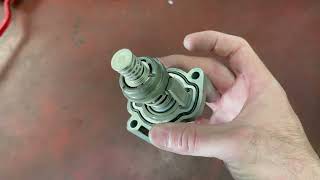
(OEM #12681133 (supersedes 12664190))— This is the most frequent cause of code P0128. The thermostat fails in the open position, preventing the engine from reaching operating temperature. It is sold as a complete assembly with the housing, seals, and sometimes a connecting pipe.
Trusted brands: ACDelco, GM Genuine Parts, Gates, Motorad
OEM price range: $65-$135
Aftermarket price range: $45-$90
Related Codes That Often Appear With This One
- U0415 - Invalid Data Received From Engine Control Module (in the Power Steering Control Module). This code is often logged alongside P0128 and confirms the steering system is reacting to faulty data from the ECM.
Technical Service Bulletins (TSBs) & Recalls
- 22-NA-054: Mentions symptoms associated with P0128, including inaccurate temperature gauge and cooling fans running after shutdown. Applies to 2021 Enclave, Traverse, Blazer, Acadia, XT5, and XT6.
- PIT5967 / PIT5967A: Details the link between P0128 and the 'Service Steering Message', advising technicians to diagnose the P0128 code first before any steering system repairs.
Platform-Specific Known Issues
- TSB #PIT5967 (and its later revisions like PIT5967A) documents that a P0128 code can cause a 'Service Steering Message' to appear on the dash. The bulletin advises diagnosing and repairing the P0128 code before addressing any steering components, as fixing the thermostat often resolves the steering warning.
- TSB #22-NA-054 notes that P0128 may be accompanied by symptoms such as an inaccurate temperature gauge (reading cold) or cooling fans that continue to run at high speed after the vehicle is shut off.
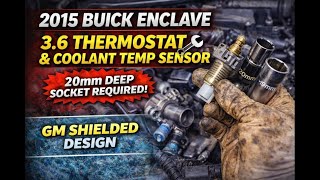
- The repair is moderately difficult for a DIYer because the thermostat housing is located in the valley between the cylinder heads, underneath the intake manifold, requiring significant disassembly.
Helpful Videos

We Have This Part in Stock


The information in this article is provided for general reference and educational purposes only. Vehicle specifications, procedures, and part compatibility can vary by production date, trim level, and region. Always consult your vehicle's factory service manual and verify part numbers before purchasing or performing repairs. Safety-critical components such as airbags, seat belts, and braking systems should be installed by a qualified professional.
- Buick ENCLAVE:
- 🎬 Helpful Videos
- 🛍️ Shop This Part
- What's Unique About the 2018-2023 Buick ENCLAVE
- Diagnostic Flowchart
- Symptoms You May Notice
- Most Likely Causes
- Rare But Worth Checking
- Diagnosis Steps
- Parts You'll Likely Need
- Related Codes That Often Appear With This One
- Technical Service Bulletins (TSBs) & Recalls
- Platform-Specific Known Issues
- 🎟️ Get 5% Off