

P0126 on 2020-2025 Mazda CX-30: Insufficient Coolant Temperature Fixes
On a 2020-2023 Mazda CX-30 with the non-turbo engine, code P0126 is almost always caused by a faulty failsafe thermostat inside the Coolant Control Valve (CCV). This is a widespread, known issue, and Mazda has a Special Service Program (SSPD8) that extends the warranty for this specific repair to 15 years or 150,000 miles. Before paying for any repairs, contact a Mazda dealer with your VIN to confirm coverage.
- P0126 on a 2020-2023 Mazda CX-30 is a known issue caused by a faulty failsafe thermostat within the Coolant Control Valve.
- Symptoms include a check engine light, very slow engine warm-up, a fluctuating temperature gauge, and poor cabin heat.
- Mazda has a warranty extension (Special Service Program SSPD8) for this problem, covering repairs for 15 years or 150,000 miles.
- Before paying for any repairs, you must contact a Mazda dealer with your VIN to check for coverage under this program.
- The latest, most permanent fix involves removing the faulty thermostat, installing a 'dummy plug', and updating the vehicle's software.
What's Unique About the 2020-2025 Mazda CX-30

This is a very common and well-documented issue on non-turbo Skyactiv-G 2.0L and 2.5L engines of this era. The problem became so widespread that Mazda issued multiple Technical Service Bulletins (TSBs) and a Special Service Program (SSP D8) to address it. The failure is specific to the design of the "Coolant Control Valve" (CCV), an electronically controlled unit that regulates engine temperature. Inside the CCV is a mechanical failsafe thermostat that is prone to sticking open. TSB MC-10225776-0001 explains that engine coolant can enter a normally dry hollow area of this failsafe thermostat, causing it to open at a much lower temperature than intended (104-176 °F) and get stuck. This bypasses the main electronic control, preventing the engine from warming up properly.
🎬 Watch: Details on the Mazda warranty extension for this issue.Diagnostic Flowchart

Tap your situation to follow the diagnostic path that matches what you're seeing on this vehicle.
Symptoms You May Notice

- Check Engine Light is on
- Engine takes a very long time to warm up.
- Temperature gauge fluctuates or stays in the blue/low range, often dropping at highway speeds or when going downhill.
- Blue low-coolant temperature light stays on longer than usual or comes back on while driving.
- Poor or weak heater performance, especially when idling.
- Noticeable decrease in fuel economy.
- Replacing the Engine Coolant Temperature (ECT) sensor without confirming the thermostat is functioning correctly.
- Assuming it's a water pump or radiator issue when the primary symptom is slow warm-up, not overheating.
- Clearing the code without addressing the underlying mechanical or software issue. Some dealers have reportedly done this, only for the light to return.
Most Likely Causes

- Stuck-Open Failsafe Thermostat / Faulty Coolant Control Valve (CCV) 🔴 High Probability A design flaw in the failsafe thermostat within the CCV can allow coolant to enter a dry hollow area, causing it to stick open at lower-than-normal temperatures (as low as 104°F). Mazda has acknowledged this with multiple TSBs and a warranty extension (SSPD8). This issue is specific to non-turbo Skyactiv-G engines.
How to confirm: Monitor the live Engine Coolant Temperature (ECT) data with an OBD-II scanner. If the engine fails to reach and maintain ~195-220°F after 15+ minutes of driving, the thermostat is almost certainly stuck open. Freeze frame data for the P0126 code will often show the temperature between 104-176°F, which TSBs identify as confirmation of the issue. A dealer can confirm the code and check eligibility for the SSPD8 warranty extension using your VIN.
Typical fix: Initially, the fix was to replace the entire Coolant Control Valve assembly. Mazda then released a repair kit (part number PYY2-15-SA1) per TSB 01-005/24 that allows for the replacement of just the thermostat component inside the CCV. A later TSB (01-003/25) updated the procedure again to remove the failsafe thermostat entirely, install a "dummy plug" (part number PYY3-15-SA1), and perform a PCM software update. This latest repair is considered the permanent fix and is covered under Mazda's SSPD8 warranty extension if the vehicle is eligible.
Est. part cost: $25-$75 for the thermostat kit (PYY2-15-SA1), $300-$600 for the full CCV assembly (PYFD-15-16Z). - Low Engine Coolant ⚪ Low Probability
How to confirm: Visually inspect the coolant reservoir and radiator (when the engine is cold) to ensure the level is between the 'MIN' and 'MAX' marks.
Typical fix: Top off the coolant with the correct type specified for your Mazda (typically FL-22). If the level drops again, inspect for leaks.
Est. part cost: $20-$30 for a gallon of coolant.
Rare But Worth Checking
- Faulty Engine Coolant Temperature (ECT) Sensor: While possible, this is much less common than the thermostat failure on these models. The ECT sensor can give false readings to the PCM, but the TSBs and owner forums point overwhelmingly to the thermostat itself.
- Cooling Fan Stuck On: A cooling fan that runs at full speed constantly, even when the engine is cold, can prevent the engine from warming up. This is typically caused by a faulty fan relay or control module, not the fan motor itself.
Diagnosis Steps
- Check the engine coolant level in the reservoir and radiator (only when the engine is completely cool). Top off if low.
- Use an OBD-II scanner to confirm the P0126 code. Check for any other stored codes. Note that if P2B61:00 is also present, the diagnosis path is different and may point to an electrical issue with the CCV circuit.
- Contact a Mazda dealership with your Vehicle Identification Number (VIN). Ask them to check if your vehicle is covered under the Special Service Program SSPD8 for the P0126 code. This is the most important step and can save you hundreds of dollars.
- If not covered or diagnosing yourself, use the live data function on an OBD-II scanner to monitor the Engine Coolant Temperature while driving. The temperature should steadily rise to and hold between 195-220°F (90-104°C).
- If the temperature struggles to exceed 160-170°F, especially at highway speeds, the thermostat is almost certainly stuck open.
- If the temperature reading is erratic or clearly incorrect (e.g., reads -40°F on a warm day), the ECT sensor or its wiring may be at fault.
Parts You'll Likely Need

- Thermostat Repair Kit
(OEM #PYY2-15-SA1)— This is the official fix from Mazda (per TSB 01-005/24) to address the stuck thermostat without replacing the entire expensive CCV assembly. It contains the thermostat, gasket, and cover.
Trusted brands: Mazda OE
OEM price range: $25-$75 - Coolant Control Valve (CCV)
(OEM #PYFD-15-16Z)— This was the original fix before the repair kit was available, and may still be used by some shops or if the housing itself is damaged. It contains the faulty thermostat.
Trusted brands: Mazda OE
OEM price range: $300-$600
Aftermarket price range: $200-$400 - Engine Coolant (FL-22)
(OEM #0000-77-508F-20)— The cooling system will need to be drained and refilled during the thermostat replacement. Using a vacuum fill tool is highly recommended to prevent air pockets.
Trusted brands: Mazda OE, Ravenol, Pentofrost
OEM price range: $25-$35
Aftermarket price range: $20-$30 - Dummy Plug Kit
(OEM #PYY3-15-SA1)— This is part of the latest, most permanent fix from Mazda as of late 2025, which involves removing the failsafe thermostat entirely and plugging the passage, along with a PCM update.
Trusted brands: Mazda OE
OEM price range: $20-$40
Technical Service Bulletins (TSBs) & Recalls
- SSPD8 Repair d (NHTSA ID 11016300): Check Engine Light ON with DTC P0126:00 - WARRANTY EXTENSION. Confirms the 15 year/150,000 mile coverage.
- 01-001-26b: Details symptoms like slow warm-up and fluctuating temperature gauge with DTC P0126:00.
- 01-005/24: The TSB that outlines the repair procedure using a thermostat kit (PYY2-15-SA1) instead of the full CCV assembly.
- MC-10225776-0001: Explains the root cause as coolant entering a dry hollow in the failsafe thermostat, causing it to open at low temperatures (104-176 °F).
- 01-003/25: Outlines the newest 'permanent' fix involving removing the thermostat, installing a dummy plug (PYY3-15-SA1), and reflashing the PCM.
Platform-Specific Known Issues
- Mazda has issued a warranty extension under Special Service Program (SSP) D8, covering this specific failure for 15 years or 150,000 miles for affected vehicles. This includes the 2020-2023 Mazda CX-30 with the 2.5L non-turbo engine.
- The issue does not apply to models with the Skyactiv-G 2.5T (turbo) engine.
- Some owners report dealers are hesitant to perform the warranty repair without a Check Engine Light, even if other symptoms are present. Being persistent and documenting symptoms can help. However, a January 2026 update to the SSPD8 bulletin states that the DTC P0126:00 is not required to be present to perform the repair.
- Mazda has released multiple iterations of the fix, starting with full CCV replacement, then a thermostat kit, and most recently a 'dummy plug' and software update, which is considered the final solution.
Mechanic-Grade Diagnostic Values
- Engine Coolant Temperature in Freeze Frame Data — expected: 40-80 °C {104-176 °F}. Failure: If the temperature when the P0126 code was set falls within this range, Mazda TSBs direct the technician to proceed with replacing the thermostat component.
- Thermostat Cover Screw Tightening Torque — expected: First pass: 26 in. lbs (3 Nm), Second pass: 44 in. lbs (5 Nm). Failure: Uneven or incorrect torque can damage the housing or gasket, leading to leaks. Screws must be tightened in a criss-cross pattern.
Hidden / Shadow Codes Worth Checking
- P0126:00: The ':00' is a Failure Type Code (FTC) used by Mazda and other manufacturers. While not a hidden code, it provides specific information. In this case, ':00' typically indicates a general or component-level failure without more specific circuit information. (see via Standard OBD-II scanner that can read full DTCs with FTCs.)
- P2B61:00: Coolant Control Valve Circuit Range/Performance. This is a critical code to watch for. If P2B61 is present alongside P0126, the TSBs for the thermostat do NOT apply. The problem is likely electrical (wiring, connector, or PCM) rather than the mechanical thermostat. Diagnosis must then follow a different path checking for circuit faults like shorts or open circuits. (see via Standard OBD-II scanner.)
Scan Tool Commands That Help
- Mazda Modular Diagnostic System (M-MDS): PCM Reprogramming (using MDARS or IDS software) — This is a required step when performing the final 'dummy plug' repair (part PYY3-15-SA1). The PCM software must be updated to work correctly without the failsafe thermostat. The specific software (MDARS or IDS) depends on the vehicle model and year.
- Mazda Modular Diagnostic System (M-MDS): PID/DATA Monitor for CCV_ACT and simulation item CCV_DSD — This is an advanced diagnostic step for testing the Coolant Control Valve's electronic operation, more relevant when diagnosing a P2B61 code. It allows a technician to monitor the commanded versus actual state of the valve.
Wiring & Ground Locations
- Coolant Control Valve (CCV) Connector — The CCV is located on the side of the cylinder head, where the upper radiator hose connects. The electrical connector is on the valve body itself.. While the common P0126 fault is mechanical, if code P2B61 is also present, inspecting this connector and its wiring harness for damage, corrosion, or looseness is a primary diagnostic step before replacing the valve.
- Coolant Refill Procedure Note — N/A. A Mazda service bulletin notes that on these vehicles, the Coolant Control Valve is OPEN when the ignition is OFF and CLOSED when the ignition is ON. To prevent trapping air during a coolant refill, the ignition must be kept OFF. Trapped air can cause cooling system issues, including erratic temperature readings.
Real Owner Repair Stories
- Mazda Forum User (2021 CX-5) — Check Engine Light with code P0126.
✅ What actually fixed it The user took the vehicle to the dealership. The repair took two days because the mechanic broke a gasket during the repair and had to order a replacement. The underlying issue was resolved by replacing the faulty coolant control valve component under warranty. - Reddit user d3rpasaurus (2019 Mazda3 (UK Market)) — Engine not reaching optimal temperature, fluctuating temps, but no CEL.
❌ Tried (didn't work) Took to two Mazda dealers while under warranty, who claimed the behavior was 'normal' and logged no claim.
✅ What actually fixed it The issue was unresolved at the time of posting. The user was quoted £650 for a full CCV replacement post-warranty. When they inquired about the thermostat repair kit (PYY2-15-SA1) available in North America, the dealer network claimed it was not compatible with UK/EU vehicles. This highlights a significant regional difference in repair availability.
OEM Part Supersession History
PYFD-15-16Z (Full CCV Assembly)→PYY2-15-SA1 (Thermostat Repair Kit)— Mazda created a less expensive repair option that allowed technicians to replace only the failed internal thermostat instead of the entire, costly Coolant Control Valve assembly.PYY2-15-SA1 (Thermostat Repair Kit)→PYY3-15-SA1 (Dummy Plug Kit)— After finding that replacing the thermostat didn't always provide a permanent fix, Mazda's final solution is to remove the failsafe thermostat entirely and block the passage with a 'dummy plug'. This requires a corresponding PCM software update to adjust the cooling strategy, as the mechanical failsafe is no longer present.
Heads up: Using the PYY3-15-SA1 dummy plug REQUIRES a PCM software update via MDARS/IDS. Installing the plug without the software update will likely cause the P0126 code to return.
Model Year Variations Within This Range
- 2020-2023: The Special Service Program (SSPD8) and associated TSBs for the P0126 thermostat issue specifically list the 2020-2023 CX-30. While the 2024-2025 models use a similar engine, they may have the updated parts from the factory and are not explicitly covered by the warranty extension as of the latest bulletins.
Helpful Videos

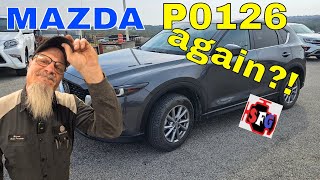
We Have This Part in Stock

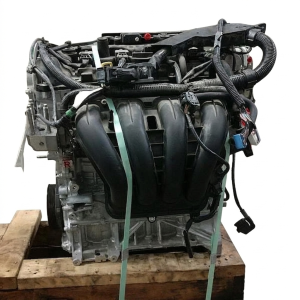


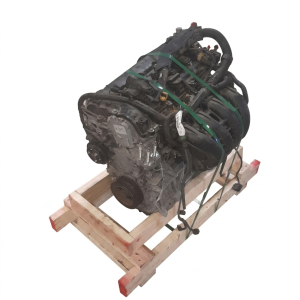

The information in this article is provided for general reference and educational purposes only. Vehicle specifications, procedures, and part compatibility can vary by production date, trim level, and region. Always consult your vehicle's factory service manual and verify part numbers before purchasing or performing repairs. Safety-critical components such as airbags, seat belts, and braking systems should be installed by a qualified professional.
- Mazda CX-30:
- 🎬 Helpful Videos
- 🛍️ Shop This Part
- What's Unique About the 2020-2025 Mazda CX-30
- Diagnostic Flowchart
- Symptoms You May Notice
- Most Likely Causes
- Rare But Worth Checking
- Diagnosis Steps
- Parts You'll Likely Need
- Technical Service Bulletins (TSBs) & Recalls
- Platform-Specific Known Issues
- Mechanic-Grade Diagnostic Values
- Hidden / Shadow Codes Worth Checking
- Scan Tool Commands That Help
- Wiring & Ground Locations
- Real Owner Repair Stories
- OEM Part Supersession History
- Model Year Variations Within This Range
- 🎟️ Get 5% Off