

P0126 on 2018-2021 Mazda CX-3: Thermostat Failure, Causes, and Fixes
On a 2018-2021 Mazda CX-3, code P0126 almost always means the thermostat inside the coolant control valve is stuck open. This is a very common issue, and Mazda has issued a Special Service Program (SSPD8) that extends the warranty for this specific repair to 15 years or 150,000 miles. The latest official fix, which removes the faulty thermostat, installs a 'dummy plug', and updates the PCM software, is typically covered for free at a dealership.
- P0126 on your CX-3 is almost certainly a stuck-open thermostat, a known issue.
- Do not pay for this repair out-of-pocket without first contacting a Mazda dealer. Your vehicle is likely covered by a 15-year/150,000-mile warranty extension (SSP D8).
- Symptoms include a slow-to-warm engine, poor heat, and a temperature gauge that stays low.
- Driving with this issue can reduce fuel economy and cause engine deposits over time, so it should be addressed.
- The dealer must be able to verify the P0126 code is active or stored to perform the repair under warranty.
What's Unique About the 2018-2021 Mazda CX-3

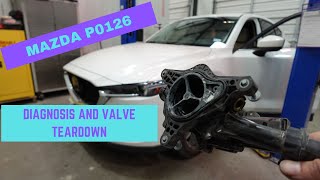
This isn't a random part failure; it's a well-documented pattern on many non-turbo Skyactiv engines from this era. The root cause is a design flaw where coolant enters a dry area of the fail-safe thermostat within the main Coolant Control Valve (CCV) 🎬 Watch: Detailed P0126 diagnosis and valve teardown, causing it to open at normal operating temperatures and then stick. In response to the widespread issue, Mazda issued Special Service Program (SSP) D8, extending the warranty for this specific repair to 15 years or 150,000 miles. The latest TSB update from late 2025 clarifies that the permanent fix is to remove the failsafe thermostat entirely, block the passage with a 'dummy plug', and perform a PCM software update to compensate. This means owners can get this common and otherwise moderately expensive repair done for free at a dealership.
Diagnostic Flowchart

Tap your situation to follow the diagnostic path that matches what you're seeing on this vehicle.
Symptoms You May Notice

- Check Engine Light is on
- Engine takes a very long time to warm up.
- Temperature gauge fluctuates or stays low, especially at highway speeds.
- Heater performance is poor, blowing lukewarm air, particularly when idling. 🎬 See why poor heater performance happens and how to fix it
- Blue low coolant temperature light stays on longer than usual or reappears while driving.
- Noticeable decrease in fuel economy.
- Remote start may fail to operate, as the active DTC can act as a kill switch.
- Replacing only the ECT sensor without confirming the thermostat's operation. Given the known TSBs for the thermostat, it should be the primary suspect.
- Assuming the check engine light must be on for a warranty claim. The latest TSB revisions state that the repair can be performed under warranty based on verified symptoms alone (slow warm-up, low temp gauge).
Most Likely Causes

- Failed Thermostat (Stuck Open) within Coolant Control Valve 🔴 High Probability Mazda identified a production issue where coolant can seep into the fail-safe thermostat assembly, causing it to open at lower-than-normal temperatures (104-176 °F) and stick open. This is the subject of TSB 01-001/26b and warranty extension SSPD8.
How to confirm: Use an OBD-II scanner to monitor live coolant temperature. If it struggles to reach or stay at normal operating temperature (approx. 195-220°F), especially while driving at speed, the thermostat is almost certainly stuck open. Some owners report driving for 30-45 minutes on the highway with the temperature gauge never reaching the normal center position. A dealer must confirm the symptoms to perform the repair under warranty; as of late 2025, the P0126 code is no longer strictly required if symptoms are present.
Typical fix: Under Mazda's SSPD8 warranty extension, the dealer will perform the latest approved repair. As of December 2025, this involves removing the original failsafe thermostat, installing a 'dummy plug' to block the bypass passage, and updating the PCM software. This is considered the permanent fix. Prior repairs involved replacing the entire coolant control valve assembly. If paying out-of-pocket, the entire assembly is often replaced.
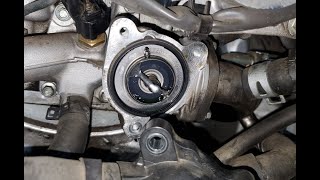
Est. part cost: $0 (under warranty), $150-$400 (aftermarket/OEM assembly) 🎬 Watch: Step-by-step guide to replacing the thermostat and coolant
- Low Engine Coolant Level ⚪ Low Probability
How to confirm: Visually inspect the coolant reservoir and radiator (when the engine is cold) to ensure the level is between the 'MIN' and 'MAX' marks. If low, look for signs of leaks from hoses, the radiator, or the water pump.
Typical fix: Top off the coolant with the correct type (Mazda FL22) and bleed the system. If a leak is present, the leaking component must be repaired or replaced.
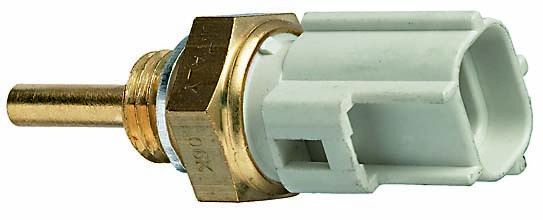
Est. part cost: $20-$40 (for coolant) - Faulty Engine Coolant Temperature (ECT) Sensor ⚪ Low Probability
How to confirm: Use an OBD-II scanner to watch the live ECT sensor data. If the reading is erratic, nonsensical (e.g., reads -40°F on a warm day), or never changes from a cold start, the sensor may be faulty. This is an unlikely cause given the known thermostat issue.
Typical fix: Replace the engine coolant temperature sensor and ensure the electrical connector is clean and secure.
Est. part cost: $30-$75
Diagnosis Steps
- Check the engine coolant level in the reservoir and radiator (only when the engine is completely cool). Top off if low with Mazda FL22 coolant.
- Use an OBD-II scanner to confirm the presence of code P0126. Check the freeze frame data to see what the coolant temperature was when the code was set.
- Monitor live data from the Engine Coolant Temperature (ECT) sensor. Start the car from cold and watch the temperature rise during a drive. It should climb steadily to around 195-220°F and stabilize.
- If the temperature rises very slowly, drops significantly at highway speeds, or never reaches the target range, the thermostat is almost certainly stuck open.
- If the temperature reading is erratic or clearly incorrect from the start, suspect the ECT sensor or its wiring.
- Contact a Mazda dealership and provide your VIN. Inquire about the Special Service Program (SSP) D8 for code P0126. If your vehicle is covered, the diagnosis and repair should be performed under the extended warranty. Note that the latest TSBs allow for this repair even without an active CEL if symptoms are verified.
Parts You'll Likely Need
- Coolant Control Valve / Thermostat Assembly
(OEM #PYFD-15-16ZA)— This assembly contains the fail-safe thermostat that is the root cause of the P0126 code. The original part number was PYFD-15-16Z, which has been superseded. The official warranty repair now modifies this part rather than replacing the whole unit.
Trusted brands: Mazda (OEM)
OEM price range: $250-$400
Aftermarket price range: $150-$250 - Thermostat Dummy Plug Kit
(OEM #PYY2-15-SA1 (Thermostat set))— This is the kit used in the latest TSB repair procedure (post-December 2025) which involves removing the faulty thermostat and installing a plug. This is typically only performed by dealers under warranty.
Trusted brands: Mazda (OEM)
OEM price range: N/A (Dealer-only part for TSB)
Aftermarket price range: N/A - Engine Coolant
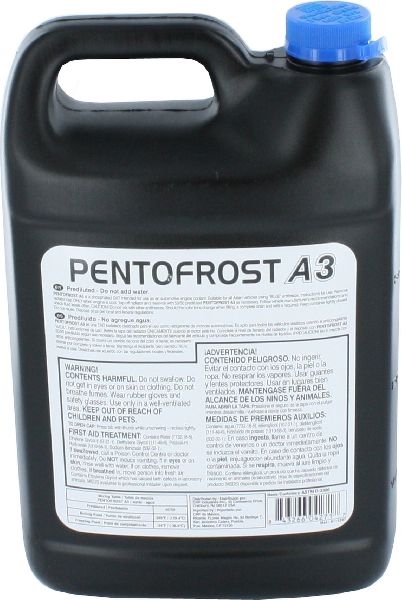
(OEM #0000-77-508F-20)— The cooling system must be partially drained to access the valve, so fresh coolant is required for the refill. Mazda specifies long-life FL22 coolant.
Trusted brands: Mazda FL22, Pentofrost A3, Ravenol HJC
OEM price range: $25-$35 per gallon
Aftermarket price range: $20-$30 per gallon
Related Codes That Often Appear With This One
- P0128 — P0128 (Coolant Thermostat - Coolant Temperature Below Thermostat Regulating Temperature) is a very similar code that is often triggered by the same fault: a thermostat stuck open.
Technical Service Bulletins (TSBs) & Recalls
- SSPD8: Special Service Program / Warranty Extension for Check Engine Light with DTC P0126:00. Extends coverage to 15 years/150,000 miles.
- 01-001-26b: Describes symptoms of P0126:00 as 'Thermostat stuck open,' including slow warm-up and fluctuating temperature gauge.
- 01-003/25 (and later revisions): Details the updated repair procedure, which as of late 2025 involves installing a 'dummy plug' and performing a PCM software update.
Platform-Specific Known Issues
- Mazda has issued a Special Service Program (SSP D8) which extends the warranty for the fail-safe thermostat repair to 15 years or 150,000 miles for affected vehicles, including the 2019-2022 CX-3. Owners who experience code P0126 or related symptoms should contact a dealer to verify coverage. The repair is performed at no cost under this program. Owners who previously paid for this repair may be eligible for reimbursement from Mazda.
Mechanic-Grade Diagnostic Values
- Freeze Frame Engine Coolant Temperature — expected: 40-80 °C (104-176 °F). Failure: If the temperature when the P0126 code was triggered is within this range, the TSB for the failed thermostat applies.
- Engine Coolant Temperature (ECT) Sensor Resistance — expected: Approx. 2000-3000 Ω at 20°C (68°F), dropping to 200-300 Ω at 90°C (194°F).. Failure: Resistance that is wildly out of this range, or does not change as the engine warms up, indicates a faulty sensor.
- Engine Coolant Temperature (ECT) Sensor Signal Voltage — expected: Approx. 2.0-3.0V with a cold engine, dropping to approx. 0.5V with a warm engine.. Failure: Voltage that is stuck high or low, or is erratic, points to a sensor or wiring issue.
Hidden / Shadow Codes Worth Checking
- P0126:00: The ':00' is a Failure Type Code (FTC) that Mazda's documentation specifically links to the 'Thermostat stuck open' condition for this TSB. (see via Most modern OBD-II scanners capable of reading manufacturer-specific codes.)
- P2B61:00: Coolant Control Valve Circuit Range/Performance. This is a critical exclusionary code. If this code is present, the TSB for P0126 does NOT apply. The problem is electrical (wiring, connector, PCM) rather than the mechanical thermostat. (see via Mazda dealer-level scanner (MDARS/IDS) or advanced aftermarket scanners.)
Scan Tool Commands That Help
- Mazda MDARS or IDS: PCM Reprogramming — This is a mandatory step after installing the 'dummy plug' as part of the official TSB repair. The PCM software must be updated to compensate for the removal of the failsafe thermostat.
- N/A - System Behavior: Ignition State Valve Position Check — For diagnostic purposes, know that the electronic coolant control valve is commanded OPEN when the ignition is OFF, and commanded CLOSED when the ignition is ON (engine off). This is useful for diagnosing a stuck valve and is critical to know for coolant refilling procedures to prevent air pockets.
Wiring & Ground Locations
- Thermostat Housing Ground Strap — A ground strap is located above the thermostat housing, secured with an 8mm bolt.. This ground strap may need to be removed to gain clearance for accessing the thermostat/coolant control valve bolts. Ensuring it is clean and secure upon reassembly is important for overall sensor and actuator grounding.
- Main Engine/Transmission Grounds — Key ground points are typically found on the transmission case, on the passenger-side motor mount, and a large cable runs from the chassis near the driver's side fender to the battery negative terminal.. While not a direct cause, poor engine grounds can cause erratic sensor readings and actuator behavior. Verifying these main grounds are clean and tight is a good practice during any engine-related electrical diagnosis.
- Chassis Ground Point — The vehicle owner's manual specifies a dedicated ground point on the chassis for jump-starting.. This is a known, reliable ground point that can be used as a reference for performing voltage and resistance tests on the ECT sensor and CCV circuits.
Real Owner Repair Stories
- Mazda Forum user (2022 Mazda CX-5) — Check Engine Light with P0126, coolant temp gauge reading low after 30+ minutes of driving.
❌ Tried (didn't work) The first time the code appeared (38,000 miles), the dealer replaced the entire coolant control valve assembly under warranty. This fix only lasted about 19,000 miles.
✅ What actually fixed it When the code returned at 57,000 miles, the dealer performed the updated TSB repair: they removed the failsafe thermostat from the CCV, installed a 'dummy plug', and updated the PCM software. This permanently resolved the issue.
"I Checked Everything" — The Actual Cause
- In the context of this code, the equivalent of a 'smoke test clean' scenario is when replacing the thermostat or the entire Coolant Control Valve assembly does not permanently fix the issue. Multiple owner accounts confirm that early repairs involved replacing the CCV, only for the P0126 code to return later. The actual, permanent solution was a revised strategy from Mazda to remove the problematic internal thermostat entirely, block its passage with a 'dummy plug', and update the PCM software to manage engine temperature without it. The initial part replacement failed because it used a component with the same inherent design flaw.
OEM Part Supersession History
PYFD-15-16Z (Coolant Control Valve Assembly)→PYFD-15-16ZA (Coolant Control Valve Assembly)— Updated part to address the original design flaw, though this entire assembly is no longer used in the latest warranty repair.N/A (Individual parts PYFB-15-169 and PE13-15-296)→PYY2-15-SAY (Complete Repair Kit)— As of March 2026, Mazda mandated that dealers must order the complete kit 'PYY2-15-SAY' for the TSB repair, and can no longer order or claim the individual gasket parts separately.
Heads up: The main component of the new repair is the plug, part number PYY3-15-SA1, which is included in the kit.
Model Year Variations Within This Range
- 2018-2022: The diagnostic software required for the mandatory PCM reflash depends on the vehicle's infotainment system. Models with the 6th Generation 'Type A' Mazda Connect system require the older Mazda Integrated Diagnostic System (IDS). Models with the 7th Generation 'Type B' system require the newer Mazda Diagnostic and Repair Software (MDARS).
Helpful Videos
Used OEM Parts in Stock
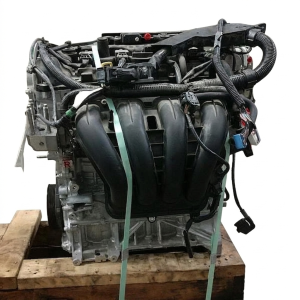


New Aftermarket Parts Available



The information in this article is provided for general reference and educational purposes only. Vehicle specifications, procedures, and part compatibility can vary by production date, trim level, and region. Always consult your vehicle's factory service manual and verify part numbers before purchasing or performing repairs. Safety-critical components such as airbags, seat belts, and braking systems should be installed by a qualified professional.
- Mazda CX-3:
- 🎬 Helpful Videos
- 🛍️ Shop This Part
- What's Unique About the 2018-2021 Mazda CX-3
- Diagnostic Flowchart
- Symptoms You May Notice
- Most Likely Causes
- Diagnosis Steps
- Parts You'll Likely Need
- Related Codes That Often Appear With This One
- Technical Service Bulletins (TSBs) & Recalls
- Platform-Specific Known Issues
- Mechanic-Grade Diagnostic Values
- Hidden / Shadow Codes Worth Checking
- Scan Tool Commands That Help
- Wiring & Ground Locations
- Real Owner Repair Stories
- "I Checked Everything" — The Actual Cause
- OEM Part Supersession History
- Model Year Variations Within This Range
- 🎟️ Get 5% Off