

P0126 on 2010-2012 Land Rover Range Rover: Insufficient Coolant Temperature Causes and Fixes
On a 2010-2012 Range Rover with the 5.0L V8, code P0126 almost always indicates a faulty thermostat that is stuck open. This prevents the engine from reaching its proper operating temperature. The issue is well-documented in Land Rover TSB LTB00461NAS2. The fix is to replace the thermostat assembly (OEM Part #LR032135). Expect to pay around $85-$130 for a genuine OEM part and 1.5-2.5 hours for installation.
- P0126 on a 2010-2012 Range Rover means the engine isn't warming up fast enough.
- The most likely cause is a thermostat that is stuck open, a known issue for this model.
- Check for code P0128, as it commonly appears with P0126 for the same reason.
- The correct fix is to replace the entire thermostat assembly (OEM part LR032135) and properly bleed the system.
- TSB LTB00461NAS2 exists for this issue, sometimes requiring a coolant hose modification to prevent airlocks.
- While you can drive the vehicle, fixing it promptly will restore fuel economy and prevent long-term engine wear.
What's Unique About the 2010-2012 Land Rover RANGE ROVER
For the 2010-2012 Range Rover (L322) with the 5.0L V8 engine, this code is directly addressed by a manufacturer Technical Service Bulletin (TSB). TSB #LTB00461NAS2 specifically links P0126-26 with P0128-00, pointing towards a known cooling system issue. The TSB suggests the cause may be an airlock in the cooling system that leads to misreadings by the temperature sensor. This gives a very high degree of confidence that the problem is not a random fluke but a recognized pattern on this platform, often resolved by addressing the thermostat and ensuring the system is properly bled. The 5.0L engine also utilizes two separate Engine Coolant Temperature (ECT) sensors, which can add a layer of complexity to diagnosis compared to single-sensor systems.
Diagnostic Flowchart
Tap your situation to follow the diagnostic path that matches what you're seeing on this vehicle.
Symptoms You May Notice
- Check Engine Light (Malfunction Indicator Lamp) is on.
- Temperature gauge on the dashboard reads lower than normal or takes a very long time to reach the middle.
- Heater provides lukewarm air or takes an unusually long time to produce hot air.
- Noticeable decrease in fuel economy.
- Engine may idle roughly or hesitate, especially when cold.
- Replacing the coolant temperature sensor when the thermostat is the actual faulty component. It's crucial to diagnose by watching the live temperature data's behavior over time rather than just replacing the sensor that reports the temperature.
Most Likely Causes
- Engine Thermostat Stuck Open 🔴 High Probability This is a widely recognized issue for the JLR 5.0L V8 engine family. The thermostat is designed to fail in the open position as a failsafe against overheating. As documented in Land Rover's own technical service bulletins and numerous owner forums, this is the most frequent cause for P0126.
How to confirm: Use an OBD-II scanner to monitor live coolant temperature data. After a cold start, the engine temperature should climb steadily to ~195-210°F and stabilize. If it is slow to rise, struggles to get above 170-180°F (77-82°C), or drops significantly at highway speeds, the thermostat is almost certainly stuck open. Physically, the upper radiator hose should stay cool for the first few minutes and then get hot suddenly. If it warms up gradually from the start, the thermostat is open.
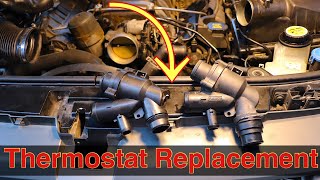
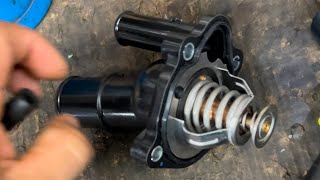
Typical fix: Replace the entire thermostat and housing assembly. 🎬 Watch: Step-by-step guide to replacing the thermostat and housing. It is critical to properly bleed the cooling system after replacement to prevent airlocks, which TSB LTB00461NAS2 identifies as a potential cause of the code.
Est. part cost: $85-$160 - Faulty Engine Coolant Temperature (ECT) Sensor ⚪ Low Probability While less common than thermostat failure, a faulty ECT sensor can send incorrect low-temperature readings to the PCM. The 5.0L engine has two coolant temperature sensors, which can sometimes lead to confusion during diagnosis. If the primary ECT sensor fails, the ECM uses a default value and may turn the cooling fans on permanently as a precaution.
How to confirm: With a scanner, observe the ECT sensor reading. If the reading is erratic, jumps around, or is clearly incorrect (e.g., reads -40°F on a warm day), the sensor is likely bad. You can also compare its reading on a cold engine to the Intake Air Temperature (IAT) sensor; they should be very close. A large, persistent discrepancy between the two ECT sensors on this engine can also indicate a fault.
Typical fix: Replace the faulty ECT sensor. Be sure to identify which of the two sensors is providing the incorrect reading.
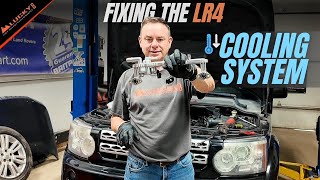
Est. part cost: $30-$60 - Low Engine Coolant Level / Airlock ⚪ Low Probability TSB LTB00461NAS2 explicitly mentions that an airlock in the cooling system can cause the temperature sensor to be misread, triggering the P0126/P0128 codes. An airlock can be caused by a recent coolant service or a small leak in the system, which is a known issue on the 5.0L V8 due to aging plastic components like the water pump and various coolant pipes. 🎬 See how to upgrade your cooling system to prevent leaks.
How to confirm: Visually inspect the coolant expansion tank. If the level is below the 'MIN' mark, there is a leak that needs to be found and fixed. If the level is correct but the issue persists, an airlock may be present. The TSB outlines a specific hose modification and bleeding procedure to resolve this.
Typical fix: Top up the coolant to the correct level, inspect for leaks, and perform the cooling system bleeding procedure as per the workshop manual or TSB LTB00461NAS2.
Est. part cost: $20-$40 for coolant
Rare But Worth Checking
- Cooling Fan Stuck On: If the electric cooling fan runs continuously at high speed from the moment the engine is started (even when cold), it can over-cool the engine, similar to a stuck-open thermostat. This is usually caused by a faulty fan control module, a shorted relay, or a bad sensor input telling it to run. A failed ECT sensor can cause the ECM to default to running the fans constantly.
- Failing Water Pump: While a failing water pump more commonly leads to overheating, if the failure results in a significant coolant leak, the resulting low coolant level can prevent the engine from warming up properly and trigger a P0126 code. Symptoms of a failing water pump on this engine include a high-pitched whining noise from the front of the engine and visible pink or orange coolant leaks.
Diagnosis Steps
- Check the engine coolant level in the expansion tank and top up if necessary. Check for any signs of leaks.
- Connect an OBD-II scanner and confirm the presence of P0126 and/or P0128.
- View live data on the scanner, focusing on the Engine Coolant Temperature (ECT).
- Start the cold engine and monitor the temperature rise. It should climb steadily to the operating range (typically 195-220°F or 90-104°C) and stabilize.
- If the temperature rises very slowly, fails to reach the target range (e.g., stays below 170-180°F), or drops significantly at highway speeds, the thermostat is the primary suspect.
- If the temperature reading is erratic, nonsensical, or shows a large discrepancy with the second ECT sensor, the sensor or its wiring is the likely culprit.
- As a physical check, carefully feel the upper radiator hose after starting the engine. It should remain relatively cool and then become hot quickly as the thermostat opens. If it warms up slowly and continuously, the thermostat is stuck open.
- If a recent coolant service was performed, suspect an airlock and follow the proper bleeding procedure outlined in the workshop manual or TSB LTB00461NAS2.
Parts You'll Likely Need
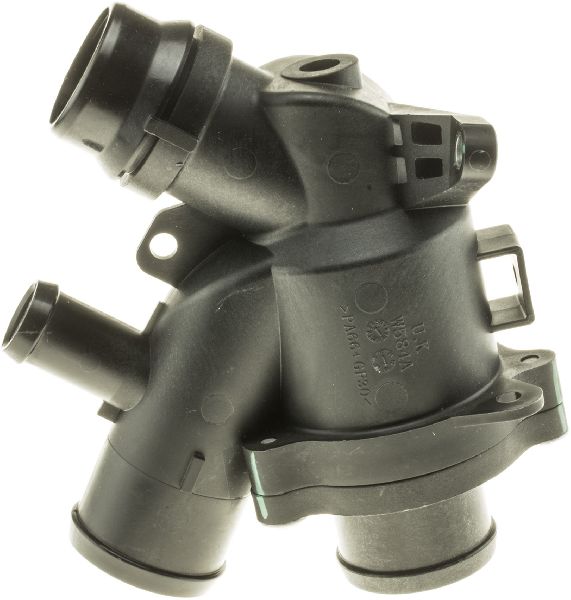
- Engine Thermostat Assembly
(OEM #LR032135)— This is the most common failure part for code P0126 on this vehicle. The original plastic housings can become brittle. The part number LR032135 supersedes several previous numbers including LR010796, LR010799, LR023429, and LR029143.
Trusted brands: Land Rover Genuine, MotoRad, 4-Seasons, URO Parts (including an upgraded aluminum alloy version)
OEM price range: $95-$135
Aftermarket price range: $45-$90
Related Codes That Often Appear With This One
- P0128 — P0128 (Coolant Temperature Below Thermostat Regulating Temperature) is almost always stored with P0126. They indicate the same fundamental problem: the engine is running too cool. Land Rover TSB LTB00461NAS2 explicitly groups these two codes for the same fault condition.
Technical Service Bulletins (TSBs) & Recalls
- LTB00461NAS2: Engine MIL Illuminated with DTC P0126-26/P0128-00 Stored.
Platform-Specific Known Issues
- TSB LTB00461NAS2 - Airlock & Hose Modification: A specific Technical Service Bulletin, LTB00461NAS2, was issued for the 2010-2012 Range Rover (naturally aspirated) for codes P0126-26 and/or P0128-00. The bulletin states the cause may be an airlock causing the ECT sensor to be misread. The service procedure involves checking coolant, and if the code returns, performing a modification that involves cutting a coolant hose and installing a T-piece from a bypass hose kit (Part No. LR040874) to improve bleeding and prevent future airlocks. This suggests a potential design issue with air entrapment on some vehicles.
Mechanic-Grade Diagnostic Values
- Engine Coolant Temperature (ECT) Sensor Resistance — expected: Approx. 2.45 kOhms at 20°C (68°F); Approx. 0.318 kOhms at 80°C (176°F); Approx. 0.147 kOhms at 110°C (230°F).. Failure: Readings that are significantly outside of the expected resistance range for a given temperature indicate a faulty sensor.
- Engine Coolant Temperature (ECT) Sensor Voltage (Signal to ECM) — expected: Approximately 2.0V - 3.0V on a cold engine, dropping to around 0.5V when the engine is fully warmed up.. Failure: A voltage that is stuck high or low, or does not change smoothly as the engine warms, points to a sensor or wiring issue.
Hidden / Shadow Codes Worth Checking
- P0126-26: This is the specific sub-code cited in TSB LTB00461NAS2. The '-26' suffix in JLR diagnostics often points to a 'Signal Rate of Change' fault, meaning the temperature is not increasing as quickly as the ECM expects after a cold start. This aligns perfectly with a stuck-open thermostat or a system airlock. (see via A professional-level scanner or the dealer-specific JLR Symptom Driven Diagnostics (SDD) software is required to see these sub-codes.)
Scan Tool Commands That Help
- JLR SDD (Symptom Driven Diagnostics): Data Logger / Live Data Monitoring — To monitor both ECT sensor values simultaneously in real-time to diagnose discrepancies between them, and to watch the temperature curve during warm-up to confirm a slow rise indicative of a stuck thermostat.
- JLR SDD (Symptom Driven Diagnostics): Read and Clear DTCs — This is a basic but essential function. After performing the hose modification from TSB LTB00461NAS2 or replacing a component, the codes must be cleared from the ECM.
- Advanced Bi-Directional Scan Tool (e.g., iCarsoft CR Pro): Cooling Fan Activation — To test the functionality of the cooling fan control module. If the fan can be commanded on and off with the scan tool but runs constantly when the vehicle is operating, it points to a faulty sensor input or ECM logic rather than a bad fan module itself.
Wiring & Ground Locations
- Engine Coolant Temperature (ECT) Sensor 1 — Located at the rear of the engine in the coolant crossover pipe, situated between the two cylinder heads.. This is the primary sensor the ECM uses to monitor engine warm-up. Damage to its wiring or connector during other engine service (e.g., injector replacement) can cause erratic readings and trigger P0126.
- Engine Coolant Temperature (ECT) Sensor 2 — Installed in the inlet to the thermostat housing, measuring the temperature of coolant coming from the radiator.. The ECM compares the readings from ECT1 and ECT2 to diagnose thermostat performance. A small temperature drop across the radiator when the thermostat should be closed is a key indicator of a stuck-open thermostat.
Real Owner Repair Stories
- DiscoWeb forum user 'discograham' (Land Rover Discovery (with similar engine logic)) — Check Engine Light with code P0126. Live data from an UltraGauge showed the engine temperature was stuck around 165°F and would never get hotter.
✅ What actually fixed it Replacing the thermostat. After replacement, the temperature returned to a normal range of around 205°F and the code cleared itself. - Land Rover Forums user 'Maine17' (2003 Discovery II) — Persistent P0126 code and Check Engine Light, even though the live temperature gauge showed readings between 186-197°F, which seemed normal for the installed 180°F thermostat.
❌ Tried (didn't work) Replacing the thermostat with a new OEM unit.
✅ What actually fixed it The final fix was not explicitly stated in the thread, but the user's experience highlights a key scenario: replacing the thermostat does not always immediately solve the code. Another user suggested the ECT sensor itself could be faulty, sending a signal that, while plausible, doesn't meet the ECM's strict warm-up timer criteria, especially with a lower-temperature (180°F) thermostat.
OEM Part Supersession History
LR010796, LR010799, LR023429, LR029143→LR032135— Revisions to address material durability and internal mechanism reliability of the thermostat assembly.
Heads up: While all listed part numbers are for the 5.0L V8, it is always best practice to use the latest superseded part number (LR032135) to ensure you have the most updated design.N/A (OEM is plastic)→Aftermarket Aluminum Housings (e.g., from URO Parts)— The original plastic thermostat housings and many plastic coolant pipes on the 5.0L V8 are known to become brittle and fail over time. Aftermarket companies offer full aluminum alloy replacements to provide a more durable, long-term solution against cracking and leaks.
Heads up: While generally a reliable upgrade, ensure the aftermarket kit comes with high-quality gaskets and seals. Poor quality seals can negate the benefit of the metal housing.
Helpful Videos
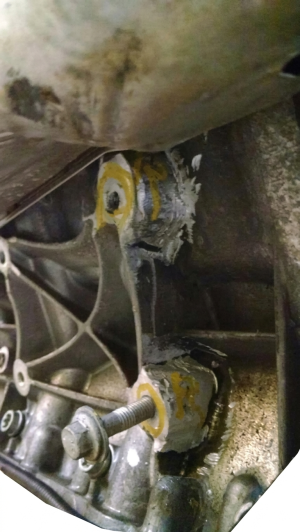
Used OEM Parts in Stock
New Aftermarket Parts Available
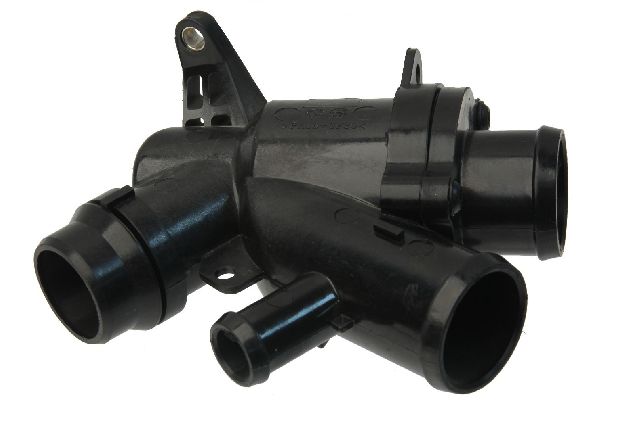



The information in this article is provided for general reference and educational purposes only. Vehicle specifications, procedures, and part compatibility can vary by production date, trim level, and region. Always consult your vehicle's factory service manual and verify part numbers before purchasing or performing repairs. Safety-critical components such as airbags, seat belts, and braking systems should be installed by a qualified professional.
- Land Rover RANGE ROVER:
- 🎬 Helpful Videos
- 🛍️ Shop This Part
- What's Unique About the 2010-2012 Land Rover RANGE ROVER
- Diagnostic Flowchart
- Symptoms You May Notice
- Most Likely Causes
- Rare But Worth Checking
- Diagnosis Steps
- Parts You'll Likely Need
- Related Codes That Often Appear With This One
- Technical Service Bulletins (TSBs) & Recalls
- Platform-Specific Known Issues
- Mechanic-Grade Diagnostic Values
- Hidden / Shadow Codes Worth Checking
- Scan Tool Commands That Help
- Wiring & Ground Locations
- Real Owner Repair Stories
- OEM Part Supersession History
- 🎟️ Get 5% Off