

P0126 on 2003-2024 Honda Accord: Insufficient Coolant Temperature Causes and Fixes
On a 2003-2024 Honda Accord, code P0126 almost always means the engine thermostat is stuck open. This prevents the engine from warming up properly. Replacing the thermostat and gasket is the most common fix, with parts costing between $25 and $70. This is a very common and well-documented failure for this vehicle.
- P0126 on a Honda Accord almost always points to a stuck-open thermostat.
- Symptoms include a Check Engine Light, a temperature gauge that reads low, and poor heat from the vents.
- Before replacing parts, always check the engine coolant level first when the engine is cold.
- The most reliable fix is to replace the thermostat and its gasket, then refill and bleed the cooling system using Honda Type 2 coolant.
- This is a DIY-friendly repair for most home mechanics with basic tools, typically taking 1-2 hours.
What's Unique About the 2003-2024 Honda Accord
Across multiple generations of the Honda Accord, the P0126 code has a consistent and well-documented history of being caused by a simple mechanical failure: the engine thermostat sticking open. While other causes are possible, the thermostat is the primary culprit by a large margin for this specific platform. Some earlier 4-cylinder models feature a thermostat integrated into a plastic housing, while V6 and later generation models typically use a separate, replaceable thermostat. Owners and mechanics strongly recommend using an OEM Honda thermostat for reliability and precise temperature control, as aftermarket versions can sometimes have slightly different opening temperatures that may not satisfy the ECM's strict parameters.
Generation note: This guide covers the 7th (2003-2007), 8th (2008-2012), 9th (2013-2017), 10th (2018-2022), and 11th (2023-2024) generations of the Honda Accord. The primary cause and fix are consistent, but the thermostat design can vary. For many 7th and 8th generation 4-cylinder models (K24 engine), the thermostat is part of a larger housing assembly. On V6 models (J-series engine) and later 4-cylinder generations, it is often a separate component within a housing. The latest 1.5T and 2.0T engines feature more complex integrated thermostat and water pump assemblies.
Symptoms You May Notice
- Check Engine Light is on
- Engine temperature gauge takes a very long time to rise or stays on cold
- Temperature gauge drops at highway speeds when airflow increases
- Heater blows cool or lukewarm air, especially at idle
- Noticeable decrease in fuel economy
- Replacing the ECT sensor when the thermostat is actually the problem. The diagnostic data usually points clearly to one or the other. A slow, steady rise that plateaus too early or drops at speed points to the thermostat, whereas an erratic or completely incorrect reading from a cold start points to the sensor.
Most Likely Causes
- Engine Thermostat Stuck Open 🔴 High Probability This is a common failure point for thermostats on many vehicles, including the Accord, as the internal wax element or spring wears out over time and fails in the open position. It is the most reported cause for P0126 on Honda forums by a significant margin.
How to confirm: Use an OBD-II scan tool to monitor live coolant temperature data. Start the engine from cold. If the temperature rises extremely slowly, never reaches the normal range (approx. 180-210°F), or drops significantly at highway speeds, the thermostat is almost certainly stuck open. You can also feel the upper radiator hose; it should remain cool for the first few minutes and then get hot quickly once the thermostat opens. If it gets warm gradually right from the start, it's stuck open.
Typical fix: Replace the engine thermostat and the corresponding gasket or O-ring. Drain some coolant, remove the thermostat housing, swap the part, and then refill and bleed the cooling system. 🎬 Watch: How to bleed air from your Accord's cooling system It is highly recommended to use an OEM Honda thermostat.
Est. part cost: $25-$70 - Low Engine Coolant Level 🟡 Medium Probability
How to confirm: Visually inspect the coolant reservoir and the radiator (when the engine is cold). If the level is below the 'MIN' line, it's low. Air pockets in the system from low coolant can cause inaccurate readings at the ECT sensor or prevent the system from heating up properly.
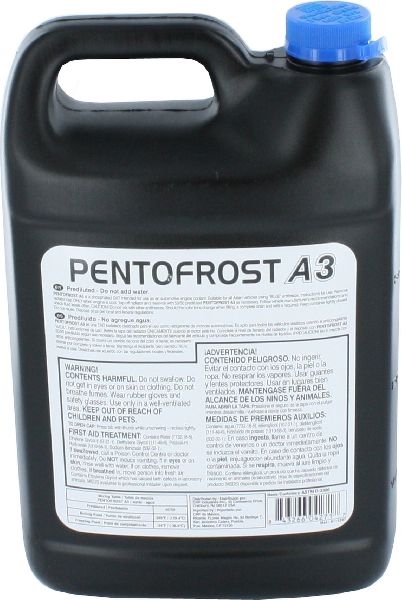
Typical fix: Top off the coolant with Honda Type 2 (blue) coolant. If the level is very low, inspect the system for leaks from hoses, the radiator, or the water pump.
Est. part cost: $20-$30 for a gallon of coolant - Faulty Engine Coolant Temperature (ECT) Sensor ⚪ Low Probability
How to confirm: Compare the ECT sensor reading on a scan tool to the ambient air temperature after the car has been sitting for several hours (cold soak). They should be nearly identical. If the ECT sensor reads an unreasonably low or high temperature when cold, or if its reading is erratic as the engine warms up, it is likely faulty.
Typical fix: Replace the ECT sensor. It is typically a small, threaded sensor that screws into the engine block or a coolant passage.
Est. part cost: $20-$50
Rare But Worth Checking
- Cooling Fan Running Constantly: If the cooling fan runs continuously from the moment the car is started (even when cold), it can over-cool the engine and prevent it from reaching operating temperature. This is usually caused by a faulty fan relay, a short in the wiring, or a failed A/C pressure switch.
- Wiring Issue to ECT Sensor: Damaged wires or a corroded connector for the ECT sensor can cause incorrect resistance, leading the ECM to read a false, low temperature. This is less common than sensor failure itself.
Diagnosis Steps
- Check for any other stored trouble codes with an OBD-II scanner.
- With the engine completely cold, check the coolant level in the overflow reservoir and the radiator. Top off if necessary with Honda Type 2 coolant.
- Start the engine and use an OBD-II scanner to monitor the live data for the Engine Coolant Temperature (ECT).
- Observe the temperature as the engine idles. It should rise steadily. A normal warm-up to ~190°F should take 5-15 minutes depending on ambient temperature.
- If the temperature rises very slowly, struggles to get above 160-170°F, or drops when driving at highway speeds, the thermostat is very likely stuck open.
- If the temperature reading on the scanner is erratic, or reads an illogical value (e.g., -40°F on a warm day) from the start, suspect a faulty ECT sensor or wiring.
- If the temperature seems to rise normally on the scanner but the code persists, check for cooling fan issues (is it running constantly?) or potential (but rare) ECM problems.
Parts You'll Likely Need
- Engine Thermostat Kit
(OEM #7th Gen 2.4L (K24A4): 19301-RAA-A02; 🎬 Watch: 7th Gen Accord 2.4L thermostat replacement walkthrough 8th Gen 2.4L (K24Z): 19301-R40-A01; 9th Gen 2.4L (K24W): 19310-5A2-A01; 🎬 See this 2013-2017 Accord thermostat replacement DIY 9th Gen V6 (J35Y): 19315-5G0-A01 (Auto) or 19315-5G2-A01 (Manual); 10th Gen 2.0T (K20C4): 19310-5MS-H01; 10th/11th Gen 1.5T (L15B7/L15BE): 19310-6A0-A01. Always verify by VIN.)— This is the most common cause of P0126 on a Honda Accord, as the thermostat fails by sticking open.
Trusted brands: Honda (OEM), Nippon Thermostat (NTC), Stant
OEM price range: $40-$85
Aftermarket price range: $25-$50 - Engine Coolant Temperature (ECT) Sensor
(OEM #37870-PNA-003 (Common for many models, verify by VIN))— This is the second most likely part to fail, sending incorrect temperature data to the computer.
Trusted brands: Honda (OEM), Denso, Delphi
OEM price range: $45-$60
Aftermarket price range: $20-$40 - Honda Type 2 Coolant
(OEM #OL999-9011)— The cooling system must be partially drained and refilled during thermostat replacement. Using the correct OEM coolant is highly recommended to prevent corrosion and ensure system compatibility.
Trusted brands: Honda
OEM price range: $25-$30 per gallon
Technical Service Bulletins (TSBs) & Recalls
- While no specific Honda TSB directly addresses P0126 as a widespread issue (since it's a standard diagnostic code for a common failure), other manufacturers have issued TSBs for the exact same problem. For example, Mazda TSB 01-001/26 for code P0126 on some models describes the thermostat diaphragm deforming and opening at a lower temperature, causing slow warm-up. This mirrors the common failure mode on the Accord.
Platform-Specific Known Issues
- Owner Experience: 2014 Accord EX-L V6: A user on a Honda forum with a 2014 Accord V6 reported getting code P0126. The temperature gauge would not go past the 1/3 mark. The repair was replacing the thermostat assembly. The OEM part number was 19315-5G0-A01 and cost approximately $61. The repair completely solved the issue.
Mechanic-Grade Diagnostic Values
- Engine Coolant Temperature (ECT) Sensor Resistance — expected: Approximately 2,000-3,000 Ω at 20°C (68°F) and 200-400 Ω at normal operating temperature (80-90°C / 176-194°F).. Failure: Readings significantly outside the expected range for a given temperature, or an open/short circuit, indicate a faulty sensor.
- Engine Coolant Temperature (ECT) Sensor Signal Voltage — expected: Approximately 3.0V on a cold engine (~20°C/68°F), dropping smoothly to around 0.5V - 1.0V at normal operating temperature.. Failure: Voltage stuck near 5V (open circuit), stuck near 0V (short circuit), or not decreasing smoothly as the engine warms up.
- ECM Diagnostic Trip Logic — expected: Engine coolant temperature must reach a minimum of 160-170°F within approximately 15 minutes of startup.. Failure: If the ECT reading does not meet this minimum temperature within the specified time, the ECM will set code P0126.
Scan Tool Commands That Help
- Honda Diagnostic System (HDS): DTC & Freeze Data / On-Board Snapshot — Use this to view the exact engine parameters (ECT, IAT, vehicle speed, engine run time) at the moment the P0126 code was triggered. This helps confirm if the engine was truly running cold for an extended period.
- Honda Diagnostic System (HDS): Live Data Monitoring (ECT Sensor 1) — This is the primary function for diagnosing P0126. It allows real-time observation of the coolant temperature as the engine warms up, making it easy to spot a slow rise or a temperature drop at speed, which points to a stuck thermostat.
Wiring & Ground Locations
- G101 — On many Honda Accord models (especially 4-cylinder), this is the main engine harness ground. It is typically located on the thermostat housing or on the intake manifold plenum near the driver's side.. The ECT sensor, along with other critical engine sensors, relies on this ground for an accurate signal. A corroded or loose G101 ground can cause high resistance, leading to incorrect temperature readings at the ECM and potentially triggering a false P0126 code.
- ECT Sensor Connector — Typically a 2-pin connector plugging into the ECT sensor, which is located on the cylinder head or thermostat housing, often under the distributor on older models or near the upper radiator hose connection on newer ones.. The two wires are typically a signal wire (e.g., Red/White) and a ground wire (e.g., Green/Blue or Green/Black). Damage to these wires or corrosion in the connector can cause an open or short, leading to illogical temperature readings and setting the code.
Real Owner Repair Stories
- driveaccord.net forum user (2013 Honda Accord V6) — Check Engine Light with code P0126, temperature gauge would not rise past the 1/3 mark.
❌ Tried (didn't work) Initial diagnosis pointed away from sensor issues due to the gauge's behavior.
✅ What actually fixed it The problem was resolved by replacing the engine thermostat assembly with an OEM part. The temperature gauge returned to its normal position (just under halfway) and the code did not return. - honda-tech.com forum user (Unknown year Honda with G101 ground issue) — Car would randomly die and not restart, especially in cold weather. No start, no fuel.
❌ Tried (didn't work) Checking the connection at the thermostat housing appeared fine visually.
✅ What actually fixed it The G101 ground wire was found to be frayed inside the wiring loom. Running a temporary new ground wire from the ECU pin to the chassis immediately solved the problem, confirming the bad ground. The permanent fix was to properly repair the ground wire.
OEM Part Supersession History
19301-RAA-A01→19301-RAA-A02— Standard part revision/update by Honda for 7th generation 2.4L Accords.Not applicable→19301-R40-A01— This is the integrated thermostat and housing assembly for many 8th generation 2.4L Accords. It is a distinct design from the previous generation.
Heads up: This assembly is not interchangeable with the separate thermostat/housing of other generations.
Model Year Variations Within This Range
- 2003-2012 (K24 Engines): The ECT sensor is typically a threaded brass sensor located on the cylinder head, under the distributor assembly on the earliest models or near the thermostat housing. The main engine ground (G101) is often physically on the thermostat housing itself.
- 2013-2017 (K24W, J35Y Engines): Thermostat designs became more integrated. The V6 (J35Y) uses a thermostat assembly that is distinct from the 4-cylinder (K24W) version.
- 2018-2024 (L15B, K20C Engines): The 1.5T and 2.0T engines use more complex, electronically controlled cooling systems. The thermostat is often part of a larger water pump and valve assembly. While a stuck-open failure mode is still possible, diagnosis may be more complex and could involve checking electronic control of the cooling system.
Diagnostic Flowchart
Other Known Issues on This Vehicle
Issues unrelated to this code that are worth knowing about as an owner of this generation:
- VTC Actuator Rattle on Cold Start (K24 Engine) 🟠 Medium — Very common on 8th and 9th gen 4-cylinder models (K24 engine), typically appearing after 60,000 miles. Causes a 1-2 second grinding/rattling noise on cold startup. (Ref: Honda TSB #09-010 addresses this issue with an updated VTC actuator part.)
- Excessive Oil Consumption (8th Gen) 🟠 Medium — Affects both 4-cylinder (piston rings) and V6 models (VCM issues) from 2008-2012. Can lead to fouled spark plugs and low oil levels between changes. (Ref: Honda TSB #11-033 provided a software update to address the V6 VCM issue.)
- Automatic Transmission Failure/Judder (Early 7th Gen V6 & 8th Gen) 🔴 High — Widespread on 2003-2004 V6 models, often leading to complete failure before 100,000 miles. 8th gen V6 models can also experience judder or slipping. (Ref: Honda issued an extended warranty for the 7th gen V6 transmission, but it has long since expired.)
- Premature Starter Failure (9th Gen) 🟠 Medium — A well-documented issue on 9th generation Accords (2013-2017), affecting both 4-cylinder and V6 models. Owners report intermittent no-start conditions, often starting around 90,000 miles. (Ref: No recall, but a known common failure discussed widely in owner forums.)
- Fuel/Oil Dilution (10th Gen 1.5T Engine) 🟠 Medium — Common on 2018+ models with the 1.5L Turbo engine, especially in cold climates with frequent short trips. Unburnt fuel mixes with engine oil, raising the oil level and reducing lubrication effectiveness. (Ref: Honda issued software updates and a product update campaign to help mitigate the issue.)
- Premature Rear Brake Wear (8th Gen) 🟡 Low — Particularly common on 2008-2009 models, where rear brake pads could wear out in as little as 30,000-40,000 km.
Used vs. New Parts: Buying Guide for This Vehicle
When a used part is the smart pick: A used part is almost never a good choice for this repair. However, if the plastic thermostat *housing* is cracked or damaged (a separate issue from P0126), a used housing from a low-mileage donor vehicle can be a cost-effective alternative to a new assembly.
Donor-vehicle mileage cap: roughly under 60000 miles for the part to have meaningful remaining life.
What to inspect on the donor part:
- For a thermostat housing, inspect for any hairline cracks, especially around bolt holes and hose connections.
- Ensure all threaded holes are intact and not stripped.
- Check for signs of heavy corrosion or pitting on mating surfaces.
OEM-only on this vehicle (don't cheap out):
- Engine Thermostat: This is the most critical part. Forum veterans and mechanics overwhelmingly recommend using a genuine Honda (OEM) thermostat. Aftermarket thermostats can have slightly different opening temperatures or fail prematurely, causing the P0126 code to return.
Aftermarket brands forum-validated for this vehicle:
- Engine Coolant Temperature (ECT) Sensor: Denso (often the OEM supplier), NTK.
Brands owners have reported issues with on this vehicle:
- Unnamed/white-box thermostats from online marketplaces are frequently cited as failing quickly or having incorrect temperature ratings, leading to repeat repairs.
Real Owner Stories
Aggregated from forums and TSBs cited above. Mileages and costs reflect what owners reported in those sources.
2014 Accord EX-L V6
Symptoms: The Check Engine Light was on and the temperature gauge would not go past the 1/3 mark.
What fixed it: Replacing the thermostat assembly (OEM part number 19315-5G0-A01).
Cost: $61-$61
Source hint: Vehicle_specific_issues: Owner Experience: 2014 Accord EX-L V6
2009 Accord (8th Gen)
Symptoms: Had the P0126 code present.
What fixed it: Replaced the thermostat with an OEM unit.
Source hint: reddit.com/r/Accord thread about P0126 on an 8th gen Accord
2014 Accord V6
Symptoms: Temp gauge wouldn't go past 1/3.
What fixed it: Replaced the thermostat (part #19315-5G0-A01).
Source hint: driveaccord.net thread titled 'P0126 Code - 2014 Accord V6'
Honda Accord (Unspecified Year)
Symptoms: Temp gauge was slow to rise and dropped on the freeway.
What fixed it: Changed the thermostat and bled the system.
Source hint: honda-tech.com forum discussion
Related OBD-II Codes
Frequently Asked Questions
What is the recommended replacement thermostat part for a 2014 Accord V6 with code P0126?
My 8th Gen Accord is throwing P0126; is this a common issue for this generation?
What type of coolant should I use when refilling my Accord after a thermostat swap?
Is there a specific TSB for P0126 on the Honda Accord?
Can I use a thermostat from a Honda Element on my 7th or 8th Gen Accord?
Will a bad thermostat affect my Accord's fuel economy?
Helpful Videos
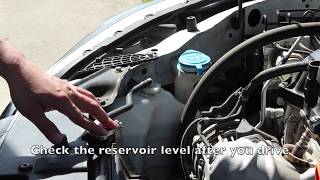
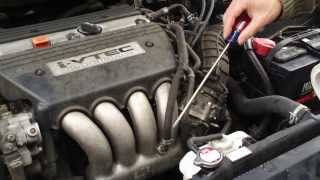
Used OEM Parts in Stock

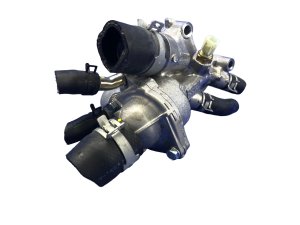
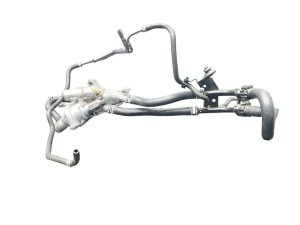
New Aftermarket Parts Available

The information in this article is provided for general reference and educational purposes only. Vehicle specifications, procedures, and part compatibility can vary by production date, trim level, and region. Always consult your vehicle's factory service manual and verify part numbers before purchasing or performing repairs. Safety-critical components such as airbags, seat belts, and braking systems should be installed by a qualified professional.
- Honda Accord:
- 🎬 Helpful Videos
- 🛍️ Shop This Part
- What's Unique About the 2003-2024 Honda Accord
- Symptoms You May Notice
- Most Likely Causes
- Rare But Worth Checking
- Diagnosis Steps
- Parts You'll Likely Need
- Technical Service Bulletins (TSBs) & Recalls
- Platform-Specific Known Issues
- Mechanic-Grade Diagnostic Values
- Scan Tool Commands That Help
- Wiring & Ground Locations
- Real Owner Repair Stories
- OEM Part Supersession History
- Model Year Variations Within This Range
- Diagnostic Flowchart
- Other Known Issues on This Vehicle
- Used vs. New Parts: Buying Guide for This Vehicle
- Real Owner Stories
- 2014 Accord EX-L V6
- 2009 Accord (8th Gen)
- 2014 Accord V6
- Honda Accord (Unspecified Year)
- Related OBD-II Codes
- Frequently Asked Questions
- 🎟️ Get 5% Off