

P0123 on 2011-2016 Hyundai Elantra: Throttle Position Sensor Circuit High Causes and Fixes
P0123 on a 2011-2016 Elantra almost always means the Throttle Position Sensor (TPS) has failed. Because the sensor is built into the electronic throttle body, the entire assembly must be replaced. This is a common failure point on the 1.8L Nu engine. Expect to pay $550-$980 for a professional repair using an OEM part, or $150-$300 for an aftermarket part for DIY repair.
- P0123 on a 2011-2016 Elantra means the main throttle position sensor's voltage is stuck high, typically above 4.9V.
- The most common cause is a failed sensor, which requires replacing the entire electronic throttle body assembly as the sensor is integrated.
- Before replacing the expensive throttle body, always check the wiring and connector for damage, which is a cheaper fix.
- After replacement, a simple throttle relearn procedure (key on/off cycles) is necessary to prevent high or erratic idle.
- Do not drive the vehicle extensively with this code; it will enter a 'limp mode' with significantly reduced power, which can be unsafe.
What's Unique About the 2011-2016 Hyundai Elantra
The most important thing to know about the 2011-2016 Elantra (MD generation) is that the Throttle Position Sensor (TPS) is not a separate, replaceable part. It is permanently integrated into the electronic throttle body assembly. This means that if the sensor fails—the most common cause of P0123—you cannot simply buy a new sensor; you must replace the entire throttle body unit. This significantly impacts the cost and repair procedure compared to older vehicles with serviceable sensors, a fact often discovered by DIYers attempting the repair for the first time.
Symptoms You May Notice
- Check Engine Light is on
- Engine goes into 'limp mode' with severely reduced power and RPM limited (often around 2,000 RPM)
- Hesitation, stumbling, or delayed response on acceleration
- Rough, unstable, or high idle
- Engine may stall, especially when coming to a stop
- Poor fuel economy
- In some cases, multiple warning lights (ESC, Traction Control) may illuminate simultaneously as the throttle system is linked to stability control.
- Replacing only the Accelerator Pedal Position (APP) Sensor. The P0123 code specifically points to the sensor on the throttle body, not the one connected to the gas pedal.
- Attempting to purchase a standalone Throttle Position Sensor. For this Elantra generation, the part is not sold separately from the throttle body.
- Replacing the throttle body without first checking for a simple wiring or connector fault.
Most Likely Causes
- Faulty Electronic Throttle Body Assembly 🔴 High Probability The internal Throttle Position Sensor (TPS) is the component that fails, but it is integrated into the throttle body assembly and cannot be replaced separately on this vehicle. This is a widely reported failure for the Nu engine family.
How to confirm: After confirming with a scan tool that wiring is intact (no shorts to power or open grounds), and the voltage from TPS 'A' is stuck high, the throttle body is the presumed failure point. A technician can back-probe the sensor connector to verify the faulty signal directly from the component.
Typical fix: Replace the entire electronic throttle body assembly. After replacement, a throttle position learning procedure must be performed.
Est. part cost: $350-$750 - Wiring Harness or Connector Issue 🟡 Medium Probability Wires in the engine bay are exposed to heat and vibration, which can lead to chafing, corrosion, or internal breaks over time. The connector pins themselves can also lose tension.
How to confirm: Visually inspect the wiring harness leading to the throttle body for any signs of damage. Use a multimeter to check for a short to power on the signal wire or an open circuit on the ground wire. Wiggle the connector and harness with the engine running to see if it affects the live data reading from the TPS.
Typical fix: Repair the damaged section of wire or replace the pigtail connector. Pigtail connectors are available from auto parts stores.
Est. part cost: $10-$60 - Dirty Throttle Body ⚪ Low Probability While less likely to cause a 'Circuit High' code, heavy carbon buildup can cause the throttle plate to stick or move erratically, which the PCM could misinterpret. This is more commonly associated with idle issues or P0121 performance codes.
How to confirm: Remove the air intake hose and visually inspect the throttle plate and bore for black carbon deposits.
Typical fix: Clean the throttle body with a dedicated throttle body cleaner and a soft cloth. Be careful not to force the electronic throttle plate open manually. After cleaning, an idle relearn procedure may be necessary.
Est. part cost: $5-$15
Rare But Worth Checking
- Powertrain Control Module (PCM) Failure: This is extremely rare. The PCM should only be considered after all other possibilities, including the throttle body and wiring, have been exhaustively tested and ruled out.
Diagnosis Steps
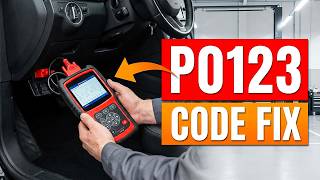
- Connect an OBD-II scanner to confirm the P0123 code and check for any other related codes.
- View live data on the scanner. Observe the voltage for 'TPS1' or 'TPS A'. With the key on and engine off, it should read a low voltage (typically under 1.0V) at idle position and sweep smoothly upwards as the throttle is manually opened. A P0123 code will likely show a voltage stuck high (e.g., ~4.9V) regardless of throttle position. 🎬 See this walkthrough for troubleshooting a P0123 high input code
- Inspect the throttle body electrical connector for loose pins, corrosion, or damage. Ensure it is seated securely. Unplug and replug it to be sure.
- Inspect the wiring harness leading to the throttle body for any visible signs of chafing, melting, or breaks. Pay close attention to where the harness might rub against other components.
- If wiring appears okay, use a multimeter to test the circuit at the connector (with it unplugged from the throttle body). Check for the correct reference voltage (usually 5V) and a solid ground connection. Then, check the signal wire to ensure it is not shorted to a power source.
- If the 5V reference and ground are good, and the signal wire is not shorted, but the live data still shows a high voltage reading when plugged in, the throttle body assembly has an internal failure and must be replaced.
- After replacing the throttle body, clear the codes. Perform the throttle position relearn procedure: Turn the ignition ON (engine off) for 15 seconds, then turn the ignition OFF for 10 seconds. Repeat this cycle once more, then start the engine. This allows the PCM to learn the new sensor's idle and wide-open positions.
- Test drive the vehicle to ensure the repair is complete and the code does not return.
Parts You'll Likely Need
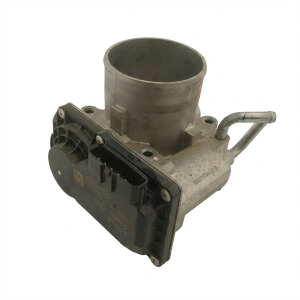
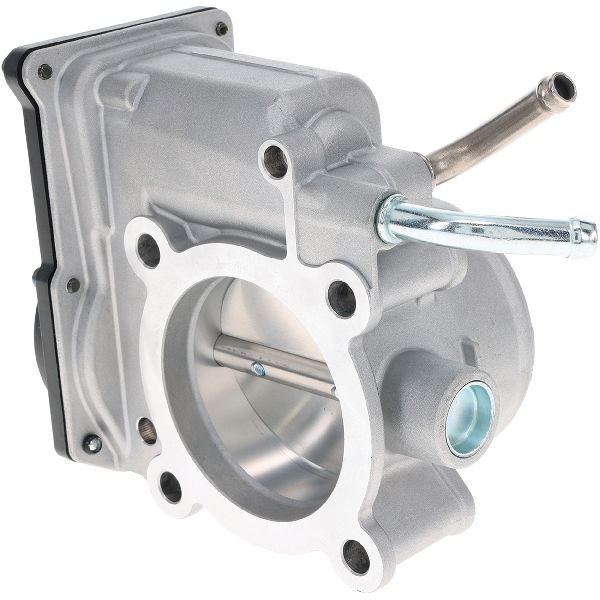
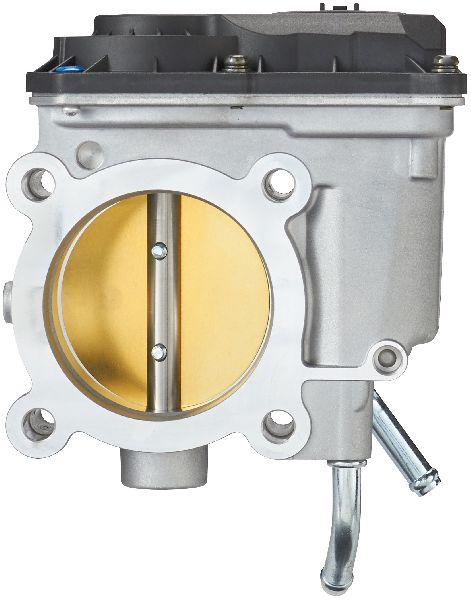
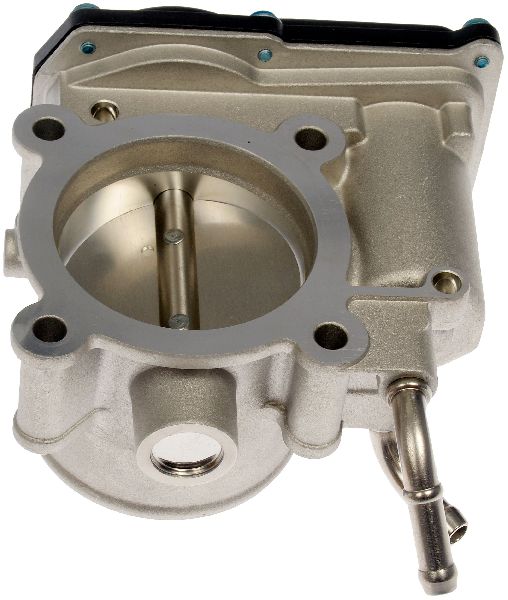
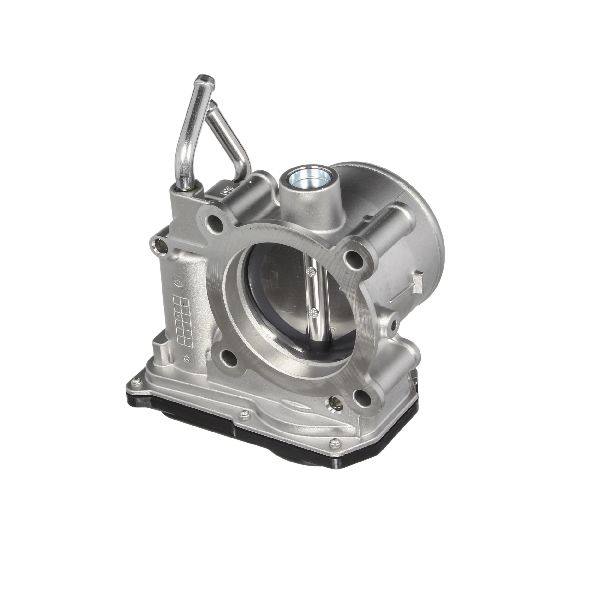
- Electronic Throttle Body Assembly
(OEM #35100-2E000)— This is the primary fix for code P0123 on this vehicle, as the internal Throttle Position Sensor (TPS) fails and is not sold as a separate component.
Trusted brands: Hyundai (OEM), Spectra Premium, Cardone (Remanufactured), Duralast, SKP, Standard Motor Products
OEM price range: $350-$750
Aftermarket price range: $150-$300
Related Codes That Often Appear With This One
- P0121 — P0121 indicates a 'Range/Performance' problem with the TPS. It can appear alongside P0123 if the sensor's signal is erratic, going both out of expected range and intermittently high.
- P0222 — This code indicates a 'Circuit Low' input for the secondary throttle position sensor (TPS 'B'). Since TPS 'A' and 'B' work together as a fail-safe, a major failure in one can sometimes cause the PCM to flag an issue with the other.
- P2110 — This code for 'Throttle Actuator Control System - Forced Limited RPM' is a direct result of the PCM detecting a critical fault like P0123 and intentionally engaging 'limp mode' to protect the engine.
Technical Service Bulletins (TSBs) & Recalls
- 13-FL-002: Provides the official Hyundai procedure for cleaning the Electronic Throttle Control (ETC) throttle body due to carbon deposits, which can be a related maintenance item.
- 15-FL-002: This TSB involves an ECU update for certain models to revise the logic for detecting abnormalities in the throttle system. While not a direct fix for a failed sensor, ensuring the PCM software is up-to-date is a good practice during diagnosis.
Platform-Specific Known Issues
- Common Failure Mileage: Based on owner forums and repair data, this failure often occurs between 80,000 and 150,000 miles, though it can happen earlier.
- Throttle Body Cleaning Caution: While cleaning a dirty throttle body can resolve some idle or hesitation issues, it will not fix an internal electronic failure that causes P0123. Some owners report that after cleaning, a high idle condition may persist for a few drive cycles until the computer fully relearns the new clean idle position.
Documented NHTSA Reports
- In a report involving a similar Hyundai model, NHTSA ODI #11445835 describes a situation where a mechanic replaced the throttle body, yet codes P0123 and P0222 persisted, highlighting that these parts are often not readily available at local auto parts stores.
- NHTSA ODI #11292479 notes a case where a vehicle experienced P0123 alongside multiple other codes including P0122, P0222, and P2106; in this instance, the vehicle had to be limped to a shop and a case was opened with the manufacturer regarding the electrical system.
Mechanic-Grade Diagnostic Values
- TPS1 (Sensor 'A') Signal Voltage at Closed Throttle (KOEO) — expected: 0.2V - 0.8V. Failure: A reading stuck high, near 4.9V, indicates a circuit high fault.
- TPS1 (Sensor 'A') Signal Voltage at Wide-Open Throttle (WOT) — expected: 4.3V - 4.8V. Failure: Sensor should sweep smoothly from closed to WOT voltage. A stuck high reading prevents this.
- PCM DTC Trigger Threshold (Case 1) — expected: TPS1 Signal < 4.9V. Failure: PCM sets P0123 if TPS1 signal exceeds 4.9V.
- PCM DTC Trigger Threshold (Case 2 - Idle Status) — expected: TPS1 Signal < 3.0V. Failure: PCM may set P0123 if TPS1 signal exceeds 3.0V while the engine is at idle.
- Scan Tool Live Data - Throttle Position Angle — expected: ~5-6° at closed throttle, ~90° at wide-open throttle.. Failure: Angle reading does not change when the throttle plate is moved or is stuck at a high value.
Scan Tool Commands That Help
- Hyundai GDS / Advanced Scan Tool (e.g., Autel): Active Test: ETC Motor — This command forces the electronic throttle control (ETC) motor to open and close the throttle plate. It is used to verify if the motor and gear mechanism are physically working, separate from the sensor's reading.
- Hyundai GDS: Resetting Adaptive Values — Located under 'Vehicle S/W Management', this function is used after replacing the throttle body to clear the old learned values from the PCM and allow it to calibrate to the new component correctly.
Wiring & Ground Locations
- Throttle Body Connector — On the electronic throttle body assembly, where the engine wiring harness connects.. This is a 6-pin connector with blade-style terminals. A poor connection, corroded pins, or damaged wires at this connector can cause a 'Circuit High' fault by interrupting the signal or ground path, mimicking a sensor failure.
- Sensor Power and Ground — Within the 6-pin connector harness.. The circuit operates on a 5-volt reference signal from the PCM. A short to a higher voltage source on the signal wire or an open/poor ground circuit can cause the signal voltage to read artificially high, triggering P0123.
Real Owner Repair Stories
- YouTube channel 'Dreamer DIYs' (Hyundai Elantra (year not specified, but consistent with 2011-2016 body style)) — Car would stall or be 'jumpy' when pressing the gas pedal. Check engine light was on with code P0123.
❌ Tried (didn't work) The owner went straight to diagnosis and replacement, but noted cleaning the throttle body is a common first step that would not have fixed this electronic failure.
✅ What actually fixed it The entire throttle body assembly was replaced with a Duralast aftermarket part. The integrated TPS was the point of failure, and since it's not serviceable, the whole unit had to be changed. The car worked perfectly after the replacement.
OEM Part Supersession History
35100-2E000→N/A— Primary part number for 1.8L and 2.0L Elantra sedans.
Heads up: This part is often listed for sedan models ('Without hatchback'). The Elantra GT (hatchback) may use a different part number, such as 35100-2E400. Always verify the part number on the original component before ordering a replacement to avoid incompatibility.
Model Year Variations Within This Range
- 2011-2016: The primary variation within the generation is between the sedan (Elantra MD/UD) and the hatchback (Elantra GT). The sedan typically uses throttle body part number 35100-2E000, while the GT may use 35100-2E400. While the engines are similar, the parts may not be interchangeable.
- 2011-2016: Some throttle bodies for this platform have coolant lines running to them to prevent freezing in extremely cold climates. Many owners in temperate climates report bypassing these lines by connecting the two hoses together without issue. Some aftermarket parts may not even include the ports for these lines.
Diagnostic Flowchart
Used vs. New Parts: Buying Guide for This Vehicle
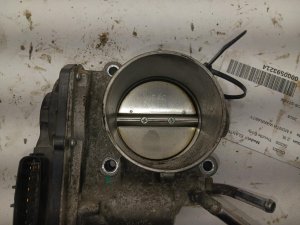
When a used part is the smart pick: A used OEM throttle body from a junkyard or online reseller is a very practical and cost-effective option, as a new OEM unit is expensive. Since this is a common failure part, a tested unit from a low-mileage donor vehicle can be a reliable fix.
Donor-vehicle mileage cap: roughly under 70000 miles for the part to have meaningful remaining life.
What to inspect on the donor part:
- Verify the OEM part number stamped on the used unit's housing matches your original part EXACTLY.
- Inspect the electrical connector pins for any signs of green or white corrosion, or bent pins.
- Look at the throttle plate; minimal carbon is okay, but avoid units that are caked in heavy black deposits.
- Ask the seller if the part has been tested or if it comes from a vehicle that was running prior to being dismantled.
Aftermarket brands forum-validated for this vehicle:
- Dorman (notes an improved shaft seal design)
- SKP
- Spectra Premium
- Cardone (Remanufactured)
- Hitachi
Related OBD-II Codes
Frequently Asked Questions
Can I just replace the Throttle Position Sensor (TPS) on my 2011-2016 Elantra to fix a P0123 code?
After I replace the throttle body on my Elantra, is there a special procedure required?
My ESC and Traction Control lights came on at the same time as the Check Engine Light for P0123. Is this related?
At what mileage does the throttle body typically fail on the 2011-2016 Elantra?
Will cleaning the throttle body fix the P0123 code?
Are there any Hyundai TSBs that address this P0123 failure?
I have a 2015 Kia Forte with the same engine. Is it also likely to have this problem?
Helpful Videos

Used OEM Parts in Stock

New Aftermarket Parts Available



The information in this article is provided for general reference and educational purposes only. Vehicle specifications, procedures, and part compatibility can vary by production date, trim level, and region. Always consult your vehicle's factory service manual and verify part numbers before purchasing or performing repairs. Safety-critical components such as airbags, seat belts, and braking systems should be installed by a qualified professional.
- Hyundai Elantra:
- 🎬 Helpful Videos
- 🛍️ Shop This Part
- What's Unique About the 2011-2016 Hyundai Elantra
- Symptoms You May Notice
- Most Likely Causes
- Rare But Worth Checking
- Diagnosis Steps
- Parts You'll Likely Need
- Related Codes That Often Appear With This One
- Technical Service Bulletins (TSBs) & Recalls
- Platform-Specific Known Issues
- Documented NHTSA Reports
- Mechanic-Grade Diagnostic Values
- Scan Tool Commands That Help
- Wiring & Ground Locations
- Real Owner Repair Stories
- OEM Part Supersession History
- Model Year Variations Within This Range
- Diagnostic Flowchart
- Used vs. New Parts: Buying Guide for This Vehicle
- Related OBD-II Codes
- Frequently Asked Questions
- 🎟️ Get 5% Off