

P0123 on 2015-2020 Honda Fit: Throttle Position Sensor High Input Causes and Fixes
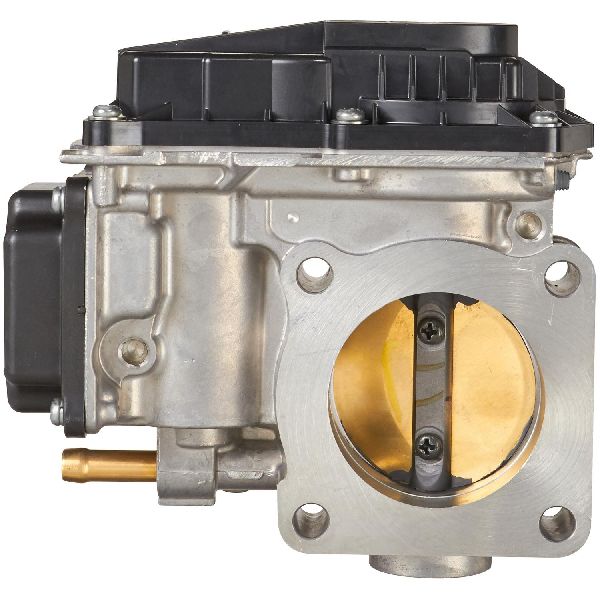
On a 2015-2020 Honda Fit, code P0123 is almost always caused by a failed internal throttle position sensor. Since the sensor is integrated into the throttle body, the entire assembly must be replaced. Expect to pay $230-$350 for an OEM throttle body (Part No. 16400-5R7-A01) and replace the gasket at the same time. An idle relearn procedure is mandatory after the repair.
- P0123 on a 2015-2020 Fit points to a high voltage signal from the throttle position sensor.
- The most common cause is the failure of the sensor itself, which is integrated into the throttle body, requiring replacement of the entire assembly.
- Before replacing the expensive throttle body, always inspect the 6-pin wiring connector for damage, as a short circuit can cause the same code.
- The correct OEM part number for the throttle body is 16400-5R7-A01.
- After replacing the throttle body, an idle relearn procedure is mandatory for the engine to run correctly.
What's Unique About the 2015-2020 Honda Fit
On the third-generation Honda Fit (2015-2020), the vehicle uses a modern 'drive-by-wire' throttle system. Unlike older cars with a separate and easily replaceable sensor, the Fit's throttle position sensor (TPS) is permanently integrated into the electronic throttle body assembly. This design includes two redundant sensors for safety and correlation checks. If the primary 'A' sensor fails and sends a high voltage signal, the entire throttle body unit must be replaced as a single component. This makes the repair more costly and involved than on vehicles with standalone sensors.
Symptoms You May Notice
- Check Engine Light is on
- Hesitation or stumbling during acceleration
- Rough or erratic idle
- Engine stalling, especially when stopping or at low speeds
- Vehicle enters 'limp mode' with significantly reduced power
- Poor throttle response or sudden loss of acceleration
- Unintended acceleration (rare, but possible)
- Replacing only the accelerator pedal position (APP) sensor. While the APP sensor is part of the throttle system, P0123 specifically points to the sensor at the throttle body, not the pedal.
- Cleaning the throttle body. While cleaning a dirty throttle body can fix idle issues, it will not resolve an electrical fault like a P0123 code, which indicates a sensor circuit failure.
Most Likely Causes
- Faulty Throttle Body Assembly (Internal TPS Failure) 🔴 High Probability The throttle position sensor is integrated into the throttle body assembly and is not serviceable separately. Electronic failure of this internal component is the most common cause of P0123 on this platform. 🎬 Watch: Diagnostic walkthrough for the 2015-2020 Honda Fit TPS
How to confirm: After confirming wiring is intact, use a diagnostic scanner to view live data. If the TPS voltage (TP_A) is stuck high (near 5V) regardless of pedal position, the sensor has failed. The diagnostic procedure in the service manual often leads to replacing the throttle body if the wiring checks out.
Typical fix: Replace the entire throttle body assembly (Honda Part No. 16400-5R7-A01) and the corresponding gasket (Honda Part No. 17107-5AA-004). An idle relearn procedure must be performed after replacement.
Est. part cost: $230-$350 - Wiring or Connector Issue 🟡 Medium Probability Vibrations and heat in the engine bay can cause wires to fray or the 6-pin connector at the throttle body to become loose or corroded over time.
How to confirm: Visually inspect the wiring harness and the 6-pin connector at the throttle body for any signs of damage, corrosion, or loose pins. Use a multimeter to check for a short to voltage on the signal wire and verify a stable 5V reference and good ground at the connector with the key on, engine off.
Typical fix: Repair the damaged section of the wiring harness or clean/replace the connector.
Est. part cost: $5-$50
Rare But Worth Checking
- Faulty Powertrain Control Module (PCM): This is very uncommon. The PCM should only be considered after all other possibilities, including the throttle body and wiring, have been thoroughly tested and ruled out. A PCM software update may be required in some cases.
- Poor Engine Ground (G101): A corroded or loose main engine ground can cause erratic voltage readings across multiple sensors, including the TPS. While not the first thing to check, it has been documented on similar Honda platforms and can cause a variety of electrical issues.
Diagnosis Steps
- Connect an OBD-II scanner to read the code and check for any other stored codes, such as P0223 or P2135.
- Use the scanner's live data feature to observe the Throttle Position Sensor 'A' voltage (TP_A). With the key on, engine off, the voltage should be around 0.5V at closed throttle and rise smoothly to about 4.5V at wide-open throttle.
- If the voltage is stuck high (e.g., near 5.0V) and does not change with pedal input, proceed with electrical checks. 🎬 See how to troubleshoot throttle position sensor high input codes
- Turn the ignition off and disconnect the 6-pin electrical connector from the throttle body.
- Inspect the connector terminals and wiring for any visible damage, corrosion, or pushed-out pins.
- Turn the ignition to ON (engine off). Carefully measure the voltage between the reference voltage wire (Pin 6) and the ground wire (Pin 3) on the harness side of the connector. It should be approximately 5.0V.
- If the 5V reference and ground are good, the wiring is likely okay, and the throttle body assembly itself has failed internally.
- If the 5V reference is missing or incorrect, there is a wiring issue between the PCM and the throttle body, or a faulty PCM.
- If diagnosis points to the throttle body, replace it with a new gasket.
- After replacement, perform the throttle body idle relearn procedure. This typically involves warming the engine to operating temperature (until the radiator fan cycles on), then letting it idle with no electrical load for 5-10 minutes. 🎬 Watch: How to perform the idle relearn on any Honda
Parts You'll Likely Need
- Throttle Body Assembly
(OEM #16400-5R7-A01)— This is the most common fix because the throttle position sensor (TPS) that fails is integrated into this assembly and cannot be replaced separately on the 2015-2020 Fit.
Trusted brands: Honda (Genuine OEM), Hitachi (Often the OEM manufacturer), Bosch, Standard Motor Products (SMP)
OEM price range: $230-$350
Aftermarket price range: $150-$250 - Throttle Body Gasket
(OEM #17107-5AA-004)— The gasket creates a seal between the throttle body and the intake manifold. It is a single-use part and must be replaced whenever the throttle body is removed to prevent vacuum leaks.
Trusted brands: Honda (Genuine OEM)
OEM price range: $10-$15
Aftermarket price range: $5-$10
Related Codes That Often Appear With This One
- P0223: Throttle/Pedal Position Sensor/Switch 'B' Circuit High Input - This code for the redundant 'B' sensor often appears with P0123, strongly indicating a failure of the entire throttle body unit.
- P2135: Throttle/Pedal Position Sensor/Switch 'A'/'B' Voltage Correlation - The PCM compares signals from the two internal sensors. If one is stuck high (P0123), their values won't match, triggering this code.
Technical Service Bulletins (TSBs) & Recalls
- No specific Technical Service Bulletins (TSBs) from Honda were found to be widely issued for the P0123 code on this specific vehicle model. The issue is addressed as a standard diagnostic procedure.
Platform-Specific Known Issues
- Forum discussions on FitFreak.net and Reddit's r/hondafit confirm that replacing the entire throttle body assembly is the standard and effective fix for a persistent P0123 code after wiring has been ruled out.
Mechanic-Grade Diagnostic Values
- TP Sensor 'A' Voltage (Live Data) — expected: Approx. 0.5V at closed throttle, rising smoothly to approx. 4.5V at wide-open throttle.. Failure: Voltage is stuck high, at or near 5.0V, regardless of pedal position. A reading over 4.8V will trigger the code.
- Reference Voltage at Throttle Body Connector (Harness Side) — expected: Approx. 5.0V. Failure: No voltage or significantly lower voltage indicates a wiring issue or a problem with the PCM.
- Test between Pin 6 (VCC1 - 5V Reference) and Pin 3 (SG1 - Sensor Ground) at the harness connector — expected: Approx. 5.0V with key on, engine off.. Failure: Incorrect voltage points to a wiring fault between the PCM and the throttle body.
Scan Tool Commands That Help
- Honda Diagnostic System (HDS) or i-HDS: TP POSITION CHECK (in ETCS TEST menu) — This is a specific function used to verify the throttle position sensor readings before and after a repair. It's part of the official Honda diagnostic procedure.
- Honda Diagnostic System (HDS) or i-HDS: PCM - Reset — This function is required after replacing the throttle body to clear learned values from the old part before performing the idle relearn procedure.
- Honda Diagnostic System (HDS) or i-HDS: PCM - Idle Learn — This is the dealer-level command to force the PCM to relearn the new throttle body's idle characteristics. It is mandatory after replacement to ensure a stable idle.
Wiring & Ground Locations
- G101 — On the engine block, typically attached to the thermostat housing or the water pipe-side of the housing.. This is a primary power and logic ground for the PCM. A poor connection here can cause erratic voltage readings across multiple engine sensors, including the TPS, leading to a false P0123 code.
- Throttle Body 6-Pin Connector — Directly on the electronic throttle body assembly.. This is the single connection point for the dual throttle position sensors and the throttle actuator motor. Key pins for testing P0123 are Pin 6 (5V Reference) and Pin 3 (Sensor Ground).
Real Owner Repair Stories
- Reddit user on r/hondafit (2015 Honda Fit Automatic) — Vehicle went into limp mode, throwing codes P0223 and P2135.
❌ Tried (didn't work) Initial diagnosis pointed to a previous owner installing an aftermarket throttle body with incorrectly spliced wires.
✅ What actually fixed it The user was seeking a wiring diagram to correct the faulty splice, confirming that wiring issues at the connector are a real-world cause of these codes. - FitFreak.net forum user (2009 Honda Fit (Note: 2nd Gen, but demonstrates identical failure pattern)) — Check engine light on, very little acceleration, car barely drivable.
❌ Tried (didn't work) Dealer initially suspected a loose gas cap, which provided a temporary fix but the problem returned the next day.
✅ What actually fixed it The dealer diagnosed a failed throttle body and quoted $1000 for replacement. The owner was skeptical but the symptoms are classic for throttle body failure leading to limp mode.
OEM Part Supersession History
16400-5R7-A01→— This is the current and primary part number for the 2015-2020 Fit. It is also marked with 'GMG1C'.
Heads up: Some sources also list 16400-5R1-J01, which may be for Fits manufactured in a different location (e.g., Japan vs. Mexico). It is critical to verify the correct part number for your vehicle's VIN.
Diagnostic Flowchart
Other Known Issues on This Vehicle
Issues unrelated to this code that are worth knowing about as an owner of this generation:
- Premature Starter Motor Failure 🔴 High — Common failure, particularly on 2015 models, often between 45,000 and 70,000 miles. Symptoms include a single click with no crank. (Ref: No recall, but a related TSB (20-098) exists for the start/stop switch on push-button models, which can cause similar symptoms.)
- Direct Injection Carbon Buildup 🟠 Medium — As a direct-injection engine, carbon can build up on intake valves over time, causing misfires, rough idle, and hesitation. (Ref: No recall, but Honda extended the warranty on fuel injectors for some 2015-2016 models, which can be related to misfire issues.)
- Faulty VTC Actuator 🟠 Medium — Can cause a brief, loud rattling noise from the engine during cold startups, especially on 2015-2016 models. (Ref: No recall, but it is a well-documented issue requiring replacement of the VTC actuator.)
- Fuel Injector Problems 🔴 High — Faulty or improperly installed fuel injectors were an issue on 2015-2016 models, leading to rough idle, hesitation, and misfire codes. (Ref: Honda extended the warranty for fuel injectors on some 2015-2016 models to 10 years/150,000 miles.)
- Prematurely Failing Small Battery 🟡 Low — The small OEM 151R battery is known to have a short lifespan, causing various electrical issues and no-start conditions. Many owners upgrade to a larger 51R battery.
Used vs. New Parts: Buying Guide for This Vehicle
When a used part is the smart pick: A used OEM throttle body from a reputable salvage yard is a very smart and cost-effective choice for this repair. They are often significantly cheaper than new OEM parts and generally more reliable than new, non-OEM aftermarket units.
Donor-vehicle mileage cap: roughly under 80000 miles for the part to have meaningful remaining life.
What to inspect on the donor part:
- Verify the part number on the used unit EXACTLY matches your original part (e.g., 16400-5R7-A01).
- Inspect the electrical connector for any bent, corroded, or pushed-out pins.
- Look for a clean throttle bore with minimal carbon buildup, which can indicate a well-maintained donor vehicle.
- Ensure the throttle plate moves freely without binding (if it can be moved by hand, though this is not always possible on electronic units).
OEM-only on this vehicle (don't cheap out):
- Throttle Body Assembly
Aftermarket brands forum-validated for this vehicle:
- Hitachi (Often the original equipment manufacturer for Honda, so a Hitachi-branded part is equivalent to OEM).
Brands owners have reported issues with on this vehicle:
- Unbranded, low-cost aftermarket units from online marketplaces should be avoided, as they have a higher likelihood of premature failure or incorrect calibration, leading to persistent drivability issues.
Real Owner Stories
Aggregated from forums and TSBs cited above. Mileages and costs reflect what owners reported in those sources.
2015 Honda Fit
Symptoms: Rough idle and hesitation during driving.
What fixed it: Replacement of the throttle body assembly and performing the idle air relearn procedure.
Source hint: https://www.fitfreak.net/forums/3rd-generation-2015/100789-rough-idle-hesitation.html
2017 Honda Fit
Symptoms: Vehicle suddenly entered limp mode with significantly reduced power.
What fixed it: Replacement of the throttle body assembly.
Source hint: Reddit r/hondafit thread titled 'I jinxed it'
Related OBD-II Codes
Frequently Asked Questions
Can I just replace the Throttle Position Sensor (TPS) on my 2015 Honda Fit to fix P0123?
Is there a specific TSB for P0123 on the 2015-2020 Honda Fit?
What is the correct idle relearn procedure for a 2015-2020 Honda Fit after replacing the throttle body?
Are there any specific aftermarket brands recommended for the throttle body?
Does the Honda HR-V share this P0123 issue with the Fit?
Could my P0123 code be caused by a weak battery?
Helpful Videos
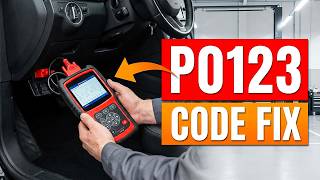
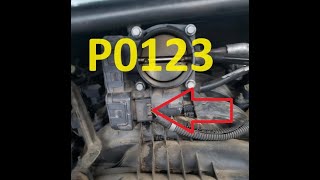
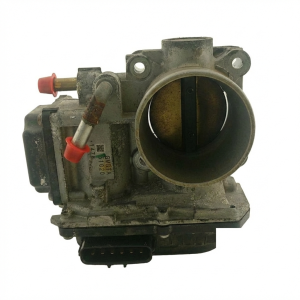
Used OEM Parts in Stock

New Aftermarket Parts Available

The information in this article is provided for general reference and educational purposes only. Vehicle specifications, procedures, and part compatibility can vary by production date, trim level, and region. Always consult your vehicle's factory service manual and verify part numbers before purchasing or performing repairs. Safety-critical components such as airbags, seat belts, and braking systems should be installed by a qualified professional.
- Honda Fit:
- 🎬 Helpful Videos
- 🛍️ Shop This Part
- What's Unique About the 2015-2020 Honda Fit
- Symptoms You May Notice
- Most Likely Causes
- Rare But Worth Checking
- Diagnosis Steps
- Parts You'll Likely Need
- Related Codes That Often Appear With This One
- Technical Service Bulletins (TSBs) & Recalls
- Platform-Specific Known Issues
- Mechanic-Grade Diagnostic Values
- Scan Tool Commands That Help
- Wiring & Ground Locations
- Real Owner Repair Stories
- OEM Part Supersession History
- Diagnostic Flowchart
- Other Known Issues on This Vehicle
- Used vs. New Parts: Buying Guide for This Vehicle
- Real Owner Stories
- 2015 Honda Fit
- 2017 Honda Fit
- Related OBD-II Codes
- Frequently Asked Questions
- 🎟️ Get 5% Off