

P0123 on 2007-2014 Chevrolet Silverado 1500: Throttle Position Sensor Circuit High Fixes
This code means the Throttle Position Sensor (TPS) is sending an abnormally high voltage signal to the truck's computer. The most common fix is replacing the entire throttle body assembly, as the sensor is often integrated. Expect to pay between $150 and $350 for the part. After replacement, a 'throttle relearn' procedure is required.
- P0123 means the throttle position sensor circuit is sending a voltage signal that is too high.
- Symptoms will be severe, including a 'Reduced Engine Power' warning and very poor acceleration.
- The most common fix for this specific truck is to replace the entire throttle body assembly, not just the sensor.
- Before buying parts, always inspect the wiring and connector at the throttle body for damage or corrosion.
- After replacing or cleaning the throttle body, a 'throttle relearn' procedure is mandatory for the engine to idle correctly.
What's Unique About the 2007-2014 Chevrolet Silverado 1500
On many GMT900 (2007-2013) and K2XX (2014) Silverados with the 5.3L V8, the throttle position sensor (TPS) is not sold separately by the OEM. It is integrated into the complete throttle body assembly. While some aftermarket companies offer a standalone sensor, many owners and shops find that replacing the entire throttle body is the most reliable and common repair. This is a key difference from older vehicles where the TPS was a simple, inexpensive, and separate component. Using an OEM or high-quality aftermarket throttle body is often recommended, as some cheaper aftermarket units can cause issues with the required idle relearn procedure.
Generation note: This range covers two Silverado generations: the GMT900 (2007-2013) and the start of the K2XX (2014). While the P0123 code has the same meaning for both, the specific throttle body part numbers are different. The diagnostic and repair process is nearly identical, focusing on the throttle body assembly for both generations. The K2XX platform introduced new EcoTec3 engines and more advanced electrical systems, but the fundamental operation of the drive-by-wire throttle remained similar.
Symptoms You May Notice
- Check Engine Light is on
- "Reduced Engine Power" message on the dash
- Vehicle has very poor acceleration (limp mode)
- Hesitation or bucking when pressing the gas pedal
- Rough or high idle
- Engine may stall unexpectedly
- Unintended or sudden acceleration
- Replacing only the Accelerator Pedal Position (APP) sensor. While the APP sensor is part of the drive-by-wire system, P0123 specifically points to the sensor circuit at the throttle body, not the pedal inside the cab. A faulty pedal sensor would typically set a P2138 code.
Most Likely Causes
- Failed Throttle Position Sensor (TPS) 🔴 High Probability The TPS is an electronic sensor subject to wear and tear from heat and vibration. On these trucks, it is most often part of the throttle body assembly, making it the most commonly replaced part for this code. GM even issued a special coverage adjustment for the TPS on some models due to high failure rates.
How to confirm: Using an OBD-II scanner, check the live data for 'TPS Voltage'. With the key on and engine off, the voltage should be around 0.5V at rest and sweep smoothly up to ~4.5V as you press the pedal. A P0123 code is often accompanied by a voltage reading stuck high (near 5V).
Typical fix: Replace the entire throttle body assembly. While some aftermarket sensors are available, replacing the whole unit is the standard and most reliable repair. A throttle relearn procedure must be performed after replacement.
Est. part cost: $150-$350 - Wiring Harness or Connector Issue 🟡 Medium Probability The wiring harness leading to the throttle body can become brittle from engine heat cycles, or connections can suffer from fretting corrosion. A common failure is the signal wire shorting to a power source due to chafed insulation. In some cases, a wire can break internally while appearing fine on the outside, leading to a frustrating diagnosis.
How to confirm: Visually inspect the wiring harness and the connector at the throttle body for any signs of damage, melting, or corrosion. With the engine running or key on, gently wiggle the connector and harness to see if it causes the engine idle to change or the voltage reading to fluctuate wildly. Check for a loose or poorly seated connector.
Typical fix: Repair the damaged section of wire or replace the connector pigtail. Clean any corrosion from the connector pins using electrical contact cleaner and apply dielectric grease. In one documented case, a technician bypassed a faulty wire by running a new, separate wire from the throttle body to the ECM.
Est. part cost: $15-$50 - Dirty or Sticking Throttle Body ⚪ Low Probability Carbon and gunk from the PCV system can build up inside the throttle body, causing the throttle plate to stick. While less likely to cause a 'circuit high' fault, it can cause erratic sensor readings and is a common maintenance item.
How to confirm: Remove the air intake tube and visually inspect the throttle bore and plate for heavy carbon buildup. Check if the plate moves smoothly by hand (with the engine off).
Typical fix: Clean the throttle body thoroughly with a dedicated throttle body cleaner and a soft cloth. This is often done as a first step before replacing parts. A throttle relearn procedure is often required after cleaning.
Est. part cost: $5-$15
Rare But Worth Checking
- Faulty Powertrain Control Module (PCM): This is very rare. The PCM should only be considered after all other possibilities, including the sensor, wiring, and connections, have been exhaustively tested and ruled out. An internal failure in the ECM's input circuit can cause the voltage to spike.
- High Voltage from Alternator: A failing alternator that is over-charging the electrical system can sometimes cause high voltage readings across multiple sensors, including the TPS. This would typically be accompanied by other trouble codes and symptoms.
Diagnosis Steps
- Connect an OBD-II scanner and confirm P0123 is present. Note any other codes like P0223 or P2135.
- View live data on the scanner. Observe the 'Throttle Position Sensor 1 Voltage'. With the Key On, Engine Off, it should be stuck at a high value (e.g., >4.5V).
- Turn the ignition off. Disconnect the electrical connector at the throttle body. Inspect the connector and pins for corrosion, moisture, or damage. Ensure it was fully seated.
- Inspect the wiring harness leading to the throttle body for any signs of chafing, melting, or breaks. Pay close attention to where it might rub against the engine or other components.
- If wiring looks good, the most likely cause is a failed sensor within the throttle body assembly.
- To be certain, you can test the circuit. With the connector unplugged and key on, check for a 5-volt reference and a good ground 🎬 See this video for a detailed pinout and circuit diagnosis. at the appropriate pins on the harness side of the connector.
- If the 5V reference and ground are present, the throttle body assembly is almost certainly the faulty component.
- Before replacing, consider cleaning the throttle body bore and plate to ensure it isn't sticking, although this is less likely to cause a 'circuit high' fault.
- CRITICAL POST-REPAIR STEP: After replacing or cleaning the throttle body, a 'Throttle Relearn' or 'Idle Relearn' procedure must be performed. This can sometimes be done manually (e.g., letting the engine idle for several minutes), but often requires a capable OBD-II scan tool to initiate the process. Failure to do this can result in a high idle 🎬 Watch: How to perform the idle relearn procedure after repair. or the return of trouble codes.
Parts You'll Likely Need
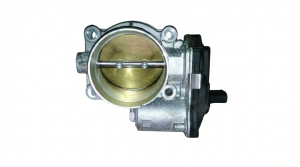
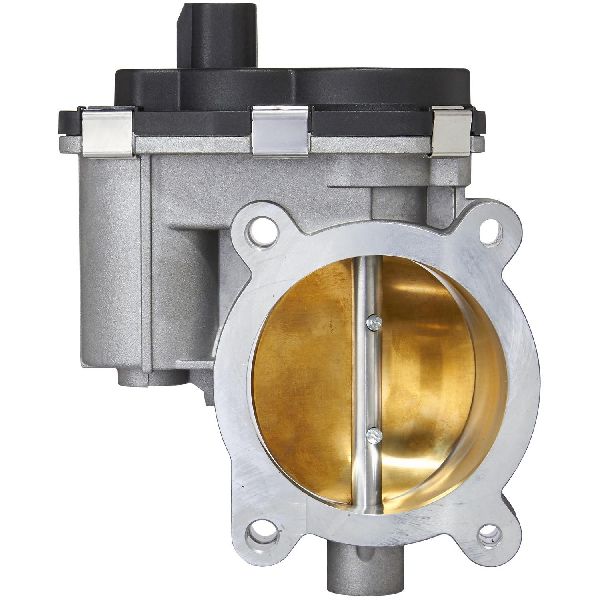
- Throttle Body Assembly
(OEM #GMT900 (2007-2013): 12679524 (formerly 12580760); K2XX (2014): 12670839 or 12676296. Part numbers can supersede, always verify with VIN.)— This is the primary fix because the Throttle Position Sensor (TPS) is typically integrated into the assembly and not sold separately by GM for this vehicle.
Trusted brands: ACDelco, Bosch, Hitachi, SKP, Dorman
OEM price range: $250-$400
Aftermarket price range: $150-$250
Related Codes That Often Appear With This One
- P0223 — This code is for 'Throttle/Pedal Position Sensor/Switch 'B' Circuit High'. These trucks use two TPS circuits ('A' and 'B') for redundancy. A failure often affects both, triggering both codes simultaneously.
- P2135 — This code means 'Throttle/Pedal Position Sensor/Switch 'A'/'B' Voltage Correlation'. The PCM constantly compares the voltages from the two TPS circuits. If they don't match, it sets this code. It's very common to see this with P0123 as the high voltage on one sensor will not correlate with the other.
- P1516 — This code refers to 'Throttle Actuator Control (TAC) Module Throttle Actuator Position Performance'. It often appears alongside TPS codes when the PCM detects a discrepancy between the commanded throttle position and the actual position reported by the sensors.
Technical Service Bulletins (TSBs) & Recalls
- GM TSB #PIP4786B: Addresses intermittent 'Reduced Engine Power' with codes P0123, P0223, and P2135. It points towards checking for terminal fretting/corrosion at the throttle body connector and the PCM connectors.
- GM TSB #07-06-04-019F: While primarily for code P2138 (pedal sensor), this TSB is highly relevant as it details a common platform issue of water intrusion into the driver's side kick panel harness connector, causing a wide range of electrical problems including those related to the throttle control system.
- GM Special Coverage Adjustment #15-06-04-001: This document acknowledged a high failure rate of the throttle position sensor and extended warranty coverage to 10 years/120,000 miles on certain vehicles, though most are now outside this coverage period.
Platform-Specific Known Issues
- Throttle Relearn Procedure is Mandatory: After cleaning or replacing the throttle body, the PCM must relearn the idle and closed-throttle positions. Some owners report success with a manual procedure (idling for 3 mins, key off for 60s, repeat), while others state a scan tool is required for the relearn to complete successfully. Failure to perform this step can lead to a persistent high idle or new error codes.
- Aftermarket Part Quality: Some owners have reported issues with cheaper, aftermarket throttle bodies failing to complete the idle relearn procedure correctly. Using an OEM ACDelco part is often recommended for a higher chance of success.
- Wiring Harness Cross-Talk/Short: In complex diagnostic cases, technicians have found that the TPS signal wire can get interference or a voltage bleed from an adjacent wire within the main harness, causing a P0123 code even with a good sensor and connector. The fix involved running a new, dedicated wire from the sensor to the PCM.
Mechanic-Grade Diagnostic Values
- Throttle Body Connector - 5-Volt Reference — expected: 4.8-5.2 Volts. Failure: Voltage below 4.8V or above 5.2V indicates a problem in the reference circuit or ECM.
- Throttle Body Connector - Low Reference (Ground) Circuit Resistance — expected: Less than 5.0 Ohms. Failure: Resistance greater than 5.0 Ohms indicates an open or high resistance in the ground circuit.
- Scan Tool - TP Sensor 1 Voltage (Key On, Engine Off) — expected: Approx. 0.25V - 1.0V (varies slightly by vehicle). Failure: A reading stuck high (above 4.5V) confirms the fault condition for P0123.
- Scan Tool - TP Sensor 1 Voltage (Connector Unplugged) — expected: Less than 0.1 Volts. Failure: If the voltage is greater than 0.1V with the sensor unplugged, it indicates the signal wire (Terminal D) is shorted to a voltage source somewhere in the harness.
Scan Tool Commands That Help
- GM GDS2 / Tech2Win: Module Diagnostics -> ECM -> Data Display — Used to monitor live data streams for TP Sensor 1 Voltage, TP Sensor 2 Voltage, and Desired vs. Actual throttle position to confirm the fault.
- GM GDS2 / Tech2Win: Configuration/Reset Functions -> Reset ECM Learned Values — This function is critical after replacing or cleaning the throttle body. It forces the ECM to relearn idle and throttle position values. Failure to perform this step is a common cause of post-repair issues like high idle.
- GM GDS2 / Tech2Win: Output Controls / Bidirectional Controls — Allows a technician to command the throttle plate to specific angles to test the actuator motor and verify sensor response, helping to differentiate between a sensor, motor, or wiring fault.
Wiring & Ground Locations
- Throttle Body Connector — On the throttle body, at the front of the engine, connected to the air intake.. This is the primary connection point for the TPS. Pins to test are: Pin C (Low Reference/Ground), Pin D (TPS 1 Signal), and Pin E (5V Reference). A fault at this connector or its wiring is a common cause.
- G103 — On the front of the passenger side (right) cylinder head on GMT900 models.. This is a primary engine and ECM ground. A loose or corroded connection here can cause unstable sensor readings and various electrical faults, including TPS codes.
- G104 — On the rear of the driver's side (left) cylinder head, often a braided strap connected to the firewall on GMT900 models.. This is another critical engine-to-chassis ground. It is a very common failure point due to corrosion or breakage, leading to intermittent and hard-to-diagnose electrical issues, including problems with the 5V reference circuit that feeds the TPS.
Real Owner Repair Stories
- 2CarPros Forum User (1996 Chevrolet Silverado 7.4L V8) — Lost 'passing gear', check engine light with code P0123.
❌ Tried (didn't work) Initial testing showed incorrect voltage readings on the TPS signal and ground wires.
✅ What actually fixed it The user found the ground circuit from the TPS connector back to the ECM had no continuity. They fixed it by bypassing the bad wire with a new one, splicing it in, which resolved all issues. - NHTSA ODI #10003154 (Cross-model reference) — An owner reported that the vehicle would unexpectedly lose power and lack accelerator response with code P0123 active. Despite replacing the sensor and inspecting the wiring, the loss of power remained a persistent issue.
OEM Part Supersession History
12580760→12679524— Standard part revision and consolidation by GM.
Heads up: These parts are generally interchangeable for the specified GMT900 applications. Always verify the correct part number for your specific VIN, as other numbers like 12572658 were also superseded by 12679524.
Model Year Variations Within This Range
- 2007-2013 (GMT900) vs. 2014 (K2XX): The 2014 K2XX models marked a new platform with different frames, a new EcoTec3 engine family (L83 5.3L), and more advanced electrical architecture compared to the GMT900's Vortec engines. While the P0123 fault code's meaning is the same, the throttle body part numbers are distinct, and ground strap locations and designs were updated.
Diagnostic Flowchart
Used vs. New Parts: Buying Guide for This Vehicle
When a used part is the smart pick: A used OEM (ACDelco) throttle body from a low-mileage donor vehicle can be a cost-effective and reliable option. Given that the failure is electronic, a used part is a calculated risk, but often successful if sourced carefully.
Donor-vehicle mileage cap: roughly under 80000 miles for the part to have meaningful remaining life.
What to inspect on the donor part:
- Check for a clean throttle plate and bore, indicating good engine health of the donor.
- Ensure the electrical connector pins are straight, clean, and free of corrosion.
- Ask for the donor vehicle's VIN to verify mileage and compatibility.
- Avoid parts from vehicles that show signs of significant front-end damage or engine fires.
OEM-only on this vehicle (don't cheap out):
- While not strictly 'OEM-only', the Throttle Body Assembly is a part where sticking to OEM (ACDelco) is highly recommended. Forum and mechanic reports indicate a higher rate of issues with some aftermarket units, particularly with performing the mandatory idle relearn procedure.
Aftermarket brands forum-validated for this vehicle:
- Bosch
- Hitachi
Brands owners have reported issues with on this vehicle:
- Dorman: While Dorman offers an OE FIX version with a Hall Effect sensor, some users across various GM platforms have reported immediate or premature failures and issues with the relearn procedure.
Real Owner Stories
Aggregated from forums and TSBs cited above. Mileages and costs reflect what owners reported in those sources.
GMC Sierra / Chevrolet Silverado
Symptoms: A persistent P0123 code remained even after common parts were replaced.
What fixed it: The root cause was a faulty wire in the main harness bleeding voltage into the sensor signal wire. The fix was to bypass the faulty section by running a new, separate wire from the throttle body to the ECM.
Source hint: YouTube - Global Commerce CA - 'GMC Sierra Chevy Silverado Tahoe P0123... Diag/FIX'
Chevrolet Silverado / GMC Sierra
Symptoms: After cleaning the throttle body to fix a different code (P0121), the truck developed a high idle.
What fixed it: The problem was related to the mandatory throttle relearn procedure. The discussion advised performing the relearn correctly and checking for any vacuum leaks that may have been introduced during reassembly.
Source hint: silveradosierra.com - 'Throttle Relearn'
2007-2014 Chevrolet Silverado 1500 5.3L V8
Symptoms: A cheaper, aftermarket throttle body was installed, but the truck would not complete the idle relearn procedure correctly, leading to persistent idle issues.
What fixed it: The recommended solution is to use a higher-quality OEM ACDelco part, which has a much higher chance of integrating with the vehicle's computer and completing the relearn procedure successfully.
Source hint: Vehicle-specific issues section regarding Aftermarket Part Quality
Related OBD-II Codes
Frequently Asked Questions
I replaced the throttle body on my Silverado for code P0123, but now it idles really high. What did I do wrong?
Is it worth trying a cheaper aftermarket throttle body, or should I buy the OEM part for my 2011 Silverado?
I heard there was a warranty extension for the throttle position sensor on these trucks. Is my 2012 Silverado still covered?
My mechanic replaced the throttle body and checked the connector, but P0123 came back. What's the next step?
Are there any official GM service bulletins (TSBs) related to the 'Reduced Engine Power' message and code P0123?
Should I just clean my throttle body first before spending money on a new one?
Helpful Videos
Used OEM Parts in Stock




New Aftermarket Parts Available

The information in this article is provided for general reference and educational purposes only. Vehicle specifications, procedures, and part compatibility can vary by production date, trim level, and region. Always consult your vehicle's factory service manual and verify part numbers before purchasing or performing repairs. Safety-critical components such as airbags, seat belts, and braking systems should be installed by a qualified professional.
- Chevrolet Silverado 1500:
- 🎬 Helpful Videos
- 🛍️ Shop This Part
- What's Unique About the 2007-2014 Chevrolet Silverado 1500
- Symptoms You May Notice
- Most Likely Causes
- Rare But Worth Checking
- Diagnosis Steps
- Parts You'll Likely Need
- Related Codes That Often Appear With This One
- Technical Service Bulletins (TSBs) & Recalls
- Platform-Specific Known Issues
- Mechanic-Grade Diagnostic Values
- Scan Tool Commands That Help
- Wiring & Ground Locations
- Real Owner Repair Stories
- OEM Part Supersession History
- Model Year Variations Within This Range
- Diagnostic Flowchart
- Used vs. New Parts: Buying Guide for This Vehicle
- Real Owner Stories
- GMC Sierra / Chevrolet Silverado
- Chevrolet Silverado / GMC Sierra
- 2007-2014 Chevrolet Silverado 1500 5.3L V8
- Related OBD-II Codes
- Frequently Asked Questions
- 🎟️ Get 5% Off