

P0122 on 2009-2017 Audi Q5 2.0T TFSI: Throttle Sensor Circuit Low Causes and Fixes
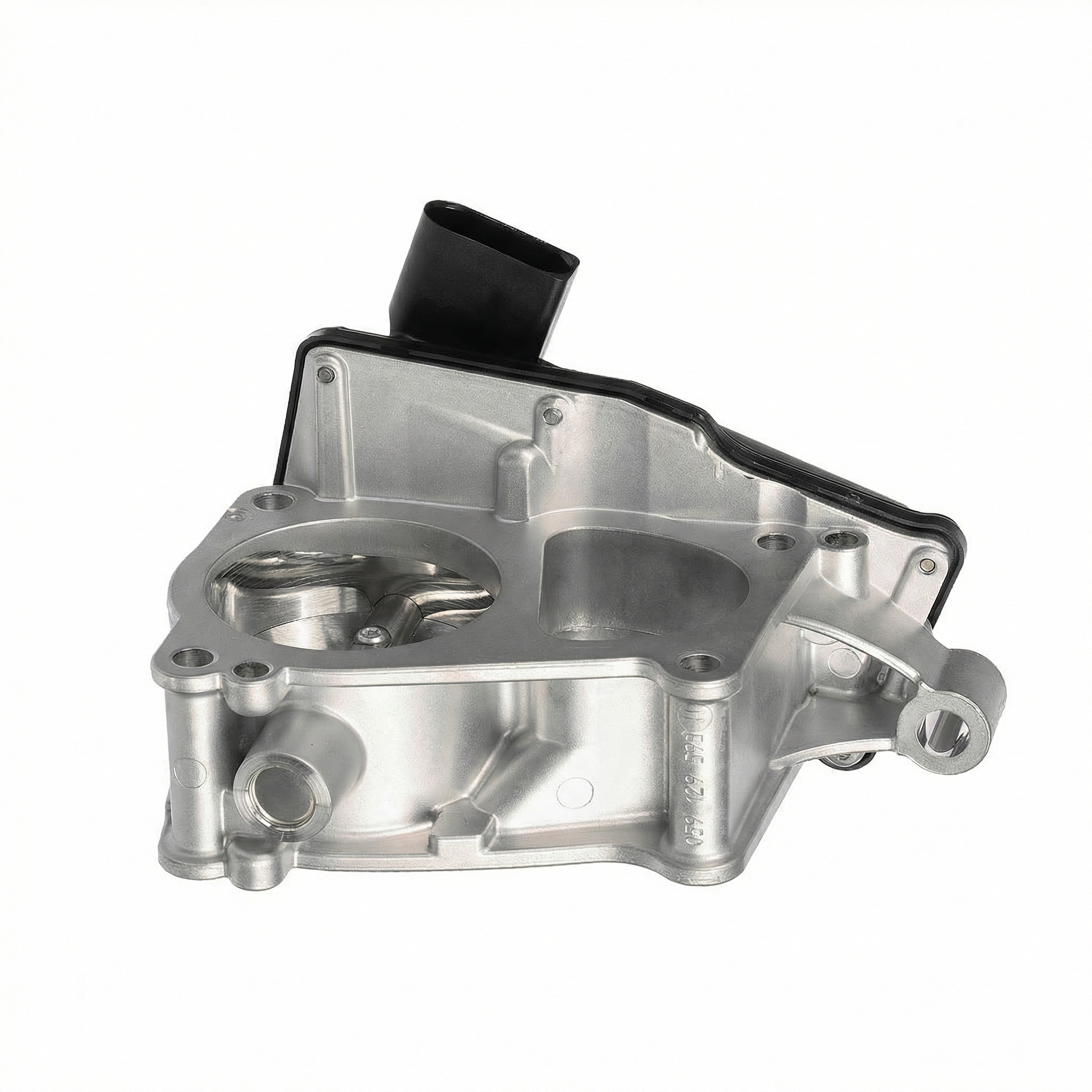
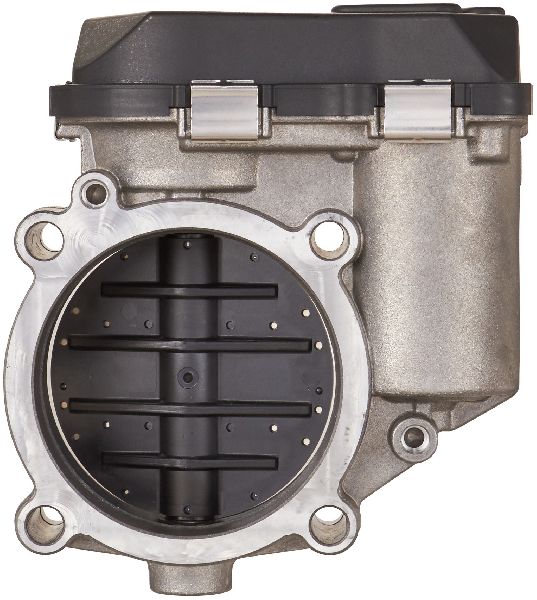
On a 2009-2017 Audi Q5 2.0T, code P0122 almost always points to a faulty throttle body assembly, as the sensor is integrated. Symptoms include the EPC light and reduced power. Replacing the entire throttle body is the common fix, with parts costing between $150 and $450.
- P0122 on this Audi Q5 indicates a low voltage signal from the throttle position sensor, which is part of the throttle body.
- The most common symptoms are an illuminated EPC light and the engine going into a low-power 'limp mode'.
- Before replacing parts, check for and clean any heavy carbon buildup inside the throttle body, as this can cause the throttle plate to stick.
- The most frequent fix is to replace the entire throttle body assembly, followed by a throttle adaptation procedure with a scan tool.
- Do not replace the accelerator pedal; P0122 points specifically to the sensor at the engine's throttle body.
What's Unique About the 2009-2017 Audi Q5
The 2.0T TFSI engine in the Audi Q5 uses an electronic throttle body where the position sensors are built into the assembly. This means you cannot replace just the sensor; the entire throttle body must be replaced if the sensor fails. This design is common across many modern Volkswagen and Audi vehicles. Carbon buildup inside the throttle body is also a frequent issue on these direct-injection engines, which can cause the throttle plate to stick and potentially trigger this fault code.
Symptoms You May Notice
- Check Engine Light is on
- EPC (Electronic Power Control) light is illuminated
- Vehicle enters 'limp mode' with significantly reduced engine power
- Poor or delayed throttle response
- Rough or unstable idle
- Hesitation or stumbling during acceleration
- Engine may stall unexpectedly
- Surging
- Hard starting
- Replacing the accelerator pedal sensor. While the pedal also has position sensors, P0122 specifically refers to the sensor circuit 'A' at the throttle body, not the pedal.
Most Likely Causes
- Faulty Throttle Body Assembly 🔴 High Probability The throttle position sensors (TPS) are integrated into the throttle body and are not sold as separate components. Wear and tear on the internal electronic contacts (potentiometer) of the sensor is a common failure mode. The entire unit must be replaced.
How to confirm: Using a diagnostic scanner (like VCDS), monitor the live data for 'Throttle Position Sensor A'. The voltage should increase smoothly from about 0.5V to 4.5V as you press the accelerator pedal with the engine off (key on). If the voltage is stuck near zero, reads erratically, or shows a value below the ~0.2V threshold, the sensor within the throttle body has failed.
Typical fix: Replace the entire throttle body assembly. After replacement, a throttle body adaptation procedure must be performed with a compatible diagnostic tool like VCDS or Carista.
Est. part cost: $150-$450 - Dirty or Obstructed Throttle Body 🟡 Medium Probability Direct-injection engines like the 2.0T TFSI are susceptible to carbon buildup in the intake system, including the throttle body. This can cause the throttle plate to stick, preventing it from returning to its base position and causing a sensor reading mismatch or triggering other throttle-related codes.
How to confirm: Remove the intake pipe connected to the throttle body and visually inspect the throttle plate and bore for heavy carbon deposits. Check if the plate moves freely by hand (with the engine off).
Typical fix: Clean the throttle body thoroughly with a dedicated throttle body cleaner and a soft brush, being careful not to spray cleaner directly into the electronic components. After cleaning, perform a throttle body adaptation.
Est. part cost: $10-$20 - Wiring Harness or Connector Issue ⚪ Low Probability Wiring can become brittle from engine heat cycles or chafe against other components, leading to a short to ground. The connector pins can also become corroded or loose.
How to confirm: Visually inspect the wiring harness leading to the throttle body connector for any signs of damage, melting, or corrosion. Disconnect the connector and check for bent or corroded pins. Use a multimeter to check for continuity, a 5V reference signal, a good ground, and for a short to ground on the signal wire between the ECM and the throttle body.
Typical fix: Repair the damaged section of wire or replace the connector pigtail.
Est. part cost: $15-$50
Rare But Worth Checking
- Faulty Engine Control Module (ECM): This is extremely rare. The ECM should only be considered after all other possibilities, including the throttle body and wiring, have been definitively ruled out.
Diagnosis Steps
- Connect an OBD-II scanner and confirm that P0122 is the primary code. Note any other codes present, such as P0121, P0123, or P2101.
- With the key on and engine off, use the scanner to view live data for the throttle position sensor. The reading should be very low, near 0 volts, confirming the 'Circuit Low' condition.
- Turn the ignition off. Visually inspect the throttle body electrical connector and its wiring harness for any obvious signs of damage, chafing, or corrosion.
- Remove the intake hose from the throttle body and inspect the throttle plate and bore for heavy carbon buildup. A sticking plate can cause performance issues that may be misdiagnosed.
- If significant carbon is present, clean the throttle body thoroughly using a dedicated cleaner and a soft cloth or brush.
- After cleaning (or if it was already clean), reconnect everything and perform a throttle body adaptation using a suitable scan tool like VCDS. The procedure is typically found under Engine -> Basic Settings -> Group 060.
- Clear the codes and test drive to see if the fault returns. If the code returns immediately, the issue is likely electrical.
- If the code returns, test the wiring. Using a multimeter, check for a 5V reference, good ground, and the signal wire at the throttle body connector. Back-probe the connector to test while it's connected if possible.
- If wiring is confirmed to be good and the throttle body is clean, the throttle body assembly itself is the most likely culprit and should be replaced.
- After installing the new throttle body, perform the throttle body adaptation procedure to teach the ECM the new sensor's range.
Parts You'll Likely Need
- Throttle Body Assembly
(OEM #06F133062T (and others))— This is the most common cause of code P0122, as the non-serviceable throttle position sensor is integrated into the assembly. Part number may vary by production date and specific engine code. Other common variants include 06F133062Q, 06F133062J, and 06F133062M. Always verify with VIN.
Trusted brands: Bosch (OEM), VDO (OEM), Continental (OEM), A-Premium, Hitachi
OEM price range: $350-$450
Aftermarket price range: $150-$250
Related Codes That Often Appear With This One
- P0121 — Throttle Position Sensor 'A' Circuit Range/Performance. This can appear if the sensor signal is erratic before it fails completely low.
- P0123 — Throttle Position Sensor 'A' Circuit High Input. Seeing both P0122 and P0123 intermittently can point to a severe wiring short or an internally failing sensor.
- P2101 — Throttle Actuator Control Motor Circuit Range/Performance. This code relates to the motor that moves the throttle plate and can be triggered if the plate is stuck or the motor is failing along with the sensor.
Platform-Specific Known Issues
- A throttle body adaptation using a VAG-specific tool like VCDS is not just recommended, but required after cleaning or replacement. Failure to do so will result in an erratic idle and other drivability problems.
Mechanic-Grade Diagnostic Values
- Throttle Position Sensor (TPS) 'A' Signal Voltage — expected: Approx. 0.5V - 0.7V at closed throttle (idle), increasing smoothly to approx. 4.5V at wide-open throttle (WOT).. Failure: A reading stuck below 0.2V, or voltage that is erratic, jumpy, or does not respond to throttle plate movement.
- ECM 5V Reference Voltage at Throttle Body Connector — expected: A steady 5.0V on the reference wire pin.. Failure: Voltage significantly below 5.0V or no voltage indicates a wiring issue or a problem with the ECM's 5V reference circuit.
- VCDS Measuring Value Block (MVB) - Throttle Sensors — expected: In Group 062, fields for Sensor 1 (G187) and Sensor 2 (G188) should show smooth, opposing percentage changes as the throttle is opened. For example, one may go from ~12% to ~90% while the other goes from ~88% to ~10%.. Failure: One or both sensor values are static, show 0%, or jump erratically, confirming a sensor fault within the throttle body.
Scan Tool Commands That Help
- VCDS (VAG-COM): Engine -> Meas. Blocks -> Group 062 — To view the live data from the two redundant throttle position sensors (G187 and G188) simultaneously. This is the primary method to confirm if the sensors are tracking properly or if one has failed, causing the P0122 code.
- VCDS (VAG-COM): Engine -> Basic Settings -> Group 060 -> Go! — This is the Throttle Body Adaptation (TBA) procedure. It is mandatory after cleaning the throttle body or replacing it. The process allows the ECM to relearn the closed, open, and partial positions of the new or cleaned throttle plate. Failure to perform this will result in erratic idle and other drivability issues.
Wiring & Ground Locations
- G12 / G615 — Main engine compartment ground point, located on the left side frame rail or near the suspension strut tower.. A corroded or loose main engine ground can introduce electrical noise and voltage drops across the entire engine management system, potentially causing incorrect readings from sensitive sensors like the TPS, even if the sensor and its direct wiring are good.
- Throttle Body Connector (J338) — The 6-pin electrical connector directly on the throttle body assembly.. This is the primary point of failure for wiring issues. The pins for the 5V reference, ground, and the two sensor signal wires (for G187 and G188) are located here. Checking for voltage and continuity at these pins is a critical diagnostic step.
- ECM Ground Strap — Typically a braided strap connecting the engine block to the chassis, often near the engine mount or transmission.. While less common, degradation of this main ground strap can cause intermittent and bizarre electrical issues, including sensor faults. The ECM relies on a stable ground reference; if the engine block's ground potential floats, sensor readings can become unreliable.
Real Owner Repair Stories
- MHH Auto Forum User (VW Golf 6 2.0 TDI (similar throttle body control as Q5 2.0T)) — Intermittent P0122 fault, especially during city driving with many gear shifts and light acceleration.
❌ Tried (didn't work) Initial assumption was a wiring or ground issue due to the intermittent nature of the fault.
✅ What actually fixed it The user removed the electronic portion of the throttle body (J338) and found a small amount of oil inside the housing. Cleaning the oil out with electronics cleaner resolved the issue temporarily, confirming that the internal electronics of the throttle body were failing (likely due to seal failure allowing oil contamination). The long-term fix is throttle body replacement.
OEM Part Supersession History
06F133062J, 06F133062M, 06F133062Q→06F133062T, then 06F133062AG— Incremental manufacturing updates for improved durability, material composition, and tolerance to heat. The core design, fit, and function remain the same.
Heads up: All listed part numbers (J, M, Q, T, AG) are generally interchangeable for the 2.0T EA888 Gen 2 engine. However, it is always best practice to use the latest revision (e.g., 'AG') when replacing, as it contains all previous improvements.
Model Year Variations Within This Range
- 2009-2015: The Audi Q5 within this range primarily used the EA888 Gen 2 engine. While there was a facelift in 2012, the core engine and throttle control system for the 2.0T remained consistent. The part numbers for the throttle body are shared across this period.
Diagnostic Flowchart
Other Known Issues on This Vehicle
Issues unrelated to this code that are worth knowing about as an owner of this generation:
- Excessive Oil Consumption 🔴 High — Very common on 2009-2012 models with CAEB engine code. Caused by faulty piston ring design. Many owners report adding oil every 500-1000 miles. (Ref: Subject of a class-action lawsuit and multiple TSBs. The fix involves an oil consumption test (Stage 1) followed by piston and ring replacement (Stage 2).)
- Timing Chain Tensioner Failure 🔴 High — Widespread on pre-facelift (approx. 2008-2013) EA888 Gen 2 engines. The original tensioner can fail without warning, allowing the chain to stretch or jump time, causing catastrophic engine damage. (Ref: Subject of a class-action lawsuit and a warranty extension (TSB AWA 18-15). An updated tensioner design resolves the issue.)
- Water Pump / Thermostat Housing Failure 🟠 Medium — Common across all years. The original plastic housing becomes brittle and cracks, leading to coolant leaks. Failure can occur as early as 50,000 miles. (Ref: A class-action lawsuit led to an extended warranty on some vehicles (typically 8 years/80,000 miles). Upgraded aftermarket pumps with metal housings are available.)
- PCV / Oil Separator Failure 🟠 Medium — Common failure item. The internal diaphragm tears, causing a large vacuum leak. Symptoms include a whistling noise, high or rough idle, increased oil consumption, and lean fault codes.
Used vs. New Parts: Buying Guide for This Vehicle
When a used part is the smart pick: A used OEM throttle body from a low-mileage donor vehicle can be a cost-effective option, as the failure is electronic wear rather than a guaranteed defect. Given the high cost of a new OEM unit, a tested used part from a reputable salvage yard with a warranty is a reasonable choice.
Donor-vehicle mileage cap: roughly under 70000 miles for the part to have meaningful remaining life.
What to inspect on the donor part:
- Check for a clean electrical connector with no corrosion or bent pins.
- Ensure the throttle plate moves smoothly by hand (with ignition off) without binding or sticking.
- Avoid parts with physical damage to the housing or signs of being tampered with (e.g., sealant around the electronic housing).
- If possible, get the VIN of the donor car to verify its year and mileage.
OEM-only on this vehicle (don't cheap out):
- While the throttle body itself can be sourced from quality aftermarket brands, the Engine Control Module (ECM) should only be replaced with an OEM unit if it is ever diagnosed as the fault.
Aftermarket brands forum-validated for this vehicle:
- Bosch (often the original OEM supplier)
- VDO / Continental (also an OEM supplier)
- Pierburg
Brands owners have reported issues with on this vehicle:
- Unbranded, no-name parts from online marketplaces should be avoided. While significantly cheaper, they have a high rate of premature failure and may not respond correctly to the required throttle body adaptation procedure.
Real Owner Stories
Aggregated from forums and TSBs cited above. Mileages and costs reflect what owners reported in those sources.
2013 Audi Q5 2.0T — 112000 miles
Symptoms: Jerky throttle response and occasional stalling at traffic lights; physical inspection showed carbon deposits around the throttle plate bore edge and a faint grinding noise from the motor when activated.
What fixed it: Replacing the throttle body unit resolved all symptoms instantly.
Source hint: AliExpress Product Page Anecdote
2013 Audi Q5 B8.5 2.0T
Symptoms: VCDS scan log confirmed P0122 code present alongside a stuck injector issue.
What fixed it: Diagnostic capture via VCDS confirmed the fault code presence for further troubleshooting.
Source hint: Ross-Tech Forums - '13 Q5 B8.5 2.0 stuck Injector'
Related OBD-II Codes
Frequently Asked Questions
Can I just replace the sensor on my 2009-2017 Audi Q5 2.0T throttle body?
Is there a specific tool required to fix P0122 on my Audi Q5?
Could my Q5's P0122 code be caused by carbon buildup?
My Q5 is in 'limp mode' with an EPC light; is this related to P0122?
Are there any known engine issues on the 2009-2012 Q5 I should check while fixing this?
Helpful Videos
Used OEM Parts in Stock


New Aftermarket Parts Available


The information in this article is provided for general reference and educational purposes only. Vehicle specifications, procedures, and part compatibility can vary by production date, trim level, and region. Always consult your vehicle's factory service manual and verify part numbers before purchasing or performing repairs. Safety-critical components such as airbags, seat belts, and braking systems should be installed by a qualified professional.
- Audi Q5:
- 🎬 Helpful Videos
- 🛍️ Shop This Part
- What's Unique About the 2009-2017 Audi Q5
- Symptoms You May Notice
- Most Likely Causes
- Rare But Worth Checking
- Diagnosis Steps
- Parts You'll Likely Need
- Related Codes That Often Appear With This One
- Platform-Specific Known Issues
- Mechanic-Grade Diagnostic Values
- Scan Tool Commands That Help
- Wiring & Ground Locations
- Real Owner Repair Stories
- OEM Part Supersession History
- Model Year Variations Within This Range
- Diagnostic Flowchart
- Other Known Issues on This Vehicle
- Used vs. New Parts: Buying Guide for This Vehicle
- Real Owner Stories
- 2013 Audi Q5 2.0T — 112000 miles
- 2013 Audi Q5 B8.5 2.0T
- Related OBD-II Codes
- Frequently Asked Questions
- 🎟️ Get 5% Off