

P0121 on 2011-2016 Hyundai Elantra 1.8L: Throttle Position Sensor Causes and Fixes
On a 2011-2016 Elantra, code P0121 is almost always caused by a failing electronic throttle body assembly. The sensor is integrated and cannot be replaced separately. The most common fix is replacing the entire throttle body, which costs about $80-$250 for an aftermarket part and is a DIY-friendly job.
- P0121 on your Elantra almost always means you need a new throttle body assembly.
- Before buying a new part, spend 20 minutes cleaning the existing throttle body, as carbon buildup can sometimes cause this code.
- A simple, no-tools-required 'relearn' procedure is necessary after cleaning or replacing the throttle body to ensure a stable idle.
What's Unique About the 2011-2016 Hyundai Elantra
For this generation of Hyundai Elantra (MD/UD), the Throttle Position Sensor (TPS) is not a separate, replaceable part. It is integrated directly into the electronic throttle body assembly. This design choice means that when the sensor's internal electronics fail—which is the most common reason for P0121 on this car—the entire throttle body must be replaced. While the code definition includes the accelerator pedal, owner experiences and mechanic reports overwhelmingly point to the throttle body itself as the culprit for this specific vehicle and engine.
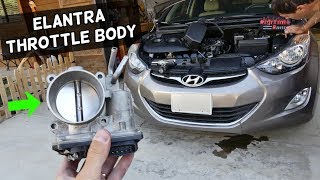
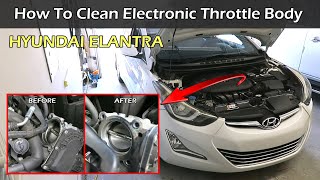
🎬 Watch: A detailed overview of P0121 on this Elantra.Symptoms You May Notice
- Check Engine Light is on
- Sudden loss of engine power (entering 'limp mode')
- Hesitation or stumbling during acceleration
- Rough or unstable idle
- Engine stalling, especially when coming to a stop or at idle
- Poor or no throttle response
- Replacing the accelerator pedal assembly first. While it contains position sensors, the throttle body is a much more frequent point of failure for this specific code on this car.
- Replacing oxygen sensors or mass airflow sensors. These are unlikely to be the root cause unless other specific codes for those components are also present.
Most Likely Causes
- Faulty Electronic Throttle Body Assembly 🔴 High Probability The internal electronics of the integrated Throttle Position Sensor (TPS) are a common failure point. The sensor is not sold separately, requiring replacement of the entire assembly. This is the most frequent cause of P0121 on this platform.
How to confirm: Using a scan tool, monitor the live data for TPS1 and TPS2 voltage while slowly pressing the accelerator pedal with the engine off (key on). If the voltage for TPS1 jumps erratically, drops out, or doesn't change smoothly, the sensor is bad.
Typical fix: Replace the entire electronic throttle body assembly. After replacement, perform a throttle relearn procedure.
Est. part cost: $80-$250 - Dirty or Sticking Throttle Body 🟡 Medium Probability Carbon and oil residue from the PCV system can build up in the throttle bore, causing the throttle plate to stick. This can cause the physical plate position to not match the computer's command, triggering a performance code.
How to confirm: Remove the air intake hose from the throttle body. Visually inspect the throttle plate and bore for significant black carbon buildup. Check if the plate moves freely or feels sticky.
Typical fix: Thoroughly clean the throttle plate and bore using a dedicated throttle body cleaner and a soft cloth or brush. A Hyundai TSB (13-FL-002) for similar issues recommends cleaning before replacement.
Est. part cost: $5-$15 - Damaged Wiring or Poor Connection ⚪ Low Probability
How to confirm: Visually inspect the wiring harness and the 6-pin connector going to the throttle body. Look for any signs of chafed or broken wires, corrosion on the pins, or a loose connection. Wiggle the connector while the engine is running or while monitoring live data to see if it causes a change. In some cases, damage to the harness has been found to be the root cause.
Typical fix: Repair the damaged section of wiring or clean/replace the connector pins. One owner found and repaired a damaged harness to resolve P0121, P0123, and P2118 codes.
Est. part cost: $10-$50
Rare But Worth Checking
- Faulty Accelerator Pedal Position (APP) Sensor: While the code definition includes the pedal sensor, it is an uncommon cause for P0121 on this platform. This should only be considered if the throttle body has been replaced and the issue persists. Confirm by checking live data for the APP sensors.
- Faulty Powertrain Control Module (PCM): This is extremely rare. The PCM should only be suspected after all other possibilities, including wiring, have been exhaustively ruled out by a professional.
Diagnosis Steps
- Connect an OBD-II scanner and confirm P0121 is the primary code. Note any other codes present, such as P0123, P2110, or P2118.
- With the key on and engine off, access live data on the scanner. Graph the voltage for TPS1 and TPS2.
- Slowly press and release the accelerator pedal. TPS1 voltage should sweep smoothly from about 0.5V to 4.5V. TPS2 should do the opposite. Any glitches, spikes, or dropouts indicate a faulty sensor.
- If sensor data looks good, turn the vehicle off and disconnect the battery.
- Remove the air intake hose from the throttle body.
- Inspect the throttle plate and bore for heavy carbon buildup. If dirty, clean it thoroughly with throttle body cleaner and a rag. Do not spray directly into the electronics. This is recommended by TSB 13-FL-002.
- Inspect the throttle body's electrical connector and wiring harness for any visible damage, corrosion, or loose pins. A real-world repair showed damaged wiring can cause this exact issue.
- If the TPS data was erratic or cleaning did not solve the issue, replace the throttle body assembly. 🎬 Watch: Step-by-step walkthrough for replacing the throttle body assembly.
- After replacement or cleaning, perform a throttle relearn. A common procedure is to warm up the engine, turn it off, then turn the key to the 'ON' position (without starting) for 15 seconds, then off for 5 seconds. Repeat this cycle 5 times.
Parts You'll Likely Need
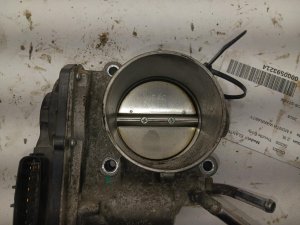
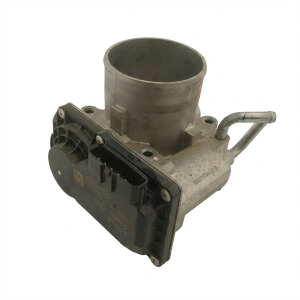
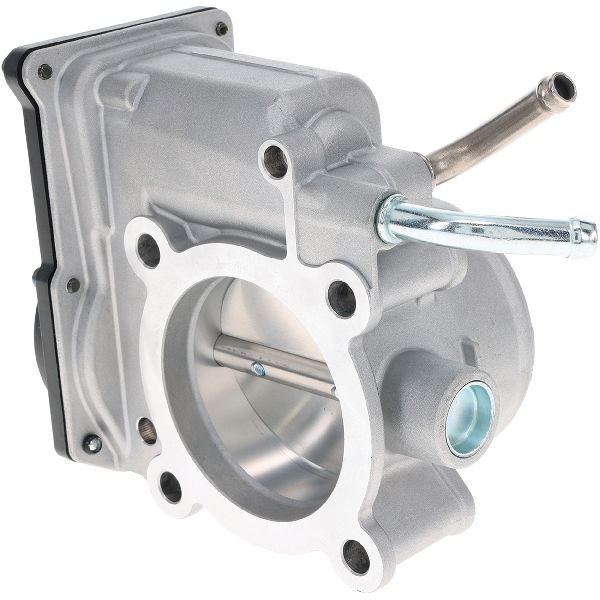
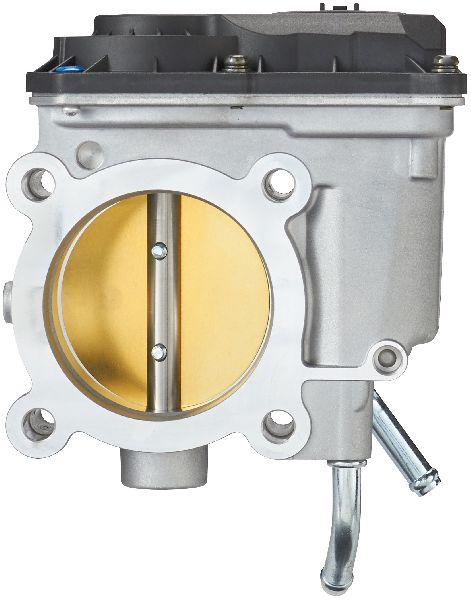
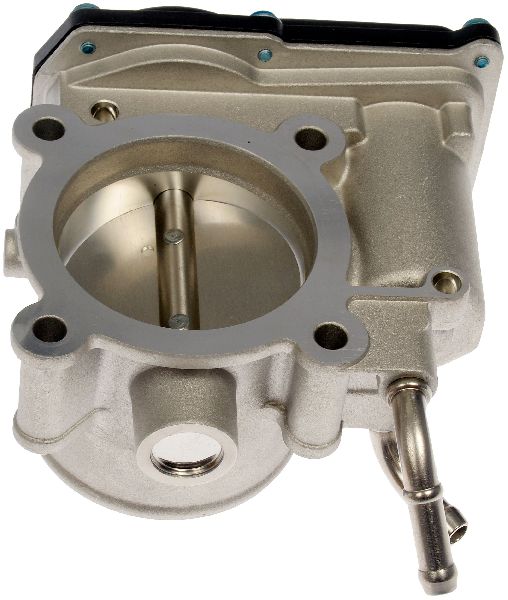
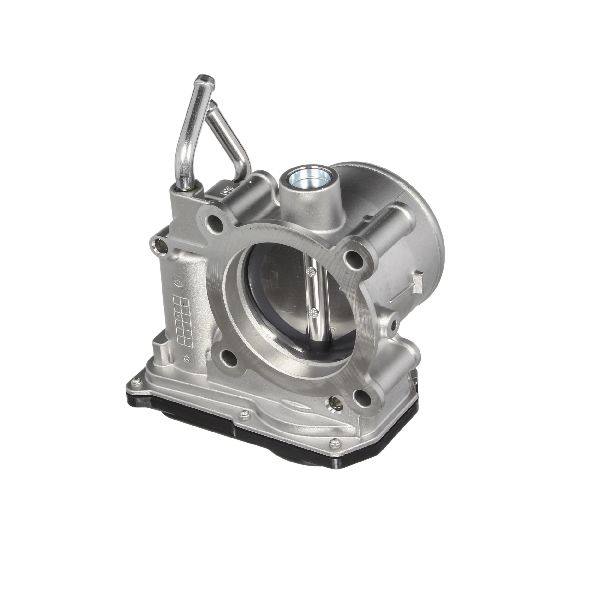
- Electronic Throttle Body Assembly
(OEM #35100-2E000)— This is the most common failure for code P0121, as the internal Throttle Position Sensor (TPS) fails and is not sold separately for this vehicle.
Trusted brands: Hyundai (Genuine OEM), Bosch, Hitachi, Standard Motor Products, JDMSPEED
OEM price range: $700-$1000
Aftermarket price range: $80-$250
Related Codes That Often Appear With This One
- P0123 — This code indicates 'TPS Circuit High'. It can appear with P0121 if the sensor's signal is erratic and spikes to a high voltage.
- P2110 — This code means 'Throttle Actuator Control System - Forced Limited RPM'. It is a direct result of the PCM detecting a critical fault like P0121 and intentionally engaging 'limp mode' to protect the engine.
- P2118 — This code relates to the throttle actuator motor current. It can be triggered alongside P0121 if there's a wiring issue or a comprehensive failure within the throttle body assembly.
Technical Service Bulletins (TSBs) & Recalls
- TSB 13-FL-002: Recommends cleaning the throttle body to address rough idle and certain trouble codes before replacing the part.
- TSB 21-EM-002H / 22-EM-009H: Details the warranty extension for the engine short/long block due to piston slap issues on the 1.8L Nu engine, a major known issue for this platform.
Platform-Specific Known Issues
- A Hyundai Technical Service Bulletin (TSB 13-FL-002) for related issues advises technicians to thoroughly clean the throttle body before considering replacement, as carbon buildup can cause similar symptoms like rough idle or stalling.
Mechanic-Grade Diagnostic Values
- TPS1 vs. TPS2 Voltage Correlation — expected: The voltage signals from TPS1 and TPS2 should move in opposite directions. The PCM expects the difference between their signals to be within a tight window.. Failure: The PCM will set DTC P0121 if the absolute difference between the TPS1 and TPS2 signals is greater than 7.6% for more than 0.3 seconds.
- TPS2 (Sensor 'B') Signal Voltage — expected: At closed throttle, voltage should be high (~4.5V) and decrease smoothly to ~0.5V at wide-open throttle.. Failure: A companion code, P0222, will be set if the PCM detects the TPS2 signal is less than 0.1V for more than 0.05 seconds.
- TPS1 (Sensor 'A') Signal Voltage — expected: At closed throttle, voltage should be low (~0.5V) and increase smoothly to ~4.5V at wide-open throttle.. Failure: Any erratic jumps, dropouts, or a flat-line signal during pedal sweep indicates a failed sensor track within the throttle body.
Scan Tool Commands That Help
- Hyundai GDS (or equivalent high-end bidirectional scanner): Throttle Actuator Control Motor Test — Use this command to force the throttle plate to open and close. If the motor does not respond to the command, it points to an issue with the wiring, connector, or the motor itself, rather than just the sensor. This helps differentiate a wiring problem from an internal component failure.
- Hyundai GDS (or equivalent): Reset Adaptive Values (Throttle) — This function should be performed after cleaning or replacing the throttle body. It is the dealer-level method to force the PCM to immediately relearn the closed, open, and idle throttle positions, providing a more reliable reset than the manual key-cycle procedure.
Wiring & Ground Locations
- Electronic Throttle Body Connector — The 6-pin electrical connector located directly on the electronic throttle body assembly, where the main engine wiring harness attaches.. This is the single point of failure for all power, ground, and signal lines for both the throttle motor and the dual TPS sensors. Corrosion on the pins, spread terminals, or chafed wires right at the connector are a known cause of P0121 and related codes. Wiggling this connector while monitoring live data is a key diagnostic step.
Real Owner Repair Stories
- YouTube channel 'auto information' (2011-2016 Hyundai Elantra (exact year not specified)) — Check Engine Light on with codes P0121, P0123, and P2118.
❌ Tried (didn't work) The technician immediately suspected a wiring or power delivery issue rather than a faulty part.
✅ What actually fixed it A bidirectional scan tool test commanding the throttle motor to open failed (no response). A test light confirmed no power was reaching the motor. A visual inspection revealed a damaged section of the wiring harness. Repairing the damaged wires resolved all three codes and restored throttle function.
Documented NHTSA Reports
- In a report involving a similar Hyundai model, NHTSA ODI #10846204 describes a situation where the MIL codes P2135, P0221, P2106, P0121, and P2110 were present, but the acceleration pedal began working again after restarting the engine.
- NHTSA ODI #10576819 notes a case where P0121 appeared alongside a gear ratio mismatch code, causing the vehicle to run only in third gear, which the owner described as a major distraction.
OEM Part Supersession History
35100-2E000→N/A— This part number remains the primary OEM replacement for the 2011-2016 Elantra 1.8L.
Heads up: This part is also used on some 2.0L applications in other Hyundai/Kia models (e.g., Tucson, Forte, Soul). Always verify fitment by VIN, but for the 2011-2016 Elantra 1.8L, this is the correct assembly.
Model Year Variations Within This Range
- 2014-2016: A mid-cycle refresh for the 2014 model year introduced a more powerful 2.0L GDI engine as an option on higher sedan trims and standard on the Coupe/GT. However, the base 1.8L Nu MPI engine, which is the subject of this article, remained largely unchanged. The throttle body assembly (35100-2E000) and the P0121 failure pattern are consistent across the entire 2011-2016 range for the 1.8L engine.
Diagnostic Flowchart
Other Known Issues on This Vehicle
Issues unrelated to this code that are worth knowing about as an owner of this generation:
- Engine Ticking / Piston Slap 🔴 High — Widespread issue, particularly noticeble on cold starts. Can lead to excessive oil consumption and eventual engine failure. (Ref: TSB 21-EM-002H, TSB 22-EM-007H, TSB 22-EM-009H; A class-action lawsuit (Brown v. Hyundai) resulted in an extended warranty (10 years/120,000 miles) for the engine block assembly for this issue.)
- Worn Steering Coupler 🟠 Medium — Very common failure. Owners report a distinct clicking or clunking noise from the steering column when turning the wheel. The rubber coupler disintegrates over time.
- Timing Chain Guide Failure 🟠 Medium — Less common than piston slap, but can occur. Plastic timing chain guides can become brittle, crack, and fall apart, causing chain noise (rattling/chattering) and potentially allowing the chain to jump timing, resulting in a no-start condition.
Used vs. New Parts: Buying Guide for This Vehicle
When a used part is the smart pick: A used throttle body is a significant gamble for this repair. The failure mode is electronic and not visible. A used part should only be considered if it is from a very low-mileage donor vehicle (under 40,000 miles) and comes with a warranty from the seller.
Donor-vehicle mileage cap: roughly under 40000 miles for the part to have meaningful remaining life.
What to inspect on the donor part:
- Verify the part number stamped on the unit is 35100-2E000.
- Inspect the 6-pin connector for any signs of corrosion, bent pins, or heat damage.
- Ensure the throttle plate moves smoothly by hand (if possible) and is not seized.
- Ask for the mileage of the donor vehicle; lower is always better.
OEM-only on this vehicle (don't cheap out):
- No parts for this specific repair are strictly OEM-only.
Aftermarket brands forum-validated for this vehicle:
- Hitachi
- Bosch
- Dorman
- SKP
- Standard Motor Products (SMP)
Brands owners have reported issues with on this vehicle:
- Unbranded, no-name parts sold at a significant discount on marketplace sites should be avoided, as quality control can be inconsistent.
Real Owner Stories
Aggregated from forums and TSBs cited above. Mileages and costs reflect what owners reported in those sources.
2011-2016 Hyundai Elantra 1.8L Nu MPI
Symptoms: The vehicle experienced a sudden loss of engine power, entering 'limp mode,' along with a rough or unstable idle.
What fixed it: Replacement of the entire electronic throttle body assembly followed by a throttle relearn procedure.
Source hint: hyundai-forums.com
2011-2016 Hyundai Elantra 1.8L Nu MPI
Symptoms: The car suffered from hesitation during acceleration and stalling when coming to a stop. The Check Engine Light was on with code P0121.
What fixed it: Thoroughly cleaning the throttle plate and bore using a dedicated throttle body cleaner to remove carbon and oil residue.
Source hint: Car Talk Community: TSB 13-FL-002 discussion
2011-2016 Hyundai Elantra 1.8L Nu MPI
Symptoms: The vehicle displayed codes P0121, P0123, and P2118 simultaneously.
What fixed it: Inspection of the wiring harness revealed physical damage; repairing the damaged section of the harness resolved all three codes.
Source hint: Article Context
Related OBD-II Codes
Frequently Asked Questions
Does Hyundai TSB 13-FL-002 apply to my Elantra if I have a P0121 code?
Can I just replace the Throttle Position Sensor (TPS) on my 1.8L Nu engine?
Is there a specific relearn procedure I need to do after cleaning the throttle body?
Could my P0121 code be related to the engine ticking noise I hear on cold starts?
What aftermarket brands are recommended for a replacement Elantra throttle body?
Is it worth buying a used throttle body from a salvage yard?
Helpful Videos


Used OEM Parts in Stock

New Aftermarket Parts Available



The information in this article is provided for general reference and educational purposes only. Vehicle specifications, procedures, and part compatibility can vary by production date, trim level, and region. Always consult your vehicle's factory service manual and verify part numbers before purchasing or performing repairs. Safety-critical components such as airbags, seat belts, and braking systems should be installed by a qualified professional.
- Hyundai Elantra:
- 🎬 Helpful Videos
- 🛍️ Shop This Part
- What's Unique About the 2011-2016 Hyundai Elantra
- Symptoms You May Notice
- Most Likely Causes
- Rare But Worth Checking
- Diagnosis Steps
- Parts You'll Likely Need
- Related Codes That Often Appear With This One
- Technical Service Bulletins (TSBs) & Recalls
- Platform-Specific Known Issues
- Mechanic-Grade Diagnostic Values
- Scan Tool Commands That Help
- Wiring & Ground Locations
- Real Owner Repair Stories
- Documented NHTSA Reports
- OEM Part Supersession History
- Model Year Variations Within This Range
- Diagnostic Flowchart
- Other Known Issues on This Vehicle
- Used vs. New Parts: Buying Guide for This Vehicle
- Real Owner Stories
- 2011-2016 Hyundai Elantra 1.8L Nu MPI
- 2011-2016 Hyundai Elantra 1.8L Nu MPI
- 2011-2016 Hyundai Elantra 1.8L Nu MPI
- Related OBD-II Codes
- Frequently Asked Questions
- 🎟️ Get 5% Off