

P0117 on 2006-2016 Chevrolet Impala: Engine Coolant Sensor Circuit Low Causes and Fixes
On a 2006-2016 Impala, P0117 almost always means the Engine Coolant Temperature (ECT) sensor has failed. This can cause a false overheating warning, constant fan operation, and poor performance. Replacing the sensor is the most common fix, costing around $20-$50 for the part. On 9th gen V6 models, a 19mm stubby ratcheting wrench is key to a quick repair.
- P0117 on your Impala is almost always a bad Engine Coolant Temperature (ECT) sensor.
- Symptoms are dramatic: 'Engine Hot' warnings will appear, the temperature gauge will be dead, and the cooling fans will run constantly.
- For 9th gen V6 models (2006-2013), use a 19mm stubby or ratcheting wrench to save significant time on the repair.
- For 10th gen models (2014-2016), inspect the sensor's electrical connector carefully for any sign of coolant, as it can damage the main wiring harness.
- This is a very DIY-friendly repair that can save you hundreds of dollars at a shop.
What's Unique About the 2006-2016 Chevrolet Impala
For the 9th generation Impala (2006-2013 and 2014-16 Limited) with V6 engines, the ECT sensor is in a notoriously tight location. However, mechanics and DIYers have found a shortcut using a 19mm stubby ratcheting wrench to replace the sensor without removing the exhaust crossover pipe, turning a difficult job into a quick one. On the 10th generation (2014+), a specific GM service bulletin (PIC6460) notes that the sensor can leak coolant internally, which then travels up the wiring harness to the main computer, causing bizarre electrical issues beyond just the P0117 code.
Generation note: This range covers two Impala generations: - 9th Generation (2006-2013, plus 2014-2016 Limited models): Primarily equipped with 3.5L and 3.9L V6 engines. The ECT sensor is located on the driver's side cylinder head in a tight space near the exhaust crossover. The 'stubby wrench' trick is specific to this generation. 🎬 Watch: 9th Gen Impala coolant sensor replacement walkthrough. - 10th Generation (2014-2016): Features 2.5L I4 and 3.6L V6 engines. The sensor location is generally more accessible, near the thermostat housing on the driver's side of the engine. A known issue on this generation involves the sensor leaking coolant into the wiring harness, as documented in TSB PIC6460.
Symptoms You May Notice
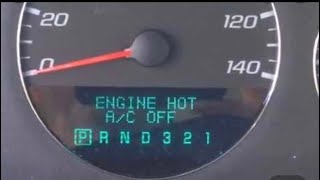
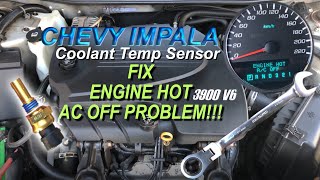
- "Engine Hot / AC Off" message on the instrument cluster. 🎬 See how to fix the Engine Hot A/C Off warning.
- Engine temperature gauge reads cold and does not move, or is pegged at maximum.
- Cooling fans run constantly at high speed, even when the engine is off and cold.
- Check Engine Light is on.
- Difficulty starting the engine, especially when cold.
- Reduced fuel economy due to the engine running a rich fuel mixture.
- Rough idle or engine hesitation.
- Black smoke from the exhaust on some models.
- Replacing the thermostat. While a faulty thermostat can cause cooling issues (often code P0128), it will not cause an electrical circuit low code like P0117.
- Replacing the radiator or water pump without first diagnosing the electrical circuit.
Most Likely Causes
- Failed Engine Coolant Temperature (ECT) Sensor 🔴 High Probability On 10th gen models (2014+), GM technical bulletin PIC6460 acknowledges a pattern of internal sensor failure leading to coolant leakage into the connector and wiring harness. This can cause coolant to 'wick' all the way to the Engine Control Module (ECM), causing further damage.
How to confirm: With a scan tool, observe the live ECT reading. If it shows an extremely high temperature (e.g., 280°F+) on a cold engine, the sensor or its circuit is faulty. Disconnecting the sensor should set a P0118 (Circuit High) code and the temperature reading should drop to a very low value (e.g., -40°F); if this happens, the sensor itself is almost certainly bad. Visually inspect the sensor's electrical connector for green corrosion, moisture, or bent pins. The presence of coolant inside the connector is definitive proof of a failed, leaking sensor.
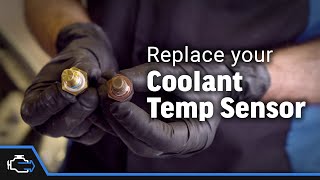
Typical fix: Replace the Engine Coolant Temperature sensor. This requires partially draining the coolant, unscrewing the old sensor (a 19mm deep socket or wrench is needed), installing the new one, and topping off/bleeding the cooling system.
Est. part cost: $20-$50 - Shorted Signal Wire or Damaged Connector 🟡 Medium Probability The wiring harness is routed in a hot, tight engine bay, making it susceptible to chafing against other components or becoming brittle and cracking over time. The connector lock tab is also known to become brittle and break.
How to confirm: Inspect the wiring harness leading to the ECT sensor for any signs of physical damage, melting, or chafing. If the sensor is disconnected and the scan tool still shows a high temperature, the signal wire is likely shorted to ground somewhere in the harness. Use a multimeter to check for continuity to ground on the signal wire (with the sensor and PCM disconnected).
Typical fix: Repair the damaged section of the wiring harness. If the connector is corroded or broken, replace it with a new pigtail connector (a common repair).
Est. part cost: $15-$30 for a pigtail connector - Low Engine Coolant or Air in the System ⚪ Low Probability
How to confirm: Visually check the coolant level in the reservoir and radiator (when the engine is cool). While low coolant typically causes an actual overheat condition, a significant air pocket in the system (often after a cooling system repair) can become trapped around the sensor, causing it to read incorrectly and potentially trigger a circuit code.
Typical fix: Top off the coolant to the correct level and properly bleed the cooling system to remove any trapped air. This involves running the engine with the heater on and sometimes using a special funnel to burp the system.
Est. part cost: $15-$25 for a gallon of DEX-COOL compatible coolant
Rare But Worth Checking
- Faulty Powertrain Control Module (PCM): This is extremely rare and should be considered a last resort. The PCM should only be replaced after all other possibilities, including the sensor, wiring, and connections, have been exhaustively tested and ruled out. A manufacturer service bulletin, TSB Bulletin #PIT5713A, notes that P0117 can sometimes appear in combination with various communication codes (like U0100 or U0121) when there are broader electrical or module issues.
Diagnosis Steps
- Connect an OBD-II scanner and confirm P0117 is the active code. 🎬 Watch: Diagnosing the P0117 engine coolant temperature circuit low code. Note any other codes present, especially P1258.
- View the live data for the Engine Coolant Temperature (ECT) sensor. If the engine is cold but the reading is maxed out (e.g., 280°F or higher), proceed with diagnosis.
- Turn the engine off. Locate the ECT sensor. On 9th Gen V6 models, it's on the driver's side cylinder head, below the throttle body area. On 10th Gen models, it's typically near the thermostat housing on the driver's side.
- Disconnect the ECT sensor's electrical connector. Inspect the sensor and the connector for any signs of green corrosion, moisture, or physical damage. Coolant inside the connector is a sure sign of a failed sensor.
- With the sensor still disconnected, turn the ignition to the 'On' position (engine off). The ECT reading on the scan tool should now show a minimum value (e.g., -40°F) and a P0118 (Circuit High) code should be stored. If this happens, the wiring and PCM are likely good and the original sensor is faulty.
- If the temperature reading remains high even with the sensor disconnected, there is a short to ground in the signal wire of the harness. Inspect the harness carefully between the sensor and the PCM and repair as needed.
- If the sensor and wiring check out, ensure the cooling system is full and properly bled of air.
Parts You'll Likely Need
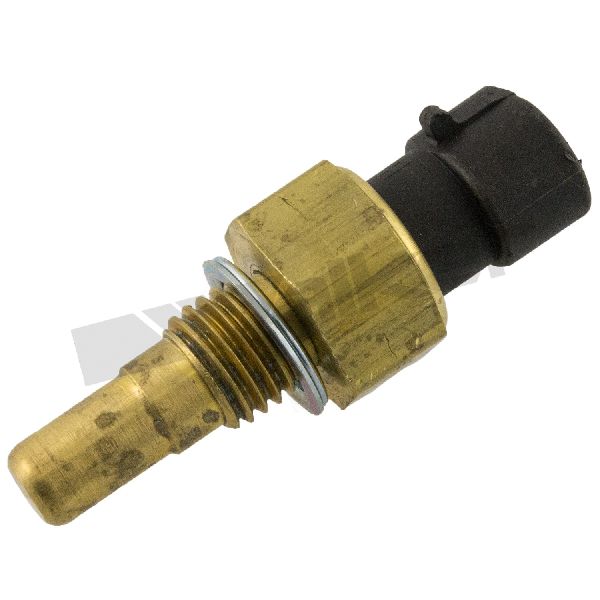
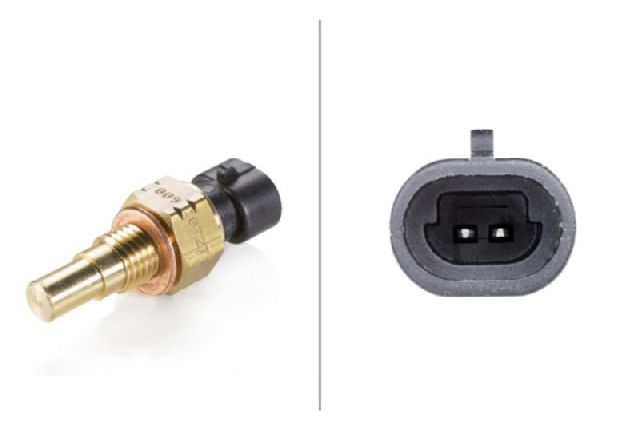
- Engine Coolant Temperature (ECT) Sensor
(OEM #12608814 (ACDelco 213-4514 or 213-4333). This part number is widely used across GM engines, but always verify with VIN.)— This sensor is the most common point of failure for the P0117 code on this vehicle.
Trusted brands: ACDelco, Delphi, Standard Motor Products
OEM price range: $30-$50
Aftermarket price range: $15-$35 - Engine Coolant (Antifreeze) — Coolant will be lost when the old sensor is removed. The system must be topped off and bled. Use a DEX-COOL compatible coolant.
Trusted brands: ACDelco DEX-COOL, Prestone DEX-COOL
OEM price range: $20-$25 per gallon
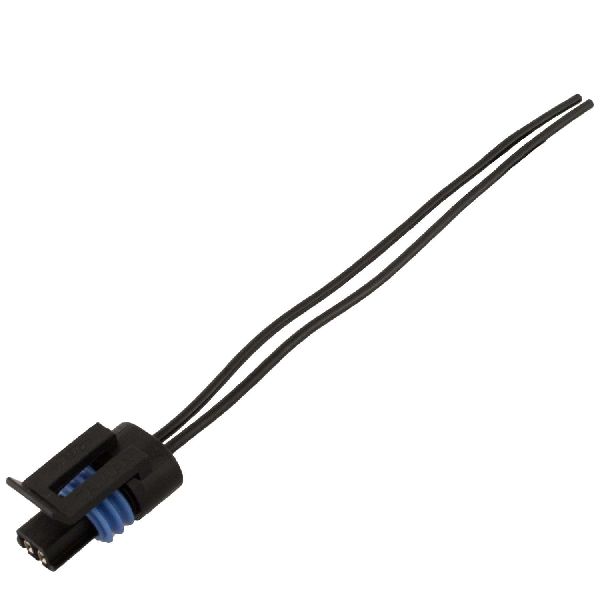
Aftermarket price range: $18-$22 per gallon - ECT Sensor Pigtail Connector — The original connector's locking tab often becomes brittle and breaks upon removal, or the terminals may be corroded from a leaking sensor.
Trusted brands: Dorman, ACDelco
OEM price range: $25-$40
Aftermarket price range: $10-$20
Related Codes That Often Appear With This One
- P0118 — This code for "ECT Circuit High" can appear during diagnosis if you unplug the sensor to test the circuit. Seeing P0117 with the sensor plugged in and P0118 with it unplugged is a strong confirmation that the sensor itself has failed.
- P1258 — This is a GM-specific code for "Engine Coolant Overtemperature Protection Mode Active". The PCM sets this code when it believes the engine is overheating based on the faulty high-temperature signal from the P0117 condition.
Technical Service Bulletins (TSBs) & Recalls
- PIC6460 - Relates to coolant wicking from the ECT sensor into the wiring harness on 10th generation models, potentially causing other electrical faults like a 'Hood Ajar' message.
- TSB Bulletin #PIT5713A - Mentions P0117 in conjunction with multiple "U" communication codes and warning messages displayed on the instrument cluster.
Platform-Specific Known Issues
- GM TSB PIC6460 (2014+ models): A known issue where the ECT sensor leaks coolant internally. The coolant can 'wick' up the wiring harness into the Engine Control Module (ECM), causing short circuits and potentially triggering unrelated trouble codes (like P257D for Hood Ajar Switch Circuit High) and electrical problems.
- 9th Gen V6 Sensor Access: The location on the 3.5L/3.9L V6 is extremely tight. The official repair procedure may suggest removing the exhaust crossover pipe, which is a significant job. However, many owners and technicians report success using a 19mm or 3/4" stubby ratcheting wrench to access the sensor from behind the engine, drastically reducing repair time.
Mechanic-Grade Diagnostic Values
- ECT Sensor Resistance vs. Temperature — expected: Approximate values: 100°C (212°F) -> 177 Ω; 80°C (176°F) -> 332 Ω; 20°C (68°F) -> 3520 Ω; 0°C (32°F) -> 9420 Ω. Resistance decreases as temperature increases.. Failure: Readings that are infinite (open), near zero (shorted), or do not change smoothly with temperature indicate a failed sensor.
- ECT Sensor Signal Wire Voltage (Key On, Engine Off) — expected: Cold engine (~20°C/68°F): 3.0V - 3.5V. Warm engine (~80°C/176°F): 1.0V - 1.3V.. Failure: A voltage near 0V indicates a short to ground. A voltage near 5V indicates an open circuit (or a P0118 code).
- ECT Connector Reference Voltage (Sensor Unplugged, Key On) — expected: ~4.6 Volts on the reference wire from the PCM.. Failure: 0V may indicate a problem with the PCM or the reference voltage wire. A full 5V is less common on GM but not impossible; the key is that voltage should be present.
Scan Tool Commands That Help
- GDS2 / Tech2: Cooling Fan Relay Command — To verify the PCM can control the cooling fans. If the fans run constantly due to P0117, but cannot be commanded off with the scan tool, it helps confirm the PCM is in failsafe mode due to the perceived high temperature.
- Professional Scan Tool (e.g., iCarsoft, Autel): ECT Calibration — After replacing a sensor or repairing wiring, this function can be used to reset the PCM's learned voltage-to-temperature mapping to ensure accuracy.
Wiring & Ground Locations
- ECT Signal Wire — A yellow wire running from the ECT sensor connector to the PCM. On some GM models with blue/red PCM connectors, this is Pin 74.. This wire carries the voltage signal the PCM interprets as temperature. A short to ground on this specific wire is a direct cause of P0117. A common failure point is under the engine air filter box, where rodents may chew the harness.
- G111 — A ground point located on the lower left rear of the engine block.. This is an engine block ground. While the ECT sensor grounds through its own return wire to the PCM, a poor main engine ground can cause stray voltage and electrical noise, potentially affecting sensor readings.
- G101 / G106 — Main ECM ground, located on the front lower left of the engine block, sometimes jumpered to a ground on the frame cross rail under the crank pulley.. This is the primary ground for the Engine Control Module. A corroded or loose ECM ground can cause a host of erratic sensor codes, including P0117, as it disrupts the baseline voltage for all sensor circuits.
- J101 — A splice point or junction within the engine wiring harness, located in the harness branch between the ECM and the ECT sensor.. Factory splices can sometimes fail or corrode over time. If the sensor and wiring at both ends test good, a fault could lie within a hidden junction point like this inside the harness loom.
Real Owner Repair Stories
- YouTube channel 'Dirt Road Auto Repair' (2008 Chevrolet Impala 3.5L V6) — "Engine Hot AC Off" message on the dash; temp gauge not working.
❌ Tried (didn't work) Replacing the Engine Coolant Temperature sensor., Replacing the pigtail connector for the sensor., Testing the old sensor (it tested good).., Continuity testing the wires from the connector to the main harness plug (they tested good).
✅ What actually fixed it Found a mouse nest under the air filter box. Several wires in the harness at that location, including the yellow ECT signal wire, had been chewed through. Repairing the chewed wires resolved the code. - YouTube channel '2012IMPALASS' (Chevrolet Impala (likely 2012+ with 3.6L)) — "Engine Hot AC Off" message, no power to the temperature sensor.
❌ Tried (didn't work) Replacing the temperature sensor.
✅ What actually fixed it After removing the intake, the mechanic found a section of the wiring harness had been chewed by rodents. The yellow signal wire for the ECT sensor was completely severed. Repairing the broken wire fixed the problem. - YouTube channel 'Kevin Brister' (2013 Chevrolet Impala 3.6L V6) — "Engine Hot AC Off" message, temperature gauge stayed on cold.
✅ What actually fixed it The first and only part replaced was the engine coolant temperature sensor. This immediately solved the problem. - NHTSA ODI #10980210 — An owner reported that their dealership identified the coolant thermostat sensor and housing needed replacing after the car displayed error codes P0118 and P0117, noting it as a common problem for the manufacturer's cooling systems.
When the Usual Fixes Don't Work
- In multiple documented cases, replacing the ECT sensor—the most common fix—did not resolve the P0117 code and 'Engine Hot AC Off' message. The actual cause was found to be a wiring issue, specifically rodent damage to the harness that runs underneath the air filter box. The yellow signal wire is frequently the point of failure. Before spending money on parts, it is a wise diagnostic step on this platform to remove the airbox and thoroughly inspect this section of the harness for damage.
OEM Part Supersession History
12191170, 15326388, 15369305, 25037062→12608814— Part consolidation and design updates by GM.
Heads up: The GM part 12608814 is cross-referenced to both ACDelco 213-4333 and 213-4514. Some owner forums report issues with 213-4333 providing incorrect readings (e.g., -36°F), while 213-4514 worked correctly. It is safest to use the part number specified for the vehicle's VIN or the 213-4514 part.
Model Year Variations Within This Range
- 2012-2016: Starting in 2012, the 9th generation Impala began using the 3.6L LFX V6 engine, which then became an engine option in the 10th generation. For this engine, the ECT sensor is in a more accessible location near the thermostat housing, making it an easier repair compared to the 3.5L/3.9L V6 engines used from 2006-2011.
Diagnostic Flowchart
Other Known Issues on This Vehicle
Issues unrelated to this code that are worth knowing about as an owner of this generation:
- 4T65-E Automatic Transmission Failure (9th Gen) 🔴 High — Common after 100,000 miles. Symptoms include harsh shifting (especially with code P1811), slipping, and delayed engagement.
- HVAC Blend Door Actuator Failure 🟡 Low — Extremely common across all model years. Characterized by a loud clicking or 'thumping' noise from the dashboard when changing temperature or airflow settings.
- Ignition Switch Recall (Pre-2014 models) 🔴 High — Subject of a major safety recall (GM recall #14299). A heavy keychain could cause the ignition to move out of the 'Run' position while driving, disabling the engine and airbags. (Ref: GM Recall 14299)
- 3.6L LFX V6 Timing Chain Stretch (10th Gen) 🔴 High — Can occur on higher mileage engines (typically over 100,000-120,000 miles), often exacerbated by extended oil change intervals. Leads to rough idle, loss of power, and codes like P0008/P0009.
- Intermediate Steering Shaft Noise 🟡 Low — Common on 9th gen models. A clunking or popping noise is heard and felt through the steering wheel, especially at low speeds. Usually fixed by lubricating or replacing the intermediate shaft. (Ref: Multiple TSBs exist for lubrication procedures.)
Used vs. New Parts: Buying Guide for This Vehicle
When a used part is the smart pick: A used part is rarely recommended for this repair, with one exception: the engine wiring harness. If the original harness is severely damaged by rodents or coolant contamination, a complete used harness from a reputable salvage yard can be more practical and cost-effective than attempting to repair dozens of individual wires.
Donor-vehicle mileage cap: roughly under 120000 miles for the part to have meaningful remaining life.
What to inspect on the donor part:
- For a wiring harness, inspect thoroughly for any cuts, abrasions, or signs of previous repairs (e.g., mismatched tape, butt connectors).
- Check all connectors for brittle plastic, broken locking tabs, or corrosion on the pins.
- Ensure the donor vehicle shows no signs of fire, flood, or major front-end collision.
- Verify the harness is from the exact same engine and model year range to ensure compatibility.
OEM-only on this vehicle (don't cheap out):
- Engine Coolant Temperature (ECT) Sensor. This part is inexpensive and critical for engine management. Aftermarket sensors have a documented high rate of failure or inaccuracy out of the box, leading to repeat repairs.
Aftermarket brands forum-validated for this vehicle:
- ACDelco (GM Original Equipment or Professional/Gold series)
- Delphi (Often the Original Equipment Manufacturer for GM)
Brands owners have reported issues with on this vehicle:
- Unbranded 'value' or 'economy' sensors.
- Some owners have reported premature failure with store brands like Duralast for this specific part.
Real Owner Stories
Aggregated from forums and TSBs cited above. Mileages and costs reflect what owners reported in those sources.
2008 Chevrolet Impala
Symptoms: The owner reported an "engine hot / AC off" message on the instrument cluster, a temperature gauge that read cold, and cooling fans that ran constantly.
What fixed it: The forum discussion pointed to a short in the Engine Coolant Temperature Sensor (ECTS) circuit as the likely cause, requiring inspection and repair of the wiring harness.
Source hint: ChevroletForum.com: A 2010 thread discusses an '08 Impala with the classic "engine hot / AC off" message, a cold temp gauge, and constant fan operation, pointing to a short in the ECTS circuit as a likely cause.
2008 Chevrolet Impala LT
Symptoms: The vehicle displayed an 'Engine Hot AC Off' message and the temperature gauge remained on cold, even after a shop had already replaced the ECT sensor and thermostat.
What fixed it: The persistence of the symptoms after parts replacement strongly indicated the problem was a short in the wiring harness leading to the sensor, which needed to be located and repaired.
Source hint: Reddit r/MechanicAdvice: A user with a 2008 Impala reported the classic P0117 symptoms ('Engine Hot AC Off', cold temp gauge) even after a shop replaced the sensor and thermostat, highlighting the need to check wiring for shorts.
2014+ Chevrolet Impala
Symptoms: The vehicle may present with a P0117 code and other, seemingly unrelated electrical faults, such as a 'Hood Ajar' message (code P257D).
What fixed it: The fix, according to GM TSB PIC6460, is to replace the internally leaking ECT sensor and inspect the wiring harness and Engine Control Module (ECM) connector for coolant contamination, cleaning or repairing as necessary.
Source hint: TSB PIC6460
Related OBD-II Codes
Frequently Asked Questions
My 2014 Impala is showing a 'Hood Ajar' message along with code P0117. Are these related?
How do I replace the ECT sensor on my 9th Gen (2006-2013) Impala V6? It looks impossible to reach.
I disconnected the ECT sensor on my Impala, and the scan tool now reads -40°F and shows code P0118. What does this mean?
I found green corrosion and moisture inside the electrical connector for the ECT sensor. Is this a problem?
What are the most common symptoms of a P0117 code on a Chevy Impala?
Can low coolant cause a P0117 code on my Impala?
Helpful Videos
Used OEM Parts in Stock
New Aftermarket Parts Available

The information in this article is provided for general reference and educational purposes only. Vehicle specifications, procedures, and part compatibility can vary by production date, trim level, and region. Always consult your vehicle's factory service manual and verify part numbers before purchasing or performing repairs. Safety-critical components such as airbags, seat belts, and braking systems should be installed by a qualified professional.
- Chevrolet Impala:
- 🎬 Helpful Videos
- 🛍️ Shop This Part
- What's Unique About the 2006-2016 Chevrolet Impala
- Symptoms You May Notice
- Most Likely Causes
- Rare But Worth Checking
- Diagnosis Steps
- Parts You'll Likely Need
- Related Codes That Often Appear With This One
- Technical Service Bulletins (TSBs) & Recalls
- Platform-Specific Known Issues
- Mechanic-Grade Diagnostic Values
- Scan Tool Commands That Help
- Wiring & Ground Locations
- Real Owner Repair Stories
- When the Usual Fixes Don't Work
- OEM Part Supersession History
- Model Year Variations Within This Range
- Diagnostic Flowchart
- Other Known Issues on This Vehicle
- Used vs. New Parts: Buying Guide for This Vehicle
- Real Owner Stories
- 2008 Chevrolet Impala
- 2008 Chevrolet Impala LT
- 2014+ Chevrolet Impala
- Related OBD-II Codes
- Frequently Asked Questions
- 🎟️ Get 5% Off