

P0116 on 2018-2022 Volkswagen Jetta: Engine Coolant Temperature Sensor Issues & Fixes
Code P0116 on a 2018-2022 VW Jetta usually means there's a problem with the engine coolant temperature (ECT) reading. Before replacing parts, check your coolant level. If it's low, you likely have a leak, often from the water pump/thermostat housing assembly, a known weak point. If the coolant level is fine, the ECT sensor itself or a stuck thermostat are the next most likely culprits.
- For a P0116 code on a 2018-2022 Jetta, your first step should always be to check the coolant level.
- A low coolant level strongly points to a leak from the common failure point: the integrated water pump and thermostat housing.
- If the coolant level is normal, the next most likely cause is a faulty Engine Coolant Temperature (ECT) sensor.
- Driving with this code is risky; an unresolved coolant leak can lead to engine overheating and catastrophic damage.
- Always use the correct specification VW coolant (G12/G13/G12evo) when refilling the system.
What's Unique About the 2018-2022 Volkswagen JETTA

The 2018-2022 Jetta, primarily using the EA211 (1.4T/1.5T) and EA888 (2.0T GLI) engines, features a complex cooling system with a water pump and integrated thermostat housing made of a polymer composite. This entire assembly is a well-documented failure point across the VW/Audi lineup, often leading to coolant leaks from cracks in the housing or failed seals. Therefore, a P0116 code on this Jetta is frequently a symptom of a coolant leak from this housing, which causes the ECT sensor to give an erratic reading due to air pockets or low levels, rather than just a simple sensor failure. The provided TSB #VIN4APIN20220831 supports this, linking P0116 to customer complaints of low coolant levels.
Diagnostic Flowchart
Tap your situation to follow the diagnostic path that matches what you're seeing on this vehicle.
Generation note: This range covers the end of the A6 (Mk6) generation (2018 model year) and the beginning of the A7 (Mk7) generation (2019-2022). Both generations in this timeframe commonly use variants of the EA211 engine (1.4T), with the GLI model using the EA888 (2.0T). The causes for P0116, particularly related to the failure-prone thermostat/water pump assembly, are common to these modern VW engine families and the MQB platform they are built on.
Symptoms You May Notice
- Check Engine Light is on
- Coolant warning light may be on
- Temperature gauge behaving erratically, dropping to zero, or not working
- Engine takes a long time to warm up
- Reduced fuel economy
- Engine running rough, especially when cold
- Cooling fans running constantly at high speed, even when the engine is cold
- Sweet smell of coolant from the engine bay
- Heater not blowing warm air
- Replacing only the ECT sensor when the root cause is a slow coolant leak from the thermostat housing. The code may temporarily disappear but will return as the coolant level drops again, causing erratic readings.
Most Likely Causes

- Low Engine Coolant Level (due to leak) 🔴 High Probability The plastic water pump and thermostat housing assembly on EA211 and EA888 engines is a notorious failure point, frequently developing cracks or seal leaks over time due to constant heat cycles.
How to confirm: Visually check the coolant reservoir. If it's below the 'MIN' line, you have a leak. Inspect the area around the thermostat housing (located on the cylinder head) for white or pink crusty residue, which indicates a dried coolant leak. A cooling system pressure test is the definitive way to find a leak.
Typical fix: Find and repair the leak. This often requires replacing the entire water pump and thermostat housing assembly. Top off the system with the correct G12/G13/G12evo coolant.
Est. part cost: $150-$450 for the assembly - Faulty Engine Coolant Temperature (ECT) Sensor 🟡 Medium Probability
How to confirm: With a cold engine, use a scan tool to compare the ECT reading to the Intake Air Temperature (IAT) reading. They should be within a few degrees of each other. If the ECT reading is illogical (-40°F, 250°F, etc.) or doesn't change as the engine warms up, the sensor is likely bad. You can also test its resistance with a multimeter; at 68°F (20°C), it should be between 2,000 and 3,000 ohms. At 176°F (80°C), the resistance should drop to between 275 and 375 ohms.
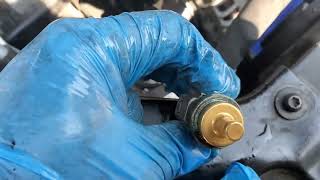
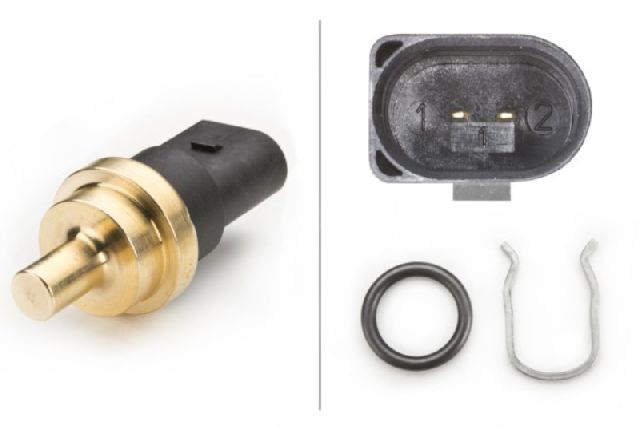
Typical fix: Replace the ECT sensor (VW designation G62). On many VWs, it is held in place by a simple clip and O-ring. 🎬 Watch: How to diagnose and replace the coolant temperature sensor. Be prepared for a small amount of coolant to spill.
Est. part cost: $20-$90 - Stuck Open Thermostat 🟡 Medium Probability The thermostat is integrated into the failure-prone housing assembly. A mechanical failure of the thermostat can occur along with a leak, or on its own, preventing the engine from reaching operating temperature efficiently.
How to confirm: Monitor live data on a scan tool. If the engine takes an excessively long time (e.g., over 15-20 minutes of driving) to reach operating temperature (~90°C / 195°F), the thermostat is likely stuck open.
Typical fix: On these engines, the thermostat is part of the larger water pump/thermostat housing assembly. The entire unit is typically replaced.
Est. part cost: $150-$450 for the assembly - Wiring or Connector Issue ⚪ Low Probability
How to confirm: Visually inspect the wiring and connector going to the ECT sensor for any signs of damage, corrosion (green crust), or loose pins. Wiggle the connector while monitoring live data on a scan tool; if the temperature reading jumps, the connection is faulty. Check for continuity from the ECU pin to the sensor connector; resistance should be near 0 Ω.
Typical fix: Repair the damaged section of wire or clean/replace the connector pigtail. Use only gold-plated terminals when servicing the G62 sensor connector.
Est. part cost: $10-$30
Rare But Worth Checking
- Air in the Cooling System: If the cooling system was recently serviced, trapped air can cause erratic temperature readings as air pockets pass over the sensor. The system may need to be properly bled, often requiring a vacuum-fill tool for best results.
- Faulty Powertrain Control Module (PCM): In very rare cases, the PCM itself can be the source of the problem, misinterpreting a correct sensor signal. This should only be considered after all other possibilities (sensor, wiring, thermostat, coolant level) have been exhaustively ruled out.
Diagnosis Steps
- Check for other stored trouble codes.
- Check the engine coolant level in the reservoir. Ensure the engine is cool before opening the cap. If low, this is your primary problem to solve.
- If coolant is low, carefully inspect the water pump/thermostat housing, hoses, and radiator for signs of leaks (wet spots or pink/white crust). A pressure test is recommended.
- If coolant level is correct, connect an OBD-II scanner and view live data for the Engine Coolant Temperature sensor (G62).
- With a cold engine (sitting overnight), compare the ECT reading to the Intake Air Temperature (IAT). They should be nearly identical (within ~5-10°F). If not, the ECT sensor is suspect.
- Start the engine and monitor the ECT reading as it warms up. It should climb steadily to around 90-105°C (195-221°F) without erratic jumps or drop-offs.
- If the temperature rises extremely slowly or never reaches full operating temp, the thermostat is likely stuck open.
- If the sensor reading is illogical (e.g., -40°F) or doesn't change, inspect the sensor's electrical connector and wiring for damage or corrosion.
- If the wiring is good, test the sensor's internal resistance with a multimeter. At 68°F (20°C), it should be between 2,000-3,000 Ohms. At 80°C (176°F), it should be 275-375 Ohms. If it's out of spec, replace it.
- If all other components check out, consider the possibility of air in the system and perform a proper bleeding procedure.
Parts You'll Likely Need

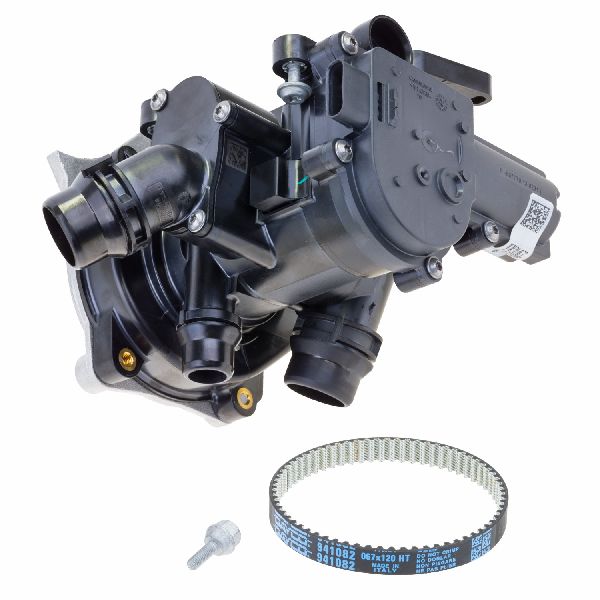
- Water Pump & Thermostat Housing Assembly
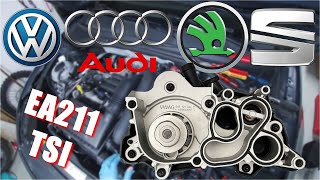
(OEM #EA888 Engine: 06L121111P (or newer revisions like M, K, H). EA211 Engine: 04E121600-series (e.g., 04E121600R, 04E121600AL, 04E121600CB).)🎬 See this walkthrough for replacing the EA211 TSI water pump. — This integrated plastic unit is a very common failure point on modern VW engines, causing coolant leaks that can trigger a P0116 code. It is often replaced as a complete unit.
Trusted brands: INA, Continental, Mahle, Genuine VW/Audi
OEM price range: $250-$450
Aftermarket price range: $150-$350 - Engine Coolant Temperature Sensor (ECT)
(OEM #06K919525 (Confirm with VIN))— The sensor itself can fail, providing incorrect readings to the ECM. It's a common and relatively inexpensive part to replace.
Trusted brands: Bosch, Delphi, Hella, Genuine VW/Audi
OEM price range: $50-$90
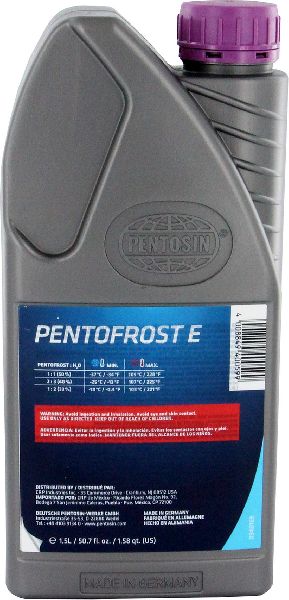
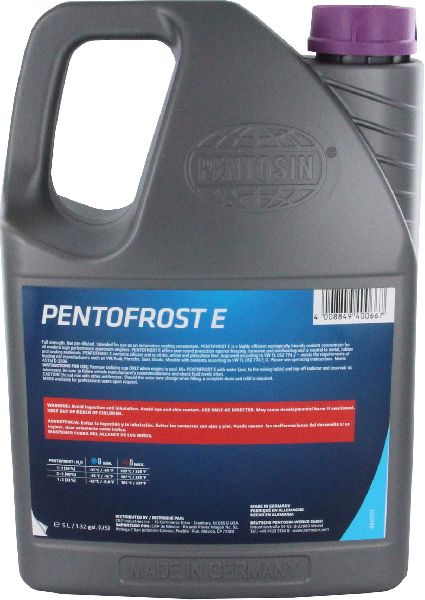
Aftermarket price range: $20-$60 - Engine Coolant / Antifreeze
(OEM #G12evo (replaces G13/G12++))— The system must be refilled with the correct specification coolant after repairing a leak or replacing components.
Trusted brands: Genuine VW/Audi, Pentofrost, Rowe
OEM price range: $25-$40 per gallon
Aftermarket price range: $20-$35 per gallon
Related Codes That Often Appear With This One
- P0117 — Stands for 'Engine Coolant Temperature Sensor Circuit Low'. This can occur if the sensor or its wiring shorts to ground. TSB #VIN4APIN20220831 also lists P0117 alongside P0116.
- P0118 — Stands for 'Engine Coolant Temperature Sensor Circuit High'. This can happen if there's an open circuit in the sensor or its wiring.
- P00B7 — Stands for 'Engine Coolant Flow Low/Performance'. This code can be triggered if the ECU detects a large discrepancy between different temperature sensors in the cooling system, pointing to a flow issue like a failing water pump or stuck thermostat.
- P2181 — Stands for 'Cooling System Performance'. This code is often set alongside P0116 when the engine is not reaching its target operating temperature within a specified time, strongly pointing to a stuck-open thermostat or major coolant leak.
Technical Service Bulletins (TSBs) & Recalls
- VIN4APIN20220831: Customer states MIL-on, fault P0116 and/or P0117 in the ECM, may also state coolant light on, coolant level low.
- VIN4APIN20191023: Customer states MIL-on with P0116.
- VIN4APIN20191014: Customer states MIL-on with P0116.
- VIN4APIN20190906: Customer states MIL-on with P0116.
- VIN4APIN20190617: Customer states MIL-on with P0116.
Platform-Specific Known Issues
- Multiple TSBs (VIN4APIN20220831, VIN4APIN20191023, etc.) have been issued by VW that list P0116 among a host of other potential fault codes. These are general informational bulletins for technicians and do not point to a single specific cause, but they confirm it is a known issue.
- The EA888 Gen 3 engine (found in the GLI) is particularly infamous for the water pump/thermostat housing leak. Many owners report needing this replaced between 40,000 and 80,000 miles.
- On the EA211 (1.4T) engine, the water pump is driven by a small toothed belt off the back of the exhaust camshaft, making access more difficult than traditional front-mounted water pumps.
Mechanic-Grade Diagnostic Values
- ECT Sensor (G62) Resistance — expected: 1500-2000 Ω at 30°C (86°F); 275-375 Ω at 80°C (176°F).. Failure: Readings outside of these ranges indicate a faulty sensor.
- ECT Sensor (G62) Resistance (General) — expected: 2,000-3,000 Ω at 20°C (68°F).. Failure: No reading or a reading significantly outside this range suggests the sensor is bad.
- ECT Sensor (G62) Circuit Voltage — expected: The sensor operates on a 5V reference from the ECU. The signal voltage should stay within a 0.5V–4.5V window as the engine warms up.. Failure: Voltage outside this range can indicate a short or open in the wiring.
- ECT Sensor (G62) Wiring Continuity — expected: Max 1.5 Ω between the sensor connector and the corresponding pins at the ECU connector.. Failure: Higher resistance indicates a wiring problem (corrosion, break).
Scan Tool Commands That Help

- VCDS / ODIS: Read Measuring Value Block (MVB) - Group 007 — To monitor the coolant temperature reading from the G62 sensor in real-time. The value should rise steadily as the engine warms up. An erratic or static value points to a problem.
- VCDS / ODIS: Compare ECT (G62) and Radiator Outlet Temp (G83) readings — When diagnosing a stuck thermostat. After the engine reaches operating temperature, the G83 reading should rise, indicating coolant is flowing through the radiator. If G62 is hot and G83 stays cold, the thermostat is likely stuck closed. If both rise together from a cold start, the thermostat is likely stuck open.
Wiring & Ground Locations
- G62 Sensor Connector — On the EA211/EA888 engines, the G62 sensor is typically located in the thermostat housing assembly, which is on the cylinder head, often under the intake manifold.. This is the primary connector to inspect for corrosion, damage, or loose pins, which can directly cause the P0116 code.
- ECM Ground Points — Key ground points for the engine management system are typically located on the chassis near the battery and on the engine block itself. Specific locations vary by model year and require a wiring diagram for precise identification.. A poor ground connection for the Engine Control Module (ECM) can cause fluctuating reference voltages and lead to incorrect sensor readings, including from the ECT sensor.
Real Owner Repair Stories
- Reddit user rjz_media (2013 Jetta (Mk6, but relevant principle)) — P0116 code appeared after previously having a battery drain code (01598).
❌ Tried (didn't work) Clearing the code was only a temporary fix.
✅ What actually fixed it The user discovered that disconnecting their aftermarket subwoofer and door amplifiers from the battery made the P0116 code go away. Reconnecting them caused the code to return, indicating a wiring issue with the aftermarket accessories was creating electrical interference that affected the ECT sensor circuit. - Reddit user in r/AskMechanics (Unknown VW/Audi) — P0116 and P0128 codes appeared about 3 months after a mechanic replaced the thermostat housing for a coolant leak.
❌ Tried (didn't work) The initial thermostat housing replacement did not resolve the coolant leak until the hose clamps were tightened on a return visit.
✅ What actually fixed it The user suspected the new thermostat was faulty or installed incorrectly, causing the new codes. This story highlights that even after a major component replacement, the new part itself can be faulty or an installation error (like not bleeding the system properly) can cause the P0116 code to appear.
OEM Part Supersession History
06L121111F, G, H, J, K, L, M→06L121111P— For the EA888 Gen 3 engine (GLI), the thermostat housing has been revised multiple times to improve durability and prevent coolant leaks. 06L121111P is the latest, most robust version.04E121600D, P, AD, AL, AH, AF→04E121600CB or 04E121600BD— For the EA211 engine (1.4T), the water pump/thermostat assembly has undergone numerous revisions. The latest part numbers aim to resolve the common leaking issues.
Heads up: Always confirm the correct part number with the vehicle's VIN, as multiple versions exist.
Model Year Variations Within This Range
- 2019-2022: The 1.4T EA211 engine was updated to the EA211 Evo series starting around 2017-2019 in various models. The Evo engines feature changes like a Miller combustion cycle, a map-controlled cooling module, and higher pressure (350 bar) fuel injection. While the fundamental cause of P0116 (leaking thermostat housing) remains the same, the specific part numbers for the housing assembly may differ between the standard EA211 and the EA211 Evo.
Helpful Videos
Used OEM Parts in Stock



New Aftermarket Parts Available


The information in this article is provided for general reference and educational purposes only. Vehicle specifications, procedures, and part compatibility can vary by production date, trim level, and region. Always consult your vehicle's factory service manual and verify part numbers before purchasing or performing repairs. Safety-critical components such as airbags, seat belts, and braking systems should be installed by a qualified professional.
- Volkswagen JETTA:
- 🎬 Helpful Videos
- 🛍️ Shop This Part
- What's Unique About the 2018-2022 Volkswagen JETTA
- Diagnostic Flowchart
- Symptoms You May Notice
- Most Likely Causes
- Rare But Worth Checking
- Diagnosis Steps
- Parts You'll Likely Need
- Related Codes That Often Appear With This One
- Technical Service Bulletins (TSBs) & Recalls
- Platform-Specific Known Issues
- Mechanic-Grade Diagnostic Values
- Scan Tool Commands That Help
- Wiring & Ground Locations
- Real Owner Repair Stories
- OEM Part Supersession History
- Model Year Variations Within This Range
- 🎟️ Get 5% Off