

P0111 on 2016-2021 Honda Civic: IAT Sensor Range/Performance Causes and Fixes
On a 2016-2021 Honda Civic, code P0111 is most often caused by a faulty Mass Air Flow (MAF) sensor, which contains the Intake Air Temperature (IAT) sensor. Cleaning the sensor may work, but replacement is the common fix. The correct OEM part is Honda P/N 37980-5BA-A01. Expect to pay ~$120-$190 for an OEM MAF sensor and ~$75 for an aftermarket one, with DIY difficulty rated at 1/5.
- P0111 on a 10th Gen Civic points to a problem with the Intake Air Temperature sensor's performance.
- The most likely cause is a faulty MAF sensor, as the IAT sensor is built into it. The OEM part number is 37980-5BA-A01.
- Before replacing parts, check the engine air filter and try cleaning the MAF sensor with a dedicated cleaner.
- The easiest way to confirm a bad sensor is to check its temperature reading with a scan tool when the engine is cold; it should match the ambient and coolant temperatures.
- This is a very simple DIY repair that typically requires only a screwdriver or basic socket set and takes less than 15 minutes.
What's Unique About the 2016-2021 Honda Civic
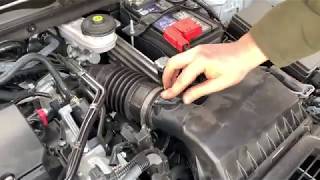
For the 10th generation Honda Civic (2016-2021), the primary IAT sensor (Sensor 1) is not a standalone part. Instead, it is integrated into the Mass Air Flow (MAF) sensor assembly located in the air intake tube after the air filter. This means that if the IAT sensor component fails and triggers a P0111, the entire MAF sensor assembly must be replaced. This design is common on both the 2.0L naturally aspirated (K20C2) and 1.5L turbocharged (L15B7) engines for this generation. The same MAF sensor assembly is used across both engine types.
Symptoms You May Notice
- Check Engine Light is on
- Reduced fuel economy
- Engine hesitation or stumbling during acceleration
- Rough or unstable idle
- Hard starting, especially in cold or hot weather
- Black smoke from the exhaust if the engine is running too rich
- Replacing the oxygen sensors. While O2 sensors are part of the fuel management system, they will not cause a P0111 code.
- Replacing a standalone IAT sensor. On this Civic, the IAT Sensor 1 is part of the MAF assembly. Some parts stores may list a separate IAT sensor (IAT Sensor 2), which is used on turbocharged models and is located on the charge pipe or intake manifold. Replacing IAT Sensor 2 will not fix a P0111 code, which refers to Sensor 1.
Most Likely Causes
- Faulty Mass Air Flow (MAF) / IAT Sensor Assembly 🔴 High Probability The IAT sensor is an integrated thermistor within the MAF sensor for this generation. The internal thermistor can degrade or fail over time, causing it to send inaccurate signals. Use of aftermarket oiled air filters can also contaminate the sensor, leading to premature failure.
How to confirm: With the engine cold (off for several hours), use an OBD-II scanner to compare the live data for the IAT sensor, Engine Coolant Temperature (ECT) sensor, and Ambient Air Temperature sensor. All three should read within about 5°F (3°C) of each other. If the IAT reading is significantly off, the sensor is likely faulty. A more advanced test involves using a heat gun on the removed sensor and watching for a corresponding temperature rise on the scan tool.
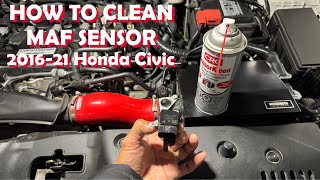
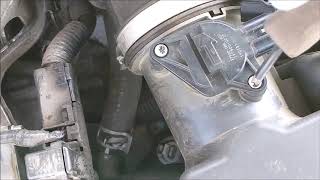
Typical fix: First, try cleaning the MAF sensor wires with a dedicated MAF sensor cleaner spray. Do not touch the delicate wires. 🎬 See how to safely clean your MAF sensor wires. If cleaning doesn't resolve the issue, replace the entire MAF sensor assembly. 🎬 Watch: Quick walkthrough for replacing the MAF sensor assembly.
Est. part cost: $75-$190 - Damaged Wiring or Loose Connector 🟡 Medium Probability The wiring harness leading to the MAF sensor can be exposed to engine heat and vibration, potentially causing wires to fray or the connector pins to corrode or become loose.
How to confirm: Visually inspect the wiring and connector for any signs of damage, melting, or corrosion. With the key on and engine off, gently wiggle the connector and harness while monitoring the IAT reading on a scan tool. If the reading fluctuates wildly, you have a connection issue.
Typical fix: Repair the damaged section of wiring or clean the connector terminals with an electrical contact cleaner. If the connector itself is broken, it will need to be replaced.
Est. part cost: $5-$50 - Dirty or Clogged Engine Air Filter ⚪ Low Probability A severely clogged air filter can restrict airflow across the sensor, potentially causing skewed or slow-to-react temperature readings that the ECM flags as a performance issue. While a possible cause, it's less common to be the sole reason for the code.
How to confirm: Visually inspect the engine air filter. If it is visibly dirty, black, or full of debris, it needs to be replaced.
Typical fix: Replace the engine air filter. This is a simple and inexpensive maintenance item that should be checked first.
Est. part cost: $15-$40
Rare But Worth Checking
- Intake Air Leak: A leak in the air intake tube between the MAF sensor and the throttle body can allow unmetered air to enter, which might, in some circumstances, affect temperature readings enough to set a code.
- Faulty Powertrain Control Module (PCM): This is extremely rare, but the PCM's internal circuits for interpreting the IAT signal can fail. This should only be considered after all other possibilities have been exhaustively ruled out.
Diagnosis Steps
- Read the Code: Use an OBD-II scanner to confirm P0111 is the active code and check for any other related codes.
- Check Freeze Frame Data: Review the freeze frame data to see the engine conditions (speed, temperature, load) when the code was set.
- Inspect the Air Filter: Check the engine air filter and replace it if it's dirty.
- Perform a Cold Soak Test: Let the vehicle sit for at least 3-4 hours until the engine is completely cold. Turn the key to the 'ON' position (without starting the engine) and use a scan tool to view live data. Compare the Intake Air Temperature (IAT), Engine Coolant Temperature (ECT), and Ambient Air Temperature readings. They should all be within 5°F (3°C) of each other. If the IAT reading is significantly different, the sensor is the primary suspect.
- Inspect Wiring and Connector: Visually inspect the MAF sensor connector and its wiring for any signs of corrosion, damage, or loose pins. Perform a 'wiggle test' on the harness while watching live data for fluctuations.
- Clean the MAF Sensor: If the sensor reading is only slightly off or seems slow to respond, try cleaning it. Remove the MAF sensor from the intake tube and spray the small sensor wires inside with a dedicated Mass Airflow Sensor cleaner. Do not touch the wires. Let it dry completely before reinstalling.
- Test Drive: After cleaning or repairs, clear the code and perform a test drive to see if the code returns. If it does, and the cold soak test failed, the MAF sensor assembly needs to be replaced.
Parts You'll Likely Need
- Mass Air Flow (MAF) Sensor Assembly
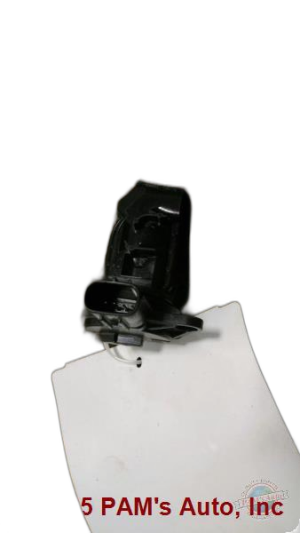
(OEM #37980-5BA-A01)— This assembly contains the integrated IAT Sensor 1, which is the most common failure point for code P0111 on this vehicle. This part number is confirmed to fit both 1.5T and 2.0L engines in the 2016-2021 Civic (excluding Type R).
Trusted brands: Honda (OEM), Denso (Often the OEM supplier), Delphi, Walker, NTK
OEM price range: $120-$190
Aftermarket price range: $75-$110
Related Codes That Often Appear With This One
- P0101 — Mass Air Flow (MAF) Circuit Range/Performance. Since the IAT sensor is housed within the MAF sensor, a fault in the unit or its wiring can trigger both codes simultaneously.
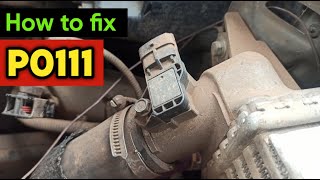
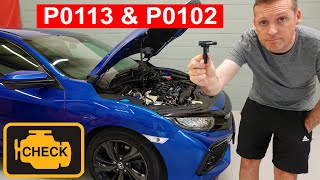
- P0113 — IAT Sensor 1 Circuit High Input. This indicates a specific electrical fault (like an open circuit), whereas P0111 is a performance/rationality fault. 🎬 Watch: Understanding the P0111 code causes and fixes. They can appear together if the sensor is failing intermittently.
Platform-Specific Known Issues
- Use of aftermarket oiled air filters is a known contributor to premature MAF sensor failure on this platform, as the oil can contaminate the delicate sensor elements.
- On 1.5T models, there is a second IAT sensor (IAT #2) located post-turbo/intercooler. It is crucial not to confuse this with the IAT #1 sensor integrated into the MAF that causes P0111.
Mechanic-Grade Diagnostic Values
- IAT Sensor Resistance (Thermistor) — expected: Approximately 2-3 kΩ at 68°F (20°C). Resistance decreases as temperature increases.. Failure: An open circuit (infinite resistance) or a short (very low resistance), or values that do not change with temperature.
- MAF/IAT Sensor Connector - Pin 3 (Signal) — expected: Voltage should vary between approximately 0.5V (cold) and 4.5V (hot/high load) with the engine running.. Failure: A fixed voltage (e.g., 0V or 5V) or a voltage that doesn't respond to changes in air temperature indicates a sensor or wiring fault.
- MAF/IAT Sensor Connector - Pin 5 (Power) — expected: Approximately 5V with key on, engine off.. Failure: No voltage or significantly lower voltage points to a wiring or PCM issue.
Scan Tool Commands That Help
- Honda Diagnostic System (HDS): IAT Sensor Performance Check — To verify the sensor's reaction to temperature changes. The procedure involves removing the sensor, connecting it, applying heat with a heat gun, and monitoring the IAT value on the HDS. A change of 76°F (42°C) or more indicates a functional sensor.
- Honda Diagnostic System (HDS): ECM RESET — After replacing the MAF/IAT sensor or repairing wiring, an ECM reset should be performed to clear learned values and force the system to recalibrate with the new component.
Wiring & Ground Locations
- MAF/IAT Sensor Connector (5-Pin) — On the MAF sensor, located in the air intake tube right after the air filter box.. This connector provides power, ground, and signal lines for both the MAF and IAT sensors. A loose connection, corrosion on the pins, or damaged wires here is a common cause for P0111. The IAT sensor uses two of these five pins.
- G101 — Typically located on the thermostat housing, serving as the main power and logic ground for the PCM (ECU).. A poor connection at G101 can cause a wide range of erratic sensor readings and seemingly unrelated codes, including P0111. If sensor tests are inconclusive, verifying this ground is a critical step, as a frayed wire or corrosion here can disrupt the sensor's reference ground.
- ECU/PCM Fuses — There are at least two fuses for the ECU/PCM. One is in the interior fuse box under the driver's dash (Fuse 11, 5A), and another is in the under-hood fuse box.. While a blown fuse would likely cause a no-start condition and multiple other codes, an intermittent connection at the fuse block could contribute to erratic PCM behavior and sensor faults.
Diagnostic Flowchart
Other Known Issues on This Vehicle
Issues unrelated to this code that are worth knowing about as an owner of this generation:
- A/C System Failures (Condenser & Compressor) 🔴 High — Very common across all model years. Condenser is prone to leaks from road debris or manufacturing defects; compressor shaft seals also fail. (Ref: Honda issued warranty extensions for both the A/C condenser (TSB 19-091) and the compressor shaft seal (TSB 23-039), extending coverage to 10 years/unlimited miles for specific failures.)
- Fuel in Oil (Oil Dilution) - 1.5T Engine 🟠 Medium — More prevalent in 2016-2018 models, especially in colder climates and with frequent short trips. Unburned fuel dilutes the engine oil, raising the oil level and reducing lubrication properties. (Ref: Honda issued a product update and a warranty extension to address the issue, involving software updates and, in some cases, hardware changes. The issue is considered largely resolved in 2019+ models.)
- Infotainment System Glitches/Bugs 🟡 Low — Commonly reported issues include system freezing, Bluetooth connectivity problems, and unresponsive touchscreens. Often intermittent. (Ref: Honda released several software updates (e.g., TSB A17-048) to address various bugs. Dealers can apply these updates.)
- Rattling from Front Suspension 🟡 Low — A common rattling or clunking noise heard over bumps, often caused by faulty front strut damper caps. (Ref: TSB A20-036 was issued to address this, involving the replacement of the rubber damper caps (P/N 51608-TJB-A00).)
- Sticky Steering (2022+ models, but relevant context) 🔴 High — While primarily affecting the next-generation (2022+) Civic, it's a significant recent issue with Honda steering racks that owners of late-model 10th gens should be aware of as a potential future concern for the brand. (Ref: NHTSA investigation is ongoing for the 11th generation.)
- Low-Pressure Fuel Pump Failure 🔴 High — Affects a wide range of Honda/Acura vehicles from 2018-2020, including the Civic. The fuel pump may fail, causing the engine to stall. (Ref: Subject to a major recall (NHTSA Campaign Number: 20V-314).)
Used vs. New Parts: Buying Guide for This Vehicle
When a used part is the smart pick: A used OEM MAF sensor from a low-mileage, rear-ended donor vehicle can be a cost-effective option. Since it's an electronic part, the risk of failure is higher than with a mechanical part, but it can be a viable choice if the part is guaranteed by the seller.
Donor-vehicle mileage cap: roughly under 60000 miles for the part to have meaningful remaining life.
What to inspect on the donor part:
- Check for a clean donor vehicle; avoid parts from cars with signs of engine bay fire, flood damage, or heavy front-end impact.
- Inspect the sensor's connector pins for any corrosion or damage.
- Ensure the delicate sensor wires inside the housing are intact and not physically broken or coated in oil.
- Ask the salvage yard for the donor vehicle's VIN to check its history if possible.
OEM-only on this vehicle (don't cheap out):
- Mass Air Flow (MAF) Sensor: While some aftermarket brands are reliable, many forum users strongly recommend sticking with OEM (Honda) or the original equipment manufacturer (Denso or Hitachi) to avoid compatibility and performance issues.
Aftermarket brands forum-validated for this vehicle:
- Denso
- Hitachi
Brands owners have reported issues with on this vehicle:
- Unnamed, no-brand sensors from online marketplaces are frequently cited as problematic, often failing quickly or being out of calibration from the start.
Real Owner Stories
Aggregated from forums and TSBs cited above. Mileages and costs reflect what owners reported in those sources.
2017 Honda Civic 1.5T
Symptoms: Check Engine Light came on with codes P0111 and P0101 appearing together.
What fixed it: Replacement of the MAF sensor assembly (P/N 37980-5BA-A01).
Source hint: civicx.com (10th Gen Civic Forum)
2019 Acura ILX
Symptoms: Vehicle set codes P2183 and P0111.
What fixed it: Diagnosis revealed a faulty temperature sensor was the root cause.
Source hint: acurazine.com - A thread on a related Honda platform
Related OBD-II Codes
Frequently Asked Questions
I have a 1.5T Civic. Is there more than one IAT sensor I need to worry about for code P0111?
Could my aftermarket oiled air filter be causing the P0111 code on my Civic?
My scanner is showing both P0111 and P0101. Is this a common problem?
How can I test the IAT sensor at home before buying a new one?
What is the part number for the MAF sensor on my 2018 Civic, and will it fit other Honda models?
Should I try cleaning the MAF sensor first, or just replace it?
Helpful Videos

We Have This Part in Stock



The information in this article is provided for general reference and educational purposes only. Vehicle specifications, procedures, and part compatibility can vary by production date, trim level, and region. Always consult your vehicle's factory service manual and verify part numbers before purchasing or performing repairs. Safety-critical components such as airbags, seat belts, and braking systems should be installed by a qualified professional.
- Honda Civic:
- 🎬 Helpful Videos
- 🛍️ Shop This Part
- What's Unique About the 2016-2021 Honda Civic
- Symptoms You May Notice
- Most Likely Causes
- Rare But Worth Checking
- Diagnosis Steps
- Parts You'll Likely Need
- Related Codes That Often Appear With This One
- Platform-Specific Known Issues
- Mechanic-Grade Diagnostic Values
- Scan Tool Commands That Help
- Wiring & Ground Locations
- Diagnostic Flowchart
- Other Known Issues on This Vehicle
- Used vs. New Parts: Buying Guide for This Vehicle
- Real Owner Stories
- 2017 Honda Civic 1.5T
- 2019 Acura ILX
- Related OBD-II Codes
- Frequently Asked Questions
- 🎟️ Get 5% Off