

P0108 on 2012-2019 Toyota Prius C: Manifold Pressure High Causes and Fixes
Code P0108 on a Toyota Prius C most often means the Manifold Absolute Pressure (MAP) sensor has failed or its wiring is damaged. A replacement Denso sensor costs around $60-$90, and it's a straightforward DIY replacement. Before replacing parts, always check for a broken ground wire to the sensor and confirm the health of the 12V auxiliary battery, as both are known culprits on this platform.
- P0108 on your Prius C points to a problem with the MAP sensor circuit reporting high pressure (low vacuum).
- The most likely fix is replacing the MAP sensor, which is an accessible and affordable DIY job.
- Before buying parts, check the sensor's wiring for damage and test the health of your 12V auxiliary battery, as both are known potential causes on this car.
- A dirty or stuck PCV valve is a less common but possible cause worth investigating if the sensor and wiring seem fine.
What's Unique About the 2012-2019 Toyota Prius C
On the Prius C, like many Toyota hybrids, electrical issues can have surprising causes. While a faulty MAP sensor is common, owners have reported that a weak 12V auxiliary battery can trigger the P0108 code. Before replacing sensors, it's wise to check the health of the 12V battery, as these cars are sensitive to voltage irregularities. Additionally, oil contamination in the intake manifold from the PCV system is common and can foul the MAP sensor. This oil buildup is also a precursor to the infamous EGR (Exhaust Gas Recirculation) system clogging that affects many Prius models, which can also influence intake pressure readings.
Symptoms You May Notice
- Check Engine Light is on
- Rough or unstable idle
- Hesitation or lack of power during acceleration
- Decreased fuel economy
- Engine may stall, especially when coming to a stop
- Black smoke from the exhaust (due to a rich fuel mixture)
- Hard starting
- Replacing the Mass Airflow (MAF) sensor. The MAF and MAP sensors work together but are different parts. P0108 specifically points to the MAP sensor circuit.
- Immediately replacing the MAP sensor without checking the wiring. A broken ground wire will produce the exact same code as a failed sensor, as documented by owners.
Most Likely Causes
- Faulty Manifold Absolute Pressure (MAP) Sensor 🔴 High Probability The MAP sensor is a critical electronic component that operates in a harsh environment and can fail over time due to heat cycles and internal wear. It can also become contaminated with oil from the PCV system.
How to confirm: With the key on and engine off, the MAP sensor reading on a scan tool should be close to barometric pressure (approx. 4.5V). At idle, the voltage should drop significantly (e.g., to 1-1.8V). If the voltage stays high (e.g., above 4.5V) at idle, unplug the sensor. If the code changes to P0107 (Circuit Low), the sensor is internally shorted and bad.
Typical fix: Replace the MAP sensor. It is mounted directly on the intake manifold, typically held by a single 10mm bolt, making for a quick replacement. 🎬 Watch this guide to test and replace your MAP sensor.
Est. part cost: $60-$120 - Wiring or Connector Issue 🟡 Medium Probability The engine bay is a harsh environment, and wires can become brittle. Rodents are also known to chew on soy-based wiring insulation. A broken ground wire (E2) is a specifically documented failure mode for this code on Prius models.
How to confirm: Visually inspect the harness for damage. Unplug the connector and check for corrosion. Use a multimeter to check for a 5V reference (VC), a good ground (E2, should have continuity to the chassis), and the signal wire (PIM) at the connector. A detailed account on PriusChat describes finding a P0108 was caused by the 'E2' ground wire having no continuity.
Typical fix: Repair the damaged section of the wiring harness. If it's a broken ground wire, splicing in a new section or running a new ground can resolve the issue. Clean corroded connector terminals and apply dielectric grease.
Est. part cost: $5-$50 - Failing 12V Auxiliary Battery ⚪ Low Probability Toyota hybrids are highly dependent on stable 12V power for their computer systems. A weak or failing 12V battery can cause low system voltage and trigger a variety of seemingly unrelated electrical fault codes, including P0108.
How to confirm: Test the 12V auxiliary battery (located under the rear passenger seat) with a multimeter or at an auto parts store. A healthy battery should read above 12.4V when the car is off. Any reading below 12.2V warrants a load test. 🎬 See how a weak 12V battery triggers hybrid system codes.
Typical fix: Replace the 12V auxiliary battery.
Est. part cost: $150-$250 - Clogged or Stuck-Open PCV Valve ⚪ Low Probability Over time, the PCV (Positive Crankcase Ventilation) valve can get clogged with oil sludge. If it sticks, it can alter crankcase pressure and allow excessive oil vapor into the intake manifold, which can foul the MAP sensor and contribute to broader EGR clogging issues.
How to confirm: Inspect the PCV valve and hose. If there is significant oil pooling in the intake manifold below the throttle body, it's a strong indicator the PCV system is not functioning correctly. Replacing the valve is an inexpensive preventative measure. 🎬 Watch: Replace your Prius C PCV valve in three minutes.
Typical fix: Replace the PCV valve and clean any oil residue from the intake manifold and MAP sensor.
Est. part cost: $15-$40
Rare But Worth Checking
- Clogged Catalytic Converter: A severely clogged catalytic converter can create excessive backpressure in the exhaust, which can affect the intake manifold pressure and trigger a P0108 code. This is usually accompanied by other codes (like P0420) and a significant loss of power.
- Dirty or Malfunctioning Throttle Body: A throttle body heavily caked with carbon and oil can fail to operate smoothly. Sometimes, after a cleaning, if the electronic throttle body is not handled correctly or if harsh chemicals damage nearby sensors, it can cause erratic behavior and related codes.
- Faulty Engine Control Module (ECM): This is very rare, but the ECM itself can fail. All other possibilities, especially the sensor and wiring, should be exhaustively ruled out before considering ECM replacement.
Diagnosis Steps
- Read the code with an OBD-II scanner and check for any other stored codes. Note freeze frame data.
- With the scanner's live data function, observe the MAP sensor voltage with the Key On, Engine Off (KOEO). It should read high, around 4.5V, corresponding to atmospheric pressure.
- Start the engine. The MAP sensor voltage should drop significantly at idle (typically to between 1.0V and 1.8V). If the voltage remains high (above 4.5V), the circuit has a fault.
- Test the 12V auxiliary battery to ensure it is healthy and providing stable voltage (above 12.4V at rest).
- Visually inspect the MAP sensor connector for corrosion and the wiring harness for any visible damage, such as cuts, burns, or signs of rodent activity. Pay close attention to the harness for about 15cm back from the connector.
- Disconnect the MAP sensor and test the connector with a multimeter. With the key on, you should find: Pin VC with ~5V reference, Pin E2 with continuity to ground (<1 ohm), and Pin PIM (signal wire).
- Specifically check the E2 ground wire. A PriusChat user fixed their P0108 by finding this wire was broken, resulting in no continuity to ground.
- Inspect the intake manifold port for the MAP sensor and the throttle body for heavy oil or carbon buildup. This points to PCV or EGR system issues that may have fouled the sensor.
- If wiring, battery, and vacuum systems are good, the MAP sensor itself is the most likely culprit.
Parts You'll Likely Need
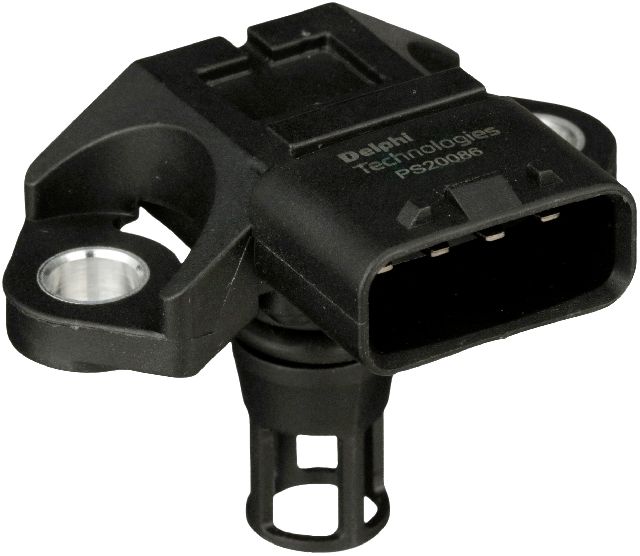
- Manifold Absolute Pressure (MAP) Sensor
(OEM #89421-52010 (supersedes 89421-52011))— This is the most common failure point for a P0108 code. The sensor's internal electronics fail, causing it to send a persistently high voltage signal.
Trusted brands: Denso (OEM supplier), Standard Motor Products, Delphi, NTK
OEM price range: $90-$150
Aftermarket price range: $40-$90
Related Codes That Often Appear With This One
- P0107 — P0107 is 'MAP Circuit Low Input'. Seeing both P0107 and P0108 intermittently can point to a failing sensor or a wiring issue causing erratic readings. Unplugging a shorted MAP sensor will often cause a P0107 to appear, confirming the sensor is the issue.
- P3190 — This is a general code for 'Engine Did Not Start' or 'Poor Engine Power' on a Prius. A faulty MAP sensor providing incorrect data can be one of the root causes that leads to the conditions that set a P3190.
Platform-Specific Known Issues
- A recall (NHTSA ID: 19V544000, Toyota recall K0K) was issued for some 2018-2019 Prius C models for a faulty DC-DC converter. While not directly causing P0108, a failure in this component can lead to a loss of drive and various electrical problems.
- Another recall (NHTSA ID: 14V363000) for 2012-2014 models addresses a failing inverter IPM which can cause stalling, a more severe issue but one that highlights the platform's sensitivity to electrical component failure.
Mechanic-Grade Diagnostic Values
- MAP Sensor Signal Voltage (PIM wire) — expected: Approx. 4.5V with Key On, Engine Off (KOEO). Drops to 1.0V - 1.8V at idle.. Failure: Voltage remains high (near 4.5V) when the engine is idling, or reads over 4.5V for more than 0.5 seconds.
- MAP Sensor 5V Reference (VC wire) — expected: 4.8V to 5.2V with key on.. Failure: Voltage is significantly lower than 4.8V or is absent.
- MAP Sensor Ground Circuit Voltage Drop (E2 wire) — expected: Less than 0.1V (100mV) between the E2 pin at the connector and the negative battery terminal.. Failure: Voltage is higher than 0.1V, indicating high resistance in the ground circuit.
- MAP Sensor Ground Circuit Continuity (E2 wire) — expected: Less than 1.0 Ohm between the E2 pin at the connector and a clean chassis ground point.. Failure: High resistance or an Open Loop (O.L.) reading, indicating a broken ground wire.
- Scan Tool Live Data (Techstream) — expected: At idle, manifold pressure should be low (e.g., ~30 kPa). At KOEO, it should equal Barometric Pressure.. Failure: Manifold pressure reads high at idle (e.g., near 100 kPa) or reads 130 kPa or more, which can indicate an open/short in the circuit.
Scan Tool Commands That Help
- Toyota Techstream: Data List (Live Data) — This is the primary diagnostic function for P0108. Use it to monitor the 'Manifold Absolute Pressure' PID in real-time to see if the sensor's readings are logical during KOEO, idle, and throttle snaps. This is more useful than an active test for this specific sensor.
- Toyota Techstream: Freeze Frame Data — Always review the freeze frame data for P0108. It captures engine conditions (RPM, load, temp, etc.) at the exact moment the fault was set, which provides critical clues as to whether the fault occurs at idle, under load, or during a specific event.
Wiring & Ground Locations
- E2 — This is the sensor ground wire in the MAP sensor harness. The physical ground point it connects to is one of the engine bay grounds, likely 'EA' or 'EB' located on the engine block or cylinder head near the intake side.. A break in the E2 wire is a known, documented cause for P0108 on this platform. The sensor loses its reference to ground, causing the signal voltage to float high and trigger the code.
- EA, EB, EC — These are Toyota's designators for the primary ground points in the engine compartment. They are typically found bolted to the cylinder head, engine block, and the chassis frame rail on the driver's side.. The MAP sensor's E2 ground wire ultimately terminates at one of these points. If the main ground point is loose or corroded, it can cause this and other sensor-related codes.
Real Owner Repair Stories
- PriusChat user 'Bookkeepper' (2010 Toyota Prius (Gen 3, 1.8L but uses similar MAP sensor logic and wiring designators)) — Check Engine Light with P0108, but car drove completely normally with no drop in MPG.
❌ Tried (didn't work) Replacing the MAP sensor with a new Denso part., Unplugging the sensor (still threw P0108).
✅ What actually fixed it The user performed a continuity test on the sensor connector's wiring harness and found the 'E2' ground wire was broken (no continuity to ground). Repairing the broken wire resolved the code. - Reddit r/prius user (2010 Toyota Prius, 205k miles) — Check Engine Light with P0107 and P0108 codes.
❌ Tried (didn't work) Cleaning the MAP sensor., Searching for an external vacuum leak.
✅ What actually fixed it A mechanic identified that oil pooling in the intake manifold (visible when the MAP sensor was removed) was caused by a stuck-open PCV valve. This created an 'internal vacuum leak.' Replacing the PCV valve and cleaning the sensor fixed the codes.
"I Checked Everything" — The Actual Cause
- A stuck-open PCV valve can cause P0107/P0108 codes. This fault won't be found with a smoke test because it's not an external vacuum leak. Instead, the valve allows unmetered air and oil vapor from the crankcase into the intake manifold, altering the pressure reading. The key symptom is visible oil pooling in the intake manifold when the MAP sensor is removed.
When the Usual Fixes Don't Work
- While a faulty MAP sensor is the most common cause, there are multiple owner-documented cases where replacing the sensor did not fix the P0108 code. The two most prominent alternative causes were a broken ground wire in the sensor's harness and a failed PCV valve causing incorrect pressure readings. Both of these scenarios highlight the importance of diagnosing the entire circuit and related systems before replacing the sensor itself.
OEM Part Supersession History
89421-52011→89421-52010— Part consolidation and revision.
Heads up: The two part numbers are generally interchangeable for this application, but it is always best to use the latest revision (89421-52010) when purchasing new.
Diagnostic Flowchart
Other Known Issues on This Vehicle
Issues unrelated to this code that are worth knowing about as an owner of this generation:
- EGR System Clogging 🔴 High — Very common, especially on vehicles over 100,000 miles. Clogging of the EGR valve, cooler, and intake manifold passages can lead to engine knocking, hesitation, and eventually head gasket failure if ignored.
- Inverter (IPM) Failure 🔴 High — Affects 2012-2014 models most. A recall was issued to address this. The Intelligent Power Module (IPM) within the inverter can fail from thermal stress, causing the car to stall or enter a low-power limp mode. (Ref: NHTSA ID: 14V363000 (Toyota Recall E0E))
- Excessive Oil Consumption 🟠 Medium — While not as severe as the 2ZR-FXE engine in the standard Gen 3 Prius, some 1NZ-FXE engines can consume oil, often linked to piston ring design and PCV system performance. Owners are advised to monitor oil levels closely, especially on higher mileage examples.
- Premature A/C Compressor Failure 🟠 Medium — Commonly reported on 2012-2014 models. Owners report a loud noise followed by the A/C blowing warm air, requiring a costly compressor replacement.
- Weak 12V Auxiliary Battery Life 🟡 Low — The 12V battery in all Prius models can degrade and cause a wide array of confusing electrical codes and system malfunctions, including no-start conditions, long before the battery would be considered 'dead' in a conventional car.
Used vs. New Parts: Buying Guide for This Vehicle
When a used part is the smart pick: A used MAP sensor is generally not recommended as it is a relatively low-cost electronic part where age and heat cycles are the primary failure mode. A used part may have limited remaining life. It only makes sense if sourced from a very low-mileage, verified-running donor vehicle as a temporary diagnostic tool or if on a strict budget.
Donor-vehicle mileage cap: roughly under 50000 miles for the part to have meaningful remaining life.
What to inspect on the donor part:
- Ensure the donor vehicle was not in a front-end collision.
- Inspect the sensor's plastic housing for any cracks or heat damage.
- Check the connector pins for any signs of corrosion or moisture.
- Ask for the donor vehicle's VIN to verify mileage and confirm it was running without this specific code.
OEM-only on this vehicle (don't cheap out):
- While not an OEM-only part, using the OEM supplier (Denso) for the MAP sensor is highly recommended for reliability and correct calibration. Cheap, no-name aftermarket sensors are a common source of repeat failures.
Aftermarket brands forum-validated for this vehicle:
- Denso (OEM)
- NTK
- Delphi
- Standard Motor Products (SMP)
Brands owners have reported issues with on this vehicle:
- Unbranded, low-cost sensors from online marketplaces are frequently reported on forums as being dead-on-arrival or failing prematurely.
Real Owner Stories
Aggregated from forums and TSBs cited above. Mileages and costs reflect what owners reported in those sources.
2010 Toyota Prius 1.8L (Platform Mate)
Symptoms: The owner experienced a P0108 code. They replaced the MAP sensor, but the code remained.
What fixed it: After testing continuity using a wiring diagram, the owner discovered the 'E2' ground wire was broken. Repairing the wire resolved the code.
Source hint: PriusChat: '2010 MAP sensor Mystery - P0108'
Related OBD-II Codes
Frequently Asked Questions
Is there a recall for my 2018-2019 Prius C that could be related to these electrical issues?
My 2013 Prius C is stalling; could this be the inverter issue I've heard about?
Where is the MAP sensor located on the 1NZ-FXE engine for a quick replacement?
Can a weak 12V battery cause a P0108 code on a Prius C?
I found oil in my intake manifold; is this related to the MAP sensor failure?
What should the MAP sensor voltage read at idle on my Prius C?
Helpful Videos

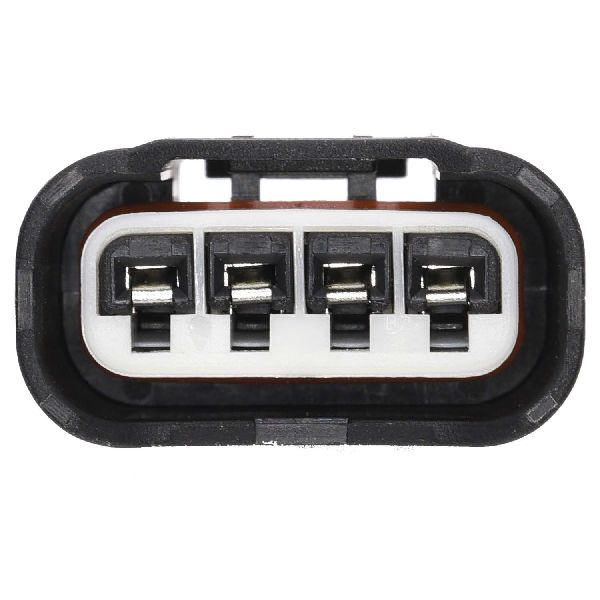
We Have This Part in Stock


The information in this article is provided for general reference and educational purposes only. Vehicle specifications, procedures, and part compatibility can vary by production date, trim level, and region. Always consult your vehicle's factory service manual and verify part numbers before purchasing or performing repairs. Safety-critical components such as airbags, seat belts, and braking systems should be installed by a qualified professional.
- Toyota Prius C:
- 🎬 Helpful Videos
- 🛍️ Shop This Part
- What's Unique About the 2012-2019 Toyota Prius C
- Symptoms You May Notice
- Most Likely Causes
- Rare But Worth Checking
- Diagnosis Steps
- Parts You'll Likely Need
- Related Codes That Often Appear With This One
- Platform-Specific Known Issues
- Mechanic-Grade Diagnostic Values
- Scan Tool Commands That Help
- Wiring & Ground Locations
- Real Owner Repair Stories
- "I Checked Everything" — The Actual Cause
- When the Usual Fixes Don't Work
- OEM Part Supersession History
- Diagnostic Flowchart
- Other Known Issues on This Vehicle
- Used vs. New Parts: Buying Guide for This Vehicle
- Real Owner Stories
- 2010 Toyota Prius 1.8L (Platform Mate)
- Related OBD-II Codes
- Frequently Asked Questions
- 🎟️ Get 5% Off