

P0108 on 2013-2019 Subaru Legacy 2.5L: Causes and Fixes for MAP Sensor High Input
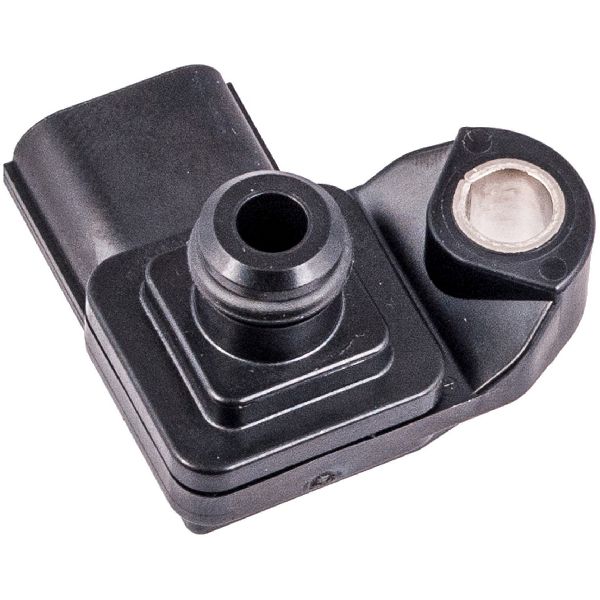
For a 2013-2019 Subaru Legacy, code P0108 most often means the Manifold Absolute Pressure (MAP) sensor has failed. It's an easy DIY replacement located on top of the engine's intake manifold, with an OEM Denso part (22627AA510) costing around $240-$260. Before replacing, verify the wiring and connector as a damaged harness can also trigger this code.
- P0108 on your Legacy almost always points to a problem with the Manifold Absolute Pressure (MAP) sensor or its circuit.
- The most likely fix is replacing the MAP sensor itself, which is an easy 10-minute DIY job with basic tools.
- Always check the wiring and connector for damage before buying parts. A loose or corroded connector can set this code.
- It is highly recommended to use a genuine Subaru or OEM Denso replacement sensor to ensure compatibility and prevent the code from returning.
- Do not confuse the MAP sensor (on the intake manifold) with the MAF sensor (on the air filter housing).
What's Unique About the 2013-2019 Subaru Legacy
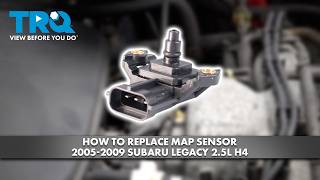
On the FB25B engine used in this generation of Legacy, the MAP sensor is conveniently located right on top of the intake manifold near the throttle body, making it very accessible for testing and replacement. 🎬 Watch: How to test and replace the Subaru MAP sensor While the code itself is generic, Subarus can be sensitive to aftermarket electronics. Many owners and mechanics strongly recommend using a genuine OEM (Denso) sensor to avoid persistent issues, as a non-OEM sensor has been reported to cause the same code to return even if the part is new. A key diagnostic point is that disconnecting the MAP sensor harness on these cars can also result in a P0108 code, pointing towards a potential wiring issue rather than a sensor failure.
Generation note: The 2013-2019 year range covers the end of the fifth generation (2013-2014) and the full sixth generation (2015-2019) Legacy. Both generations use the FB25B 2.5L engine, and the location, function, and replacement procedure for the MAP sensor are effectively identical. The same primary OEM part number is used for both generations.
Symptoms You May Notice
- Check Engine Light is on
- Flashing cruise control light (a common Subaru trait when the Check Engine Light is on)
- Rough or unstable idle
- Engine hesitation or stumbling during acceleration
- Poor fuel economy
- Engine stalling, especially when coming to a stop
- Black smoke from the exhaust due to a rich fuel mixture
- Excessive cranking required to start the engine
- Engine surging
- Replacing the Mass Airflow (MAF) sensor. The MAF sensor is located on the air filter box, while the MAP sensor is on the intake manifold. They are different parts with different functions.
- Replacing the ECM. A faulty wiring harness can mimic the symptoms of a bad ECM, leading to a very expensive and unnecessary replacement. One owner documented a long ordeal where a bad harness was misdiagnosed as a bad ECM. 🎬 See a real-world diagnosis of a tricky wiring harness issue
Most Likely Causes
- Faulty Manifold Absolute Pressure (MAP) Sensor 🔴 High Probability The MAP sensor is a primary electronic component that can fail over time with heat cycles and mileage. It's the most common point of failure for this code on the FB25B engine.
How to confirm: With the key on and engine off, use a scan tool to compare the MAP sensor reading to the BARO (barometric) reading. They should be nearly identical. If the MAP reading is stuck high (e.g., over 119 kPa or 4.5V), the sensor has likely failed internally. You can also test the signal wire with a multimeter; a reading over 4.5V with the key on indicates a problem.
Typical fix: Replace the MAP sensor. It is located on top of the intake manifold and held by a single 8mm or 10mm bolt. Always use a new O-ring and ensure the port is clean before installation.
Est. part cost: $240-$260 for OEM/Denso, $30-$80 for aftermarket - Wiring Harness or Connector Issue 🟡 Medium Probability The wiring harness connector at the sensor can become loose, corroded, or damaged. Wires can also be damaged or shorted to power elsewhere in the harness, especially after other engine work has been performed.
How to confirm: Visually inspect the MAP sensor connector for damage, corrosion, or loose pins. Wiggle the connector with the engine running to see if the idle changes. Check for 5V reference and good ground at the connector. Unplugging the sensor should still result in a P0108 code, which can help differentiate a circuit problem from a sensor problem. A detailed inspection of the harness routing is necessary if the connector appears fine.
Typical fix: Repair or replace the damaged section of wiring or the connector pigtail. In a documented case on a Subaru 2.5L, a faulty engine wiring harness was the ultimate culprit after a sensor replacement failed to fix the issue.
Est. part cost: $15-$50 for a pigtail connector, variable for harness repair - Major Vacuum Leak ⚪ Low Probability While less common for a 'high input' code, a significant vacuum leak from a cracked hose or bad gasket right at the intake manifold or throttle body could cause erratic sensor readings that the ECM interprets as a fault. A large leak near the sensor can cause strange readings.
How to confirm: Listen for a hissing sound near the intake manifold with the engine running. You can also (carefully) spray short bursts of brake cleaner or an unlit propane torch around suspected areas; a change in engine idle indicates a leak. A smoke test is the most definitive way to find a leak.
Typical fix: Replace the cracked vacuum hose or faulty gasket.
Est. part cost: $5-$50
Rare But Worth Checking
- Clogged Catalytic Converter: A severely clogged catalytic converter can increase backpressure, which in turn increases pressure in the intake manifold, causing the MAP sensor to read high. This is rare and would almost certainly be accompanied by other codes (like P0420) and severe performance loss, especially at high RPM.
- Faulty Engine Control Module (ECM): This is extremely rare. The ECM itself could be failing to correctly interpret the sensor's signal. This should only be considered after all other possibilities, including the entire wiring harness, have been exhaustively ruled out by a professional.
Diagnosis Steps
- Retrieve all stored fault codes with an OBD-II scanner. Note any other codes present.
- With the Key On, Engine Off (KOEO), view live data on the scanner. Compare the MAP sensor pressure/voltage reading to the Barometric Pressure (BARO) reading. They should be almost identical. If the MAP reading is stuck high (above ~4.5V or 119.5 kPa), the sensor is likely faulty.
- If the readings are plausible, start the engine. The MAP reading should drop significantly at idle (indicating high vacuum, around 30-32 kPa is normal). If the reading does not change or stays high, this points toward a sensor or circuit issue.
- Visually inspect the MAP sensor connector and nearby wiring for any signs of damage, corrosion, or loose connections. Pay close attention to any areas where the harness may have been disturbed during previous repairs.
- If wiring looks good, disconnect the sensor and test the connector terminals with a multimeter. You should find a 5-volt reference wire, a ground wire, and a signal wire. Confirm 5V and ground are present.
- A key test for this platform: unplugging the MAP sensor may still generate a P0108 code. If the code persists with the sensor unplugged, it strongly suggests a wiring harness issue (short to power) rather than a faulty sensor.
- If the sensor and wiring appear to be okay, check for major vacuum leaks around the intake manifold and throttle body using a smoke machine for best results.
- As a final check, if a known-good OEM MAP sensor is available, swap it in. If the code disappears and the live data readings return to normal, the original sensor was faulty.
Parts You'll Likely Need
- Manifold Absolute Pressure (MAP) Sensor
(OEM #22627AA510)— This is the most common component to fail and cause a P0108 code.
Trusted brands: Denso (OEM), Subaru (Genuine)
OEM price range: $240-$260
Aftermarket price range: $30-$150 - MAP Sensor Connector Pigtail — If the connector itself is damaged or corroded, replacing the pigtail is necessary to ensure a solid connection.
Trusted brands: Dorman, Standard Motor Products
Aftermarket price range: $15-$50
Related Codes That Often Appear With This One
- P0107 — This code is for 'MAP Circuit Low Input'. Seeing it alongside P0108 can indicate an intermittent wiring problem, a loose connection, or a sensor that is failing erratically and sending signals across its entire possible range.
- P030x (e.g., P0301, P0302) — Misfire codes can occur because the incorrect MAP sensor reading causes the ECM to deliver the wrong fuel mixture, leading to incomplete combustion in one or more cylinders.
Technical Service Bulletins (TSBs) & Recalls
- TSB 11-174-17R: While not directly for P0108, this TSB addresses oil leaks from the cam carrier seal on FB engines, a repair which could potentially disturb nearby wiring harnesses and lead to electrical issues if not performed carefully.
- TSB Bulletin #07-96-15: A manufacturer service bulletin notes that a repositioning of the sensor and actuator wiring ground junction point was necessary to a location unaffected by engine movement, as the previous design could set DTCs including P0108 in error.
Mechanic-Grade Diagnostic Values
- MAP Sensor Signal Voltage (Key On, Engine Off) — expected: ~4.5V - 5.0V (should match BARO). Failure: A reading significantly different from BARO, or a reading that doesn't change when vacuum is applied.
- MAP Sensor Signal Voltage (Engine Idling) — expected: 1.0V - 1.8V. Failure: Voltage remains high (near 4.5V) or is below 0.5V.
- MAP Sensor Connector - 5V Reference Wire — expected: Approximately 5V DC with key on.. Failure: No voltage or significantly lower voltage indicates a problem with the ECM or wiring.
- MAP Sensor Connector - Ground Wire — expected: Less than 100mV (0.1V). Failure: Higher voltage indicates a poor ground connection, which can cause incorrect sensor readings.
- Live Data - Intake Manifold Absolute Pressure (Engine Idling) — expected: 30-32 kPa. Failure: Pressure reading is stuck high (near atmospheric, ~100 kPa) or reads excessively high (120+ kPa).
- P0108 Trigger Threshold (Voltage) — expected: N/A. Failure: Signal voltage is at or above 4.4V - 4.5V.
- P0108 Trigger Threshold (Pressure) — expected: N/A. Failure: Signal pressure is at or above 120 kPa.
Scan Tool Commands That Help
- Subaru Select Monitor (or equivalent professional scanner): Current Data Display / Live Data — This is essential for diagnosis. Use it to monitor 'Intake Manifold Absolute Pressure' and compare it to the 'Atmosphere Pressure' reading with the key on, engine off. At idle, the pressure should drop significantly. Watching for intermittent spikes in this data can help differentiate a bad sensor from a wiring short.
Wiring & Ground Locations
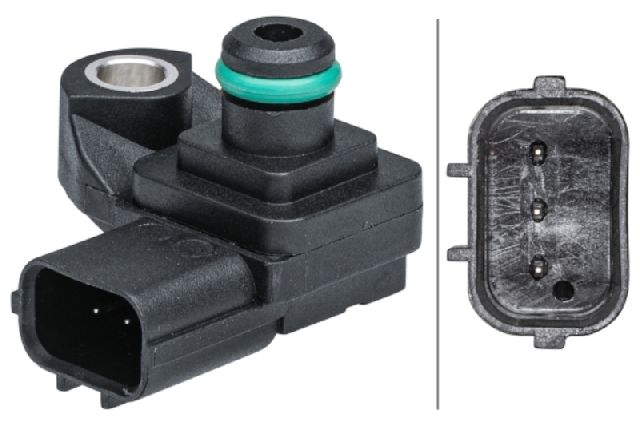
- MAP Sensor Connector Pinout (Typical 3-wire Denso) — The 3-pin connector on the MAP sensor, located on the intake manifold.. Knowing the function of each pin is critical for testing. You must verify the 5V reference from the ECM, the integrity of the ground, and check the signal wire for shorts to power. A typical configuration is Pin 1: 5V Reference, Pin 2: Ground, Pin 3: Signal.
- Engine Ground Straps — There are multiple ground points on the engine block and chassis. Key grounds are typically from the block to the firewall and from the battery negative terminal to the chassis.. A poor engine ground can cause a floating voltage reference for multiple sensors, including the MAP sensor. This can lead to incorrect readings and trigger a P0108 code. If the ground wire at the sensor connector shows more than 0.1V, tracing and cleaning the main engine grounds is a necessary step.
- Main Engine Harness Connector (e.g., F61) — Large multi-pin connectors that link the engine harness to the main body harness, often located near the battery or firewall.. A loose or corroded main harness connector can cause intermittent electrical faults for multiple engine sensors. One owner traced a P0108 to a loose 'F61' connector after an engine service, which caused intermittent signal spikes that mimicked a sensor failure.
Real Owner Repair Stories
- MNSubaru forum user 'pbedroske' (2004 Subaru WRX (EJ20 engine, but same code and principle)) — P0108 code appeared after an engine-out service. Scan tool showed MAP readings were mostly normal at idle but would intermittently spike to the maximum reading (75 inHg), triggering the CEL.
❌ Tried (didn't work) Replacing the MAP sensor with a used unit from eBay., Checking for vacuum leaks with propane., Cleaning sensor contacts and adding dielectric grease.
✅ What actually fixed it The user found a loose main engine harness connector (identified as 'F61') located near the battery. Securing this connector resolved the intermittent signal spikes and fixed the P0108 code. - YouTube channel 'Last Garage' (2011 Subaru Outback 2.5L (FB25 engine family)) — Persistent P0108 code, rough idle, and misfire codes.
❌ Tried (didn't work) Fixing a vacuum leak near the MAP sensor., Replacing the MAP sensor., Replacing the Engine Control Module (ECM) based on misdiagnosis.
✅ What actually fixed it After a year-long diagnostic battle, the ultimate fix was replacing the entire engine wiring harness. A short-to-power was present on the signal wire, which was only resolved by a complete harness replacement. - Reddit user on r/Subaru_Outback (2015 Subaru Outback 2.5L with 125k miles) — Shoddy acceleration, lunging, stalling at stop lights, and codes P0107, P0102, P0113.
❌ Tried (didn't work) Cleaning the MAF sensor., Replacing the MAP sensor.
✅ What actually fixed it The issue was not resolved in the post, but the diagnosis found the root cause: a wiring issue. Using a multimeter on the MAP sensor connector, the owner discovered that two of the three pins were reading 5 volts. This indicates the ground wire was compromised and picking up voltage, or there was a short in the harness. The fix would be to trace and repair the faulty wiring.
OEM Part Supersession History
22627AA510→22627AA510 (no supersession)— This part number remains current.
Heads up: This part is widely used across many Subaru models from 2011-2020 including the BRZ, Crosstrek, Forester, Impreza, Legacy, and Outback. Ensure the part is genuine Subaru or OEM Denso for best results.
Model Year Variations Within This Range
- 2015+: The FB25 engine received updates for the 2015 model year (start of the 6th gen Legacy) to improve efficiency, including changes to the intake ports (from 'D' shape to 'tumble generator' style rectangular ports). However, the MAP sensor's location, function, and part number (22627AA510) remained the same, and the diagnostic procedure for P0108 is not affected by these internal engine changes.
Diagnostic Flowchart
Other Known Issues on This Vehicle
Issues unrelated to this code that are worth knowing about as an owner of this generation:
- Excessive Oil Consumption 🔴 High — More common on early FB engines (2011-2014). Caused by issues with piston rings. Consumption can be as high as 1 quart per 1200 miles. (Ref: TSB 02-157-14R revised the repair from piston ring replacement to a full short block replacement for affected vehicles.)
- CVT Transmission Problems (TR580) 🔴 High — Issues like hesitation, shuddering, or outright failure can occur, often between 80,000 and 150,000 miles. Valve body solenoid failure is a common fault. (Ref: Subaru extended the CVT warranty for many models. TSBs like 16-97-15 and 16-132-20R address diagnostic procedures for harsh engagement and chain slip.)
- Premature Wheel Bearing Failure 🟠 Medium — Front and rear wheel bearings are known to fail earlier than expected, sometimes under 70,000 miles. Symptoms include a humming or roaring noise that changes with vehicle speed. (Ref: Subaru has had warranty extensions for wheel bearings on previous generations and the issue persists on this platform according to owner forums.)
- Draining Battery / Parasitic Draw 🟡 Low — Reported on 2015-2020 models where the battery drains completely after a few days of sitting. Attributed to the CAN system not entering sleep mode properly. (Ref: A class-action lawsuit was filed regarding this issue, but no official recall was issued.)
- Cam Carrier Oil Leak 🟠 Medium — A known leak point on the FB engine is the seal for the cam carrier (camshaft housing). It's a slow leak but requires significant labor to reseal. (Ref: TSB 11-174-17R provides details on this issue.)
Used vs. New Parts: Buying Guide for This Vehicle
When a used part is the smart pick: A used part is generally not recommended for the MAP sensor itself due to the risk of pre-existing failure. However, a used wiring connector pigtail from a junkyard harness is a perfectly acceptable and cost-effective repair if only the connector is damaged. A complete used engine wiring harness can be a viable option if a widespread harness failure is confirmed, as it is much cheaper than a new one.
Donor-vehicle mileage cap: roughly under 80000 miles for the part to have meaningful remaining life.
What to inspect on the donor part:
- For a pigtail, inspect for brittle plastic, corrosion on the pins, and ensure there is enough wire length for splicing.
- For a full harness, check for any signs of previous repair (tape, splices), heat damage near the exhaust, or rodent damage.
- Ensure all connector locking tabs are intact and not broken.
OEM-only on this vehicle (don't cheap out):
- Manifold Absolute Pressure (MAP) Sensor - The Pass 2 and Pass 3 research strongly indicates that aftermarket sensors are a common cause of repeat failures for this code on Subarus. Sticking to Genuine Subaru or the OEM manufacturer, Denso, is critical.
Aftermarket brands forum-validated for this vehicle:
- Denso (This is the Original Equipment Manufacturer for Subaru)
Brands owners have reported issues with on this vehicle:
- Unbranded or generic 'white-box' sensors from online marketplaces are frequently cited in forums as being unreliable or failing to meet OEM specifications, causing the code to return.
Real Owner Stories
Aggregated from forums and TSBs cited above. Mileages and costs reflect what owners reported in those sources.
2011 Subaru Forester 2.5L (FB25B)
Symptoms: The vehicle experienced a P0108 code that persisted even after replacing the sensor, fixing vacuum leaks, and replacing the ECM.
What fixed it: Complete engine wiring harness replacement.
Source hint: YouTube (Last Garage) - "EP178-2011 Subaru 2.5 P0108 Diag/Repair..."
2015 Subaru Outback 2.5L Premium
Symptoms: P0107, P0102, and P0113 codes were present. Testing the MAP connector revealed two of the three pins showed 5 volts.
What fixed it: Identified as a grounding issue or short in the wiring harness after a sensor replacement failed.
Source hint: Reddit r/Subaru_Outback - "MAP Sensor Wiring Problem (2015 2.5L Premium)"
Subaru Legacy 2.5L (FB25B)
Symptoms: P0108 code appeared immediately after an engine-out service. Live data showed intermittent spikes to maximum readings.
What fixed it: Repair of a short to power in the wiring harness or connector.
Source hint: MNSubaru - "MAP (manifold absolute pressure) sensor issues P0108"
Related OBD-II Codes
Frequently Asked Questions
Why is my cruise control light flashing along with the Check Engine Light on my Legacy?
Does TSB 11-174-17R for cam carrier oil leaks relate to my P0108 code?
Can I use an aftermarket MAP sensor for my FB25B engine, or should I buy OEM?
Where is the MAP sensor located on the 2013-2019 Subaru Legacy 2.5L?
My Legacy is stalling when coming to a stop; is this related to P0108?
Helpful Videos


We Have This Part in Stock


The information in this article is provided for general reference and educational purposes only. Vehicle specifications, procedures, and part compatibility can vary by production date, trim level, and region. Always consult your vehicle's factory service manual and verify part numbers before purchasing or performing repairs. Safety-critical components such as airbags, seat belts, and braking systems should be installed by a qualified professional.
- Subaru Legacy:
- 🎬 Helpful Videos
- 🛍️ Shop This Part
- What's Unique About the 2013-2019 Subaru Legacy
- Symptoms You May Notice
- Most Likely Causes
- Rare But Worth Checking
- Diagnosis Steps
- Parts You'll Likely Need
- Related Codes That Often Appear With This One
- Technical Service Bulletins (TSBs) & Recalls
- Mechanic-Grade Diagnostic Values
- Scan Tool Commands That Help
- Wiring & Ground Locations
- Real Owner Repair Stories
- OEM Part Supersession History
- Model Year Variations Within This Range
- Diagnostic Flowchart
- Other Known Issues on This Vehicle
- Used vs. New Parts: Buying Guide for This Vehicle
- Real Owner Stories
- 2011 Subaru Forester 2.5L (FB25B)
- 2015 Subaru Outback 2.5L Premium
- Subaru Legacy 2.5L (FB25B)
- Related OBD-II Codes
- Frequently Asked Questions
- 🎟️ Get 5% Off