

P0108 on 2007-2009 Saturn Aura: MAP Sensor Circuit High Causes and Fixes
On a 2007-2009 Saturn Aura, code P0108 is most often caused by a failed Manifold Absolute Pressure (MAP) sensor. Replacing the sensor is a simple DIY job that takes under 30 minutes, with an aftermarket part costing around $30-$60. The sensor is the same across all 2.4L, 3.5L, and 3.6L engines.
- P0108 on a Saturn Aura almost always points to a bad MAP sensor.
- Symptoms include rough idle, poor fuel economy, black smoke, and hesitation.
- This is a very easy and inexpensive DIY repair, typically taking less than 30 minutes with basic tools.
- Before replacing, always check the connector and wiring for damage, and verify the sensor has failed using a scan tool to check voltage readings at KOEO and idle.
- The same part (GM #55573248) is used across all engines for this vehicle, as well as on platform mates like the Chevy Malibu and Pontiac G6.
What's Unique About the 2007-2009 Saturn Aura
The Saturn Aura, being a GM Epsilon platform vehicle, uses a common and generally reliable MAP sensor design shared across many GM models of the era, including the Chevrolet Malibu and Pontiac G6. There are no widespread, unique design flaws that make the Aura exceptionally prone to P0108. The issue is typically a straightforward component failure of the sensor itself due to age and heat cycles, rather than a complex systemic problem. The fix is consistent across all engine options (2.4L, 3.5L, and 3.6L) as they share the same sensor.
Symptoms You May Notice
- Check Engine Light is on
- Rough or unstable idle
- Poor engine performance and acceleration, including hesitation
- Hesitation or stalling, especially when coming to a stop
- Decreased fuel economy
- Black smoke from the exhaust with a noticeable smell of unburnt fuel (due to a rich fuel mixture)
- Replacing the Mass Air Flow (MAF) sensor, as some symptoms like rough idle and hesitation can overlap. The Aura has both a MAF and a MAP sensor.
- Replacing the throttle body without first checking the MAP sensor and its wiring.
- Assuming a vacuum leak is the cause, which is more typical for P0106 or P0107 codes, not the 'high input' P0108.
Most Likely Causes
- Faulty Manifold Absolute Pressure (MAP) Sensor 🔴 High Probability The sensor is a common failure point on many vehicles of this age due to heat and vibration in the engine bay. It's the most likely cause for this code, often failing internally and sending a constant high voltage signal.
How to confirm: With the key on and engine off (KOEO), use a scan tool to check the MAP sensor reading. It should be close to the barometric pressure reading, with a voltage near 4.5-5.0 volts. At idle, the voltage should drop significantly to around 1.0-1.8 volts. If the voltage is stuck high (near 4.5-5.0 volts) regardless of engine state, the sensor has failed.
Typical fix: Replace the MAP sensor. It is mounted directly on the intake manifold and is easily accessible after removing the plastic engine cover.
Est. part cost: $30-$90 - Damaged Wiring or Corroded Connector 🟡 Medium Probability The wiring harness and connector are exposed to engine heat and vibration, which can cause wires to become brittle, frayed, or for pins in the connector to corrode over time. A short in the signal wire to the 5V reference wire can also cause a constant high reading.
How to confirm: Visually inspect the MAP sensor's electrical connector and wiring harness for any signs of damage, looseness, or green/white corrosion. With the connector unplugged and key on, use a multimeter to verify the 5-volt reference on one wire and a good ground on another. The third wire is the signal wire. Wiggle the harness while monitoring live data to see if the reading changes, 🎬 Watch: How to diagnose MAP sensor codes made simple. indicating an intermittent connection.
Typical fix: Clean the connector terminals with electrical contact cleaner. If the connector or wiring is damaged, replace the connector pigtail (e.g., Standard Ignition S1038).
Est. part cost: $10-$25 - Vacuum Leak ⚪ Low Probability While less common for a 'high input' code (as it reduces vacuum), a very large vacuum leak could potentially affect sensor readings, though it more commonly causes lean codes (like P0171) or range/performance codes (P0106).
How to confirm: Listen for hissing sounds around the intake manifold with the engine running. You can also spray a small amount of brake cleaner or starter fluid around vacuum lines and gasket seals; if the engine RPM changes, you've found a leak.
Typical fix: Replace the cracked vacuum hose or faulty gasket.
Est. part cost: $5-$50
Rare But Worth Checking
- Clogged Catalytic Converter: A severely clogged catalytic converter can increase backpressure, which in turn can raise pressure in the intake manifold, potentially confusing the MAP sensor. This would typically be accompanied by other codes (like P0420) and a severe lack of power, especially at highway speeds.
- Dirty Throttle Body: A throttle body heavily caked with carbon can restrict airflow at idle, slightly altering the expected manifold pressure. While it's unlikely to be the primary cause of a P0108, cleaning it is good practice and can resolve other idle-related issues.
- Faulty Engine Control Module (ECM): This is extremely rare. The ECM itself can fail, specifically the internal voltage regulator for the sensor circuit, but all other possibilities should be exhausted before considering ECM replacement, as it is expensive and requires programming.
Diagnosis Steps
- Read the code: Use an OBD-II scanner to confirm P0108 is present and check for any other stored codes. Note if the code is active or stored in history.
- Visual Inspection: Remove the plastic engine cover. Locate the MAP sensor on the intake manifold. Inspect the sensor, its electrical connector, and the surrounding wiring for any obvious damage, corrosion, or loose connections.
- Check Live Data (Scan Tool): With the Key On, Engine Off (KOEO), observe the MAP sensor voltage. It should be high, near 4.5-5.0 volts, and the pressure reading should correspond to your local atmospheric pressure.
- Check Idle Reading: Start the engine. At idle, the MAP sensor voltage should drop significantly to around 1.0-1.8 volts due to engine vacuum. If the voltage remains stuck high (e.g., above 4.0V), the sensor is not reading the vacuum correctly, strongly indicating a bad sensor or a signal wire shorted to power.
- Test the Circuit: Unplug the sensor connector. With the key on, use a multimeter to verify you have a 5-volt reference on one wire and a good ground on another (check for less than 0.1V on the ground pin). The third wire is the signal wire.
- Check for Blockages: Before installing a new sensor, inspect the port on the intake manifold where the sensor sits. Ensure it is not clogged with carbon buildup, which could dampen its readings. Clean it carefully with a small pick or brush if needed.
- Test the Sensor (Optional but definitive): If the wiring checks out, the sensor itself is the prime suspect. Given the low cost, replacement is often the most efficient next step. Alternatively, you can test the sensor with a hand-held vacuum pump while monitoring its voltage output to see if it changes.
- Clear Codes and Test Drive: After replacing the part, clear the codes with the scanner. Some codes may remain in 'history' for a few drive cycles before clearing completely. Take the vehicle for a test drive to ensure the issue is resolved.
Parts You'll Likely Need
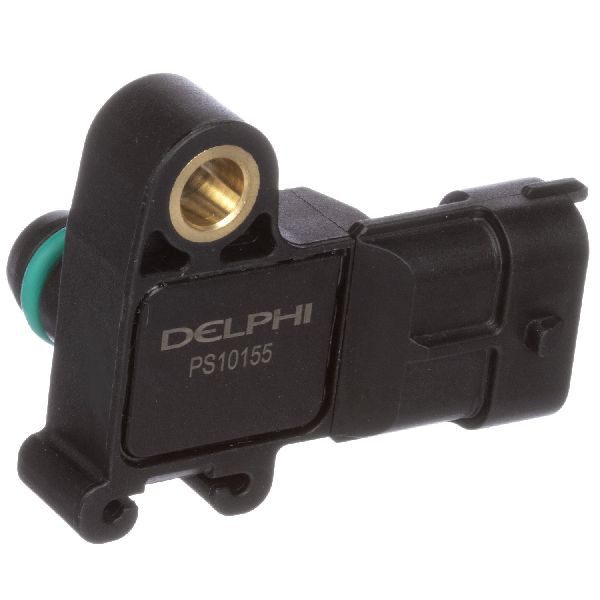
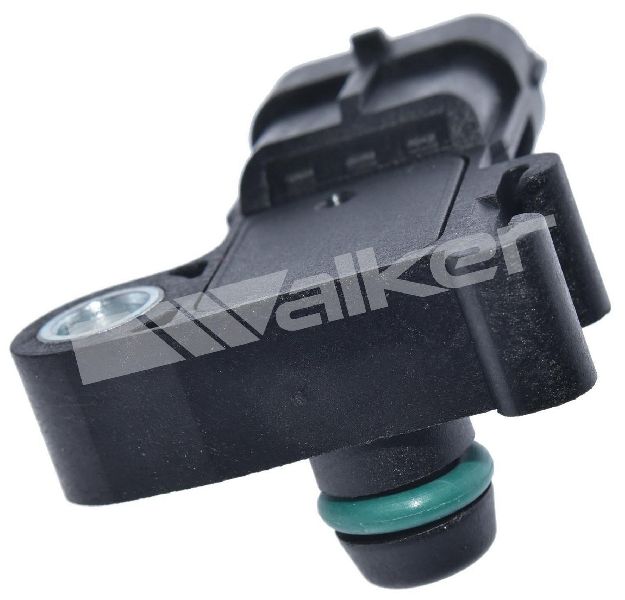
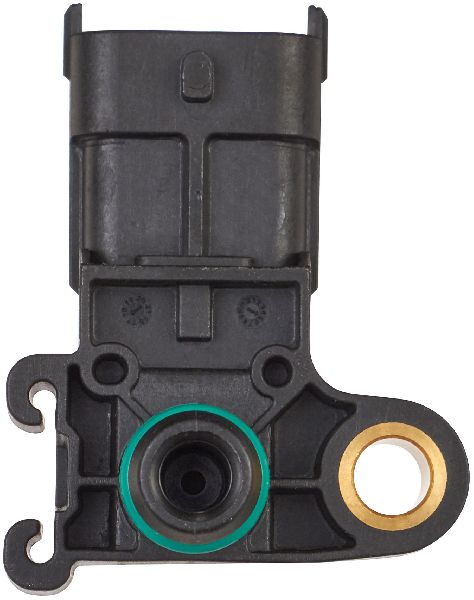
- Manifold Absolute Pressure (MAP) Sensor
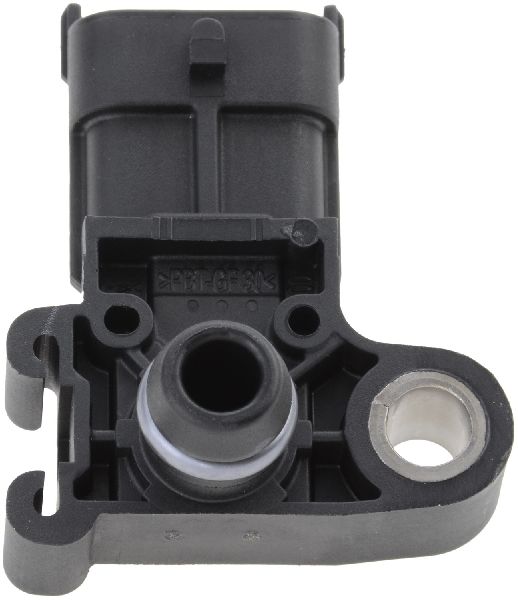
(OEM #55573248 (replaces 12591290, 93192107))— This is the most common part to fail and directly cause the P0108 code. It's a critical sensor for engine management that is prone to failure over time. This part number fits all 2.4L, 3.5L, and 3.6L engines for the 2007-2009 Aura.
Trusted brands: ACDelco (OEM), Delphi, Bosch, Standard Motor Products, NTK
OEM price range: $45-$70
Aftermarket price range: $30-$60
Related Codes That Often Appear With This One
- P0106 — This code indicates a MAP sensor performance/range issue, which can be caused by the same failing sensor or an intermittent wiring problem.
- P0107 — This code indicates a MAP sensor circuit low input. Seeing both P0107 and P0108 intermittently could point to a wiring short or a completely failed sensor that is fluctuating between open and shorted states.
Platform-Specific Known Issues
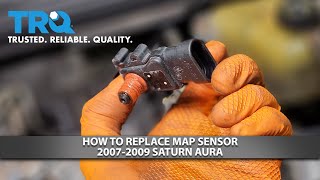
- On the 3.5L V6 engine, the MAP sensor is located on the intake manifold, but a small bracket holding spark plug wires and other lines may need to be unbolted (two 13mm bolts) for easier access. A video guide shows these bolts should be torqued to 18 ft-lbs upon reinstallation. 🎬 See this replacement walkthrough for the Saturn Aura.
Mechanic-Grade Diagnostic Values
- MAP Sensor Voltage (Key On, Engine Off) — expected: ~4.5 - 5.0 Volts. Failure: Voltage significantly lower than 4.5V suggests a sensor or reference voltage issue.
- MAP Sensor Voltage (Engine at Idle) — expected: 1.0 - 1.8 Volts. Failure: Voltage remaining high (above 2.5V, especially near 5V) indicates the sensor is not reading engine vacuum.
- MAP Sensor Connector - 5V Reference Pin — expected: ~5.0 Volts (with key on, sensor unplugged). Failure: No voltage or significantly low voltage points to a wiring or ECM issue.
- MAP Sensor Connector - Ground Pin to Chassis Ground — expected: < 100 ohms (or continuity beep). Failure: High resistance or an open circuit indicates a bad ground wire, which can cause the signal voltage to float high.
- MAP Sensor Signal Wire (Sensor Unplugged, Key On) — expected: ~5.0 Volts (Bias Voltage from ECM). Failure: If the signal wire shows 5V when unplugged but drops to near 0V when plugged into a new sensor (and the code changes to P0107), the original sensor was shorted internally. If it stays at 5V even when plugged in, the signal wire is likely shorted to a power source in the harness.
Scan Tool Commands That Help
- Tech-2 / GDS2: MAP Sensor Reset/Relearn — After replacing a MAP sensor, the vehicle's adaptive learning may take time to adjust. A GM scan tool can sometimes be used to speed up this 'learn process' to restore normal operation faster, although it is not typically required as the ECM will self-adapt over several drive cycles.
Wiring & Ground Locations
- MAP Sensor Connector (3-wire) — On the MAP sensor, mounted to the intake manifold.. This is the primary point of failure for wiring issues. The pins are: Pin A (Gray): 5-Volt Reference from ECM. Pin B (Orange/Black): Low Reference (Ground) from ECM. Pin C (Light Green): Signal wire to ECM. A short between Pin A and Pin C is a common cause for P0108.
- G105 — On the rear of the cylinder head, under the left side of the intake manifold (specifically for 3.5L V6).. This is a critical engine ground point. A loose or corroded G105 can affect multiple sensors, including the MAP sensor's low reference circuit, causing erratic or high voltage readings.
- G106 — On the rear of the engine, near the Park/Neutral Position (PNP) switch on the 2.4L engine.. This is the corresponding engine ground for the 2.4L engine. A fault here can cause similar issues as a faulty G105 on the V6 models.
Real Owner Repair Stories
- GM Forum user (Vehicle with P0108 (specific model not Aura, but same GM MAP sensor logic)) — P0108 code present.
❌ Tried (didn't work) Visual inspection of sensor and connector.
✅ What actually fixed it The user's MAP sensor had physically broken into two pieces, but was still held together by the electrical connector, causing an internal fault. This highlights the need to physically handle the sensor during inspection, not just look at it. - BAT Auto Technical forum user (1999 Jeep Grand Cherokee 4.7L (different vehicle, but demonstrates a universal P0108 wiring diagnostic principle)) — P0108 code, 5 volts measured on the MAP sensor signal wire with the connector disconnected.
❌ Tried (didn't work) Initial voltage checks that confirmed 5V on reference and signal wires.
✅ What actually fixed it The definitive test proposed was to unplug the sensor and connect a resistor (1k-10k ohm) between the signal and ground pins in the harness connector. If the voltage across the resistor still reads 5V, it confirms a hard short in the wiring or a faulty PCM driver, isolating the problem from the sensor itself. This technique differentiates a true wiring short from the normal high-impedance bias voltage the ECM places on the signal wire.
OEM Part Supersession History
12591290, 93192107→55573248— Standard part consolidation and potential design/material improvements by GM over time.
Heads up: The current part number 55573248 is the correct and direct replacement for the earlier numbers and is used across a wide range of GM vehicles, including LS3-based engines. No incompatibility issues are widely reported.
Diagnostic Flowchart
Real Owner Stories
Aggregated from forums and TSBs cited above. Mileages and costs reflect what owners reported in those sources.
GM Vehicle (Saturn Aura Platform Mate)
Symptoms: Check Engine Light was on with a stored P0108 code.
What fixed it: Replaced the MAP sensor. The Check Engine Light went out immediately, though the code remained in the scanner's history memory until cleared.
Source hint: GM Forum thread titled 'Replaced MAP Sensor, Light went out but still getting P0108 code?'
Related OBD-II Codes
Frequently Asked Questions
How hard is it to replace the MAP sensor on my 2008 Saturn Aura with the 3.5L V6 engine?
I replaced the MAP sensor on my Aura and the Check Engine Light turned off, but my scanner still shows P0108. Is it still broken?
The wiring to the MAP sensor on my 2007 Aura looks corroded. Can I just replace the connector?
My mechanic says the MAP sensor for my 2009 Saturn Aura is the same as a Chevy Malibu. Is that true?
Could something besides a bad sensor cause the P0108 code on my Aura?
Helpful Videos

We Have This Part in Stock


The information in this article is provided for general reference and educational purposes only. Vehicle specifications, procedures, and part compatibility can vary by production date, trim level, and region. Always consult your vehicle's factory service manual and verify part numbers before purchasing or performing repairs. Safety-critical components such as airbags, seat belts, and braking systems should be installed by a qualified professional.
- Saturn Aura:
- 🎬 Helpful Videos
- 🛍️ Shop This Part
- What's Unique About the 2007-2009 Saturn Aura
- Symptoms You May Notice
- Most Likely Causes
- Rare But Worth Checking
- Diagnosis Steps
- Parts You'll Likely Need
- Related Codes That Often Appear With This One
- Platform-Specific Known Issues
- Mechanic-Grade Diagnostic Values
- Scan Tool Commands That Help
- Wiring & Ground Locations
- Real Owner Repair Stories
- OEM Part Supersession History
- Diagnostic Flowchart
- Real Owner Stories
- GM Vehicle (Saturn Aura Platform Mate)
- Related OBD-II Codes
- Frequently Asked Questions
- 🎟️ Get 5% Off