

P0108 on 2015-2017 Chrysler 200 2.4L: MAP Sensor Circuit High Causes and Fixes
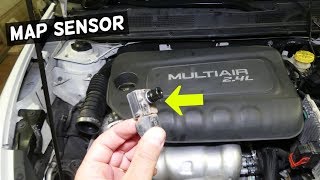
On a 2015-2017 Chrysler 200 with the 2.4L engine, code P0108 is almost always caused by a failed Manifold Absolute Pressure (MAP) sensor. It's an inexpensive part (around $25-$60) and a very easy DIY replacement located on the passenger side of the intake manifold. The sensor sends a continuously high voltage signal (stuck near 5V), tricking the computer into thinking the engine is under heavy load, which causes a rich fuel mixture, rough idle, and poor performance.
- P0108 on your Chrysler 200 2.4L almost certainly means the MAP sensor has failed and needs to be replaced.
- It is a very simple and cheap DIY repair that takes less than 15 minutes with no special tools.
- The correct OEM part number is 68199324AB, which is shared across many Dodge, Jeep, and Fiat models with the same engine.
- When replacing, be careful not to crack the plastic intake manifold when twisting the sensor out.
- If a new sensor does not fix the issue, check the wiring connector for damage before suspecting a rare PCM problem.
What's Unique About the 2015-2017 Chrysler 200
The 2.4L MultiAir (also called Tigershark) engine is used across many Chrysler, Dodge, Jeep, and Fiat vehicles, making this a well-documented issue. For the 2015-2017 Chrysler 200, the problem is rarely complex. The failure is overwhelmingly the MAP sensor itself rather than complicated wiring or vacuum issues. The sensor's location on the passenger side of the intake manifold is accessible, and its twist-lock design makes for a quick, tool-free (after disconnecting the electrical plug) replacement. However, extreme care must be taken not to break the plastic intake manifold when twisting the sensor out, as many owners have reported the plastic becoming brittle.
Symptoms You May Notice
- Check Engine Light is on
- Rough or unstable idle
- Hesitation or loss of power during acceleration
- Reduced fuel economy
- Engine may stall, especially when coming to a stop
- Black smoke from the exhaust
- Hard starting
- Engine running rich, sometimes with a fuel smell
- Replacing spark plugs or ignition coils to fix a rough idle without first diagnosing the P0108 code.
- Replacing oxygen (O2) sensors because the engine is running rich and producing black smoke.
- Assuming a major vacuum leak, which would more typically cause a P0106 (range/performance) or P0171 (lean) code, not a circuit high code.
Most Likely Causes
- Faulty Manifold Absolute Pressure (MAP) Sensor 🔴 High Probability The sensor is a common failure point on this engine platform due to internal electronic failure, causing it to short to the 5V reference and send a constant high signal.
How to confirm: With the key on and engine off (KOEO), use a scan tool to check the MAP sensor voltage. It should read approximately 4.5-5.0 volts and match the Barometric Pressure (BARO) reading. After starting the engine, the voltage at idle should drop to around 1.0-2.0 volts. If the voltage is stuck high (near 5 volts) and doesn't change with engine RPM, the sensor is bad.
Typical fix: Replace the MAP sensor. It is located on the passenger side of the intake manifold. 🎬 Watch: See the exact MAP sensor location on the 2.4L engine. Disconnect the electrical connector, turn the sensor about 90 degrees counter-clockwise, and pull it out. Be gentle to avoid breaking the plastic intake manifold.
Est. part cost: $25-$95 - Wiring Harness or Connector Issue ⚪ Low Probability While less common than sensor failure, the wiring harness can become loose or damaged, especially if it detaches from its clip on the intake manifold and contacts moving parts like the serpentine belt.
How to confirm: Visually inspect the wiring and connector going to the MAP sensor for any signs of damage, corrosion, or loose pins. With a multimeter, check for a 5-volt reference on one pin, a good ground (less than 0.1V) on another, and a signal wire that should read around 4.5V with the sensor disconnected (KOEO). A short between the signal wire and the 5-volt reference wire is a common fault that mimics a failed sensor.
Typical fix: Repair the damaged section of the wiring harness or replace the connector pigtail.
Est. part cost: $5-$50
Rare But Worth Checking
- Clogged Catalytic Converter: A severe exhaust restriction can increase pressure in the intake manifold, causing a P0108 code. This is usually accompanied by a significant loss of power, especially at higher RPMs, and possibly a sulfur (rotten egg) smell from the exhaust.
- Powertrain Control Module (PCM) Software Update Needed: While less common for a direct P0108 fault, related FCA TSBs like 18-023-16 and 18-051-16 were issued to fix incorrect sensor correlation logic (often triggering P1185 alongside other codes) via a PCM software update. If a new sensor doesn't fix the issue, it's worth checking with a dealer for available updates.
- Faulty Powertrain Control Module (PCM): This is extremely rare and should only be considered after all other possibilities, including the sensor, wiring, and software, have been completely ruled out by a professional.
Diagnosis Steps
- Read the code with an OBD-II scanner to confirm P0108 is present. Note any other codes, like P1185.
- Use the scanner's live data function. With the Key On, Engine Off (KOEO), observe the MAP sensor voltage. It should be high, around 4.5-5.0 volts, and should correspond to the BARO sensor reading.
- Start the engine. At a stable idle, the MAP sensor voltage should drop significantly, typically to between 1.0 and 2.0 volts.
- If the voltage remains high (e.g., over 4.5 volts) at idle, the sensor has almost certainly failed internally.
- If the sensor reading seems plausible, turn off the engine and inspect the MAP sensor connector and nearby wiring for any visible damage, corrosion, or loose connections. Ensure the harness is properly secured.
- If the wiring looks good, the most likely cause is the MAP sensor itself. Replace the sensor.
- To replace, disconnect the electrical plug (you may need to slide a locking tab first). Firmly grip the sensor and twist it counter-clockwise about 90 degrees to unlock it from the intake manifold, then pull it straight out. Be careful not to break the plastic manifold.
- Lubricate the O-ring on the new sensor with clean engine oil, insert it into the manifold, and twist it clockwise to lock it in place.
- Reconnect the electrical connector, clear the trouble code with the scanner, 🎬 Watch: A simple 2-minute guide to fixing the P0108 code. and start the engine to verify the fix. The check engine light should remain off.
Parts You'll Likely Need
- Manifold Absolute Pressure (MAP) Sensor
(OEM #68199324AB)— This is the most common failure part for a P0108 code on this specific engine. The internal electronics fail, causing a persistent high voltage signal. The part number 68199324AB supersedes previous versions 68199324AA, 5149091AA, and 5033310AC.
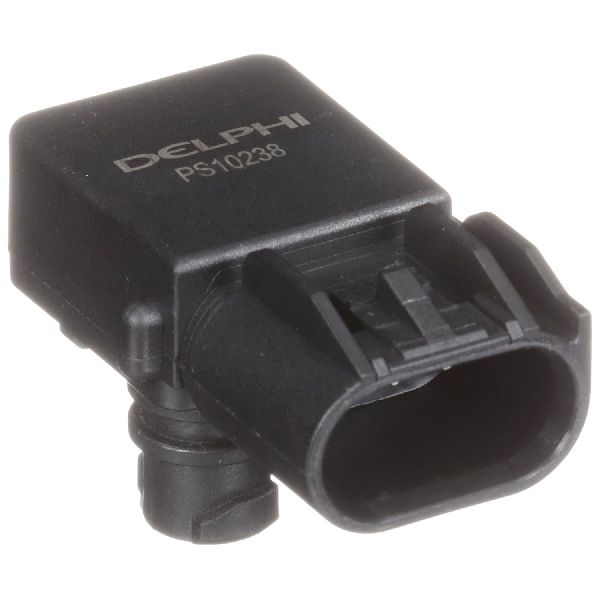
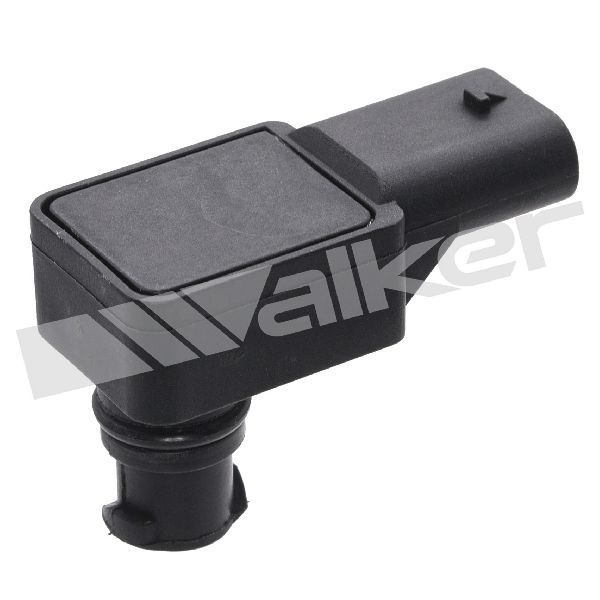
Trusted brands: Mopar, Delphi, Standard Motor Products (SMP), Walker Products
OEM price range: $55-$95
Aftermarket price range: $25-$60
Related Codes That Often Appear With This One
- P1185 — This code for 'General Pressure Sensor Correlation' can be triggered by the faulty MAP sensor reading on the 2.4L MultiAir engine, as the PCM detects a mismatch between expected and actual sensor values. It is very common to see P0108 and P1185 together.
Technical Service Bulletins (TSBs) & Recalls
- TSB 18-023-16 / 18-051-16: While not directly for P0108, these bulletins address related code P1185 (General Pressure Sensor Correlation) on the 2.4L engine by reprogramming the PCM. This indicates that Chrysler is aware of software logic issues related to the MAP sensor readings and could be a potential fix if a new sensor does not resolve the problem.
Platform-Specific Known Issues
- A common owner experience is successfully replacing the MAP sensor in under 10 minutes to resolve the P0108 code. The primary warning shared in forums is to be gentle when twisting the old sensor out of the plastic intake manifold, as the manifold can become brittle and crack, leading to a much more expensive repair.
- The 2.4L Tigershark engine is also known for potential oil consumption issues, which can sometimes lead to other engine problems. While not directly related to the P0108 MAP sensor failure, owners should be diligent about checking oil levels.
Mechanic-Grade Diagnostic Values
- MAP Sensor 5V Reference Wire — expected: Approximately 5.0 Volts DC with key on, engine off.. Failure: A reading below 4.9V or 0V points to a wiring issue or a problem with the PCM's 5V reference circuit.
- MAP Sensor Ground Circuit — expected: Less than 0.1 Volts (100 millivolts).. Failure: Voltage higher than 0.1V indicates a poor ground connection, which can skew sensor readings and cause incorrect codes.
- MAP Sensor Signal Voltage (Key On, Engine Off) — expected: Approximately 4.5 - 5.0 Volts, should be close to BARO reading.. Failure: A voltage significantly lower than this range with the key on suggests a faulty sensor or wiring issue before the engine is even started.
- MAP Sensor Signal Voltage (Engine Running at Idle) — expected: 1.0 - 2.0 Volts (a good range is often cited as 1.4V - 1.8V).. Failure: Voltage that remains high (near the 4.5V KOEO reading) confirms the sensor is not reading engine vacuum. A reading above 4.4V may trigger P0108.
Scan Tool Commands That Help
- wiTECH: View PCM Live Data (MAP Sensor Voltage, Barometric Pressure) — This is the primary diagnostic function. It allows a technician to compare the MAP sensor's reported voltage against the BARO reading with the key on, engine off. An unresponsive or stuck-high reading is a clear indicator of a P0108 fault. It also allows monitoring of the voltage drop when the engine starts.
- wiTECH: PCM Reprogramming/Flash — This is used to apply software updates as specified in TSBs (e.g., 18-023-16, 18-051-16). If a new MAP sensor does not fix the P0108 code, and especially if P1185 is also present, checking for a PCM software update is the next logical step.
Wiring & Ground Locations
- G300 — Under the driver's seat.. This is a major body ground point. While not a direct engine ground, poor grounding here can contribute to various electrical issues in the cabin and dashboard systems. A wiring diagram for a 2012 model shows this location.
- G308 — Right rear of the engine.. This is a critical engine-area ground. A loose or corroded connection at this point could potentially cause incorrect readings from various engine sensors that share a ground path, including the MAP sensor circuit.
- MAP Sensor Connector Pinout — At the MAP sensor on the intake manifold.. For manual testing with a multimeter, the typical Chrysler pinout is: Pin 1 - Sensor Ground, Pin 2 - MAP Signal, Pin 3 - 5V Supply. Verifying these voltages at the connector is the definitive way to test the circuit.
Real Owner Repair Stories
- DodgeForum.com user (1997 Dodge Ram 1500 5.9L (Note: Different vehicle, but illustrates a common P0108 diagnostic trap)) — Poor performance, stalls/backfires on heavy acceleration, runs rich, rough idle, wants to die at stops.
❌ Tried (didn't work) Replaced MAP sensor (twice), Professional diagnostic (checked fuel pressure, vacuum lines, harness - all good), Replaced O2 sensors, Replaced PCV valve
✅ What actually fixed it The user eventually replaced a clogged catalytic converter, which resolved the issue temporarily, but the code returned. The story highlights how a severe exhaust restriction can mimic a MAP sensor electrical fault and how frustrating the code can be if the root cause isn't the sensor itself. The user was next considering a fuel pump or plenum gasket, showing the diagnostic rabbit hole this code can create. - YouTube channel 'Electrical Car Repair LIVE' (2015 Dodge Dart with 2.4L MultiAir engine (same engine family)) — Check Engine Light with codes P0108 and P1185.
❌ Tried (didn't work) The video directly identifies the MAP sensor as the most probable cause after checking that the connector is secure.
✅ What actually fixed it Replacing the Manifold Absolute Pressure (MAP) sensor. After the sensor was replaced and codes were cleared, the engine was started and the check engine light remained off, confirming the fix.
OEM Part Supersession History
5033310AC, 5149091AA, 68199324AA→68199324AB— Part has been updated and revised by the manufacturer over time to improve reliability or for manufacturing changes.
Heads up: While multiple part numbers exist, 68199324AB is the current correct part for the 2.4L MultiAir engine in this vehicle. Using older stock or an incorrect superseded part could lead to continued issues.
Diagnostic Flowchart
Real Owner Stories
Aggregated from forums and TSBs cited above. Mileages and costs reflect what owners reported in those sources.
2015 Chrysler 200 Limited 2.4L
Symptoms: Triggered a P0108 check engine light code.
What fixed it: Replaced the MAP sensor with an OEM replacement part, which was described by the community as a very common and easy fix.
Source hint: 200forums.com thread titled 'P0108 code on my 2015 200 limited'
Related OBD-II Codes
Frequently Asked Questions
Is there a TSB for the P0108 code on my 2015-2017 Chrysler 200 2.4L?
How difficult is it to replace the MAP sensor on the 2.4L Tigershark engine?
What should I be careful of when removing the old MAP sensor?
Can a wiring issue cause the P0108 code on my Chrysler 200?
Does the 2.4L engine's oil consumption issue cause the P0108 code?
How can I test if the MAP sensor is actually bad before replacing it?
Helpful Videos
![How to Fix P0108 Engine Code in 2 Minutes [1 DIY Method / Only $11.6]](https://img.youtube.com/vi/1vsWxWRzbQk/mqdefault.jpg)
We Have This Part in Stock


The information in this article is provided for general reference and educational purposes only. Vehicle specifications, procedures, and part compatibility can vary by production date, trim level, and region. Always consult your vehicle's factory service manual and verify part numbers before purchasing or performing repairs. Safety-critical components such as airbags, seat belts, and braking systems should be installed by a qualified professional.
- Chrysler 200:
- 🎬 Helpful Videos
- 🛍️ Shop This Part
- What's Unique About the 2015-2017 Chrysler 200
- Symptoms You May Notice
- Most Likely Causes
- Rare But Worth Checking
- Diagnosis Steps
- Parts You'll Likely Need
- Related Codes That Often Appear With This One
- Technical Service Bulletins (TSBs) & Recalls
- Platform-Specific Known Issues
- Mechanic-Grade Diagnostic Values
- Scan Tool Commands That Help
- Wiring & Ground Locations
- Real Owner Repair Stories
- OEM Part Supersession History
- Diagnostic Flowchart
- Real Owner Stories
- 2015 Chrysler 200 Limited 2.4L
- Related OBD-II Codes
- Frequently Asked Questions
- 🎟️ Get 5% Off