

P0108 on 2013-2019 Cadillac ATS 2.0L Turbo: MAP Sensor Circuit High Causes and Fixes
On a 2013-2019 Cadillac ATS with the 2.0L Turbo engine, code P0108 is most often caused by a failed Manifold Absolute Pressure (MAP) sensor. Replacement is a simple DIY job, with an OEM ACDelco sensor costing around $40-$70. Before replacing, check the sensor's connector and wiring for damage, as this is another possible cause.
- P0108 on your ATS 2.0L almost always points to the MAP sensor or its wiring.
- The most likely fix is replacing the MAP sensor, which is an inexpensive part (ACDelco 12644228) and very easy to replace yourself in under 30 minutes with a T25 Torx bit.
- Before buying a new sensor, use a
What's Unique About the 2013-2019 Cadillac ATS
The Cadillac ATS with the 2.0L LTG turbo engine relies heavily on the MAP sensor for accurate boost control and overall performance. While P0108 is a generic code, a failure on this platform can lead to more pronounced symptoms like poor acceleration, black smoke from the exhaust, and rough running because of its direct impact on the turbocharger's operation. The MAP sensor itself is a very common failure point, but the repair is straightforward as the sensor is easily accessible on the intake manifold, held by a single T25 bolt.
Symptoms You May Notice
- Check Engine Light is on
- Rough or unstable idle
- Poor acceleration and engine hesitation
- Noticeable loss of power
- Reduced fuel economy
- Black smoke from the exhaust
- Engine may stall intermittently
- Strong smell of gasoline
- Replacing the throttle body when the issue is a simple MAP sensor or wiring fault.
- Replacing spark plugs or ignition coils to fix a rough idle caused by incorrect fuel calculations from the bad MAP data.
- Assuming a major vacuum leak exists without first checking the MAP sensor's electrical readings, as a failed sensor can mimic leak symptoms.
Most Likely Causes
- Faulty Manifold Absolute Pressure (MAP) Sensor 🔴 High Probability The sensor is a common failure item due to heat cycles and potential contamination from oil in the intake system, which is common on direct-injected turbo engines like the LTG. Forum users frequently report this as the sole cause of P0108.
How to confirm: With a scan tool, observe the MAP sensor voltage with the Key On, Engine Off (KOEO). If the voltage is stuck high (near 5V) and does not reflect the local barometric pressure, the sensor has likely failed internally. At idle, a healthy sensor should read around 1.4-1.8 volts.
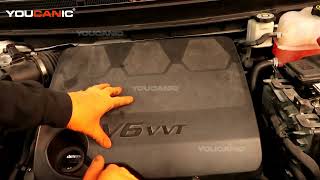
Typical fix: Replace the MAP sensor. It is located on the intake manifold and held in by a single T25 Torx bolt. 🎬 See this walkthrough for replacing the sensor on GM engines Apply a small amount of silicone lubricant to the new sensor's O-ring to ease installation and prevent damage.
Est. part cost: $40-$70 - Damaged Wiring or Connector 🟡 Medium Probability Engine bay heat and vibration can cause wiring to become brittle or the connector pins to corrode or loosen over time. A short to a power source on the signal wire will cause a constant high voltage reading.
How to confirm: Visually inspect the wiring harness and connector for the MAP sensor for any signs of damage, corrosion, or loose pins. With the sensor disconnected, test the connector for the 5V reference from the ECM and a good ground. Check the signal wire for any voltage; it should be near 0V with the sensor unplugged. If voltage is present, there is a short to power in the harness.
Typical fix: Repair the damaged section of the wiring harness or replace the connector pigtail. The mating connector part number is often cited as 13580108.
Est. part cost: $10-$30
Rare But Worth Checking
- Loose Intake Manifold Bolts: While more commonly associated with code P0106 (performance), GM Technical Service Bulletin PIP5529B explicitly lists P0106 and a host of other codes as potential results of loose intake manifold bolts on the LTG engine. This can create a significant vacuum leak, leading to erratic sensor readings. The fix is to remove each bolt one at a time, apply medium-strength threadlocker, and torque in sequence to specification (typically 18 ft-lbs or 24 N·m for the LTG).
- Faulty Engine Control Module (ECM): This is a very rare cause. The internal circuits of the ECM that process the MAP sensor signal can fail. This should only be considered after all other possibilities, including the sensor, wiring, and intake integrity, have been definitively ruled out.
Diagnosis Steps
- Read the code with an OBD-II scanner to confirm P0108 is present and note any other codes.
- Use the scanner's live data function to view the MAP sensor reading with the Key On, Engine Off (KOEO). The reading should be close to your local barometric pressure. A reading stuck at a very high pressure/voltage (near 5V) points to the issue.
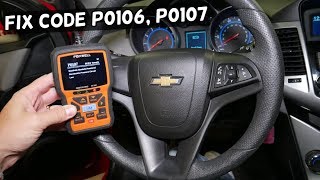
- Start the engine. At idle, the MAP voltage should drop to around 1.4-1.8V. If it remains high, the sensor or its circuit is faulty. 🎬 Watch: How to test and replace your MAP sensor
- Visually inspect the MAP sensor, its connector, and the surrounding wiring for any obvious damage, melting, or corrosion. Wiggle the connector to see if the live data reading changes.
- Disconnect the MAP sensor. The live data reading on the scanner should drop to a very low value (near 0V). If it remains high, there is a short to voltage in the signal wire.
- If the reading drops as expected, test the electrical connector with a multimeter. Confirm you have a 5-volt reference wire and a proper ground wire.
- If the wiring and connector check out, the MAP sensor itself is the most likely culprit.
- Replace the MAP sensor, clear the code, and perform a test drive to ensure the problem is resolved.
Parts You'll Likely Need
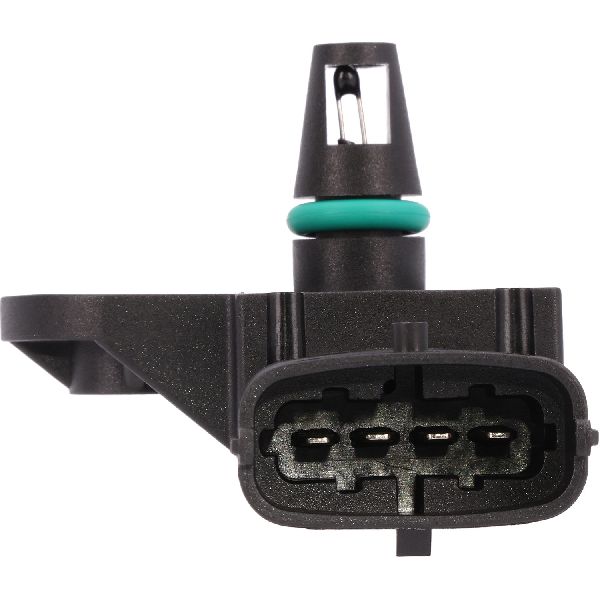
- Manifold Absolute Pressure (MAP) Sensor
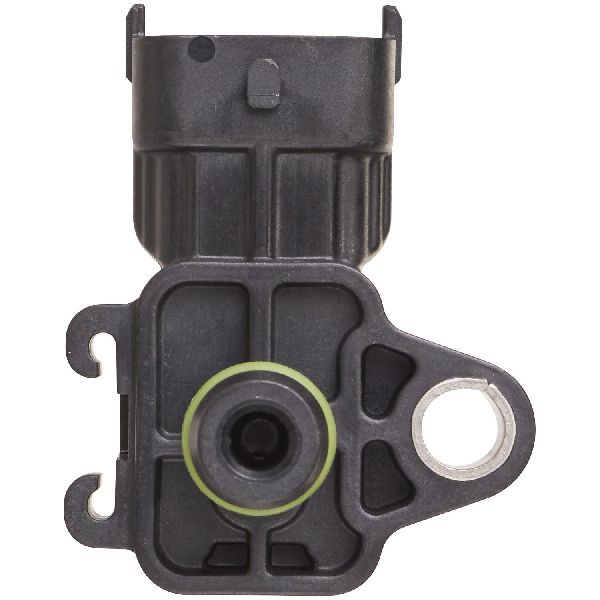
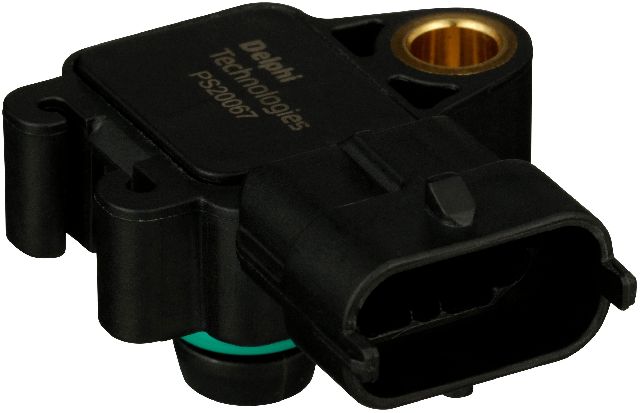
(OEM #12644228)— This is the most common cause for a P0108 code, as the sensor fails internally, sending a constant high voltage signal.
Trusted brands: ACDelco (OEM), Bosch, Delphi, Standard Motor Products
OEM price range: $40-$70
Aftermarket price range: $25-$50
Related Codes That Often Appear With This One
- P0106 — If the sensor is failing intermittently or providing readings that are out of the expected range but not consistently high, a P0106 (MAP Sensor Performance) code may appear alongside or instead of P0108.
- P0172 — A 'System Too Rich' code can be triggered because a high MAP sensor reading incorrectly tells the ECM the engine is under high load, causing it to inject excess fuel.
- P0107 — Occasionally, a failing sensor or intermittent wiring issue can cause the voltage to swing between high (P0108) and low (P0107) extremes, logging both codes.
Technical Service Bulletins (TSBs) & Recalls
- PIP5529B: While primarily for code P0106, this TSB advises checking for loose intake manifold bolts on the LTG engine if MAP sensor-related codes (including P0108) appear without an obvious cause. It affects 2013-2017 ATS, CTS, Camaro, and other LTG-equipped vehicles. The procedure involves applying threadlocker and re-torquing the bolts.
- Bulletin #N212330660: A manufacturer service bulletin notes that customers may notice the service engine soon (SES) lamp illuminate and that DTCs P0106 and P0108 may be present as active or stored in history, requiring a MAP sensor replacement.
- Bulletin #PIP5787A: This bulletin describes an illuminated check engine light where a technician may notice DTC P0106, P0108, and/or P00C7 codes during inspection.
Platform-Specific Known Issues
- High Failure Rate of MAP Sensor: Owners on forums for the ATS and its platform mates (like the Camaro 2.0T) frequently report that the P0108 code appears suddenly with no other symptoms and is resolved 9/10 times by simply replacing the MAP sensor. 🎬 Watch: Fixing common MAP sensor codes on Cadillac and GM vehicles It is considered a common wear item on the LTG engine.
Mechanic-Grade Diagnostic Values
- MAP Sensor 5V Reference Circuit — expected: 4.8 - 5.2 Volts with Key On, Engine Off (KOEO). Failure: Voltage below 4.8V or absent points to a problem with the wiring or the ECM's 5V supply circuit.
- MAP Sensor Ground Circuit Voltage Drop — expected: Less than 0.10 Volts (100 mV) with KOEO. Failure: Voltage higher than 100 mV indicates high resistance or a poor ground connection, which can cause incorrect sensor readings.
- MAP Sensor Signal Wire (KOEO) — expected: ~4.5 - 4.7 Volts (Varies with altitude). Failure: A reading near 0V or significantly different from a known good vehicle at the same altitude suggests a faulty sensor.
- MAP Sensor Signal Wire (Engine Idling) — expected: 1.0 - 1.8 Volts. Failure: Voltage stuck high (near 4.5V) indicates the sensor has failed internally and is not responding to engine vacuum.
- P0108 Trigger Condition — expected: MAP sensor voltage is greater than or equal to ~4.4 Volts while the engine is running under conditions where low voltage is expected (e.g., not at wide-open throttle).. Failure: The ECM logs the fault when this condition is met for a specified duration.
Scan Tool Commands That Help
- GM GDS2 (Global Diagnostic System 2): MAP Sensor Data Display — This is the primary function used for diagnosis. A technician would observe the 'Manifold Absolute Pressure' parameter in kPa or Volts. With KOEO, it should match the 'Barometric Pressure' reading. At idle, it should drop significantly. If it's stuck high (e.g., >100 kPa or >4.5V) while the engine is running, it confirms the fault condition.
- GM GDS2 (Global Diagnostic System 2): Freeze Frame / Failure Records — Used to review the exact engine operating conditions (RPM, throttle position, engine load, etc.) at the moment the P0108 code was set. This can help differentiate between a constant electrical fault and an intermittent one that only occurs under specific circumstances.
Wiring & Ground Locations
- MAP Sensor Connector (B35) — On the MAP sensor, which is located on the top of the intake manifold on the 2.0L LTG engine.. This is the primary point of failure for wiring issues. The three pins are: Pin 1 (Gray): 5-volt reference from the ECM. Pin 2 (Black/White): Low Reference (Ground) from the ECM. Pin 3 (Light Green): Signal wire back to the ECM. Testing voltage and ground at these pins is a critical diagnostic step.
- G104 — On the lower rear of the cylinder head for the 2.0L LTG engine.. This is a critical engine block ground point. While the MAP sensor has a dedicated low-reference wire back to the ECM, a poor main engine ground can introduce electrical noise and voltage offsets that may affect sensor readings across the system. Ensuring this ground is clean and tight is a good practice when diagnosing any sensor circuit fault.
OEM Part Supersession History
12594942→12644228— Standard part evolution, likely for improved reliability or manufacturing efficiency. 12644228 is the most common replacement part number for this application.12644228→12711681— Latest part number in the GM catalog for this application. This is an active supersession.
Heads up: Parts are interchangeable. Ordering 12644228 from a GM dealer will likely result in receiving part 12711681.
Diagnostic Flowchart
Other Known Issues on This Vehicle
Issues unrelated to this code that are worth knowing about as an owner of this generation:
- Cracked Pistons (especially #3 cylinder) 🔴 High — More common on earlier 2013-2016 models, but can occur at any mileage. Often leads to complete engine failure and replacement. (Ref: GM issued a recall/special coverage program to recalibrate the ECM to help prevent pre-ignition, which was a suspected cause.)
- Timing Chain Stretch / Failure 🔴 High — Can occur with mileage, often signaled by a rattling noise on startup. Failure is catastrophic to the engine. Proper oil maintenance is critical to longevity.
- PCV System Hose Cracking 🟡 Low — The plastic PCV hoses become brittle with heat and time, leading to cracks that cause vacuum leaks and codes like P0171 (System Too Lean).
- Turbocharger Wastegate or Coolant Line Issues 🟠 Medium — Wastegate actuators can fail, and coolant/oil lines for the turbo can leak over time.
- 8-Speed (8L45) Automatic Transmission Shudder 🟠 Medium — Widespread issue on 2016+ models with the 8-speed auto. Feels like driving over rumble strips. (Ref: TSB 18-NA-355 recommends a specific fluid flush procedure with an updated transmission fluid.)
- CUE Infotainment Screen Failure 🟡 Low — The touchscreen is known to crack internally and become unresponsive ('spider-webbing'). This is a very common issue across many Cadillac models of this era.
Used vs. New Parts: Buying Guide for This Vehicle
When a used part is the smart pick: Given the low cost of a new, warrantied aftermarket or OEM sensor (typically $25-$70), buying a used MAP sensor from a junkyard is generally not recommended. The risk of receiving a part that is already failing or has limited life remaining outweighs the small potential cost savings.
Donor-vehicle mileage cap: roughly under 50000 miles for the part to have meaningful remaining life.
What to inspect on the donor part:
- Inspect the connector housing for cracks or brittleness.
- Check the sensor's nozzle and O-ring for physical damage or heavy oil contamination.
- Avoid parts from vehicles that show signs of a major engine fire or flood damage.
OEM-only on this vehicle (don't cheap out):
- For this specific P0108 repair, no parts are strictly OEM-only. However, using an OEM ACDelco sensor is highly recommended due to its proven reliability and correct calibration for the LTG engine.
Aftermarket brands forum-validated for this vehicle:
- ACDelco (OEM)
- Bosch
- Delphi
- Standard Motor Products (SMP)
Brands owners have reported issues with on this vehicle:
- No-name, unbranded sensors from online marketplaces should be avoided, as their calibration and durability are often questionable and can cause persistent performance issues.
Real Owner Stories
Aggregated from forums and TSBs cited above. Mileages and costs reflect what owners reported in those sources.
2016 Cadillac ATS 2.0L Turbo
Symptoms: The P0108 code appeared suddenly with no other symptoms.
What fixed it: Replacing the MAP sensor.
Source hint: vehicle_specific_issues
2016 Chevrolet Camaro 2.0L Turbo
Symptoms: P0108 code triggered by MAP sensor failure on the LTG platform.
What fixed it: Replacement of the MAP sensor.
Source hint: https://www.camaro6.com/forums/showthread.php?t=414502
Related OBD-II Codes
Frequently Asked Questions
Does TSB PIP5529B apply to my 2013-2017 Cadillac ATS with the LTG engine?
Is the P0108 code a common issue for the Cadillac ATS 2.0T?
Where is the MAP sensor located on my 2.0L Turbo I4 engine?
What should the MAP sensor voltage read on my ATS at idle?
Can I use a used MAP sensor from a salvage yard to fix my P0108 code?
Is there a specific connector part number if my MAP sensor wiring is damaged?
Helpful Videos

We Have This Part in Stock


The information in this article is provided for general reference and educational purposes only. Vehicle specifications, procedures, and part compatibility can vary by production date, trim level, and region. Always consult your vehicle's factory service manual and verify part numbers before purchasing or performing repairs. Safety-critical components such as airbags, seat belts, and braking systems should be installed by a qualified professional.
- Cadillac ATS:
- 🎬 Helpful Videos
- 🛍️ Shop This Part
- What's Unique About the 2013-2019 Cadillac ATS
- Symptoms You May Notice
- Most Likely Causes
- Rare But Worth Checking
- Diagnosis Steps
- Parts You'll Likely Need
- Related Codes That Often Appear With This One
- Technical Service Bulletins (TSBs) & Recalls
- Platform-Specific Known Issues
- Mechanic-Grade Diagnostic Values
- Scan Tool Commands That Help
- Wiring & Ground Locations
- OEM Part Supersession History
- Diagnostic Flowchart
- Other Known Issues on This Vehicle
- Used vs. New Parts: Buying Guide for This Vehicle
- Real Owner Stories
- 2016 Cadillac ATS 2.0L Turbo
- 2016 Chevrolet Camaro 2.0L Turbo
- Related OBD-II Codes
- Frequently Asked Questions
- 🎟️ Get 5% Off