

P0107 on 2010-2017 GMC Terrain 2.4L: MAP Sensor Circuit Low Causes and Fixes
Code P0107 on a 2010-2017 GMC Terrain 2.4L almost always points to a failed Manifold Absolute Pressure (MAP) sensor or a break in its wiring harness. The sensor itself is an easy, 15-minute DIY fix with the part costing between $25 and $60. A wiring issue requires more careful diagnosis but is also a common, documented failure point.
- P0107 on your GMC Terrain 2.4L means the MAP sensor circuit has low voltage, most often due to a failed sensor.
- It is a very common code on this vehicle and is usually a simple, inexpensive DIY fix.
- Always check the wiring harness near the sensor by wiggling it with the engine running, as an internal wire break is a common secondary cause.
- Ignoring the code can lead to poor fuel economy, stalling, and potential damage to the catalytic converter.
What's Unique About the 2010-2017 GMC Terrain
For the 2010-2017 GMC Terrain and its sibling, the Chevy Equinox, with the 2.4L Ecotec engine, the P0107 code is a very common issue. The MAP sensor is exceptionally easy to access, located right on top of the intake manifold. While an internal failure of the sensor itself is the most frequent cause, this platform is also known for the sensor's wiring to break internally near the connector due to engine heat and vibration. This can make diagnosis tricky, as the wire's insulation may appear intact. The repair is considered beginner-level if it's just the sensor.
🎬 Watch: A quick walkthrough on replacing the MAP sensor.Symptoms You May Notice
- Check Engine Light is on
- Rough or unstable idle, sometimes feeling like a misfire
- Engine hesitation or stalling, especially at stops or after a cold start
- Sluggish acceleration and reduced engine power, may enter 'limp mode'
- Decreased fuel economy
- Black smoke from the exhaust or a strong smell of gasoline, indicating a rich fuel mixture
- Replacing the throttle body when the issue is the MAP sensor.
- Replacing oxygen sensors due to the rich or lean running condition caused by the bad MAP data.
- Replacing fuel injectors when the issue is a simple sensor or wiring fault.
Most Likely Causes
- Faulty Manifold Absolute Pressure (MAP) Sensor 🔴 High Probability The sensor is an electronic component that fails from heat cycles and vibration. It is the most common point of failure for this code on this platform. Contamination from the PCV system can also degrade the sensor over time.
How to confirm: After checking the wiring, the most definitive test is to replace the sensor. Given the low cost ($25-$60) and ease of replacement, this is often the most practical diagnostic step. A mechanic can also test the sensor's output voltage with a scan tool; a reading consistently below 0.5V at idle confirms the fault.
Typical fix: Replace the MAP sensor. It is held by a single T-25 Torx screw on top of the intake manifold.
Est. part cost: $25-$60 - Damaged Wiring or Connector 🟡 Medium Probability This is a known GM issue. Wires in the harness, particularly the signal or ground wire for the MAP sensor, can fracture internally from engine vibration and heat, often right near the connector. The outer insulation may look perfectly fine. Manufacturer service bulletin TSB Bulletin #PIP4409F notes that technicians should inspect all MAP sensor circuits for being broken inside of the insulation, which can cause the engine to run rough.
How to confirm: With the engine running, carefully wiggle the wiring harness leading to the MAP sensor. If the engine idle stumbles, stalls, or changes, you have found the problem. A multimeter can be used to check for a 5-volt reference, a good ground, and signal wire continuity back to the PCM. A broken wire will show an open circuit.
Typical fix: Repair the broken wire using a butt connector and heat shrink tubing, or replace the entire connector pigtail if the break is too close to the connector.
Est. part cost: $15-$40 - Vacuum Leak ⚪ Low Probability Hoses and gaskets can become brittle and crack with age. A significant leak would be required to drop manifold pressure enough to set P0107, making it less common than a sensor or wiring fault.
How to confirm: Listen for a hissing sound near the intake manifold with the engine running. You can also spray short bursts of brake cleaner around vacuum lines; a change in engine idle indicates a leak. A professional would use a smoke machine.
Typical fix: Replace the cracked vacuum hose or faulty gasket.
Est. part cost: $5-$50
Rare But Worth Checking
- Faulty Powertrain Control Module (PCM): This is very rare. The PCM should only be considered after all other possibilities, including the sensor and its entire circuit, have been thoroughly tested and ruled out.
- Clogged Catalytic Converter: A severely clogged catalytic converter can increase backpressure and affect manifold pressure readings. This is usually a consequence of the engine's oil consumption issue and would likely be accompanied by other codes and severe power loss.
Diagnosis Steps
- Read the code with an OBD-II scanner to confirm P0107 and note any other codes present.
- With the engine off, remove the plastic engine cover. Locate the MAP sensor on the top of the intake manifold, just above the throttle body.
- Inspect the sensor's electrical connector for a secure fit, corrosion, or damaged pins.
- Perform a 'Wiggle Test': Start the engine. Carefully wiggle the wiring harness near the MAP sensor connector. If the engine stumbles, stalls, or the idle changes noticeably, a broken wire or poor pin fitment inside the harness is the likely cause.
- If a scan tool with live data is available, check the MAP sensor voltage with the Key On, Engine Off (KOEO). It should read around 4.5-5.0 volts. With the engine idling, it should read between 1.0-1.8 volts. A reading consistently below 0.5V confirms the fault. 🎬 See how to diagnose a P0107 code with a scanner.
- If the wiggle test passes and live data points to a bad sensor, replace it. The sensor is held by one T-25 Torx screw.
- If a new sensor does not fix the issue, perform a circuit test with a multimeter. Unplug the sensor and check the connector for: a 5V reference signal on one wire, a good ground on another (<0.1V or <100 ohms to chassis ground), and continuity on the signal wire back to the PCM.
- Check the engine oil for a strong gasoline smell. If present, this points to a failing high-pressure fuel pump (HPFP) leaking fuel into the crankcase, which can affect engine operation and potentially other sensors.
- If the circuit is good, check for major vacuum leaks using a smoke machine or by carefully spraying carb cleaner around the intake manifold gaskets and vacuum hoses.
- After the repair, clear the codes with the scanner and take the vehicle for a test drive to ensure the fix was successful.
Parts You'll Likely Need
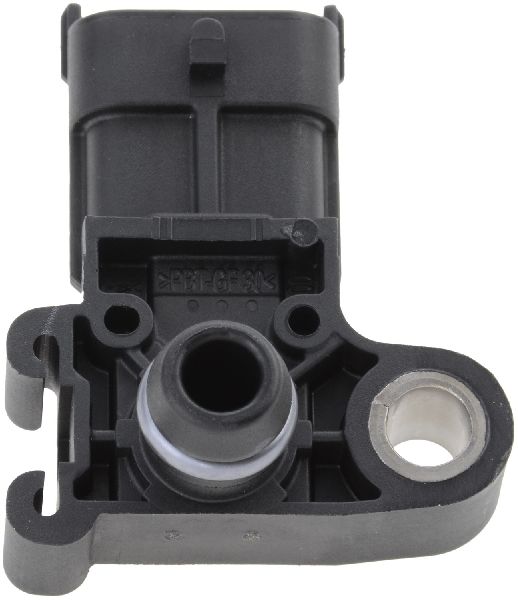
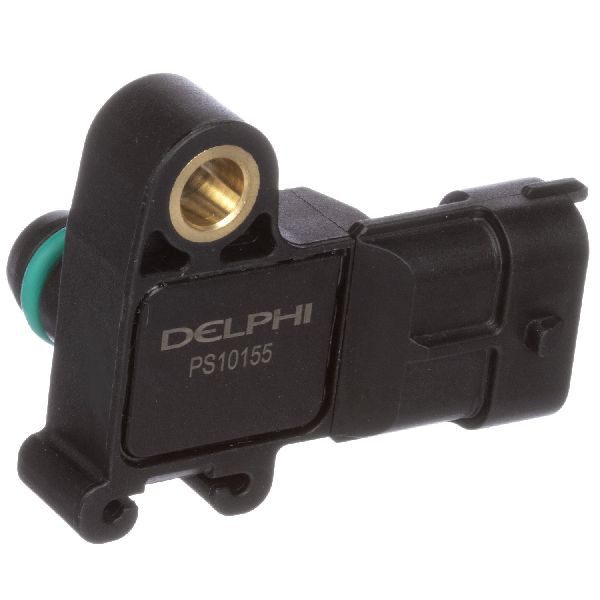
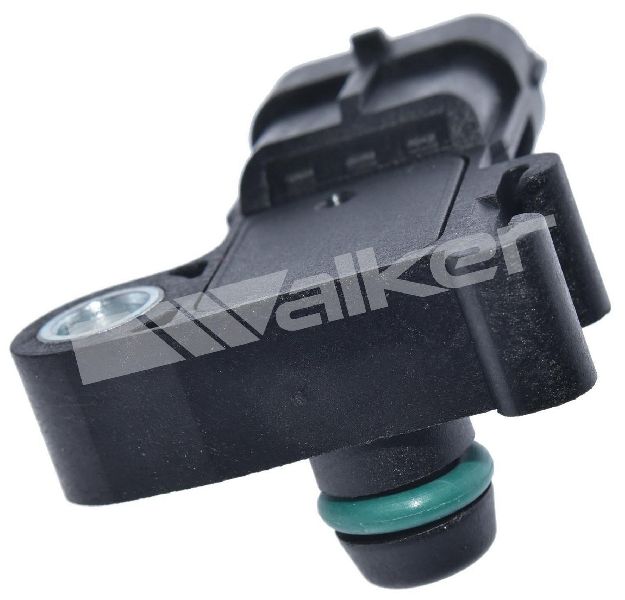
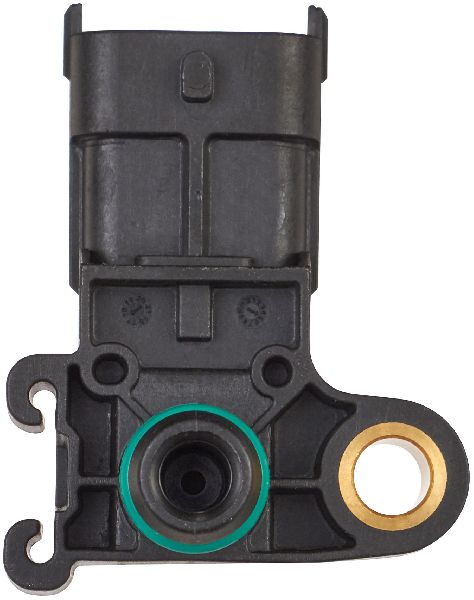
- Manifold Absolute Pressure (MAP) Sensor
(OEM #12644228)— This is the most common cause of a P0107 code on the 2.4L Ecotec engine. The sensor fails internally, sending a low voltage signal to the computer.
Trusted brands: ACDelco, Bosch, Delphi, NGK/NTK
OEM price range: $50-$80
Aftermarket price range: $25-$50 - Damaged Wiring Harness Connector Pigtail
(OEM #ACDelco PT2647 (or equivalent))— If the wiring is broken right at the connector, replacing the pigtail is the most reliable repair. This is a common failure point due to engine vibration.
Trusted brands: ACDelco, Dorman
OEM price range: $25-$40
Aftermarket price range: $15-$25
Related Codes That Often Appear With This One
- P0106 — This code indicates a MAP sensor performance issue. A failing sensor can send erratic signals that are both out of range (P0106) and too low (P0107).
- P2228 — This code for 'Barometric Pressure Sensor Circuit Low' can appear with P0107 because on many GM vehicles, the MAP sensor also contains the BARO sensor to measure atmospheric pressure.
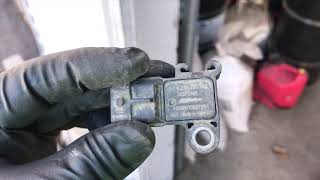
- P0108 — This code indicates MAP Sensor Circuit High Voltage. It's common to see P0107, P0106, and P0108 appear together when the sensor's connector has poor pin fitment, causing the voltage to fluctuate wildly. 🎬 Watch: How to fix multiple MAP sensor codes at once.
- P0172 - System Too Rich — A faulty MAP sensor reading low voltage (indicating high vacuum/low pressure) can cause the PCM to inject too much fuel. This code can also be a symptom of a failing High-Pressure Fuel Pump (HPFP) on this engine, which leaks fuel into the oil.
- P0641 — According to TSB Bulletin #PIT5713A, P0107 can sometimes appear in combination with P0641 and various communication codes (U-codes), often accompanied by IPC warning messages.
- P2122 — TSB Bulletin #PIP5344 notes that P0107 may be found alongside P2122, P2127, and P2138, potentially resulting in a "reduced power" message on the dashboard.
Technical Service Bulletins (TSBs) & Recalls
- TSB #PIP4409F: Although written for other GM models, this bulletin is highly relevant as it describes the exact failure mode seen on the Terrain: an intermittent P0107 code caused by an internal break in the MAP sensor wiring harness due to vibration. It recommends a wiggle test and pigtail replacement.
- TSB Bulletin #PIT5677: This bulletin notes that P0107 can be part of a combination of codes that cause the engine to run rough, reduced engine power, or an erratic speedometer.
- TSB Bulletin #PIT5677E: This manufacturer record lists P0107 as a potential DTC found in combination with various sensor codes such as P001A, P018C, and P0340 during diagnostic checks.
Platform-Specific Known Issues
- Internal Wiring Break at Connector: A well-documented issue on this and other GM platforms is for the MAP sensor wires to fracture inside their insulation, right near the connector. A visual inspection will reveal no damage. The key diagnostic is to start the engine and wiggle the harness; a change in idle confirms the hidden break. This is often mistaken for a bad sensor.
Mechanic-Grade Diagnostic Values
- MAP Sensor Signal Voltage (KOEO - Key On, Engine Off) — expected: 4.5V - 5.0V. Failure: Voltage below this range, especially near 0V, indicates a short to ground or open circuit.
- MAP Sensor Signal Voltage (Engine Idling at Sea Level) — expected: 1.0V - 1.8V. Failure: A reading below 0.5V will trigger P0107. A reading that does not change with engine RPM is also a sign of failure.
- MAP Sensor 5V Reference Voltage at Connector — expected: ~5.0V. Failure: No voltage indicates a wiring problem between the PCM and the sensor, or a faulty PCM.
- MAP Sensor Ground Circuit Voltage Drop at Connector — expected: < 0.1V (100mV). Failure: Higher voltage indicates a poor ground connection, which can cause incorrect sensor readings.
- MAP Sensor Signal Voltage with Vacuum Pump — expected: Voltage should drop steadily as vacuum is applied. E.g., ~4.7V at 0 in.Hg, dropping to ~1.2V at 20 in.Hg.. Failure: Voltage does not change or drops erratically as vacuum is applied, indicating a failed sensor diaphragm or electronics.
Wiring & Ground Locations
- MAP Sensor Connector (3-wire) — On top of the intake manifold, directly on the MAP sensor.. This is the primary point of failure for wiring issues. The wires are: 5-Volt Reference (Gray), Low Reference/Ground (Orange/Black), and Signal (Light Green). Knowing the pinout is essential for testing.
- G101 — Left front of the engine compartment.. This is a major engine compartment ground. While not directly for the MAP sensor's low reference (which is often provided by the PCM), a poor engine block ground can cause electrical noise and erratic behavior in multiple sensors.
- G112 — Left rear of the engine.. Another key engine ground point. Verifying engine grounds are clean and tight is a crucial step when diagnosing any electronic sensor fault.
Real Owner Repair Stories
- YouTube - Richfield Auto Center (Chevy Equinox (platform sibling) with 2.4L engine) — Stalling, multiple MAP-related codes including P0107 (low voltage), P0108 (high voltage), and P0106 (performance).
❌ Tried (didn't work) Replacing the MAP sensor. The problem returned shortly after.
✅ What actually fixed it The connector pigtail had poor pin fitment. Wiggling the connector caused the live data voltage to jump erratically. Replacing the connector pigtail provided a permanent fix.
OEM Part Supersession History
12644228→12711681— Standard part number update by GM. The new part is a direct replacement.12591290→12644228— Earlier part number that was superseded. Vehicles originally equipped with 12591290 can use 12644228 or the latest 12711681.
Diagnostic Flowchart
Other Known Issues on This Vehicle
Issues unrelated to this code that are worth knowing about as an owner of this generation:
- Excessive Oil Consumption 🔴 High — Extremely common, especially in 2010-2013 models. Caused by a piston ring design flaw. Consumption can exceed 1 quart per 1,000-2,000 miles. (Ref: Subject of class-action lawsuits and multiple Special Coverage Adjustments (e.g., 15285C, 16118, N192291100) extending warranty for piston/ring replacement.)
- Stretched/Failed Timing Chain 🔴 High — Commonly occurs around 100,000 miles, but can happen earlier. Often a direct result of accelerated wear from low oil levels caused by excessive consumption. (Ref: TSB 12-06-01-009G and Special Coverage 14582 address timing chain wear. A rattling noise on startup is a key symptom.)
- High-Pressure Fuel Pump (HPFP) Failure 🔴 High — Common failure on this direct-injection engine. Internal seals fail, causing fuel to leak into the crankcase, contaminating the oil. (Ref: Symptoms often include a P0172 code (System Too Rich), gasoline smell in the oil, and stalling.)
- Frozen PCV Orifice / Blown Main Seals 🟠 Medium — Occurs in cold climates. The PCV orifice in the intake manifold can freeze shut, causing excessive crankcase pressure that blows out the front or rear main engine seals, leading to a major oil leak. (Ref: TSB 14882 / PIP5150 addresses the clogged PCV orifice.)
- Catalytic Converter Failure 🟠 Medium — This is a consequential failure. The excessive oil burned by the engine contaminates and clogs the catalytic converter, eventually causing it to fail emissions tests and restrict exhaust flow.
Used vs. New Parts: Buying Guide for This Vehicle
When a used part is the smart pick: For this repair, a used part is generally not recommended. The MAP sensor is a sensitive electronic component that degrades with heat and time. The cost savings of a used part are minimal compared to the risk of receiving a part that is already near the end of its service life.
Donor-vehicle mileage cap: roughly under 40000 miles for the part to have meaningful remaining life.
What to inspect on the donor part:
- Check for a clean connector with no corrosion on the pins.
- Ensure the plastic housing has no cracks or signs of heat damage.
- Ask for the mileage of the donor vehicle if possible; lower is always better.
Aftermarket brands forum-validated for this vehicle:
- ACDelco (GM Original Equipment or Professional line)
- Bosch
- Delphi
- NGK/NTK
Brands owners have reported issues with on this vehicle:
- Unbranded, 'white-box' parts from online marketplaces should be avoided. Their quality control can be inconsistent, and a faulty sensor can cause more drivability issues than it solves.
Real Owner Stories
Aggregated from forums and TSBs cited above. Mileages and costs reflect what owners reported in those sources.
2011 Chevrolet Equinox 2.4L I4
Symptoms: Stalling and rough running issues after a cold start, even without a check engine light being set.
What fixed it: Replacing the MAP sensor.
Source hint: YouTube - Flatland Jeeper
2010-2017 GMC Terrain 2.4L I4
Symptoms: Intermittent P0107 code caused by engine vibration; the outer insulation of the wires looked fine but the engine would stumble when the harness was moved.
What fixed it: Repairing the internal wire break near the connector using a pigtail replacement as suggested by the wiggle test.
Source hint: TSB #PIP4409F
Related OBD-II Codes
Frequently Asked Questions
I heard there is a TSB for wiring issues on GM vehicles like my Terrain; does it apply to P0107?
Where is the MAP sensor located on the 2.4L I4 engine in my 2010-2017 GMC Terrain?
My Terrain is stalling at stops and has a rough idle. Could this be the MAP sensor even if the light isn't on yet?
Is the P0107 code related to the high oil consumption issues common in the 2010-2013 Terrain models?
Can I just clean the MAP sensor, or does it need to be replaced?
Helpful Videos
We Have This Part in Stock


The information in this article is provided for general reference and educational purposes only. Vehicle specifications, procedures, and part compatibility can vary by production date, trim level, and region. Always consult your vehicle's factory service manual and verify part numbers before purchasing or performing repairs. Safety-critical components such as airbags, seat belts, and braking systems should be installed by a qualified professional.
- GMC Terrain:
- 🎬 Helpful Videos
- 🛍️ Shop This Part
- What's Unique About the 2010-2017 GMC Terrain
- Symptoms You May Notice
- Most Likely Causes
- Rare But Worth Checking
- Diagnosis Steps
- Parts You'll Likely Need
- Related Codes That Often Appear With This One
- Technical Service Bulletins (TSBs) & Recalls
- Platform-Specific Known Issues
- Mechanic-Grade Diagnostic Values
- Wiring & Ground Locations
- Real Owner Repair Stories
- OEM Part Supersession History
- Diagnostic Flowchart
- Other Known Issues on This Vehicle
- Used vs. New Parts: Buying Guide for This Vehicle
- Real Owner Stories
- 2011 Chevrolet Equinox 2.4L I4
- 2010-2017 GMC Terrain 2.4L I4
- Related OBD-II Codes
- Frequently Asked Questions
- 🎟️ Get 5% Off