

P0107 on 2011-2017 Chrysler 200 3.6L: MAP Sensor Circuit Low Causes and Fixes
On the 3.6L Pentastar V6, code P0107 almost always means the Manifold Absolute Pressure (MAP) sensor has failed. It's an easy, 15-minute DIY replacement located on top of the intake manifold, secured by a twist-lock mechanism. Expect to pay $25-$60 for an aftermarket sensor or $70-$120 for an OEM part. Before replacing, a quick check of the wiring for a 5V reference and good ground is recommended.
- P0107 on a 2011-2017 Chrysler 200 3.6L almost always points to a bad MAP sensor.
- This is a very easy and affordable DIY repair. The sensor is on top of the engine and can be replaced in about 15 minutes with basic tools by twisting it out of the manifold.
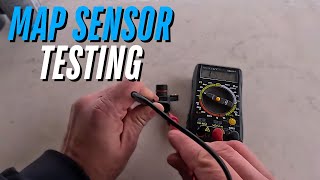
- Before replacing the sensor, do a quick check of the connector with a multimeter to confirm it's receiving a 5-volt reference and has a good ground.
- The failure is often caused by oil vapor from the engine's PCV system fouling the sensor, which is a known characteristic of the 3.6L Pentastar engine.
What's Unique About the 2011-2017 Chrysler 200
For the 3.6L Pentastar V6, this code is extremely common and straightforward. The engine's Positive Crankcase Ventilation (PCV) system is known to allow oil vapor into the intake manifold. This oil mist can contaminate the MAP sensor's delicate sensing element over time, causing it to fail and trigger a P0107 code. The good news is the sensor is located conveniently right on top of the intake manifold, making it one of the easiest sensors to replace on this engine. It is removed by twisting it 90 degrees counter-clockwise and pulling it out.
Generation note: The 2011-2017 year range covers two generations of the Chrysler 200: the first generation (JS, 2011-2014) and the second generation (UF, 2015-2017). The 3.6L Pentastar V6 engine and the common causes for P0107 are consistent across both generations. The MAP sensor location and replacement procedure are identical.
Symptoms You May Notice
- Check Engine Light is on
- Rough or unstable idle
- Engine stalling, especially when coming to a stop
- Hesitation or lack of power during acceleration
- Noticeably worse fuel economy
- Hard starting
- Engine may refuse to move in gear (blinking gear indicator on dash)
- Replacing the throttle body. While a dirty throttle body can cause idle issues, it will not cause a circuit-specific code like P0107.
- Replacing spark plugs or ignition coils. Misfires can be a symptom of a bad MAP sensor signal, but the root cause is the incorrect fuel mixture, not the ignition components themselves.
Most Likely Causes
- Faulty Manifold Absolute Pressure (MAP) Sensor 🔴 High Probability The 3.6L Pentastar's PCV system design allows oil vapor to enter the intake manifold, which can foul and damage the MAP sensor over time. This is a well-documented characteristic of this engine family.
How to confirm: After confirming the wiring has a 5V reference and good ground, the sensor is the presumed cause. A scan tool will show a voltage reading stuck below 0.5V, even when the engine is off. Visually inspect the old sensor for oil contamination upon removal.
Typical fix: Replace the MAP sensor. It is located on top of the intake manifold, visible after removing the plastic engine cover. Disconnect the electrical connector, twist the sensor 90 degrees counter-clockwise, and pull it out. 🎬 Watch: A quick walkthrough of the MAP sensor removal process.
Est. part cost: $25-$120 - MAP Sensor Wiring or Connector Issue 🟡 Medium Probability Engine bay heat and vibrations can cause wires to become brittle, chafe, or break over time. On some Pentastar applications, the harness can rub against nearby A/C lines, causing a short. The connector pins can also corrode, causing a poor connection.
How to confirm: Visually inspect the harness for damage, paying close attention to where it might contact other components. Use a multimeter to test the connector with the key on: one wire should have 5 volts (reference), one should have continuity to ground, and the signal wire should be tested for shorts.
Typical fix: Repair the damaged section of wiring or replace the connector pigtail if the pins are corroded or damaged.
Est. part cost: $10-$30
Rare But Worth Checking
- Outdated Powertrain Control Module (PCM) Software: On some early model year (2011-2012) Chrysler vehicles with the 3.6L engine, a sensitive PCM software calibration could falsely trigger MAP sensor codes. Chrysler issued TSB 18-034-14 for the related P0108 code to be fixed with a software update. While no specific TSB for P0107 on the 200 was found, it's a possibility for early models if the sensor and wiring check out.
- Failed Powertrain Control Module (PCM): This is very rare. The PCM's internal circuit for the MAP sensor can fail, but this should only be considered after the sensor and all wiring have been thoroughly tested and proven to be good.
- Major Vacuum Leak: While a vacuum leak typically sets a P0171 or P0174 lean code, a very large, unmetered air leak could theoretically cause the MAP sensor readings to be abnormal, though it's less likely to cause a specific 'circuit low' code.
Diagnosis Steps
- Read the codes with an OBD-II scanner and note any other codes that are present.
- Visually inspect the MAP sensor on top of the intake manifold. Check its electrical connector for a secure fit and look for any signs of corrosion or damage. The red locking tab must be slid out before the connector can be unplugged.
- Inspect the wiring harness leading to the sensor for any obvious signs of chafing, melting, or breaks, especially where it may rub against A/C lines.
- With the ignition on and engine off, use a scan tool to view the live MAP sensor data. The reading should be close to the barometric pressure (BARO) reading and the voltage should be around 4.5V (at sea level). A reading near 0V or stuck below 0.5V strongly indicates a circuit or sensor fault. 🎬 See how to test your MAP sensor using a multimeter or scanner.
- Disconnect the MAP sensor connector. Use a multimeter to test the terminals on the harness side.
- Verify the 5-volt reference wire has ~5V with the key on.
- Verify the ground wire has good continuity to the chassis ground (less than 1 ohm).
- If the 5V reference and ground are good, the MAP sensor is faulty over 90% of the time. Replace the MAP sensor.
- If the 5V reference or ground is missing, the wiring between the PCM and the sensor needs to be traced and repaired.
- After repair, clear the codes with the scanner and perform a test drive to ensure the code does not return.
Parts You'll Likely Need
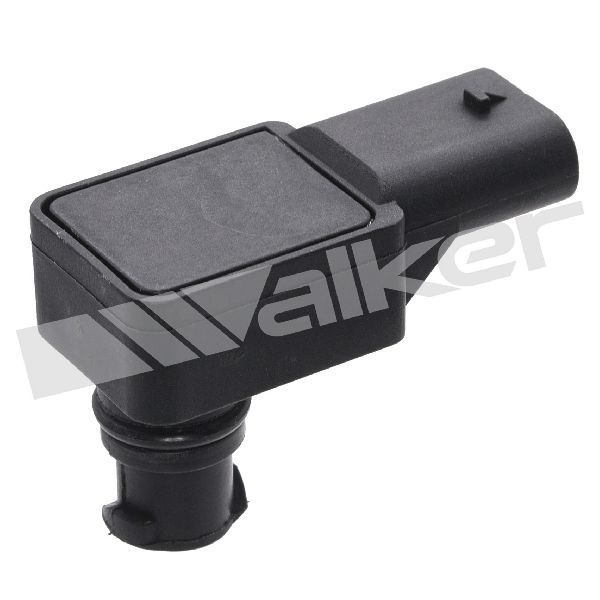
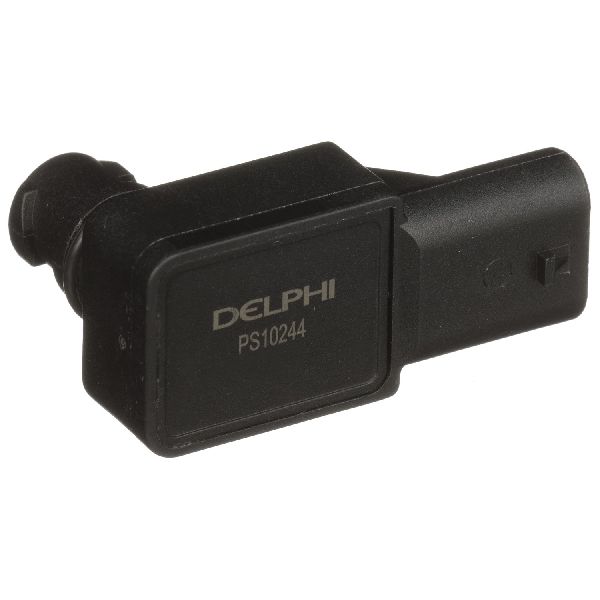
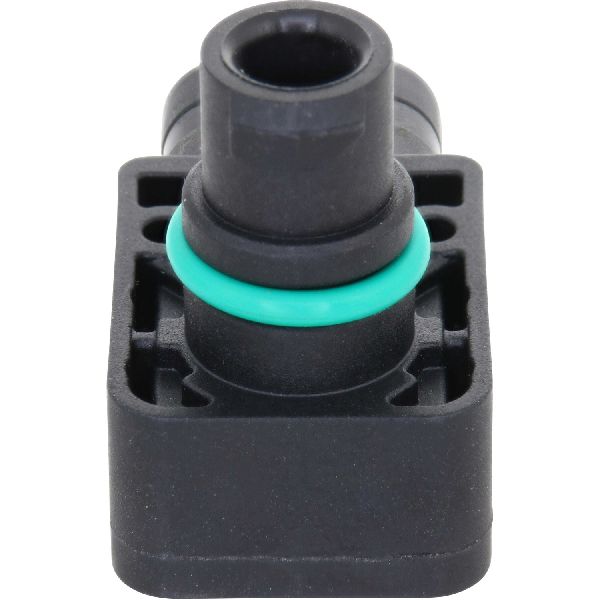
- Manifold Absolute Pressure (MAP) Sensor
(OEM #68371847AB)— This is the component that fails most frequently for a P0107 code on this engine, often due to internal failure or oil contamination from the PCV system.
Trusted brands: Mopar, Delphi, Standard Motor Products (SMP), NGK/NTK 🎬 Watch: This video shows how to install the new sensor.
OEM price range: $70-$120
Aftermarket price range: $25-$60
Related Codes That Often Appear With This One
- P0106 — This code for 'MAP Sensor Performance' can appear alongside P0107 as the sensor begins to fail, often due to the same oil contamination issue.
- P0108 — This code for 'MAP Sensor Circuit High' can appear if the sensor fails intermittently or if there's a wiring short that fluctuates.
- P0300-P0306 — Cylinder misfire codes are common because the incorrect MAP sensor reading causes the PCM to calculate the wrong air-fuel mixture, leading to poor combustion.
Technical Service Bulletins (TSBs) & Recalls
- TSB 18-034-14: While not for P0107, this TSB addresses a PCM software update to correct false P0108 (MAP Circuit High) codes on some 2014-2015 Chrysler vehicles, indicating a history of software sensitivity for the MAP sensor circuit.
- TSB 09-008-15: This bulletin provides diagnostic aid for oil loss on 2014 models with the 3.6L engine, specifically mentioning to check for oil pooling in the engine valley under the intake, which is caused by a leaking oil filter housing. This leak is a major issue on the platform.
Platform-Specific Known Issues
- The 3.6L Pentastar engine's PCV system design can lead to premature failure of the MAP sensor due to oil vapor contamination.
- On some Pentastar applications, the MAP sensor wiring harness is routed in a way that can cause it to chafe on a nearby metal A/C line, leading to a short circuit.
Mechanic-Grade Diagnostic Values
- MAP Sensor 5V Reference Supply — expected: 4.5 to 5.0 Volts DC. Failure: Voltage below 4.5V indicates a wiring issue (open, high resistance) or a PCM fault. Test at the sensor connector with key on, engine off.
- MAP Sensor Ground Circuit Voltage Drop — expected: Less than 100 millivolts (0.1V). Failure: Voltage higher than 0.1V indicates a poor or corroded ground connection, which can cause incorrect sensor readings.
- MAP Sensor Signal Voltage (Key On, Engine Off) — expected: ~4.5 Volts at sea level. Failure: A reading below 0.5V triggers the P0107 code. This indicates a shorted sensor, a signal wire shorted to ground, or a faulty PCM.
- MAP Sensor Signal Voltage (Engine at Idle) — expected: 1.0 to 2.0 Volts. Failure: Voltage should drop significantly from the KOEO reading as vacuum is created. If the voltage remains high or doesn't change, the sensor or its vacuum port may be faulty.
- Wiring Harness Resistance — expected: Less than 0.5 Ohms. Failure: A reading of 'O.L.' (Open Loop) or high resistance on any of the three wires (tested end-to-end with the PCM and sensor disconnected) indicates a broken wire.
Wiring & Ground Locations
- MAP Sensor Connector Pinout — At the MAP sensor on top of the intake manifold.. Knowing the pinout is essential for manual testing. For many Chrysler vehicles: Pin 1 is Sensor Ground, Pin 2 is MAP Signal, and Pin 3 is the 5V Supply. This should always be verified with a vehicle-specific wiring diagram if possible.
- Engine Harness Chafe Point — The main engine wiring harness can rub against a metal A/C line near the top-rear of the engine.. This is a known issue on Pentastar platforms. Chafing can wear through the insulation on the MAP sensor signal wire, causing it to short to ground on the A/C line and trigger a P0107 code.
- Engine Block Ground Strap — A braided strap connecting the engine block to the chassis, often near one of the engine mounts.. While not a direct cause, a corroded or broken main engine ground strap can cause a host of electrical issues and floating grounds, potentially affecting sensor readings. Ensuring this connection is clean and tight is a good practice when diagnosing any electrical fault.
- MAP Sensor Connector Pigtail (Part #5161924AA) — The electrical connector that plugs into the MAP sensor.. If the connector itself is damaged, corroded, or has pushed-out pins, replacing the sensor will not fix the problem. A replacement pigtail (Mopar #5161924AA or equivalent) can be spliced in to fix the issue.
Real Owner Repair Stories
- Forum User Report on a platform-sharing Jeep Wrangler JK 3.6L (2012 Jeep Wrangler JK 3.6L) — P0107 code returned immediately after sensor replacement.
❌ Tried (didn't work) Replacing the MAP sensor
✅ What actually fixed it Upon close inspection of the MAP sensor's electrical connector, a single female pin had been pushed back into the plastic housing, creating a poor connection. Reseating the pin firmly into its locked position and reconnecting the harness resolved the code permanently.
OEM Part Supersession History
5149174AA→5149174AB, then 68371847AA, and finally 68371847AB— Standard part revisions for improved reliability, material changes, or manufacturing process updates.
Heads up: All part numbers in this chain are considered direct, backward-compatible replacements.
Model Year Variations Within This Range
- 2011-2014 (JS Generation) vs 2015-2017 (UF Generation): While the 3.6L Pentastar engine and the P0107 fault are consistent across both Chrysler 200 generations, the surrounding vehicle architecture and some wiring harness routing may differ slightly. However, the MAP sensor itself, its location on the engine, and the primary causes of failure (oil fouling, wiring chafe) remain the same.
Diagnostic Flowchart
Other Known Issues on This Vehicle
Issues unrelated to this code that are worth knowing about as an owner of this generation:
- Cracked Oil Filter / Cooler Housing 🔴 High — Extremely common across all 3.6L Pentastar applications. The plastic housing warps and cracks from heat cycles, causing significant oil leaks into the engine valley. (Ref: TSB 09-008-15 provides diagnostic aid for this issue.)
- Rocker Arm / Lifter Failure ('Pentastar Tick') 🔴 High — Common issue where needle bearings in the rocker arms fail, causing a distinct ticking noise that can progress to misfires and camshaft damage if ignored.
- ZF 9-Speed Automatic Transmission Problems (2015-2017 models) 🔴 High — Very common on the second-generation (UF) Chrysler 200. Symptoms include harsh/erratic shifting, lurching, unexpected shifts to neutral, and premature failure. (Ref: Multiple recalls (e.g., NHTSA 16V-529) and software updates were issued to address these problems.)
- Left Cylinder Head Defect (2011-2013 models) 🔴 High — Affects early-build 3.6L engines. Improperly hardened valve seats/guides lead to loss of compression and misfires on cylinders 2, 4, and 6. (Ref: TSB 09-002-14 Rev. B; Covered by Chrysler's extended warranty X56 (10-year/150,000-mile).)
Used vs. New Parts: Buying Guide for This Vehicle
When a used part is the smart pick: For this specific repair, a used part is NOT recommended. The MAP sensor is a relatively inexpensive electronic component that is a known common failure point due to oil contamination. A used sensor from a junkyard has an unknown history and is likely to have been subjected to the same conditions, leading to premature failure.
OEM-only on this vehicle (don't cheap out):
- While not strictly 'OEM-only', many forum users and professional mechanics strongly recommend using the Mopar OEM sensor for critical electronic components like the MAP sensor. Some aftermarket sensors, particularly budget-friendly ones, have been reported to fail quickly or be dead-on-arrival.
Aftermarket brands forum-validated for this vehicle:
- Standard Motor Products (SMP)
- Delphi
- NGK/NTK
Brands owners have reported issues with on this vehicle:
- Unbranded, 'white-box' sensors from online marketplaces should be avoided. Some users have reported issues with lower-tier brands causing immediate or intermittent issues, though specific brand names are not consistently cited.
Real Owner Stories
Aggregated from forums and TSBs cited above. Mileages and costs reflect what owners reported in those sources.
2012 Chrysler 200 3.6L V6
Symptoms: Owner experienced a P0107 code, rough idle, and stalling.
What fixed it: Replacing the MAP sensor.
Source hint: 200forums.com thread titled '2012 CHRYSLER 200 P0107 CODE'
2011-2019 Dodge Charger 3.6L V6
Symptoms: P0107 code for Map Sensor Voltage Too Low.
What fixed it: Replacing the MAP sensor.
Source hint: Dodge Charger Forums thread titled 'P0107 Map Sensor Voltage Too Low - Dodge Charger Forums'
2012 Jeep Wrangler 3.6L V6
Symptoms: Engine light, traction control, and low power light came on. Had issues idling and found oil in the air intake.
What fixed it: The dealer replaced the MAP sensor and the PCM.
Source hint: r/JeepWrangler
Related OBD-II Codes
Frequently Asked Questions
Does TSB 18-034-14 apply to my Chrysler 200 if I have a P0107 code?
Is the MAP sensor failure on the 3.6L Pentastar related to the PCV system?
Could a leaking oil filter housing cause my P0107 code?
I see a blinking gear indicator and my car won't move; is this related to P0107?
Is there a specific wiring issue I should look for on my Pentastar V6?
My 2012 Chrysler 200 is misfiring; could this be the extended warranty cylinder head issue?
Helpful Videos
We Have This Part in Stock


The information in this article is provided for general reference and educational purposes only. Vehicle specifications, procedures, and part compatibility can vary by production date, trim level, and region. Always consult your vehicle's factory service manual and verify part numbers before purchasing or performing repairs. Safety-critical components such as airbags, seat belts, and braking systems should be installed by a qualified professional.
- Chrysler 200:
- 🎬 Helpful Videos
- 🛍️ Shop This Part
- What's Unique About the 2011-2017 Chrysler 200
- Symptoms You May Notice
- Most Likely Causes
- Rare But Worth Checking
- Diagnosis Steps
- Parts You'll Likely Need
- Related Codes That Often Appear With This One
- Technical Service Bulletins (TSBs) & Recalls
- Platform-Specific Known Issues
- Mechanic-Grade Diagnostic Values
- Wiring & Ground Locations
- Real Owner Repair Stories
- OEM Part Supersession History
- Model Year Variations Within This Range
- Diagnostic Flowchart
- Other Known Issues on This Vehicle
- Used vs. New Parts: Buying Guide for This Vehicle
- Real Owner Stories
- 2012 Chrysler 200 3.6L V6
- 2011-2019 Dodge Charger 3.6L V6
- 2012 Jeep Wrangler 3.6L V6
- Related OBD-II Codes
- Frequently Asked Questions
- 🎟️ Get 5% Off