

P0106 on 2007-2010 Saturn Sky 2.0L Turbo: MAP Sensor Causes and Fixes
On the 2.0L Turbo Saturn Sky, code P0106 is almost always caused by one of the two MAP sensors failing due to oil contamination from the PCV system. These sensors are identical parts. Replacing the faulty sensor(s) is the most common fix. Expect to pay $30-$60 for an aftermarket sensor and $70-$100 for an OEM part.
- P0106 on a 2.0L Turbo Sky points to a problem with one of the two MAP sensors.
- The most likely cause is a faulty MAP sensor contaminated by engine oil.
- Before replacing parts, always check for vacuum or boost leaks, as they can cause the same code.
- Replacing the faulty sensor(s) is a DIY-friendly job that can be done with basic tools.
- Consider replacing both sensors at the same time for peace of mind.
What's Unique About the 2007-2010 Saturn Sky
The Saturn Sky with the 2.0L LNF Turbo engine is unique because it uses two Manifold Absolute Pressure (MAP) sensors, not just one. One sensor is on the intake manifold, and the other is on the charge pipe before the throttle body. This dual-sensor setup is critical for managing turbo boost and engine load accurately. A common failure point on this platform is oil contamination of the sensors from the PCV system, which leads to sensor failure and the P0106 code. Many owners on forums for the Sky and its platform mates report this exact issue.
Symptoms You May Notice
- Check Engine Light is on
- Poor or hesitant acceleration
- Rough or unstable idle
- Reduced fuel economy
- Engine may stall when coming to a stop
- Black smoke from the exhaust
- Surging while cruising
- Difficulty starting the vehicle
- Replacing only one MAP sensor when the other was also failing or was the actual cause.
- Replacing MAP sensors when the root cause was a simple vacuum or boost leak from a cracked hose or bad O-ring.
- Mistaking a dirty or faulty throttle body for a MAP sensor issue, as it can cause similar irrational readings.
- Replacing the MAP sensor when the issue is a poor connection or damaged wiring in the harness connector.
Most Likely Causes
- Faulty MAP Sensor(s) 🔴 High Probability The LNF engine's PCV system can allow oil vapor into the intake tract, which contaminates and damages the MAP sensors over time. This is a widely reported issue on forums for all vehicles with this engine. The engine has two of these sensors, doubling the chance of failure.
How to confirm: With a diagnostic scanner, monitor the voltage of both MAP sensors with the key on, engine off. They should read nearly identically and match the local barometric pressure. If one is significantly different, it's likely faulty. You can also swap the positions of the two sensors (as they are the same part number) and see if the problem follows the sensor. A faulty sensor may also fail to show a voltage change when vacuum is applied with a hand pump.
Typical fix: Replace the faulty MAP sensor. It is often recommended to replace both at the same time. Cleaning with a dedicated sensor cleaner may be a temporary fix, but replacement is more reliable. Ensure the O-ring on the new sensor is in good condition to prevent leaks.
Est. part cost: $30-$100 per sensor - Vacuum or Boost Leak 🟡 Medium Probability The complex plumbing of a turbocharged engine has many connection points (hoses, clamps, gaskets) that can develop leaks over time, especially with age and heat cycles. The O-ring on the MAP sensor itself can also be a source of a vacuum leak.
How to confirm: Visually inspect all vacuum lines and charge pipes for cracks, loose clamps, or disconnections. A smoke test is the most effective way to find small, hard-to-see leaks in the intake and boost system. Spraying brake cleaner near suspected areas and listening for a change in engine RPM can also help pinpoint leaks.
Typical fix: Repair the source of the leak, which could involve tightening a clamp, replacing a cracked hose, or replacing a failed gasket or the sensor's O-ring.
Est. part cost: $5-$50 - Wiring or Connector Issue ⚪ Low Probability
How to confirm: Visually inspect the wiring harnesses and connectors for both MAP sensors. Look for any signs of damage, corrosion, or loose pins. Wiggling the connector while the engine is running can sometimes reveal a bad connection. Use a multimeter to check for the proper 5-volt reference signal, ground, and signal wire integrity at the sensor connector.
Typical fix: Repair the damaged section of wiring or clean/replace the corroded connector.
Est. part cost: $10-$40
Rare But Worth Checking
- Clogged Catalytic Converter: A clogged catalytic converter can create excessive backpressure, which can throw off MAP sensor readings. This is usually accompanied by other codes (like P0420) and a more severe loss of power.
- Faulty Powertrain Control Module (PCM): This is extremely rare. All other possibilities, especially sensors, wiring, and leaks, should be exhaustively ruled out before considering a PCM failure.
- Internal Engine Problem: A very rare but possible cause is a mechanical issue, such as a hung-up intake valve, that disrupts manifold pressure in an erratic way that the PCM interprets as a sensor fault.
- Sensor Icing in Cold Weather: In freezing temperatures, ice can form on the TMAP (charge pipe) sensor, causing a temporary P0106 code and reduced power. The issue often resolves itself after the engine warms up and melts the ice. GM has acknowledged this possibility.
Diagnosis Steps
- Read the code with an OBD-II scanner and note any other codes present.
- With the scanner, view live data. With the Key On, Engine Off (KOEO), compare the readings of the two MAP sensors. They should be very close to each other and reflect the local atmospheric pressure.
- Start the engine. At idle, the intake manifold MAP sensor should show a strong vacuum (low pressure), while the charge pipe MAP sensor should read near atmospheric pressure.
- Visually inspect all intake and vacuum hoses, especially the charge pipes between the turbo, intercooler, and throttle body. Check for cracks, loose clamps, or signs of oil.
- Inspect the wiring and connectors for both MAP sensors for any visible damage, corrosion, or loose connections. Wiggle the connectors with the engine running to check for intermittent faults.
- If a sensor is suspected, remove it and inspect for oil contamination. You can try cleaning it with a dedicated MAF/MAP sensor cleaner. Do not use brake or carb cleaner and do not touch the sensing element. If cleaning doesn't work, replacement is necessary.
- If no obvious sensor or wiring fault is found, perform a smoke test to check for vacuum or boost leaks that are not visually apparent.
- Check the MAP sensor's O-ring for cracks or deformation, as this is a common leak point.
- After any repair, clear the codes with a scanner and perform a test drive to ensure the issue is resolved.
Parts You'll Likely Need
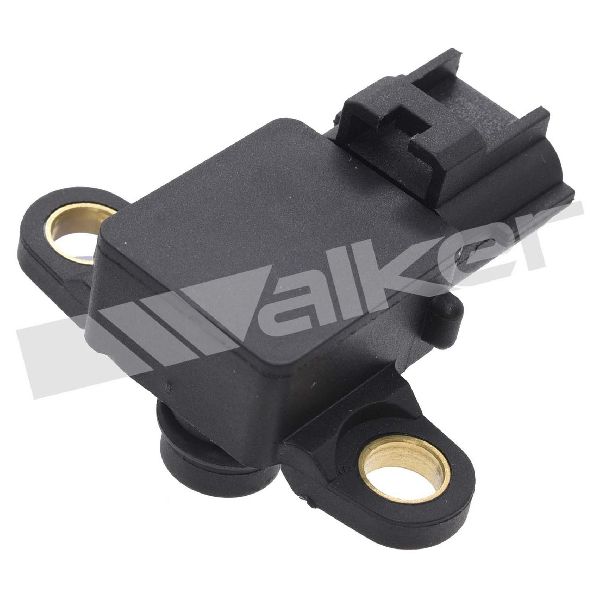
- Manifold Absolute Pressure (MAP) Sensor
(OEM #12591290)— This is the most common failure item for code P0106 on the LNF engine due to oil contamination. The engine uses two of these sensors. The original part 12591290 may be superseded by 55573248.
Trusted brands: ACDelco, Bosch, Delphi
OEM price range: $70-$100
Aftermarket price range: $30-$60
Related Codes That Often Appear With This One
- P0069 — This code specifically indicates a correlation error between the Manifold Absolute Pressure and the Barometric Pressure sensor, which is often one of the two MAP sensors on the LNF engine.
- P0107 — Indicates the MAP sensor circuit has low voltage, which could point directly to a failed sensor or a wiring issue.
- P0108 — Indicates the MAP sensor circuit has high voltage, also pointing to a failed sensor or wiring fault.
- P0420 — While it indicates catalyst inefficiency, a faulty MAP sensor causing a rich fuel mixture can lead to this code appearing alongside P0106.
Technical Service Bulletins (TSBs) & Recalls
- While no TSB was found directly for the Saturn Sky, GM has issued bulletins for other vehicles regarding P0106. For example, bulletin #19-NA-222 (not for this specific vehicle) notes that ice can form on the TMAP sensor in freezing temperatures, causing a P0106 code that may clear on its own after the engine warms up. This could be relevant for owners in cold climates.
Platform-Specific Known Issues
- The 2.0L LNF Turbo engine uses two MAP sensors which are identical parts (GM P/N 12591290). One is located on the top of the intake manifold and is very easy to access. The other is on the cold-side charge pipe, lower down and closer to the front of the engine, requiring a bit more effort to reach.
- Owners on forums for the Sky and its sibling, the Pontiac Solstice GXP, frequently report that oil from the PCV system coats the sensors, leading to failure. Some owners install an oil catch can to mitigate this issue long-term.
- A known, though less common, issue is the O-ring on the sensor failing, creating a vacuum leak that triggers the P0106 code even if the sensor itself is functional. A user on a Solstice forum reported fixing their P0106 code simply by replacing the O-ring and using Teflon tape for a better seal.
Mechanic-Grade Diagnostic Values
- MAP Sensor 5V Reference Supply — expected: 4.5 to 5.0 Volts DC. Failure: Voltage below 4.5V or 0V indicates a wiring issue or a fault in the ECM.
- MAP Sensor Ground Circuit — expected: Approximately 12.0 Volts DC. Failure: A reading of 0V indicates a loss of ground to the sensor, likely due to a break in the wire to the ECM.
- MAP Sensor Signal Voltage (Intake Manifold Sensor) — expected: 1.0 to 1.5 Volts DC at idle. Failure: Voltage significantly higher or lower than the expected range at idle can indicate a faulty sensor or a vacuum leak.
- MAP Sensor Signal Voltage (Both Sensors) — expected: 4.0 to 5.0 Volts DC. Failure: A reading outside this range with the key on and engine off suggests a faulty sensor, as it should be reading atmospheric pressure.
Scan Tool Commands That Help
- Tech-2 / GDS2: Sensor 'Learn Process' — After replacing a MAP sensor, the vehicle may not run normally as the sensor has a 'learn process'. Using a GM Tech-2 scan tool can speed up this process and restore normal operation faster than letting it adapt over several days of driving.
Wiring & Ground Locations
- G103 — At the left rear of the engine compartment on the cowl, above the brake booster.. This is a critical ground point for the Engine Control Module (ECM). A loose or corroded connection here can cause unstable voltage and erratic signals from engine sensors, including the MAP sensors, potentially triggering a P0106 code.
- G104 — On the right front/rear corner of the engine (location varies slightly by year).. This is another primary engine ground. A poor connection can affect sensor readings and overall engine electronics performance.
- J142 — In the engine harness, located approximately 7 cm (2.75 inches) from the MAP sensor breakout.. This is a junction connector in the harness. While not a common failure point, damage or corrosion at this junction could interrupt the MAP sensor signals or reference voltage.
- ECM Connector — On the left side of the engine compartment for the 2.0L LNF engine.. All MAP sensor wiring (5V reference, ground, and signal) terminates here. Verifying signal integrity at the ECM connector is the final step to rule out wiring issues before condemning the ECM itself.
Real Owner Repair Stories
- GM Forum user Hassan1981 (2013 Chevy Malibu 2.4L Ecotec (similar MAP/BARO logic)) — Hesitation, rough idle, stalling, 'Service ESP' message, codes P0106 and P2227.
❌ Tried (didn't work) Replaced MAP sensor, Replaced intake manifold gaskets, Replaced throttle body gasket, Replaced air filter, Replaced MAF sensor, Replaced spark plugs
✅ What actually fixed it The final root cause was a clogged catalytic converter and dirty O2 sensors. Using three canisters of a catalytic converter cleaner additive in a full tank of fuel and driving on the highway resolved the issue.
"I Checked Everything" — The Actual Cause
- On the 2.0L LNF GDI engine, a smoke test may come back clean, showing no vacuum leaks, yet P0106 symptoms persist. A potential cause is severe carbon buildup on the back of the intake valves. This buildup disrupts airflow into the cylinders, causing erratic manifold pressure readings, especially during cold starts or transients, which the PCM interprets as a sensor performance issue. This condition is not a traditional vacuum leak and won't be found by a smoke test.
OEM Part Supersession History
12591290→55573248— Unspecified, but typically for design improvement, material change, or supplier change. The new part is the standard GM replacement.
Heads up: No incompatibility is noted; 55573248 is the direct replacement for 12591290 and 93192107.
Model Year Variations Within This Range
- 2008+: For the 2008 model year, a limited-slip differential and stability control became standard equipment. While not directly related to the P0106 code, the addition of stability control means that severe engine performance issues from a bad MAP sensor are more likely to trigger other warnings on the dash, such as 'Service ESP'.
- Tuned Vehicles: For owners running higher-than-stock boost levels, the factory 2.5-bar MAP sensors are a limiting factor, as they can only read up to ~25 PSI of boost. Aftermarket kits are available with 3.0-bar Bosch sensors that can read up to ~30 PSI, but they require specific ECU tuning to interpret the new sensor's voltage scale correctly. Installing these without a tune will cause incorrect readings and codes.
Diagnostic Flowchart
Real Owner Stories
Aggregated from forums and TSBs cited above. Mileages and costs reflect what owners reported in those sources.
2007-2009 Saturn SKY Redline
Symptoms: Check Engine Light with P0106 and/or P0107, with the car going into limp mode.
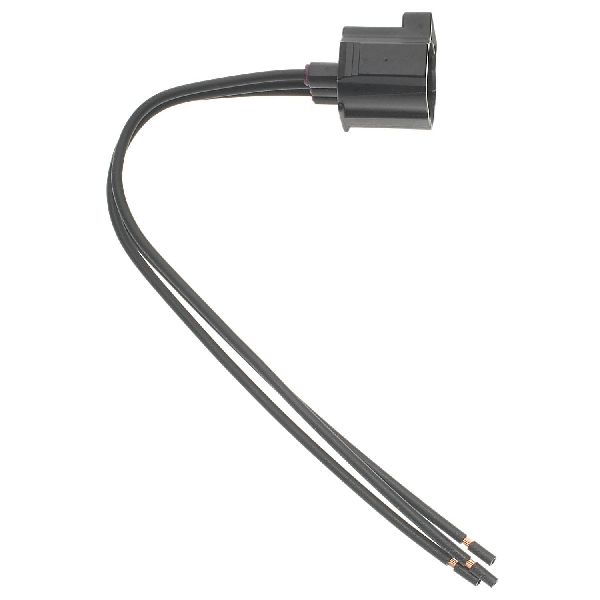
What fixed it: Replacing the failing butt connectors from the dealer-installed 3-bar MAP sensor upgrade with soldered connections using a repair kit with new pigtails and shrink tubing.
Source hint: RPM Motorsports forum
Chevrolet Cobalt SS (2.0L LNF Turbo)
Symptoms: Car threw a P0106 code after replacing the PCM, with oil circulating through factory charge pipes and coating the MAP sensors.
What fixed it: Identified oil contamination on the MAP sensors originating from the PCV system and charge pipes.
Source hint: Cobalt SS Network forum
Pontiac Solstice GXP (2.0L LNF Turbo)
Symptoms: P0106 code triggered by a vacuum leak at the sensor, even though the MAP sensor itself was fully functional.
What fixed it: Replaced the MAP sensor O-ring and used Teflon tape for a better seal.
Source hint: Solstice forum user report
Chevrolet Cobalt SS (2.0L LNF Turbo)
Symptoms: P0106 code appeared.
What fixed it: Replaced the MAP sensor, noting it is a very common replacement part on these cars due to the MAP and TMAP failure mechanism.
Source hint: CobaltSS.net - Thread 'p0106'
Related OBD-II Codes
Frequently Asked Questions
Why does my 2.0L LNF Turbo have two MAP sensors, and do I need to replace both for a P0106?
Can oil from the PCV system cause a P0106 code on my Saturn Sky?
I have the dealer-installed 3-bar MAP sensor upgrade on my Sky Redline. Could this cause a P0106?
Does GM bulletin #19-NA-222 apply to my Saturn Sky?
Can a bad O-ring cause a P0106 even if the MAP sensor is good?
We Have This Part in Stock


The information in this article is provided for general reference and educational purposes only. Vehicle specifications, procedures, and part compatibility can vary by production date, trim level, and region. Always consult your vehicle's factory service manual and verify part numbers before purchasing or performing repairs. Safety-critical components such as airbags, seat belts, and braking systems should be installed by a qualified professional.
- Saturn Sky:
- 🛍️ Shop This Part
- What's Unique About the 2007-2010 Saturn Sky
- Symptoms You May Notice
- Most Likely Causes
- Rare But Worth Checking
- Diagnosis Steps
- Parts You'll Likely Need
- Related Codes That Often Appear With This One
- Technical Service Bulletins (TSBs) & Recalls
- Platform-Specific Known Issues
- Mechanic-Grade Diagnostic Values
- Scan Tool Commands That Help
- Wiring & Ground Locations
- Real Owner Repair Stories
- "I Checked Everything" — The Actual Cause
- OEM Part Supersession History
- Model Year Variations Within This Range
- Diagnostic Flowchart
- Real Owner Stories
- 2007-2009 Saturn SKY Redline
- Chevrolet Cobalt SS (2.0L LNF Turbo)
- Pontiac Solstice GXP (2.0L LNF Turbo)
- Chevrolet Cobalt SS (2.0L LNF Turbo)
- Related OBD-II Codes
- Frequently Asked Questions
- 🎟️ Get 5% Off