

P0106 on 2007-2014 GMC Sierra 5.3L: MAP Sensor & Engine Performance Fixes
P0106 on a 2007-2014 Sierra most often points to a faulty Manifold Absolute Pressure (MAP) sensor, which is an easy DIY replacement for under $75. However, it can also be caused by vacuum leaks from common intake manifold gasket failures or, in more serious cases documented by GM, internal engine problems like a broken valve spring that may also trigger a P0300 misfire code.
- P0106 most commonly means you need a new MAP sensor, an affordable and easy part to replace.
- Before replacing the sensor, always check for vacuum leaks, especially from the intake manifold gaskets and PCV system, as they are common problems on this engine.
- If P0106 is accompanied by a P0300 (misfire) and engine noise, you must investigate for a broken valve spring, a known issue cited in a GM Technical Service Bulletin.
- A simple diagnostic check with a scan tool (comparing MAP to BARO with the engine off) can quickly determine if the MAP sensor itself has failed.
- Cleaning the throttle body is a good maintenance step that can sometimes resolve this code if it's caused by incorrect idle airflow.
What's Unique About the 2007-2014 GMC Sierra
While a faulty MAP sensor is the most frequent culprit for a P0106 code on these trucks, the 5.3L V8 engines in this generation have documented issues that can also trigger it. Vacuum leaks from aged plastic intake manifold gaskets are extremely common. More critically, GM has issued service bulletins (like #PIP5752M and #PIP5423B) linking P0106 to serious mechanical failures like broken valve springs, which can cause misfires (P0300) and low idle speed (P0506) alongside the MAP code. This means that while the fix is often simple, a thorough diagnosis is crucial to rule out more severe engine problems, especially if engine noise is present.
Generation note: This range covers the end of the GMT900 generation (2007-2013) and the first year of the K2XX generation (2014). The LMG 5.3L V8 engine was part of the Gen IV family, primarily found in the GMT900 trucks. While some causes are common across the range, issues like Active Fuel Management (AFM) lifter failures are a known concern for this engine family and can cause symptoms that overlap with P0106, such as misfires.
Symptoms You May Notice
- Rough or erratic idle
- Engine stalling, especially at stops
- Hesitation or stumbling during acceleration
- Reduced fuel economy
- Engine misfiring (may cause a flashing check engine light)
- Engine noise (ticking or tapping)
- Black smoke from the exhaust
- Reduced engine power or 'limp mode'
- Replacing the Mass Airflow (MAF) sensor. While airflow-related, the MAF sensor is a different component and is less likely to be the direct cause of a P0106 code. Owners often replace it mistakenly.
- Replacing the MAP sensor when the intake manifold gaskets are the true cause of the vacuum leak.
- Replacing the MAP sensor when the throttle body is simply dirty and needs cleaning.
Most Likely Causes
- Faulty Manifold Absolute Pressure (MAP) Sensor 🔴 High Probability The MAP sensor is a common failure point due to age, heat cycles, and contamination from oil vapor. Its signal can become erratic or fail completely. GM TSB #N212330660 directly advises replacing the MAP sensor for this code on some models.
How to confirm: With the key on but the engine off, use a scan tool to compare the MAP sensor reading to the Barometric Pressure (BARO) reading. They should be nearly identical. At idle, the sensor voltage should be low (around 1-1.5V), and it should rise smoothly toward 4.5V when you snap the throttle. If the reading is stuck, slow to respond, or doesn't match BARO, the sensor is likely faulty.
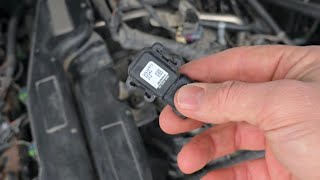
Typical fix: Replace the MAP sensor. It is located on top of the intake manifold, often near the throttle body, and is typically held in by a single clip or bolt.
Est. part cost: $30-$80 - Vacuum Leak 🟡 Medium Probability The original plastic-carrier intake manifold gaskets on the 5.3L V8 are a known failure point, becoming brittle and cracking over time, which creates a vacuum leak that throws off MAP sensor readings. Cracked PCV hoses or a failed PCV diaphragm in the valve cover are also common sources, especially on models with the non-serviceable PCV system integrated into the driver's side valve cover.
How to confirm: Perform a smoke test on the intake system to visually identify the source of any leaks. Pay close attention to the intake manifold gaskets and all vacuum hoses. Listening for a hissing sound at idle can also indicate a leak.
Typical fix: Replace the leaking gasket or hose. Upgraded intake manifold gaskets with a metal carrier, like Fel-Pro MS98016T, are recommended to prevent repeat failures.
Est. part cost: $15-$150 - Dirty or Clogged Throttle Body 🟡 Medium Probability Carbon buildup around the throttle plate can restrict airflow at idle. This forces the ECM to open the throttle plate more to maintain idle speed, causing a mismatch between the expected and actual MAP sensor readings, which can trigger P0106.
How to confirm: Visually inspect the throttle body bore and plate for significant carbon deposits. A common symptom is a rough or high idle that accompanies the code.
Typical fix: Clean the throttle body thoroughly with a dedicated throttle body cleaner and a soft brush. A throttle position relearn procedure is required afterward, which can be done with a scan tool or by following a specific drive cycle.
Est. part cost: $10-$20 - Damaged Wiring or Poor Connection ⚪ Low Probability Engine heat and vibration can cause the wiring to the MAP sensor to become brittle or connectors to loosen. In one documented case, a user found the MAP sensor connector can be plugged in upside down if the locking tab is broken, causing the code. Corroded ground connections, particularly G103 on the right cylinder head, can also distort the sensor's signal.
How to confirm: Inspect the MAP sensor connector for corrosion, damage, or a loose fit. Check for 5-volt reference (4.8-5.2V), ground (less than 5 ohms to chassis ground), and a fluctuating signal wire voltage using a multimeter. Wiggle the harness while monitoring the live data on a scan tool to see if the reading changes.
Typical fix: Repair the damaged wire or clean/replace the connector.
Est. part cost: $5-$30
Rare But Worth Checking
- Broken Valve Spring: GM TSBs #PIP5752M and #PIP5423B directly link P0106 with P0300 (misfire) and P0506 (low idle) to a possible broken valve spring. If you hear engine noise or have a persistent misfire along with P0106, this should be investigated immediately. A compression test on the misfiring cylinder will often show very low readings. This can prevent catastrophic engine damage.
- Restricted Exhaust System: A clogged catalytic converter can cause abnormal pressure in the intake manifold, leading to an irrational MAP sensor reading. This is often accompanied by a significant loss of power, especially at higher RPMs, and may set codes P0420 and P0430.
- Melted Intake Manifold Runner: In a severe case related to a broken valve spring, exhaust gases can be forced back into the intake manifold, melting the plastic runner for that cylinder. This creates a massive internal vacuum/pressure leak that will persistently cause a P0106 code even after the spring is fixed. A smoke test after the valve cover is off may reveal smoke coming from under the intake manifold.
- Faulty Engine Control Module (ECM): This is extremely rare and should only be considered after all other possibilities, including wiring and grounds, have been exhaustively ruled out.
Diagnosis Steps
- Check for other stored DTCs. Codes like P0300, P0506, or P0068 provide important clues about mechanical vs. sensor issues.
- Visually inspect the MAP sensor, its electrical connector, and nearby wiring for any obvious damage, looseness, or corrosion. Ensure the connector is not broken or installed upside down.
- With the Key On, Engine Off (KOEO), use a scan tool to view live data. Compare the MAP sensor pressure reading to the BARO (Barometric Pressure) reading. They should be within a very close range (e.g., MAP at 29 inHg, BARO at 29.5 inHg). If not, the MAP sensor is likely faulty.
- Start the engine and observe the MAP reading at idle (it should be low, indicating high vacuum, ~1-1.5V) and then snap the throttle (it should rise quickly towards the BARO reading, ~4.5V). If the reading is stuck or slow to respond, the sensor or its port may be clogged.
- Inspect all vacuum hoses connected to the intake manifold for cracks, brittleness, or loose connections. Pay special attention to the PCV system and the brake booster hose.
- Perform a smoke test to check for vacuum leaks, especially around the intake manifold gaskets. This is the most definitive test for this common failure.
- Remove and inspect the throttle body for carbon buildup. Clean it if necessary and perform an idle relearn procedure using a scan tool.
- If misfires (P0300) and engine noise are present, remove the valve covers to inspect for broken valve springs, as indicated by GM TSB #PIP5752M.
Parts You'll Likely Need
- Manifold Absolute Pressure (MAP) Sensor
(OEM #12644228 (superseded by 12711681))— This is the most common failure part for code P0106. It directly measures the pressure the code is reporting as out of range. TSB #N212330660 specifically calls for its replacement on some models.
Trusted brands: ACDelco, Bosch, Delphi
OEM price range: $45-$70
Aftermarket price range: $25-$50 - Intake Manifold Gasket Set
(OEM #89060413)— These gaskets are a known high-failure point on the 5.3L V8, causing vacuum leaks that trigger P0106. If a smoke test reveals a leak here, they must be replaced. Many owners report fixing a persistent P0106 by replacing these gaskets.
Trusted brands: Fel-Pro (MS98016T is a popular metal-carrier upgrade), ACDelco
OEM price range: $50-$80
Aftermarket price range: $30-$60 - Throttle Body Cleaner — Required for cleaning carbon buildup from the throttle body, a common and low-cost fix that should be attempted before replacing more expensive parts.
Trusted brands: CRC, Gumout
OEM price range: $10-$20
Aftermarket price range: $8-$15
Related Codes That Often Appear With This One
- P0300 — A random misfire code often appears with P0106 because an incorrect MAP reading leads to improper fueling, or because an underlying mechanical issue (like a vacuum leak or broken valve spring) is causing both the misfire and the MAP code.
- P0506 — This code for 'Idle Speed Low' is frequently seen with P0106. The root cause, such as a vacuum leak, dirty throttle body, or a mechanical issue like a broken valve spring, affects the engine's ability to maintain a stable idle, triggering both codes.
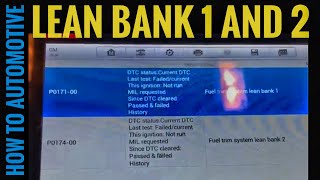
- P0171/P0174 — These 'System Too Lean' codes can be caused by a vacuum leak, which allows unmetered air into the engine. This same leak can cause the MAP sensor readings to be out of range, triggering P0106.
- P0068 — This code indicates a disagreement between the MAP, MAF, and Throttle Position sensors. It's often triggered alongside P0106 when a dirty throttle body or vacuum leak causes airflow readings that don't correlate with each other.
Technical Service Bulletins (TSBs) & Recalls
- Bulletin #PIP5752M: Links P0106, P0300, and P0506 to a possible broken valve spring concern.
- Bulletin #N212330660: Recommends replacing the MAP sensor when DTCs P0106 and P0108 are present.
- Bulletin #21-NA-214: Lists P0106 in a group of DTCs that can be found with exhaust brake issues on heavy-duty models, showing its relation to overall engine breathing.
Platform-Specific Known Issues
- Broken Valve Springs: As highlighted in TSB #PIP5752M, a broken valve spring can cause a misfire, engine noise, and set codes P0106, P0300, and P0506. This is a serious mechanical issue that requires immediate attention.
- PCV System Failure: A torn diaphragm in the PCV valve, which is integrated into the driver's side valve cover on some models, can create a significant internal vacuum leak that is hard to detect with a standard smoke test.
- Active Fuel Management (AFM) Issues: The LMG engine is equipped with AFM (also known as Displacement on Demand or DOD), which is known to have issues with lifters. While not a direct cause of P0106, a failing lifter can cause a misfire (P0300) that may occur alongside a P0106 code.
Mechanic-Grade Diagnostic Values
- MAP Sensor 5-Volt Reference Circuit — expected: 4.8-5.2 Volts (Key On, Engine Off). Failure: Voltage below 4.8V or above 5.2V indicates a short or open in the circuit, or a faulty ECM.
- MAP Sensor Low Reference Circuit Resistance — expected: Less than 5.0 Ohms to a known good ground. Failure: Resistance greater than 5.0 Ohms indicates a poor ground connection.
- MAP Sensor Signal Voltage at Idle — expected: Approximately 1.0 - 1.5 Volts. Failure: Voltage that is stuck high (near 4.5V) or does not change with engine load suggests a faulty sensor or a major vacuum leak.
- Scan Tool MAP Reading (Harness Disconnected) — expected: Less than 12 kPa. Failure: A reading greater than 12 kPa with the sensor disconnected points to a short to voltage in the signal circuit.
Scan Tool Commands That Help
- GDS2 / Tech2 or equivalent professional scan tool: Idle Learn Reset — Required after cleaning or replacing the throttle body. Failure to perform this reset can cause a high idle, stalling, and may trigger a P0106 code because the ECM's learned throttle values no longer match the clean throttle plate's airflow characteristics.
Wiring & Ground Locations
- MAP Sensor Connector — On the MAP sensor, located on top of the intake manifold.. This 3-wire connector provides power, ground, and signal. The pins are: 5-Volt Reference, Low Reference (Ground), and Signal. If the locking tab is broken, it can be plugged in upside down, reversing the 5V and ground circuits and causing an immediate P0106 code.
- G103 — On the right side (passenger side) cylinder head, either at the front or rear depending on the model year.. This is a primary ground for the main engine wiring harness and ECM. Corrosion or a loose connection here can cause erratic sensor readings, including the MAP sensor, leading to a P0106 code.
- G102 / G104 — G102 is on the left (driver's side) of the engine block. G104 is on the rear of the left cylinder head.. These are additional engine harness grounds. While G103 is more commonly cited for ECM issues, poor connections at any major engine ground can create voltage offsets and interfere with sensitive sensor signals.
Real Owner Repair Stories
- Chevy Silverado and GMC Sierra Forum (2012 Silverado 3500HD) — Sudden loss of power, engine stumbles on throttle, P0106 set. Engine ran best with MAP sensor unplugged.
❌ Tried (didn't work) Replacing the MAP sensor with an AC Delco part., Replacing the MAP sensor with a part from O'Reilly's., Replacing the MAP sensor with one from a salvage yard., Performing mechanical checks for vacuum leaks (none found).
✅ What actually fixed it The MAP sensor connector's locking tab was broken, and the user had inadvertently plugged it in upside down after re-installing the intake manifold. Correcting the connector orientation resolved the code. The misdiagnosis was compounded by using an incorrect wiring pinout found online.
"I Checked Everything" — The Actual Cause
- In a documented case, a user performed all standard mechanical checks, including searching for vacuum leaks, after a P0106 code appeared following intake manifold work. After replacing the MAP sensor multiple times with no success, the root cause was discovered to be purely electrical: the sensor's connector was installed upside down due to a broken locking tab. This highlights that even when symptoms strongly suggest a vacuum leak, the fault can be in the wiring or connector itself.
OEM Part Supersession History
12594942→12644228 (ACDelco 213-4658 is a related part number, but often associated with Duramax applications)— Standard part revision and consolidation.
Heads up: While various MAP sensors may physically fit, using a non-specified part can result in incorrect voltage readings, as reported by owners who noted different scan tool values between OEM and generic parts store sensors.Older style driver's side valve cover with integrated, non-serviceable PCV orifice.→GM Part #12642655 (and later revisions)— The original design was prone to clogging, leading to high oil consumption and PCV system-related vacuum issues that can trigger P0106.
Heads up: This is a direct-fit upgrade for earlier models. Some owners of the new design still report clogging, but it is less frequent.
Model Year Variations Within This Range
- 2007-2009 vs. 2010-2014: In 2010, the LMG engine gained Variable Valve Timing (VVT). This change also included different fuel injectors. 2007-2009 models use a longer injector (1.890 in.) while 2010+ models use a shorter injector (1.730 in.). This is critical information for anyone diagnosing fuel-related issues alongside P0106.
- 2007-2010 vs. 2011-2014: The driver's side valve cover, which contains the PCV orifice, was redesigned around 2011 to mitigate oil consumption issues. A clogged PCV system can alter crankcase vacuum and contribute to a P0106 code.
- 2007 only: Per TSB #PI1257, 2007 models are uniquely susceptible to MAP sensor port icing in freezing conditions, which can trigger P0106. The official fix is a redesigned intake manifold.
Diagnostic Flowchart
Other Known Issues on This Vehicle
Issues unrelated to this code that are worth knowing about as an owner of this generation:
- Active Fuel Management (AFM) Lifter Failure 🔴 High — Common failure, often occurring between 80,000 and 150,000 miles. Can be precipitated by oil consumption issues. (Ref: GM TSB #PIP4568P discusses diagnosis for AFM lifter tick and misfires.)
- Excessive Oil Consumption 🟠 Medium — Particularly prevalent in 2007-2011 models. Caused by a combination of PCV system design, piston ring issues, and AFM operation. Many owners report consuming 1 quart per 2,000-3,000 miles.
- Cracked Dashboard 🟡 Low — Extremely common across all GMT900 trucks (Sierra, Silverado, Tahoe, etc.). The plastic dash develops cracks, typically on the driver's side near the instrument cluster and over the passenger airbag.
- Intake Manifold Gasket Failure 🟠 Medium — The original plastic-carrier gaskets are prone to degrading from heat and fuel exposure, causing vacuum leaks. This is a very common repair needed on these engines.
- Transmission (4L60E/6L80) Failure 🟠 Medium — The 4L60E and early 6L80 transmissions paired with the 5.3L can experience issues, particularly as mileage exceeds 100,000 miles. High operating temperatures are a contributing factor.
Used vs. New Parts: Buying Guide for This Vehicle
When a used part is the smart pick: For expensive electronic components like a throttle body assembly, a used part from a reputable salvage yard can be a cost-effective diagnostic step or replacement. A used valve cover from an earlier model year with a serviceable PCV valve can also be a smart upgrade over the integrated non-serviceable design.
Donor-vehicle mileage cap: roughly under 100000 miles for the part to have meaningful remaining life.
What to inspect on the donor part:
- For throttle bodies, check for a clean throttle plate and smooth operation without binding.
- For valve covers, ensure there are no cracks, especially around bolt holes, and that the PCV baffle is intact.
- Check for excessive oil sludge or varnish on the underside of the part, which can indicate a poorly maintained donor engine.
OEM-only on this vehicle (don't cheap out):
- Engine Sensors (MAP, TPS, etc.): While not strictly 'OEM-only', using GM Genuine Parts or ACDelco is highly recommended. Forum reports and diagnostic evidence show that generic, off-brand sensors can have different voltage outputs, leading to persistent codes and misdiagnosis.
Aftermarket brands forum-validated for this vehicle:
- Intake Manifold Gaskets: Fel-Pro is frequently recommended, with the metal-carrier MS98016T being a popular upgrade over the failure-prone OEM plastic design.
- Sensors: ACDelco (GM's OEM brand), Delphi, Bosch, and NGK/NTK are trusted OES brands.
Brands owners have reported issues with on this vehicle:
- Unbranded or 'white-box' parts store sensors. While they may be cheaper, they are a common source of continued problems due to inconsistent quality and electrical specifications.
Real Owner Stories
Aggregated from forums and TSBs cited above. Mileages and costs reflect what owners reported in those sources.
2007-2013 GMC Sierra 1500 5.3L
Symptoms: The owner experienced a recurring P0106 and P0300 misfire code.
What fixed it: The issue was resolved by installing higher-quality intake manifold gaskets and re-torquing loose Valve Lifter Oil Manifold (VLOM) bolts.
Source hint: gm-trucks.com thread titled 'reoccurring P0106'
2007-2013 GMC Sierra 1500 5.3L
Symptoms: Owner diagnosed a P0106 after an intake manifold job and performed bench tests on the MAP sensor.
What fixed it: Discovered the MAP sensor electrical connector had been installed upside down because the locking tab was broken.
Source hint: silveradosierra.com thread titled 'DTC P0106 Trouble Shooting'
2007-2014 GMC Yukon 5.3L
Symptoms: Hard start or no start condition accompanied by a P0106 MAP sensor performance code.
What fixed it: A broken valve spring led to a melted intake manifold runner, requiring significant mechanical repair.
Source hint: chevroletforum.com 'Hard Start / No Start P0106 MAP Sensor Performance Diagnostic Tip'
2007-2013 GMC Sierra 1500 5.3L
Symptoms: Vehicle entered Reduced Engine Power (limp mode) with codes P0106 and P0068.
What fixed it: Troubleshooting focused on the throttle body, wiring, and potential valve spring failure.
Source hint: performancetrucks.net discussion 'P0068 P0106 REP'
Related OBD-II Codes
Frequently Asked Questions
My GMC Sierra has a P0106 and P0300; is there a TSB for this?
I replaced my MAP sensor but the P0106 code came back. Could it be the intake manifold?
Can a dirty throttle body cause a P0106 on my 2010 Sierra?
Is there a specific TSB that recommends just replacing the MAP sensor?
Could my Sierra's Active Fuel Management (AFM) system be related to this code?
Where is the MAP sensor located on the 5.3L V8 LMG engine?
Helpful Videos

Used OEM Parts in Stock


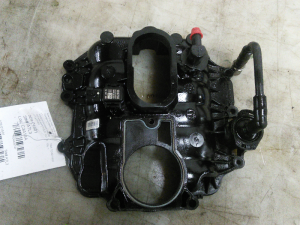
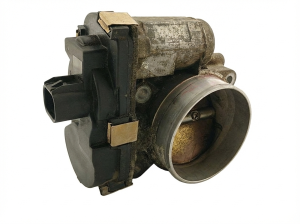
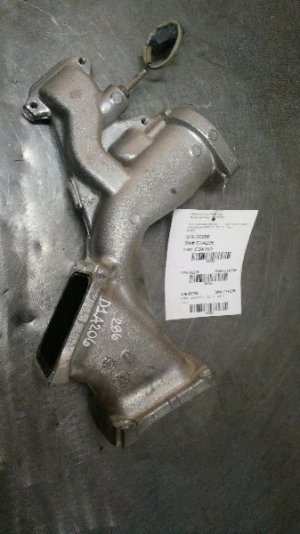
New Aftermarket Parts Available

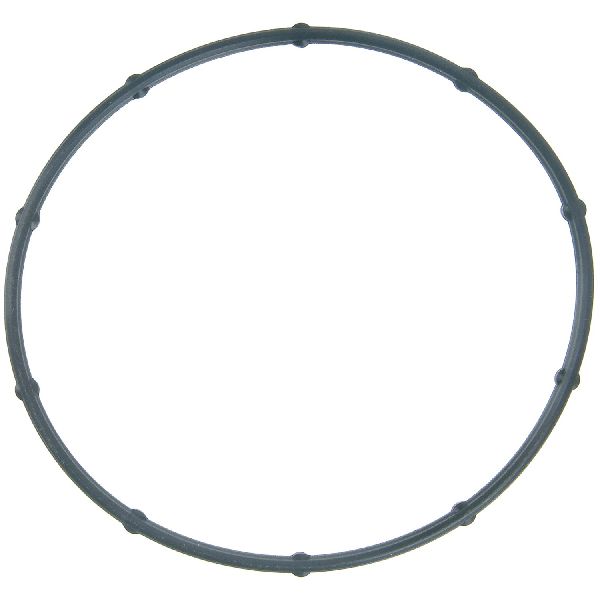

The information in this article is provided for general reference and educational purposes only. Vehicle specifications, procedures, and part compatibility can vary by production date, trim level, and region. Always consult your vehicle's factory service manual and verify part numbers before purchasing or performing repairs. Safety-critical components such as airbags, seat belts, and braking systems should be installed by a qualified professional.
- GMC Sierra:
- 🎬 Helpful Videos
- 🛍️ Shop This Part
- What's Unique About the 2007-2014 GMC Sierra
- Symptoms You May Notice
- Most Likely Causes
- Rare But Worth Checking
- Diagnosis Steps
- Parts You'll Likely Need
- Related Codes That Often Appear With This One
- Technical Service Bulletins (TSBs) & Recalls
- Platform-Specific Known Issues
- Mechanic-Grade Diagnostic Values
- Scan Tool Commands That Help
- Wiring & Ground Locations
- Real Owner Repair Stories
- "I Checked Everything" — The Actual Cause
- OEM Part Supersession History
- Model Year Variations Within This Range
- Diagnostic Flowchart
- Other Known Issues on This Vehicle
- Used vs. New Parts: Buying Guide for This Vehicle
- Real Owner Stories
- 2007-2013 GMC Sierra 1500 5.3L
- 2007-2013 GMC Sierra 1500 5.3L
- 2007-2014 GMC Yukon 5.3L
- 2007-2013 GMC Sierra 1500 5.3L
- Related OBD-II Codes
- Frequently Asked Questions
- 🎟️ Get 5% Off