

P0106 on 2008-2012 Ford Escape 3.0L: MAP Sensor and Vacuum Leak Guide
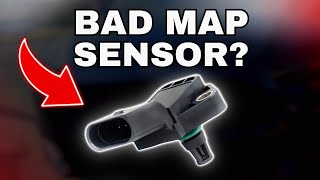
This code usually points to a faulty Manifold Absolute Pressure (MAP) sensor or a vacuum leak. Replacing the MAP sensor is a common fix and is relatively inexpensive and easy for DIYers. On this vehicle, also check for brittle vacuum lines connected to the sensor and intake.
- P0106 on a 2008-2012 Escape 3.0L means the MAP sensor signal is out of the expected range.
- The most likely cause is a faulty MAP sensor, followed by a vacuum leak from a cracked hose, especially the one connected to the sensor itself.
- Symptoms include a rough idle, poor acceleration, and decreased fuel mileage.
- Diagnosis is straightforward: check for vacuum leaks first (especially hoses and EGR gasket), then inspect the sensor's wiring, and if both are good, replace the MAP sensor.
- This is a DIY-friendly repair with a difficulty of 2 out of 5.
What's Unique About the 2008-2012 Ford Escape

On the Ford Escape with the 3.0L V6 engine, the P0106 code is a straightforward diagnostic issue without many platform-specific oddities. Unlike some newer Ford engines with turbochargers that have complex TSBs related to this code, the issue on this naturally aspirated V6 typically boils down to a few common causes like the sensor itself, vacuum leaks from aging hoses, or wiring problems. The diagnostic process is classic and doesn't require special software updates or procedures. A common point of failure is the small vacuum hose connected directly to the MAP sensor, which can become brittle and crack. However, manufacturer service bulletins such as TSB Bulletin #21B68 and TSB Bulletin #21B68-S1 note that in extremely cold temperatures, a TMAP sensor can ice over, causing the check engine light to illuminate with code P0106 and potentially triggering a "Stop Safely Now" message.
Symptoms You May Notice
- Check Engine Light is on
- Rough or unstable idle
- Hesitation or stumbling during acceleration
- Reduced fuel economy
- Engine stalling, especially at idle
- Increased exhaust emissions / black smoke
- Lack of engine power 🎬 Watch: Common symptoms of a failing MAP sensor
- "Stop Safely Now" message in the instrument cluster (associated with sensor icing)
- Replacing the throttle body without checking the MAP sensor or for vacuum leaks first.
- Replacing oxygen sensors, as a P0106 can sometimes be accompanied by lean codes (P0171/P0174) that are actually caused by a vacuum leak.
Most Likely Causes

- Faulty Manifold Absolute Pressure (MAP) Sensor 🔴 High Probability Sensors can fail over time due to heat cycles and internal wear. A 'performance' code often points directly to a sensor that is providing readings, but they are incorrect or irrational for the current engine condition.
How to confirm: With the key on and engine off, check the MAP sensor voltage using a scan tool. It should match the Barometric Pressure (BARO) reading. With the engine running at idle, the voltage should drop significantly. If the voltage is stuck or doesn't change with engine RPM, the sensor is likely bad. A diagnostic flow chart for this code suggests replacing the sensor if other tests pass.
Typical fix: Replace the MAP sensor.
Est. part cost: $30-$80 - Vacuum Leak 🟡 Medium Probability The rubber and plastic vacuum hoses, as well as intake manifold gaskets, can become brittle and crack over time, leading to unmetered air entering the engine. A frequent failure point on this engine is the small vacuum line running to the MAP sensor itself. Leaks can also occur at the intake manifold gasket sealing the EGR tube.
How to confirm: Perform a visual inspection of all vacuum lines connected to the intake manifold, especially the one for the MAP sensor. A smoke test is the most effective method to find small, hard-to-see leaks. A video for a 2008 Mercury Mariner (a platform mate) with a 3.0L engine and multiple codes including P0106 traced the issue to a vacuum leak at the gasket between the EGR valve and the intake manifold.
Typical fix: Replace the cracked hose or leaking gasket.
Est. part cost: $5-$50 - Wiring or Connector Issue ⚪ Low Probability The wiring harness or the connector at the MAP sensor can become damaged, corroded, or loose, causing an intermittent or complete loss of signal.
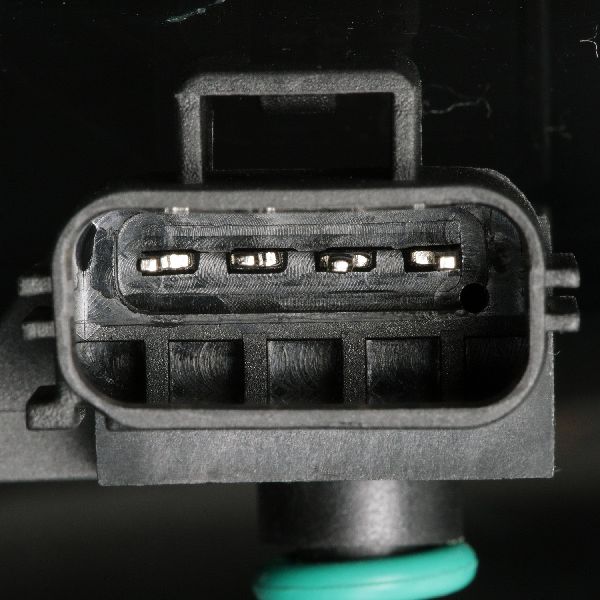
How to confirm: Visually inspect the MAP sensor connector for corrosion or bent pins. Wiggle the harness while monitoring the MAP sensor voltage on a scan tool to see if the reading fluctuates. Use a multimeter to check for proper voltage, ground, and signal at the connector.
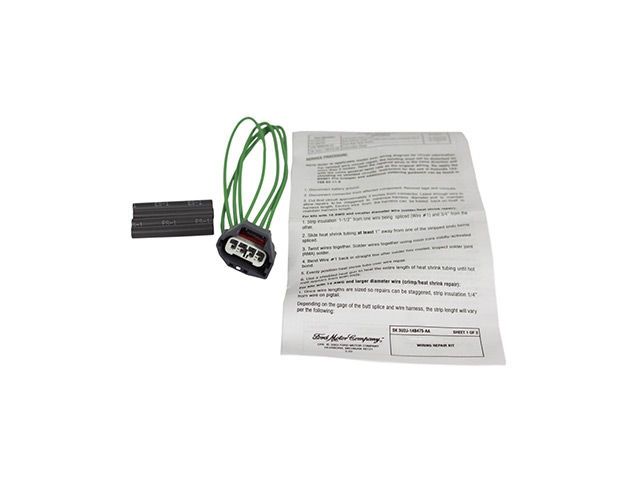
Typical fix: Repair the damaged wire or replace the connector pigtail.
Est. part cost: $15-$40
Rare But Worth Checking
- Clogged Catalytic Converter: A severely restricted exhaust can cause abnormal pressure readings in the intake manifold, potentially triggering a P0106 code. This is usually accompanied by other symptoms like a significant loss of power.
- Dirty or Faulty Throttle Body: Excessive carbon buildup on the throttle body and plate can restrict airflow at idle, causing the PCM to see an irrational MAP reading compared to the throttle position. The 2009-2012 Escape was also part of a customer satisfaction program for faulty electronic throttle bodies that could cause stalling or limp mode.
- Faulty Powertrain Control Module (PCM): This is extremely rare. The PCM should only be considered after all other possibilities, including sensors, wiring, and vacuum leaks, have been thoroughly ruled out.
Diagnosis Steps

- Connect an OBD-II scanner to verify the P0106 code is present and check for any other codes. If lean codes like P0171/P0174 are present, a vacuum leak is highly suspected.
- Observe the live data for the MAP sensor with the Key On, Engine Off (KOEO). The reading should be close to the barometric pressure reading.
- Start the engine and observe the MAP sensor reading at idle. It should drop significantly, indicating it is responding to engine vacuum.
- Visually inspect all vacuum hoses connected to the intake manifold for cracks, breaks, or loose connections. Pay close attention to the PCV hose, brake booster line, and especially the small hose going directly to the MAP sensor.
- If a vacuum leak is suspected but not visible, perform a smoke test to pinpoint the source of the leak. Common leak areas include intake manifold gaskets and the EGR tube gasket.
- Inspect the MAP sensor's electrical connector for corrosion, damage, or loose pins. Perform a wiggle test on the harness to check for intermittent connections.
- Check the throttle body for excessive carbon buildup around the throttle plate, which can cause this code.
- If no vacuum leaks, wiring issues, or throttle body problems are found, and the sensor's readings are illogical, the MAP sensor itself is the most likely culprit.
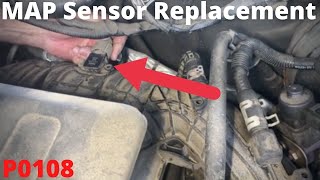
- Replace the MAP sensor, clear the code, and perform a test drive to ensure the code does not return. 🎬 Watch: How to locate and replace the MAP sensor
Parts You'll Likely Need

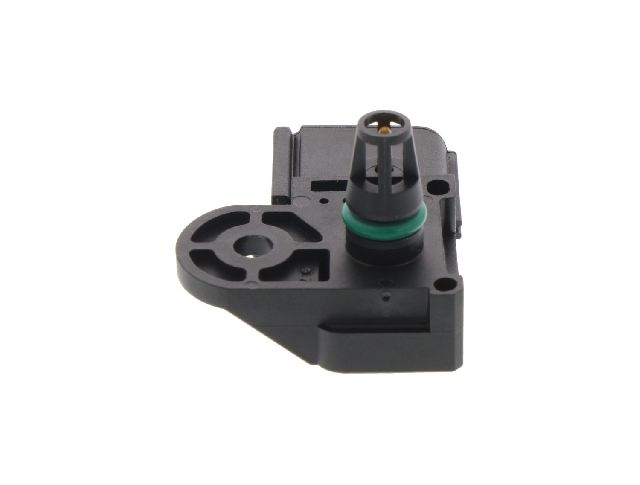
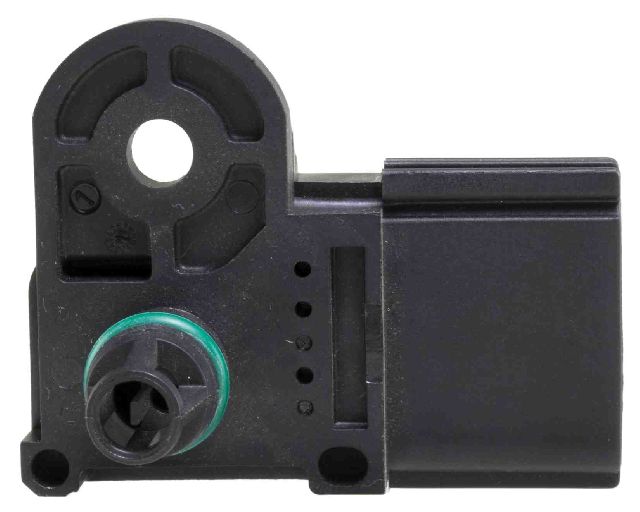
- Manifold Absolute Pressure (MAP) Sensor
(OEM #4S4Z9F479AA)— This sensor is the most common point of failure for this code when vacuum leaks are not present.
Trusted brands: Motorcraft, Bosch, Standard Motor Products (SMP), NGK/NTK
OEM price range: $60-$100
Aftermarket price range: $30-$70 - Vacuum Hoses/Lines — Aging rubber hoses are a frequent source of vacuum leaks that trigger this code. The small hose to the MAP sensor is a common culprit.
OEM price range: $10-$50
Aftermarket price range: $5-$30
Related Codes That Often Appear With This One
- P0171 — System Too Lean (Bank 1) - Often caused by a vacuum leak, which is also a primary cause for P0106.
- P0174 — System Too Lean (Bank 2) - Often caused by a vacuum leak, which is also a primary cause for P0106.
- P2195 — O2 Sensor Signal Stuck Lean (Bank 1 Sensor 1) - Can be triggered by a large vacuum leak that the fuel system cannot compensate for.
- P2197 — O2 Sensor Signal Stuck Lean (Bank 2 Sensor 1) - Can be triggered by a large vacuum leak that the fuel system cannot compensate for.
- P0236 — Turbocharger Boost Sensor A Circuit Range/Performance - An owner reported this code appearing alongside P0106 and P06A7 in NHTSA ODI #11181564.
Platform-Specific Known Issues
- Brittle MAP Sensor Vacuum Hose: A Reddit user with a 2006 3.0L Escape reported that after replacing the MAP sensor for a P0106 code did not fix the issue, they discovered the small vacuum hose attached to the sensor was brittle and breaking. Replacing this hose resolved the code. This is a common failure point due to engine heat.
- EGR to Intake Manifold Gasket Leak: A YouTube video documented a 2008 Mercury Mariner 3.0L with a host of codes, including P0106, P2195, and P2197. The root cause was found to be a vacuum leak from the gasket where the EGR tube enters the intake manifold. Sealing this leak resolved all the codes and fixed the severe drivability issues. 🎬 See how a vacuum leak caused these exact codes
Mechanic-Grade Diagnostic Values
- MAP Sensor 5-Volt Reference (VREF) — expected: 4.8V to 5.2V. Failure: Voltage outside of this range indicates a problem with the PCM or wiring, not necessarily the sensor.
- MAP Sensor Signal Voltage (Key On, Engine Off) — expected: Approximately 4.5V to 5.0V (should correspond to barometric pressure). Failure: A reading of 0.5V or less will trigger a P0107 (low voltage), while a reading stuck at 5.0V could trigger a P0108 (high voltage). A P0106 is for an irrational reading.
- MAP Sensor Signal Voltage (Engine at Idle) — expected: 1.0V to 1.5V. Failure: Voltage does not drop significantly from the KOEO reading, or is stuck high, indicating the sensor is not reading engine vacuum.
- MAP Sensor Signal Change (KOEO to KOER) — expected: The voltage should change by at least 1.5 volts from Key On, Engine Off to Key On, Engine Running.. Failure: If the voltage does not change, check the MAP sensor's vacuum hose for obstructions or freezing before condemning the sensor.
Scan Tool Commands That Help
- Ford IDS / FORScan: Live Data / Datalogger — Use this to monitor the MAP_V (voltage) or MAP (pressure) PID while performing a 'wiggle test' on the harness and connector to check for intermittent wiring faults. It's also essential for comparing the MAP sensor reading against the Throttle Position Sensor (TPS) and engine RPM to see if the value is rational for the given conditions.
Wiring & Ground Locations
- G108 — On the 3.0L V6, this ground is located at the rear of the engine compartment, on the firewall.. This is a primary PCM and sensor ground point. A corroded or loose connection here can cause erratic voltage readings for multiple sensors, including the MAP sensor, leading to performance codes.
- G105 / G110 — Located at the left front corner of the engine compartment.. This is a major chassis and engine component ground point. Poor integrity can introduce electrical noise and unstable ground reference for sensor circuits.
- G106 / G107 — Located at the right front of the engine compartment, near the front of the engine.. These grounds serve various components in the front of the engine bay. Ensuring they are clean and tight is a crucial step in diagnosing any electrical fault.
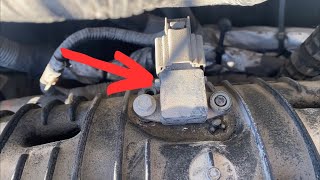
- MAP Sensor Connector — Plugged directly into the MAP sensor, which is mounted on the intake manifold.. The three wires are typically a 5V reference, a ground, and the signal wire. Back-probing these wires with a multimeter is the definitive way to test the circuit.
Real Owner Repair Stories
- YouTube - Sergio Velazquez (2007 Ford Escape 3.0L) — P0106 code, high voltage reading from MAP sensor.
❌ Tried (didn't work) Initial diagnosis pointed towards a bad sensor.
✅ What actually fixed it The root cause was a vacuum leak in the HVAC system's vacuum supply line. The user temporarily fixed it by plugging the vacuum port to the HVAC system with a 10mm bolt, which normalized the MAP sensor readings and resolved the code. - NHTSA ODI #11417750 — An owner reported having identical issues with a previous Ford recall (14S17), receiving error code P0106 and having the sensor replaced twice without a permanent resolution.
- NHTSA ODI #11408337 — A driver reported struggling to get help for a P0106 code, noting that a previous recall for a MAP sensor manifold issue existed but was no longer open for their vehicle.
OEM Part Supersession History
4S4Z-9F479-AA→1S7Z-9F479-AD— Part has been updated by Ford. The new part number is the current service replacement.
Model Year Variations Within This Range
- 2009-2012: For the 2009 model year, the 3.0L Duratec V6 was updated, increasing power from 200 hp to 240 hp. It was also paired with a new 6-speed automatic transmission, replacing the previous 4-speed. While the fundamental causes of P0106 remain the same, PCM software and transmission-related inputs could differ slightly.
- 2008: The 2008 model year used the second-generation body style but carried over the powertrain from the first generation, including the 200 hp 3.0L V6 and 4-speed automatic transmission.
Diagnostic Flowchart
Other Known Issues on This Vehicle
Issues unrelated to this code that are worth knowing about as an owner of this generation:
- 6F35 Transmission Failure 🔴 High — Widespread issue, can occur under 100,000 miles. Complaints include harsh shifting, shuddering, slipping, and complete failure. (Ref: Subject of multiple lawsuits, but no widespread recall. Some TSBs exist for specific symptoms.)
- Rear Shock Tower Rust 🔴 High — Very common in regions that use road salt. The upper shock mount area rusts through, allowing the shock to detach and enter the cabin. (Ref: No recall. Aftermarket repair panels are widely available due to the commonality of the issue.)
- Electronic Throttle Body (ETB) Failure 🟠 Medium — Common enough that Ford initiated a customer satisfaction program (13N03) extending the warranty on the part. Causes sudden limp mode, stalling, or surging. (Ref: Customer Satisfaction Program 13N03, not a formal recall.)
- Leaking Axle Shaft Seal 🟡 Low — Commonly reported issue, especially on the driver's side, leading to transmission fluid leaks. (Ref: Repair kits are available from Ford to address the seal and related components.)
- Ignition Coil Failure 🟠 Medium — A known failure item on the 3.0L V6, causing misfires (P030X codes). The rear bank of coils is difficult to access, requiring removal of the upper intake manifold. (Ref: TSB 14-0059 was issued for related vehicles concerning coil circuit codes.)
Used vs. New Parts: Buying Guide for This Vehicle
When a used part is the smart pick: For this repair, buying a used electronic part like a MAP sensor is not recommended. The cost of a new, warrantied aftermarket sensor is low, making the risk of getting a faulty or near-end-of-life used part not worthwhile. Used parts make sense for large mechanical or cosmetic components, but not for inexpensive, critical sensors.
What to inspect on the donor part:
- Not applicable, as buying a used MAP sensor is not advised.
Aftermarket brands forum-validated for this vehicle:
- Motorcraft (OEM)
- Bosch
- Standard Motor Products (SMP)
- NGK/NTK
- Delphi
Brands owners have reported issues with on this vehicle:
- No-name, unbranded sensors from online marketplaces should be avoided due to a high likelihood of poor quality control, incorrect calibration, and premature failure.
Real Owner Stories
Aggregated from forums and TSBs cited above. Mileages and costs reflect what owners reported in those sources.
2006 Ford Escape 3.0L V6
Symptoms: P0106 code persisted even after replacing the MAP sensor.
What fixed it: Replacing the small vacuum hose attached to the sensor which was brittle and breaking.
Source hint: Reddit r/fordescape
2008 Mercury Mariner 3.0L V6
Symptoms: Severe drivability issues and multiple codes including P0106, P2195, and P2197.
What fixed it: Sealing a vacuum leak at the gasket where the EGR tube enters the intake manifold.
Source hint: YouTube - M&N Car Diagnosis
NHTSA ODI #11181564
Symptoms: Vehicle stalled but restarted with no issues. Fuel pressures were normal, but codes P06A7, P0106, and P0236 were present and permanent.
What fixed it: Permanent codes remained elusive during initial diagnosis.
Related OBD-II Codes
Frequently Asked Questions
Is there a specific TSB or warranty extension for the throttle body on my 2008-2012 Ford Escape?
I replaced the MAP sensor on my 3.0L V6 Escape but the P0106 code is still there. What else should I check?
Can a leak in the EGR system cause a P0106 code on a 2008 Mercury Mariner?
How can I tell if my MAP sensor is actually bad before I spend $30-$80 on a new one?
Are there other common mechanical issues on the 2008-2012 Escape I should look out for while fixing this?
Does the 3.0L V6 engine have any specific ignition issues that mimic P0106 symptoms?
Can cold weather affect my MAP sensor and trigger a P0106 code?
Helpful Videos
We Have This Part in Stock


The information in this article is provided for general reference and educational purposes only. Vehicle specifications, procedures, and part compatibility can vary by production date, trim level, and region. Always consult your vehicle's factory service manual and verify part numbers before purchasing or performing repairs. Safety-critical components such as airbags, seat belts, and braking systems should be installed by a qualified professional.
- Ford Escape:
- 🎬 Helpful Videos
- 🛍️ Shop This Part
- What's Unique About the 2008-2012 Ford Escape
- Symptoms You May Notice
- Most Likely Causes
- Rare But Worth Checking
- Diagnosis Steps
- Parts You'll Likely Need
- Related Codes That Often Appear With This One
- Platform-Specific Known Issues
- Mechanic-Grade Diagnostic Values
- Scan Tool Commands That Help
- Wiring & Ground Locations
- Real Owner Repair Stories
- OEM Part Supersession History
- Model Year Variations Within This Range
- Diagnostic Flowchart
- Other Known Issues on This Vehicle
- Used vs. New Parts: Buying Guide for This Vehicle
- Real Owner Stories
- 2006 Ford Escape 3.0L V6
- 2008 Mercury Mariner 3.0L V6
- NHTSA ODI #11181564
- Related OBD-II Codes
- Frequently Asked Questions
- 🎟️ Get 5% Off