

P0106 on 1995-2000 Chrysler Cirrus: MAP Sensor Range/Performance Causes and Fixes
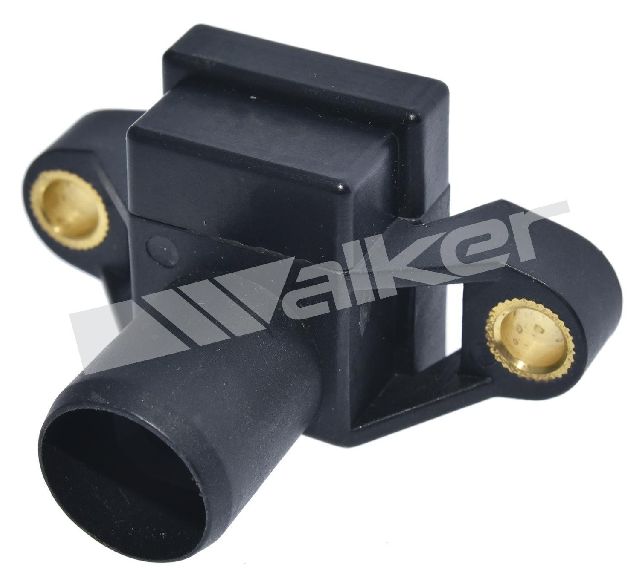
This code most often indicates a faulty Manifold Absolute Pressure (MAP) sensor or a vacuum leak. Replacing the MAP sensor is a common fix, costing around $30-$70 for an aftermarket part and is generally an easy DIY job. Before replacing, check for cracked vacuum lines, especially the small hose connected to the sensor itself.
- P0106 on a 1995-2000 Cirrus points to a problem with the MAP sensor's signal.
- The most likely causes are a failed MAP sensor or a cracked vacuum line.
- Diagnosis is straightforward: check vacuum lines, then test the sensor's voltage before replacing any parts.
- This issue is also common on the Dodge Stratus and Plymouth Breeze, which use the same parts.
What's Unique About the 1995-2000 Chrysler Cirrus
For the 1995-2000 Chrysler Cirrus and its 'Cloud Car' platform mates (Dodge Stratus, Plymouth Breeze), this is a straightforward and common diagnostic code. The issue almost always traces back to the usual suspects for a MAP sensor code: the sensor itself, its vacuum supply, or its electrical connection. Both the 2.4L 4-cylinder and 2.5L V6 engines use a similar, easily accessible MAP sensor mounted directly on the intake manifold, making diagnosis consistent across the model line.
Symptoms You May Notice
- Check Engine Light is on
- Rough or unstable idle
- Hesitation or stumbling during acceleration
- Reduced fuel economy
- Black smoke from the exhaust
- Difficulty starting the engine
- Engine stalling
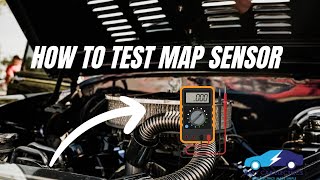
- Replacing the Throttle Position Sensor (TPS) without diagnosis. While symptoms can be similar, a P0106 specifically points to the MAP sensor circuit. 🎬 Watch: A simple guide to diagnosing MAP sensor codes.
- Replacing fuel system components like the fuel pump or injectors before checking for simple vacuum leaks or testing the MAP sensor itself.
- Replacing the MAP sensor without first checking for a simple cracked vacuum hose leading to it.
Most Likely Causes
- Faulty Manifold Absolute Pressure (MAP) Sensor 🔴 High Probability Like any electronic sensor, the MAP sensor can fail with age and heat cycles. It's a very common failure point for this code across all vehicles, including the Cirrus and its platform mates.
How to confirm: After confirming wiring and vacuum are good, test the sensor's output voltage with a multimeter or scan tool. With the key on and engine off (KOEO), the voltage should be high (around 4.7V-4.9V). At idle, it should drop to 1.2-1.8V. If the voltage is stuck or doesn't respond to vacuum changes (e.g., using a hand vacuum pump), the sensor is bad.
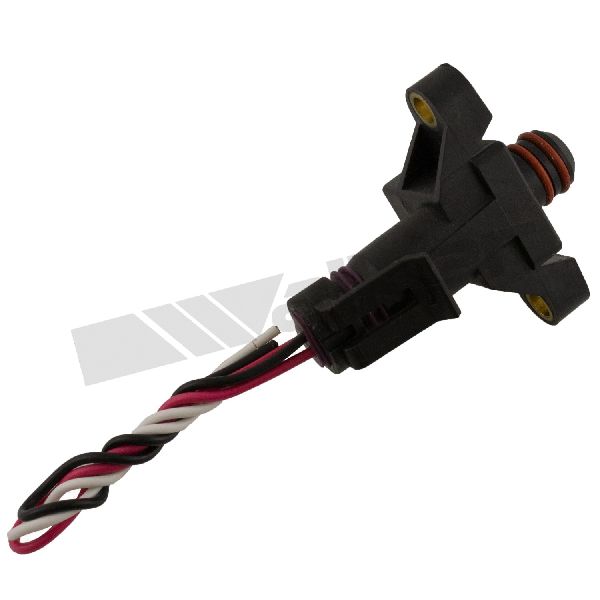
Typical fix: Replace the MAP sensor. It is typically mounted to the intake manifold with one or two bolts.
Est. part cost: $30-$70 - Vacuum Leak 🟡 Medium Probability The plastic and rubber vacuum lines used in this era become brittle and crack over time, leading to leaks that disrupt the manifold pressure reading. The small rubber hose connecting the MAP sensor to the intake manifold nipple is a frequent failure point.
How to confirm: Visually inspect all vacuum hoses connected to the intake manifold for cracks, breaks, or loose connections, paying close attention to the hose for the MAP sensor itself. You can also spray a small amount of brake cleaner or starting fluid around suspected leak areas with the engine running; a change in engine RPM indicates a leak.
Typical fix: Replace the cracked or broken vacuum hose(s).
Est. part cost: $5-$20 - Damaged Wiring or Connector ⚪ Low Probability Engine vibration and heat can cause wires to fray or the connector to become brittle and make a poor connection. Water or dirt can also get into the connector, causing corrosion.
How to confirm: Inspect the MAP sensor's electrical connector for corrosion, pushed-out pins, or damage. A video for a 1998 Cirrus shows checking for the 5-volt reference, ground, and signal continuity. Test for a 5-volt reference signal and a good ground at the connector with a multimeter.
Typical fix: Repair the damaged section of wiring or replace the connector pigtail.
Est. part cost: $10-$30
Rare But Worth Checking
- Clogged MAP Sensor Port: The small port on the intake manifold where the sensor reads pressure can become clogged with carbon buildup, preventing an accurate reading. When you remove the old sensor, it's worth checking that this port is clear with a small pick or wire.
- Faulty Powertrain Control Module (PCM): This is very rare, but the PCM can fail internally and misinterpret a good sensor signal. This should only be considered after all other possibilities have been exhaustively ruled out. Some other manufacturers have issued software updates for overly sensitive P0106 monitoring, but no specific TSB for this issue on the Cirrus is known.
- Poor Engine Mechanical Condition: Internal engine problems like a jumped timing belt, low compression, or burnt valves can cause erratic manifold vacuum, which may trigger a P0106 code. This would typically be accompanied by other severe running issues.
Diagnosis Steps
- Read the code with an OBD-II scanner to confirm P0106 is present and note any other codes.
- Perform a thorough visual inspection of all vacuum hoses connected to the intake manifold. Pay special attention to the small rubber hose going to the MAP sensor itself. Look for any cracks, loose fittings, or disconnections.
- Inspect the MAP sensor's electrical connector and wiring for any signs of damage, corrosion, or loose pins.
- With a scan tool (or a multimeter), check the MAP sensor reading with the Key On, Engine Off (KOEO). The voltage should be around 4.7V-4.9V.
- Start the engine. At idle, the manifold vacuum should be high, and the sensor's voltage should drop significantly to between 1.2V and 1.8V.
- If the voltage does not change or is stuck, verify the sensor is receiving a 5V reference and has a good ground at the connector.
- If wiring is confirmed to be good, remove the MAP sensor from the intake manifold.
- Inspect the port on the manifold and the nipple on the sensor to ensure they are not clogged with carbon or debris. Consider cleaning the sensor port with electrical parts cleaner as a preliminary step. 🎬 See how to properly clean your MAP sensor.
- If the wiring is good, the vacuum supply is intact, and the port is clear, the MAP sensor is very likely faulty and should be replaced.
Parts You'll Likely Need
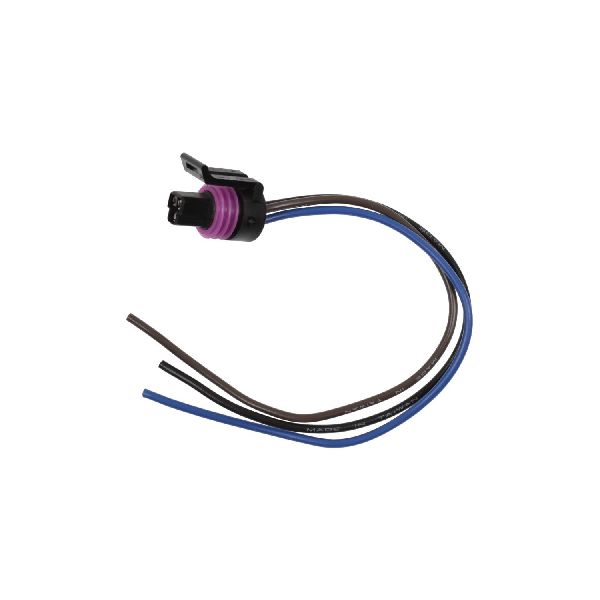
- Manifold Absolute Pressure (MAP) Sensor
(OEM #5293985AA (may be superseded by 5269565; interchange part AS95).)— This sensor is the most common part to fail in the circuit, directly causing the P0106 code. Note: This genuine Mopar part is listed as discontinued, so aftermarket will be the most likely source.
Trusted brands: Mopar, Standard Motor Products, Delphi, Bosch
OEM price range: $60-$90
Aftermarket price range: $30-$70
Related Codes That Often Appear With This One
- P0171 — If a vacuum leak is the cause of P0106, the engine may run lean, triggering a P0171 (System Too Lean) code as well.
- P0107 — This code indicates 'MAP Sensor Circuit Low Voltage', which can appear if the sensor has an internal short or a wiring problem leading to the P0106 performance code.
- P0108 — This code indicates 'MAP Sensor Circuit High Voltage', which can appear if the sensor's signal circuit is open or has failed, leading to the P0106 performance code.
Technical Service Bulletins (TSBs) & Recalls
- No specific Technical Service Bulletins (TSBs) were found for the 1995-2000 Chrysler Cirrus related to the P0106 code. However, it is worth noting that other manufacturers (like VW and GM) have issued TSBs for other vehicles where a P0106 code was caused by overly sensitive PCM monitoring logic, fixed by a software update.
Platform-Specific Known Issues
- On the 2.5L V6 engine, the MAP sensor is located on the upper intake manifold and connects via a small rubber vacuum hose. This hose can become brittle and crack, causing a vacuum leak that is a very common root cause of P0106 on these engines.
Mechanic-Grade Diagnostic Values
- MAP Sensor Signal Voltage vs. Vacuum — expected: 0 in. Hg = ~4.7V; 5 in. Hg = ~3.9V; 10 in. Hg = ~3.0V; 15 in. Hg = ~1.1V. Failure: Voltage does not drop smoothly as vacuum is applied with a hand pump, or the readings are far outside this expected range.
- MAP Sensor 5V Reference Supply — expected: 4.5 to 5.0 Volts DC. Failure: Significantly lower or no voltage indicates an open in the supply wire or a faulty PCM.
- MAP Sensor Ground Circuit Check — expected: 10 to 12 Volts (when probing from battery positive to the ground wire). Failure: No voltage or low voltage indicates a poor ground connection for the sensor.
- Scan Tool MAP reading at 2000 RPM (to test for restricted exhaust) — expected: 1.2 to 1.6 Volts. Failure: If, after snapping the throttle open and returning to idle, the voltage takes longer than 3 seconds to return to the 1.2-1.6V range, the catalytic converter may be restricted.
Scan Tool Commands That Help
- Generic OBD-II Scan Tool: Live Data Graphing (MAP vs. TPS vs. RPM) — Use this to visually check if the MAP sensor signal responds logically and quickly to throttle changes. When you snap the throttle open, the MAP voltage should spike towards ~4.5V and then drop quickly as the throttle closes. A lazy or erratic response indicates a problem.
- Chrysler DRB III (or equivalent): MAP Sensor Voltage/Pressure Display — The dealer-level tool provides the most accurate live data. With Key On, Engine Off, the MAP sensor reading should be nearly identical to the Barometric Pressure (BARO) reading. A significant difference points to a faulty sensor.
Wiring & Ground Locations
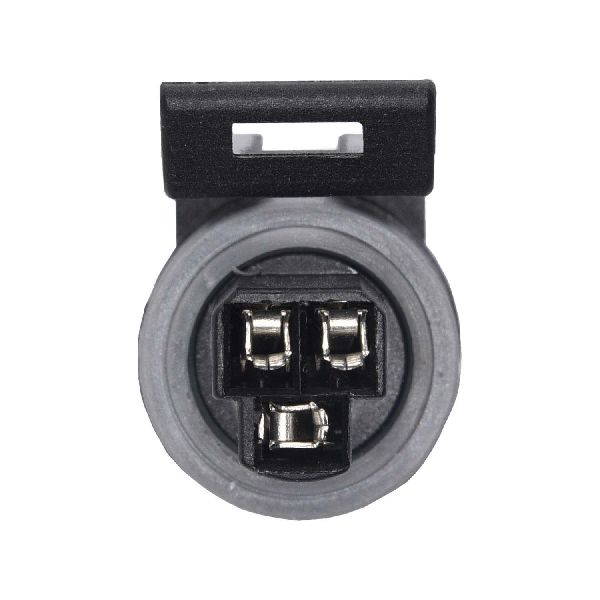
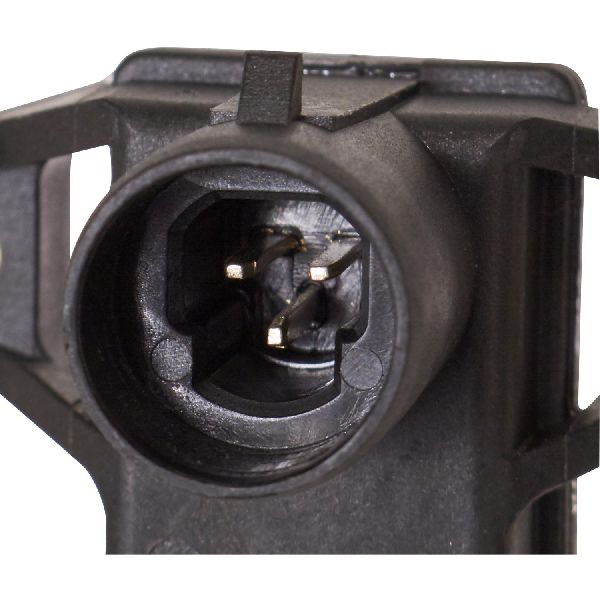
- MAP Sensor Connector (3-wire, round) — On the MAP sensor, which is mounted to the intake manifold.. This is the primary point of failure for wiring issues. The pins are: Pin 1 - Ground (provided by PCM), Pin 2 - 5V Reference (from PCM), Pin 3 - Signal Output (to PCM). Knowing the pinout allows for targeted testing of power, ground, and signal integrity.
Real Owner Repair Stories
- 2CarPros Forum (1996 Chrysler Sebring 2.5L V6 (platform mate)) — Very intermittent problem of the engine losing power and shutting off. Sometimes it would restart after some cranking. Threw a P1296 code once, which relates to the MAP sensor 5-volt supply.
❌ Tried (didn't work) The owner was trying to trace the intermittent problem without just replacing parts.
✅ What actually fixed it The responding mechanic advised that based on the code (referencing a missing 5-volt supply), the most likely causes were a break in the wire, a bad connector, or an internal failure in the MAP sensor itself. Given the intermittent nature, replacing the MAP sensor was the recommended first step after a visual check of the connector. - Opinautos Forum (Dodge Stratus) (1999 Dodge Stratus 2.4L) — Car would crank but not start. Scan showed P0106 for the MAP sensor.
❌ Tried (didn't work) Replaced crankshaft sensor, oxygen sensor, fuel pump, spark plugs, and plug wires.
✅ What actually fixed it The final question from the owner was whether the MAP sensor could cause a no-start condition. The forum response confirmed that any sensor providing incorrect data can cause a no-start. The implication is that after replacing many other parts, the P0106 code was pointing directly to the root cause (the MAP sensor or its circuit) which was preventing the engine from starting.
Model Year Variations Within This Range
- 1995: The initial 1995 Cirrus was launched exclusively with the 2.5L V6 engine.
- 1996-1997: The Chrysler-built 2.4L 4-cylinder engine became available. For 1997, the 4-cylinder was made standard on both LX and LXi trims, with the V6 being optional.
- 1998-1999 (U.S. Market): For 1998, Chrysler dropped the 4-cylinder engine and LX trim, leaving only the V6-powered LXi model.
- 2000: The 4-cylinder engine was reintroduced for the base LX model to join the V6 LXi. This means both engines were again available in the final model year.
Diagnostic Flowchart
Real Owner Stories
Aggregated from forums and TSBs cited above. Mileages and costs reflect what owners reported in those sources.
1998 Chrysler Cirrus 2.5L
Symptoms: MAP sensor issue requiring electrical diagnosis.
What fixed it: Tested the 3-wire connector to confirm the 5V reference, ground, and signal continuity. Verified the sensor was outputting the correct KOEO voltage (4.9V) and idle voltage (1.8V) to properly diagnose the circuit.
Source hint: YouTube: Chrysler cirrus 1998 MAP by angel pineda
Related OBD-II Codes
Frequently Asked Questions
Where is the MAP sensor located on my 2.5L V6 Chrysler Cirrus?
Are there any Technical Service Bulletins (TSBs) or software updates for the P0106 code on the 1995-2000 Cirrus?
Can I use a MAP sensor from a Dodge Stratus or Plymouth Breeze to fix my Cirrus?
What should the MAP sensor voltage read on my Cirrus when testing it with a multimeter?
Besides a bad MAP sensor, what is a very common cause for P0106 on the Cirrus 2.5L?
How do I test the MAP sensor wiring connector on my Cirrus?
Helpful Videos
We Have This Part in Stock


The information in this article is provided for general reference and educational purposes only. Vehicle specifications, procedures, and part compatibility can vary by production date, trim level, and region. Always consult your vehicle's factory service manual and verify part numbers before purchasing or performing repairs. Safety-critical components such as airbags, seat belts, and braking systems should be installed by a qualified professional.
- Chrysler Cirrus:
- 🎬 Helpful Videos
- 🛍️ Shop This Part
- What's Unique About the 1995-2000 Chrysler Cirrus
- Symptoms You May Notice
- Most Likely Causes
- Rare But Worth Checking
- Diagnosis Steps
- Parts You'll Likely Need
- Related Codes That Often Appear With This One
- Technical Service Bulletins (TSBs) & Recalls
- Platform-Specific Known Issues
- Mechanic-Grade Diagnostic Values
- Scan Tool Commands That Help
- Wiring & Ground Locations
- Real Owner Repair Stories
- Model Year Variations Within This Range
- Diagnostic Flowchart
- Real Owner Stories
- 1998 Chrysler Cirrus 2.5L
- Related OBD-II Codes
- Frequently Asked Questions
- 🎟️ Get 5% Off