

P0106 on 2011-2017 Chrysler 200 2.4L: MAP Sensor Performance Causes and Fixes
Code P0106 on a Chrysler 200 2.4L most often points to a faulty Manifold Absolute Pressure (MAP) sensor or a vacuum leak. Replacing the sensor is a common fix, costing around $20-$60 for the part. On 2015-2017 'Tigershark' models, DIY difficulty is moderate to high due to the sensor's difficult-to-reach location on the lower rear of the intake manifold, requiring access from under the car.
- P0106 on your Chrysler 200 means the MAP sensor reading is out of its expected range.
- The most likely causes are a bad MAP sensor itself or a vacuum leak in the intake system.
- For 2015-2017 models, be prepared for a more difficult repair, as the sensor is on the back of the engine and accessed from below.
- Always check for vacuum leaks and wiring issues before replacing the sensor to avoid misdiagnosis.
What's Unique About the 2011-2017 Chrysler 200
The 2011-2017 Chrysler 200 spans two generations with different 2.4L engines. The 2015-2017 models with the 'Tigershark' MultiAir engine have a notoriously difficult-to-reach MAP sensor located on the back of the intake manifold, often requiring access from underneath the vehicle. This contrasts with many other vehicles where the sensor is easily accessible on top of the engine. While the code's causes are typical, the repair complexity is significantly higher on these later models due to the sensor's placement, a common point of frustration for DIY mechanics.
Generation note: The 2011-2017 range covers two Chrysler 200 generations. The first generation (2011-2014) used the 2.4L 'World' engine, where the MAP sensor is located on the upper intake manifold and is relatively easy to access. The second generation (2015-2017) used the 2.4L 'Tigershark' MultiAir engine. The MAP sensor location on the newer Tigershark engine is on the lower rear of the intake manifold, making it significantly harder to access, typically requiring the vehicle to be lifted for access from below.
Symptoms You May Notice
- Check Engine Light is on
- Rough or erratic idle
- Engine hesitates or stumbles during acceleration
- Noticeable loss of engine power
- Decreased fuel economy
- Black smoke from the exhaust
- Engine may stall, especially at idle or during low-speed deceleration
- Engine hard to start
- Replacing the throttle body when the issue is a simple vacuum leak or a bad MAP sensor.
- Replacing spark plugs or ignition coils, as the rough running symptoms can be similar to a misfire.
- Assuming the MAP sensor is bad without first checking for vacuum leaks or wiring issues.
Most Likely Causes
- Faulty Manifold Absolute Pressure (MAP) Sensor 🔴 High Probability The sensor can fail internally from heat cycles and age, or the port can become contaminated with oil or carbon. Given the oil consumption issues noted on the 2.4L Tigershark engine, oil fouling of the sensor is a plausible contributing factor.
How to confirm: Use a scan tool to monitor MAP sensor voltage with the key on, engine off (should match BARO) and while running (should change smoothly from ~1.0-1.5V at idle to ~4.5V at wide-open throttle). A vacuum pump can also be used to verify its response. A faulty sensor may give erratic readings or get stuck at a certain voltage.
Typical fix: Replace the MAP sensor. This involves disconnecting the battery, accessing the sensor from under the vehicle (on 2015+ models), removing the connector, rotating the sensor 90 degrees, and pulling it out.
Est. part cost: $20-$60 - Vacuum Leak 🟡 Medium Probability Vacuum hoses can become brittle and crack over time. The intake manifold gasket, PCV valve hose, and brake booster hose are common areas for leaks.
How to confirm: Visually inspect all vacuum lines connected to the intake manifold for cracks or disconnections. A professional method is to use a smoke machine to inject smoke into the intake system and watch for where it escapes. You can also carefully spray brake cleaner or a propane torch (unlit) around suspected leak areas and listen for a change in engine idle.
Typical fix: Replace the cracked hose or leaking gasket.
Est. part cost: $5-$50 - Damaged Wiring or Poor Connection ⚪ Low Probability The wiring harness to the MAP sensor is routed near hot engine components and can be subject to heat and vibration. On platform mates like the Jeep Cherokee, it's noted that if the harness isn't secured properly, it can contact the serpentine belt. The connector itself can also become brittle and break.
How to confirm: Visually inspect the MAP sensor connector and its wiring for any signs of damage, corrosion, or loose pins. Use a multimeter to check for the correct 5-volt reference signal and a good ground at the connector. Wiggle the harness while monitoring live data to see if the signal fluctuates.
Typical fix: Repair the damaged wiring or replace the connector pigtail.
Est. part cost: $10-$30
Rare But Worth Checking
- Restricted Air Intake or Exhaust: A severely clogged engine air filter or a blocked catalytic converter can alter intake manifold pressure enough to trigger P0106. This is less common and usually accompanied by other symptoms or codes, like P0420 for the catalytic converter.
- Faulty Powertrain Control Module (PCM): In very rare cases, the PCM itself may be faulty. This should only be considered after all other possibilities have been exhaustively ruled out, as it is an expensive and uncommon failure.
- Internal Engine Problems: Poor engine health, such as incorrect timing or low compression, can affect manifold vacuum and potentially set a P0106 code. This is an unlikely cause and would be accompanied by more severe running issues.
Diagnosis Steps
- Connect an OBD-II scanner to confirm P0106 is present and check for any other codes. Note any pending or historical codes.
- Perform a thorough visual inspection of the intake manifold and all connected vacuum hoses for obvious cracks, breaks, or loose fittings. Pay close attention to the PCV hose and brake booster line.
- Inspect the MAP sensor's electrical connector for corrosion, damage, or a loose fit. Check the wiring harness for any visible damage, ensuring it's properly secured away from belts and hot exhaust parts.
- Using the scanner's live data function, observe the MAP sensor reading (in kPa or Volts) with the Key On, Engine Off. It should be very close to the Barometric Pressure (BARO) reading and reflect your local atmospheric pressure.
- Start the engine and monitor the MAP sensor voltage at idle (should be steady around 1.0-1.5 volts, indicating high vacuum). Snap the throttle to wide open; the voltage should quickly rise to around 4.5 volts and then return smoothly as the throttle closes. If it's stuck, slow to respond, or jumps erratically, the sensor is likely bad.
- If a vacuum leak is suspected but not visible, use a smoke machine to pressurize the intake system and identify the source of the leak. This is the most reliable method.
- If the sensor signal is erratic but wiring appears intact, gently wiggle the connector and harness with the engine running to see if the live data reading changes, indicating an intermittent connection.
- If the MAP sensor, wiring, and vacuum systems check out, investigate for a clogged catalytic converter by measuring exhaust backpressure or for a severely restricted engine air filter.
Parts You'll Likely Need
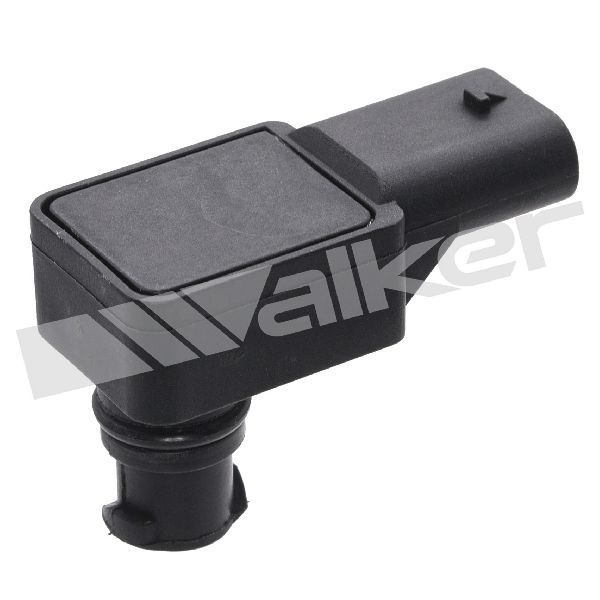
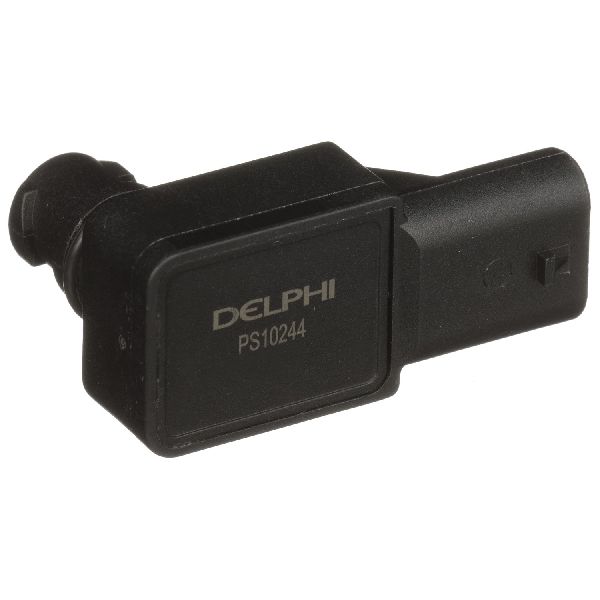
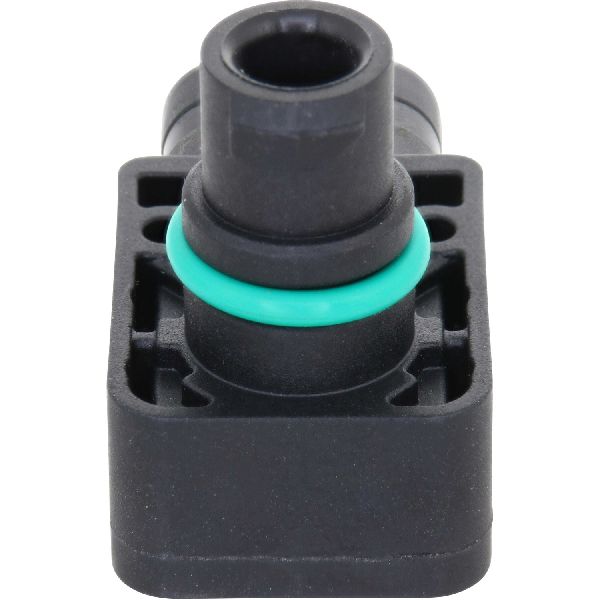
- Manifold Absolute Pressure (MAP) Sensor
(OEM #68199324AA, superseded by 68199324AB)— This is the most frequent failure point for code P0106. The original part number 68199324AA has been superseded by 68199324AB, indicating a potential revision.
Trusted brands: Mopar, Bosch, Delphi, Standard Motor Products (SMP), Holstein
OEM price range: $40-$70
Aftermarket price range: $20-$50
Related Codes That Often Appear With This One
- P0171 — A vacuum leak that causes P0106 can also cause the engine to run lean, triggering a System Too Lean (Bank 1) code.
- P0300 — The erratic air/fuel mixture caused by a bad MAP sensor can lead to random engine misfires.
- P2172 — This code, for 'Throttle Actuator Control System - Sudden High Airflow Detected', can appear alongside P0106 on platform mates, pointing towards a significant vacuum leak or a MAP sensor that is reading incorrectly.
- P0107 / P0108 — These codes indicate MAP sensor circuit low and high voltage, respectively. Seeing them with P0106 points strongly to a failing sensor or an intermittent wiring fault.
Platform-Specific Known Issues
- On 2015-2017 models with the 2.4L Tigershark engine, the MAP sensor is located on the rear of the intake manifold, making access very difficult without putting the vehicle on a lift or ramps. A forum post for the Dodge Dart with the same engine confirms the procedure requires removing the lower splash shield to gain access from underneath.
- The wiring harness for the MAP sensor can become brittle from heat. On platform mates, there are reports of the harness coming loose and making contact with the serpentine belt if not properly secured.
Mechanic-Grade Diagnostic Values
- MAP Sensor Connector - 5V Reference Supply — expected: ~5.0 Volts DC. Failure: No voltage or significantly lower voltage indicates a wiring or PCM issue.
- MAP Sensor Connector - Ground — expected: Near 0 Volts / Good continuity to chassis ground. Failure: Voltage present or high resistance to ground indicates a bad ground connection.
- MAP Sensor Connector - Signal Wire Voltage (Idle) — expected: 1.0 - 1.8 Volts DC. Failure: Voltage is stuck, erratic, or significantly outside this range. A P0107 (low circuit) may trigger below ~0.6V, and a P0108 (high circuit) may trigger above ~4.4V.
Scan Tool Commands That Help
- Professional Scan Tool (e.g., wiTECH): Throttle Body/Idle Relearn Procedure — If the P0106 code appeared immediately after the battery was disconnected or replaced, the PCM may have lost its learned idle values. Performing a throttle body cleaning followed by an idle relearn (letting the vehicle idle for 10 minutes without touching the accelerator) may resolve the code.
Wiring & Ground Locations
- MAP Sensor Connector (2015+ 2.4L) — On the lower rear of the intake manifold, accessed from under the vehicle.. This 3-wire connector provides power, ground, and signal for the MAP sensor. Wire colors are reportedly: Yellow (5V Supply), Green (Ground), and Pink (Signal). The plastic locking tab on this connector can become brittle and break during removal.
- Engine Ground Strap — A key ground strap is located on the upper passenger-side engine mount, connecting the engine to the chassis.. Corrosion on this ground (often appearing as a green buildup) can cause a variety of electrical issues and erratic sensor readings. Cleaning or adding a supplemental ground wire is a known fix for intermittent electrical problems on this platform.
Real Owner Repair Stories
- Reddit user on r/MechanicAdvice (Hyundai Tucson with 2.4L engine (similar architecture)) — P0106 code, very rough idle, and stalling after the battery died.
❌ Tried (didn't work) Replacing the MAP sensor did not fix the code.
✅ What actually fixed it The issue was resolved by thoroughly cleaning the throttle body and performing an idle relearn procedure. The procedure involved disconnecting the battery, cleaning the throttle body, reconnecting everything, and then letting the engine idle for 10 minutes without touching the accelerator pedal to allow the computer to relearn the idle position.
OEM Part Supersession History
68199324AA→68199324AB— The change from AA to AB indicates a revision by the manufacturer, often to address a known issue, improve durability, or change suppliers. No specific reason was publicly documented.
Model Year Variations Within This Range
- 2011-2014: Uses the 2.4L 'World' engine. The MAP sensor is located on the upper intake manifold and is easily accessible from the top of the engine bay.
- 2015-2017: Uses the 2.4L 'Tigershark' MultiAir engine. The MAP sensor is located on the lower rear of the intake manifold, requiring access from underneath the vehicle, which significantly increases repair complexity and labor time.
Diagnostic Flowchart
Other Known Issues on This Vehicle
Issues unrelated to this code that are worth knowing about as an owner of this generation:
- Excessive Oil Consumption (2.4L Tigershark) 🔴 High — Widespread on 2015-2017 models. Can consume a quart of oil in as little as 1,000 miles. Caused by piston rings that don't seal properly against the cylinder walls. (Ref: Subject of multiple Customer Service Notifications (e.g., CSN W80) and a class-action lawsuit (Wood, et al. v. FCA US, LLC) which resulted in extended warranties and potential reimbursements.)
- ZF 9-Speed Automatic Transmission Problems 🔴 High — Very common on 2015-2017 models. Symptoms include harsh/abrupt shifting, lurching, hesitation, and unexpectedly shifting into neutral. (Ref: Multiple software updates (reflashes) were issued by Chrysler to improve shift logic. A recall was also issued by ZF for a wiring harness issue that could cause the shift to neutral.)
- Engine Stalling While Driving 🔴 High — Reported on both generations. An NHTSA investigation into 2011-2013 models found a faulty PCM could cause stalling at low speeds. The oil consumption issue on later models can also lead to engine shutdown if oil levels become critically low. (Ref: NHTSA investigation PE12025 for 2011-2013 models. The oil consumption issue on later models is covered by CSNs related to the class-action lawsuit.)
- MultiAir System Actuator (Brick) Failure 🟠 Medium — Less common than oil consumption but a known failure point. The electro-hydraulic actuator assembly can fail, often due to oil contamination or low oil levels, causing misfires and rough running.
- Coolant Leaks 🟡 Low — Common areas for leaks include the water pump, thermostat housing, and various hose connections as the vehicle ages.
Used vs. New Parts: Buying Guide for This Vehicle
When a used part is the smart pick: For this repair, a used part is generally not recommended for the MAP sensor itself due to its electronic nature and sensitivity. However, sourcing a used wiring harness pigtail from a junkyard is a viable option if only the connector is broken, as new pigtails can be expensive or hard to find.
Donor-vehicle mileage cap: roughly under 80000 miles for the part to have meaningful remaining life.
What to inspect on the donor part:
- For a wiring pigtail, ensure the plastic is not brittle and the locking tab is intact.
- Check for any signs of corrosion (green or white powder) on the connector pins.
- Ensure there is at least 6 inches of wire attached to the pigtail for easier splicing.
- Verify the donor vehicle was not in a front-end collision that could have stressed the engine wiring.
OEM-only on this vehicle (don't cheap out):
- While not strictly 'OEM-only', using a Mopar or a reputable OEM-supplier brand (like Bosch or Delphi) for the MAP sensor is highly recommended. Cheap, unbranded sensors are known to fail prematurely or provide inaccurate readings out of the box.
Aftermarket brands forum-validated for this vehicle:
- Mopar
- Bosch
- Delphi
- Standard Motor Products (SMP)
Brands owners have reported issues with on this vehicle:
- Unbranded, no-name sensors from online marketplaces should be avoided as they are a common source of repeat failures.
Real Owner Stories
Aggregated from forums and TSBs cited above. Mileages and costs reflect what owners reported in those sources.
2015 Chrysler 200 2.4L Tigershark
Symptoms: Engine may stall, especially at idle or during low-speed deceleration.
What fixed it: Replacing the MAP sensor by accessing it from under the vehicle after removing the lower splash shield.
Source hint: vehicle_specific_issues
2013-2016 Dodge Dart 2.4L MultiAir
Symptoms: Rough running condition and P0106 code.
What fixed it: Diagnostic criteria from the factory service manual suggested checking for intake leaks as a primary cause alongside the sensor itself.
Source hint: Dodge-Dart.org ('map sensor issue' thread)
Related OBD-II Codes
Frequently Asked Questions
Is there a specific Customer Service Notification for the 2.4L Tigershark engine issues that might relate to my P0106 code?
Where is the MAP sensor located on my 2015 Chrysler 200 2.4L?
Can the 9-speed automatic transmission issues on my 2015 Chrysler 200 cause engine stalling similar to a P0106 code?
Could a wiring issue near the serpentine belt cause my P0106 code?
What should the MAP sensor voltage read at idle on my Chrysler 200?
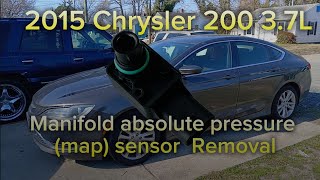
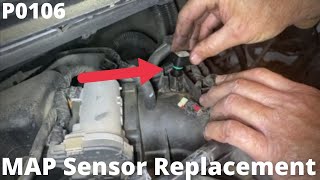
Helpful Videos
We Have This Part in Stock


The information in this article is provided for general reference and educational purposes only. Vehicle specifications, procedures, and part compatibility can vary by production date, trim level, and region. Always consult your vehicle's factory service manual and verify part numbers before purchasing or performing repairs. Safety-critical components such as airbags, seat belts, and braking systems should be installed by a qualified professional.
- Chrysler 200:
- 🎬 Helpful Videos
- 🛍️ Shop This Part
- What's Unique About the 2011-2017 Chrysler 200
- Symptoms You May Notice
- Most Likely Causes
- Rare But Worth Checking
- Diagnosis Steps
- Parts You'll Likely Need
- Related Codes That Often Appear With This One
- Platform-Specific Known Issues
- Mechanic-Grade Diagnostic Values
- Scan Tool Commands That Help
- Wiring & Ground Locations
- Real Owner Repair Stories
- OEM Part Supersession History
- Model Year Variations Within This Range
- Diagnostic Flowchart
- Other Known Issues on This Vehicle
- Used vs. New Parts: Buying Guide for This Vehicle
- Real Owner Stories
- 2015 Chrysler 200 2.4L Tigershark
- 2013-2016 Dodge Dart 2.4L MultiAir
- Related OBD-II Codes
- Frequently Asked Questions
- 🎟️ Get 5% Off