

P0106 on 2015-2018 Cadillac CTS-V: MAP Sensor or Broken Valve Spring?
On the 2015-2018 Cadillac CTS-V, P0106 often points to a faulty MAP sensor, an easy fix. However, a GM Technical Service Bulletin confirms it can also be caused by a broken valve spring, a serious mechanical failure. If code P0506 is also present, the valve spring is a strong possibility. This issue is also common in its platform mates, the Corvette Z06 and Camaro ZL1, which share the same LT4 engine.
- P0106 on a 2015-2018 CTS-V is more serious than on a typical car.
- Always check for other codes. If P0506 (low idle) or P0300 (misfire) are present, suspect a mechanical issue.
- Listen for engine noises. A ticking or chirping sound is a major clue pointing towards a valvetrain problem like a broken valve spring.
- Do not simply replace the MAP sensor without ruling out a vacuum leak or the more serious broken valve spring, as documented in TSB #PIP5423B.
- Due to the potential for a major mechanical failure, professional diagnosis is highly recommended.
What's Unique About the 2015-2018 Cadillac CTS-V

The 2015-2018 CTS-V uses the supercharged 6.2L LT4 V8, a high-performance engine shared with the C7 Corvette Z06 and Camaro ZL1. Unlike on most vehicles where P0106 is a simple sensor or vacuum leak issue, GM has issued a specific Technical Service Bulletin (TSB #PIP5423B) for this entire engine family. This bulletin directly links code P0106, especially when paired with P0506 (Idle RPM Lower Than Expected), to a broken valve spring. This makes diagnosis more critical, as a simple sensor swap may not fix a potentially severe underlying mechanical problem that could lead to catastrophic engine failure.
Diagnostic Flowchart
Tap your situation to follow the diagnostic path that matches what you're seeing on this vehicle.
Symptoms You May Notice
- Check Engine Light is on
- Rough or unstable idle
- Engine stalling when coming to a stop
- Poor acceleration or hesitation
- Increased fuel consumption
- Ticking, chirping, or squeaking noise from the engine
- Reduced Engine Power ('limp mode') may be activated
- Replacing the MAP sensor without investigating potential mechanical engine problems, especially when codes like P0506 or P0300 are also present. The sensor is often correctly reporting the bad data caused by the mechanical fault. This is especially critical on the LT4 engine due to the known valve spring issue.
Most Likely Causes

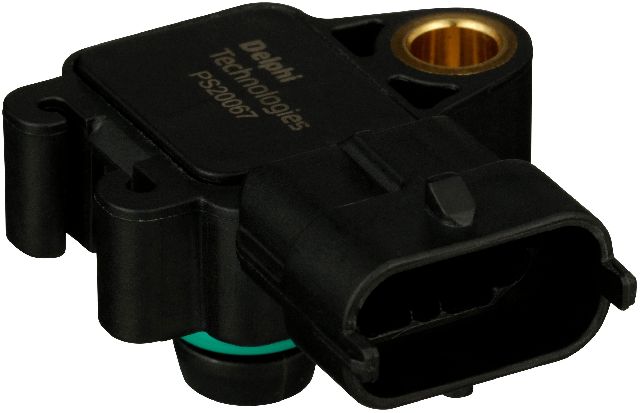
- Faulty Manifold Absolute Pressure (MAP) Sensor 🔴 High Probability Sensors can fail over time due to heat cycles and contamination from the PCV system. It's a common failure part, but should be diagnosed carefully on this platform.
How to confirm: Test the sensor's voltage output with a multimeter or an advanced scan tool. With the key on and engine off, the voltage should correspond to atmospheric pressure. The voltage should change predictably with engine vacuum when running. However, if a mechanical fault like a broken valve spring exists, the sensor may be accurately reporting the erratic pressure, leading to a misdiagnosis if the sensor is replaced without further investigation.
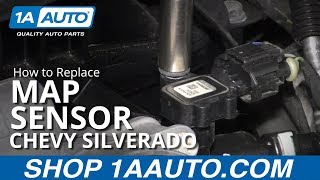
Typical fix: Replace the MAP sensor. It is typically located on the intake manifold. 🎬 See this walkthrough for replacing a MAP sensor on a GM V8.
Est. part cost: $40-$100 - Broken Valve Spring 🟡 Medium Probability A specific GM Technical Service Bulletin (PIP5423B) identifies this as a known cause for P0106 and P0506 on the 6.2L LT4 engine across multiple platforms including the CTS-V, Corvette, and Camaro. Another TSB, PIP5752A, also points to valve spring issues on 2020 model year 6.2L engines, suggesting a potential manufacturing quality control issue with the springs.
How to confirm: Listen for a distinct ticking or mechanical noise. The definitive check is to remove the valve covers and visually inspect the valve springs for breakage. Sometimes the broken pieces remain stacked, so light pressure may be needed to reveal the break. A cylinder leakage test on the affected cylinder is also recommended.
Typical fix: Replace the broken valve spring, valve seals, and any associated hardware. TSB PIP5752A suggests that for certain build dates, if one spring is found broken, all valve springs on both banks should be replaced. This is a labor-intensive job.
Est. part cost: $20-$50 for a single spring, but labor costs will be significant. A full set of upgraded aftermarket springs can cost over $300. - Vacuum Leak 🟡 Medium Probability The complex plumbing of a supercharged engine, including intercooler lines and various vacuum hoses, provides more potential points of failure. Plastic and rubber components in the engine bay can become brittle and crack over time from heat.
How to confirm: Perform a visual inspection of all vacuum lines connected to the intake manifold. A smoke test is the most effective way to find small, hard-to-see leaks.
Typical fix: Replace the cracked or disconnected vacuum hose or faulty gasket.
Est. part cost: $5-$50 - Wiring or Connector Issue ⚪ Low Probability Wiring can be damaged by the high heat of the supercharged engine bay, vibration, or improper repairs. The MAP sensor connector is a common point to check.
How to confirm: Inspect the MAP sensor connector for corrosion or damage. Check the wiring harness for continuity and shorts to ground or power using a multimeter.
Typical fix: Repair the damaged wire or replace the connector pigtail.
Est. part cost: $15-$40
Rare But Worth Checking
- Faulty Powertrain Control Module (PCM): This is very rare. The PCM should only be considered after all other possibilities, including mechanical faults and wiring, have been exhaustively ruled out. Some TSBs for platform mates have pointed to software glitches requiring a dealer reflash for this code under specific conditions (e.g., high speed).
Diagnosis Steps
- Scan the vehicle for all DTCs. Note if P0506 or any P030x codes are present alongside P0106, which strongly increases the likelihood of a mechanical fault.
- Listen carefully to the engine at idle for any abnormal noises like ticking, squeaking, or chirping, which could indicate a valvetrain issue.
- Review TSBs. Check for applicability of TSB #PIP5423B and any other relevant bulletins for your specific VIN.
- If codes P0506 or P030x are present, or if a mechanical noise is heard, prioritize the inspection for a broken valve spring as outlined in the TSB.
- To inspect the valve springs, remove the valve covers. Carefully examine each spring. If no obvious break is seen, gently push on the springs to check for hidden fractures.
- If no mechanical faults are immediately obvious, perform a cylinder leakage test on any cylinders showing misfires to check for valve sealing issues.
- If no mechanical faults are found, proceed with diagnosing the MAP sensor circuit. Inspect the MAP sensor wiring and connector for any visible damage, corrosion, or loose connections.
- With the engine off, use a scan tool to check the MAP sensor reading. It should be close to the BARO (barometric pressure) reading.
- Inspect all vacuum hoses connected to the intake manifold for cracks, loose fittings, or disconnections. A smoke test is recommended to find hidden leaks.
- If all other tests pass, test the MAP sensor's signal with a multimeter while applying vacuum to it with a hand pump to ensure the voltage changes smoothly.
Parts You'll Likely Need

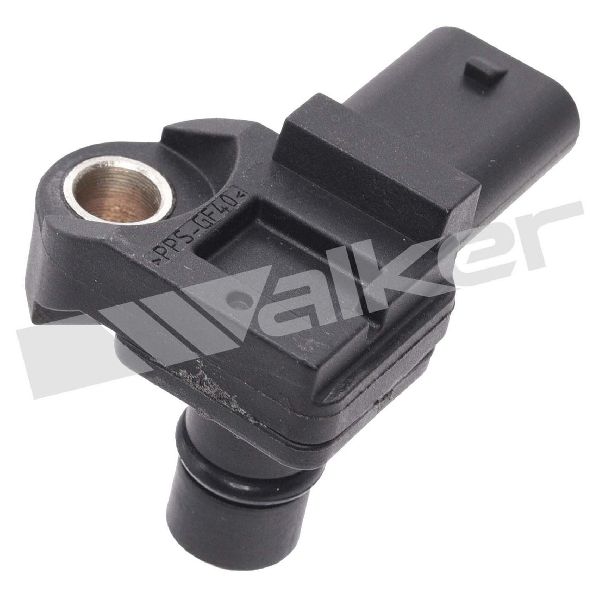
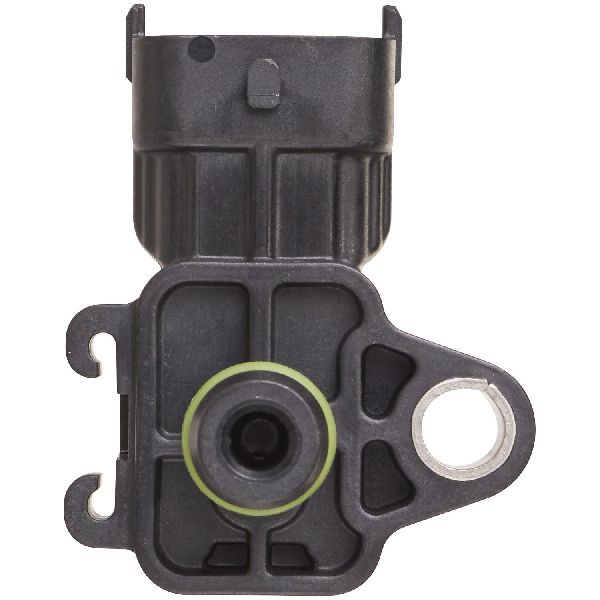
- Manifold Absolute Pressure (MAP) Sensor
(OEM #12644228)— This is the most common and straightforward fix for a P0106 code if no mechanical issues are present.
Trusted brands: ACDelco, Bosch
OEM price range: $70-$110
Aftermarket price range: $40-$80 - Engine Valve Spring
(OEM #12691120)— A documented cause of P0106 on this specific engine, per TSB #PIP5423B. Replacing it is a major repair. Part number 12691120 is listed as the OEM spring for the Gen V LT4.
Trusted brands: ACDelco, GM Genuine, Brian Tooley Racing (BTR) - Aftermarket Upgrade
OEM price range: $20-$50
Aftermarket price range: $15-$40
Related Codes That Often Appear With This One
- P0506 — Stands for 'Idle Air Control System RPM Lower Than Expected.' TSB #PIP5423B explicitly links P0106 and P0506 to a broken valve spring, which would cause a rough, low idle.
- P0300-P0308 — These are engine misfire codes. A broken valve spring will prevent the valve from seating properly, leading to a loss of compression and a misfire on the affected cylinder. TSB #PIP5752A links P0300 with P0106 and P0506 to a broken valve spring.
Technical Service Bulletins (TSBs) & Recalls

- PIP5423B: SES Lamp Setting A P0106 And/Or P0506 - This TSB is the primary source identifying a broken valve spring as a root cause for this code on the 2015-2019 CTS-V and its platform mates with Gen V V8 engines.
- PIP5752A: Service Engine Light misfire engine noise With DTC P0300 P0106 P0506 - A newer TSB from 2020 that also links these codes to a broken valve spring on newer LT engines, reinforcing the diagnosis pattern.
Platform-Specific Known Issues
- TSB #PIP5423B, issued by GM, explicitly states that on the 6.2L LT4 engine, a Service Engine Soon lamp with DTCs P0106 and/or P0506 may be caused by a broken valve spring. The bulletin instructs technicians to remove the valve cover and inspect.
- Real-world owner story: On CorvetteForum, a user with a 2016 Z06 (same LT4 engine) reported a P0106 code with no other codes or obvious noises. Other members immediately pointed to the TSB and the possibility of a broken valve spring, advising against continued driving and recommending a physical inspection of the valvetrain. This highlights the community's awareness of this specific failure mode.
Mechanic-Grade Diagnostic Values
- MAP Sensor 5-Volt Reference Circuit — expected: 4.8-5.2 Volts with ignition ON, engine OFF.. Failure: Voltage outside this range indicates a problem with the ECM or wiring.
- MAP Sensor Signal Voltage (Key On, Engine Off) — expected: 4.0-5.0 Volts, should correspond to the current barometric pressure.. Failure: Voltage significantly lower or higher suggests a faulty sensor or circuit issue.
- MAP Sensor Signal Voltage (Hot Idle) — expected: 1.5-2.1 Volts for a stock engine.. Failure: Voltage that does not drop from the KOEO reading, or is erratic, points to a sensor, vacuum, or mechanical issue. A higher-than-normal voltage at idle (e.g., >2.5V) can be caused by a large aftermarket camshaft.
- MAP Sensor Low Reference Circuit Resistance — expected: Less than 5 ohms to ground.. Failure: Resistance higher than 5 ohms indicates a poor ground connection, which can cause erratic sensor readings.
- Scan Tool MAP Reading vs. BARO Reading (Key On, Engine Off) — expected: The MAP and BARO (Barometric Pressure) parameters on a scan tool should be nearly identical.. Failure: A significant difference between the two readings points to a faulty MAP sensor.
Scan Tool Commands That Help
- GDS2 (GM Global Diagnostic System 2): MAP Sensor Data Display — Use to monitor MAP sensor voltage and pressure (kPa) in real-time. Compare the Key On, Engine Off (KOEO) MAP reading to the Barometric Pressure (BARO) reading; they should be almost identical. A discrepancy points to a sensor fault.
- GDS2 (GM Global Diagnostic System 2): Cylinder Leakage Test — While not a direct scan tool command, TSBs PIP5423B and PIP5752A instruct technicians to perform a cylinder leakage test after finding a broken valve spring to check for further engine damage (e.g., bent valves, damaged piston) before proceeding with repairs.
Wiring & Ground Locations
- MAP Sensor Connector (LT4) — The LT4 engine in the CTS-V uses a TMAP (Temperature and Manifold Absolute Pressure) sensor located on the supercharger lid. It is a 4-wire sensor.. This sensor provides both pressure and temperature data to the ECM. Damage to the connector or harness from heat and vibration is a potential cause of P0106. The four pins are typically +5V reference, ground, MAP signal, and IAT signal.
- G110 (V8) — Attached to the rear of the left cylinder head.. Engine-to-chassis grounds are critical for ensuring all sensors have a stable reference. A loose or corroded ground at this location could potentially cause erratic sensor readings for multiple components, including those that share a ground path with the MAP sensor circuit.
- G101/G106 — G101 grounds the ECM and is often located on the frame rail. G106 is on the front center of the frame cross rail.. The Engine Control Module (ECM) relies on a solid ground connection. A poor ground at G101 can cause the ECM to misinterpret sensor data, potentially setting false codes like P0106.
Real Owner Repair Stories
- CorvetteForum user 'brandonsmash' (2015 Corvette Z06 (same LT4 engine)) — P0106 code and 'Reduced Engine Power' message appearing during aggressive driving on a track. No other codes were present.
❌ Tried (didn't work) Letting the car cool down between sessions., Initial shop inspection found no issues.
✅ What actually fixed it The user found that the coupler for their aftermarket cold air intake had slightly slipped off the throttle body, creating a small, hard-to-see air leak. Refitting the coupler and tightening the clamp resolved the issue. This highlights that even small, post-MAF air leaks can trigger this code under high-load conditions. - LS1Tech user 'ronhightracing' (2014 Chevrolet SS (Gen V V8 architecture)) — Occasional P0106 code after installing a stage 2 TSP camshaft and getting a professional tune.
❌ Tried (didn't work) Replacing the MAP sensor with a new OEM part.
✅ What actually fixed it The issue is common with aggressive camshafts due to lower engine vacuum at idle, which causes the MAP reading to fall outside the stock expected range. The confirmed fix is to have the tuner adjust the diagnostic test parameters within the ECM tune (specifically, raising the minimum ECT for the P0106 test or adjusting the MAP calculated Min/Max tables) to prevent the code from being falsely triggered.
OEM Part Supersession History
12644228→12711681— Standard part revision and update by GM.
Heads up: The new part number is a direct replacement for the old one.12629515, 12661339, 12678635→12691120— Consolidation of previous part numbers into a new standard valve spring for Gen V 6.2L engines.12691120→12728729— Standard part revision and update by GM.
Heads up: The new part number is a direct replacement for the old one.
Helpful Videos

Used OEM Parts in Stock


New Aftermarket Parts Available


The information in this article is provided for general reference and educational purposes only. Vehicle specifications, procedures, and part compatibility can vary by production date, trim level, and region. Always consult your vehicle's factory service manual and verify part numbers before purchasing or performing repairs. Safety-critical components such as airbags, seat belts, and braking systems should be installed by a qualified professional.
- Cadillac CTS-V:
- 🎬 Helpful Videos
- 🛍️ Shop This Part
- What's Unique About the 2015-2018 Cadillac CTS-V
- Diagnostic Flowchart
- Symptoms You May Notice
- Most Likely Causes
- Rare But Worth Checking
- Diagnosis Steps
- Parts You'll Likely Need
- Related Codes That Often Appear With This One
- Technical Service Bulletins (TSBs) & Recalls
- Platform-Specific Known Issues
- Mechanic-Grade Diagnostic Values
- Scan Tool Commands That Help
- Wiring & Ground Locations
- Real Owner Repair Stories
- OEM Part Supersession History
- 🎟️ Get 5% Off