

P0106 on 2009-2016 Audi A4 3.2L V6: MAP Sensor, Carbon Buildup, and Fixes
On the Audi A4 3.2L V6, code P0106 is most often caused by a faulty Manifold Absolute Pressure (MAP) sensor, significant carbon buildup on the intake valves, or a failing Barometric (BARO) sensor inside the ECM. Replacing the MAP sensor is a straightforward DIY fix costing around $40-$100. Professional carbon cleaning can cost $600-$1200, while a faulty ECM requires specialized repair or replacement.
- P0106 on the Audi A4 3.2L V6 points to an issue with the MAP sensor's reading.
- The two most likely causes are a faulty MAP sensor or significant carbon buildup on the intake valves, a known issue with this engine.
- Start your diagnosis by checking live data from the MAP sensor with the key on and engine off. The reading should match the barometric pressure.
- If replacing the MAP sensor doesn't fix the issue, a professional carbon cleaning service (walnut blasting) is likely the next required step.
- In rare cases, the fault can be internal to the engine computer (ECM), which is an expensive repair.
What's Unique About the 2009-2016 Audi A4
The Audi A4 B8 with the 3.2L CALA V6 engine uses a Fuel Stratified Injection (FSI) system, a form of direct injection. A major, well-documented side effect of this design is the severe accumulation of carbon deposits on the intake valves. Unlike traditional port injection, fuel is sprayed directly into the cylinder, so it never washes over and cleans the valves. This carbon buildup can disrupt airflow, leading to implausible pressure readings and triggering a P0106 code, even if the MAP sensor itself is functional. Additionally, on this platform, the barometric pressure sensor (F96) is integrated into the ECM itself, making it a non-serviceable part that can fail and cause this specific code.
Symptoms You May Notice
- Check Engine Light is on
- Rough or unstable idle, sometimes waving between 850-900 RPM
- Hesitation or lack of power during acceleration
- Reduced fuel economy
- Engine stalling, especially when coming to a stop
- Difficulty starting the engine
- Black smoke from the exhaust due to a rich fuel mixture
- Replacing the throttle body when it only needs cleaning.
- Replacing spark plugs or ignition coils, which are more likely to cause specific misfire codes (P030x) rather than a general performance code like P0106.
- Repeatedly replacing the MAP sensor when the root cause is either carbon buildup or the internal ECM BARO sensor.
Most Likely Causes
- Faulty Manifold Absolute Pressure (MAP) Sensor 🔴 High Probability Sensors can fail over time due to heat cycles and internal wear. On some VW/Audi engines, oil contamination from a failing PCV system can also foul the sensor. It's a common first part to replace, though it doesn't always solve the issue.
How to confirm: With the engine off and key on, use a scan tool (like VCDS) to compare the MAP sensor reading (G71) to the Barometric Pressure (BARO) reading (F96). They should be nearly identical to each other and to the local atmospheric pressure. If the G71 reading is off, the sensor is likely faulty.
Typical fix: Replace the MAP sensor. It is located on the intake manifold and secured with two T20 Torx screws. Access can be tight.
Est. part cost: $40-$100 - Carbon Buildup on Intake Valves 🔴 High Probability This is a very common issue on Audi's direct injection (FSI) engines like the 3.2L V6. Oil vapor from the PCV system and combustion byproducts bake onto the back of the intake valves, severely restricting airflow and causing rough running.
How to confirm: This requires visual inspection, usually with a borescope inserted into the intake ports after removing the intake manifold. Symptoms like misfires, a persistent P0106 after sensor replacement, and a history of the issue on FSI engines strongly point to this cause.
Typical fix: The intake manifold must be removed and the valves cleaned. The most effective method is walnut shell blasting, which is typically a professional service costing $600-$1200.
Est. part cost: $20-$50 (for gaskets) - Faulty Internal ECM Barometric Pressure (BARO) Sensor 🟡 Medium Probability On many Audi models of this era, the BARO sensor (F96) is integrated directly into the Engine Control Module (ECM) and is not a separately replaceable part. An internal failure can cause it to read incorrectly, creating a discrepancy with the MAP sensor and triggering P0106, often with the engine at 0 RPM.
How to confirm: Using a scan tool like VCDS, compare the BARO reading (F96) to your local atmospheric pressure. If it's significantly off (e.g., 70-90 mbar lower) and doesn't change with altitude, the sensor inside the ECM is faulty. Owners have confirmed its location by removing the ECM and seeing the reading change when blowing air at small holes on the unit.
Typical fix: This is a complex issue. The ECM must be sent to a specialist for repair/cloning or replaced entirely by the dealer, which is very expensive and requires programming.
Est. part cost: $800-$2000 - Vacuum Leaks 🟡 Medium Probability Plastic and rubber vacuum hoses, gaskets, and the PCV (Positive Crankcase Ventilation) valve can become brittle and crack over time, allowing unmetered air to enter the intake manifold. The hose from the brake booster to the intake is a common failure point.
How to confirm: Perform a visual inspection of all vacuum lines connected to the intake manifold. A smoke test is the most effective way to find small, hard-to-see leaks. Spraying brake cleaner around suspected areas and listening for a change in engine RPM can also help.
Typical fix: Replace the cracked hose, faulty gasket, or PCV valve.
Est. part cost: $20-$150
Rare But Worth Checking
- Damaged Wiring or Connector: A visual inspection of the MAP sensor wiring harness for breaks, corrosion, or loose pins is always a good idea, especially if the sensor has been replaced without fixing the code.
- Clogged Air Filter: A severely restricted air filter can starve the engine of air, potentially affecting the pressure readings enough to trigger a P0106 code. This is a simple and inexpensive check.
- Intake Manifold Runner Control (IMRC) Issues: The 3.2L engine has intake manifold runner flaps that adjust airflow. If these flaps or their sensors (G336) are stuck or faulty, it can affect manifold pressure and potentially contribute to a P0106 code.
Diagnosis Steps
- Read Fault Codes: Use a VAG-COM/VCDS scanner to confirm P0106 is the primary code and check freeze frame data. Note if the fault occurred at 0 RPM, which points towards an electrical/sensor issue rather than a running issue.
- Check Live Data (Engine Off): With the key on, engine off, compare the Manifold Absolute Pressure (MAP) reading (G71) to the Barometric Pressure (BARO) reading (F96). They should be within ~10-20 mbar of each other and match local weather data. A significant deviation in either points to a faulty sensor.
- Inspect MAP Sensor and Wiring: Visually inspect the MAP sensor's connector and wiring for damage. The sensor is held by two T20 Torx screws on the intake manifold.
- Test for Vacuum Leaks: Perform a smoke test to identify any leaks in the intake system, including hoses (especially the brake booster line), intake manifold gaskets, and the PCV system.
- Inspect for Carbon Buildup: If the above steps reveal no cause, the next step is to inspect the intake valves for carbon buildup. This requires removing the intake manifold and using a borescope. Given the engine's design, this is a highly probable cause.
- Advanced Diagnostics (ECM/BARO): If the BARO (F96) reading was incorrect in Step 2, this strongly suggests an internal ECM fault. This requires sending the ECM for professional repair or replacement.
Parts You'll Likely Need
- Manifold Absolute Pressure (MAP) Sensor
(OEM #03C906051F)— This is a common failure point and the first logical part to replace. The Bosch equivalent is part number 0261230234.
Trusted brands: Bosch, Audi Genuine
OEM price range: $70-$120
Aftermarket price range: $40-$80 - Intake Manifold Gaskets
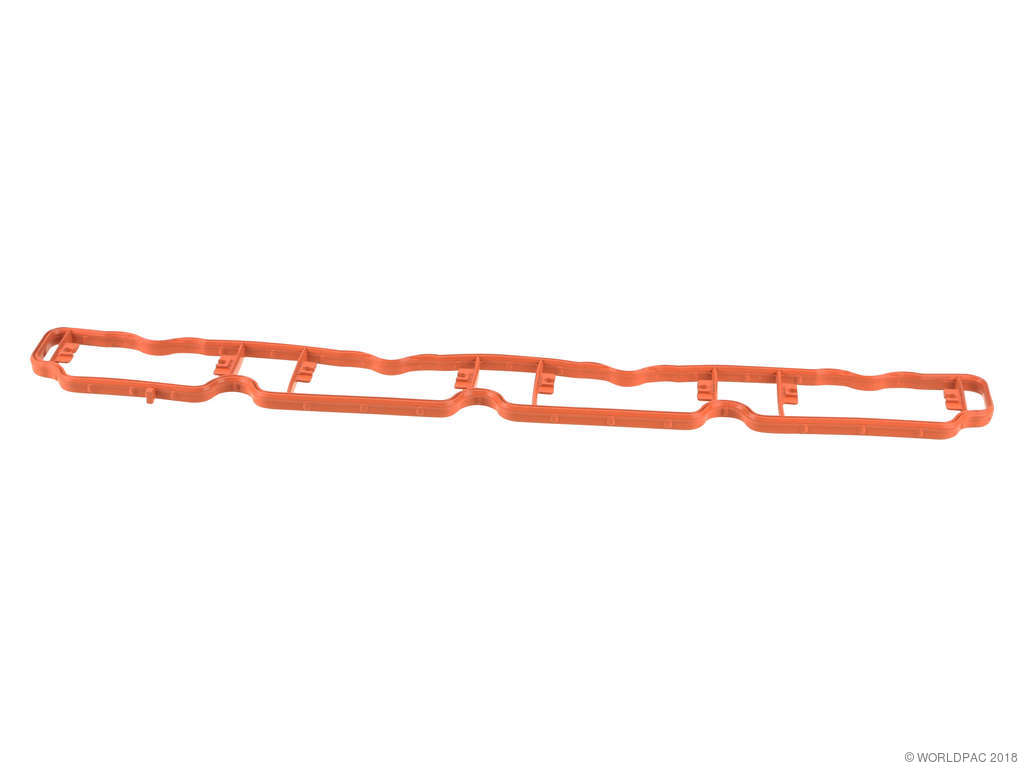
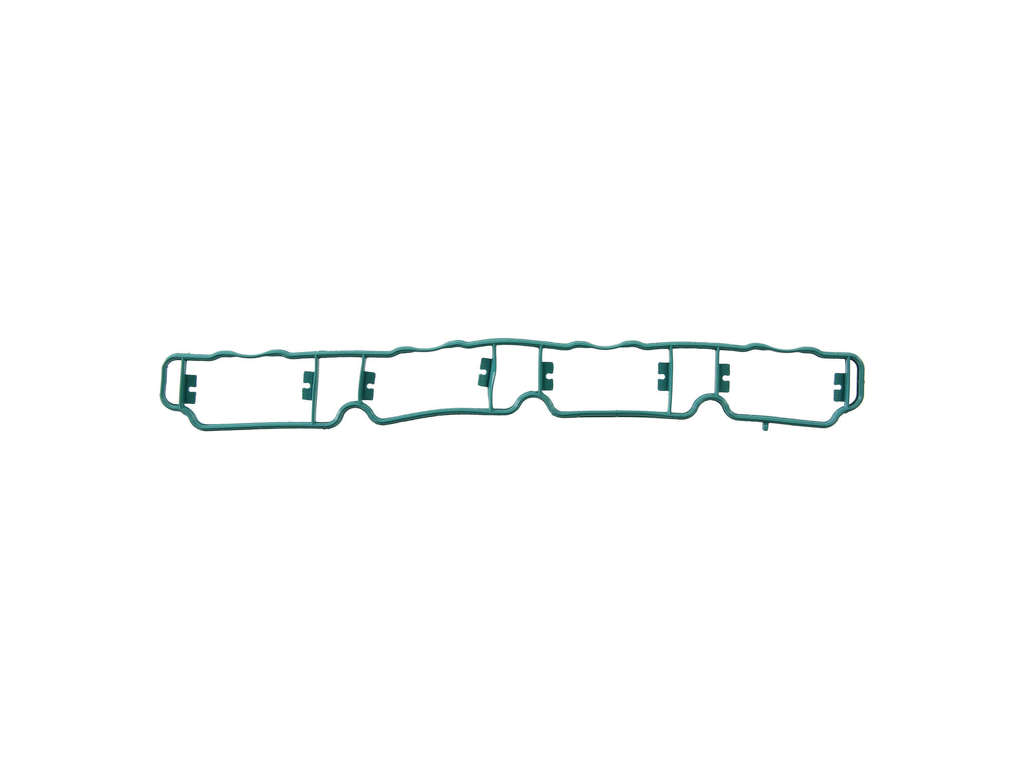
(OEM #06E129717D)— These must be replaced if the intake manifold is removed for carbon cleaning, which is a very common and necessary service for the 3.2L FSI engine to resolve this code.
Trusted brands: Victor Reinz, Elring
OEM price range: $40-$60
Aftermarket price range: $20-$40
Related Codes That Often Appear With This One
- P2006: Intake Manifold Runner Control Stuck Closed (Bank 1)
- P2007: Intake Manifold Runner Control Stuck Closed (Bank 2)
Platform-Specific Known Issues
- Severe carbon buildup on the intake valves is a widely known issue for the 3.2L FSI engine and a primary suspect for code P0106.
- The barometric pressure sensor (F96) is integrated into the ECM, making it non-serviceable. A failure here requires ECM repair or replacement and is a known cause for this code, often setting the fault at 0 RPM.
Mechanic-Grade Diagnostic Values
- MAP (G71) vs. BARO (F96) Pressure Correlation — expected: With Key On, Engine Off (KOEO), the MAP sensor reading and BARO sensor reading in VCDS should be within ~20 mbar of each other and match the local atmospheric pressure (e.g., ~1010 mbar at sea level).. Failure: The BARO (F96) reading is consistently 70-90 mbar lower than the MAP (G71) and actual atmospheric pressure. The fault code freeze frame often shows the error occurred at 0 RPM.
- Crankcase Vacuum (PCV Test) — expected: With the engine idling, you should be able to remove the oil filler cap with slight resistance. There should not be a strong suction holding it down.. Failure: The oil filler cap is held on by a very strong vacuum, making it difficult to remove. This indicates a failed PCV diaphragm, which can cause an implausible manifold pressure reading.
- MAP Sensor Voltage (General) — expected: Approximately 5V reference from the ECU on the power wire, a good ground connection, and a signal voltage that changes with engine load/vacuum.. Failure: No 5V reference, poor ground, or a signal voltage that is stuck or does not respond to pressure changes.
Scan Tool Commands That Help
- VCDS (VAG-COM): Engine (01) -> Meas. Blocks / Advanced Meas. Values -> Check MAP (G71) and BARO (F96) readings. — This is the primary diagnostic step to compare the two pressure sensor readings at KOEO to identify a discrepancy, which is the core of the P0106 fault logic.
- VCDS (VAG-COM): Engine (01) -> Basic Settings -> Group 060 -> Activate — To perform a Throttle Body Adaptation (TBA). This is required after cleaning the throttle body, replacing it, or after prolonged battery disconnection to relearn the throttle plate's positions.
Wiring & Ground Locations
- Primary Engine Bay Grounds — Key ground points for the B8 chassis are: next to the battery, at the center of the firewall (grounds the ECM), on the left and right engine bay structures, and from the engine block to the firewall.. A corroded or loose engine or ECM ground can cause unstable voltage and reference signals for all engine sensors, including the MAP sensor, leading to erratic readings and fault codes like P0106.
- MAP Sensor Connector — On the MAP sensor itself, located on the intake manifold.. It is typically a 3 or 4-pin connector. The pins provide 5V reference power from the ECM, a ground path, and a signal wire back to the ECM. If it's a 4-pin, the fourth wire is for the integrated Intake Air Temperature (IAT) sensor. Corrosion or damage to these pins will directly cause a P0106 fault.
Real Owner Repair Stories
- Ross-Tech & AudiWorld Forum Users (2006-2009 Audi A4/A6 3.2L V6) — Persistent P0106 Check Engine Light, fault triggers with engine off (0 RPM in freeze frame).
❌ Tried (didn't work) Replacing the MAP sensor with a new Bosch or OEM part., Checking for vacuum leaks (smoke test was clean)., Cleaning the throttle body.
✅ What actually fixed it This was not fixed by many users, but correctly diagnosed as a failed internal barometric pressure sensor (F96) within the ECM. The ECM was reading atmospheric pressure ~80 mbar lower than the new MAP sensor, causing the 'implausible signal' fault during the KOEO check. The only fixes are to live with the light, send the ECM for specialized repair, or replace the ECM and have it programmed. - Ross-Tech Forum User (VW/Audi with P0106) — P0106 code, oily intake manifold.
❌ Tried (didn't work) Initially cleaning the MAP sensor and manifold provided only a temporary fix.
✅ What actually fixed it The root cause was a failed PCV diaphragm creating excessive crankcase vacuum, pulling oil into the intake and fouling the MAP sensor. Replacing the PCV valve assembly and thoroughly cleaning the MAP sensor and throttle body resolved the issue permanently.
"I Checked Everything" — The Actual Cause
- The most common story for this pattern on the 3.2L V6 is a clean smoke test, a new MAP sensor, and a clean throttle body, yet the P0106 code persists. The actual cause is the internal, non-serviceable barometric pressure sensor (F96) in the ECM failing its self-test correlation with the MAP sensor when the key is turned on before the engine starts. The ECM sees a discrepancy between the two sensors (which should read identically before the engine creates vacuum) and flags the fault.
When the Usual Fixes Don't Work
- While replacing the MAP sensor is the most common first step, numerous owner accounts confirm that this often does not fix the P0106 code on the 3.2L V6. In many documented cases, owners replaced the MAP sensor multiple times with both aftermarket (Bosch) and genuine Audi parts to no avail. The final diagnosis frequently pointed to either severe carbon buildup requiring physical cleaning or the much more complex failure of the barometric sensor inside the ECM, proving that simply replacing the MAP sensor is often just treating a symptom.
OEM Part Supersession History
03C906051, 03C906051E, 36906051G→03C906051F— Standard revision and update process for reliability and performance.
Heads up: The Bosch equivalent part number is 0261230234 and is a direct, reliable replacement.
Model Year Variations Within This Range
- 2009-2012: The 3.2L CALA V6 was only offered in the early years of the B8 A4 platform. The primary causes of P0106 (carbon buildup, internal ECM BARO sensor failure) are consistent across all years this specific engine was used and are characteristic of the FSI design of that era.
Diagnostic Flowchart
Other Known Issues on This Vehicle
Issues unrelated to this code that are worth knowing about as an owner of this generation:
- Timing Chain Tensioner & Guide Failure 🔴 High — Common after 100,000 miles. Plastic guides become brittle and fail, often preceded by a brief 'rattle' on cold startup. The timing components are on the rear of the engine, requiring engine or transmission removal for service, making it a very expensive repair ($4000+).
- Carbon Buildup on Intake Valves 🔴 High — Inevitable on all 3.2L FSI engines. Significant buildup can occur as early as 50,000-60,000 miles, causing rough idle, misfires, and loss of power. Requires periodic manual cleaning (walnut blasting).
- Plastic Cooling System Component Failure 🟠 Medium — The water pump and thermostat housing are made of plastic and are prone to cracking and leaking over time, a common issue on many VAG engines of this era. Failure often occurs around 80,000-120,000 miles.
- Multiple Oil Leaks 🟠 Medium — These engines are known for developing oil leaks from numerous locations as they age, including the valve covers, cam girdles, and various seals. While the core engine is robust, the gaskets are not.
Used vs. New Parts: Buying Guide for This Vehicle
When a used part is the smart pick: A used Engine Control Module (ECM) can be a cost-effective choice if the internal barometric sensor has failed. However, it is NOT a plug-and-play part. It MUST be sent to a specialist service along with your original ECM to have the immobilizer data cloned. A used intake manifold is also a possibility if the original is physically damaged, but this is rare.
Donor-vehicle mileage cap: roughly under 80000 miles for the part to have meaningful remaining life.
What to inspect on the donor part:
- For a used ECM, ensure the part number is an exact match.
- Verify the donor vehicle was not involved in a flood or fire.
- Ask the seller for a guarantee that the unit is functional and 'unlocked' if possible, though cloning is still necessary.
OEM-only on this vehicle (don't cheap out):
- Engine Control Module (ECM) - While a used OEM unit can be cloned, avoid non-OEM remanufactured units from unknown sources. The programming is highly specific.
- PCV Valve Assembly - Forum reports suggest some aftermarket PCV valves do not perform to OEM spec and can fail to resolve vacuum-related issues. Sticking with an OEM part is a safer bet.
Aftermarket brands forum-validated for this vehicle:
- MAP Sensor: Bosch (part no. 0261230234) is the original equipment manufacturer and is a reliable alternative to the more expensive Audi-branded part.
- Intake Gaskets: Victor Reinz and Elring are reputable OEM-equivalent brands for gaskets needed during a carbon cleaning service.
Brands owners have reported issues with on this vehicle:
- Unbranded, low-cost MAP sensors from online marketplaces should be avoided, as their accuracy and longevity are questionable and can make diagnosis more difficult.
Real Owner Stories
Aggregated from forums and TSBs cited above. Mileages and costs reflect what owners reported in those sources.
2009-2012 Audi A4 3.2L V6
Symptoms: The owner experienced a discrepancy between the MAP reading and the atmospheric pressure reading (F96). Even after trying a new computer and carbon cleaning, the dealership could not resolve the issue.
What fixed it: Unresolved; the owner eventually sold the car because the issue persisted after multiple expensive repair attempts.
Source hint: Reddit: 3.2L giving a P0106 code
2009-2011 Audi A6 (C6) 3.2L V6
Symptoms: The owner diagnosed a P0106 and confirmed a discrepancy between the MAP and BARO readings. The fault would trigger even with the engine off, and replacing the MAP sensor did not solve the problem.
What fixed it: Identified the core issue as the internal BARO sensor located within the ECU.
Source hint: AudiWorld Forums: P0106 - Do I just have a bad MAP Sensor?
2009-2016 Audi A4 3.2L V6
Symptoms: The internal ECM barometric sensor (F96) was reading low, causing an implausible signal fault against the MAP sensor (G71), specifically noted at 0 RPM.
What fixed it: Professional repair or replacement of the ECM, as the F96 sensor is integrated and non-serviceable.
Source hint: Ross-Tech Forums: P0106 - Is it as simple as a bad/wrong MAP sensor?
2009-2016 Audi A4 3.2L V6
Symptoms: P0106 code triggered by oil fouling the intake manifold and the MAP sensor.
What fixed it: Repairing the faulty PCV system which was allowing oil to contaminate the intake tract.
Source hint: Ross-Tech Forums: P0106 - What Causes It?
Related OBD-II Codes
Frequently Asked Questions
Where is the MAP sensor located on my 3.2L V6 Audi A4 and how hard is it to replace?
My VCDS scan shows the P0106 fault occurred at 0 RPM. What does this mean for my Audi?
Can I replace the Barometric Pressure (BARO) sensor (F96) separately on this vehicle?
Why is carbon buildup such a common cause for P0106 on the 3.2L FSI engine?
How can I tell if my PCV system is causing the P0106 code on my Audi A4?
What is the recommended method for cleaning the intake valves on the CALA engine?
Helpful Videos

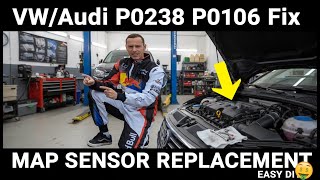


Used OEM Parts in Stock


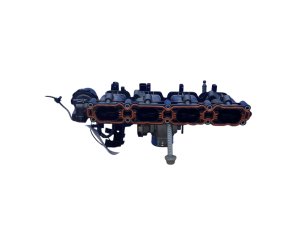

New Aftermarket Parts Available


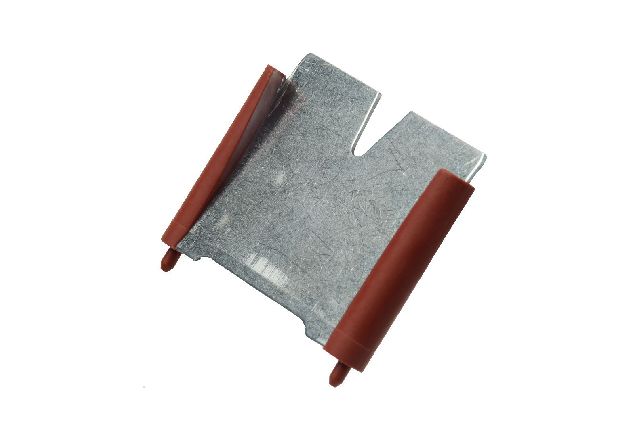

The information in this article is provided for general reference and educational purposes only. Vehicle specifications, procedures, and part compatibility can vary by production date, trim level, and region. Always consult your vehicle's factory service manual and verify part numbers before purchasing or performing repairs. Safety-critical components such as airbags, seat belts, and braking systems should be installed by a qualified professional.
- Audi A4:
- 🎬 Helpful Videos
- 🛍️ Shop This Part
- What's Unique About the 2009-2016 Audi A4
- Symptoms You May Notice
- Most Likely Causes
- Rare But Worth Checking
- Diagnosis Steps
- Parts You'll Likely Need
- Related Codes That Often Appear With This One
- Platform-Specific Known Issues
- Mechanic-Grade Diagnostic Values
- Scan Tool Commands That Help
- Wiring & Ground Locations
- Real Owner Repair Stories
- "I Checked Everything" — The Actual Cause
- When the Usual Fixes Don't Work
- OEM Part Supersession History
- Model Year Variations Within This Range
- Diagnostic Flowchart
- Other Known Issues on This Vehicle
- Used vs. New Parts: Buying Guide for This Vehicle
- Real Owner Stories
- 2009-2012 Audi A4 3.2L V6
- 2009-2011 Audi A6 (C6) 3.2L V6
- 2009-2016 Audi A4 3.2L V6
- 2009-2016 Audi A4 3.2L V6
- Related OBD-II Codes
- Frequently Asked Questions
- 🎟️ Get 5% Off