

P0103 on 2012-2016 Honda CR-V: MAF Circuit High Causes and Fixes
For a 2012-2016 Honda CR-V, code P0103 is most often caused by a dirty Mass Air Flow (MAF) sensor. The most likely fix is cleaning the sensor with a dedicated spray (~$15). If that fails, replacing the sensor is the next step (approx. $70-$150 for a quality aftermarket part). In rare cases, a wiring short or blown fuse may be the cause.
- P0103 on a 2012-2016 CR-V means the MAF sensor circuit has a high voltage fault.
- The easiest and cheapest first step is to clean the MAF sensor with dedicated cleaner spray.
- If cleaning doesn't fix it, inspect the wiring and intake boot for damage before replacing the sensor.
- When replacing, use a reputable brand like Denso, as cheap aftermarket sensors are known to be unreliable.
- This is a very DIY-friendly repair, requiring only basic hand tools and about 15-30 minutes.
What's Unique About the 2012-2016 Honda CR-V
The 4th generation Honda CR-V (2012-2016) uses a reliable 2.4L engine, first the K24Z7 and later the direct-injected K24W9. While the MAF sensors on these engines are generally robust, their location in the intake tract makes them susceptible to contamination from dirt or oil (especially from aftermarket oiled air filters). A high-input code like P0103 on this platform points more strongly toward an electrical fault (a dirty or failed sensor sending a high voltage signal, or a wiring short) than a simple vacuum leak, which more commonly triggers lean (P0171) or range/performance (P0101) codes.
Symptoms You May Notice
- Check Engine Light is on
- Rough or erratic idle
- Hesitation or stumbling during acceleration
- Noticeable loss of engine power
- Reduced fuel economy
- Black smoke from the exhaust pipe, especially on acceleration
- Engine is hard to start or stalls shortly after starting
- Replacing the MAF sensor without first attempting to clean it. Cleaning is inexpensive and often solves the problem.
- Replacing oxygen sensors. While O2 sensors are part of the fuel control system, P0103 points directly to the MAF circuit, not the exhaust sensors.
Most Likely Causes
- Dirty or Contaminated MAF Sensor 🔴 High Probability The sensor's hot wire can become coated with dirt, dust, or oil from the air filter, insulating it and causing incorrect readings. Using aftermarket oiled air filters increases this risk. This is the most common cause and should always be the first check.
How to confirm: Visually inspect the sensor's wire elements. If they appear coated or dirty, cleaning is the first logical step.
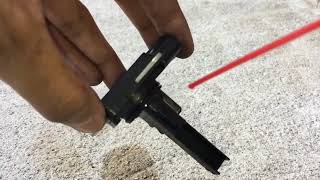
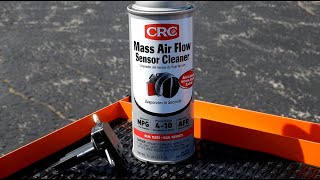
Typical fix: Remove the sensor and clean it thoroughly with a dedicated Mass Air Flow sensor cleaner spray. 🎬 Watch: Step-by-step MAF cleaning on a 2.4L CR-V Let it dry completely before reinstalling.
Est. part cost: $10-$20 for MAF cleaner spray - Faulty Mass Air Flow (MAF) Sensor 🟡 Medium Probability While Honda MAF sensors are generally reliable, internal electronic failure can occur, causing the sensor to send a constant high voltage signal regardless of actual airflow.
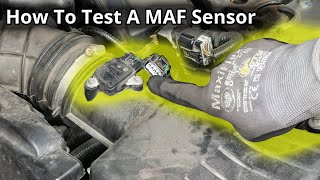
How to confirm: If cleaning the sensor does not resolve the code, and the wiring is confirmed to be good, the sensor itself is the likely culprit. A scan tool can monitor the MAF voltage; if it's stuck high (near 5V) with the key on and engine off, the sensor has failed internally. 🎬 See how to test if your MAF sensor is bad
Typical fix: Replace the MAF sensor. It is a simple component held in by two screws. Using an OEM or OEM-supplier part (like Denso) is highly recommended for reliability.
Est. part cost: $150-$250 for OEM, $70-$150 for a quality aftermarket brand like Denso or Hitachi. - Wiring or Connector Issue ⚪ Low Probability Vibration and heat can cause wires to break or chafe over time. The connector pins can also become corroded or loose, causing a short to power or a bad signal.
How to confirm: Visually inspect the wiring harness leading to the MAF sensor for any signs of damage, chafing, or melting. Check the connector for corrosion or backed-out pins. Use a multimeter to test for proper power, ground, and signal integrity at the connector.
Typical fix: Repair the damaged section of the wire or replace the connector pigtail.
Est. part cost: $5-$30 for wiring repair supplies
Rare But Worth Checking
- Torn Air Intake Boot: A significant tear in the flexible rubber boot between the MAF sensor and the throttle body can cause turbulent, unmetered air to enter. While this more commonly causes lean (P0171) or range/performance (P0101) codes, a large enough disturbance could potentially cause erratic high readings. A Honda technician on a forum noted this is a common issue to check for.
- Blown Fuse: The MAF sensor circuit is protected by a fuse. On a 2015 CR-V, for example, this is reportedly fuse #2, labeled 'ACG', located in the under-dash fuse box. If this fuse blows, it can cause a P0103 code, often along with other issues since the fuse may power other components.
- Faulty Powertrain Control Module (PCM): This is extremely rare. The PCM's internal circuit for processing the MAF signal can fail, but all other potential causes should be exhaustively ruled out before considering PCM replacement.
Diagnosis Steps
- Read the code with an OBD-II scanner and record the freeze frame data.
- Visually inspect the MAF sensor wiring harness and connector for any obvious damage, corrosion, or loose connections.
- Inspect the air intake system, especially the flexible rubber boot between the air filter box and the throttle body, for any cracks, tears, or loose clamps.
- Check for a blown fuse. For example, on a 2015 CR-V, inspect fuse #2 (ACG) in the interior fuse panel.
- Remove the MAF sensor (typically two Phillips head screws). Visually inspect the sensing elements for dirt, oil, or debris.
- If dirty, clean the sensor using only dedicated MAF sensor cleaner spray. Do not touch the wires or use other chemicals. Allow it to air dry completely.
- Reinstall the sensor, clear the code, and perform a test drive to see if the code returns.
- If the code returns, use a scan tool to monitor the MAF sensor voltage and g/s reading. With the key on and engine off, the voltage should be low (near 0V). If it's stuck high (near 5 volts), the sensor is likely shorted internally or there is a short to power in the signal wire.
- If scan tool access is limited, use a multimeter to test the wiring at the connector: check for a 12V power wire (with key on), a good ground, a 5V reference wire, and the signal wire voltage.
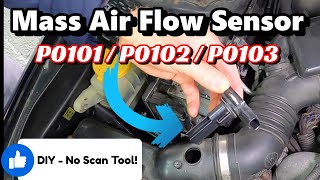
- If cleaning fails and the wiring and fuse check out, replace the MAF sensor with a new, quality part. 🎬 Watch: How to test and replace a faulty MAF sensor
Parts You'll Likely Need
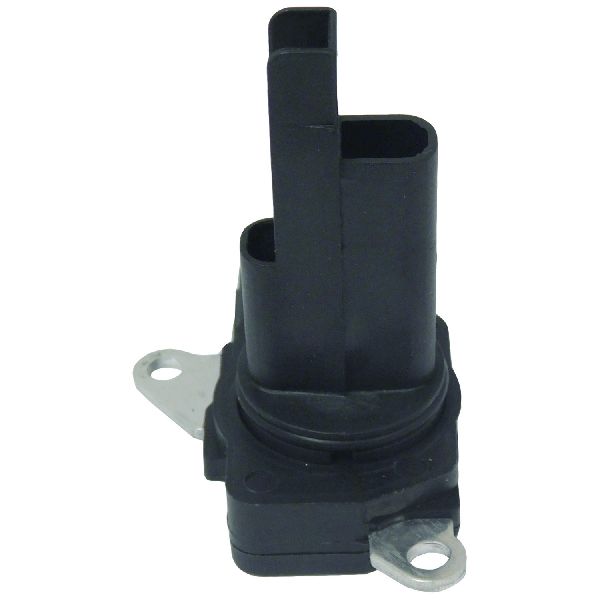
- Mass Air Flow (MAF) Sensor
(OEM #37980-RLF-013)— This is the most common part to fail for this code if cleaning does not work. An internal short will cause the high voltage reading. This part number supersedes previous versions like 37980-R40-A01 and 37980-R11-A01.
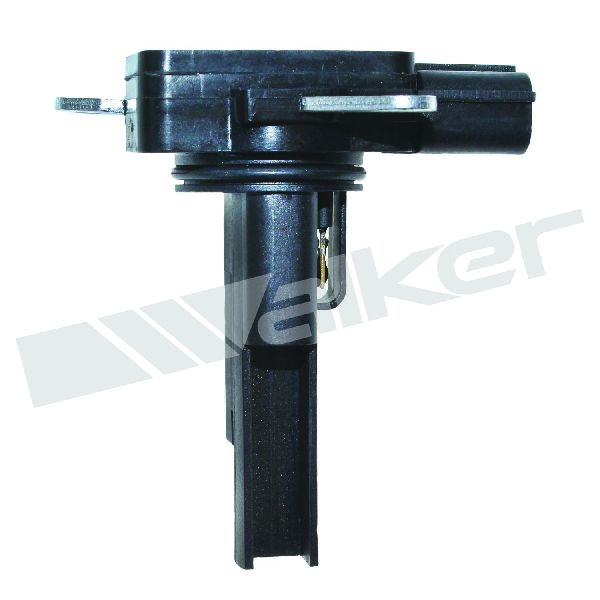
Trusted brands: Honda (Genuine OEM), Denso (OEM Supplier), Hitachi, Walker Products
OEM price range: $265.20
Aftermarket price range: $70-$150 - Mass Air Flow Sensor Cleaner — This specialized aerosol cleaner is required to safely remove contaminants from the sensor's delicate wires without leaving a residue or damaging the electronics. It is the first and most cost-effective repair step.
Trusted brands: CRC, Liqui Moly, WD-40 Specialist
Aftermarket price range: $10-$20
Related Codes That Often Appear With This One
- P0113 — Intake Air Temperature (IAT) Sensor Circuit High Input. On many Hondas, including this CR-V, the IAT sensor is integrated into the same housing as the MAF sensor. A problem with the shared connector, a blown fuse, or a faulty sensor unit can cause both codes to appear simultaneously.
Technical Service Bulletins (TSBs) & Recalls
- While no TSBs directly address P0103 on this CR-V, related bulletins provide context. TSB 16-011, for codes P0335/P0339 on 2015-2016 CR-Vs, points to corrosion in an engine wiring harness connector, showing that wiring issues are a known possibility on this platform.
Platform-Specific Known Issues
- Owner Experience: Cleaning Solved P0103: A user on 'BobIsTheOilGuy' forums with a K-series engine reported solving intermittent drivability issues by cleaning the MAF sensor, noting that even a small amount of contamination can cause problems. This supports the 'clean first' approach.
- Repair Story: Replacement Required: On CRVOwnersClub.com, a thread titled '2013 CRV P0103 Code' details an owner's experience. After cleaning the sensor didn't work, they replaced it with a Denso aftermarket unit which resolved the code and restored normal engine operation. This highlights that while cleaning is a good first step, sensor failure is a real possibility.
Mechanic-Grade Diagnostic Values
- MAF Sensor Signal Voltage (Scan Tool) — expected: Approximately 0.5V at idle, rising to 4.5V at wide-open throttle.. Failure: Voltage is stuck near 5.0V with the key on, engine off, or does not change with engine RPM. A reading above 0.25 g/s with the engine off also indicates a problem.
- MAF Sensor Airflow (Scan Tool) — expected: A 2.4L engine should read approximately 2.0-4.0 g/s at a stable idle (around 700 RPM). This value should increase smoothly and proportionally with RPM.. Failure: The g/s reading is excessively high at idle (e.g., > 10 g/s) or does not respond logically to changes in throttle.
- MAF Sensor Connector Pin 2 (VGM wire) to Ground — expected: No continuity (open circuit).. Failure: Continuity to ground indicates a short in the PCM's internal circuit.
Scan Tool Commands That Help
- Honda HDS (or equivalent advanced scanner): PCM Reset — After replacing the MAF sensor or performing any wiring repairs, a PCM reset should be performed to clear learned fuel trim values and force the system to relearn with the new component's data.
- Honda HDS (or equivalent advanced scanner): PCM Idle Learn Procedure — Following a PCM reset, the idle learn procedure must be performed to allow the engine to establish a stable idle.
Wiring & Ground Locations
- MAF/IAT Sensor 5-Pin Connector — On the MAF sensor body, located in the air intake tube between the air filter box and the throttle body.. This is the primary connection point for all MAF sensor tests. A P0103 is a high voltage code, often caused by a short to power on the signal wire or an internal sensor failure diagnosed at this connector. The IAT is integrated, so a connector-wide issue can set multiple codes.
- Pin 2 (VGM wire) at MAF Connector — This is the MAF signal wire running to the PCM. On a 2012 CR-V, this corresponds to pin B43 on the PCM connector.. This wire carries the voltage signal that the PCM interprets as airflow. A short to a power source on this wire will cause a P0103 code. Testing for voltage here is a key diagnostic step.
- G101 / G102 Engine Ground — Typically located on the engine block or cylinder head, often near the thermostat housing or on the front of the engine. One main ground strap connects from the battery negative terminal to the chassis, and another to the engine/transmission.. While a bad ground more commonly causes a low voltage code (P0102), a corroded or intermittent ground can cause erratic sensor behavior and, in some cases, voltage fluctuations that could be misinterpreted by the PCM. Ensuring all engine and chassis grounds are clean and tight is a fundamental step.
OEM Part Supersession History
37980-R40-A01, 37980-R11-A01, 37980-R11-A02, 37980-RLF-003→37980-RLF-013— Standard part consolidation and minor revisions by the manufacturer over a long production run.
Heads up: The listed part numbers are generally interchangeable for the 2012-2014 CR-V, with 37980-RLF-013 being the latest service part. Always verify fitment with VIN.
Model Year Variations Within This Range
- 2015-2016: The engine was updated to the direct-injected K24W9. While the P0103 diagnostic principles remain the same, the PCM software and some related components are different. The fuse protecting the circuit is confirmed as the 'ACG' fuse #2 in the under-dash fuse box for 2015-2016 models.
Diagnostic Flowchart
Other Known Issues on This Vehicle
Issues unrelated to this code that are worth knowing about as an owner of this generation:
- VTC Actuator Rattle on Cold Start 🟠 Medium — Very common on 2012-2014 models with the K24Z7 engine. A brief, 1-2 second grinding or rattling noise is heard immediately after a cold start. (Ref: Honda TSBs 09-010 and 16-012 address this issue.)
- Vibration at Idle or While Driving (2015-2016 models) 🟠 Medium — Widespread issue on the 2015 model year, which introduced the CVT. Owners report vibrations at idle, during low-speed acceleration, and at highway speeds. This led to a class-action lawsuit. (Ref: Honda TSB 15-046 provides a multi-step repair procedure involving software updates, new radiator cushions, new transmission mounts, and other parts to mitigate the vibration.)
- Starter Motor Failure 🟠 Medium — A common reason for a no-start condition across this generation. Symptoms include a single click or no sound when turning the key, even with a good battery. The starter is located under the intake manifold, making replacement a moderately involved job.
- Transmission Judder/Vibration (2012-2014 models) 🟡 Low — Some owners of the earlier 5-speed automatic models experience a judder or vibration under light acceleration. (Ref: Honda TSB 15-086 recommends a transmission software update and a fluid change to correct the issue.)
- Parasitic Battery Drain 🟡 Low — Some vehicles may experience a dead battery after sitting for a few days. This has been traced to components like a faulty A/C clutch relay or VSA module not shutting down correctly.
Used vs. New Parts: Buying Guide for This Vehicle
When a used part is the smart pick: A used OEM MAF sensor from a low-mileage (under 60k miles) donor vehicle can be a cost-effective alternative to a new aftermarket part. Since it's a genuine OEM part (Denso or Hitachi), it is more likely to perform within the correct parameters than a cheap, unbranded new sensor.
Donor-vehicle mileage cap: roughly under 60000 miles for the part to have meaningful remaining life.
What to inspect on the donor part:
- Check the donor vehicle's VIN to ensure it's from a compatible year range.
- Inspect the connector pins for any signs of corrosion or damage.
- Look at the sensing element if possible; avoid any parts with visible contamination, oil, or physical damage.
- Ask for a short warranty (e.g., 30 days) from the salvage yard to protect against a dead-on-arrival part.
OEM-only on this vehicle (don't cheap out):
- While not strictly 'OEM-only', sensitive electronic sensors like the MAF are poor candidates for no-name or budget brands. Sticking to OEM or the original equipment supplier is highly recommended to avoid persistent issues.
Aftermarket brands forum-validated for this vehicle:
- Denso (OEM supplier)
- Hitachi (OEM supplier)
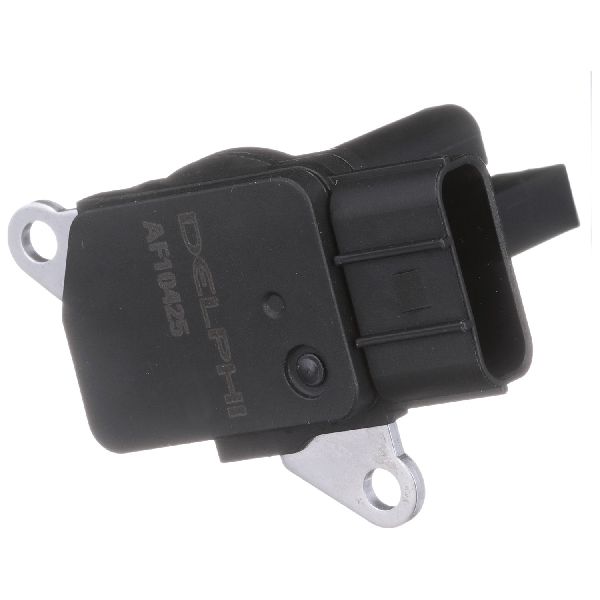
- Delphi
- NTK
- Walker Products
Brands owners have reported issues with on this vehicle:
- Unbranded, 'white-box' parts from online marketplaces are frequently reported on forums to be calibrated incorrectly, causing the engine to run poorly even if they clear the initial code.
Real Owner Stories
Aggregated from forums and TSBs cited above. Mileages and costs reflect what owners reported in those sources.
2013 Honda CR-V
Symptoms: Check Engine Light with P0103 code was present.
What fixed it: After an attempt to clean the sensor failed, the owner replaced it with a Denso aftermarket unit, which resolved the code and restored normal engine operation.
Source hint: CRVOwnersClub.com, a thread titled '2013 CRV P0103 Code'
Honda CR-V with K-series engine
Symptoms: Owner reported intermittent drivability issues.
What fixed it: The owner solved the problems by cleaning the MAF sensor, noting that even a small amount of contamination can cause issues.
Source hint: 'BobIsTheOilGuy' forums
Related OBD-II Codes
Frequently Asked Questions
What's the very first thing I should do if my 2014 CR-V shows a P0103 code?
I cleaned the MAF sensor on my CR-V, but the Check Engine Light with P0103 came back. What's next?
What brand of replacement MAF sensor is best for my 2012-2016 Honda CR-V?
Are there any known wiring problems on this generation of CR-V that could cause a P0103 code?
I heard a fuse could cause the P0103 code. Which one should I check on my 2015 CR-V?
My CR-V is hesitating during acceleration and has the P0103 code. Are these two things related?
Helpful Videos
Used OEM Parts in Stock

New Aftermarket Parts Available



The information in this article is provided for general reference and educational purposes only. Vehicle specifications, procedures, and part compatibility can vary by production date, trim level, and region. Always consult your vehicle's factory service manual and verify part numbers before purchasing or performing repairs. Safety-critical components such as airbags, seat belts, and braking systems should be installed by a qualified professional.
- Honda CR-V:
- 🎬 Helpful Videos
- 🛍️ Shop This Part
- What's Unique About the 2012-2016 Honda CR-V
- Symptoms You May Notice
- Most Likely Causes
- Rare But Worth Checking
- Diagnosis Steps
- Parts You'll Likely Need
- Related Codes That Often Appear With This One
- Technical Service Bulletins (TSBs) & Recalls
- Platform-Specific Known Issues
- Mechanic-Grade Diagnostic Values
- Scan Tool Commands That Help
- Wiring & Ground Locations
- OEM Part Supersession History
- Model Year Variations Within This Range
- Diagnostic Flowchart
- Other Known Issues on This Vehicle
- Used vs. New Parts: Buying Guide for This Vehicle
- Real Owner Stories
- 2013 Honda CR-V
- Honda CR-V with K-series engine
- Related OBD-II Codes
- Frequently Asked Questions
- 🎟️ Get 5% Off