

P0102 on 2002-2014 Volvo XC90: MAF Circuit Low Causes and Fixes
For a 2002-2014 Volvo XC90, code P0102 almost always points to a dirty or failed Mass Airflow (MAF) sensor. A simple cleaning with dedicated MAF cleaner may work, but replacement with a genuine Bosch OEM part (like Bosch P/N 0280218088 or Volvo P/N 31342362 for the 2.5T) for ~$90-$160 is the most common permanent fix. Non-OEM sensors are known to cause issues.
- P0102 on your XC90 means the MAF sensor circuit has a low signal. Your car will likely run poorly.
- The most likely cause is a dirty or failed MAF sensor. Start by cleaning it with dedicated MAF cleaner.
- If you replace the sensor, use a genuine Bosch part. These Volvos are known to be picky about electronics.
- The repair is very simple and DIY-friendly, requiring only basic hand tools and about 15-20 minutes.
- Check the simple things first: air filter, sensor connector, and intake hoses for obvious cracks or leaks.
What's Unique About the 2002-2014 Volvo XC90
The first-generation XC90, particularly with the 2.5T and D5 engines, relies on a sensitive Bosch hot-wire/hot-film MAF sensor. These sensors are known to become contaminated over time from dust and oil vapors, leading to incorrect readings. The platform is also notoriously sensitive to non-OEM electronic parts; owners and mechanics across numerous forums strongly recommend using a genuine Bosch replacement sensor to avoid immediate or premature failure. Interestingly, a well-documented case on a 2004 XC90 2.5T showed this MAF code was triggered by the electrical interference from non-Volvo specification Bosch platinum spark plugs (Bosch 4028 FR7DP). Reverting to OEM Volvo plugs solved the problem after a new MAF sensor did not.
Symptoms You May Notice
- Check Engine Light is on
- Engine runs rough, especially at idle
- Hesitation or stumbling during acceleration
- Reduced engine power, sometimes described as 'limp mode'
- Stalling, particularly when coming to a stop or at idle
- Black smoke from the exhaust, especially on D5 models
- Decreased fuel economy
- Extended cranking time before the engine starts
- Inability to rev past a certain RPM (e.g., 3000rpm)
- Replacing the MAF sensor when the actual problem is a bad ground wire or a broken power wire in the sensor's harness.
- Replacing the MAF sensor when the issue is a massive vacuum leak from a cracked intake boot post-MAF.
- Replacing other components like fuel pumps or O2 sensors before checking for simple issues like a clogged air filter or a dirty MAF sensor element.
Most Likely Causes
- Dirty or Contaminated MAF Sensor 🔴 High Probability The hot-wire/hot-film design is susceptible to contamination from oil vapors (especially from aftermarket oiled air filters or a clogged PCV system) and fine dust that gets past the air filter.
How to confirm: Remove the sensor and visually inspect the small wires or plates inside the sensor housing. If they appear coated in grime or oil, cleaning is warranted.
Typical fix: Remove the sensor and clean it thoroughly with a dedicated Mass Airflow Sensor cleaner spray. Do not touch the sensor elements. Allow it to air dry completely before reinstalling.
Est. part cost: $10-$15 for a can of CRC MAF cleaner. - Failed MAF Sensor 🔴 High Probability The electronic components of the sensor can fail with age and heat cycles, leading to a complete loss of signal or a signal that is stuck low. Aftermarket sensors are reported to fail very quickly.
How to confirm: If cleaning does not resolve the issue, the next step is replacement. A common DIY test is to unplug the MAF sensor's electrical connector; if the engine's running condition improves, the sensor is likely bad as the ECM reverts to a safer default map. A scan tool showing 0 or near-0 g/s airflow at idle also confirms a dead sensor.
Typical fix: Replace the MAF sensor. It is highly recommended to use a new Bosch (OEM) sensor to ensure compatibility and longevity.
Est. part cost: $90-$180 - Damaged Wiring or Poor Connection 🟡 Medium Probability Engine vibration and heat can cause wires to fray or the connector pins to corrode or loosen over time. The harness is routed near the headlight and can be subject to damage.
How to confirm: Visually inspect the wiring harness and connector going to the MAF sensor for any signs of damage, corrosion, or loose pins. With a multimeter and the key on (engine off), check for battery voltage (approx. 12V) at the power supply pin (Pin 2) and a good ground at Pin 3. A high resistance reading (>1 ohm) on the ground pin indicates a faulty ground path, a known issue.
Typical fix: Repair the damaged section of wire, clean the connector pins, or replace the connector pigtail if necessary. If the ground path has high resistance, run a new ground wire from Pin 3 to a clean chassis ground point.
Est. part cost: $15-$40 for a new connector pigtail or wiring repair supplies. - Large Intake Air Leak (Post-MAF) ⚪ Low Probability A crack in the large intake hose between the MAF and the throttle body is a common failure point. This allows unmetered air to enter, but it can sometimes confuse the sensor and cause a low reading instead of a lean code.
How to confirm: Inspect the large black rubber/plastic intake boot for cracks, especially in the accordion sections. A visual inspection or a smoke test will reveal leaks.
Typical fix: Repair or replace the cracked intake boot.
Est. part cost: $50-$200 depending on the part.
Rare But Worth Checking
- Incorrect Spark Plugs: A documented case on a 2004 XC90 2.5T showed that non-OEM Bosch platinum plugs (P/N 4028 FR7DP) created enough radio frequency interference (RFI) to trigger a P0102 code. The owner replaced the MAF and checked for leaks to no avail. Reverting to genuine OEM Volvo plugs solved the problem instantly.
- Weak Battery or Charging System: Low system voltage can cause various electronic modules, including the ECM, to report erroneous low-input faults. A user on the Volvo Owners Club forum with a D5 experiencing P0102 and P0112 found that charging a weak battery (reading 12.05V) improved starting and allowed the codes to be cleared.
- Faulty Pre-heat Thermostat in Airbox: On older P2 models, a thermostat-controlled flap in the airbox can fail and get stuck open, constantly feeding hot air from the exhaust manifold into the intake. This hot air is less dense and can also overheat and destroy the MAF sensor over time, leading to a P0102 code.
Diagnosis Steps
- Read the code with an OBD-II scanner and confirm P0102 is present. Note any other codes, especially P0112 (IAT low) which strongly points to the MAF assembly or its wiring. If using a Volvo-specific scanner, look for code ECM-1300.
- Visually inspect the entire air intake tract from the air filter box to the throttle body. Look for disconnected hoses, large cracks in the intake boot, and loose clamps.
- Inspect the air filter. If it is excessively dirty or clogged, replace it.
- Unplug the MAF sensor's electrical connector and inspect for corrosion, moisture, or bent pins. Ensure it's seated firmly.
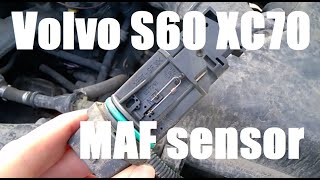
- Remove the MAF sensor (usually held by two T25 Torx screws). 🎬 Watch: How to remove and clean your Volvo's MAF sensor. Visually inspect the sensor elements for dirt, oil, or debris.
- If dirty, clean the sensor using only dedicated MAF sensor cleaner spray. Let it air dry completely. Reinstall, clear codes, and test drive.
- If cleaning doesn't work, use a scan tool to monitor live data. With the key on, engine off, the MAF reading should be 0 g/s. At a fully warmed-up idle, the MAF reading for a 2.5T should be stable and around 3.3-4.2 g/s (12-15 kg/hr). A reading of 0 or near-0 g/s with the engine running indicates a failed sensor or circuit.
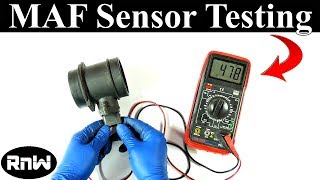
- If the sensor reading is zero or incorrect, test the circuit. 🎬 See this guide on how to test any MAF sensor. With the key on, engine off, and the connector unplugged, use a multimeter to check for ~12V power on Pin 2 and a good ground (<1 ohm resistance to chassis) on Pin 3. A high resistance ground is a known failure point.
- As a final confirmation, unplug the MAF sensor and start the engine. If the stalling/hesitation improves significantly, the MAF is providing bad data and should be replaced.
- If a new OEM MAF sensor does not fix the issue, investigate rare causes like a high-resistance ground path, electrical interference from incorrect spark plugs, or low system voltage from a failing battery/alternator.
Parts You'll Likely Need
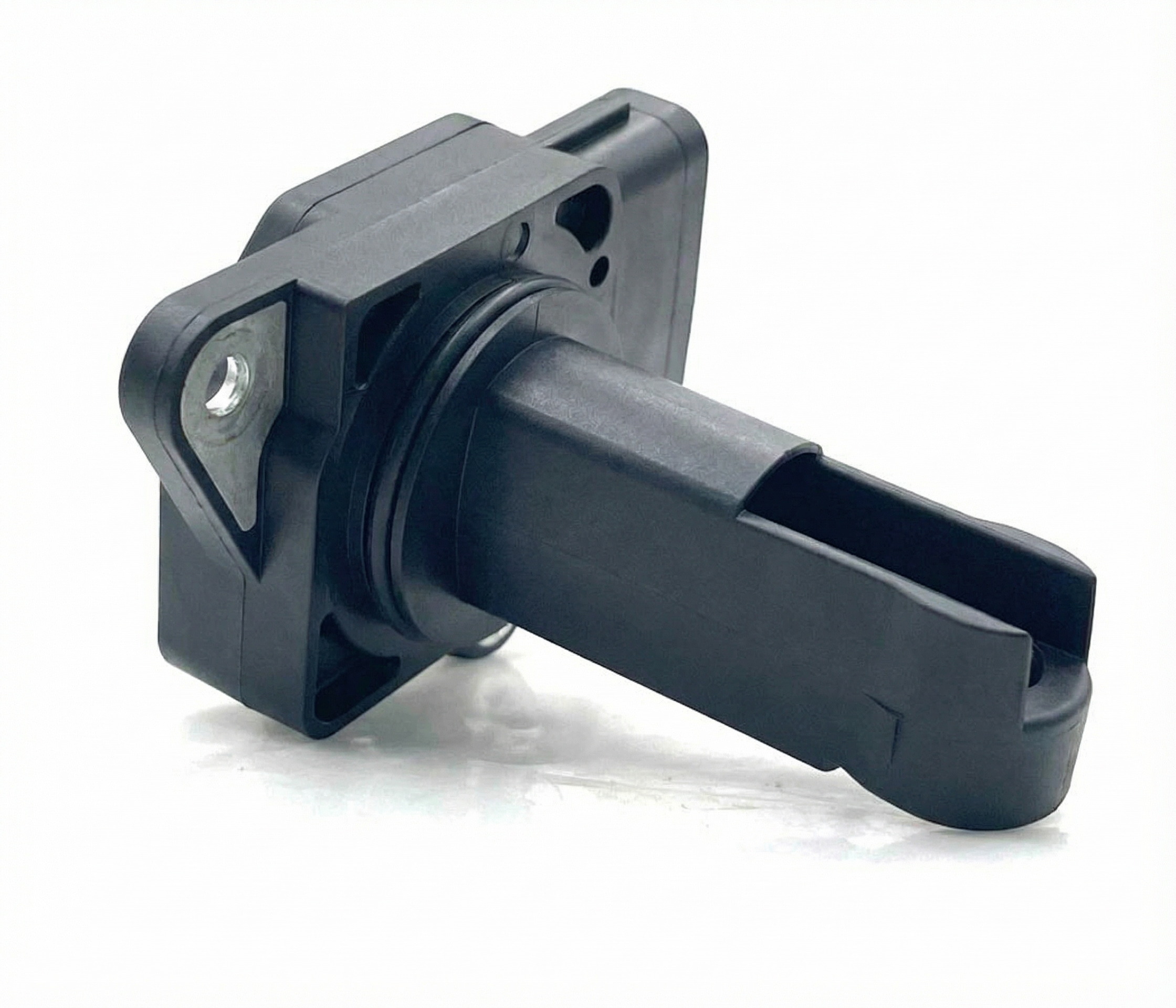
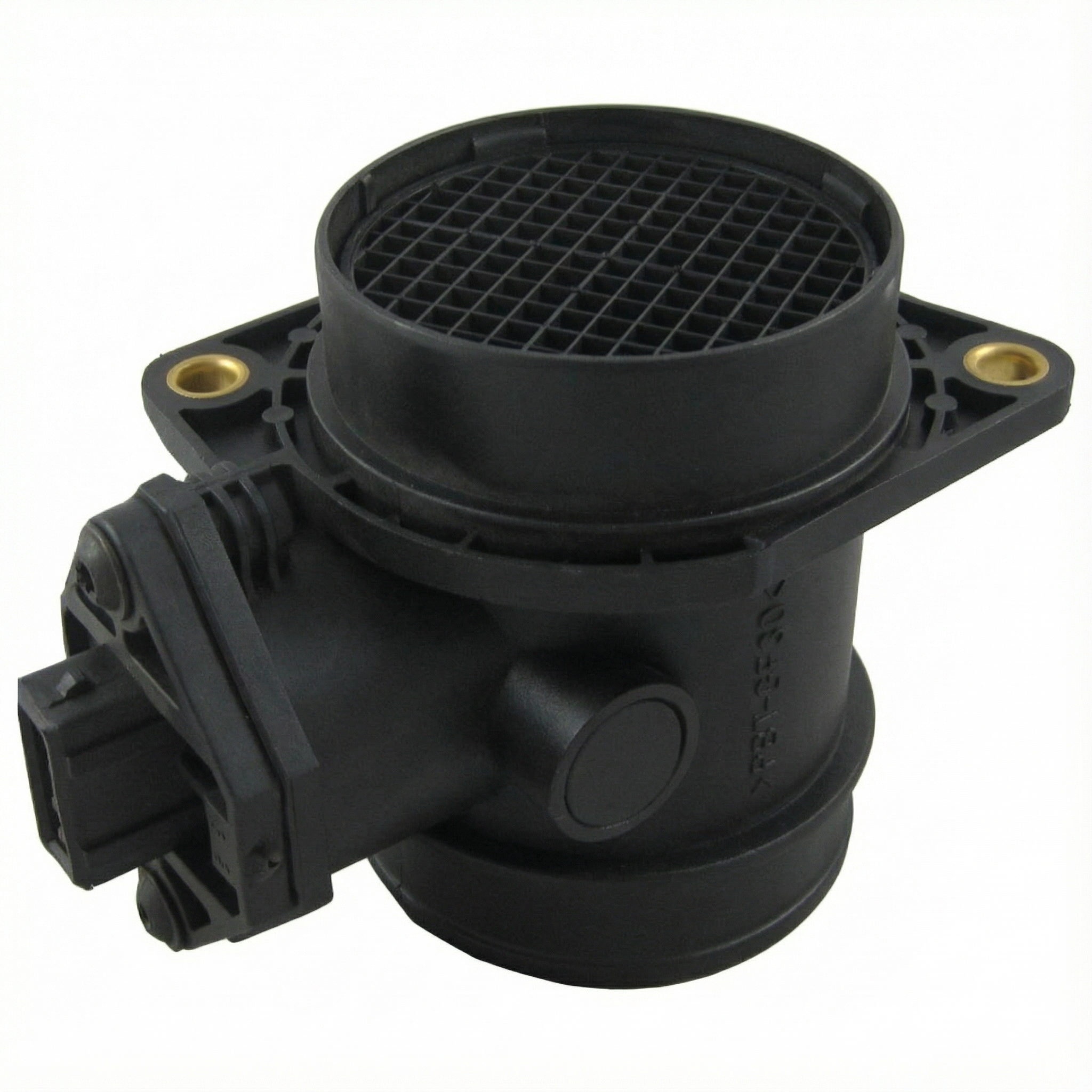
- Mass Air Flow Sensor (2.5T Engine)
(OEM #31342362, 8670398, 8670114)— This is the most frequent failure point for the P0102 code. The internal electronics fail or become permanently unresponsive to cleaning.
Trusted brands: Bosch (P/N: 0280218088)
OEM price range: $120-$180
Aftermarket price range: $40-$100 (Use with extreme caution, OEM is strongly recommended by forum users) - MAF Sensor Cleaner — Often, the sensor is simply dirty and cleaning it is the first and cheapest diagnostic step.
Trusted brands: CRC Mass Air Flow Sensor Cleaner
OEM price range: $10-$15
Aftermarket price range: $10-$15
Related Codes That Often Appear With This One
- P0112 — Intake Air Temperature (IAT) Circuit Low Input. The IAT sensor is integrated into the MAF sensor housing on these models. A failure of the MAF sensor assembly, its connector, or shared wiring will cause both codes to appear together. This is a very common pairing.
- P0171 / P0174 — System Too Lean (Bank 1 / Bank 2). While P0102 is a low *input* code, if it's caused by a massive post-MAF vacuum leak, the MAF will under-report airflow (P0102) while the oxygen sensors detect the excess unmetered air, triggering lean codes.
- ECM-1300 — This is the Volvo-specific Diagnostic Trouble Code (DTC) for 'Mass air flow (MAF) sensor - Flow too low'. It is the direct equivalent of the generic P0102 and will be displayed by dealer-level diagnostic tools like VIDA.
Mechanic-Grade Diagnostic Values
- MAF Sensor Live Data at Idle (2.5T Engine, fully warm) — expected: 12-15 kg/hr (approximately 3.3 - 4.2 g/s). Failure: A reading of 0 or near 0 g/s indicates a dead sensor or circuit. An abnormally high reading (e.g., 28-30 kg/hr) can indicate a bad ground, not a bad sensor.
- MAF Sensor Ground Pin Resistance — expected: < 1.0 Ohm (measured between Pin 3 on the harness connector and a clean chassis ground). Failure: High resistance (e.g., 8 Ohms) indicates a corroded or broken ground path, which can cause incorrect sensor readings even with a new sensor.
- MAF Sensor Power Supply Voltage (KOEO) — expected: Approximately 12V (Battery Voltage). Failure: 0V or significantly low voltage indicates an open circuit or problem with the system relay.
Hidden / Shadow Codes Worth Checking
- ECM-1300: Mass air flow (MAF) sensor - Flow too low. This is the manufacturer-specific code that corresponds to the generic P0102. (see via Volvo's diagnostic software (VIDA) or an advanced scan tool capable of reading manufacturer-specific codes.)
Scan Tool Commands That Help
- VIDA (Volvo Diagnostic Software): ECM Reload/Relearn — Recommended for the XC90 after replacing the MAF sensor to ensure the Engine Control Module properly adapts to the new component's characteristics.
Wiring & Ground Locations
- MAF Connector Pin 3 — The ground pin on the 5-pin electrical connector for the Mass Airflow Sensor.. This is the sensor's ground reference. A high resistance on this pin due to corrosion or a break in the wire is a documented cause of incorrect MAF readings that can mimic a failed sensor.
- MAF Connector Pin 2 — The power supply pin on the MAF electrical connector.. This pin should have battery voltage with the key on. Lack of power means the sensor cannot operate, leading to a low/no signal code.
- MAF Connector Pin 5 — The signal wire pin on the MAF electrical connector, which connects to terminal A22 on the ECM.. This is the wire that carries the airflow signal to the computer. VIDA procedures include checking this for a short-circuit to ground.
- Engine Block Ground Strap — A braided strap typically running from the top of the engine (near the timing cover on the 2.5T) to the chassis/strut tower area.. While not the direct ground for the MAF sensor, a corroded or broken main engine ground can cause widespread electrical issues and unstable sensor readings across the engine.
Real Owner Repair Stories
- VolvoForums user report (2006 Volvo XC90 2.5T, 210k miles) — High MAF readings at idle (28-30 kg/hr), codes for MAF flow too high (ECM-1210). Note: While the code was for 'too high', the diagnostic principle for a bad ground applies directly to 'too low' faults as well.
❌ Tried (didn't work) Replacing the MAF sensor with a new Bosch unit., Multiple smoke tests for vacuum/boost leaks (all were negative)., Overhauling the PCV system., Cleaning the throttle body., Replacing intake, exhaust, and turbo gaskets., Cleaning ECM and MAF connector contacts.
✅ What actually fixed it The owner measured the resistance of the MAF ground (Pin 3) and found it was 8 ohms. He cut the ground wire at the connector and spliced in a new wire directly to a chassis ground point, achieving a <1 ohm resistance. This immediately corrected the MAF reading at idle to a normal 12-15 kg/hr and resolved all codes.
"I Checked Everything" — The Actual Cause
- A documented repair showed that even after a new Bosch MAF was installed and multiple smoke tests came back clean, the issue persisted. The root cause was a high-resistance ground path for the MAF sensor (8 ohms on Pin 3). A smoke test cannot detect electrical faults, so technicians may wrongly conclude the issue is not with the MAF system if a smoke test is negative. The fix was to run a new, dedicated ground wire for the sensor.
OEM Part Supersession History
8670398, 9470640, 8627296→31342362 (Volvo), 0280218088 (Bosch OEM)— Standard part evolution and consolidation.
Heads up: While not specific to this exact part, be aware that some Volvo part supersessions involve a change in sensor technology (e.g., hot-wire to a different design) that may not be fully compatible with older ECU software, even if it physically fits. Always use the specific Bosch part number known to work (0280218088) rather than relying solely on a cross-reference from a non-OEM brand.
Model Year Variations Within This Range
- 2003-2014 (XC90): While the MAF sensor and its common failures are consistent, some sources specifically recommend an ECM reload/relearn procedure via VIDA for the XC90 model after replacing the MAF sensor, which may not be as critical on other P2 platform cars.
Diagnostic Flowchart
Used vs. New Parts: Buying Guide for This Vehicle
When a used part is the smart pick: A used part is a viable, and often recommended, choice for the MAF sensor IF it is a genuine OEM Volvo or Bosch part from a low-mileage donor vehicle. This is often considered superior to a brand-new, non-OEM aftermarket sensor.
Donor-vehicle mileage cap: roughly under 80000 miles for the part to have meaningful remaining life.
What to inspect on the donor part:
- Verify the part has 'Bosch' or 'Volvo' markings and a legitimate part number.
- Visually inspect the sensor element through the bore; avoid any with obvious physical damage, heavy oil coating, or debris.
- If possible, get the VIN of the donor car to verify its mileage and that it was a running vehicle.
OEM-only on this vehicle (don't cheap out):
- Mass Airflow Sensor
Brands owners have reported issues with on this vehicle:
- Generic, unbranded sensors from marketplaces like eBay or Amazon are widely reported to be dead-on-arrival or fail quickly.
Real Owner Stories
Aggregated from forums and TSBs cited above. Mileages and costs reflect what owners reported in those sources.
2004 Volvo XC90 D5
Symptoms: The car went into limp home mode and would not rev over 3000rpm, though it idled perfectly. It triggered fault codes P0102, P0112, and P0237.
What fixed it: Diagnosis with a scan tool showed a MAF reading of only 0.52 g/s at idle, far below the expected value, which strongly indicated the MAF sensor itself had failed.
Source hint: volvoforums.org.uk thread titled 'xc90 limp home and fault code 102,112&237 HELP - Volvo Owners Club Forum'
Volvo XC90
Symptoms: A P0102 MAF code appeared after installing new spark plugs.
What fixed it: The root cause was identified as incorrect spark plugs causing electrical interference that affected the MAF sensor's signal.
Source hint: volvoxc.com/forums/showthread.php?26345-New-Bosch-Spark-Plugs-Caused-a-P0102-MAF-Code-in-my-Volvo-XC90 - Detailed story of incorrect spark plugs causing P0102.
Volvo XC90
Symptoms: Vehicle was setting a P0102 code.
What fixed it: After performing wiring checks, the owner discovered and repaired a broken wire in the harness leading to the MAF sensor.
Source hint: volvoxc.com/forums/showthread.php?28812-Troubleshooting-MAF - Excellent diagnostic thread showing wiring checks and finding a broken wire.
Related OBD-II Codes
Frequently Asked Questions
What brand of MAF sensor is recommended for my 2002-2014 XC90?
My XC90 is in 'limp mode' and won't rev over 3000 RPM. Is this related to P0102?
I cleaned the MAF sensor but the code returned. What's a simple test to confirm the sensor is bad?
I'm also seeing code P0112 with P0102. What does this combination mean?
What should the MAF reading be on a scan tool for my 2.5T at idle?
I suspect a wiring issue. What voltage should I find at the MAF sensor connector?
Helpful Videos
We Have This Part in Stock


The information in this article is provided for general reference and educational purposes only. Vehicle specifications, procedures, and part compatibility can vary by production date, trim level, and region. Always consult your vehicle's factory service manual and verify part numbers before purchasing or performing repairs. Safety-critical components such as airbags, seat belts, and braking systems should be installed by a qualified professional.
- Volvo XC90:
- 🎬 Helpful Videos
- 🛍️ Shop This Part
- What's Unique About the 2002-2014 Volvo XC90
- Symptoms You May Notice
- Most Likely Causes
- Rare But Worth Checking
- Diagnosis Steps
- Parts You'll Likely Need
- Related Codes That Often Appear With This One
- Mechanic-Grade Diagnostic Values
- Hidden / Shadow Codes Worth Checking
- Scan Tool Commands That Help
- Wiring & Ground Locations
- Real Owner Repair Stories
- "I Checked Everything" — The Actual Cause
- OEM Part Supersession History
- Model Year Variations Within This Range
- Diagnostic Flowchart
- Used vs. New Parts: Buying Guide for This Vehicle
- Real Owner Stories
- 2004 Volvo XC90 D5
- Volvo XC90
- Volvo XC90
- Related OBD-II Codes
- Frequently Asked Questions
- 🎟️ Get 5% Off