

P0102 on 2014-2019 Toyota Highlander: MAF Circuit Low Causes and Fixes
For a 2014-2019 Highlander, code P0102 most often means the Mass Air Flow (MAF) sensor is dirty. Cleaning it with a dedicated MAF cleaner for about $15 is the most likely fix and takes less than 30 minutes. If cleaning doesn't work, check for blown fuses (specifically EFI NO. 2 or EFI NO. 3) or wiring damage from rodents before replacing the sensor, which is a less common failure point.
- P0102 on a Highlander is most likely a dirty MAF sensor. Start by cleaning it with the correct spray cleaner.
- Do not touch the delicate wires inside the MAF sensor; only spray them.
- Before buying a new sensor, always check for simple issues like a loose connector, damaged wires, or a blown 'EFI' fuse.
- If you also have P0171 or P0174 codes, you likely have a vacuum leak somewhere after the MAF sensor.
- This is a very DIY-friendly repair. The sensor is easily accessible on top of the engine and held by two screws.
What's Unique About the 2014-2019 Toyota Highlander
On the third-generation Highlander, this code is overwhelmingly caused by a dirty sensor element rather than a catastrophic failure. The MAF sensor, a hot-wire type made by Denso for Toyota, is generally reliable but its platinum sensing wire is sensitive to contamination from dust, pollen, or oil residue from over-oiled aftermarket air filters. Before suspecting a more complex issue, the first and most effective step is almost always to clean the sensor. Another issue noted for Toyotas is rodent damage to the soy-based wiring insulation, which can cause a short in the MAF circuit and trigger this code.
Symptoms You May Notice
- Check Engine Light is on
- Engine idles roughly or shakes
- Hesitation or lack of power when accelerating
- Engine may stall, especially when stopped or at low speeds
- Noticeable decrease in fuel economy
- Exhaust smells rich or like unburnt fuel
- Black smoke from the exhaust
- Engine is hard to start
- Immediately replacing the MAF sensor without cleaning it first. A dirty sensor is far more common than a failed one.
- Replacing the oxygen sensors. While a bad MAF can affect fuel trim, P0102 points directly to the MAF circuit, not the O2 sensors. The O2 sensors may report a lean condition (P0171/P0174) as a symptom of the MAF issue.
Most Likely Causes
- Dirty or Contaminated MAF Sensor 🔴 High Probability The sensor's hot wire is sensitive to buildup from dust, pollen, or oil residue from certain aftermarket air filters. The glass film coating on the wire can get dirty, leading to inaccurate readings.
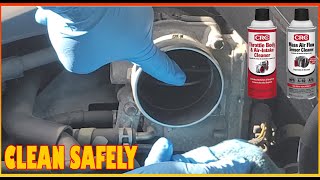
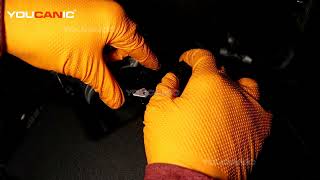
How to confirm: Visually inspect the sensor's internal wires after removing it. Any visible film or debris is a clear indicator. A video guide for a 2014 Highlander shows this exact process. 🎬 Watch: How to clean your sensor and replace the air filter.
Typical fix: Remove the sensor and clean it thoroughly with a dedicated Mass Air Flow sensor cleaner spray. Do not touch the wires or use other chemicals like brake cleaner. Let it air dry completely for at least 30-40 minutes before reinstalling.
Est. part cost: $10-$20 - Damaged Wiring or Loose Connector 🟡 Medium Probability Rodents are known to chew on the soy-based wiring insulation used in many modern vehicles, including Toyotas. This can cause wires to short together or break, leading to a 'Circuit Low' code.
How to confirm: Visually inspect the MAF sensor's wiring harness for any signs of chewing, fraying, or breaks. Ensure the connector is securely plugged into the sensor. A YouTube video shows a 2010 Highlander with P0102 caused by chewed wires. 🎬 See how rodent damage to wiring can trigger this code.
Typical fix: Repair the damaged section of wire, often by soldering and using heat-shrink tubing. Replace the connector if the pins are corroded or damaged.
Est. part cost: $5-$50 - Blown Fuse 🟡 Medium Probability A short in the MAF sensor circuit, often caused by damaged wiring, can blow the corresponding fuse. This is a critical but often overlooked step.
How to confirm: Check the fuse box (typically in the engine bay) for a blown fuse. On Toyotas, this is often labeled as 'EFI NO. 2' or 'EFI NO. 3' and is a 10A fuse. A user on Motor Vehicle Maintenance & Repair Stack Exchange confirmed a blown fuse was the cause on their 2014 Highlander after running over road debris damaged other wiring.
Typical fix: Replace the blown fuse with one of the same amperage. If the new fuse blows immediately, a short circuit exists and must be diagnosed.
Est. part cost: $1-$5 - Intake Air Leak (Post-MAF) ⚪ Low Probability Rubber and plastic intake components can crack with age and heat cycles, creating a source of unmetered air.
How to confirm: Perform a smoke test on the intake system. Smoke will escape from any cracks or loose connections between the MAF sensor and the engine's throttle body. This can also trigger lean codes P0171/P0174.
Typical fix: Replace the cracked intake boot or tighten the loose hose clamp that is causing the leak.
Est. part cost: $20-$100 - Failed MAF Sensor ⚪ Low Probability While Denso sensors are reliable, internal electronics can eventually fail. However, this should be the last resort after all other possibilities are exhausted.
How to confirm: After confirming all other causes are not present (wiring is good, sensor is clean, no leaks, fuse is okay), the sensor itself is the likely culprit. A scan tool showing zero or erratic g/s readings with the engine running can also point to a failed sensor. With the engine off, the reading should be near zero; if it shows a significant value, the sensor is likely faulty.
Typical fix: Replace the Mass Air Flow sensor. It is held in by two Phillips head screws. 🎬 Watch this quick walkthrough on replacing the MAF sensor. Use an OEM Denso part for best results.
Est. part cost: $70-$180
Rare But Worth Checking
- Clogged catalytic converter: A severe blockage can restrict exhaust flow so much that it also limits air intake, potentially triggering a P0102 code. This usually presents with a severe lack of power.
- Faulty Engine Control Module (ECM): In very rare cases, the fault may lie within the ECM itself, but this is extremely unlikely and should only be considered after all other possibilities have been professionally eliminated.
Diagnosis Steps
- Read the Code: Confirm P0102 is present using an OBD-II scanner. Check for any other codes like P0171/P0174 which might point to a vacuum leak.
- Visual Inspection: Check the engine air filter. If it is excessively dirty, replace it. Inspect the MAF sensor wiring harness for any visible damage, like chewed or frayed wires, paying close attention to areas near the airbox.
- Check Fuses: Locate and inspect the 'EFI NO. 2' or 'EFI NO. 3' (10A) fuses in the engine bay fuse box. This is a crucial and easy step that is often missed.
- Clean the MAF Sensor: Disconnect the battery. Unplug the MAF sensor, remove the two screws holding it, and carefully lift it out. Spray the internal sensor wires with dedicated MAF sensor cleaner. Do not use brake or carb cleaner. Allow it to dry completely for at least 30-40 minutes before reinstalling.
- Clear Code and Test Drive: Reconnect the battery, clear the code with your scanner, and drive the vehicle for 10-15 minutes to see if the code returns. Some permanent codes may require a specific drive cycle to clear.
- Check for Vacuum Leaks: If the code returns, the next most likely cause is an air leak. A smoke test is the most effective way to find leaks in the intake hose between the MAF sensor and the throttle body.
- Test the Sensor Circuit: If no leaks are found, use a multimeter to check the connector. With the key on, engine off, you should have battery voltage (approx. 12V) on one pin, 5V reference on another, and a good ground (less than 0.2 ohms resistance to chassis ground) on a third. A user on a forum noted they measured 4.99V on the pink wire of their 2014 Highlander connector.
- Replace the MAF Sensor: If all previous steps fail to resolve the issue, and the circuit has been proven to be good, the sensor itself has likely failed and should be replaced. Using an OEM Denso part is highly recommended.
Parts You'll Likely Need
- Mass Air Flow Sensor Cleaner — This is the most common fix. Cleaning a dirty sensor often resolves the code without needing to replace any parts.
Trusted brands: CRC, Liqui Moly
Aftermarket price range: $10-$20 - Mass Air Flow (MAF) Sensor
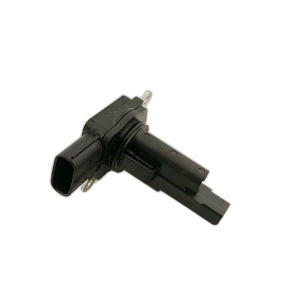
(OEM #22204-0V020)— If the sensor is confirmed faulty after cleaning and circuit testing, it must be replaced. Denso is the Original Equipment Manufacturer for Toyota. This part number supersedes 22204-0T020 and 22204-0V010.
Trusted brands: Denso (OEM), Hitachi, Spectra Premium
OEM price range: $140-$212
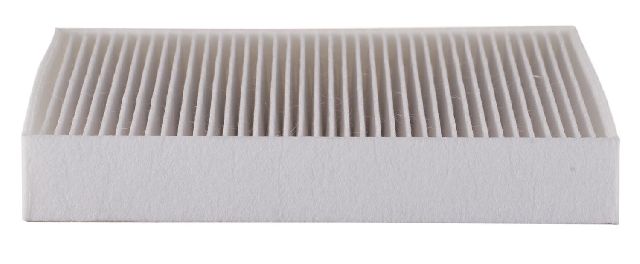
Aftermarket price range: $70-$120 - Engine Air Filter — A severely clogged air filter can restrict airflow and cause a P0102 code. It should be inspected and replaced if dirty.
Trusted brands: Toyota (OEM), Denso, Fram
OEM price range: $20-$35
Aftermarket price range: $15-$25
Related Codes That Often Appear With This One
- P0171 / P0174 — These 'System Too Lean' codes often appear with P0102 when there is a vacuum leak. The MAF sensor reports low airflow (P0102) because unmetered air is entering after the sensor, and the oxygen sensors detect the resulting lean condition (too much air, not enough fuel).
- P0113 — This code for 'Intake Air Temperature (IAT) Sensor Circuit High' may appear if you disconnect the MAF sensor while the engine is running to test it. The IAT sensor is integrated into the MAF sensor assembly on the Highlander. A user confirmed this behavior on their 2014 Highlander.
Technical Service Bulletins (TSBs) & Recalls
- While no specific TSB for P0102 on the 2014-2019 Highlander was found in the search, a TSB for a 2006 Tacoma described a similar issue where loose terminals in the MAF sensor connector could cause P0102, requiring connector inspection and repair. This highlights the importance of checking the connector integrity.
Platform-Specific Known Issues
- Rodent Damage: Toyota's use of soy-based wire insulation makes the MAF sensor harness a target for rodents, which can chew through wires causing a short or open circuit. This has been documented by owners.
Mechanic-Grade Diagnostic Values
- MAF Sensor Live Data (g/s) at Idle — expected: 1.0 to 3.9 g/sec (on a fully warmed-up engine). Failure: A value near 0.0 g/sec or a value that does not change when the engine RPM changes.
- MAF Sensor Live Data (g/s) at 2,500 RPM (No Load) — expected: 2.0 to 6.0 g/sec. Failure: Value remains low and does not increase proportionally with engine speed.
- MAF Sensor Live Data (g/s) with Key On, Engine Off (KOEO) — expected: Less than 0.70 g/s (should be near 0.0 g/s). Failure: A reading significantly above 0.70 g/s with the engine off indicates a faulty sensor or circuit.
- MAF Sensor Connector 5V Reference Voltage — expected: ~5.0V. Failure: Significantly lower or no voltage indicates a wiring or ECM issue.
Hidden / Shadow Codes Worth Checking
- Permanent DTC P0102: If the engine is started with the MAF sensor unplugged, Toyota ECUs can store a 'permanent' version of P0102. This code will not clear with a standard scanner 'Clear Codes' command or by disconnecting the battery, and can cause a vehicle to fail a smog check even with no Check Engine Light on. (see via May only be visible with a professional scan tool or during an emissions test. A standard OBD-II reader may report 'No Codes Found' while the permanent code is still stored.)
Scan Tool Commands That Help
- Toyota Techstream: Data List > MAF — This is the primary diagnostic function. It allows you to view the live airflow reading in grams per second (g/s) to see if it matches expected values at idle, under load, and with the key on/engine off.
- Toyota Techstream: Active Test — While there is no direct 'Active Test' for the MAF sensor itself, Techstream allows you to command other components (like fuel injectors, VVT solenoids, etc.) on and off. This is useful for ruling out other system faults that could be affecting engine performance alongside the P0102 code.
Wiring & Ground Locations
- MAF Connector Pin 1 (Pink) — On the 5-pin connector for the MAF sensor, located on the air intake tube between the air filter box and throttle body.. This is the 5V reference wire from the ECM. A 2014 Highlander owner confirmed a reading of 4.99V here with the key on, engine off, which is a critical first check to confirm the ECM is providing power to the circuit.
- Engine Ground Point (e.g., EA) — Typically found on the cylinder head or bolted to the fender apron in the engine bay. For example, on similar Toyota models, ground point 'EA' is on the right front fender apron.. The MAF sensor circuit requires a solid ground to function. A corroded or loose engine ground can cause a low voltage reading and trigger P0102. Inspecting the main ground straps from the engine to the chassis is a key diagnostic step.
- Driver's Kick Panel Ground Cluster — Behind the plastic kick panel, to the left of the driver's foot pedals.. While not directly for the MAF sensor, this is a major grounding point for many interior and dashboard-related circuits, including connections to the ECM. A problem here can cause widespread, difficult-to-diagnose electrical issues. On the next generation Highlander, a large ground cluster is located here.
Real Owner Repair Stories
- Motor Vehicle Maintenance & Repair Stack Exchange (2014 Toyota Highlander) — Check Engine Light with code P0102, exhaust smells rich.
❌ Tried (didn't work) Checked MAF sensor (it was clean), Replaced the MAF sensor with a new one, Reset the computer
✅ What actually fixed it The final cause was a blown fuse. The owner had run over road debris which damaged the downstream O2 sensor wiring, causing a short that blew a fuse shared by the MAF sensor circuit. Replacing the fuse resolved the P0102 code. - YouTube channel 'trackpalmer' (2014 Toyota Highlander) — Check Engine Light with code P0102.
❌ Tried (didn't work) Initially checked wiring harness (it was okay)
✅ What actually fixed it The MAF sensor was dirty. The owner removed the sensor, sprayed it thoroughly with dedicated MAF sensor cleaner, let it dry for 40 minutes, reinstalled it, and cleared the code. The problem was resolved. - NHTSA ODI #11296751 — An owner of a garaged Toyota vehicle reported that error codes P0113 and P0102, along with warning messages for the check engine light and ICS malfunction, appeared immediately upon starting the vehicle.
"I Checked Everything" — The Actual Cause
- A common scenario for P0102 is a technician performing a smoke test and finding no vacuum leaks, cleaning the MAF sensor, and checking the wiring near the sensor, only for the code to persist. A real-world example on a 2014 Highlander showed the root cause was a blown EFI fuse, which was caused by a short in a completely different circuit (the O2 sensor) that the owner had damaged. This highlights the need to check fuses even if the fault seems unrelated to the event that caused it.
When the Usual Fixes Don't Work
- While cleaning the MAF sensor is the most common fix, it is not a guaranteed solution. A documented repair on a 2014 Highlander with P0102 showed that even after cleaning and then replacing the MAF sensor, the code persisted. The ultimate cause was a blown EFI fuse that was shorted by damaged wiring from an unrelated component (the O2 sensor). This proves that assuming the fault lies with the MAF sensor itself can lead to misdiagnosis; the code indicates a 'circuit' problem which includes the fuse and wiring shared by other components.
OEM Part Supersession History
22204-0T020, 22204-0V010, 22204-0T040→22204-0V020— Standard part revision and consolidation by Toyota for improved performance, reliability, or manufacturing efficiency.
Heads up: The newer part number (22204-0V020) is fully backward compatible with vehicles that originally used the older part numbers. When ordering, always use the latest part number.
Model Year Variations Within This Range
- 2014-2019: The V6 engine was updated in 2017 from the 2GR-FE to the direct-injected 2GR-FKS. However, for the purposes of diagnosing P0102, this change is not significant. Both engines use the same Denso MAF sensor (part number 22204-0V020) and the diagnostic logic for a 'Circuit Low' code remains identical.
Diagnostic Flowchart
Used vs. New Parts: Buying Guide for This Vehicle
When a used part is the smart pick: A used MAF sensor is a smart choice if it is a guaranteed OEM Denso part from a reputable salvage yard, especially from a low-mileage, rear-ended vehicle. This is often a more reliable and cost-effective option than purchasing a new, non-OEM aftermarket sensor.
Donor-vehicle mileage cap: roughly under 80000 miles for the part to have meaningful remaining life.
What to inspect on the donor part:
- Confirm it is a genuine Denso part; the name is usually molded into the plastic housing.
- Inspect the internal sensing wires; they should be straight and unbroken.
- Check the connector pins for any corrosion or damage.
- Ask for the donor vehicle's mileage if possible.
OEM-only on this vehicle (don't cheap out):
- Mass Air Flow (MAF) Sensor
Aftermarket brands forum-validated for this vehicle:
- Denso (This is the Original Equipment Manufacturer; buying a Denso-branded part is the same as buying the Toyota part, often for less money).
Brands owners have reported issues with on this vehicle:
- Unbranded 'white-box' sensors
- Store-brand sensors (e.g., Duralast)
- Remanufactured units from brands not known for electronics (e.g., Cardone, Spectra Premium have been reported by users to cause issues with sensitive sensors like MAFs).
Real Owner Stories
Aggregated from forums and TSBs cited above. Mileages and costs reflect what owners reported in those sources.
2014 Highlander
Symptoms: Check Engine Light with code P0102 appeared after running over road debris which damaged other wiring.
What fixed it: The ultimate cause was a blown 'EFI' fuse, which was initially overlooked during diagnosis.
Source hint: Motor Vehicle Maintenance & Repair Stack Exchange: A 2014 Highlander owner with P0102...
2010 Highlander 2.7L
Symptoms: Check Engine Light with code P0102 was present due to rodent damage.
What fixed it: The fix involved soldering the chewed wires and replacing the 'EFI 3' 10A fuse that had blown as a result of the short circuit.
Source hint: YouTube - 'P0102 Toyota Highlander 2010 2.7L'
Highlander (2GR-FE engine)
Symptoms: Experienced P0102 along with severe performance loss.
What fixed it: After replacing the sensor twice did not fix the issue, the problem was determined to be in the wiring, the connector, or a major intake leak.
Source hint: Reddit r/AskAMechanic
Toyota Owner Report (NHTSA ODI #11296751)
Symptoms: Check engine and ICS malfunction warning messages appeared alongside codes P0113 and P0102 upon starting the vehicle.
What fixed it: This report highlights that these codes can appear suddenly even in garaged vehicles, often pointing to immediate circuit or sensor communication failures.
Related OBD-II Codes
Frequently Asked Questions
What fuse should I check first for a P0102 code on my 2014-2019 Highlander?
Why is the wiring for the MAF sensor on my Highlander a common failure point?
I cleaned the MAF sensor and the P0102 code came back. What should I do next?
Can I use brake cleaner to clean my Highlander's MAF sensor?
What is the recommended replacement MAF sensor if mine has failed?
Are there any official Toyota TSBs for the P0102 code on the 2014-2019 Highlander?
What voltage readings should I expect at the MAF sensor connector?
Helpful Videos


Used OEM Parts in Stock


New Aftermarket Parts Available

The information in this article is provided for general reference and educational purposes only. Vehicle specifications, procedures, and part compatibility can vary by production date, trim level, and region. Always consult your vehicle's factory service manual and verify part numbers before purchasing or performing repairs. Safety-critical components such as airbags, seat belts, and braking systems should be installed by a qualified professional.
- Toyota Highlander:
- 🎬 Helpful Videos
- 🛍️ Shop This Part
- What's Unique About the 2014-2019 Toyota Highlander
- Symptoms You May Notice
- Most Likely Causes
- Rare But Worth Checking
- Diagnosis Steps
- Parts You'll Likely Need
- Related Codes That Often Appear With This One
- Technical Service Bulletins (TSBs) & Recalls
- Platform-Specific Known Issues
- Mechanic-Grade Diagnostic Values
- Hidden / Shadow Codes Worth Checking
- Scan Tool Commands That Help
- Wiring & Ground Locations
- Real Owner Repair Stories
- "I Checked Everything" — The Actual Cause
- When the Usual Fixes Don't Work
- OEM Part Supersession History
- Model Year Variations Within This Range
- Diagnostic Flowchart
- Used vs. New Parts: Buying Guide for This Vehicle
- Real Owner Stories
- 2014 Highlander
- 2010 Highlander 2.7L
- Highlander (2GR-FE engine)
- Toyota Owner Report (NHTSA ODI #11296751)
- Related OBD-II Codes
- Frequently Asked Questions
- 🎟️ Get 5% Off