

P0102 on 2021-2024 Nissan Rogue 1.5L VC-Turbo: Causes, Fixes, and MAF Sensor Info
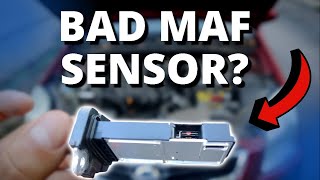
For a 2021-2024 Nissan Rogue with the 1.5L VC-Turbo engine, code P0102 is most often caused by a dirty Mass Air Flow (MAF) sensor or a clogged engine air filter. Before replacing the sensor, try cleaning it with a dedicated MAF sensor cleaner and inspect the air filter. This simple step often resolves the issue without needing expensive parts.
- P0102 on your 2021-2024 Rogue most likely means your MAF sensor is dirty, not broken.
- The easiest and cheapest first step is to buy a can of MAF sensor cleaner and clean the sensor. Also, check your engine air filter.
- The MAF sensor is easy to access on top of the air filter box and is held by two screws, making this a very simple DIY job.
- If you must replace the sensor, be aware there are two potential OEM part numbers. It is best to confirm the correct part for your vehicle's VIN with a Nissan dealer.
- Do not use an over-oiled aftermarket air filter, as the excess oil can contaminate the MAF sensor and cause this code.
What's Unique About the 2021-2024 Nissan Rogue
On the Nissan Rogue with the 1.5L VC-Turbo (KR15DDT) engine, the MAF sensor is considered a high-quality and reliable component that rarely fails outright. More often than not, the P0102 code is triggered by contamination on the sensor's delicate sensing element or by a severely clogged engine air filter restricting airflow. Another potential issue can be over-oiling a reusable aftermarket air filter, which can cause oil to coat the MAF sensor and trigger the code. The complex nature of the VC-Turbo system relies heavily on accurate sensor inputs, making it sensitive to even minor deviations in airflow readings.
Symptoms You May Notice
- Check Engine Light is on
- Rough or unstable idle
- Engine hesitation or stumbling during acceleration
- Reduced fuel economy
- Engine stalling, especially when coming to a stop
- Hard starting
- Black smoke from the exhaust
- Loss of power
- Replacing the MAF sensor without first attempting to clean it.
- Replacing oxygen (O2) sensors or other fuel system components before properly diagnosing the air induction system.
- Overlooking a simple clogged air filter as the root cause.
Most Likely Causes
- Dirty or Contaminated MAF Sensor 🔴 High Probability The sensor is sensitive to dirt, oil, and other debris that can bypass a dirty or poorly-fitted air filter. Over-oiled aftermarket filters are a common source of contamination. Given the sensor's location, it is susceptible to any airborne particles that make it past the filter.
How to confirm: Visually inspect the MAF sensor's sensing wires/elements. If they appear dirty, dusty, or oily, they need cleaning. This is the most common cause.
Typical fix: Remove the sensor and clean it carefully using only dedicated Mass Air Flow sensor cleaner. 🎬 Watch: How to service the AMS and air filter on this engine. Do not touch the sensing elements. Let it air dry completely before reinstalling.
Est. part cost: $8-$15 for a can of MAF sensor cleaner. - Clogged or Dirty Engine Air Filter 🟡 Medium Probability A severely clogged filter restricts the amount of air entering the intake, which can cause the MAF sensor to read a lower-than-expected airflow, triggering P0102. This is a primary maintenance item that is often overlooked.
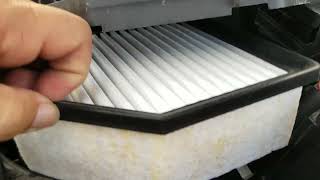
How to confirm: Remove and inspect the engine air filter. If it is visibly dirty, clogged with debris, or has been in service beyond its recommended interval, it should be replaced.
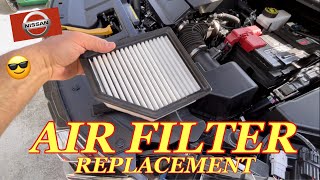
Typical fix: Replace the engine air filter.
Est. part cost: $20-$50 - Vacuum Leak ⚪ Low Probability A leak in the intake system between the MAF sensor and the throttle body can allow unmetered air to enter. However, for a P0102 (low flow) code, it's more likely a crack or loose connection in the intake boot *before* the sensor, or a significant obstruction.
How to confirm: Visually inspect the air intake boot and all vacuum hoses for cracks, loose connections, or damage. A smoke test can be performed to pinpoint hard-to-see leaks.
Typical fix: Repair the leak by replacing the damaged hose or tightening the loose connection.
Est. part cost: $10-$100 depending on the hose. - Faulty MAF Sensor ⚪ Low Probability While the sensor itself can fail electrically, it is less common on this platform than being dirty. A user on a Nissan forum with a different model experienced a scenario where a new OEM MAF sensor was also faulty, suggesting it's a rare but possible issue. Diagnostic trouble can arise if the live data shows 0 g/s (grams per second) of airflow at all times, even after replacement, pointing towards a wiring or ECM issue.
How to confirm: After cleaning the sensor and ruling out other causes, test the sensor's output voltage with a multimeter or view its live data on a scan tool. An erratic or flatlined signal (reading 0 g/s) with the engine running indicates a bad sensor or wiring issue.
Typical fix: Replace the MAF sensor.
Est. part cost: $390-$600 for an OEM part.
Rare But Worth Checking
- Damaged Wiring or Connector: Check the wiring harness and connector for the MAF sensor. Wires can become frayed or pins can get corroded, causing a low or no signal. A forum user noted that the loop of wire between the MAF and the main harness can fatigue and break from repeated removal. Wiggle the connector and wiring with the engine running while watching live data to see if the reading changes.
- Faulty ECM (Engine Control Module): This is extremely rare. The ECM itself could be failing to properly read the MAF sensor signal. This should only be considered after all other possibilities have been exhaustively ruled out by a professional.
Diagnosis Steps
- Read the code with an OBD-II scanner and check for any other pending or stored codes. Note codes like P0101 or P0113 which often accompany P0102.
- Inspect the engine air filter. If it's dirty or past its service life, replace it.
- Carefully inspect the air intake tube between the air filter box and the throttle body for any cracks, tears, or loose connections.
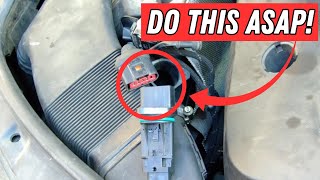
- Locate the MAF sensor on the air filter housing. Disconnect the electrical connector and inspect it for corrosion or damaged pins.
- Remove the two screws holding the MAF sensor and gently pull it out.
- Visually inspect the sensor's elements. If they look dirty, spray them liberally with a dedicated MAF sensor cleaner. Do not use brake cleaner or touch the elements. Let it dry completely for at least 15-20 minutes.
- Reinstall the clean sensor, reconnect the electrical connector, and clear the trouble codes with the scanner.
- Start the engine and let it idle. If the code does not return and the engine runs smoothly, the problem is solved.
- If the code returns, use a scan tool to monitor the MAF sensor's live data (grams/second). The reading should be near zero with the engine off, around 2-7 g/s at idle, and increase smoothly as you rev the engine. A flatline (0 g/s) or erratic reading suggests a bad sensor or wiring issue.
- If a wiring issue is suspected, check for power and ground at the sensor connector with a multimeter. Wiggle the harness to check for intermittent breaks.
- If the sensor is confirmed to be faulty, replace it with a new OEM part for best results.
Parts You'll Likely Need
- Mass Air Flow Sensor
(OEM #22680-6RC0B)— This is the primary component indicated by the code. It may need replacement if cleaning doesn't work. Part number 22680-6RC0B is specified for the 2021-2025 Rogue with the 1.5L engine.
Trusted brands: Nissan (Genuine), Hitachi
OEM price range: $390-$601
Aftermarket price range: $40-$150 - Engine Air Filter
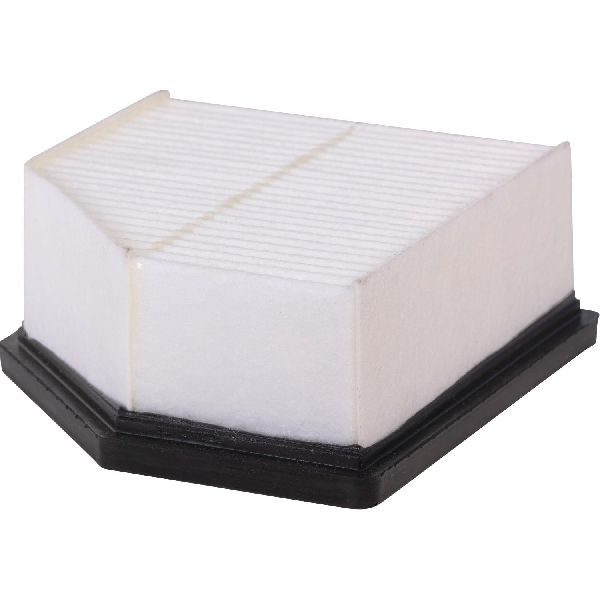
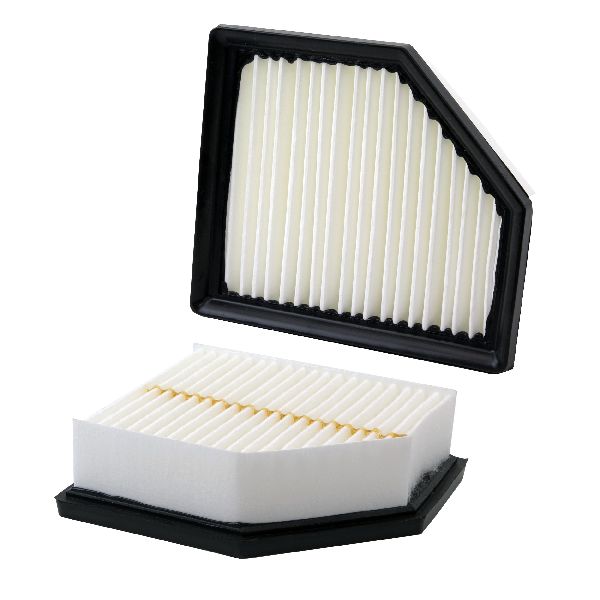
(OEM #16546-6RC0A)— A clogged air filter is a common cause for restricted airflow, leading to the P0102 code. It should be inspected and replaced if dirty.
Trusted brands: Nissan (Genuine), Bosch, Denso
OEM price range: $30-$50
Aftermarket price range: $20-$35 - Mass Air Flow Sensor Cleaner — Often, the sensor is just dirty and cleaning it is the only fix required. This is the most cost-effective first step.
Trusted brands: CRC, Liqui Moly
Aftermarket price range: $8-$15
Related Codes That Often Appear With This One
- P0101 — Mass Air Flow (MAF) Circuit Range/Performance. This code often appears alongside P0102 and points to a general problem with the MAF sensor's readings not matching what the ECM expects.
- P0171 — System Too Lean (Bank 1). If the MAF sensor is under-reporting airflow, the ECM may not inject enough fuel, leading to a lean condition.
- P0113 — Intake Air Temperature (IAT) Sensor 1 Circuit High. The IAT sensor is often integrated into the MAF sensor assembly. A fault in the MAF sensor or its connector can trigger both codes simultaneously.
Platform-Specific Known Issues
- Owner Experience with Faulty Replacement Sensor: A Reddit user working on a 2017 Rogue (different engine, but relevant diagnostic process) reported a P0102 code with live data showing 0 kg/s airflow. After replacing the MAF with a new OEM part, the issue persisted with the same code and data reading, leading them to suspect the new part was also faulty or a deeper wiring issue was present. This highlights the importance of verifying sensor readings post-replacement.
- Cross-Model Nissan MAF Issues: While the Rogue uses the VC-Turbo, other Nissan models show similar P0102 patterns. For instance, NHTSA ODI #11721516 describes an owner receiving both P0101 and P0102 codes related to the mass or volume air flow sensor. Similarly, NHTSA ODI #11687984 notes that when P0102 triggers, it may be accompanied by traction and collision warning lights.
Mechanic-Grade Diagnostic Values
- MAF Sensor Live Data at Idle (warmed up) — expected: 2 to 7 grams/second (g/s). Failure: A reading of 0 g/s or a reading that does not change with RPM indicates a fault. A reading below 2 g/s at idle could trigger P0102.
- MAF Sensor Live Data at 2500 RPM — expected: 15 to 25 grams/second (g/s). Failure: A reading that does not increase smoothly with RPM or is significantly outside this range suggests a problem.
- MAF Sensor Signal Wire Voltage at Idle — expected: ~0.5V to 1.5V. Failure: Voltage at or below 0.5V for a set duration can trigger the code. A reading that is erratic or does not rise with RPM is also a failure indicator.
- MAF Sensor Power Supply Voltage (Key On, Engine Off) — expected: 12V (Battery Voltage). Failure: No voltage or significantly lower voltage indicates a wiring or fuse issue.
- MAF Sensor Reference Voltage (Key On, Engine Off) — expected: 5V. Failure: Missing or incorrect voltage points to a wiring or ECM issue.
- MAF Sensor Ground Wire Resistance — expected: Less than 0.2 ohms to chassis ground. Failure: Higher resistance indicates a poor ground connection, which can cause low voltage readings.
Scan Tool Commands That Help
- Nissan CONSULT: DATA MONITOR for 'MAS A/F SE-B1' — This is the Nissan-specific PID for the Mass Air Flow sensor. It is used to monitor the sensor's voltage output in real-time to check for proper operation during idle and while revving the engine.
- Nissan CONSULT: DTC Confirmation Procedure — After a repair, this guided procedure is used to run the engine under specific conditions to verify that the fault has been corrected and the P0102 code does not return.
- Generic OBD-II Scanner: Idle Air Volume Learn — After cleaning the throttle body or replacing the MAF sensor, an Idle Air Volume Learn procedure may be necessary if the idle is unstable. While not always required for just a MAF sensor replacement, it's a common related procedure.
Wiring & Ground Locations
- MAF Sensor Connector — Mounted on the air filter housing, after the engine air filter.. This is the primary connection point for the sensor. Corrosion, bent pins, or a loose connection here will directly cause a P0102 by interrupting the signal, power, or ground.
- MAF Sensor Pinout (Generic Nissan) — At the MAF sensor connector.. Testing requires knowing which pin is which. While specific colors for the KR15DDT are not detailed, a common Nissan pattern is: Pin 1 (or Pink wire) = 12V Power, Pin 2 (or Black/White wire) = Ground, Pin 3 (or Yellow wire) = 5V Reference, Pin 4 = Signal. Always verify with a vehicle-specific diagram.
- Engine Ground Straps — Typically located from the engine block/cylinder head to the chassis frame rail.. A corroded or loose main engine ground can cause a variety of electrical issues, including incorrect sensor readings. While not a direct cause, it can create floating grounds that affect the MAF sensor's ground reference, leading to low voltage errors.
Real Owner Repair Stories
- Reddit user in r/NissanRogue (2017 Nissan Rogue (different engine, but diagnostically relevant)) — Rough start and idle, engine dies constantly, especially when warm.
❌ Tried (didn't work) Cleaned corroded battery terminal., Replaced heavily carbon-fouled spark plugs., Replaced an 'atrocious' air filter.
✅ What actually fixed it The user diagnosed a shorted signal wire on the original MAF sensor. However, after replacing it with a new OEM part, the problem persisted with the scan tool still reading 0 kg/s airflow. The final resolution was not posted, but the user suspected either the brand new OEM sensor was also faulty out of the box or a persistent wiring issue was the true root cause. This story serves as a critical warning about verifying new parts and checking wiring thoroughly. - NHTSA ODI #11462817: An owner of a different Nissan model reported the car kept dying out while reading P0101 and P0102 codes for the mass air flow sensor and low circuit current, eventually spending $400 to resolve the issue.
- NHTSA ODI #11633951: An owner reported a combination of P0420, P0113, P0101, and P0102. A mechanic replaced both the intake air temperature sensor and the MAF sensors to address the faults.
Model Year Variations Within This Range
- 2021 vs 2022-2024: The 2021 model year Rogue primarily used a 2.5L 4-cylinder engine. For the 2022 model year, Nissan introduced the 1.5L VC-Turbo I3 (KR15DDT) as the standard engine, which continued through 2024. This is a significant change, and parts, including the MAF sensor and its expected performance values, are specific to the engine type.
Diagnostic Flowchart
Other Known Issues on This Vehicle
Issues unrelated to this code that are worth knowing about as an owner of this generation:
- Engine Main Bearing and L-Link Failure 🔴 High — Significant enough to trigger a NHTSA investigation (PE23-018) and subsequent recalls. Affects 2021-2024 models. (Ref: NHTSA Recall 23V-437, expanded by 26V-080)
- Leaking/Failed Engine Mounts 🟠 Medium — Common complaint of excessive vibration at idle. The hydraulic-filled passenger side mount is prone to leaking and collapsing. (Ref: Nissan TSB NTB24-014)
- Carbon Buildup on Intake Valves 🟡 Low — A common long-term consequence of direct-injection engines. Can cause rough idle and reduced power over 60,000 miles.
- Faulty Electronic Throttle Body 🟠 Medium — A recall was issued because internal gears in the throttle body could fracture, leading to a stall or no-start condition. (Ref: NHTSA Recall (undetermined number, related to campaign 26V-080))
- Glitching Start-Stop System 🟡 Low — Some owners report inconsistent operation of the auto start-stop feature, often leading them to disable it manually at every startup.
Used vs. New Parts: Buying Guide for This Vehicle
When a used part is the smart pick: Given the high cost of a new OEM MAF sensor ($390+), a used OEM sensor from a low-mileage, late-model (2022-2024) donor vehicle can be a cost-effective choice. Since the part is electronic and not a typical wear item, failure is more often due to contamination than age. A used part makes sense if it can be acquired for a fraction of the new price and comes from a reputable salvage yard with a short warranty or return policy.
Donor-vehicle mileage cap: roughly under 50000 miles for the part to have meaningful remaining life.
What to inspect on the donor part:
- Check for physical damage to the sensor housing or connector.
- Inspect the sensing element through the mesh; it should be clean and free of oil or debris.
- Ensure the connector pins are straight and not corroded.
- Verify the part number (22680-6RC0B) matches exactly.
- Ask for the mileage of the donor vehicle if possible.
OEM-only on this vehicle (don't cheap out):
- Mass Air Flow Sensor
Aftermarket brands forum-validated for this vehicle:
- Hitachi (This is the Original Equipment Manufacturer)
Brands owners have reported issues with on this vehicle:
- Unnamed, low-cost aftermarket sensors. Testing has shown that very cheap MAF sensors can fail calibration, cause intermittent issues, or have a short service life compared to the OEM Hitachi unit.
Real Owner Stories
Aggregated from forums and TSBs cited above. Mileages and costs reflect what owners reported in those sources.
2017 Nissan Rogue
Symptoms: The vehicle triggered a P0102 code and live data showed 0 kg/s airflow. Even after replacing the MAF with a new OEM part, the code and the zero-flow reading persisted.
What fixed it: The owner suspected either a faulty new replacement part or a deeper wiring issue, highlighting that a '0 g/s' reading after replacement requires checking the wiring harness for power and ground.
Source hint: Reddit r/NissanRogue
Nissan Pathfinder Owner
Symptoms: According to NHTSA ODI #10469505, the engine was running with a "roar" and fault codes including P0102 were present. Diagnostic results initially suggested a transmission failure costing $4,000-$5,000.
Documented NHTSA Reports
- NHTSA ODI #11721516: An owner reported receiving P0101 and P0102 error codes specifically related to the mass or volume air flow sensor.
- NHTSA ODI #11687984: A report describes how the P0102 code occasionally appears with the check engine light, simultaneously triggering the traction light and head collision warning lights.
- NHTSA ODI #11462817: An owner noted that after passing emissions, the vehicle began dying out while displaying P0101 and P0102 codes, indicating a mass air flow sensor and low circuit current issue.
Related OBD-II Codes
Frequently Asked Questions
Is there a recall for the 2021-2024 Nissan Rogue 1.5L VC-Turbo that might be related to my engine stalling?
My Rogue is vibrating excessively at idle along with the P0102 code; could this be the MAF sensor?
Can I use any cleaner to fix the MAF sensor on my KR15DDT engine?
Should I buy an aftermarket MAF sensor for my 2022 Rogue to save money?
Does the Mitsubishi Outlander share this same MAF sensor issue since it's on the same platform?
I replaced the sensor but my scan tool still shows 0 g/s airflow. What should I check next?
Helpful Videos

Used OEM Parts in Stock


New Aftermarket Parts Available


The information in this article is provided for general reference and educational purposes only. Vehicle specifications, procedures, and part compatibility can vary by production date, trim level, and region. Always consult your vehicle's factory service manual and verify part numbers before purchasing or performing repairs. Safety-critical components such as airbags, seat belts, and braking systems should be installed by a qualified professional.
- Nissan Rogue:
- 🎬 Helpful Videos
- 🛍️ Shop This Part
- What's Unique About the 2021-2024 Nissan Rogue
- Symptoms You May Notice
- Most Likely Causes
- Rare But Worth Checking
- Diagnosis Steps
- Parts You'll Likely Need
- Related Codes That Often Appear With This One
- Platform-Specific Known Issues
- Mechanic-Grade Diagnostic Values
- Scan Tool Commands That Help
- Wiring & Ground Locations
- Real Owner Repair Stories
- Model Year Variations Within This Range
- Diagnostic Flowchart
- Other Known Issues on This Vehicle
- Used vs. New Parts: Buying Guide for This Vehicle
- Real Owner Stories
- 2017 Nissan Rogue
- Nissan Pathfinder Owner
- Documented NHTSA Reports
- Related OBD-II Codes
- Frequently Asked Questions
- 🎟️ Get 5% Off