

P0102 on 2016-2020 Kia Optima 2.4L: MAF Circuit Low Causes and Fixes
For the 2016-2020 Kia Optima with the 2.4L engine, code P0102 most often points to a dirty or faulty Mass Airflow (MAF) sensor. Cleaning the sensor with a dedicated MAF cleaner is a common first step. If that fails, replacing the MAF sensor is the likely fix. Due to the engine's known oil consumption issues, the MAF sensor can become contaminated with oil vapor, making this a recurring problem for some owners. An aftermarket sensor costs around $60-$110, while an OEM sensor (Part No. 28164-2E000
- P0102 on a 2016-2020 Kia Optima 2.4L means the MAF sensor is sending a low voltage signal to the computer.
- The most common fix is cleaning the MAF sensor with a special cleaner. If that doesn't work, the sensor itself likely needs to be replaced.
- Before replacing parts, always check for simple issues like a dirty air filter or cracks in the air intake hose.
- This is a very DIY-friendly repair, requiring minimal tools and time.
- Driving with this code can lead to poor performance, bad gas mileage, and potential damage to other expensive components, so it should be addressed promptly.
What's Unique About the 2016-2020 Kia Optima
On the 2016-2020 Kia Optima with the 2.4L GDi engine, the P0102 code is a straightforward issue, but its context is critical. The Theta II GDI engine is infamous for severe oil consumption and connecting rod bearing failures. The high oil consumption can increase oil vapor in the PCV system, which then contaminates the MAF sensor's hot wire, leading to premature failure or the low readings that trigger P0102. Therefore, while the immediate cause is often a simple dirty sensor, it can be a symptom of the engine's larger, more serious systemic flaws. A P0102 code on this engine warrants an immediate check of the engine oil level.
Symptoms You May Notice
- Check Engine Light is on
- Rough or unstable idle
- Engine stalling, especially when coming to a stop
- Hesitation or lack of power during acceleration
- Reduced fuel economy
- Black smoke from the exhaust
- Replacing the oxygen sensors. While a bad MAF sensor can affect the air-fuel ratio and trigger related codes, the O2 sensors are usually reacting to the problem, not causing the P0102 code.
- Replacing the throttle body. A P0102 code is related to air measurement, not throttle control. Issues with the throttle body would typically set different codes.
Most Likely Causes
- Dirty or Contaminated MAF Sensor 🔴 High Probability Due to the Theta II engine's tendency to consume oil, oil vapor from the PCV system can coat the sensor's delicate sensing element. This insulates it, causing inaccurate low readings. This is the most common cause for P0102 on this platform.
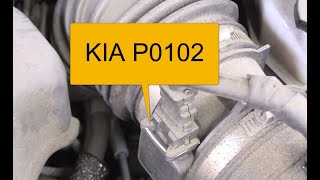
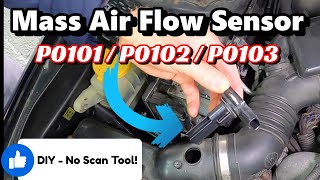
How to confirm: Visually inspect the MAF sensor's wires. If they appear dirty or oily, cleaning is warranted. The sensor is located on the air intake tube, just after the air filter box.
Typical fix: Remove the sensor and clean it carefully using only a dedicated MAF sensor cleaner spray. Do not touch the sensing wires. Allow it to dry completely before reinstalling.
Est. part cost: $8-$15 for a can of MAF cleaner. - Faulty Mass Airflow (MAF) Sensor 🟡 Medium Probability The sensor's internal electronics can fail from heat cycles and vibration, or be permanently damaged by contamination, leading to a persistent low voltage signal.
How to confirm: After cleaning, if the code returns, test the sensor's voltage output with a multimeter or observe its readings on a capable OBD-II scanner. The signal should increase smoothly with engine RPM. If the reading is stuck low or erratic, the sensor is likely bad.
Typical fix: Replace the MAF sensor. This is typically a simple repair involving a couple of screws and an electrical connector.
Est. part cost: $60-$230 - Vacuum Leak (Unmetered Air) 🟡 Medium Probability A crack in the air intake boot between the MAF sensor and the throttle body, or a loose clamp, allows air to enter the engine that was not measured by the MAF sensor. This makes the MAF sensor's reading seem low relative to the engine's actual air intake.
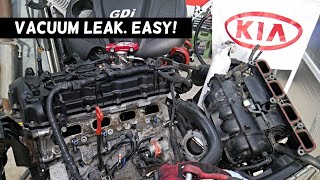
How to confirm: Visually inspect all intake hoses and connections for cracks, splits, or looseness. A common method to find leaks is to spray carburetor cleaner or a non-flammable vapor around the intake with the engine running and listen for a change in idle speed.
Typical fix: Replace the cracked intake hose or tighten the loose clamp.
Est. part cost: $30-$100 for a new intake boot. - Clogged Engine Air Filter ⚪ Low Probability A severely clogged air filter can restrict airflow to the point that the MAF sensor reads an abnormally low volume of air, triggering the code.
How to confirm: Remove and inspect the engine air filter. If it is visibly black, filled with debris, or has not been changed in a long time, it should be replaced.
Typical fix: Replace the engine air filter.
Est. part cost: $15-$30
Rare But Worth Checking
- Wiring or Connector Issue: A damaged wire, corroded pin, or loose connection at the MAF sensor harness can interrupt the signal to the ECM, causing a low or no-voltage reading. This should be checked by wiggling the connector while monitoring live data, especially if a new sensor does not solve the problem.
- Faulty Engine Control Module (ECM): This is a very rare cause. The ECM itself could be failing and unable to correctly read the signal from a perfectly good MAF sensor. This should only be considered after all other possibilities, including wiring, have been exhaustively ruled out.
Diagnosis Steps
- Read the code with an OBD-II scanner to confirm P0102 is the primary code present. Check for other codes like P0101 or P0171.
- Visually inspect the MAF sensor connector for loose or corroded pins and check the wiring harness for any visible damage.
- Inspect the air intake system between the MAF sensor and the throttle body for any cracks, loose clamps, or disconnected hoses.
- Remove and inspect the engine air filter. Replace if it is dirty or clogged.
- Remove the MAF sensor. Inspect the sensing elements for dirt or contamination. If dirty, clean it using only dedicated MAF sensor cleaner. Let it dry completely.
- Reinstall the sensor, clear the code, and perform a test drive. If the code does not return, the issue was likely dirt or a poor connection.
- If the code returns, use an OBD-II scanner with live data capability to monitor the MAF sensor reading (in grams/second). The reading should be near 0 g/s with the engine off (Key On, Engine Off). At a stable, warm idle, it should be around 2-4 g/s. The reading must increase steadily as you increase engine RPM. 🎬 Watch: How to test and replace a MAF sensor If the value is stuck at or near zero, or does not respond to RPM changes, the sensor is likely faulty.
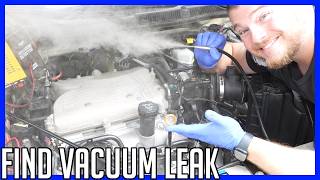
- If the sensor appears to be working but the code persists, a smoke test is the most effective way to find hidden vacuum leaks.
- If all else fails, use a multimeter to test the MAF sensor circuit for proper power (12V), ground, and a 5V reference signal from the ECM before considering ECM failure.
Parts You'll Likely Need
- Mass Airflow (MAF) Sensor
(OEM #28164-2E000)— This is the most common part to fail or become contaminated, directly causing the P0102 code. Contamination is especially likely on this engine.
Trusted brands: Genuine Kia/Hyundai, Delphi, Walker, Standard Motor Products (SMP), Pierburg
OEM price range: $170-$250
Aftermarket price range: $60-$110 - MAF Sensor Cleaner — Often, the sensor is just dirty and does not need replacement. This is the first and most cost-effective step in diagnosis and repair.
Trusted brands: CRC, Liqui Moly, WD-40 Specialist
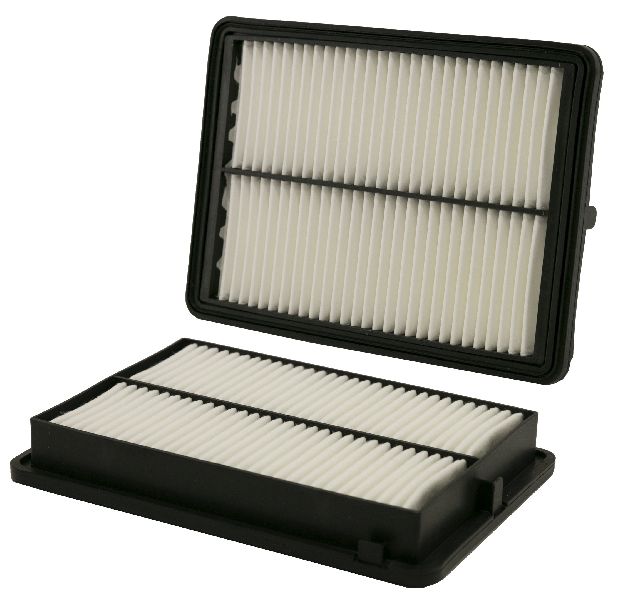
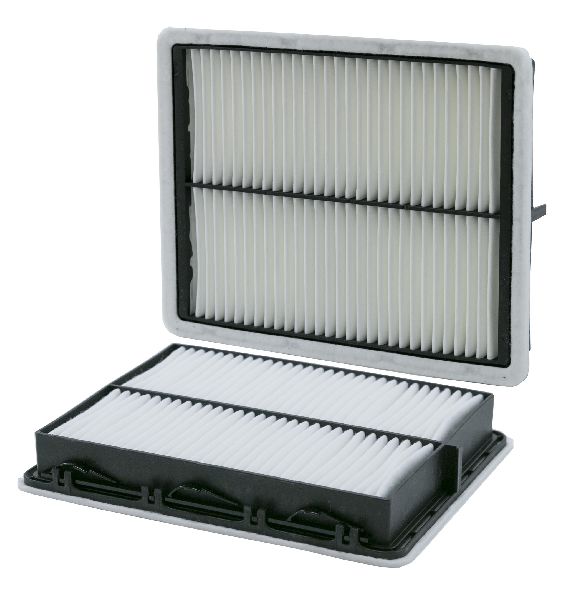
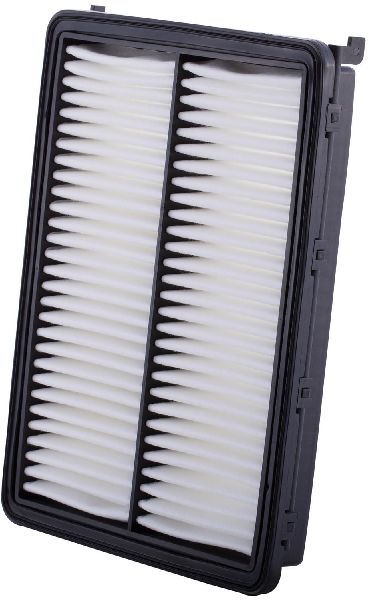
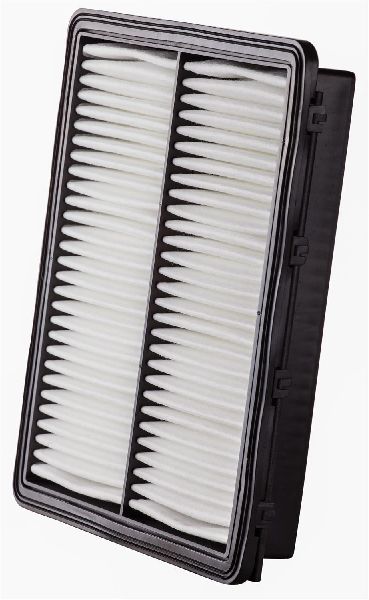
Aftermarket price range: $8-$15 - Engine Air Filter
(OEM #28113-D4000)— A severely restricted air filter can cause a low airflow reading, and it's a basic maintenance item that should be checked during diagnosis.
Trusted brands: WIX, Purolator, Fram, Kia Genuine
OEM price range: $25-$40
Aftermarket price range: $15-$30
Related Codes That Often Appear With This One
- P0171 — System Too Lean (Bank 1). If there is a vacuum leak after the MAF sensor, the sensor reports low airflow (P0102), but the oxygen sensors detect the extra, unmetered air, resulting in a lean condition that the ECM tries to correct by adding fuel.
- P0101 — MAF Circuit Range/Performance. This code often appears alongside P0102, indicating the sensor's readings are not just low, but also erratic, irrational, or not changing as expected with engine speed changes.
- P1326 — Knock Sensor Detection System. This is a Hyundai/Kia-specific code related to the KSDS that monitors for bearing wear. While not directly caused by P0102, seeing it alongside could indicate the engine is suffering from the severe internal wear these engines are known for.
Mechanic-Grade Diagnostic Values
- MAF Sensor Live Data (g/s) at Key On, Engine Off — expected: ~0.0 g/s. Failure: A reading significantly above 0.0 g/s with the engine off indicates a faulty sensor or circuit issue.
- MAF Sensor Live Data (g/s) at warm idle (approx. 750 RPM) — expected: 2.0 - 4.0 g/s. Failure: A reading stuck near 0 or not responding indicates a failed sensor; a reading significantly outside this range suggests a sensor or vacuum leak issue.
- MAF Sensor Signal Voltage at warm idle — expected: ~1.0 V. Failure: Voltage that is stuck low (near 0V) or does not increase with RPM points to a faulty sensor or wiring.
- MAF Sensor Power Supply Pin at Connector — expected: 12V (B+). Failure: Less than 12V indicates a problem with the power supply circuit, potentially a fuse or wiring issue.
- MAF Sensor Ground Pin at Connector — expected: < 0.1V (100mV). Failure: Higher voltage indicates a poor ground connection, which can cause incorrect sensor readings.
Scan Tool Commands That Help
- Kia GDS (Global Diagnostic System): Resetting Adaptive Values — After replacing a major component like the MAF sensor or cleaning the throttle body, this function in the Engine Control Module's 'Special Function' menu forces the ECM to relearn fuel trims and airflow characteristics from a baseline, which can resolve performance issues that persist after a repair.
Wiring & Ground Locations
- Engine Harness Chafe Point 1 — Against the ECM/TCM mounting bracket in the driver's side of the engine bay.. Vibration can cause the main engine harness, which contains the MAF sensor wiring, to rub against the sharp edge of the bracket, potentially shorting or breaking the signal, power, or ground wires for the MAF sensor.
- Engine Harness Chafe Point 2 — Near the driver's side upper control arm and shock tower.. Engine movement can cause the harness to contact the upper control arm or shock tower bolt, leading to abrasion and potential wiring faults for any circuit in that bundle, including the MAF sensor.
- Engine Ground (GE01) — Main ground point typically located on the engine block or transmission case, connected to the chassis.. A poor engine ground can affect all engine sensors, including the MAF sensor, by creating a floating ground and causing erratic or incorrect readings.
- Chassis Ground — Bolted directly to the chassis near the battery or on the inner fender.. The MAF sensor circuit relies on a solid ground reference. Corrosion or looseness at the main chassis ground can introduce resistance and voltage drops, leading to a P0102 code.
Real Owner Repair Stories
- Reddit user on r/kia (2017 Optima Hybrid) — P0102 error code, MAF sensor not outputting any data on OBD2 scanner.
❌ Tried (didn't work) Checking engine air filter, Cleaning the MAF sensor
✅ What actually fixed it Found and repaired a broken wire at the MAF sensor's Molex connector. - NHTSA ODI #10250930 — An owner of a Kia Sedona reported having problems with the exhaust system and a light turning on; when scanned, the vehicle read P0102: Low Input Circuit MAF or VAF.
OEM Part Supersession History
28164-2E000→28164-2E000 remains the current part number for this application.— N/A
Heads up: While the part number itself has not been superseded, it is shared with other Hyundai/Kia models like the Sonata Hybrid and some Elantras. Always verify fitment by VIN, as subtle calibration differences may exist even if the sensor physically fits.
Diagnostic Flowchart
Other Known Issues on This Vehicle
Issues unrelated to this code that are worth knowing about as an owner of this generation:
- Catastrophic Connecting Rod Bearing Failure 🔴 High — Widespread across the Theta II GDI engine family. Can occur at various mileages, often without warning. Led to a massive class-action lawsuit and recalls. (Ref: NHTSA Recall 20V750; Kia Service Campaign SC147. Involves a Knock Sensor Detection System (KSDS) software update and engine inspection/replacement if necessary, extending the warranty to 15 years/150,000 miles for this issue.)
- Excessive Oil Consumption 🔴 High — Extremely common, often starting between 80,000 and 120,000 miles, but can be earlier. Many owners report needing to add a quart of oil every 1,000 miles or less. (Ref: Kia TSB ENG222 outlines an oil consumption test procedure. The root cause is often attributed to carbon-stuck piston rings.)
- Piston Scuffing and Slap 🟠 Medium — A known issue related to piston design and materials, leading to scuffing on cylinder walls and audible piston slap, especially on cold starts.
- High-Pressure Fuel Pipe Leaks 🔴 High — Less common than engine failure but subject to a recall. The pipe connecting to the high-pressure fuel pump can develop leaks, creating a fire risk. (Ref: Recall issued for 2011-2017 models with 2.0L and 2.4L GDI engines.)
- Steering Coupler Disintegration 🟡 Low — The flexible steering coupler can degrade over time, causing a clicking noise and play in the steering wheel.
Used vs. New Parts: Buying Guide for This Vehicle
When a used part is the smart pick: A used OEM MAF sensor from a low-mileage donor vehicle can be a smart choice, as OEM sensors are often more reliable than new, cheap aftermarket alternatives. Given the simplicity of the part, a junkyard part is a viable budget-friendly option if its history is known.
Donor-vehicle mileage cap: roughly under 60000 miles for the part to have meaningful remaining life.
What to inspect on the donor part:
- Check the donor vehicle's mileage; lower is always better.
- Visually inspect the sensor's connector pins for corrosion or damage.
- Look at the sensing element if possible; avoid any that look heavily contaminated with oil or debris.
- Ensure the plastic housing is not cracked or damaged.
OEM-only on this vehicle (don't cheap out):
- Mass Airflow (MAF) Sensor: While not strictly 'OEM-only', many technicians and forum users strongly advise against cheap, no-name aftermarket sensors due to high rates of out-of-box failure and incorrect calibration. If not buying Genuine Kia/Hyundai, stick to the OEM supplier or reputable aftermarket brands.
Aftermarket brands forum-validated for this vehicle:
- Delphi
- Bosch
- Standard Motor Products (SMP)
- Walker Products
Brands owners have reported issues with on this vehicle:
- Unbranded 'white box' parts from online marketplaces.
- Store brands like Duralast have received mixed reviews, with some users reporting immediate driveability issues after installation.
Real Owner Stories
Aggregated from forums and TSBs cited above. Mileages and costs reflect what owners reported in those sources.
2016-2020 Kia Optima 2.4L
Symptoms: The flange for the MAF was not secured after the vehicle was brought in for service.
What fixed it: Securing the MAF flange/intake components.
Source hint: Reddit - r/kia owner report
2016-2020 Kia Optima 2.4L — 90000 miles
Symptoms: Significant oil loss and black smoke from the exhaust.
What fixed it: The owner discussed these symptoms in relation to the Theta II oil consumption issue, which leads to MAF contamination.
Source hint: Reddit - r/kia: "Kia optima 2.4l Oil Consumption/Burning at 90k miles"
Kia Sedona (Cross-Model Reference)
Symptoms: An owner reported problems with the exhaust system and a warning light.
What fixed it: A scan revealed code P0102 indicating a low input circuit for the MAF or VAF sensor (NHTSA ODI #10250930).
Source hint: NHTSA ODI #10250930
Related OBD-II Codes
Frequently Asked Questions
Is there a TSB for the excessive oil consumption that might be causing my P0102 code?
My 2.4L Optima is stalling and has a P0102; could this be related to the engine bearing recall?
Can I use any cleaner to fix the MAF sensor on my 2016 Optima?
Where is the MAF sensor located on the 2.4L Theta II engine?
What are the typical live data readings for a healthy MAF sensor on this vehicle?
Is the P0102 code common on other Kia or Hyundai models?
Helpful Videos
Used OEM Parts in Stock


New Aftermarket Parts Available


The information in this article is provided for general reference and educational purposes only. Vehicle specifications, procedures, and part compatibility can vary by production date, trim level, and region. Always consult your vehicle's factory service manual and verify part numbers before purchasing or performing repairs. Safety-critical components such as airbags, seat belts, and braking systems should be installed by a qualified professional.
- Kia Optima:
- 🎬 Helpful Videos
- 🛍️ Shop This Part
- What's Unique About the 2016-2020 Kia Optima
- Symptoms You May Notice
- Most Likely Causes
- Rare But Worth Checking
- Diagnosis Steps
- Parts You'll Likely Need
- Related Codes That Often Appear With This One
- Mechanic-Grade Diagnostic Values
- Scan Tool Commands That Help
- Wiring & Ground Locations
- Real Owner Repair Stories
- OEM Part Supersession History
- Diagnostic Flowchart
- Other Known Issues on This Vehicle
- Used vs. New Parts: Buying Guide for This Vehicle
- Real Owner Stories
- 2016-2020 Kia Optima 2.4L
- 2016-2020 Kia Optima 2.4L — 90000 miles
- Kia Sedona (Cross-Model Reference)
- Related OBD-II Codes
- Frequently Asked Questions
- 🎟️ Get 5% Off