

P0101 on 2003-2014 Volvo XC90 2.4L D5: MAF, Leaks, and Swirl Flap Causes
On the Volvo XC90 D5, code P0101 is most often caused by a split in the turbo boost hoses or a problem with the swirl flap actuator arm. Before replacing the MAF sensor, thoroughly inspect all intake pipes for cracks and check that the plastic swirl flap arm is intact and connected. A new boost hose can cost between $50-$150.
- Before buying any parts, inspect your XC90 D5 for a hissing sound under acceleration, which strongly suggests a boost leak.
- The most likely cause is not the sensor, but a split rubber boost hose or a broken plastic swirl flap arm (on 2005+ models). Check these first.
- A smoke test is the most reliable way to find an air leak if it's not visually obvious.
- Only after confirming there are no air leaks should you consider cleaning or replacing the MAF sensor.
- Always use a quality OEM brand like Bosch for electronic sensors on a Volvo, as they can be sensitive to cheaper alternatives.
What's Unique About the 2003-2014 Volvo XC90

The Volvo 2.4L D5 engine in the XC90 is robust, but has specific components that commonly fail and trigger a P0101 code. Unlike many vehicles where a dirty MAF sensor is the primary culprit, D5 owners frequently find the cause to be a split boost hose (intercooler pipe) or a failure in the plastic swirl flap control system. These issues create a mismatch between the air measured by the MAF sensor and the air actually reaching the cylinders, which the ECM flags as a performance problem. Forum discussions are filled with owners who mistakenly replaced the MAF sensor first, only to find the real issue was a leak.
Generation note: The 2003-2014 XC90 is a single generation (P2 platform), but the 2.4L D5 engine had several updates (Euro 3, Euro 4, Euro 5). Swirl flaps, a common cause, were introduced on the Euro 4 D5 (185hp, D5244T4 engine) around 2005. Earlier Euro 3 models (163hp, D5244T) do not have them, simplifying diagnosis. All versions are prone to boost hose leaks, but the intercooler itself is also a known failure point for cracks on the plastic end tanks.
Symptoms You May Notice
- Check Engine Light is on
- Vehicle enters 'limp mode' (reduced engine power message may display)
- Significant loss of acceleration and power
- Hissing or 'swooshing' sound from the engine bay under acceleration
- Rough or unstable idle
- Poor fuel economy
- Black smoke from the exhaust
- Intermittent hesitation under load
- Immediately replacing the MAF sensor without checking for air leaks. On the D5 engine, air leaks from boost hoses, the intercooler, or swirl flap issues are more probable causes for P0101 than a failed MAF sensor itself.
Most Likely Causes


- Split or Leaking Boost Hoses / Intercooler Pipes 🔴 High Probability The rubber hoses that carry pressurized air from the turbo to the engine are known to split or crack with age, heat, and pressure cycles. Oil contamination from the crankcase ventilation system can also weaken the rubber from the inside out. The hose connecting the intercooler to the EGR/throttle body is a frequent failure point.
How to confirm: Visually inspect all intake hoses, especially the large ones connected to the intercooler. Look for obvious splits, cracks, or oily residue indicating a leak. Squeezing the hoses may reveal hidden splits. A smoke test is the most effective way to find less obvious leaks.
Typical fix: Replace the damaged hose. It's often the hose connected directly to the throttle body or coming off the intercooler.
Est. part cost: $50-$150 - Broken or Disconnected Swirl Flap Arm 🔴 High Probability On Euro 4/5 D5 engines (2005+), the swirl flaps are controlled by a small plastic actuator arm. This arm becomes brittle and either breaks or the ball joint wears out, causing it to pop off the actuator motor. This causes the flaps to jam, disrupting airflow and confusing the MAF sensor readings. The engine may run poorly and eventually clog the DPF if the flaps are stuck closed.
How to confirm: Locate the swirl flap actuator on the front of the engine, below the fuel rail. Check if the small plastic linkage arm is connected between the motor and the swirl flap rail. Often, the arm will be found lying on the engine block, completely disconnected or broken.
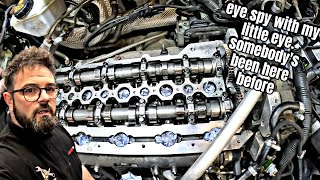
Typical fix: Replace the swirl flap arm with an upgraded metal or more robust plastic version. The OEM part number for the link arm is 31216460. 🎬 Watch: How to quickly repair a broken swirl flap arm. If the ball socket on the swirl rail itself is worn, the new arm may pop off again, necessitating a full swirl flap assembly replacement.
Est. part cost: $10-$50 for the arm, much more for the full assembly. - Dirty or Faulty Mass Air Flow (MAF) Sensor 🟡 Medium Probability While less common than leaks on the D5, the MAF sensor can become contaminated with dirt and oil, causing inaccurate readings. Using non-OEM or oiled air filters can accelerate this contamination.
How to confirm: Remove the MAF sensor from the airbox housing. Visually inspect the small wires/filaments inside. If they appear dirty, cleaning may help. A definitive test requires a diagnostic tool (like VIDA) to monitor airflow. A healthy D5 engine should read approximately 3.5 g/s at idle. Readings that are stuck or don't increase with RPM indicate a faulty sensor.
Typical fix: First, try cleaning the sensor with a dedicated MAF sensor cleaner spray. Do not touch the delicate internal components. If cleaning doesn't resolve the issue, replace the sensor with a quality OEM unit like Bosch. The Bosch part number is often 0281002468 🎬 Watch: A simple 5-minute DIY guide for MAF sensor replacement. or a superseding number.
Est. part cost: $10 for cleaner, $150-$250 for a new sensor. - Leaking or Cracked Intercooler ⚪ Low Probability The intercooler, particularly on the D5 engine, is known for the plastic end tanks developing cracks over time. This creates a boost leak similar to a split hose and is a very common cause of P0101 and underboost codes on this platform.
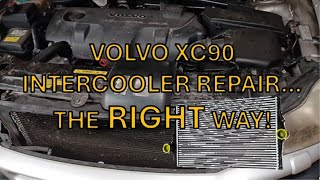
How to confirm: A smoke test is the best method. Smoke will be seen escaping from the front of the intercooler, usually where the plastic end tank is crimped 🎬 See this walkthrough on replacing the intercooler the right way. to the aluminum core. You may also see oily residue in the area of the leak.
Typical fix: Replace the intercooler. This is a more involved job than replacing a hose.
Est. part cost: $200-$400
Rare But Worth Checking
- Clogged Diesel Particulate Filter (DPF): A severely clogged DPF can create excessive backpressure, affecting turbo performance and airflow, which can indirectly trigger a P0101 code along with other DPF-specific codes.
- Faulty EGR Valve: If the EGR valve sticks open or closed, it can cause the amount of air flowing past the MAF sensor to be different than what the ECM expects, leading to a P0101 code. This is often accompanied by other EGR-related fault codes.
- Faulty Turbocharger or VNT Actuator: A failing turbo, particularly one with bad oil seals or a stuck Variable Nozzle Turbine (VNT) mechanism, can cause erratic airflow and boost levels, potentially triggering a P0101 code. This is usually accompanied by other symptoms like excessive smoke or noise.
Diagnosis Steps

- Read all fault codes with a Volvo-compatible scanner (like VIDA). Note any codes that accompany P0101, as they provide crucial clues.
- Visually inspect the engine bay for obvious signs of trouble, like a disconnected hose or the swirl flap arm lying on the engine block.
- Carefully inspect the small plastic swirl flap actuator arm (on 2005+ models) to see if it is broken or disconnected from the actuator motor or the swirl rail.
- Thoroughly inspect all rubber and plastic intake and boost hoses between the air filter, turbo, intercooler, and intake manifold. Squeeze the hoses to feel for soft spots or splits that aren't visible. Pay close attention to bends and connection points for splits, cracks, or signs of oil spray.
- If no visible leaks are found, perform a smoke test on the entire intake system to identify hard-to-see cracks or gasket leaks, especially from the intercooler end tanks.
- If no leaks are present, remove and inspect the MAF sensor. If it appears dirty, clean it with dedicated MAF sensor cleaner and re-test.
- Check the air filter to ensure it is clean and not restricting airflow.
- If the problem persists, use a diagnostic tool to monitor live MAF sensor data (g/s) and Boost Pressure Sensor data to confirm if they are reading correctly and responding to engine RPM changes before replacing any sensors.
Parts You'll Likely Need
- Swirl Flap Actuator Arm/Linkage
(OEM #31216460)— The original plastic arm is a notorious failure point on Euro 4/5 D5 engines, causing incorrect swirl flap operation and airflow errors.
Trusted brands: Volvo (OEM), Aftermarket repair kits (often metal)
OEM price range: $20-$40
Aftermarket price range: $10-$25 - Intercooler Boost Hose
(OEM #30740896 (example, varies by position))— These rubber hoses are under pressure and high temperatures, and frequently split with age, causing a major boost leak that triggers P0101.
Trusted brands: Volvo (OEM), Rein, URO Parts
OEM price range: $100-$200
Aftermarket price range: $50-$120 - Mass Air Flow (MAF) Sensor
(OEM #31342362)— If all air leaks are ruled out, the sensor itself may have failed or be too contaminated to clean effectively. Use a reputable brand like Bosch.
Related Codes That Often Appear With This One
- ECM-6805 / P0299 — These codes indicate 'Turbo Underboost' or a 'Boost Pressure Fault'. A large air leak after the turbo but before the engine (like a split boost hose or cracked intercooler) is a common cause for both P0101 and an underboost condition.
- ECM-18A0 / P2008 — These codes relate directly to the swirl flap actuator control circuit. If you see these alongside P0101, the swirl flap system is almost certainly the root cause.
Platform-Specific Known Issues
- Swirl Flap Arm Failure (2005+ Euro 4/5): The plastic swirl flap arm is a guaranteed failure point. It becomes brittle and pops off the actuator motor or the swirl vane rail. The part number for the replacement link is 31216460. Many owners opt for more durable aftermarket metal versions.
- Cracked Intercooler End Tanks: A very common issue on the D5 is for the plastic end tanks of the intercooler to develop cracks, causing a boost leak that triggers P0101 and often ECM-6805. This is usually accompanied by a 'whooshing' noise under acceleration.
Mechanic-Grade Diagnostic Values
- Mass Air Flow at idle (engine at operating temperature) — expected: Approximately 48 to 60 kg/h (13 to 16 g/s) with EGR off, may be lower (8-14 g/s) with EGR active.. Failure: Readings that are stuck, do not change with RPM, or are significantly outside the expected range. A 'signal too high' code may trigger under load even if idle values seem correct.
- Mass Air Flow under hard acceleration (in motion) — expected: Should smoothly and rapidly increase, potentially exceeding 140 g/s.. Failure: A failure to reach high values, or erratic/spiking readings that cause the ECM to trigger a range/performance fault.
Scan Tool Commands That Help
- Volvo VIDA or compatible advanced scanner (e.g., YOUCANIC): Reset adaptation of fuel/air mixture (AFR Adaptation Reset) — This should be performed after replacing the MAF sensor, O2 sensors, injectors, or fixing a major vacuum/boost leak. It forces the ECM to relearn the long-term fuel trims from a baseline, preventing the old, incorrect learned values from causing persistent issues.
- Volvo VIDA: Adaptation of the throttle unit — If the throttle body has been cleaned or replaced during diagnosis, this function should be run to ensure the ECM correctly learns its new closed and open positions.
Wiring & Ground Locations
- Fuse 11B/12 — In the fuse box located in the engine compartment.. This 15A fuse provides power to the Mass Air Flow (MAF) sensor on diesel models. A blown fuse will cause the sensor to stop sending a signal, directly leading to a fault code.
- Ground Point G93 — On the left side of the engine compartment, attached to the strut tower.. This is a primary engine bay ground point. A corroded or loose connection here can cause erratic voltage and signal issues for multiple sensors, including the MAF sensor.
- ECM (Engine Control Module) — Located in a black box in the engine compartment, typically near the firewall on the driver's side. Removal requires releasing specific clips.. All MAF sensor wiring terminates at the ECM. If the sensor and wiring test good, the ECM connectors should be inspected for corrosion or damage.
Real Owner Repair Stories
- Volvo Owners Club Forum user 'Zander99' (2006 Volvo S60 D5 (D5244 engine, same as XC90)) — P0101 code with 'signal too high' description in VIDA. Loss of power only occurred under hard acceleration.
❌ Tried (didn't work) Logged MAF and MAP data, which appeared to show correct values during normal driving.
✅ What actually fixed it Discovered the swirl flap actuator arm was completely broken ('FUBAR'). Replacing the arm resolved the airflow management issue and the code. - Volvo Forums user 'ernestos' (1997 Volvo 960 2.9L (different vehicle, but demonstrates the principle of unmetered air)) — P0101 code, CEL on, multiple other codes.
❌ Tried (didn't work) Initial research and testing pointed towards multiple possibilities.
✅ What actually fixed it Found and replaced a leaking intake manifold gasket. This stopped the unmetered air from entering the engine, which was the root cause of the MAF range/performance code.
"I Checked Everything" — The Actual Cause
- A broken or disconnected swirl flap arm on Euro 4/5 D5 engines is a common cause of P0101 that will not be found with a smoke test. The issue is not an air leak into the system, but rather incorrect management of the air already inside the intake manifold. The ECM expects a certain airflow reading based on the swirl flaps being in a specific position; when the arm breaks, the flaps jam, causing an airflow deviation that the MAF sensor correctly reports but the ECM flags as a fault.
OEM Part Supersession History
9470640, 8670398, 8670263, 8602391, 9438757, 31342414→31342362— Standard part evolution and consolidation by Volvo over the years.
Heads up: While many part numbers exist, they should all be cross-compatible leading up to the latest PN. Always use a quality OEM brand like Bosch. Some original MAF sensors use 5-spline security screws to discourage replacing only the sensor element, while many aftermarket replacements use standard 6-spline Torx security screws.
Model Year Variations Within This Range
- 2005-2014 (Euro 4/5): These engines feature swirl flaps in the intake manifold, controlled by a failure-prone plastic arm. Pre-2005 Euro 3 engines do not have this system, eliminating it as a potential cause. The Euro 4 engine also introduced a DPF, an uprated intercooler, and a different turbo compared to the Euro 3.
- 2005-2014 (Euro 4/5): Euro 4 engines are equipped with a turbo resonator box on the lower intercooler pipe that is a known failure point for cracks. Earlier Euro 3 models do not have this unit. Aftermarket kits are available to delete this resonator and replace it with a more durable silicone hose.
Diagnostic Flowchart
Other Known Issues on This Vehicle
Issues unrelated to this code that are worth knowing about as an owner of this generation:
- AWD System Failure (Angle Gear/Spline Sleeve) 🔴 High — Very common, especially on pre-2006 models. The splined sleeve connecting the transmission to the angle gear strips out, resulting in loss of AWD. Many owners are unaware their AWD is not working until they need it.
- Instrument Cluster (DIM) Failure 🟠 Medium — Common on early P2 platform cars (approx. 2002-2006). Symptoms include flickering gauges, blank information displays, or total power loss to the cluster. Often caused by failing solder joints on the circuit board.
- Automatic Transmission (TF-80SC) Valve Body Failure 🔴 High — Common on models from 2006 onwards, especially if transmission fluid is not changed. Symptoms include harsh shifting, flaring between gears, and a 'thump' when coming to a stop. Usually requires valve body replacement.
- Cracked Intercooler End Tanks 🟠 Medium — A frequent issue on D5 models. The plastic end tanks crimped to the aluminum core develop cracks, causing boost leaks. This is a direct cause of P0101 but is also a general platform weakness.
Used vs. New Parts: Buying Guide for This Vehicle
When a used part is the smart pick: Used parts can be a cost-effective option for structural components like the air filter housing, or potentially an intercooler from a verified low-mileage, non-crashed donor vehicle. Hard pipes from the intake system are also generally safe to buy used.
Donor-vehicle mileage cap: roughly under 80000 miles for the part to have meaningful remaining life.
What to inspect on the donor part:
- For an intercooler, inspect the end tanks meticulously for hairline cracks, especially around the seams.
- Check inside the intercooler and pipes for excessive oil residue, which could indicate a blown turbo on the donor car.
- Ensure all mounting tabs and connection points are intact and not broken.
OEM-only on this vehicle (don't cheap out):
- Mass Air Flow (MAF) Sensor: It is strongly recommended to use a new, OEM-quality sensor (e.g., Bosch). Cheap aftermarket MAF sensors are notoriously unreliable and a frequent cause of repeat failures and incorrect diagnoses.
Aftermarket brands forum-validated for this vehicle:
- Intercooler Hoses: do88, Rein, and Gates are reputable brands that offer high-quality silicone hoses that are often more durable than the stock rubber parts.
Brands owners have reported issues with on this vehicle:
- Unbranded, no-name electronic sensors, especially Mass Air Flow sensors, purchased from online marketplaces. These often have poor quality control and do not perform to OEM specifications.
Real Owner Stories
Aggregated from forums and TSBs cited above. Mileages and costs reflect what owners reported in those sources.
2005+ Volvo XC90 D5
Symptoms: Owner experienced a P0101 code along with P2008, confirming a fault in the swirl flap system.
What fixed it: Repairing the swirl flap system faults which were directly linked to the MAF range code.
Source hint: Reddit r/Volvo: 'XC90 D5 Swirl Flaps fault code'
2003-2014 Volvo XC90 2.4L D5
Symptoms: Vehicle entered limp mode with a P0101 code; technician identified a broken swirl flap system.
What fixed it: Extensive work including injector removal to replace the entire swirl flap assembly.
Source hint: YouTube: 'Volvo XC90 D5 2.4 Diesel, Limp Mode, P0101, Swirl Flaps, Injector Removal'
2003-2014 Volvo XC90 2.4L D5
Symptoms: User was quoted £500 for a MAF sensor replacement for an 'engine system service urgent' message.
What fixed it: Checking for cheaper, more common issues like boost leaks or swirl flap arms before replacing the expensive MAF sensor.
Source hint: Volvo Owners Club Forum: 'help please/ engine system service urgent'
Related OBD-II Codes
Frequently Asked Questions
My XC90 D5 is making a 'whooshing' sound when I accelerate and has lost power. Is this related to P0101?
I found a small plastic arm lying on my engine block. Could this cause a P0101 code?
What is the correct airflow reading for a healthy XC90 D5 at idle?
Can I just clean the MAF sensor on my Volvo XC90 instead of replacing it?
Is the P0101 code on my XC90 D5 always caused by a bad sensor?
Helpful Videos

Used OEM Parts in Stock

New Aftermarket Parts Available

The information in this article is provided for general reference and educational purposes only. Vehicle specifications, procedures, and part compatibility can vary by production date, trim level, and region. Always consult your vehicle's factory service manual and verify part numbers before purchasing or performing repairs. Safety-critical components such as airbags, seat belts, and braking systems should be installed by a qualified professional.
- Volvo XC90:
- 🎬 Helpful Videos
- 🛍️ Shop This Part
- What's Unique About the 2003-2014 Volvo XC90
- Symptoms You May Notice
- Most Likely Causes
- Rare But Worth Checking
- Diagnosis Steps
- Parts You'll Likely Need
- Related Codes That Often Appear With This One
- Platform-Specific Known Issues
- Mechanic-Grade Diagnostic Values
- Scan Tool Commands That Help
- Wiring & Ground Locations
- Real Owner Repair Stories
- "I Checked Everything" — The Actual Cause
- OEM Part Supersession History
- Model Year Variations Within This Range
- Diagnostic Flowchart
- Other Known Issues on This Vehicle
- Used vs. New Parts: Buying Guide for This Vehicle
- Real Owner Stories
- 2005+ Volvo XC90 D5
- 2003-2014 Volvo XC90 2.4L D5
- 2003-2014 Volvo XC90 2.4L D5
- Related OBD-II Codes
- Frequently Asked Questions
- 🎟️ Get 5% Off