

P0101 on 2008-2016 Subaru Impreza: MAF Sensor Causes and Fixes
On a 2008-2016 Subaru Impreza, P0101 is most often caused by a dirty Mass Airflow (MAF) sensor. Cleaning the sensor with a special cleaner is a common first step and often solves the problem. If not, a vacuum leak from a cracked intake boot or a faulty sensor are the next most likely culprits.
- Start with the cheapest and easiest fix: clean the MAF sensor with dedicated cleaner.
- Do not use brake cleaner or carburetor cleaner on the MAF sensor; it will damage it.
- Thoroughly inspect the accordion-style intake boot for hidden cracks, as it is a very common point of failure causing vacuum leaks.
- If replacing the MAF sensor, use a genuine Subaru or Denso part to avoid performance and compatibility issues.
What's Unique About the 2008-2016 Subaru Impreza
For the 2008-2016 Impreza, this code is very common and typically not a sign of a catastrophic failure. The most frequent cause is simple contamination of the MAF sensor element, sometimes made worse by aftermarket oiled air filters. Unlike some other manufacturers where this code can point to complex software or electrical issues, on this platform, the diagnostic path is straightforward and usually begins with cleaning the sensor. A very common secondary cause, especially on the EJ25 engine, is a cracked accordion-style rubber intake boot, which causes a vacuum leak that is often missed during a simple visual inspection.
Generation note: The 2008-2016 range covers two Impreza generations: - 3rd Generation (2008-2011): Primarily used a 2.5L SOHC engine (EJ253). - 4th Generation (2012-2016): Switched to a more efficient 2.0L DOHC engine (FB20B). While the engines are different, the common causes and diagnostic steps for P0101 are nearly identical for both generations, with dirty sensors and intake/vacuum leaks being the primary culprits for both.
Symptoms You May Notice
- Check Engine Light is on
- Rough or erratic idle
- Engine hesitation or stalling, especially under load or when coming to a stop
- Reduced acceleration and power
- Decreased fuel economy
- Black smoke from the exhaust
- Replacing the MAF sensor immediately without first attempting to clean it.
- Replacing the front oxygen (Air/Fuel Ratio) sensor, as it can also be affected by a poor air/fuel mixture but is not the root cause.
- Overlooking a small crack in the intake boot, as it may not be visible without removing and flexing the part.
Most Likely Causes
- Dirty or Contaminated MAF Sensor 🔴 High Probability The sensor's hot wire is sensitive to dirt, dust, and oil. Aftermarket oiled air filters are a frequent contributor to contamination. This is the most common cause and the easiest first step.
How to confirm: Visually inspect the MAF sensor wires inside the housing. If they appear dirty or coated in residue, cleaning is warranted. The car may run perfectly fine after clearing the code, only for it to return days later.
Typical fix: Remove the sensor (typically two Phillips head screws) and clean it carefully with a dedicated MAF sensor cleaner spray, such as from CRC or Liqui Moly. Do not touch the wires or use other chemicals like brake cleaner.
Est. part cost: $8-$15 for a can of MAF cleaner. - Vacuum Leak 🟡 Medium Probability The accordion-style rubber intake boot between the air filter box and the throttle body is a very common failure point. Over time, it develops cracks in the folds that are hard to see without removing and flexing it. Other vacuum hoses and gaskets can also become brittle.
How to confirm: Perform a smoke test by introducing smoke into the intake system and watching for leaks. A hissing sound at idle can also be a clue. Thoroughly remove and inspect the main intake boot, bending it to reveal hidden cracks.
Typical fix: Replace the cracked hose, intake boot, or gasket that is causing the leak.
Est. part cost: $40-$150 depending on the specific hose or gasket. - Clogged or Dirty Engine Air Filter 🟡 Medium Probability
How to confirm: Visually inspect the engine air filter. If it is dark, full of debris, or has not been changed per the service interval, it is suspect.
Typical fix: Replace the engine air filter.
Est. part cost: $20-$40 - Faulty MAF Sensor ⚪ Low Probability
How to confirm: If cleaning the sensor, replacing the air filter, and confirming there are no vacuum leaks does not resolve the code, the sensor itself may have failed. A scan tool can be used to monitor the MAF sensor data (g/s) to see if it's providing a logical reading that increases with RPM.
Typical fix: Replace the Mass Airflow Sensor. It is highly recommended to use an OEM (Subaru/Denso) part to avoid compatibility issues.
Est. part cost: $100-$300
Rare But Worth Checking
- Damaged Wiring or Connector: Check the wiring harness and connector for the MAF sensor for any signs of corrosion, loose pins, or frayed wires before replacing the sensor. Wiggle the connector with the engine running to see if it affects the idle.
- Clogged Catalytic Converter: While rare, a severely restricted exhaust can cause airflow issues that may trigger a P0101 code. This is usually accompanied by other symptoms like a severe lack of power, especially at high RPMs, and potentially a sulfur or 'rotten egg' smell.
- Recent Battery Change or Disconnect: Some owners report the P0101 code appearing shortly after disconnecting or replacing the battery. This can happen if the ECM's learned fuel trim values are reset, making it more sensitive to minor deviations in the MAF signal. The issue often resolves on its own after a drive cycle or may highlight a borderline dirty sensor that was previously compensated for.
Diagnosis Steps
- Read the code from the OBD-II port using a scanner. Confirm P0101 is present and check for any other codes, like P0171.
- Visually inspect the engine air filter. Replace if dirty or clogged.
- Inspect the air intake system between the MAF sensor and the throttle body. Check for loose clamps. Remove the accordion-style intake boot and flex it in your hands to check for small cracks in the crevices.
- Carefully remove the MAF sensor. Inspect the sensing elements. Are they dirty or coated in oil?
- Clean the MAF sensor using a dedicated MAF sensor cleaner spray (e.g., CRC). Do not touch the internal wires. Allow it to dry completely before reinstalling.
- Clear the trouble codes with the scanner and perform a test drive, including varied speeds and idle periods, to see if the code returns.
- If the code returns, the next step is to definitively check for vacuum leaks. A smoke test is the most effective method. Listen for hissing sounds at idle.
- If no vacuum leaks are found, inspect the MAF sensor connector and wiring for damage, corrosion, or loose pins.
- Using a scan tool with live data, monitor the MAF sensor reading in grams per second (g/s). At idle, it should be roughly equal to the engine displacement (e.g., 2.0-2.5 g/s). The reading should increase smoothly with engine RPM.
- If all other steps fail to resolve the issue, the MAF sensor itself is likely faulty and should be replaced. Use a genuine OEM (Denso) part for best results.
Parts You'll Likely Need
- Mass Airflow (MAF) Sensor
(OEM #22680AA380)— This is the sensor that fails or gets dirty. While cleaning often works, replacement is the next step. This part number is widely used across many Subaru models from 2008-2021.
Trusted brands: Denso (OEM Manufacturer, Part No. 197400-5111), Subaru (Genuine)
OEM price range: $250-$350
Aftermarket price range: $70-$180 - Engine Air Filter
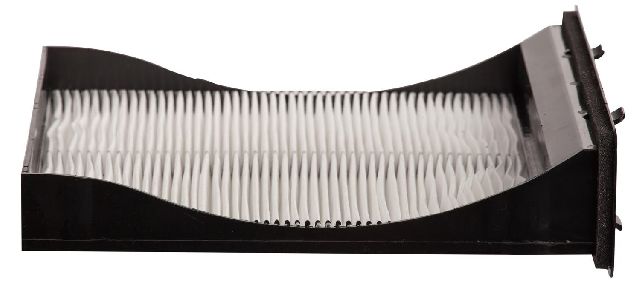
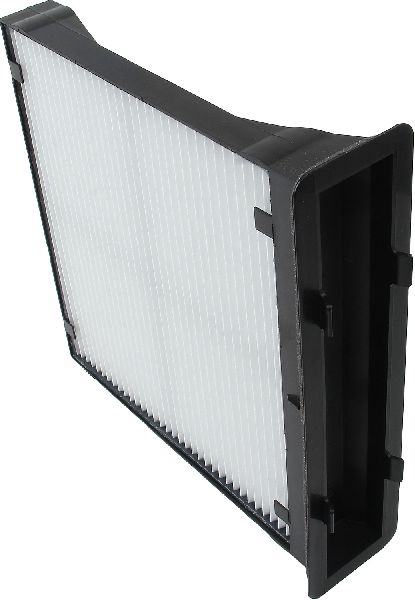
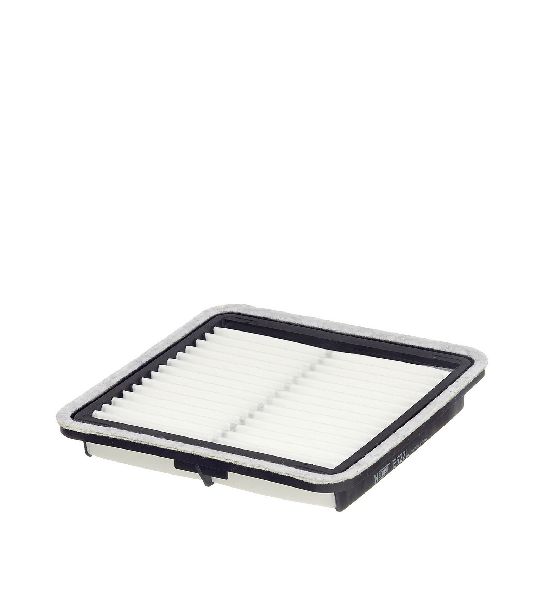
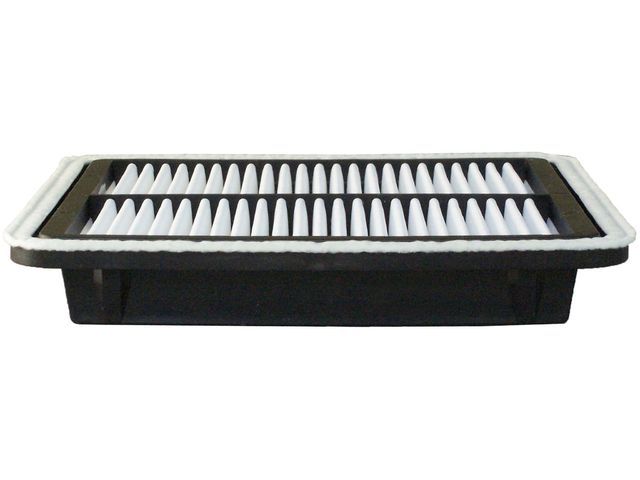
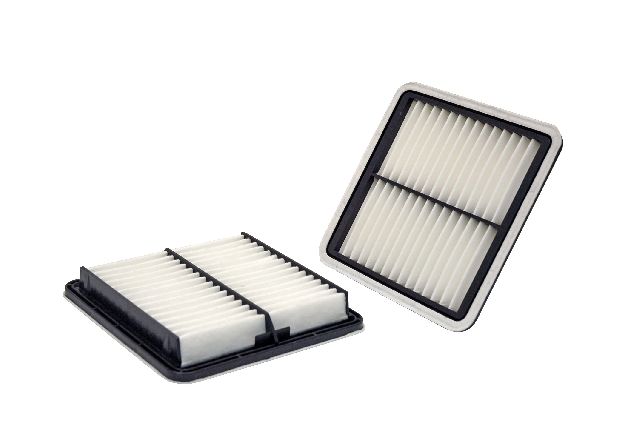
(OEM #16546AA12A (fits many 2.0L/2.5L models))— A clogged air filter restricts airflow and is a common contributing cause. It should be checked and replaced if dirty.
Trusted brands: Subaru OE, Denso, Wix
OEM price range: $25-$40
Aftermarket price range: $15-$30 - MAF Sensor Cleaner — This is often the only 'part' needed to fix the issue by cleaning the existing sensor.
Trusted brands: CRC, Liqui Moly
Aftermarket price range: $8-$15 - Intake Air Duct / Boot
(OEM #14462AA290 (example for EJ25))— This accordion-style hose is a common failure point for vacuum leaks due to cracking with age and heat cycles.
Trusted brands: Subaru OE
OEM price range: $50-$90
Aftermarket price range: $30-$60
Related Codes That Often Appear With This One
- P0171 — System Too Lean. A vacuum leak or under-reporting MAF sensor can cause the engine to run lean, triggering both codes. This is the most common companion code to P0101.
- P0172 — System Too Rich. Less common, but if the MAF sensor is faulty and over-reporting airflow, the ECM will inject too much fuel.
Technical Service Bulletins (TSBs) & Recalls
- While no specific TSB for P0101 was found, related TSBs for oil consumption on FB20 engines (e.g., 02-157-14R) and head gasket issues on EJ25 engines are well-documented platform problems that owners should be aware of.
Platform-Specific Known Issues
- Cracked Accordion Intake Boot: The flexible, ribbed intake boot located between the air filter housing and the throttle body is a frequent source of vacuum leaks. Cracks often form deep within the ribs and are not visible without removing the boot and flexing it by hand. This allows unmetered air to enter the engine, which is a classic cause of P0101.
Mechanic-Grade Diagnostic Values
- MAF Sensor Reading (g/s) at Idle — expected: Should be approximately equal to the engine's displacement in liters. For the 2.0L (FB20), expect ~1.8-2.2 g/s. For the 2.5L (EJ25), expect ~2.3-2.7 g/s.. Failure: A reading significantly lower than expected suggests a vacuum leak (unmetered air entering after the sensor). A reading that is erratic, stuck, or doesn't respond smoothly to throttle input suggests a faulty sensor.
- MAF Sensor Reading (g/s) Under Load — expected: Readings should increase smoothly and linearly with RPM. General values are 15-25 g/s at 2500 RPM and can reach 70-100+ g/s at wide-open throttle.. Failure: A slow or delayed increase can indicate a dirty sensor or intake restriction. Jumpy or non-linear readings point to a failing sensor.
- MAF Sensor Signal Voltage at Idle — expected: Approximately 1.2V - 2.0V with the engine fully warmed up and idling.. Failure: Voltage that is stuck, erratic, or doesn't increase smoothly when the throttle is snapped open indicates a problem with the sensor or wiring.
- MAF Sensor Ground Circuit Voltage Drop — expected: Less than 9mV (0.009V) when testing between the sensor's ground wire and the battery negative terminal with the engine running.. Failure: A reading higher than 9mV indicates high resistance in the ground circuit, which can skew the sensor's signal. This could be due to a corroded or loose ground connection.
Hidden / Shadow Codes Worth Checking
- Permanent DTC (PDTC): Even after you fix the P0101 fault and clear the code with a scanner, the ECU may store a 'Permanent' version of the code. This code cannot be erased with a scanner or by disconnecting the battery. (see via It may not show on all basic scanners but will be read by emissions testing equipment. A vehicle can fail a smog check if a PDTC is present, even with the Check Engine Light off. The ECU will clear the PDTC on its own after a specific drive cycle is completed (e.g., in California, this requires approximately 15 warm-up cycles and 200 miles of driving since the code was last cleared).)
Scan Tool Commands That Help
- OBD-II Scanner or Battery Disconnect: Reset ECU / Clear Learned Fuel Trims — After replacing the MAF sensor or fixing a major vacuum leak, it is crucial to reset the ECU's long-term fuel trim adaptations. This forces the computer to relearn the air-fuel mixture based on the new, correct sensor readings. This can be done with a scanner's 'Clear Codes' function or by disconnecting the negative battery terminal for several minutes and pressing the brake pedal to drain residual charge.
Wiring & Ground Locations
- Main Engine Ground (FB20 Engine) — On 2012-2016 models with the FB20 engine, a primary engine-to-chassis ground strap is secured under the top starter motor bolt.. This ground is critical for many sensors, including the MAF. If it's loose, corroded, or forgotten during a starter or engine replacement, it can cause erratic sensor readings and trigger a P0101 code along with other sensor circuit faults.
- MAF Sensor Connector (5-Pin) — Plugged directly into the MAF sensor, located on the air filter housing outlet.. The 5 wires typically serve: 12V Power, Chassis Ground, Sensor Ground, MAF Signal, and IAT (Intake Air Temp) Signal. Verifying power and ground at this connector is a key diagnostic step. Poor contact on any pin can cause the P0101 code.
Real Owner Repair Stories
- Reddit r/MechanicAdvice User (2012 Nissan Sentra 2.0L (Illustrates a universal diagnostic trap)) — Check Engine Light with code P0101, sluggish performance.
❌ Tried (didn't work) Cleaning the MAF sensor with CRC cleaner., Replacing the MAF sensor with a new OEM part.
✅ What actually fixed it After the code returned despite replacing the sensor, a mechanic performed a thorough inspection and found a crack in the air intake hose between the sensor and the throttle body. Replacing the hose permanently resolved the P0101 code.
OEM Part Supersession History
22680AA38A→22680AA380— Standard part revision by Subaru.
Heads up: The parts are interchangeable. The OEM manufacturer for Subaru is Denso, and their direct equivalent part number is 197400-5111.
Model Year Variations Within This Range
- 2012-2016: These models use the FB20 2.0L engine. A critical engine ground point that can affect the MAF sensor is located on the top starter bolt.
- 2008-2011: These models use the EJ253 2.5L engine. While the causes of P0101 are the same, the intake boot and some vacuum hose part numbers and routing will differ from the later FB20 engine.
Diagnostic Flowchart
Other Known Issues on This Vehicle
Issues unrelated to this code that are worth knowing about as an owner of this generation:
- EJ25 Engine Head Gasket Failure 🔴 High — Very common on 2.5L SOHC (EJ253) engines, typically between 80,000 and 150,000 miles. The failure is often an external oil or coolant leak rather than internal mixing. (Ref: No recall, but a well-documented issue. The fix involves replacing the original single-layer graphite-coated gaskets with more durable multi-layer steel (MLS) gaskets.)
- FB20 Engine Excessive Oil Consumption 🟠 Medium — Affects 2012-2013 Impreza models with the 2.0L FB20 engine. Can occur early in the vehicle's life. (Ref: Subject of class-action lawsuit (Yaegar v. Subaru). Subaru extended the powertrain warranty to 8 years/100,000 miles for affected vehicles and provided reimbursements for oil and repairs.)
- Faulty Brake Light Switch 🟡 Low — Common on 2008-2016 models. Can cause brake lights to not illuminate or stay on, and may affect push-start ignition and transmission interlock. (Ref: Subaru issued a recall for this issue. The switch can malfunction due to contamination from off-gassing chemicals inside the cabin.)
- Wheel Bearing Failure 🟠 Medium — Front and rear wheel bearings are a known wear item and can fail prematurely, sometimes before 100,000 miles, causing a loud humming or grinding noise that changes with speed.
- Rusted Rear Brake Lines 🔴 High — Affects models in salt-belt regions. Road salt can accumulate near the fuel tank protector, causing the brake lines to rust and potentially leak, leading to a loss of braking ability. (Ref: Subaru issued recalls for this problem on various model years to inspect and replace or apply anti-corrosion wax to the lines.)
Used vs. New Parts: Buying Guide for This Vehicle
When a used part is the smart pick: For the Mass Airflow (MAF) sensor, a used OEM part from a reputable salvage yard is often a much smarter and more reliable choice than a new, cheap aftermarket sensor. The OEM Denso sensors are calibrated specifically for the vehicle, while many aftermarket units are not, leading to persistent codes and performance issues.
Donor-vehicle mileage cap: roughly under 100000 miles for the part to have meaningful remaining life.
What to inspect on the donor part:
- Verify the OEM part number on the sensor (Subaru: 22680AA380, Denso: 197400-5111) matches your original part.
- Look inside the sensor bore; the two fine sensing wires should be intact and not broken.
- Ensure the plastic housing and connector are not cracked or damaged.
- Ask for the donor vehicle's mileage if possible; lower is always better.
OEM-only on this vehicle (don't cheap out):
- Mass Airflow (MAF) Sensor
Aftermarket brands forum-validated for this vehicle:
- Denso (This is the Original Equipment Manufacturer)
Brands owners have reported issues with on this vehicle:
- Generic, unbranded, or 'white-box' MAF sensors sold on sites like Amazon or eBay are frequently reported by owners to be poorly calibrated and often fail to fix the P0101 code.
Real Owner Stories
Aggregated from forums and TSBs cited above. Mileages and costs reflect what owners reported in those sources.
Subaru Outback (Shared EJ253 Platform)
Symptoms: P0101 and P0171 codes appearing together.
What fixed it: Replacing a cracked intake duct after cleaning the MAF sensor failed to resolve the issue.
Source hint: https://www.subaruoutback.org/threads/p0101-maf-sensor-and-p0171-lean.531739/
Related OBD-II Codes
Frequently Asked Questions
Is there a TSB for the oil consumption issues on my 2012-2013 Impreza that might be related to engine codes?
I cleaned my MAF sensor but the P0101 code came back on my 2010 Impreza. What should I check next?
Can an aftermarket air filter cause a P0101 code on my Subaru?
What is the correct MAF sensor reading for a 2.0L or 2.5L Impreza at idle?
Should I use an aftermarket MAF sensor if mine is faulty?
Could my P0101 code be related to the brake light recall?
Helpful Videos

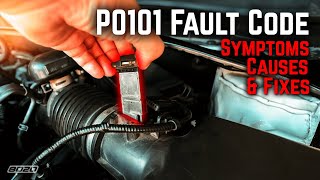
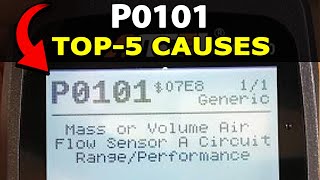
Used OEM Parts in Stock
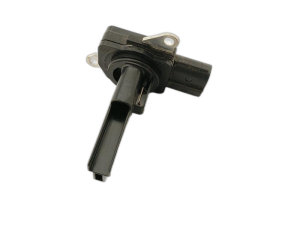
New Aftermarket Parts Available

The information in this article is provided for general reference and educational purposes only. Vehicle specifications, procedures, and part compatibility can vary by production date, trim level, and region. Always consult your vehicle's factory service manual and verify part numbers before purchasing or performing repairs. Safety-critical components such as airbags, seat belts, and braking systems should be installed by a qualified professional.
- Subaru Impreza:
- 🎬 Helpful Videos
- 🛍️ Shop This Part
- What's Unique About the 2008-2016 Subaru Impreza
- Symptoms You May Notice
- Most Likely Causes
- Rare But Worth Checking
- Diagnosis Steps
- Parts You'll Likely Need
- Related Codes That Often Appear With This One
- Technical Service Bulletins (TSBs) & Recalls
- Platform-Specific Known Issues
- Mechanic-Grade Diagnostic Values
- Hidden / Shadow Codes Worth Checking
- Scan Tool Commands That Help
- Wiring & Ground Locations
- Real Owner Repair Stories
- OEM Part Supersession History
- Model Year Variations Within This Range
- Diagnostic Flowchart
- Other Known Issues on This Vehicle
- Used vs. New Parts: Buying Guide for This Vehicle
- Real Owner Stories
- Subaru Outback (Shared EJ253 Platform)
- Related OBD-II Codes
- Frequently Asked Questions
- 🎟️ Get 5% Off