

P0101 on 2011-2018 Nissan Altima: MAF Sensor Causes and Fixes
On a 2011-2018 Nissan Altima, code P0101 is most often caused by a dirty Mass Air Flow (MAF) sensor that needs cleaning. If that doesn't work, check for a cracked intake boot. If there are no drivability issues, the cause is likely a software glitch requiring an ECM reprogram as per Nissan TSB NTB16-030a.
- Start with the cheapest and easiest fix: clean the MAF sensor with dedicated cleaner.
- Before buying any parts, carefully inspect the large rubber air intake hose for cracks; this is a very common failure point.
- Be aware that this code can be caused by a software glitch. If cleaning the sensor and checking for leaks doesn't work, the ECM may need to be reprogrammed by a professional.
- Do not ignore this code, as the associated stalling and sputtering can be a safety hazard in traffic.
What's Unique About the 2011-2018 Nissan ALTIMA

For the Nissan Altima in this year range, a P0101 code has a notable dual personality. While it's frequently caused by common issues like a dirty sensor or a simple vacuum leak, there's also a well-documented history of software glitches. Nissan issued Technical Service Bulletin NTB16-030a for 2013-2016 Altimas with the 2.5L QR25DE engine, stating that if P0101 appears *without* any drivability issues, the ECM requires a software update. This makes it crucial to not automatically replace the MAF sensor, as the fix may be a dealer-level reprogram. Another TSB, NTB12-051k, addresses the same scenario for 2011-2012 models.
Diagnostic Flowchart

Tap your situation to follow the diagnostic path that matches what you're seeing on this vehicle.
Generation note: The 2011-2018 range covers two Altima generations: the end of the 4th generation (L32, 2011-2012) and the 5th generation (L33, 2013-2018). The causes and fixes for P0101 are broadly similar, however, the intake boot part numbers differ. The MAF sensor part number also changed between generations, with 22680-7S000 used on the L32 and 22680-1MG0A on the L33. TSBs also target specific year ranges within these generations; for example, NTB16-030a is specific to 2013-2016 models with the QR25DE engine.
Symptoms You May Notice
- Check Engine Light is on
- Engine stalling, sometimes while driving or at idle
- Sputtering or hesitation during acceleration
- Rough or unstable idle
- Reduced fuel economy
- Black smoke from the tailpipe
- Traction control and/or forward collision warning lights may illuminate simultaneously with the Check Engine Light
- Replacing the MAF sensor without cleaning it first.
- Replacing the MAF sensor when the actual problem is a cracked intake boot.
- Replacing the MAF sensor when the vehicle has no drivability issues and simply needs the ECM reprogrammed per TSB NTB16-030a or NTB12-051k.
Most Likely Causes

- Dirty or Contaminated Mass Air Flow (MAF) Sensor 🔴 High Probability The sensor's delicate hot wires can become contaminated by dirt, debris, or oil (especially from over-oiled aftermarket air filters), skewing its readings and causing a performance code.
How to confirm: Visually inspect the sensor wires inside the MAF housing. If they appear dirty or coated, they need cleaning. The sensor is located on the intake tube right after the air filter box.
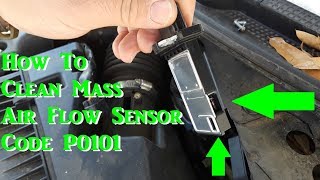
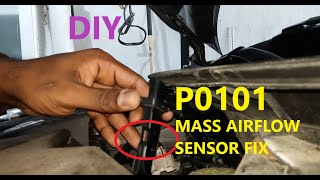
Typical fix: Remove the sensor and clean it carefully using only dedicated Mass Air Flow sensor cleaner. 🎬 Watch: How to clean the MAF sensor on your Altima Let it dry completely before reinstalling. Do not touch the internal wires. This is the most common first step for DIY repair.
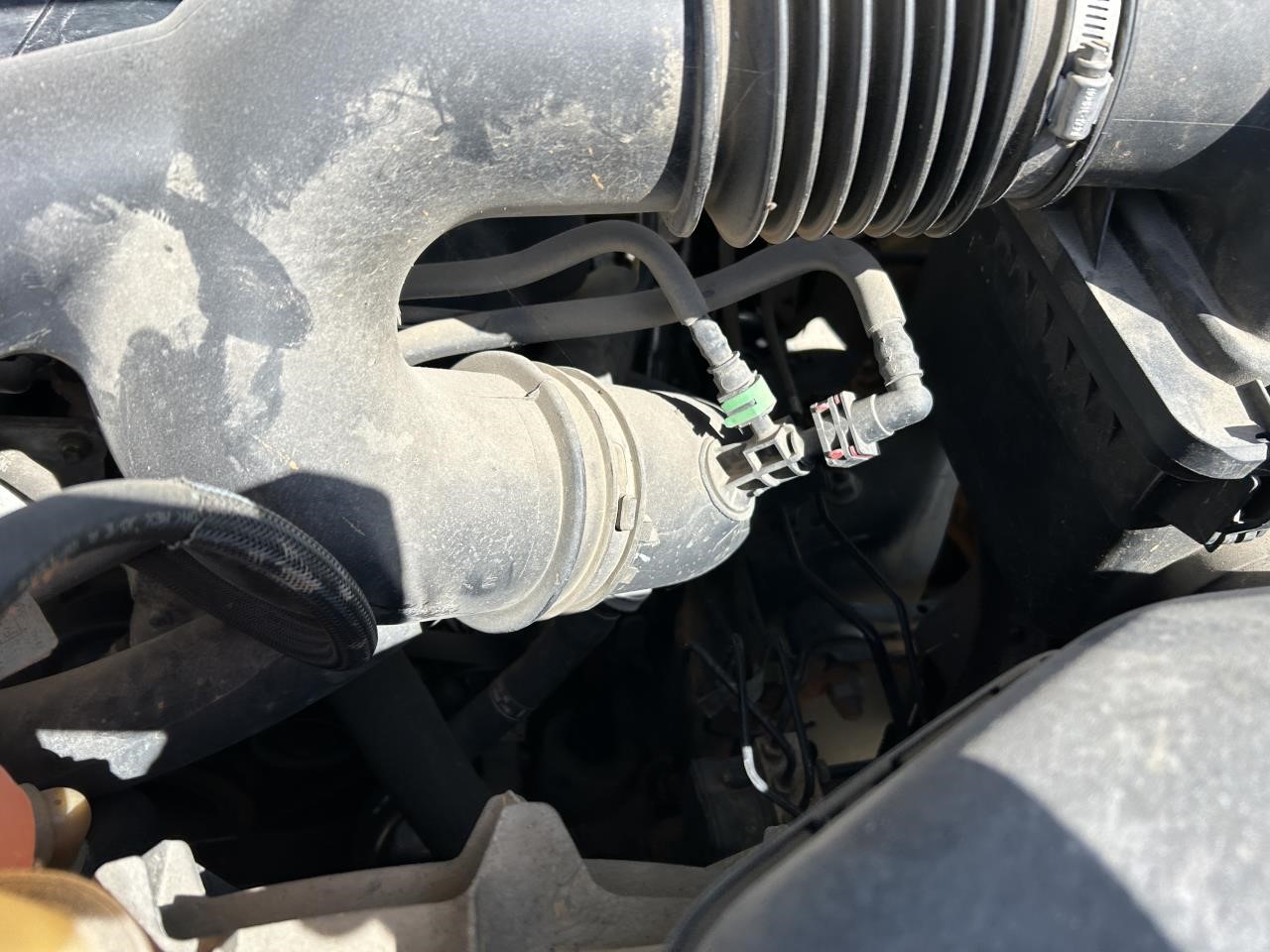
Est. part cost: $8-$15 for a can of MAF cleaner. - Cracked or Loose Intake Air Boot 🔴 High Probability The flexible rubber intake boot between the air filter housing and the throttle body is notorious for becoming brittle and developing cracks, especially in the accordion folds. This allows unmetered air to enter the engine, creating a mismatch with the MAF sensor's readings.
How to confirm: With the engine running, carefully listen for a hissing sound around the intake tube. Visually inspect the entire boot, squeezing it to reveal hidden cracks 🎬 Watch: How to inspect and replace a cracked intake boot on the underside. A smoke test is the most definitive way to find a leak.
Typical fix: Replace the cracked or torn intake air boot. This is a very common repair.
Est. part cost: $40-$120 - Engine Control Module (ECM) Software Calibration Error 🟡 Medium Probability Nissan issued TSB NTB16-030a for 2013-2016 models and NTB12-051k for 2011-2012 models, stating the ECM may improperly store a P0101 due to calibration errors. This is a very common issue on this platform.
How to confirm: This can only be confirmed by a Nissan dealer or a qualified shop with advanced scan tools like CONSULT-III plus. The key diagnostic clue from the TSB is the presence of code P0101 *without* any noticeable drivability issues.
Typical fix: Reprogram the Engine Control Module (ECM) with the latest software update. The TSB explicitly states NOT to replace the MAF sensor if the bulletin applies.
Est. part cost: $0 (if covered by a campaign) - $250 for dealer labor. - Clogged Engine Air Filter ⚪ Low Probability A severely neglected air filter can restrict airflow enough to cause the MAF sensor's reading to be out of the expected range.
How to confirm: Remove the air filter from the airbox and inspect it. If it is visibly black, filled with debris, or has not been changed in a long time, it's suspect.
Typical fix: Replace the engine air filter.
Est. part cost: $15-$40
Rare But Worth Checking
- Faulty Mass Air Flow (MAF) Sensor: While cleaning is the most common fix, the sensor itself can fail electronically. If cleaning, checking for leaks, and verifying ECM software doesn't resolve the code, the sensor may need replacement. Owners report that using cheap aftermarket sensors often fails to fix the issue or fails quickly; using an OEM Hitachi or reputable Delphi sensor is highly recommended.
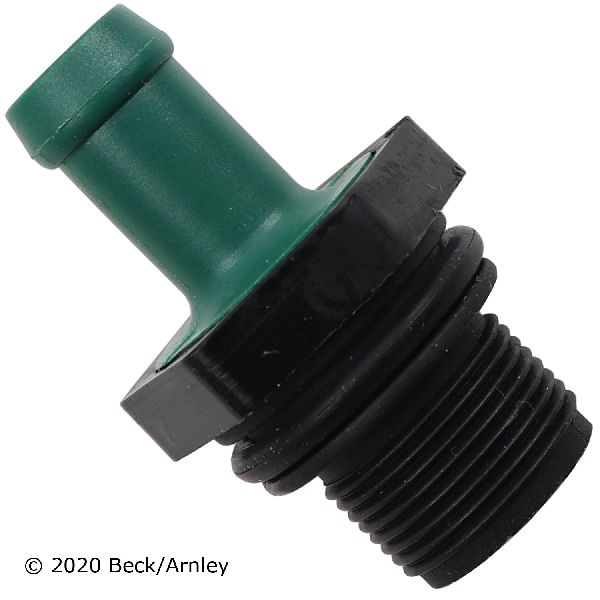
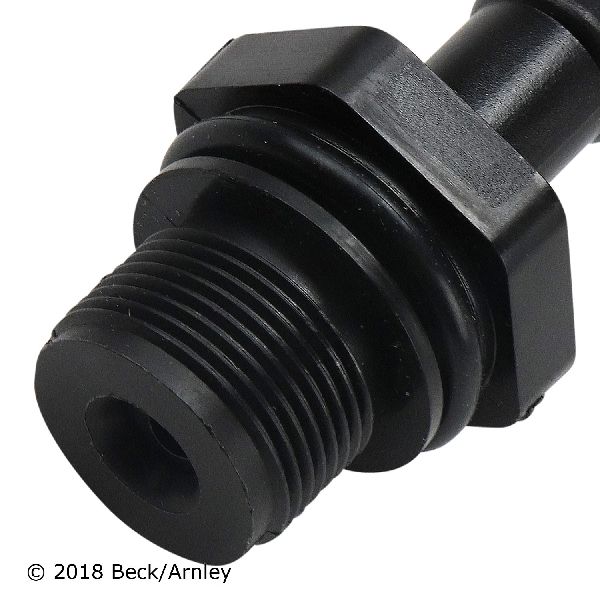
- Faulty or Outdated PCV Valve: A leak from another source, like a PCV valve hose or the valve itself, can introduce unmetered air. TSB NTB16-030a specifically instructs technicians to check the PCV valve; if it is orange, it should be replaced with the updated black version 🎬 See this video for the PCV valve and software fix (Part No. 11810-6N202) as part of the P0101 repair procedure.
- Weak or Failing Battery: In some cases, a dying battery can provide inconsistent voltage to the vehicle's electronics, including the MAF sensor. This can cause the sensor to send improper signals to the ECM, triggering a P0101 code. One owner on a forum reported that after trying all other common fixes, replacing an old battery finally cleared the code permanently.
Diagnosis Steps
- Read the trouble codes with an OBD-II scanner. Confirm P0101 is present and note any other codes.
- Assess Drivability: Does the car hesitate, stall, or run rough? If there are NO drivability issues, proceed to step 9 to investigate the TSB. If there ARE drivability issues, continue to step 3.
- Inspect the engine air filter. Replace if it is dirty or clogged.
- Thoroughly inspect the intake air boot between the air filter box and the throttle body for any cracks, tears, or loose clamps. Squeeze the accordion section to reveal hidden cracks.
- Unplug and remove the MAF sensor. It is held in by two screws.
- Spray the sensor's internal wires generously with dedicated MAF sensor cleaner. Do not use brake cleaner or carburetor cleaner, and do not touch the wires.
- Allow the sensor to air dry completely for at least 15-20 minutes before reinstalling.
- Reinstall the sensor, clear the code with the scanner, and perform a test drive to see if the code returns.
- If the code returns or was initially present without drivability issues, check for applicable TSBs. For 2013-2016 models, inspect the PCV valve. If it is orange, it should be replaced.
- If no physical faults (leaks, dirty sensor) are found, especially if there are no drivability symptoms, contact a Nissan dealership or qualified repair shop to check for and perform an ECM software update as per TSB NTB16-030a or NTB12-051k.
- If all other steps fail, test the MAF sensor's output with a multimeter or consider replacing it with a high-quality OEM (Hitachi) or reputable aftermarket part.
Parts You'll Likely Need
- Mass Air Flow (MAF) Sensor Cleaner — This is the most common and least expensive first step, as a dirty sensor is the leading cause of P0101.
Trusted brands: CRC, WD-40 Specialist
Aftermarket price range: $8-$15 - Mass Air Flow (MAF) Sensor
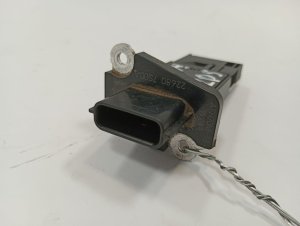
(OEM #22680-1MG0A)— If cleaning the sensor and checking for leaks does not solve the problem, the sensor itself may have failed. The OEM manufacturer is Hitachi, part number MAF0102. Using cheap aftermarket sensors is a common cause of repeat failures.
Trusted brands: Hitachi (OEM), Denso, Bosch
OEM price range: $150-$250
Aftermarket price range: $60-$120 - Engine Air Intake Hose (Boot)
(OEM #16576-3TA0A, 16576-3TA0B, 16576-3TA0C (for 2013-2018 L33) or 16576-JA000 (for 2011-2012 L32))— This rubber part is a very common source of vacuum leaks as it cracks with age, allowing unmetered air to enter the engine and trigger the code.
Trusted brands: Genuine Nissan, Dorman (696-085 for L33)
OEM price range: $70-$120
Aftermarket price range: $35-$80 - PCV Valve
(OEM #11810-6N202)— Required replacement per TSB NTB16-030a if the original valve is orange in color. This is part of the official repair procedure for P0101 on affected vehicles.
Trusted brands: Genuine Nissan
OEM price range: $15-$25
Aftermarket price range: $10-$20
Technical Service Bulletins (TSBs) & Recalls
- NTB16-030a: The most relevant TSB for 2013-2016 Altimas with the QR25DE engine. Instructs to reprogram the ECM and possibly replace the PCV valve if P0101 is present without drivability issues.
- NTB12-051k: Similar to the above, but applies to 2011-2012 Altima models (and other Nissans), recommending an ECM reprogram for P0101 when no drivability concerns are present.
- P9328_P9343_P934: Addresses a potential ECM calibration error on certain 2016 models in California that can cause a permanent P0101 code, requiring an ECM reprogram.
Platform-Specific Known Issues
- TSB for ECM Reprogram (No Drivability Issues): Nissan has issued Technical Service Bulletins (NTB16-030a and NTB12-051k) for a known software issue that can cause a P0101 code to be stored without any actual engine performance problems. The official procedure instructs technicians to check the ECM part number against a list and, if it matches, to reprogram the ECM with updated software. The TSB explicitly states not to replace the MAF sensor in this scenario.
Mechanic-Grade Diagnostic Values
- Mass Air Flow (MAF) Sensor Voltage at Idle — expected: 1.3V - 1.6V (for 2.5L engine). Failure: Voltage is significantly outside this range or does not change when the engine is revved.
- Mass Air Flow (MAF) Sensor Voltage when Revving/Under Load — expected: Should rise smoothly, potentially up to 2.5V or higher.. Failure: Voltage is erratic, does not increase with RPM, or is capped at a low value.
- Mass Air Flow (MAF) Rate (g/s) at Hot Idle — expected: Should be approximately equal to the engine displacement in liters (e.g., ~2.5 g/s for the 2.5L engine).. Failure: Reading is significantly higher or lower than the engine displacement.
- Long Term Fuel Trim (LTFT) at Idle — expected: Close to 0%, typically within +/- 10%.. Failure: A significantly negative LTFT (e.g., -10% or more) at idle can indicate the ECM thinks too much air is being measured, which can trigger P0101 even without a vacuum leak.
- Intake Air Temperature (IAT) Sensor Voltage — expected: ~2.1V (Varies with ambient temperature).. Failure: An irrational reading. This sensor is integrated into the MAF sensor assembly, and its signal is sent on the purple wire.
Scan Tool Commands That Help
- Nissan CONSULT / Capable Aftermarket Scan Tool: Idle Air Volume Learn — This procedure is mandatory after cleaning the throttle body or replacing the MAF sensor. Failure to perform it can result in a high or unstable idle, as the ECM's learned throttle position values are no longer accurate.
- Nissan NERS (Nissan ECU Reprogramming Software): ECM Reprogramming — Used to apply the software update specified in TSBs NTB16-030a and NTB12-051k. This is the specific fix when P0101 is present with no drivability symptoms.
- Nissan CONSULT / Capable Aftermarket Scan Tool: Throttle Valve Closed Position Learning & Accelerator Pedal Released Position Learning — These are prerequisite resets that must be performed before the Idle Air Volume Learn can be successfully executed.
Wiring & Ground Locations
- MAF Sensor Connector Pins — On the MAF sensor located on the air intake tube after the air filter box.. Knowing the pin functions allows for testing at the sensor. For the 5th gen Altima, the yellow wire is the MAF signal, the purple wire is the IAT signal, the blue wire is 5V power, and the brown wire is ground.
- Ground Point E15 — Lower left side of the engine compartment.. This is a primary ground point for multiple engine components, including the ECM and ignition coils. A poor connection here can cause erratic sensor readings and trigger various codes, including P0101.
- Ground Point E9 — Lower left side of the engine compartment.. Another key engine compartment ground point that serves the ECM and various sensors. Verifying this ground is clean and tight is a crucial step in diagnosing electrical faults.
- ECM Connector Pin 35 — At the Engine Control Module (ECM) harness connector.. This is the pin that receives the MAF signal (yellow wire). A technician can back-probe this pin to verify the voltage reading from the sensor is the same at the ECM, confirming there are no breaks or shorts in the wire between the two.
Real Owner Repair Stories
- Reddit user steheh (2012 Altima 2.5L) — P0101 code returned after multiple fixes.
❌ Tried (didn't work) Cleaned original MAF sensor., Replaced MAF sensor with an aftermarket part from Amazon., Cleaned the new aftermarket MAF sensor.
✅ What actually fixed it The user was informed of TSB NTB12-051k, which requires an ECM reprogram at a Nissan dealership. The final fix was having the dealer perform the ECM software update. - ScannerDanner Forum user 'Bill' (2014 Nissan Altima) — P0101 code with no drivability issues. Freeze frame showed code set at idle.
❌ Tried (didn't work) Replacing a dirty air filter and cleaning lint from the intake passage. This did not correct the negative long term fuel trim at idle (-10%).
✅ What actually fixed it The user was advised to follow TSB NTB16-030a, which involved inspecting the PCV valve (replacing if orange) and ultimately getting the ECM reprogrammed by Nissan, as the symptoms perfectly matched the TSB criteria. - YouTube comment (Nissan Altima (year not specified)) — Persistent P0101 code for 3 years, struggles to accelerate, especially uphill.
❌ Tried (didn't work) Cleaning the MAF sensor., Replacing the MAF sensor., Replacing the throttle body (by the dealer)., Replacing the PCV valve., Getting the ECM 'reprogrammed' by the dealer after installing the new sensor.
✅ What actually fixed it This story represents a counter-narrative where all common and TSB-related fixes failed to resolve the issue, suggesting a deeper, less common problem like a wiring issue, a faulty 'new' part, or a clogged exhaust.
"I Checked Everything" — The Actual Cause
- In cases where a smoke test reveals no vacuum leaks in the intake boot, a dirty electronic throttle body can be the hidden cause. Carbon buildup around the throttle plate can cause it to stick or move erratically at low openings (idle), leading to unstable airflow that the ECM misinterprets as a MAF sensor range/performance issue, triggering P0101. A thorough cleaning of the throttle body, followed by the mandatory 'Idle Air Volume Learn' procedure, can resolve these symptoms.
When the Usual Fixes Don't Work
- While the TSB for an ECM reprogram is a very common fix, it is not a silver bullet. There are multiple owner reports where the dealer performed the reprogram, yet the P0101 code returned. In these cases, the root cause was often an underlying issue that was missed, such as a persistent vacuum leak from a non-obvious source, a faulty aftermarket MAF sensor that was installed prior to the reprogram, or a more complex issue like a clogged catalytic converter. This underscores the importance of performing a full diagnosis rather than defaulting immediately to the TSB, especially if drivability symptoms are present.
OEM Part Supersession History
Orange-colored PCV Valve (various PNs)→11810-6N202 (Black-colored PCV Valve)— The original orange PCV valve design was found to contribute to conditions that could trigger a false P0101 code.
Heads up: Per the TSB, if a 2013-2016 Altima has an orange PCV valve during a P0101 diagnosis, it MUST be replaced with the updated black version as part of the repair.
Model Year Variations Within This Range
- 2011-2012 (4th Gen, L32): Uses MAF sensor part number 22680-7S000. P0101 software issues are addressed by TSB NTB12-051k.
- 2013-2018 (5th Gen, L33): Uses MAF sensor part number 22680-1MG0A. P0101 software issues for 2013-2016 models are addressed by TSB NTB16-030a, which also includes the PCV valve inspection.
Helpful Videos
Used OEM Parts in Stock


New Aftermarket Parts Available




The information in this article is provided for general reference and educational purposes only. Vehicle specifications, procedures, and part compatibility can vary by production date, trim level, and region. Always consult your vehicle's factory service manual and verify part numbers before purchasing or performing repairs. Safety-critical components such as airbags, seat belts, and braking systems should be installed by a qualified professional.
- Nissan ALTIMA:
- 🎬 Helpful Videos
- 🛍️ Shop This Part
- What's Unique About the 2011-2018 Nissan ALTIMA
- Diagnostic Flowchart
- Symptoms You May Notice
- Most Likely Causes
- Rare But Worth Checking
- Diagnosis Steps
- Parts You'll Likely Need
- Technical Service Bulletins (TSBs) & Recalls
- Platform-Specific Known Issues
- Mechanic-Grade Diagnostic Values
- Scan Tool Commands That Help
- Wiring & Ground Locations
- Real Owner Repair Stories
- "I Checked Everything" — The Actual Cause
- When the Usual Fixes Don't Work
- OEM Part Supersession History
- Model Year Variations Within This Range
- 🎟️ Get 5% Off