

P0101 on 2012-2016 Mazda CX-5 2.2L Diesel: MAF, Carbon, and Software Fixes
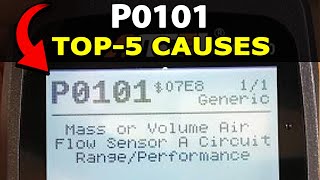
On the 2.2L Skyactiv-D, code P0101 often points to issues beyond a simple bad MAF sensor. The most common causes are heavy carbon buildup in the intake system, a worn exhaust camshaft, or a PCM software issue. On this engine, P0101 is an airflow-related issue, and replacing the MAF sensor is rarely the correct first step. Cleaning the intake, inspecting the camshaft, and performing a software update are often required before considering MAF sensor replacement.
- Do not assume P0101 is a bad MAF sensor on this engine. It is more likely a symptom of another problem.
- The most likely causes are severe carbon buildup in the intake, a worn exhaust camshaft, or a PCM software glitch.
- Diagnosis should start with a PCM software check and an inspection for carbon buildup before any parts are replaced.
- If you replace the MAF sensor, use a genuine OEM part, as aftermarket sensors are known to cause issues.
- This code often appears with other codes like P061B (torque calculation) or P0401 (EGR flow), which point towards the more complex root causes.
What's Unique About the 2012-2016 Mazda CX-5
For the Mazda CX-5 with the 2.2L Skyactiv-D engine, P0101 is frequently a symptom of deeper issues rather than a simple MAF sensor failure. This diesel engine is known for significant carbon buildup in the intake manifold and EGR system, which can restrict airflow and trigger the code. Additionally, premature wear on the exhaust camshaft can alter air pressure within the intake by allowing exhaust gases to push back into the intake manifold, leading the PCM to incorrectly flag the MAF sensor. Finally, Mazda has issued Technical Service Bulletins (TSBs) indicating that PCM software glitches can also be the root cause, sometimes requiring an update even after a mechanical repair like a camshaft replacement.
Symptoms You May Notice
- Check Engine Light is on
- Vehicle enters limp mode (reduced power)
- Loss of power and poor acceleration
- Rough or unstable idle
- Hesitation during acceleration
- Multiple other warning lights may appear simultaneously (Traction Control, SCBS, TPMS)
- Bucking or jerking, especially during gear shifts in automatic models
- Engine stalling after starting
- Immediately replacing the MAF sensor without checking for carbon buildup, worn camshafts, or software updates. Many owners replace the sensor multiple times only for the code to return because the sensor itself was not the root cause.
Most Likely Causes
- Excessive Carbon Buildup in Intake Manifold and EGR System 🔴 High Probability Direct injection diesel engines, like the Skyactiv-D, are susceptible to carbon deposits in the intake tract because fuel isn't washing over the intake valves. The EGR system recirculates exhaust gases, which contributes to a hard, tar-like soot accumulation over time, especially with frequent short trips.
How to confirm: A technician must visually inspect the intake manifold, intake ports, and EGR passages, often requiring significant disassembly. A borescope can help inspect internal areas. In some cases, the second and third cylinder intake ports can be so blocked that a borescope cannot even be inserted.
Typical fix: Physical cleaning of the intake manifold, EGR valve, and associated passages. This is labor-intensive and often requires walnut blasting for effective removal of the hard carbon deposits.
Est. part cost: $20-$50 for gaskets and cleaning supplies. - Worn Exhaust Camshaft 🟡 Medium Probability Early versions of the 2.2L Skyactiv-D engine (pre-2017/2018) were known to have issues with premature exhaust camshaft wear. A worn lobe fails to open the exhaust valves properly, causing exhaust gas to back up into the intake manifold, which confuses the MAF sensor and triggers P0101.
How to confirm: Requires removal of the valve cover and physical inspection and measurement of the camshaft lobes for visible wear. Worn lobes may appear 'spiky' compared to flat, healthy ones.
Typical fix: Replacement of the exhaust camshaft, rocker arms, and lifters (tappets). It is critical to turn the engine over by hand after installation to ensure exhaust valves are not stuck, which could break the new rocker arms upon starting.
Est. part cost: $400-$800 for an OEM camshaft. - Powertrain Control Module (PCM) Software Issue 🟡 Medium Probability Mazda issued TSB #SA-060/17 specifically mentioning that P0101 can appear with P061B due to a software miscalculation, especially after a previous reprogramming attempt with older IDS software versions. An update may be required even after a mechanical fix like camshaft replacement to prevent the code from returning.
How to confirm: A Mazda dealership or a qualified shop with a Mazda-specific scan tool (IDS) can check the current PCM software version against the latest available version.
Typical fix: Reprogramming the PCM with the updated software version. Per TSB SA-060/17, this should be done after cleaning the throttle body and disconnecting the battery to reset learned values.
Est. part cost: $0 if covered under a service campaign, otherwise labor costs apply. - Dirty or Faulty Mass Air Flow (MAF) Sensor ⚪ Low Probability While less common as the root cause on this specific engine, the sensor can still become contaminated with dirt or oil, or fail electronically. However, many owners and technicians report that replacing the MAF sensor does not fix the P0101 code in over 90% of cases on the Skyactiv-D. Using cheap, non-OEM sensors is also known to cause persistent issues.
How to confirm: First, attempt to clean the sensor with dedicated MAF sensor cleaner. If the code returns, a technician can monitor the sensor's output (grams/sec) with a scan tool. A known-good 2.2L Skyactiv-D at operating temperature should read approximately 5 g/s at idle with a corresponding voltage of ~1.13V.
Typical fix: Cleaning the sensor. If cleaning fails, replacement is necessary. Always use a high-quality OEM or brand-name sensor, as cheap aftermarket sensors are known to cause persistent issues.
Est. part cost: $10 for cleaner, $200-$295 for a new OEM sensor. - Vacuum Leak ⚪ Low Probability Cracked or disconnected intake hoses allow 'unmetered' air to enter the engine after the MAF sensor, causing the sensor's readings to conflict with the actual amount of air entering the cylinders.
How to confirm: A smoke test is the most effective method. Smoke is fed into the intake system, and any leaks will be visible.
Typical fix: Replacing the cracked hose or leaking gasket.
Est. part cost: $30-$150 depending on the specific hose or gasket.
Rare But Worth Checking
- Clogged Exhaust or Faulty Exhaust Pressure Sensor: A restriction in the exhaust, such as a clogged Diesel Particulate Filter (DPF) or a failing exhaust pressure sensor, can affect engine breathing and indirectly trigger a P0101 code. One owner reported exhaust back pressure exceeding 300 kPa, far above the expected 100-150 kPa range, while chasing a P0101 code.
- Failing Vacuum Pump: A weak vacuum pump can fail to generate enough vacuum for the braking system and to properly actuate systems that control airflow, leading to P0101. A healthy pump should pull vacuum down to around 7.6 kPa; readings higher than this at idle can indicate a problem. One owner had a vacuum pump failure diagnosed by the dealer just before the P0101 code became persistent.
Diagnosis Steps
- Read all stored fault codes. Note if P061B, P2262, or P0401 are present.
- Check with a Mazda dealer for any open recalls or Special Service Programs (SSPs) and verify the PCM has the latest software. This is a critical first step due to TSB SA-060/17 and reports that a software update is needed after mechanical repairs.
- Inspect the air intake system for obvious cracks, loose connections, or a severely clogged air filter.
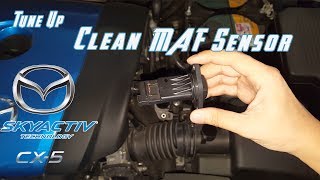
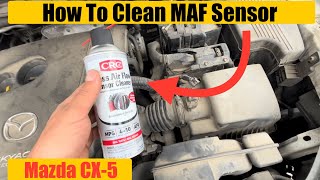
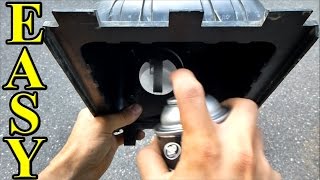
- Remove and inspect the MAF sensor. If it appears dirty, clean it with dedicated MAF sensor cleaner and re-test. Do not touch the sensing element.
- If the code persists, perform a smoke test to check for vacuum leaks between the MAF sensor and the engine.
- If no leaks are found, the next step is to inspect for carbon buildup. This requires removing the intake manifold for a visual check of the intake ports and EGR passages. A borescope can be used for an initial check.
- While the valve cover is off for the intake inspection, physically inspect the exhaust camshaft lobes for visible wear (a 'spiky' appearance), a known issue on this engine.
- Check vacuum pump performance using a scan tool to monitor the brake booster pressure sensor. It should read around 7.6 kPa at idle.
- If carbon, camshafts, and software are all confirmed to be good, test the MAF sensor wiring for continuity and proper voltage before replacing the sensor itself. Check for breaks in the harness right at the connector, a known weak point.
Parts You'll Likely Need
- Exhaust Camshaft
(OEM #SH01-12-440A)— Required if inspection reveals premature lobe wear, a known failure point on the 2.2L Skyactiv-D engine that triggers P0101.
Trusted brands: Mazda (OEM)
OEM price range: $400-$800
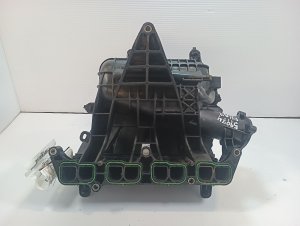
Aftermarket price range: $250-$450 - Intake Manifold Gaskets — Required when removing the intake manifold for carbon cleaning, which is a primary diagnostic step for P0101 on this engine.
Trusted brands: Mazda (OEM), Victor Reinz
OEM price range: $40-$70
Aftermarket price range: $20-$40
Related Codes That Often Appear With This One
- P061B — This code for 'Internal Control Module Torque Calculation Performance' is explicitly mentioned alongside P0101 in Mazda TSB SA-060/17 and owner complaints, indicating a PCM-level issue.
- P2262 — This code for 'Turbo/Super Charger Boost Pressure Not Detected' can appear if carbon buildup or camshaft issues are severe enough to affect the turbocharger's operation.
- P0401 — 'EGR Flow Insufficient' is a strong indicator of the heavy carbon buildup that also causes P0101. A dealership repair quote for P0101 often includes P0401.
Technical Service Bulletins (TSBs) & Recalls
- SA-060-17: Notes that P0101 and P061B can appear on 2013-2015 CX-5s after certain PCM reprogramming, requiring another update.
- SA386: Mentions that the Check Engine Light with DTC P0101 may illuminate due to a mislogic detection in the PCM calibration.
Platform-Specific Known Issues
- PCM Software Glitch: Mazda TSBs confirm that a software logic error in the PCM can cause P0101 to set, sometimes in conjunction with P061B. A software update is the only fix. [SA-060-17, SA386]
- Carbon Buildup: The Skyactiv-D engine is highly prone to severe carbon accumulation in the intake manifold, which restricts airflow and is a primary cause of this code.
- Exhaust Camshaft Wear: Premature wear of the exhaust camshaft lobes is a well-documented problem that leads to incorrect air pressure in the intake, falsely triggering a MAF sensor code.
Mechanic-Grade Diagnostic Values
- MAF Sensor Signal Voltage at Idle (Engine Warm) — expected: ~1.13 - 1.14 V. Failure: Significant deviation from this range.
- MAF Sensor Grams Per Second (g/s) at Idle (Engine Warm) — expected: ~5 g/s. Failure: Significant deviation from this value.
- MAF Sensor Signal Voltage at 2,000 RPM (Engine Warm) — expected: ~1.36 V. Failure: Significant deviation from this range.
- MAF Sensor Grams Per Second (g/s) at 2,000 RPM (Engine Warm) — expected: ~10.5 g/s. Failure: Significant deviation from this value.
- MAF Sensor Reference Voltage (Key On, Engine Off) — expected: ~5.0 V. Failure: No voltage or significantly lower voltage indicates a wiring or PCM issue.
- Wastegate Solenoid Duty Cycle at Idle — expected: 10-20%. Failure: A reading stuck high, such as 85%, indicates a potential turbocharger or exhaust restriction problem that can trigger P0101.
Hidden / Shadow Codes Worth Checking
- P0101:00: The ':00' is a Failure Type Code (FTC) or status byte used by Mazda's diagnostic system. It specifies the particular nature of the 'range/performance' fault, though its exact meaning is internal to Mazda's diagnostics. (see via Mazda M-MDS (dealer scan tool) or some advanced professional scan tools.)
Scan Tool Commands That Help
- Mazda M-MDS: CLEARING DTC — Used to clear fault codes from the PCM memory after a repair has been completed.
- Mazda M-MDS: PCM Reprogramming / Software Update — This is often a required final step after a mechanical repair like camshaft replacement or extensive carbon cleaning to prevent P0101 from returning.
- Advanced Scan Tool: DPF Value Reset / Regeneration — After performing repairs that affect the engine's air-fuel mixture (like carbon cleaning), it's necessary to reset the DPF learned values and potentially run a forced regeneration to ensure the emissions system operates correctly.
Wiring & Ground Locations
- MAF Sensor Connector — On the air intake tube, immediately after the air filter box.. The wiring harness at this connector is a known weak point. Wires, particularly the black (signal) and gray (5V reference) ones, can become brittle and break right at the connector from engine vibration and movement, causing an intermittent or total loss of signal.
Real Owner Repair Stories
- MrNiceGuy on YouTube (Mazda CX-5 2.2L Skyactiv-D (Red)) — P0101 code, limp mode with SCBS, traction control, and tire pressure lights.
❌ Tried (didn't work) Owner suspected a faulty exhaust pressure sensor.
✅ What actually fixed it The root cause was a worn exhaust camshaft. The fix required replacing the camshaft and rocker arms. The mechanic also noted that a final PCM software update is often necessary after this repair to fully resolve the P0101 code. - Mazda Forum User (2016 Mazda CX-5 2.2L Diesel AWD) — P0101, multiple warning lights, and limp mode on deceleration from ~110-120km/h.
❌ Tried (didn't work) Extensive carbon cleaning of the intake manifold and EGR system was performed ('4 glasses of carbon were discovered!!'), but the problem still remained.
✅ What actually fixed it The user's story ends without a final resolution, but serves as a critical example that carbon cleaning alone, while often necessary, may not be the complete fix if a worn camshaft or software issue is also present. - MrNiceGuy on YouTube (Mazda 2.2L Skyactiv-D with 92,000 miles) — P0101 and DPF malfunction warning light.
❌ Tried (didn't work) The vehicle had a non-OEM (aftermarket) MAF sensor installed, which was suspected of being a contributing factor.
✅ What actually fixed it The primary fix was an extensive walnut blasting of the intake ports, which were almost completely blocked with carbon. The mechanic planned to swap the aftermarket MAF sensor back to a genuine Mazda part as a final preventative measure.
"I Checked Everything" — The Actual Cause
- On the 2.2L Skyactiv-D, it is common for all intake hoses to be secure (smoke test clean) yet still have a P0101 code. The cause is often internal to the engine. A worn exhaust camshaft fails to evacuate exhaust gas properly, causing it to push back into the intake manifold during valve overlap. This introduces 'unmetered' air pressure that the PCM cannot reconcile with the MAF sensor's readings, leading it to incorrectly flag the MAF sensor for a performance issue.
When the Usual Fixes Don't Work
- In one documented case, a vehicle owner performed extensive diagnostics and repairs for P0101, including replacing the MAF and MAP sensors, injector seals, and vacuum pump, plus cleaning the EGR and intake manifold. A smoke test was clean and the camshaft appeared unworn. The problem persisted, with the key symptom being extremely high exhaust back pressure (over 300 kPa) and an abnormal wastegate duty cycle (stuck at 85% at idle). This suggests that in some cases, even after addressing the most common causes, the root issue can be a restriction in the turbocharger or exhaust system itself, causing a backup that the PCM interprets as a MAF fault.
OEM Part Supersession History
Exhaust Camshaft for pre-2017 models→Updated part for 2017/2018+ models— Widespread reports of premature lobe wear on earlier 2.2L Skyactiv-D engines strongly suggest a design or material composition change in later model years to improve durability.
Model Year Variations Within This Range
- 2012-2016: These earlier models are significantly more prone to premature exhaust camshaft wear compared to the refreshed 2017+ models. This makes camshaft inspection a higher priority when diagnosing P0101 on a vehicle within this range.
Diagnostic Flowchart
Other Known Issues on This Vehicle
Issues unrelated to this code that are worth knowing about as an owner of this generation:
- Engine Oil Dilution 🔴 High — Common, especially on vehicles used for frequent short trips which interrupt DPF regeneration cycles.
- Premature Turbocharger Failure 🔴 High — Reported frequently, often linked to other systemic issues like oil starvation or carbon buildup.
- Timing Chain Stretch/Failure 🔴 High — A significant number of failures reported, often between 70,000-120,000 miles. More common on engines suffering from oil dilution.
- Leaking Injector Seals 🟠 Medium — A common maintenance item. Seals can fail as early as 60,000 miles.
- Clogged Oil Pickup Strainer 🔴 High — A direct consequence of leaking injector seals and carbon in the oil. Often discovered after a low oil pressure warning.
Used vs. New Parts: Buying Guide for This Vehicle
When a used part is the smart pick: A used part may be a cost-effective choice for major mechanical components that don't wear, such as an engine valve cover or a bare intake manifold (which must be thoroughly cleaned before installation).
Donor-vehicle mileage cap: roughly under 60000 miles for the part to have meaningful remaining life.
What to inspect on the donor part:
- For any used part, verify it comes from a vehicle that was not in a major front-end collision.
- When considering a used camshaft (not recommended), you must physically inspect the lobes for any signs of 'spiky' wear; they should be smooth and even.
- Check for excessive rust or corrosion, especially on electronic connectors.
OEM-only on this vehicle (don't cheap out):
- Exhaust Camshaft: Due to the extremely high failure rate of the original part, installing a used one is a major gamble. A new OEM part is the only way to ensure the updated, more durable design is used.
- Mass Air Flow (MAF) Sensor: Multiple owner reports confirm that cheap aftermarket MAF sensors do not work correctly and fail to resolve the P0101 code. Even a used OEM sensor is a risk.
Aftermarket brands forum-validated for this vehicle:
- For this specific set of common P0101 causes, sticking to Mazda OEM parts for the camshaft and MAF sensor is the most reliable path to a successful repair.
Brands owners have reported issues with on this vehicle:
- Unbranded, low-cost MAF sensors sold on marketplaces like Amazon and eBay have been reported by owners to be ineffective.
Real Owner Stories
Aggregated from forums and TSBs cited above. Mileages and costs reflect what owners reported in those sources.
2016 Mazda CX-5 2.2D — 106000 miles
Symptoms: Check engine light on with P0101 code; owner noted a lack of typical driving symptoms but shared specific MAF sensor idle readings while troubleshooting.
What fixed it: The source discusses suspecting camshaft wear, though the specific resolution isn't finalized, it highlights the diagnostic path for high-mileage 2016 models.
Source hint: Reddit r/CX5 - P0101 error code
2016 Mazda CX-5
Symptoms: Multiple warning lights appearing and vehicle entering limp mode, specifically occurring when decelerating around 50mph. Cleaning the MAF sensor provided no relief.
What fixed it: The context identifies this as a case where cleaning the MAF is ineffective, pointing toward the documented mechanical or software issues.
Source hint: Mazda Forum - CX-5 code p0101 and warning lights
2012-2016 Mazda CX-5 2.2L Skyactiv-D
Symptoms: P0101, P0401, and P06DE codes present.
What fixed it: Extensive carbon cleaning (decoke), EGR cooler replacement, and multiple sensor replacements.
Cost: $4800-$5000
Source hint: Mazda Forum - Huge quote for decoke and EGR cooler replacement
Related OBD-II Codes
Frequently Asked Questions
Does TSB SA-060/17 apply to my 2014 Mazda CX-5 Skyactiv-D?
I've already cleaned my MAF sensor but the P0101 code is still there. What is the most likely cause for this specific engine?
How can I tell if my P0101 code is caused by the exhaust camshaft without taking the whole engine apart?
Is there a specific TSB regarding the PCM software and P0101 for the 2016 model year?
What should the MAF sensor readings look like on a healthy 2.2L Skyactiv-D at idle?
Why are multiple warning lights like Traction Control and TPMS appearing alongside my P0101 code?
Helpful Videos


We Have This Part in Stock



The information in this article is provided for general reference and educational purposes only. Vehicle specifications, procedures, and part compatibility can vary by production date, trim level, and region. Always consult your vehicle's factory service manual and verify part numbers before purchasing or performing repairs. Safety-critical components such as airbags, seat belts, and braking systems should be installed by a qualified professional.
- Mazda CX-5:
- 🎬 Helpful Videos
- 🛍️ Shop This Part
- What's Unique About the 2012-2016 Mazda CX-5
- Symptoms You May Notice
- Most Likely Causes
- Rare But Worth Checking
- Diagnosis Steps
- Parts You'll Likely Need
- Related Codes That Often Appear With This One
- Technical Service Bulletins (TSBs) & Recalls
- Platform-Specific Known Issues
- Mechanic-Grade Diagnostic Values
- Hidden / Shadow Codes Worth Checking
- Scan Tool Commands That Help
- Wiring & Ground Locations
- Real Owner Repair Stories
- "I Checked Everything" — The Actual Cause
- When the Usual Fixes Don't Work
- OEM Part Supersession History
- Model Year Variations Within This Range
- Diagnostic Flowchart
- Other Known Issues on This Vehicle
- Used vs. New Parts: Buying Guide for This Vehicle
- Real Owner Stories
- 2016 Mazda CX-5 2.2D — 106000 miles
- 2016 Mazda CX-5
- 2012-2016 Mazda CX-5 2.2L Skyactiv-D
- Related OBD-II Codes
- Frequently Asked Questions
- 🎟️ Get 5% Off