

P0101 on 2012-2018 Ford Focus 1.6L: Causes for MAF Circuit Range/Performance Fault
For a 2012-2018 Ford Focus with the 1.6L engine, code P0101 is most commonly caused by a dirty Mass Airflow (MAF) sensor or a vacuum leak. The first and cheapest step is to clean the MAF sensor with a dedicated cleaner. If that doesn't work, inspect the intake system for air leaks, paying close attention to the air filter box seal, before replacing the sensor.
- Always clean the MAF sensor with a dedicated cleaner before considering replacement; this is the most common and cheapest fix.
- Thoroughly inspect the entire air intake system for cracks or loose connections, as unmetered air from vacuum leaks is a frequent cause of P0101.
- Ensure the engine air filter is clean and properly seated in its housing to prevent dirt from contaminating the MAF sensor.
- If the code appears with P0171 (System Too Lean), it strongly suggests a vacuum leak or a MAF sensor that is under-reporting airflow.
What's Unique About the 2012-2018 Ford Focus
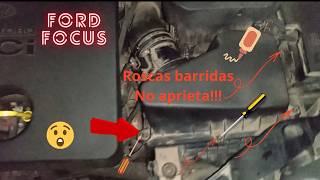
The 1.6L Ti-VCT engine in the third-generation Focus is generally reliable, but like many modern engines, it is sensitive to intake air readings. A common issue on this platform is not necessarily electronic failure of the sensor, but contamination from dirt or oil. A frequently cited problem is an improper seal at the air filter box, often due to the plastic threads for the lid screws stripping out. This allows unfiltered air to bypass the filter and contaminate the MAF sensor, leading to incorrect readings and the P0101 code.
Symptoms You May Notice
- Check Engine Light is on
- Rough idle or stalling
- Hesitation or surging during acceleration
- Reduced engine power or sluggishness
- Poor fuel economy
- Black smoke from the exhaust if running rich
- Replacing the MAF sensor without first cleaning it. Cleaning the sensor is the most common fix and much cheaper than replacement.
- Replacing the MAF sensor when the actual problem is a vacuum leak in a cracked intake hose or a bad gasket.
- Ignoring a poorly sealed air filter box. A loose lid due to stripped screws is a documented cause of MAF contamination on these cars.
Most Likely Causes
- Dirty or Contaminated MAF Sensor 🔴 High Probability The sensor's delicate wires can become coated with dirt, dust, or oil vapors, especially if the air filter isn't perfectly sealed, throwing off its readings.
How to confirm: Visually inspect the small wires inside the MAF sensor after removing it. If they look coated in grime or debris, they need cleaning.
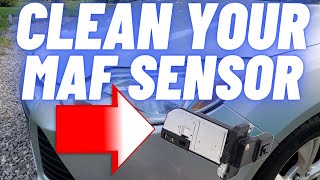
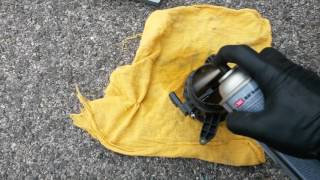
Typical fix: Remove the sensor (usually held by two T20 Torx screws) and spray the internal wires thoroughly with a dedicated Mass Airflow Sensor Cleaner. 🎬 Watch: A step-by-step guide on how to clean the sensor. Do not touch the wires or use other chemicals like brake cleaner. Allow it to dry completely before reinstalling.
Est. part cost: $10-$20 for cleaner spray - Vacuum Leak 🟡 Medium Probability Air leaks in the intake system downstream of the MAF sensor are a common cause. This unmetered air enters the engine without being measured, causing the PCM to see a mismatch between expected and actual airflow. Common spots include cracked intake hoses and faulty gaskets.
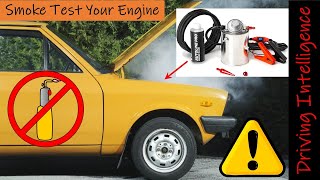
How to confirm: Perform a smoke test to find the source of the leak. 🎬 Watch: How to perform a smoke test to find vacuum leaks. Alternatively, with the engine running, carefully spray carburetor cleaner around suspected leak points like intake manifold gaskets and vacuum hoses; a change in engine idle indicates a leak.
Typical fix: Replace the cracked intake hose, faulty gasket, or leaking vacuum line.
Est. part cost: $20-$150 depending on the leaking component - Clogged or Improperly Installed Air Filter 🟡 Medium Probability
How to confirm: Inspect the engine air filter. If it is excessively dirty, clogged, or not seated correctly in the airbox, it can restrict airflow or allow dirty air to bypass it. A common issue is stripped screws on the airbox lid preventing a proper seal.
Typical fix: Replace the engine air filter and ensure the new one is seated correctly and the airbox lid is securely fastened. If screws are stripped, new hardware or a replacement airbox may be needed. 🎬 See how to repair those stripped plastic airbox threads.
Est. part cost: $15-$40 - Damaged MAF Sensor Wiring or Connector ⚪ Low Probability
How to confirm: Visually inspect the wiring harness and connector leading to the MAF sensor for any signs of fraying, corrosion, or loose pins. A known issue on some Focus models involves the wiring loom rubbing through on the gearbox/bell housing. A multimeter can be used to check for proper voltage, ground, and signal at the connector.
Typical fix: Repair the damaged wiring or replace the connector pigtail. In a Focus ST, chafed wiring near the gearbox has been documented as a cause, a similar issue could affect the 1.6L model.
Est. part cost: $15-$50 for a pigtail connector - Faulty EVAP Canister Purge Valve ⚪ Low Probability The canister purge valve can stick open, creating a persistent vacuum leak. This is a known issue on the Focus platform, subject to a recall.
How to confirm: Often accompanied by code P1450 or rough running/stalling after refueling. A scan tool can monitor fuel trims; a stuck valve causes high negative trims at idle.
Typical fix: Replace the canister purge valve. It is a relatively accessible and inexpensive part.
Est. part cost: $40-$80
Rare But Worth Checking
- Faulty MAF Sensor: While less common than being dirty, the sensor can fail electronically. This should only be considered after cleaning the sensor and ruling out all air leaks and wiring issues. Some owners on forums have replaced the sensor only to have the code return, indicating another root cause.
- Clogged Catalytic Converter: A restricted exhaust can create back pressure that affects airflow through the engine, potentially triggering a P0101 code. This is usually accompanied by a significant loss of power and is more likely on higher-mileage vehicles.
Diagnosis Steps
- Read all fault codes with an OBD-II scanner. Note any other codes present, especially P0171, P0172, or P1450.
- Inspect the engine air filter. Replace if it is dirty or clogged. Check the airbox lid for a tight seal and look for stripped screw holes.
- Inspect the air intake tube between the air filter box and the throttle body for any cracks, loose clamps, or disconnections.
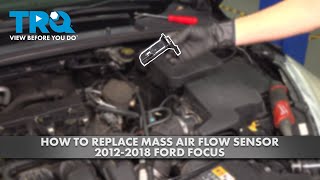
- Carefully remove the MAF sensor. It is typically located in the intake tube right after the air filter box and secured with two T20 Torx screws.
- Inspect the MAF sensor's internal wires for dirt or contamination. Clean it thoroughly using only dedicated MAF sensor cleaner spray. Do not use brake cleaner or carb cleaner, and do not touch the wires.
- Allow the sensor to dry completely and reinstall it. Clear the codes and test drive the vehicle to see if the code returns.
- If the code persists, inspect the MAF sensor wiring and connector for damage or corrosion. Pay attention to the harness where it might rub against the transmission housing.
- If wiring is good, the next step is to check for vacuum leaks. A smoke test is the most effective method. Pay attention to all vacuum hoses, the intake manifold gasket, and the EVAP purge valve.
- If no vacuum leaks are found and the sensor has been cleaned, monitor the MAF sensor's output in grams per second (g/s) with a scan tool like FORScan. The reading should increase smoothly with engine RPM. If the reading is erratic, stuck, or doesn't change, the sensor itself may be faulty.
- If all other possibilities have been exhausted, replace the MAF sensor with a quality OEM or equivalent part.
Parts You'll Likely Need
- Mass Airflow Sensor Cleaner — This is the most common and cheapest fix, as the sensor is often just dirty, not broken.
Trusted brands: CRC, Liqui Moly, WD-40 Specialist
Aftermarket price range: $10-$20 - Mass Airflow (MAF) Sensor
(OEM #8V2Z-12B579-A)— If cleaning the sensor and checking for leaks doesn't resolve the code, the sensor itself may have failed electronically.
Trusted brands: Motorcraft, Bosch, Hitachi
OEM price range: $130-$215
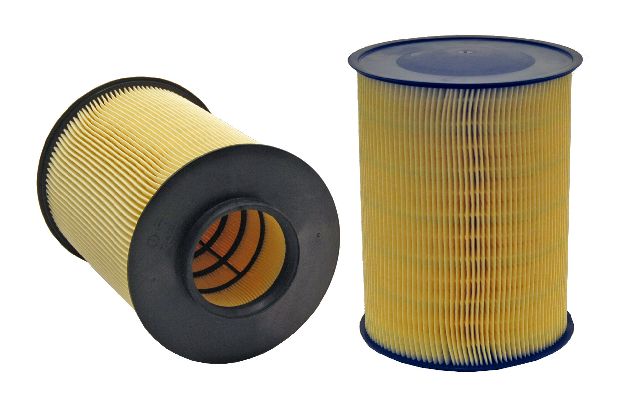
Aftermarket price range: $50-$150 - Engine Air Filter
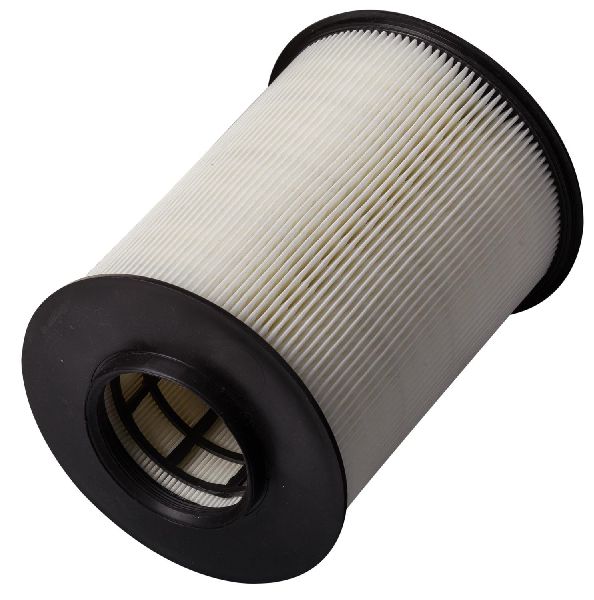
(OEM #FA-1883 (Motorcraft))— A clogged or improperly seated filter can cause airflow restrictions or allow dirt to contaminate the MAF sensor.
Trusted brands: Motorcraft, WIX, Fram
OEM price range: $25-$40
Aftermarket price range: $15-$30
Related Codes That Often Appear With This One
- P0171 — System Too Lean (Bank 1). This code often appears with P0101 because a vacuum leak or a dirty MAF sensor under-reporting airflow causes unmetered air to enter the engine, leading to a lean air-fuel mixture.
- P0172 — System Too Rich (Bank 1). This can occur if the MAF sensor is contaminated and over-reporting airflow, or if the PCM is compensating incorrectly, causing too much fuel to be injected.
- P1450 — Unable to Bleed Up Fuel Tank Vacuum. This code strongly points to a stuck-open canister purge valve, which also creates a vacuum leak that can contribute to or cause P0101.
Platform-Specific Known Issues
- A known issue on some Focus models is the screws for the air filter box lid stripping out the plastic housing. This prevents a tight seal, allowing unfiltered air to contaminate the MAF sensor and trigger a P0101 code.
Mechanic-Grade Diagnostic Values
- MAF Sensor Live Data (g/s) at Idle — expected: 2 to 7 grams per second (g/s) at normal operating temperature.. Failure: Readings are stuck, erratic, do not increase with RPM, or are significantly outside the expected idle range.
- MAF Sensor Signal Voltage at Idle — expected: A steady base voltage that should be recorded once the engine is warm.. Failure: The voltage does not rise smoothly and evenly when engine RPM is increased, or it shows spikes and gaps.
- MAF Sensor Power Supply Voltage (KOEO) — expected: Approximately 12 Volts (Battery Voltage) at Pin A of the connector.. Failure: Significantly less than 12V indicates a power supply issue to the sensor.
- MAF Sensor Ground Circuit Voltage Drop — expected: Less than 100mV (0.1V) when testing between the ground pins (Pin B and C) and the battery negative terminal.. Failure: A reading higher than 100mV indicates high resistance in the ground circuit, which can cause sensor errors.
Scan Tool Commands That Help
- FORScan: Live Data Monitoring (PID: MAF) — Use to monitor the MAF sensor's reported airflow in grams per second (g/s). This is crucial for diagnosing if the sensor is providing plausible data. The reading should be stable at idle and increase smoothly and immediately as you press the accelerator. A slow, stuck, or erratic reading points to a faulty sensor or wiring issue.
- Generic OBD-II Scanner: Mode 6, Test ID $81 — On some Ford vehicles, Mode 6 can provide manufacturer-specific test results. Test ID $81 may relate to MAF sensor diagnostics, showing raw data or test limits that are not part of standard P-codes. This can help determine if the sensor is marginally failing before it consistently sets a P0101.
Wiring & Ground Locations
- Main Engine Bay Ground Point — Located under the air cleaner box, often on the driver's side strut tower area. On some models, it's to the right of the battery near the engine compartment fuse box.. This is a primary chassis ground. A loose or corroded connection here can cause a variety of sensor errors, including incorrect ground reference for the MAF sensor circuit, leading to P0101.
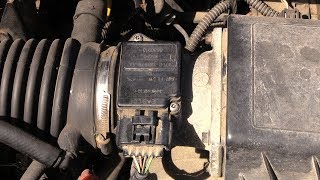
- MAF Sensor Connector — On the MAF sensor itself, located in the intake tube directly after the air filter box.. The connector pins must be clean and tight. The relevant pins for testing are typically: Pin A (12V Power), Pin B (Chassis Ground), Pin C (PCM Ground), and Pin D (Signal Output).
- Harness Chafing Point — The wiring loom for the MAF sensor may rub on top of the starter motor or transmission bell housing, especially if an aftermarket air intake has been installed, which repositions the ECU and wiring.. Chafing can cause wires to short to each other or to ground, leading to erratic sensor readings or a complete loss of signal, triggering a P0101 code. This is a known issue on the Focus platform, particularly the ST model which shares a similar layout.
- G1 Ground — Underneath the air cleaner assembly.. A TSB for other electrical issues on the Focus identifies this as a key ground point. Poor connection here can affect multiple sensors, including the MAF.
Real Owner Repair Stories
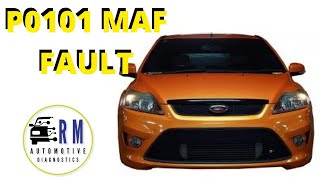
- RMAutodiag on YouTube (Ford Focus ST (Similar wiring layout to 1.6L)) — P0101 code, car would not exceed 10 mph with MAF plugged in, but ran okay with it unplugged.
❌ Tried (didn't work) Initial assumption was a faulty MAF sensor.
✅ What actually fixed it The wiring loom had been rubbing on the starter motor/bell housing, causing multiple wires to become bare and short out. This damaged the original MAF sensor. The fix required repairing the chafed section of the wiring harness and replacing the shorted MAF sensor. - FordOwnersClub.com user 'Swearwolf' (2007 Ford C-Max (Focus Platform) 2.0 TDCi) — P0101 code appeared immediately after swapping to a facelift airbox.
❌ Tried (didn't work) Cleaning the MAF sensor, Trying a second MAF sensor, Checking for intake leaks, Switching wire combinations on the new plug
✅ What actually fixed it The user had retrofitted a newer airbox which used a different MAF sensor. The issue was that the PCM's software calibration (ratio factor) was designed for the original MAF sensor and intake design. The different airflow characteristics and sensor location of the new parts caused the P0101 code. The fix required reverting to the original compatible parts or reprogramming the PCM, highlighting the sensitivity of the system to non-original components.
"I Checked Everything" — The Actual Cause
- A common scenario is a smoke test showing no leaks, but the P0101 code persists. The actual cause is often a poorly sealed air filter box lid, typically due to stripped plastic screw holes. This allows a small amount of unfiltered, unmetered air to be drawn in directly at the MAF sensor's location, contaminating it or slightly skewing readings without creating a traditional vacuum leak downstream that a smoke test would detect.
Model Year Variations Within This Range
- 2012-2014 (Mk3) vs 2015-2018 (Mk3.5 Facelift): The Ford Focus received a facelift for the 2015 model year (often called Mk3.5). While the 1.6L Ti-VCT engine itself remained largely the same, some surrounding components and aesthetics changed. The airbox and MAF sensor part numbers may differ between pre-facelift and facelift models. As seen in a forum repair story, using an airbox from a different model year can cause a P0101 because the PCM is calibrated for a specific sensor and intake geometry. Always use a part number specific to your vehicle's VIN.
Diagnostic Flowchart
Other Known Issues on This Vehicle
Issues unrelated to this code that are worth knowing about as an owner of this generation:
- DPS6 PowerShift Automatic Transmission Failure 🔴 High — Extremely common on 2012-2016 models. Symptoms include shuddering, hesitation, delayed shifts, and complete failure. Onset can be as early as 15,000-20,000 miles. (Ref: Multiple TSBs and warranty extensions were issued. A major class-action lawsuit was also involved.)
- Electric Power Steering Rack Failure 🔴 High — A high failure rate is reported for the Mk3 Focus. Symptoms include sudden loss of power assist, grinding noises when turning, and fault messages. Can occur at any time. (Ref: Fault codes often include U3000. The typical fix is a complete steering rack replacement.)
- Faulty Canister Purge Valve (EVAP) 🟠 Medium — Common issue causing rough idle, stalling (especially after refueling), and difficulty starting. Can trigger codes like P1450. (Ref: Ford issued recall 18S32 / NHTSA 18V735 for this issue, which involves a PCM update and potential replacement of the valve.)
- Failed Engine Mounts 🟠 Medium — The passenger-side (right) hydraulic engine mount is prone to leaking and collapsing, causing excessive engine vibration and noise in the cabin. The rear lower mount (roll restrictor) can also fail or collect debris. (Ref: TSB 11-3-24 was issued for the previous generation for debris in the rear mount, but mount failure is a known weak point on the Mk3 as well.)
Used vs. New Parts: Buying Guide for This Vehicle
When a used part is the smart pick: For this specific repair, buying a used MAF sensor is generally not recommended. The sensor's delicate nature and susceptibility to contamination mean a used part from a junkyard carries a high risk of being faulty or having a short remaining life. The low cost of cleaning the existing sensor and the moderate cost of a new aftermarket unit make a used sensor a poor value proposition.
Donor-vehicle mileage cap: roughly under 50000 miles for the part to have meaningful remaining life.
What to inspect on the donor part:
- If considering a used sensor, insist on one from a low-mileage, front-end collision vehicle (indicating the engine was likely running well).
- Visually inspect the sensor element for any signs of physical damage, oil coating, or dirt.
- Ask for a short warranty period (e.g., 30 days) to allow for testing.
OEM-only on this vehicle (don't cheap out):
- While not strictly 'OEM-only', using a Motorcraft (Ford's OEM brand) or a known OEM supplier like Bosch or Hitachi provides the highest likelihood of success. Cheap, unbranded eBay or Amazon sensors have a very high failure rate and often do not perform to the correct specifications, causing the code to return.
Aftermarket brands forum-validated for this vehicle:
- Bosch
- Hitachi
- Delphi
- Standard Motor Products (SMP) - avoid their 'T-series' value line
- NTK
Brands owners have reported issues with on this vehicle:
- Unbranded, generic parts from marketplaces like eBay or Amazon are frequently cited in forums as being dead-on-arrival or failing quickly. They may be modified used sensors rather than new units.
Real Owner Stories
Aggregated from forums and TSBs cited above. Mileages and costs reflect what owners reported in those sources.
2012-2018 Ford Focus 1.6L Ti-VCT
Symptoms: A persistent P0101 code caused by a loose seal on the air filter housing due to stripped screws.
What fixed it: Swapping to a different airbox assembly to ensure a proper seal.
Source hint: FordOwnersClub.com
2012-2018 Ford Focus 1.6L Ti-VCT
Symptoms: Persistent P0101 code that remained even after installing a new MAF sensor and performing a smoke test.
What fixed it: The source highlights that the issue can be difficult to diagnose and may not always be the sensor itself.
Source hint: Reddit (r/CarTalkUK)
Related OBD-II Codes
Frequently Asked Questions
Is there a recall for the stalling and rough idle issues on my Ford Focus?
Why does my air filter box lid feel loose even when the screws are tightened?
Can I use brake cleaner to clean the MAF sensor on my 1.6L Ti-VCT?
Where should I check for wiring damage on my Focus if cleaning the sensor doesn't work?
My Focus shudders and hesitates during acceleration; is this always a P0101 MAF issue?
What specific tool do I need to remove the MAF sensor on this vehicle?
Helpful Videos

Used OEM Parts in Stock

New Aftermarket Parts Available



The information in this article is provided for general reference and educational purposes only. Vehicle specifications, procedures, and part compatibility can vary by production date, trim level, and region. Always consult your vehicle's factory service manual and verify part numbers before purchasing or performing repairs. Safety-critical components such as airbags, seat belts, and braking systems should be installed by a qualified professional.
- Ford Focus:
- 🎬 Helpful Videos
- 🛍️ Shop This Part
- What's Unique About the 2012-2018 Ford Focus
- Symptoms You May Notice
- Most Likely Causes
- Rare But Worth Checking
- Diagnosis Steps
- Parts You'll Likely Need
- Related Codes That Often Appear With This One
- Platform-Specific Known Issues
- Mechanic-Grade Diagnostic Values
- Scan Tool Commands That Help
- Wiring & Ground Locations
- Real Owner Repair Stories
- "I Checked Everything" — The Actual Cause
- Model Year Variations Within This Range
- Diagnostic Flowchart
- Other Known Issues on This Vehicle
- Used vs. New Parts: Buying Guide for This Vehicle
- Real Owner Stories
- 2012-2018 Ford Focus 1.6L Ti-VCT
- 2012-2018 Ford Focus 1.6L Ti-VCT
- Related OBD-II Codes
- Frequently Asked Questions
- 🎟️ Get 5% Off