

P0101 on 2011-2014 Ford Edge 3.5L: MAF Sensor Causes and Fixes
On a 2011-2014 Ford Edge, code P0101 is most often caused by a dirty Mass Airflow (MAF) sensor or a vacuum leak from a cracked air intake hose. Cleaning the sensor with dedicated MAF cleaner for about $10 is the most common fix and should be tried first. If the intake hose is cracked, especially in the flexible accordion sections, it must be replaced.
- Always start by cleaning the MAF sensor with dedicated cleaner; this is the most common and cheapest fix.
- Thoroughly inspect the flexible air intake hose between the air filter and the engine for cracks, as this is a very common failure point causing vacuum leaks.
- Never use an oiled aftermarket air filter, as the oil can contaminate the MAF sensor and cause this code.
- A P0101 code is a straightforward issue to diagnose and fix for a DIYer, typically requiring only basic hand tools and 15-30 minutes.
What's Unique About the 2011-2014 Ford Edge
For the Ford Edge with the 3.5L V6, the P0101 code is a straightforward and common issue. The primary culprits are consistent with many modern vehicles: contamination of the MAF sensor element and unmetered air entering the engine after the sensor. The plastic and rubber components of the air intake system, particularly the large flexible air intake tube, can become brittle over time, leading to cracks that cause vacuum leaks, which is a frequent cause for this code on this specific vehicle.
Symptoms You May Notice
- Check Engine Light is on
- Rough or unstable idle.
- Hesitation or lack of power during acceleration.
- Poor fuel economy.
- Engine stalling, especially shortly after starting.
- Difficulty starting the engine.
- Black smoke from the exhaust if the sensor is causing a rich condition.
- Replacing the oxygen (O2) sensors, as the P0101 can sometimes be accompanied by lean (P0171/P0174) or rich (P0172/P0175) codes. The O2 sensors are often just reporting the condition caused by the MAF issue.
- Replacing the throttle body when the issue is a simple vacuum leak or dirty sensor.
Most Likely Causes
- Dirty Mass Airflow (MAF) Sensor 🔴 High Probability Oil vapors from the PCV system and fine dust that gets past the air filter can coat the sensor's delicate wire, insulating it and causing inaccurate readings. This is a common issue on many modern engines.
How to confirm: Remove the sensor from the air intake tube (held by two T20 Torx screws) and visually inspect the small wires inside the sensor housing. If they appear coated in grime or oil, they need cleaning.
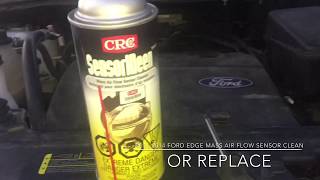
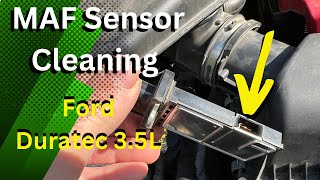
Typical fix: Clean the sensor using only dedicated Mass Airflow Sensor cleaner spray. Do not touch the wires or use other chemicals like brake or carb cleaner. Allow it to air dry completely before reinstalling. 🎬 See how to clean the MAF sensor on this 3.5L engine
Est. part cost: $10-$15 for a can of MAF cleaner - Vacuum Leak (Cracked Air Intake Hose) 🔴 High Probability The large flexible air intake tube (snorkel) between the air filter box and the throttle body is a known failure point. It frequently develops cracks in its accordion-like sections due to age and heat, allowing unmetered air to enter the engine.
How to confirm: With the engine running, listen for a hissing sound around the intake area. Carefully flex and visually inspect the intake tube for cracks, paying close attention to the ribbed sections. A smoke test is the most definitive way to find a leak.
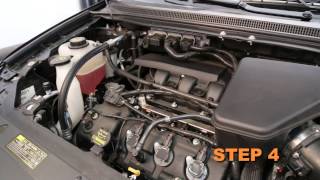
Typical fix: Replace the cracked intake tube. This is a common repair discussed in owner forums. 🎬 Watch: Step-by-step guide to replacing the air intake tube
Est. part cost: $50-$150 for an intake tube, less for hoses/gaskets - Clogged or Dirty Engine Air Filter 🟡 Medium Probability A severely restricted air filter can reduce airflow to the point that the MAF sensor's readings are lower than what the PCM expects for a given RPM and throttle position. It's recommended to clean the MAF sensor whenever the air filter is replaced.
How to confirm: Remove and visually inspect the engine air filter. If it is visibly dirty, clogged with debris, or has not been changed in a long time, it should be replaced.
Typical fix: Replace the engine air filter.
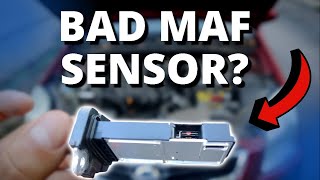
Est. part cost: $20-$40 - Faulty MAF Sensor ⚪ Low Probability While less common than being dirty, the sensor's internal electronics can fail over time. It's important to rule out dirt and vacuum leaks first before replacing the sensor.
How to confirm: If cleaning the sensor and confirming there are no vacuum leaks does not resolve the code, the sensor itself is likely faulty. A diagnostic scan tool can be used to monitor the MAF reading in grams/second to see if it responds correctly to changes in engine RPM. If the reading is stuck or doesn't change with throttle input, the sensor has failed.
Typical fix: Replace the MAF sensor.
Est. part cost: $70-$150
Rare But Worth Checking
- Clogged Catalytic Converter: A restricted exhaust can cause airflow problems that may trigger a P0101 code. This is usually accompanied by a significant loss of power, especially at high RPMs, and potentially other exhaust-related codes like P0420 or P0430.
- Wiring or Connector Issue: The wiring harness or connector for the MAF sensor can become damaged, corroded, or loose, causing an intermittent or total loss of signal. In humid climates, Ford connectors can be susceptible to corrosion. A visual inspection of the harness and checking for a secure connection is a quick and easy check.
Diagnosis Steps
- Read the code with an OBD-II scanner and check for any other accompanying codes. Note any lean (P0171/P0174) or rich (P0172/P0175) codes.
- Visually inspect the entire air intake system, from the air filter box to the throttle body. Pay extremely close attention to the flexible, ribbed sections of the intake tube for cracks.
- Inspect the engine air filter. If it's dirty or clogged, replace it.
- Remove the MAF sensor. It is located on the air intake tube, just after the air filter housing, held by two T20 Torx screws. Inspect the sensor element for dirt, oil, or debris.
- Clean the MAF sensor using only dedicated MAF sensor cleaner spray. Spray the delicate wires and thermistor from a safe distance. Do not touch them. Allow it to dry completely before reinstalling.
- After reinstallation, clear the code with the scanner. It is also recommended to disconnect the negative battery terminal for 15 minutes to reset the PCM's long-term fuel trims, forcing it to relearn with the clean sensor data.
- Test drive the vehicle to see if the code returns.
- If the code returns, perform a smoke test on the intake system to definitively check for vacuum leaks that may not be visually apparent.
- If no vacuum leaks are found and the sensor has been cleaned, check the wiring and connector to the MAF sensor for damage or corrosion. Use a multimeter to check for proper voltage and ground at the connector if possible.
- If all other possibilities are ruled out, the MAF sensor itself has likely failed and should be replaced with a high-quality OEM or OE-equivalent part.
Parts You'll Likely Need
- Mass Airflow Sensor Cleaner — This is the first and most common fix. Cleaning the sensor is inexpensive and often resolves the issue without replacing parts.
Trusted brands: CRC, WD-40 Specialist
Aftermarket price range: $10-$15 - Mass Airflow (MAF) Sensor
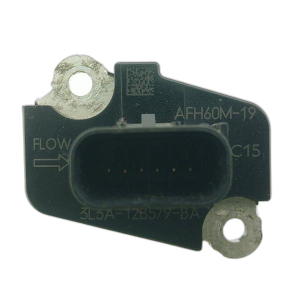
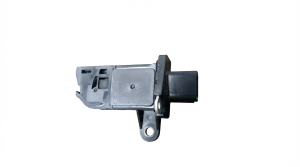
(OEM #7T4Z-12B579-A)— If cleaning the sensor and checking for vacuum leaks doesn't solve the problem, the sensor itself has likely failed. Using a cheap aftermarket sensor is not recommended as they can cause new issues.
Trusted brands: Motorcraft (OEM), Hitachi, Bosch, Delphi
OEM price range: $120-$180
Aftermarket price range: $60-$120 - Engine Air Filter
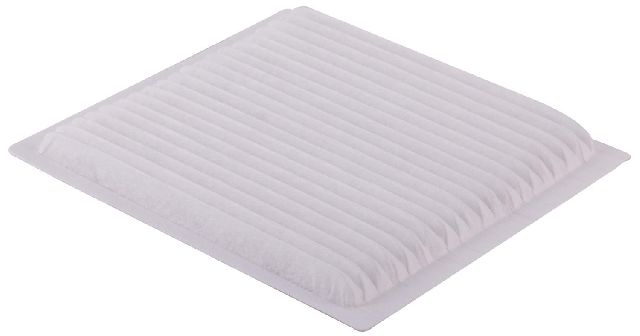
(OEM #FA1884 (Motorcraft))— A clogged air filter is a common and simple-to-fix cause of restricted airflow that can trigger a P0101 code.
Trusted brands: Motorcraft, WIX, Fram
OEM price range: $25-$40
Aftermarket price range: $15-$30 - Air Cleaner Intake Hose
(OEM #7T4Z-9A624-A)— This flexible tube is a very common source of vacuum leaks as it can crack with age, allowing unmetered air to enter the engine.
Trusted brands: Motorcraft (OEM), Dorman, Various Aftermarket
OEM price range: $100-$150
Aftermarket price range: $40-$80
Related Codes That Often Appear With This One
- P0171 / P0174 — These 'System Too Lean' codes often appear with P0101 when there is a vacuum leak or a dirty MAF sensor. Unmetered air enters the engine after the MAF sensor, or the sensor under-reports airflow, leading the PCM to inject too little fuel.
- P0172 / P0175 — These 'System Too Rich' codes can appear if the MAF sensor is contaminated and under-reporting airflow, causing the PCM to calculate an incorrect fuel mixture.
- P2096 / P2098 — These 'Post Catalyst Fuel Trim System Too Lean' codes can be triggered by long-term lean conditions originating from a faulty MAF sensor or vacuum leak.
Technical Service Bulletins (TSBs) & Recalls
- TSB 18-2013: Addresses the 'Door Ajar' lamp staying on with all doors closed, which can drain the battery on 2011-2013 models. The procedure involves cleaning the faulty switch within the door latch.
- TSB 16-0074: While for the 3.7L Mustang, this TSB is relevant as it addresses coolant pump leakage due to air entering the system, a design concern related to the Cyclone engine family. It involves replacing the pump and a coolant hose with a revised design.
Platform-Specific Known Issues
- Cracked Intake Air Tube is a Primary Culprit: More so than on many other vehicles, the flexible air intake tube on the 3.5L Edge is a very common failure point that directly causes code P0101. The accordion-style ribs are the most common place for cracks to develop. Any diagnosis of P0101 on this vehicle should start with a very thorough inspection of this part.
Mechanic-Grade Diagnostic Values
- MAF Sensor Live Data (g/s) at Idle — expected: Approximately 3-5 g/s for a fully warmed-up 3.5L V6 engine at idle in Park/Neutral. This should be a stable reading.. Failure: A reading that is stuck at zero, excessively high (e.g., 10+ g/s at idle), or does not increase smoothly and immediately as the throttle is applied indicates a faulty sensor or major vacuum leak.
- MAF Sensor Voltage (KOEO - Key On, Engine Off) — expected: Close to 0V. The sensor should not be reading any airflow when the engine is not running.. Failure: Any significant voltage reading with the engine off points to an electrical fault in the sensor or its circuit.
Scan Tool Commands That Help
- Ford IDS (Integrated Diagnostic System): KAM (Keep Alive Memory) Reset — After cleaning or replacing the MAF sensor and clearing DTCs, a KAM reset should be performed. This clears all the learned fuel trim adjustments and forces the PCM to create a new fuel strategy based on the now-accurate MAF sensor readings. Failing to do this can sometimes cause the P0101 code to return prematurely as the PCM tries to apply old, incorrect fuel trims.
Wiring & Ground Locations
- G103 / G104 — On the first generation Edge (including 2011-2014), these are primary engine bay grounds located on the left (driver's) side front of the engine compartment, on the frame rail near the battery and airbox.. The MAF sensor circuit relies on a clean and solid ground connection. A corroded or loose ground at G103 or G104 can introduce electrical noise or incorrect reference voltage, causing the PCM to see an erratic or out-of-range signal from the MAF sensor, triggering a P0101 code even if the sensor itself is good.
- MAF Sensor Connector — On the MAF sensor itself, located in the air intake tube directly after the air filter housing.. The connector is a common failure point. Wires can fray at the back of the connector, or pins can become corroded or loose, leading to an intermittent or complete loss of signal. The connector pigtail (Motorcraft WPT-1241) is a commonly replaced part.
Real Owner Repair Stories
- Ford Edge Forum user (2011 Ford Edge 3.5L) — Check engine light with P0101, rough idle, and occasional stalling.
❌ Tried (didn't work) Cleaned the MAF sensor multiple times., Replaced the MAF sensor with a new Motorcraft part., Performed a smoke test which showed no vacuum leaks in the intake hose.
✅ What actually fixed it The actual cause was a heavily carboned-up throttle body. The buildup was restricting airflow at idle and low speeds, causing the MAF readings to be irrational compared to the throttle position and engine RPM. A thorough cleaning of the throttle body plate and bore resolved the code and all symptoms.
"I Checked Everything" — The Actual Cause
- In some cases, the P0101 code persists even after a smoke test confirms there are no cracks in the intake boot or other vacuum leaks. A common culprit in this scenario is a dirty or sticking electronic throttle body. Carbon buildup can prevent the throttle plate from closing to its expected position at idle, causing a mismatch between the airflow measured by the MAF and the airflow expected by the PCM for a 'closed' throttle, which sets the P0101 code.
OEM Part Supersession History
7T4Z-12B579-A→BR3Z-12B579-A (Motorcraft AFLS165)— Standard part revision and consolidation by Ford/Motorcraft over the years.
Heads up: The new part number is a direct replacement and fully compatible. However, be aware that the sensor housing may look slightly different from the original part, but it fits and functions correctly.
Diagnostic Flowchart
Other Known Issues on This Vehicle
Issues unrelated to this code that are worth knowing about as an owner of this generation:
- Internal Water Pump Failure 🔴 High — A significant concern for owners, typically occurring over 100,000 miles. Failure can be catastrophic. (Ref: No recall, but widely documented. A TSB (16-0074) exists for a similar issue on the related 3.7L engine. When the internal pump's seal fails, it leaks coolant directly into the engine oil, leading to rapid engine damage if not caught immediately.)
- Power Transfer Unit (PTU) Failure (AWD Models) 🔴 High — Common on AWD models, often due to fluid overheating and breakdown. The unit is 'filled for life' with no drain plug, leading to premature failure. (Ref: No recall. The fix is an expensive replacement of the PTU, often costing over $2,000. Some owners proactively drill and tap a drain plug to enable fluid changes.)
- Persistent 'Door Ajar' Warning Light 🟡 Low — Extremely common on 2011-2013 models. The light stays on even when doors are closed, preventing locks from working correctly and draining the battery. (Ref: TSB 18-2013 addresses this issue, suggesting a cleaning procedure. The root cause is a faulty switch inside the door latch mechanism. Fixes range from spraying cleaner into the latch to bypassing the sensor or replacing the entire latch assembly.)
- MyFord Touch Infotainment System Failures 🟠 Medium — Widespread complaints on 2011-2015 models. Issues include a frozen or unresponsive touchscreen, system crashes, and loss of essential functions like the defroster controls. (Ref: Multiple software updates were released, but hardware issues often persist. Some owners have had to replace the entire APIM module.)
Used vs. New Parts: Buying Guide for This Vehicle
When a used part is the smart pick: For this repair, a used OEM (Motorcraft) MAF sensor from a low-mileage donor vehicle can be a cost-effective option, as they are generally reliable. A used air intake hose is also a viable option if it is thoroughly inspected for cracks and brittleness, especially in the flexible sections.
Donor-vehicle mileage cap: roughly under 60000 miles for the part to have meaningful remaining life.
What to inspect on the donor part:
- For a MAF sensor, ensure the connector pins are clean and straight, with no signs of corrosion.
- For an intake hose, squeeze and flex the rubber. It should feel pliable, not hard or crunchy. Vigorously inspect the accordion ribs for any hairline cracks.
OEM-only on this vehicle (don't cheap out):
- Mass Airflow (MAF) Sensor: While some high-quality aftermarket brands exist, it is strongly recommended to use an OEM Motorcraft sensor. Cheap, unbranded aftermarket MAF sensors are notoriously poorly calibrated and often cause new performance issues or fail to fix the original code.
Aftermarket brands forum-validated for this vehicle:
- Hitachi: Hitachi is a known OEM supplier for many automakers and produces reliable MAF sensors that are considered a safe alternative to Motorcraft.
- Delphi: Delphi has a strong reputation in automotive electronics and fuel systems and is another trusted aftermarket brand for this sensor.
Brands owners have reported issues with on this vehicle:
- Unbranded or 'white-box' sensors from online marketplaces. These often lack proper calibration and quality control, leading to persistent issues.
Real Owner Stories
Aggregated from forums and TSBs cited above. Mileages and costs reflect what owners reported in those sources.
2011-2014 Ford Edge 3.5L
Symptoms: The P0101 code appeared. Cleaning the MAF sensor provided a temporary fix, but the code returned several weeks later.
What fixed it: Discovery and replacement of a hairline crack in the air intake boot/snorkel that was missed during the initial inspection.
Source hint: fordedgeforum.com thread titled 'P0101 code'
2011-2014 Ford Edge 3.5L — ~115000 miles
Symptoms: Owners discussing long-term reliability risks, specifically mentioning catastrophic engine failure risks and high repair costs.
What fixed it: Internal water pump replacement (preventative or post-failure).
Cost: $3,000-$5,000
Source hint: reddit.com/r/FordEdge thread 'Planning to buy a ford edge 2011-2014'
2011-2013 Ford Edge
Symptoms: The 'Door Ajar' warning light stays on at all times even when doors are closed, leading to battery drain.
What fixed it: Cleaning the faulty switch within the door latch using brake cleaner.
Source hint: fordedgeforum.com thread 'Door Ajar Warning on at all times Fix'
Related OBD-II Codes
Frequently Asked Questions
Is there a TSB for the 2011-2013 Ford Edge regarding electrical issues that might seem related to engine codes?
I cleaned my MAF sensor but the P0101 code came back on my 3.5L Edge. What should I check next?
Can I use any cleaner to fix the MAF sensor on my Ford Edge?
Does the 3.5L Cyclone engine have any major mechanical issues I should be aware of while diagnosing air codes?
How do I reset the computer after cleaning the MAF sensor on my Edge?
Helpful Videos
Used OEM Parts in Stock
New Aftermarket Parts Available



The information in this article is provided for general reference and educational purposes only. Vehicle specifications, procedures, and part compatibility can vary by production date, trim level, and region. Always consult your vehicle's factory service manual and verify part numbers before purchasing or performing repairs. Safety-critical components such as airbags, seat belts, and braking systems should be installed by a qualified professional.
- Ford Edge:
- 🎬 Helpful Videos
- 🛍️ Shop This Part
- What's Unique About the 2011-2014 Ford Edge
- Symptoms You May Notice
- Most Likely Causes
- Rare But Worth Checking
- Diagnosis Steps
- Parts You'll Likely Need
- Related Codes That Often Appear With This One
- Technical Service Bulletins (TSBs) & Recalls
- Platform-Specific Known Issues
- Mechanic-Grade Diagnostic Values
- Scan Tool Commands That Help
- Wiring & Ground Locations
- Real Owner Repair Stories
- "I Checked Everything" — The Actual Cause
- OEM Part Supersession History
- Diagnostic Flowchart
- Other Known Issues on This Vehicle
- Used vs. New Parts: Buying Guide for This Vehicle
- Real Owner Stories
- 2011-2014 Ford Edge 3.5L
- 2011-2014 Ford Edge 3.5L — ~115000 miles
- 2011-2013 Ford Edge
- Related OBD-II Codes
- Frequently Asked Questions
- 🎟️ Get 5% Off