

P0101 on 2007-2012 Dodge Caliber: Airflow Fault, Causes and Fixes
This code on a Dodge Caliber almost never means a bad Mass Airflow Sensor, because it doesn't have one. P0101 is usually caused by a vacuum leak from a cracked intake manifold or bad gasket, a faulty Intake Manifold Runner Control (swirl flap) system, or a dirty/faulty electronic throttle body. A smoke test to find leaks is the best first step.
- Do not look for or replace a Mass Airflow (MAF) sensor; your 2007-2012 Dodge Caliber does not have one.
- The most likely cause of P0101 is a vacuum leak (intake gasket/manifold) or a failed Intake Manifold Runner Control (IMRC) system.
- A thorough smoke test is the most effective way to find vacuum leaks.
- The second most likely cause is a dirty or failing electronic throttle body, which requires a 'relearn' procedure after service.
- Check for IMRC-related codes like P2004/P2006, as they often pinpoint the true cause of the P0101 fault.
What's Unique About the 2007-2012 Dodge Caliber
The most critical detail for a Dodge Caliber with a P0101 code is that it uses a speed-density system with a MAP sensor, not a MAF sensor. Many generic guides will incorrectly advise you to clean or replace a MAF sensor, a part that does not exist on this vehicle. The code is triggered by a logic fault in the PCM, which sees a disagreement between various sensors. The problem is almost always an underlying mechanical issue causing this disagreement, like unmetered air from a vacuum leak or a malfunctioning intake runner control system, rather than a single faulty sensor.
Symptoms You May Notice
- Check Engine Light is on
- Rough, unstable, or surging idle
- Hesitation or stumbling during acceleration
- Reduced engine power
- Poor fuel economy
- Engine may stall when coming to a stop
- Audible whistling, hissing, or sucking sound from the engine bay, especially under acceleration.
- Replacing the Mass Airflow (MAF) sensor. The Dodge Caliber does not have a MAF sensor, so any time or money spent looking for or replacing one is wasted.
Most Likely Causes
- Vacuum Leak (Intake Manifold, Gasket, Hoses) 🔴 High Probability The plastic intake manifold and its gaskets can become brittle with age and heat cycles, leading to cracks and leaks. The manifold itself can develop hairline cracks, not just the gasket. Vacuum hoses can also dry out and crack.
How to confirm: Perform a smoke test by injecting smoke into the intake system. Smoke will visibly escape from any leak points. Alternatively, you can carefully spray carburetor cleaner around the intake manifold with the engine running; a change in idle RPM indicates a leak.
Typical fix: Replace the faulty gasket, hose, or the entire intake manifold if it is cracked. The intake manifold gasket is a very common failure point.
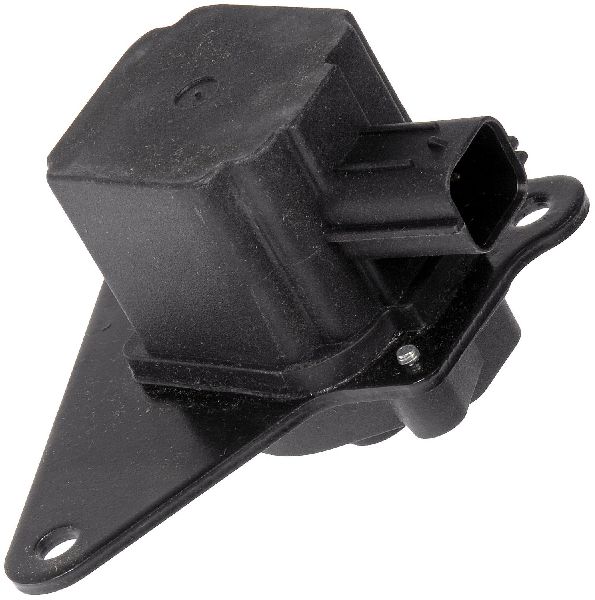
Est. part cost: $15-$60 for gaskets or hoses, $100-$250 for a new manifold. - Faulty Intake Manifold Runner Control (IMRC) / Swirl Flaps 🔴 High Probability The intake manifold contains plastic 'swirl flaps' to optimize airflow. The plastic linkage connecting the actuator motor to these flaps is a known weak point and can break, or the flaps can get stuck with carbon. This causes a mismatch between expected and actual airflow, triggering P0101.
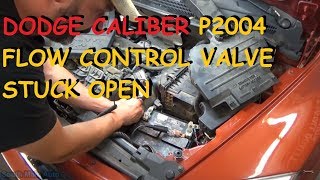
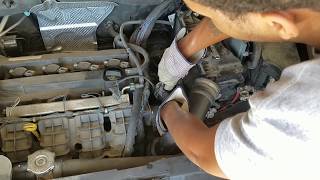
How to confirm: Visually inspect the IMRC actuator arm on the side of the intake manifold (driver's side). It should move when the engine is started. Check for related codes like P2004, P2006, or P2017, which directly point to this system. 🎬 Watch: How to diagnose and fix stuck intake runner controls. A scan tool can also command the actuator to check for response.
Typical fix: The official fix is to replace the entire intake manifold assembly, as the runner components are not typically sold separately. Some owners have attempted to repair the linkage with aftermarket kits.
Est. part cost: $150-$400 for a new intake manifold assembly. - Dirty or Faulty Electronic Throttle Body 🟡 Medium Probability Carbon and oil vapor from the PCV system can build up in the throttle body, restricting the movement of the throttle plate or preventing it from closing properly. This causes airflow to be inconsistent with what the throttle position sensor reports.
How to confirm: Remove the air intake tube connected to the throttle body and visually inspect for heavy carbon buildup around the throttle plate and bore.
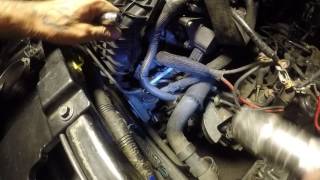
Typical fix: Clean the throttle body thoroughly with a dedicated throttle body cleaner and a soft cloth. Afterwards, a 'throttle body relearn' procedure must be performed. If cleaning doesn't work, the entire electronic throttle body assembly may need to be replaced. 🎬 See this easy walkthrough for removing the throttle body.
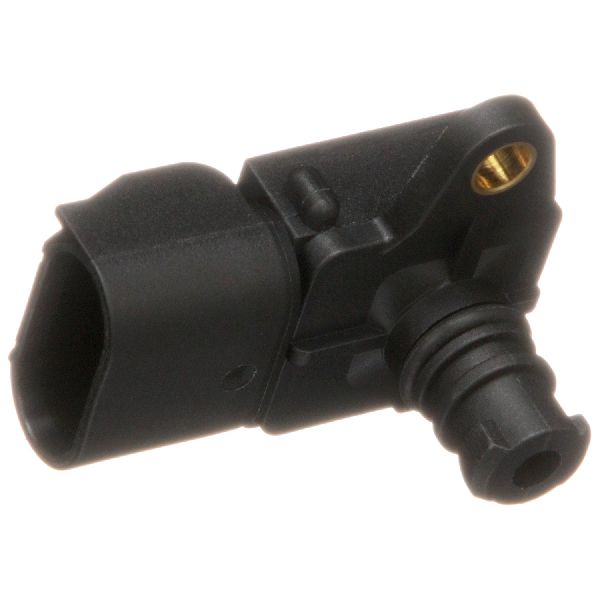
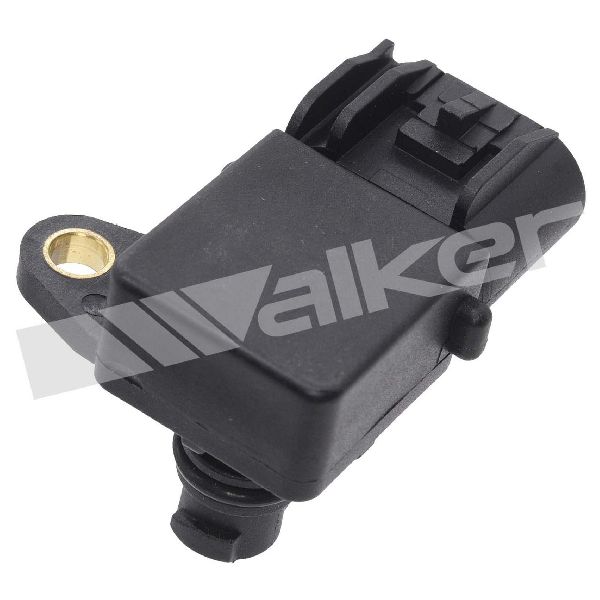
Est. part cost: $5-$15 for cleaner, $150-$300 for a new throttle body. - Faulty Manifold Absolute Pressure (MAP) Sensor ⚪ Low Probability
How to confirm: With a scan tool, observe the MAP sensor reading with the key on, engine off. It should match the barometric pressure. With the engine running, the reading should drop. You can also test the sensor's voltage output to ensure it changes smoothly with applied vacuum.
Typical fix: Replace the MAP sensor. It is typically mounted on the intake manifold.
Est. part cost: $30-$80
Rare But Worth Checking
- Clogged Catalytic Converter: A restricted exhaust can disrupt the engine's ability to breathe, throwing off the calculated airflow model and triggering P0101. This is usually accompanied by a severe lack of power, especially at higher RPMs, and sometimes a sulfur-like smell.
- Powertrain Control Module (PCM) Software Issue: In some cases, the logic within the PCM for detecting this fault can be too sensitive. Check with a dealer to see if any software updates or re-flashes are available for your vehicle's VIN, as this can sometimes resolve the issue without replacing parts. TSBs have been issued for similar issues on platform mates.
Diagnosis Steps
- Read the code with an OBD-II scanner and check for any other stored codes, especially P0171, P0507, or P20xx codes.
- Confirm you understand this vehicle has no MAF sensor. All diagnosis should focus on the MAP sensor system and calculated airflow.
- Perform a thorough visual inspection of the engine bay. Look for cracked, disconnected, or collapsed vacuum hoses, especially around the PCV system.
- Conduct a smoke test to definitively check for vacuum leaks. Pay close attention to the intake manifold gasket seam and the manifold body itself.
- Visually inspect the Intake Manifold Runner Control (IMRC) actuator on the driver's side of the intake manifold. Watch the actuator arm for movement when an assistant starts the car. If it doesn't move, or the linkage is visibly broken, the intake manifold is likely faulty.
- If no leaks are found, remove the intake ducting and inspect the electronic throttle body 🎬 Watch: Step-by-step throttle body removal for SRT4 models. for carbon buildup. Clean it if it's dirty.
- Perform a throttle body relearn procedure. After cleaning or replacing the throttle body, turn the ignition to 'ON' (don't start), wait for dash lights to stabilize, slowly press the accelerator pedal to the floor, slowly release it, then turn the ignition 'OFF'. Start the engine and let it idle to finish calibrating.
- Using a scan tool, monitor the MAP sensor data at key-on/engine-off and at idle to ensure its readings are logical.
- Check the exhaust for restrictions. A backpressure test can confirm if the catalytic converter is clogged.
- If all other components test good, investigate the possibility of a PCM software update with a dealership or qualified shop.
Parts You'll Likely Need
- Intake Manifold Gasket Set — This is a frequent cause of vacuum leaks on this engine, which directly leads to the P0101 code. Often replaced when the entire manifold is serviced.
Trusted brands: Fel-Pro, Mahle, Mopar
OEM price range: $30-$50
Aftermarket price range: $15-$30 - Intake Manifold Assembly
(OEM #4884495AK (or superseding number))— Required if the manifold itself is cracked or, more commonly, if the internal Intake Manifold Runner Control (IMRC) flaps or linkage have failed.
Trusted brands: Mopar, Dorman, Koomaha
OEM price range: $250-$400
Aftermarket price range: $100-$250 - Manifold Absolute Pressure (MAP) Sensor
(OEM #05033310AC)— If the sensor itself is faulty and providing incorrect pressure readings to the PCM, it can cause this calculated airflow code. This is a less common cause.
Trusted brands: Mopar, Bosch, Delphi, Standard Motor Products
OEM price range: $60-$100
Aftermarket price range: $30-$80
Related Codes That Often Appear With This One
- P0171 — System Too Lean (Bank 1). This code often appears with P0101 if the root cause is a vacuum leak, as the unmetered air creates a lean condition.
- P0507 — Idle Air Control System RPM Higher Than Expected. A vacuum leak or a stuck-open throttle body can cause the idle speed to be too high, triggering this code alongside the P0101.
- P2004, P2006, P2017 — Intake Manifold Runner Control Stuck Open/Closed. These codes point directly to a failure in the swirl flap system, which is a common root cause for P0101 on this engine.
Technical Service Bulletins (TSBs) & Recalls
- While no specific TSB for P0101 on the Caliber was prominently found, TSBs like 18-012-12 REV. A for other Dodge/Jeep products address similar airflow rationality codes with a PCM software update. It is always recommended to check with a dealer for the latest software for your specific VIN before replacing expensive parts.
Platform-Specific Known Issues
- Intake Manifold Runner Control (IMRC) Failure: The 1.8L, 2.0L, and 2.4L 'World Engines' are notorious for failures within the intake manifold's runner control system. This system uses butterfly valves ('swirl flaps') to alter the length of the intake runners, optimizing torque at low RPMs and horsepower at high RPMs. The plastic actuator linkage often breaks, or the flaps get stuck due to carbon buildup. When the PCM commands a change and the airflow doesn't respond as expected (verified by the MAP sensor), it triggers the logic-based P0101 code, often accompanied by a P2004 or P2006 code.
Mechanic-Grade Diagnostic Values
- MAP Sensor Signal Voltage — expected: Key On, Engine Off (KOEO): Should be near 4.5-5.0V at sea level, decreasing with altitude. Engine at Idle: Should drop to 1.0-1.5V.. Failure: Voltage that is stuck high, low, or does not change with engine vacuum indicates a faulty sensor or circuit issue.
- MAP Sensor 5V Reference — expected: Approximately 5.0V at the sensor connector with the key on.. Failure: Voltage significantly lower or higher than 5.0V points to a PCM or wiring issue.
- MAP Sensor Ground Circuit — expected: Should have near 0V, indicating a good path to ground.. Failure: Any significant voltage on the ground wire indicates high resistance in the ground circuit.
- IMRC (Manifold Flow Valve) Control Circuit Resistance — expected: Resistance between the Manifold Flow Valve harness connector and the PCM connector should be below 5.0 ohms.. Failure: Resistance above 5.0 ohms indicates an open or high resistance in the wiring.
Scan Tool Commands That Help
- Professional Scan Tool (e.g., WiTech, Autel, Snap-on): IMRC Actuator Test / Manifold Flow Valve Actuation — To command the IMRC swirl flaps to open and close. This directly tests the actuator motor, linkage, and flap movement without having to physically access them. Failure to actuate during this test points to a problem in the IMRC assembly or its circuit.
- Professional Scan Tool: Throttle Body Relearn / ETC Relearn — Required after cleaning or replacing the electronic throttle body to reset its learned idle and off-idle positions. While a manual procedure exists, a scan tool provides a more reliable and confirmed reset.
Wiring & Ground Locations
- MAP Sensor Connector — Mounted on the intake manifold.. This 3-pin connector provides the MAP sensor with power, ground, and a path to send its signal to the PCM. Corrosion or a loose connection here will directly cause incorrect readings and can trigger P0101. Pin A is ground, Pin B is the signal, and Pin C is the 5V supply.
- G111 — On the left side of the engine compartment, often near the strut tower or main harness breakout.. This is a primary ground point for several engine components. A loose or corroded G111 ground can cause floating or incorrect readings from various sensors, including the MAP sensor, leading to logic codes like P0101.
- PCM C1 and C2 Connectors — The Powertrain Control Module (PCM) is located behind the left front quarter panel/fender liner.. All sensor signals, including the MAP and IMRC position, route back to these main connectors. When diagnosing circuit faults (opens, shorts, high resistance), testing will be done between the sensor connector and the corresponding pin at these PCM connectors.
Real Owner Repair Stories
- AvengerForumz user (Dodge Avenger (shares platform and World Engine with Caliber)) — P0101 code, rough idle, stalling.
❌ Tried (didn't work) Replaced MAP sensor, Replaced throttle body, Cleaned all sensors
✅ What actually fixed it The intake manifold was faulty. Replacing the entire intake manifold assembly resolved all symptoms and the P0101 code.
OEM Part Supersession History
4884495AD, 4884495AF, 4884495AG, 4884495AH, 4884495AI, 4884495AJ→4884495AK— Revisions to the intake manifold assembly, likely to improve the durability of the IMRC flaps and linkage which are a common failure point.
Heads up: The latest part number, 4884495AK, is the recommended replacement for all previous versions and fits the 2007-2012 Caliber with the 1.8L, 2.0L, and 2.4L engines.
Model Year Variations Within This Range
- 2007-2009: The 1.8L engine was available as the base engine. It was discontinued for the 2010 model year, making the 2.0L the standard engine.
- 2010: The interior and instrument panel were redesigned. Trim levels were renamed to Main Street (SE), Heat (SXT), and Rush (R/T). These changes do not affect the P0101 diagnosis but are relevant for part compatibility of interior components.
- 2012: Trim levels reverted to SE, SXT, and SXT Plus. Electronic Stability Control became standard, which was optional on some earlier models.
Diagnostic Flowchart
Real Owner Stories
Aggregated from forums and TSBs cited above. Mileages and costs reflect what owners reported in those sources.
Dodge Caliber
Symptoms: Getting a P2004/P2017 error (Intake Runner Control) alongside airflow issues.
What fixed it: Replaced the entire intake manifold.
Source hint: r/DodgeCaliber on Reddit thread titled 'Intake manifold replacement'
Dodge Caliber
Symptoms: Experienced a persistent vacuum leak even after replacing the intake manifold gasket.
What fixed it: Required further diagnosis like a smoke test, as the issue was more complex and misdiagnosed as just a gasket failure.
Source hint: DodgeForum.com thread titled 'Replacing intake manifold gasket'
Related OBD-II Codes
Frequently Asked Questions
Does the 2007-2012 Dodge Caliber have a MAF sensor that causes the P0101 code?
What is the most common cause of P0101 on the 1.8L, 2.0L, and 2.4L World Engines?
Can a dirty throttle body cause a P0101 code on my Caliber?
I have a P0101 and a P2004 code on my Dodge Caliber. What does this mean?
Is there a TSB or software update for the P0101 code on the Dodge Caliber?
How do I test for a vacuum leak on the Caliber's plastic intake manifold?
Helpful Videos
Used OEM Parts in Stock


New Aftermarket Parts Available



The information in this article is provided for general reference and educational purposes only. Vehicle specifications, procedures, and part compatibility can vary by production date, trim level, and region. Always consult your vehicle's factory service manual and verify part numbers before purchasing or performing repairs. Safety-critical components such as airbags, seat belts, and braking systems should be installed by a qualified professional.
- Dodge Caliber:
- 🎬 Helpful Videos
- 🛍️ Shop This Part
- What's Unique About the 2007-2012 Dodge Caliber
- Symptoms You May Notice
- Most Likely Causes
- Rare But Worth Checking
- Diagnosis Steps
- Parts You'll Likely Need
- Related Codes That Often Appear With This One
- Technical Service Bulletins (TSBs) & Recalls
- Platform-Specific Known Issues
- Mechanic-Grade Diagnostic Values
- Scan Tool Commands That Help
- Wiring & Ground Locations
- Real Owner Repair Stories
- OEM Part Supersession History
- Model Year Variations Within This Range
- Diagnostic Flowchart
- Real Owner Stories
- Dodge Caliber
- Dodge Caliber
- Related OBD-II Codes
- Frequently Asked Questions
- 🎟️ Get 5% Off